
Antifreeze Proteins Market Size, Trends & Demand by 2034
Coverage: By Type (Type I, Type III, Antifreeze Glycoproteins, Others); Form (Solid, Liquid); End-Use (Medical, Cosmetics, Food, Others); Source (Fish, Plants, Insects, Others) , and Geography (North America, Europe, Asia Pacific, and South and Central America)
- Status : Data Released
- Report Code : TIPRE00005888
- Category : Food and Beverages
- No. of Pages : 150
- Available Report Formats :


- Last update date : August 26, 2026


2025 Market Size
US$ 1.36 Bn
Base year value
2034 Forecast
US$ 2.77 Bn
Projected by 2034
CAGR 2026-2034
8.19 %
Growth rate
Addressable Market
US$ 18.52 Bn
(2026-2034)
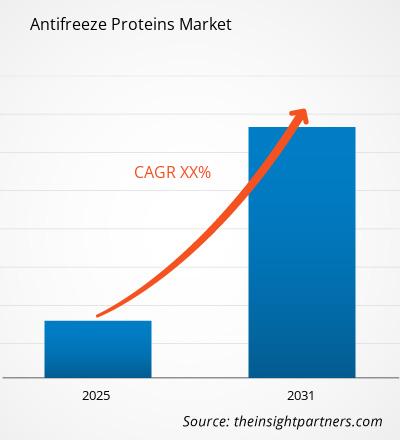
The antifreeze proteins market was valued at US$ 1.36 Billion in 2025 and is projected to reach US$ 2.77 Billion by 2034, expanding at a CAGR of 8.19% during 2026–2034. Rising commercial utilization of biologically derived cryoprotectants across healthcare, food preservation, cosmetics, and biotechnology applications is supporting demand expansion. Improvements in recombinant protein production and increasing research into low-temperature stabilization technologies continue to strengthen the commercial potential of the antifreeze proteins market.
Across North America, biotechnology investment, advanced biomedical infrastructure, and expanding cold-chain innovation are creating favorable conditions for industry expansion. The antifreeze proteins market size in the region is supported by growing adoption in organ preservation research and premium cosmetic formulations. Market participants are also benefiting from expanded university-industry collaboration and increasing interest in sustainable bio-based specialty ingredients, supporting a regional CAGR range of 7.8%–8.5% through 2034.
Antifreeze Proteins Market Assessment and Insights
- North America accounted for 34%–36% Share in 2025 and is expected to grow at a CAGR between 7.8%–8.5% during 2026–2034. Strong biotechnology ecosystems, healthcare innovation spending, and commercial protein-engineering capabilities continue to support regional leadership.
- US represented 72%–76% of North American demand in 2025 and is projected to register a CAGR between 7.9%–8.6% during 2026–2034 driven by medical research and bioingredient commercialization.
- Europe held 27%–29% Share in 2025 and is anticipated to expand at a CAGR between 7.4%–8.1% during 2026–2034. Germany, the UK, and France remain major contributors due to biotechnology research and specialty ingredient manufacturing.
- Asia Pacific accounted for 24%–26% Share in 2025 and is forecast to grow at a CAGR between 9.0%–9.8% during 2026–2034. China, Japan, South Korea, and India are benefiting from expanding life sciences investment and food technology innovation.
- Largest Segment: Medical maintained a market share of 38%–42% in 2025 and is projected to grow at a CAGR of 8.3%–9.0% during 2026–2034 owing to cryopreservation and transplant-related applications.
- High Growth Segment: Insects Source represented 14%–18% market share in 2025 and is expected to advance at a CAGR of 9.5%–10.3% during 2026–2034 due to superior ice-binding characteristics and biotechnology research.
- Key companies analyzed in detail: AquaBounty Technologies, Inc.; Kaneka Corporation; ProtoKinetix, Incorporated; Sirona Biochem Corp.; Unilever PLC; Nichirei Corporation; A/F Protein Canada Inc.; Shanghai Yu Tao Industrial Co., Ltd.; Kodera Herb Garden Co., Ltd.; Bioceres Crop Solutions Corp.
Source: The Insight Partners' analysis based on proprietary research, government publications, company annual reports, investor presentations, industry databases, and expert interviews.
Continuous advances in protein engineering have transformed commercialization pathways across the antifreeze proteins market. Production has steadily shifted from extraction-based approaches toward recombinant expression systems that provide greater scalability, purity, and formulation consistency. Technological advancements in synthetic biology are helping in overcoming manufacturing limitations while allowing the creation of specialized proteins for different uses in the health, agriculture, and consumer sectors. Increasing concerns about the availability of protein substitutes for traditional freezing agents are driving demands from high-value industries.
In the future, developing countries will contribute significantly towards the growth of the industry due to improvements in biotechnological processes and investments. The adoption of advanced biological components by regulatory bodies, along with an increasing focus on food quality preservation and biomedical cryostorage, is anticipated to boost the adoption of the products. Commercial partnerships between ingredient manufacturers, research institutions, and healthcare organizations are anticipated to accelerate product development and geographic expansion across the antifreeze proteins market.
Antifreeze Proteins Market Report Scope
| Report Attribute | Details |
|---|---|
| Market size in 2025 | US$ 1.36 Billion |
| Market Size by 2034 | US$ 2.77 Billion |
| Global CAGR (2026 - 2034) | 8.19% |
| Historical Data | 2021-2024 |
| Forecast period | 2026-2034 |
Antifreeze Proteins Market Analysis
The antifreeze proteins market growth trajectory is supported by increasing demand for biological cryoprotection solutions capable of controlling ice crystal formation. Medical applications remain a major revenue contributor, particularly in cryopreservation, regenerative medicine, tissue banking, and transplant research. There is a trend in food manufacturers using antifreeze proteins to improve the texture stability and shelf-life of frozen foods. The progress made in the area of protein expression has resulted in more effective production and lower barriers for commercialization.
The value chain includes biological sources, recombinant protein production, purification, formulation, and utilization in applications. Suppliers are working on scalable manufacturing to respond to the growing demands from the healthcare and specialty ingredients markets. Research organizations contribute to the broadening of applications, whereas biotechnology companies tend to develop protein platforms based on intellectual property that can solve the problems in specific applications.
The antifreeze proteins market analysis highlights a competitive landscape characterized by technology differentiation and strategic collaborations. AquaBounty Technologies Inc. and ProtoKinetix Inc. remain active in research pertaining to specialized proteins, whereas Kaneka Corporation and Nichirei Corporation capitalize on more comprehensive biotechnology knowledge and manufacturing facilities. Sirona Biochem Corp. keeps concentrating on the development of bioactive cosmetic ingredients that possess cold protection properties.
Research investments are increasingly directed toward recombinant biology, precision fermentation, and cryopreservation technologies. Unilever PLC and other ingredient manufacturers are developing the next generation of formulations for premium consumer goods. Companies continue to develop their intellectual property portfolio and collaborate more actively with universities to speed up commercialization. Increasingly important competitive factors include scalability, protein functionality, compliance with regulations, and the capacity to address different end-user industries via a flexible production platform.
● REPORT CUSTOMIZATION
Tailor This Report To Align With Your Specific Business Requirements
This report can be customized to align precisely with your business objectives, scope, and target markets. Customization options include tailored segmentation, geography, competitive analysis, and strategic insights to support informed decision-making.
Customize This Report →WHAT YOU CAN ADJUST
- ● Segmentations
- ● Geography
- ● Competitive Analysis
- ● Language Preferences
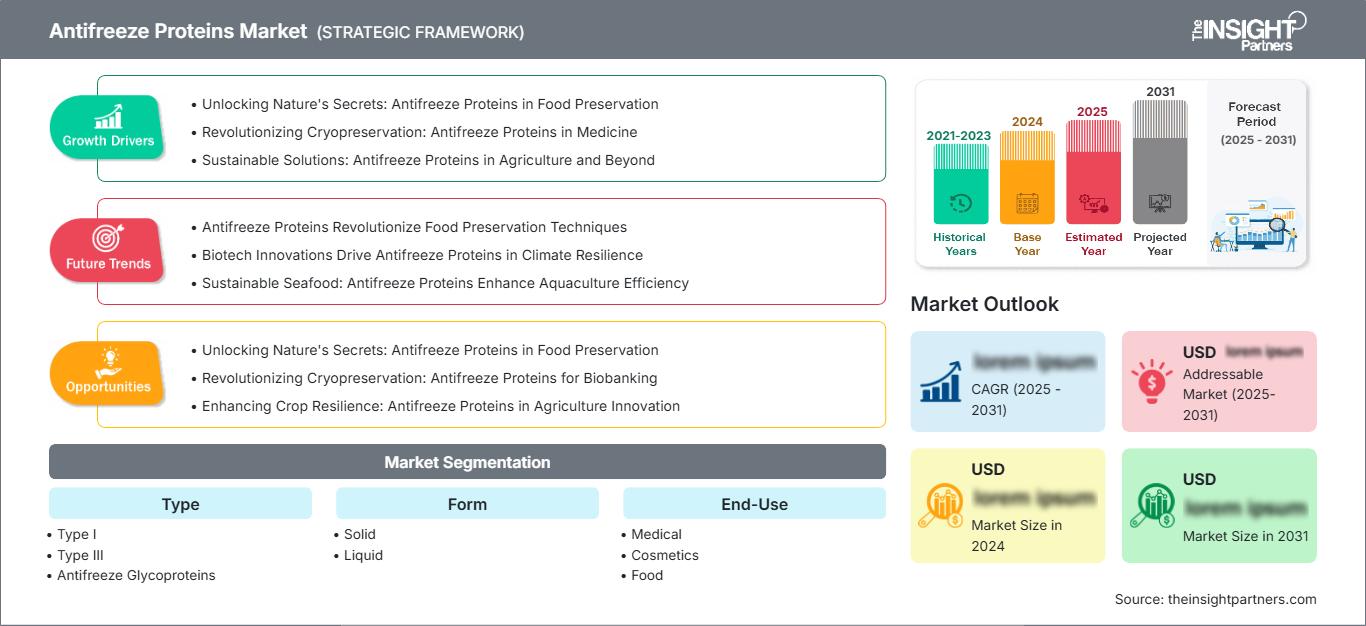
Antifreeze Proteins Market: Strategic Insights
Regional Insights
North America Antifreeze proteins market
North America represented 34%–36% of global revenue in 2025 and is forecast to expand at a CAGR of 7.8%–8.5% through 2034. The region benefits from advanced biotechnology infrastructure, extensive research funding, and strong commercialization pathways for specialty proteins. Healthcare institutions continue evaluating biological cryoprotectants for cell storage and regenerative medicine applications, while premium food manufacturers explore texture preservation capabilities.
The region also leads the antifreeze proteins market share profile due to concentrated research expertise and higher adoption of high-value biological materials. Growing demand from cosmetic formulation developers and expanding translational research programs support further expansion. Regulatory familiarity with biotechnology-derived ingredients and established intellectual property frameworks continues encouraging innovation and commercial deployment across multiple application areas.
U.S. Antifreeze proteins Market
The United States accounted for 72%–76% of North American revenue in 2025 and is projected to grow at a CAGR of 7.9%–8.6% during the forecast period. Research efforts made in the field of life sciences, cryobiology studies, and bioengineering technology aid in the process of market development. Universities and biotechnology firms explore new protein solutions for the purposes of healthcare and ingredients.
The strong representation of AquaBounty Technologies, Inc., ProtoKinetix, Incorporated, and other companies engaged in the creation of biotechnological innovations proves the dominance of the country. The demand grows in the spheres of organ preservation research, cell therapy development, and luxury personal care products.
Europe Antifreeze proteins Market
Europe held 27%–29% of global revenue in 2025 and is anticipated to register a CAGR of 7.4%–8.1% through 2034. Germany remains the leading regional market due to its biotechnology manufacturing capabilities, strong pharmaceutical research ecosystem, and emphasis on advanced biomaterials. Continuous investment in biological innovation supports broader use of specialized proteins across industrial and healthcare applications.
The United Kingdom demonstrates strong activity in biotechnology research, translational medicine, and consumer product innovation. French, Italian, and Spanish markets are benefiting from expanding food science research and increasing interest in sustainable bio-based ingredients. Regional development is also supported by collaboration between universities and private-sector organizations pursuing advanced preservation technologies for medical and commercial applications.
APAC Antifreeze proteins Market
Asia Pacific accounted for 24%–26% of global revenue in 2025 and is expected to grow at a CAGR of 9.0%–9.8%, making it the fastest-expanding major region. China leads regional demand through biotechnology investment and manufacturing scale, while Japan contributes advanced research capabilities.
South Korea, India, and Australia continue strengthening life sciences infrastructure and food innovation programs. Government support for biotechnology development and increasing healthcare research activity are expected to accelerate adoption across both medical and industrial applications.
Middle East & Africa Antifreeze proteins Market
The Middle East & Africa market is projected to expand at a CAGR of 6.8%–7.5% through 2034. Saudi Arabia and the UAE are increasing investment in biotechnology capabilities as part of broader economic diversification initiatives. Demand remains concentrated in research and specialty applications.
South Africa continues serving as an important biotechnology hub within the region. Infrastructure modernization and growing healthcare investment are expected to support gradual adoption, although commercialization remains at an earlier stage than in North America, Europe, and Asia Pacific.
Segmentation Analysis
Type
The Type segment is expected to grow at a CAGR of 8.0%–8.8% during 2026–2034. Product innovation continues to improve functionality across different molecular structures. The antifreeze proteins market scope within this category is expanding as manufacturers tailor protein characteristics for specific performance requirements involving cryostability, ice recrystallization inhibition, and formulation compatibility.
- Type I proteins are widely researched due to established performance characteristics and relevance in healthcare and biotechnology applications. Adoption remains supported by extensive scientific literature and commercialization familiarity.
- Type III proteins are increasingly examined for formulation flexibility and favorable activity profiles. Research organizations continue evaluating their suitability across preservation technologies and high-value industrial applications.
- Antifreeze Glycoproteins attract attention for strong ice-binding performance and applicability in advanced cryoprotective systems. Demand is supported by innovation targeting premium biological and medical solutions.
Form
The Form segment is forecast to register a CAGR of 8.1%–8.9% through 2034. Selection often depends on transportation requirements, storage stability, manufacturing integration, and final application needs. Continuous improvements in processing technologies support broader commercial availability across both laboratory and industrial environments.
- Solid formulations are favored where extended shelf life, transportation efficiency, and precise dosage control are required. They are commonly incorporated into specialized research, biotechnology, and ingredient-development workflows.
- Liquid formulations provide convenience for direct incorporation into formulations and laboratory processes. Their ease of handling supports usage across healthcare, cosmetics, and food-related applications.
End-Use
The End-Use segment is expected to grow at a CAGR of 8.3%–9.0% during the forecast period. Increasing demand for biological preservation technologies and premium ingredient functionality continues to support adoption. Medical applications remain the leading contributor due to intensive research activity and expanding cryopreservation requirements.
- Medical applications represent the largest demand base because of utilization in cryostorage, regenerative medicine research, tissue preservation, and advanced biological storage systems.
- Cosmetics manufacturers increasingly incorporate specialty proteins into premium formulations focused on skin protection, hydration enhancement, and differentiation through biotechnology-derived ingredients.
- Food companies use these proteins to improve texture retention and freezing performance in selected frozen products where preserving quality is strategically important.
Source
The Source segment is projected to advance at a CAGR of 8.5%–9.3% through 2034. Ongoing advances in extraction, identification, and recombinant production technologies continue to expand commercially viable biological sources. Research focus increasingly emphasizes functionality, scalability, and sustainability.
- Fish sources remain important due to established scientific understanding and historical commercial development. Their performance characteristics continue to support specialized applications across industries.
- Plants are gaining attention because of sustainability considerations and growing interest in alternative biological production pathways suitable for large-scale commercialization.
- Insects demonstrate strong strategic importance owing to potent ice-binding activity and increasing biotechnology research evaluating next-generation cryoprotective solutions.
Opportunity Snapshot
| End-Use | Revenue Contribution | Trend Adoption Stage |
|---|---|---|
| Medical | High | Organ Storage Scaling |
| Cosmetics | Medium | Bioactive Care Scaling |
| Food | Medium | Texture Control Mature |
Antifreeze Proteins Market Growth Drivers and Impact Analysis
Expansion of Cryopreservation Applications
The increasing need for cryopreservation techniques is leading to the emergence of lucrative avenues for biological ice management systems. Hospitals, biobanks, regenerative centers, and laboratories need efficient strategies to store their biological materials without causing any structural damage. Antifreeze proteins provide some exceptional functionalities by virtue of ice crystal growth management, which makes them suitable for use in medical fields. With the growing trend of cellular therapies being used in commercial markets, the need for cryopreservation is likely to become more complex.
Growing Adoption in Premium Frozen Food Formulations
Food producers will also be looking to find innovative ways to ensure texture stability and appearance enhancement in frozen foods. Biological proteins that could regulate the recrystallization process would be useful in ensuring the retention of quality during storage and transportation. The need is particularly evident for high-end product ranges where quality and differentiation are factors in the decision-making process. With the increasing use of frozen food globally and growing cold chain networks, there have been developments in ingredients that will be commercially viable.
Advances in Recombinant Protein Manufacturing
As a result of advances in synthetic biology and precision fermentation technology, the outlook for specialty biological ingredients in a business context is increasingly positive. Production via recombinant systems is more scalable and less dependent on natural extraction processes with capacity constraints. The improvements in terms of purity, consistency, and quality control will help drive uptake in regulated sectors where demanding performance standards are the norm. Process optimization will also deliver economic benefits to manufacturers, making production and business models more feasible.
Antifreeze Proteins Market Future Trends
Specialized Proteins for Precision Medical Preservation
The antifreeze proteins market trends outlook increasingly reflects demand for highly specialized protein variants designed for individual preservation challenges. The next generation of products will be designed for specialized tissues, biological matter, and treatment methods. The inclusion of regenerative medicine programs, cell-based therapy, and precise healthcare systems could provide new sources of income. The growing cooperation between biotech companies, hospitals, and universities will promote the creation of specialized storage solutions that increase the viability and efficiency of results achieved.
Integration with Sustainable Biotechnology Platforms
The next generation of commercialization techniques is believed to focus on sustainability, resource utilization, and fermentation technology. Given the trend towards ingredient sourcing that is responsible for the environment, there is a growing probability that recombinant methods will be used more often in the future. New biological manufacturing processes have the potential to lower the cost of production and expand the scale of delivery of the product. The use of artificial intelligence, along with protein engineering and precision fermentation technology, may enhance the optimization process.
Antifreeze Proteins Market Opportunities
Expansion into Emerging Healthcare Markets
Healthcare infrastructure investments across Asia, Latin America, and selected Middle Eastern economies create substantial commercial opportunities for industry participants. Improving biotechnology capabilities and expanding biomedical research activities are increasing interest in specialized preservation technologies. Companies capable of establishing regional partnerships, regulatory pathways, and localized supply networks may gain meaningful competitive advantages. The availability of skilled scientific talent and government-supported innovation programs further strengthens long-term potential. According to long-range antifreeze proteins market Forecasts, emerging healthcare ecosystems are expected to become increasingly important contributors to future industry revenue generation and product commercialization activity.
Commercialization of Next-Generation Cosmetic Ingredients
Premium beauty and personal care products represent a compelling opportunity for manufacturers seeking diversification beyond healthcare applications. Consumers increasingly value science-driven ingredients offering differentiation, efficacy, and biotechnology credentials. Antifreeze proteins can support advanced product positioning focused on environmental stress protection and formulation innovation. Partnerships between biotechnology developers and global beauty brands may accelerate adoption while expanding awareness among consumers. Continued investments in efficacy validation, formulation research, and regulatory compliance are likely to support further penetration within the premium cosmetics segment.
Frequently Asked Questions

- Comprehensive Market Sizing and Forecast Analysis
- Detailed Segmentation Analysis
- In-Depth Market Dynamics Assessment
- Regional and Country-Level Insights
- Competitive Landscape and Company Benchmarking
- Strategic Business Intelligence
Recent Reports
Testimonials

The Insight Partners' SCADA System Market report is comprehensive, with valuable insights on current trends and future forecasts. The team was highly professional, responsive, and supportive throughout. We are very satisfied and highly recommend their services.
RAN KEDEM Partner, Reali Technologies LTDs
I requested a report on a very specific software market and the team produced the report in a few days. The information was very relevant and well presented. I then requested some changes and additions to the report. The team was again very responsive and I got the final report in less than a week.
JEAN-HERVE JENN Chairman, Future Analytica
We worked with The Insight Partners for an important market study and forecast. They gave us clear insights into opportunities and risks, which helped shape our plans. Their research was easy to use and based on solid data. It helped us make smart, confident decisions. We highly recommend them.
PIYUSH NAGPAL Sr. Vice President, High Beam Global
The Insight Partners delivered insightful, well-structured market research with strong domain expertise. Their team was professional and responsive throughout. The user-friendly website made accessing industry reports seamless. We highly recommend them for reliable, high-quality research services
YUKIHIKO ADACHI CEO, Deep Blue, LLC.
This is the first time I have purchased a market report from The Insight Partners.While I was unsure at first, I visited their web site and felt more comfortable to take the risk and purchase a market report.I am completely satisfied with the quality of the report and customer service. I had several questions and comments with the initial report, but after a couple of dialogs over email with their analyst I believe I have a report that I can use as input to our strategic planning process.Thank you so much for taking the extra time and making this a positive experience.I will definitely recommend your service to others and you will be my first call when we need further market data.
JOHN SUZUKI President and Chief Executive Officer, Board Director, BK Technologies
I wish to appreciate your support and the professionalism you displayed in the course of attending to my request for information regarding to infectious disease IVD market in Nigeria. I appreciate your patience, your guidance, and the fact that you were willing to offer a discount, which eventually made it possible for us to close a deal. I look forward to engaging The Insight Partners in the future, all thanks to the impression you have created in me as a result of this first encounter.
DR CHIJIOKE ONYIA MANAGING DIRECTOR, PineCrest Healthcare Ltd.Reason to Buy
- Informed Decision-Making
- Understanding Market Dynamics
- Competitive Analysis
- Identifying Emerging Markets
- Customer Insights
- Market Forecasts
- Risk Mitigation
- Boosting Operational Efficiency
- Strategic Planning
- Investment Justification
- Tracking Industry Innovations
- Aligning with Regulatory Trends





 Get Free Sample for