
Bio Filter Market Trends, Share & Demand by 2034
Coverage: By Product (Power Filters, Canister Filters, Box Filters, Submerged Bed Filters, Others); Filter Media (Ceramic Rings, Bio Balls, Moving Bed Filter Media, Others); End Use (Aquariums, Land Based Aquaculture), and Geography (North America, Europe, Asia Pacific, and South and Central America)
- Status : Data Released
- Report Code : TIPRE00018738
- Category : Manufacturing and Construction
- No. of Pages : 150
- Available Report Formats :


- Last update date : July 17, 2026


2025 Market Size
US$ 4.34 Bn
Base year value
2034 Forecast
US$ 10.92 Bn
Projected by 2034
CAGR 2026-2034
10.81 %
Growth rate
Addressable Market
US$ 67.57 Bn
(2026-2034)
The bio filter market is projected to grow from US$ 4.34 Billion in 2025 to US$ 10.92 Billion by 2034, registering a CAGR of 10.81% during 2026–2034. Demand is being shaped by aquarium ownership, compact recirculating systems, and biologically stable water treatment needs across ornamental and land based aquaculture applications.
North America remains a structurally attractive region, with an estimated 2026–2034 CAGR range of 9.8–10.6% supported by premium aquarium equipment replacement, specialized retail channels, and stricter water quality expectations in recirculating aquaculture. The bio filter market size in the region is also supported by hobbyist upgrades toward lower-maintenance systems and commercial facilities adopting modular biological filtration.
Bio Filter Market Assessment and Insights
- North America accounted for 29–31% share in 2025 and is projected to grow at a CAGR range of 9.8–10.6% during 2026–2034, led by aquarium premiumization and RAS investments.
- US represented 76–79% of North America in 2025 and is expected to grow at 9.9–10.7% CAGR during 2026–2034.
- Europe held 23–25% share in 2025 and is likely to grow at 9.4–10.2% CAGR, with Germany, the UK, France, Italy, and Spain supporting demand.
- Asia Pacific captured 34–36% share in 2025 and is forecast to grow at 11.5–12.4% CAGR, led by China, Japan, South Korea, India, and Australia.
- Largest Segment Aquariums held 61–64% market share in 2025 and is projected to grow at 9.9–10.7% CAGR during 2026–2034.
- High Growth Segment Land Based Aquaculture held 36–39% market share in 2025 and is expected to grow at 12.0–12.9% CAGR during 2026–2034.
- Key companies analyzed in detail: Aquael Sp. z o.o., Aquaneering, Inc., AZOO BIO CORPORATION, EHEIM GmbH & Co. KG, Qian Hu Corporation Limited, Rolf C. Hagen Inc., Spectrum Brands Holdings, Inc., Tropical Marine Centre Limited, Zoo Med Laboratories, Inc., OASE GmbH.
Source: The Insight Partners' analysis based on proprietary research, government publications, company annual reports, investor presentations, industry databases, and expert interviews.
The development of technology in the bio filter market has progressed from simple sponge and box designs to advanced systems using high surface area media, efficient pumps, and canister style filters. Producers are working on improving ceramic, plastic, and moving bed media to increase stability of nitrifying bacteria in fluctuating conditions. Specialization in manufacturing process is also increasing where producers of aquarium brands try to balance design and functionality, whereas producers of aquaculture supplies focus on durability, hydraulic engineering, and consistent ammonia removal.
The demand for forward bio filters is expected to diversify as new aquaculture regions develop their production methods based on controlled environment, water recycling, and bio security. Effluent quality regulation, growth in seafood consumption, and consumer interest in planted and marine aquariums will also contribute to repeat purchasing. Thus, the bio filter market can benefit from innovations in consumer and industrial water treatment systems.
Bio Filter Market Report Scope
| Report Attribute | Details |
|---|---|
| Market size in 2025 | US$ 4.34 Billion |
| Market Size by 2034 | US$ 10.92 Billion |
| Global CAGR (2026 - 2034) | 10.81% |
| Historical Data | 2021-2024 |
| Forecast period | 2026-2034 |
Bio Filter Market Analysis
Demand for biological filtration is rising because aquariums and land based aquaculture systems both depend on controlled ammonia and nitrite conversion. The bio filter market growth outlook is reinforced by compact living spaces, specialty fishkeeping, and increasing use of recirculating aquaculture systems where biofiltration is a core operating component.
The supply chain consists of suppliers of filtration media, suppliers of molded plastic components, pump and motor suppliers, aquarium equipment brands, aquaculture solution providers, distributors, and specialized retailers. The structure of the supply chain works best for suppliers who can integrate performance of the media, energy efficiency, ease of maintenance, and product scalability from small tanks at home to industrial recirculating systems.
There is moderate fragmentation of the market, where major aquarium brands compete against aquaculture and laboratory system specialists. Aquael Sp. z o.o., EHEIM GmbH & Co. KG, Rolf C. Hagen Inc., Spectrum Brands Holdings, Inc., and OASE GmbH focus on product range for consumers, whereas Aquaneering, Inc. and Tropical Marine Centre Limited cater to systems needs.
Current trends in investments are oriented towards compatibility with intelligent monitoring, compact bio-media packs, and filter design. As indicated by the bio-filters market research, differentiation is mainly based on media technology, brand loyalty, distribution networks, and after-sales service particularly when clients seek to minimize mortality levels, water clarity, and balanced nitrogen cycling in intensive aquaculture environments.
● REPORT CUSTOMIZATION
Tailor This Report To Align With Your Specific Business Requirements
This report can be customized to align precisely with your business objectives, scope, and target markets. Customization options include tailored segmentation, geography, competitive analysis, and strategic insights to support informed decision-making.
Customize This Report →WHAT YOU CAN ADJUST
- ● Segmentations
- ● Geography
- ● Competitive Analysis
- ● Language Preferences
Bio Filter Market: Strategic Insights
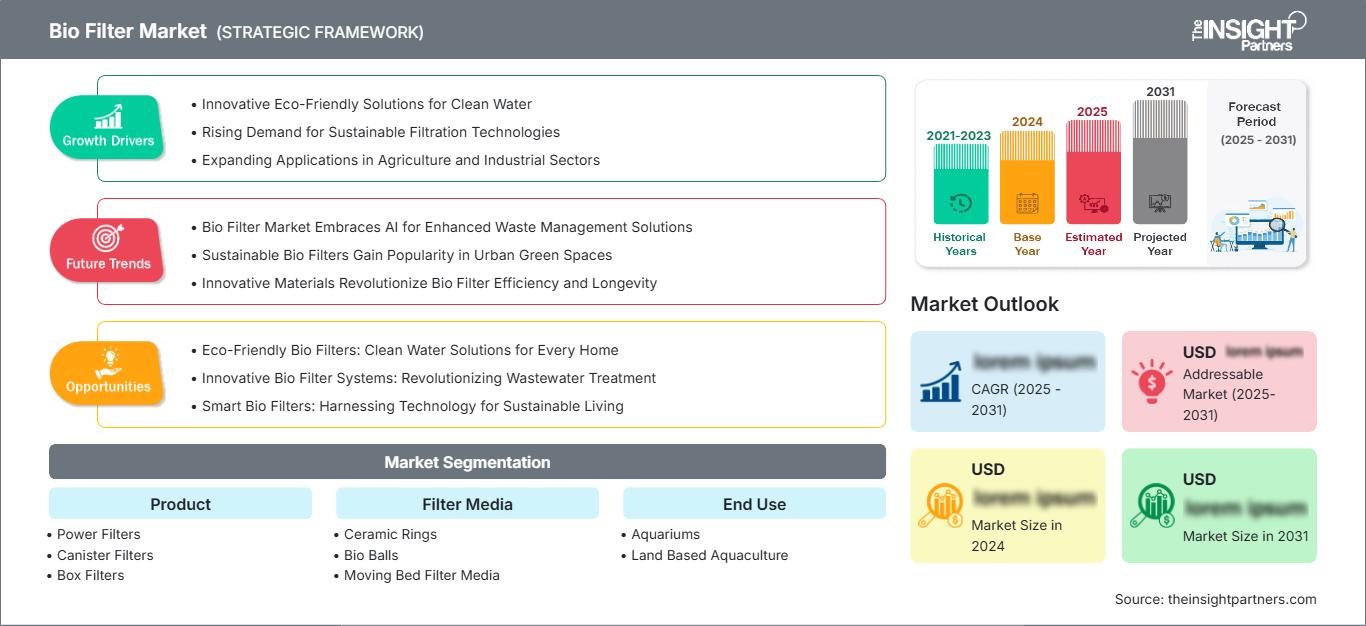
Regional Insights
North America bio filter Market
North America represented 29–31% of the bio filter market share in 2025 and is expected to expand at a CAGR range of 9.8–10.6% during 2026–2034. Demand is driven by improvements in aquarium equipment, specialty pet products, and the shift of aquaculture operators to recirculating systems.
Advantages of the market include existing brands, great awareness about fish health issues, and the use of filter technology to minimize maintenance. Commercial applications value biosecurity and recycling of water, whereas customers prefer canister and power filters that have better media capacity and easy-to-clean parts.
U.S. bio filter Market
The U.S. accounted for 76–79% of North America in 2025 and is projected to grow at a 9.9–10.7% CAGR during 2026–2034. Strong aquarium ownership, specialty retailers, online replacement media sales, and university and commercial aquatic research facilities support consistent demand for biological filtration products.
Company presence is strongest across consumer aquarium channels, where Rolf C. Hagen Inc., Spectrum Brands Holdings, Inc., Zoo Med Laboratories, Inc., and OASE GmbH compete on reliability and user convenience. Application trends favor planted tanks, marine aquariums, and land based pilot farms requiring predictable bio-media performance.
Europe bio filter Market
The Europe region accounted for 23–25% of market share in 2025 and is predicted to expand at a CAGR of 9.4–10.2% during 2026–2034 due to premium aquarium equipment production, professional retail channels, and requirements for robust canister filters in both freshwater and saltwater conditions.
The United Kingdom experiences consistent replacement needs coming from both hobbyist aquariums and public aquariums, whereas countries such as France, Italy, and Spain receive growth support owing to ornamental fish retailing and increased interests in aquaculture testing facilities. The regulatory emphasis on high water quality and lower pollution helps in the adoption of biological filtration.
APAC bio filter Market
APAC held 34%-36% share in 2025 and will be growing at a CAGR of 11.5%-12.4% from 2026 to 2034. APAC’s growth is led by China due to its aquarium manufacturing, ornamental fish industry, and aquaculture activities, and Japan and South Korea prefer high-end, space-efficient tanks.
India and Australia contribute towards the growth of the segment because of growing aquaculture activities, expenditure on pet care in cities, and desire for controlled aquatic environment. Policy support in sustainable and efficient use of water for seafood production drives the incorporation of biological filters with mechanical filters, oxygenation, and monitoring systems.
Middle East & Africa bio filter Market
The Middle East & Africa region is set to grow at a CAGR of 10.2-11.0% from 2026 to 2034, on account of controlled aquaculture infrastructure growth in the UAE and Saudi Arabia. South Africa plays a role through aquarium retail sales and local aquaculture ventures, and the Rest of MEA region is still at an initial development phase.
Water scarcity, high energy requirements for desalination plants, and food security initiatives have resulted in the use of closed-looped systems, wherein biological filtration is beneficial because it minimizes the effluents and increases fish survivability rates.
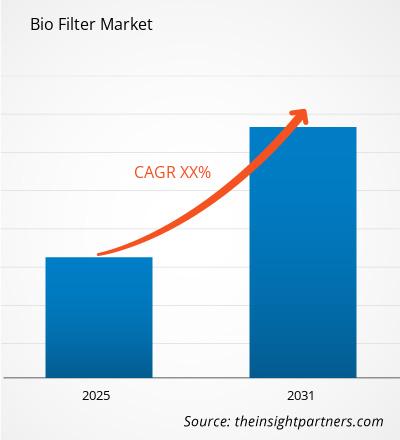
Segmentation Analysis
Product
The product segment is projected to grow at a 10.2–11.0% CAGR during 2026–2034, supported by demand for reliable filtration formats across household aquariums and land based systems. The bio filter market scope across products is widening as users seek easier cleaning, better flow control, and higher biological load capacity.
- Power Filters remain widely adopted in household aquariums because they are affordable, easy to install, and suitable for recurring cartridge and media replacement sales.
- Canister Filters serve premium freshwater and marine users requiring higher media capacity, quieter operation, and better separation of mechanical and biological filtration stages.
- Box Filters retain relevance in breeding tanks, quarantine setups, and entry-level systems where simple aeration-driven filtration and low operating cost are priorities.
- Submerged Bed Filters are important in aquaculture and larger aquatic systems because they support stable bacterial colonies under continuous water circulation and elevated biological loads.
Filter Media
The filter media segment is expected to grow at a 10.7–11.6% CAGR during 2026–2034 as system performance increasingly depends on surface area, clog resistance, and microbial stability. Media selection influences ammonia conversion, cleaning intervals, and operating resilience, making it a key differentiation point for both retail and commercial suppliers.
- Ceramic Rings are favored for porous structure, long service life, and compatibility with canister and sump systems used by experienced aquarium owners.
- Bio Balls support wet-dry filtration and high oxygen exposure, making them useful in systems where aerobic nitrification and easy rinsing are important.
- Moving Bed Filter Media is gaining attention in intensive aquaculture because self-cleaning motion helps maintain active bacterial surfaces and reduces clogging risk.
End Use
The end use segment is forecast to grow at a 10.9–11.8% CAGR during 2026–2034. Aquariums provide recurring replacement and upgrade demand, while land based aquaculture creates higher-value opportunities for engineered filtration. Buyers increasingly evaluate systems based on reliability, biological stability, ease of maintenance, and compatibility with monitoring equipment.
- Aquariums represented the largest end use, supported by home décor trends, specialty fishkeeping, public aquaria, and recurring purchases of media and replacement components.
- Land Based Aquaculture is the fastest-growing end use as recirculating systems require dependable nitrification, water reuse, and biosecure operation under dense stocking conditions.
Opportunity Snapshot
| End Use | Revenue Contribution | Trend Tag | Adoption Stage |
| Aquariums | High | Premium Kits | Mature |
| Land Based Aquaculture | Medium | RAS Buildout | Scaling |
Bio Filter Market Growth Drivers and Impact Analysis
Rising Adoption of Recirculating Aquaculture Systems
Land based aquaculture is increasing reliance on biological filtration because recirculating systems must maintain stable water chemistry while limiting discharge. Biofilters convert toxic ammonia into less harmful compounds, reducing mortality risk and improving stocking density. As seafood producers seek predictable yields near consumption centers, filtration suppliers gain opportunities in system retrofits, modular farm designs, and service contracts. The impact is strongest where regulations, water scarcity, or disease risk make open systems less attractive than controlled production.
Aquarium Premiumization and Replacement Cycles
Consumer aquarium users are moving from basic filtration toward quieter, cleaner, and more media-rich products. This shift supports recurring sales of cartridges, ceramic media, bio balls, impellers, and upgrade kits. Premiumization also raises expectations for aesthetics, compact design, and simplified maintenance, favoring established brands with broad product portfolios. The commercial impact is a more resilient aftermarket, where replacement media and accessories can generate steady revenue even when new aquarium setup demand fluctuates.
Water Quality Regulation and Biosecurity Needs
Water quality rules and biosecurity expectations are pushing aquatic facilities toward filtration systems that reduce organic loading, ammonia stress, and pathogen-sensitive operating conditions. Public aquaria, breeding centers, and aquaculture farms need repeatable treatment performance to protect livestock value. This driver increases demand for validated media, engineered flow paths, and monitoring-compatible filtration units. Suppliers that document performance, support installation, and offer durable components can capture higher-value projects beyond conventional retail aquarium channels.
Bio Filter Market Future Trends
Smart Filtration and Sensor-Linked Maintenance
Future bio filter market trends will center on sensor-linked maintenance, where flow, ammonia risk, and service intervals are monitored more closely. Aquarium users may receive alerts for media replacement, while aquaculture operators can connect biofilter performance to dissolved oxygen and feeding data. This transition should shift value from standalone hardware toward integrated systems, software-enabled service, and performance documentation. Companies that align filtration products with digital water management platforms can improve customer retention and reduce failure-related operating risk.
Media Engineering for Higher Biological Loading
Media design is expected to become more specialized as aquariums and commercial systems handle higher feeding intensity and denser stocking. Suppliers will focus on porosity, buoyancy, anti-clogging geometry, and microbial surface stability. In aquaculture, moving bed and hybrid media can support rapid biofilm recovery after cleaning or load changes. For consumer products, compact high-capacity media can help smaller tanks achieve better biological stability, improving outcomes for hobbyists and reducing product dissatisfaction.
Bio Filter Market Opportunities
Integrated Filtration Packages for Small RAS Farms
Small and mid-sized aquaculture operators need standardized packages that combine mechanical filtration, biological media, pumps, oxygen support, and maintenance guidance. This creates an opportunity for suppliers to simplify procurement and reduce design risk for farms entering land based production. The bio filter market forecasts point to strong interest in modular systems that can scale with biomass. Vendors offering commissioning support, spare parts, and performance documentation can move beyond component sales into recurring technical relationships.
Premium Retail Media and Maintenance Ecosystems
Retail brands can capture additional value by building ecosystems around replacement media, bacteria starters, cleaning tools, and subscription replenishment. Aquarium owners often need clear guidance on biological cycling, overfeeding risks, and maintenance timing, creating room for branded education and bundled consumables. Companies that connect product design with easy instructions and predictable replacement schedules can increase loyalty, reduce user error, and improve the lifetime value of each filtration system sold.
Recent Developments
- November 2024: Aquatlantis launched new bio filter media. The filtration system features a modular setup with innovative, eco-friendly B-BOX L cartridges and 100% reusable cups, allowing easy customisation and cartridge replacement for optimal performance. The highlight of this filter is its biodegradable, plastic-free B-BOX cartridges, featuring a compostable coating. They fit into a modular system that’s both versatile and easy to maintain.
- March 2024: Premier Tech announced the launch of the Ecoflo linear biofilter in the United States by its Water and Environment business group. The Ecoflo linear biofilter is the first fully eco-designed combined treatment and dispersal system. This septic system can be renewed and refurbished throughout its lifespan
Frequently Asked Questions

- Comprehensive Market Sizing and Forecast Analysis
- Detailed Segmentation Analysis
- In-Depth Market Dynamics Assessment
- Regional and Country-Level Insights
- Competitive Landscape and Company Benchmarking
- Strategic Business Intelligence
Recent Reports
Testimonials

The Insight Partners' SCADA System Market report is comprehensive, with valuable insights on current trends and future forecasts. The team was highly professional, responsive, and supportive throughout. We are very satisfied and highly recommend their services.
RAN KEDEM Partner, Reali Technologies LTDs
I requested a report on a very specific software market and the team produced the report in a few days. The information was very relevant and well presented. I then requested some changes and additions to the report. The team was again very responsive and I got the final report in less than a week.
JEAN-HERVE JENN Chairman, Future Analytica
We worked with The Insight Partners for an important market study and forecast. They gave us clear insights into opportunities and risks, which helped shape our plans. Their research was easy to use and based on solid data. It helped us make smart, confident decisions. We highly recommend them.
PIYUSH NAGPAL Sr. Vice President, High Beam Global
The Insight Partners delivered insightful, well-structured market research with strong domain expertise. Their team was professional and responsive throughout. The user-friendly website made accessing industry reports seamless. We highly recommend them for reliable, high-quality research services
YUKIHIKO ADACHI CEO, Deep Blue, LLC.
This is the first time I have purchased a market report from The Insight Partners.While I was unsure at first, I visited their web site and felt more comfortable to take the risk and purchase a market report.I am completely satisfied with the quality of the report and customer service. I had several questions and comments with the initial report, but after a couple of dialogs over email with their analyst I believe I have a report that I can use as input to our strategic planning process.Thank you so much for taking the extra time and making this a positive experience.I will definitely recommend your service to others and you will be my first call when we need further market data.
JOHN SUZUKI President and Chief Executive Officer, Board Director, BK Technologies
I wish to appreciate your support and the professionalism you displayed in the course of attending to my request for information regarding to infectious disease IVD market in Nigeria. I appreciate your patience, your guidance, and the fact that you were willing to offer a discount, which eventually made it possible for us to close a deal. I look forward to engaging The Insight Partners in the future, all thanks to the impression you have created in me as a result of this first encounter.
DR CHIJIOKE ONYIA MANAGING DIRECTOR, PineCrest Healthcare Ltd.Reason to Buy
- Informed Decision-Making
- Understanding Market Dynamics
- Competitive Analysis
- Identifying Emerging Markets
- Customer Insights
- Market Forecasts
- Risk Mitigation
- Boosting Operational Efficiency
- Strategic Planning
- Investment Justification
- Tracking Industry Innovations
- Aligning with Regulatory Trends





 Get Free Sample for