
Abdominal Aortic Aneurysm Valve Prostheses Market Size, Trends & Demand by 2034
Coverage: By Product (Material type, Shape); Application (Hospitals, Clinics, Ambulatory Surgical Centers), and Geography (North America, Europe, Asia Pacific, and South and Central America)
- Status : Data Released
- Report Code : TIPRE00015190
- Category : Life Sciences
- No. of Pages : 150
- Available Report Formats :


- Last update date : July 09, 2026


2025 Market Size
US$ 2.03 Bn
Base year value
2034 Forecast
US$ 5.77 Bn
Projected by 2034
CAGR 2026-2034
12.33 %
Growth rate
Addressable Market
US$ 34.17 Bn
(2026-2034)
The abdominal aortic aneurysm valve prostheses market size is projected to grow from US$ 2.03 Billion in 2025 to US$ 5.77 Billion by 2034; it is expected to register a CAGR of 12.33% during 2026–2034. Demand is supported by rising use of minimally invasive aneurysm repair, device customization, and increasing preference for prosthetic solutions that improve sealing, conformity, and procedural predictability.
North America is expected to remain a high-value region, expanding at a CAGR of 11.4–12.1% during 2026–2034. Growth is supported by mature vascular surgery networks, reimbursement for endovascular repair, high CT angiography utilization, and expanding treatment of older patients with comorbid cardiovascular risk. Hospital investments in hybrid operating rooms further strengthen procedural adoption.
Abdominal Aortic Aneurysm Valve Prostheses Market Assessment and Insights
- North America: Share in 2025 is estimated at 39–43%, with CAGR between 2026–2034 at 11.4–12.1%, supported by advanced vascular centers, broader EVAR use, and strong procedural reimbursement.
- US: Share in 2025 is estimated at 83–87% of North America, with CAGR between 2026–2034 at 11.3–12.0%, reflecting FDA-regulated device access and specialist-led aneurysm programs.
- Europe: Share in 2025 is estimated at 26–30%, with CAGR between 2026–2034 at 10.8–11.6%; Germany, the UK, France, Italy, and Spain lead adoption through centralized vascular services.
- Asia Pacific: Share in 2025 is estimated at 21–25%, with CAGR between 2026–2034 at 13.2–14.1%; China, Japan, India, South Korea, and Australia advance through hospital modernization and specialist training.
- Largest Segment: Hospitals hold 54–58% market share in 2025, with CAGR between 2026–2034 at 11.8–12.5%, due to hybrid suite capacity and emergency aneurysm care.
- High Growth Segment: Ambulatory Surgical Centers account for 14–18% market share in 2025, with CAGR between 2026–2034 at 13.5–14.3%, supported by outpatient vascular procedure migration.
- Key companies analyzed in detail: Medtronic plc, Cook Medical LLC, B. Braun SE, Terumo Corporation, Endologix LLC, Cardinal Health, Inc., MicroPort Scientific Corporation, Artivion, Inc., W. L. Gore & Associates, Inc., Getinge AB.
Source: The Insight Partners' analysis based on proprietary research, government publications, company annual reports, investor presentations, industry databases, and expert interviews.
The abdominal aortic aneurysm valve prostheses market Market is evolving from standard graft replacement toward anatomically precise, image-guided prosthetic repair. Materials are improving through nitinol frameworks, polyester and expanded polytetrafluoroethylene graft fabrics, better sealing rings, and lower-profile delivery systems. Production dynamics are becoming more specialized as manufacturers balance off-the-shelf inventory with customized configurations, sterile supply control, regulatory evidence, and physician training requirements across advanced vascular centers.
Forward demand will be shaped by faster diagnosis, wider use of elective repair, and expansion of complex aneurysm treatment in emerging geographies. Regulatory pathways increasingly reward long-term surveillance data, real-world registries, and evidence on endoleak reduction. The abdominal aortic aneurysm valve prostheses market growth outlook is strongest where hospitals combine imaging capacity, trained vascular specialists, and reliable reimbursement for advanced prosthetic platforms.
Abdominal Aortic Aneurysm Valve Prostheses Market Report Scope
| Report Attribute | Details |
|---|---|
| Market size in 2025 | US$ 2.03 Billion |
| Market Size by 2034 | US$ 5.77 Billion |
| Global CAGR (2026 - 2034) | 12.33% |
| Historical Data | 2021-2024 |
| Forecast period | 2026-2034 |
Abdominal Aortic Aneurysm Valve Prostheses Market Analysis
Demand is driven by diagnosed abdominal aneurysms requiring elective repair, ruptured aneurysm intervention, and device replacement or revision procedures. The abdominal aortic aneurysm valve prostheses market analysis indicates that ultrasound screening, CT-based anatomical planning, and referral to vascular specialists directly influence procedure volume. Prosthetic devices are selected based on aneurysm morphology, access vessel diameter, sealing zone quality, renal artery involvement, and patient surgical risk.
The ecosystem includes material suppliers, graft fabric manufacturers, stent frame producers, catheter delivery vendors, imaging companies, hospitals, clinics, and reimbursement bodies. Supply dynamics depend on sterile manufacturing, sizing inventory, technical support, and advanced case planning. Hospitals increasingly favor suppliers that offer broad product ranges, physician education, procedural support, and consistent availability for both scheduled and urgent aneurysm repair.
Competitive positioning is concentrated among companies with established aortic portfolios and strong clinical evidence. The abdominal aortic aneurysm valve prostheses market report focuses on the key companies including Medtronic plc, W. L. Gore & Associates, Inc., Cook Medical LLC, Terumo Corporation, and Endologix LLC that compete through differentiated sealing, fixation, delivery, and anatomical coverage. Artivion, Inc., MicroPort Scientific Corporation, Getinge AB, B. Braun SE, and Cardinal Health, Inc. support broader vascular device ecosystems.
Investment is moving toward fenestrated configurations, low-profile delivery systems, advanced graft fabrics, and procedural support services. The abdominal aortic aneurysm valve prostheses market trends show that companies are shifting from device-only sales to integrated care models involving planning software, training, case support, and post-procedure surveillance. This strategy strengthens abdominal aortic aneurysm valve prostheses market share where hospitals prioritize outcomes and workflow reliability.
● REPORT CUSTOMIZATION
Tailor This Report To Align With Your Specific Business Requirements
This report can be customized to align precisely with your business objectives, scope, and target markets. Customization options include tailored segmentation, geography, competitive analysis, and strategic insights to support informed decision-making.
Customize This Report →WHAT YOU CAN ADJUST
- ● Segmentations
- ● Geography
- ● Competitive Analysis
- ● Language Preferences
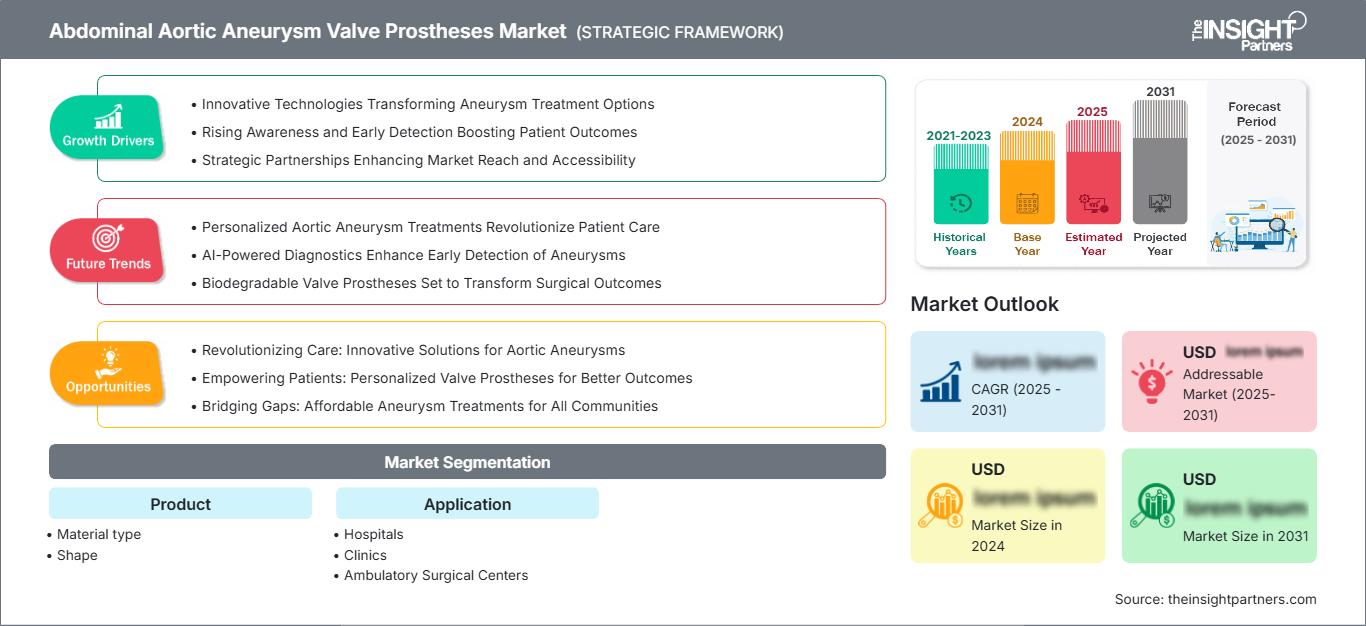
Abdominal Aortic Aneurysm Valve Prostheses Market: Strategic Insights
Regional Insights
North America abdominal aortic aneurysm valve prostheses market
North America accounts for 39–43% share in 2025 and is projected to grow at a CAGR of 11.4–12.1% during 2026–2034. Demand is reinforced by mature vascular surgery infrastructure, extensive CT angiography usage, and established reimbursement for endovascular aneurysm repair. The region also benefits from strong post-market surveillance and rapid absorption of device refinements. Hospitals are expanding the abdominal aortic aneurysm valve prostheses market scope through hybrid operating rooms, structured imaging follow-up, and advanced case planning for high-risk patients. Adoption is strongest in centers that manage both elective infrarenal aneurysms and complex anatomy cases. Supplier preference is increasingly shaped by clinical evidence, sizing breadth, and procedural support.
U.S. abdominal aortic aneurysm valve prostheses market
The US represents 83–87% of North America in 2025 and is projected to grow at a CAGR of 11.3–12.0% during 2026–2034. Demand is supported by Medicare-aged patients, vascular specialist density, FDA-cleared prosthetic platforms, and hospital preference for minimally invasive repair when anatomical eligibility is confirmed through imaging. Company presence is strong, with Medtronic plc, W. L. Gore & Associates, Inc., Cook Medical LLC, Endologix LLC, Terumo Corporation, Cardinal Health, Inc., and Getinge AB supporting procedural ecosystems. Application trends are concentrated in hospitals for emergency and complex cases, while clinics and ambulatory centers increasingly support surveillance, preoperative evaluation, and selected lower-acuity vascular procedures.
Europe abdominal aortic aneurysm valve prostheses market
Europe holds 26–30% abdominal aortic aneurysm valve prostheses market share in 2025 and is expected to grow at a CAGR of 10.8–11.6% during 2026–2034. The UK benefits from organized vascular networks, screening of older male populations, and centralized aneurysm pathways that improve referral consistency and prosthetic device selection. Germany is the leading European country, supported by high hospital procedure capacity, specialist centers, and early adoption of sophisticated endovascular platforms. Procurement decisions are influenced by durability, endoleak performance, conformability, and evidence supporting treatment of complex neck anatomy. France, Italy, and Spain contribute stable demand through public hospitals, private vascular practices, and expanding minimally invasive repair programs. Growth varies by reimbursement, physician training, and access to fenestrated planning. Across Europe, adoption remains evidence-led, with clinical societies shaping case selection and post-repair surveillance.
APAC abdominal aortic aneurysm valve prostheses market
Asia Pacific accounts for 21–25% share in 2025 and the abdominal aortic aneurysm valve prostheses market forecast is expected to register a CAGR of 13.2–14.1% during 2026–2034. China leads regional demand through tertiary hospital expansion, imaging growth, and domestic medical technology development. Japan and South Korea show mature adoption supported by advanced vascular centers. Australia maintains high procedural standards and structured follow-up practices. India is scaling from a smaller base as private hospitals add vascular programs. Policy support for medical technology localization, broader insurance access, and specialist training reinforces the region’s role in abdominal aortic aneurysm valve prostheses market size expansion.
Middle East & Africa abdominal aortic aneurysm valve prostheses market
The Middle East & Africa abdominal aortic aneurysm valve prostheses market is expected to grow at a CAGR of 8.6–9.4% during 2026–2034. Saudi Arabia leads adoption as tertiary hospitals expand cardiovascular and vascular surgery capabilities under national healthcare infrastructure programs. The UAE supports demand through private hospitals, medical tourism, and access to imported advanced prosthetic devices. Complex repair remains concentrated in premium centers. South Africa anchors demand in Sub-Saharan Africa, while Rest of MEA adoption is limited by reimbursement gaps and specialist availability. Energy-linked public investment and infrastructure modernization support selective growth in advanced endovascular repair.
Segmentation Analysis
Product
The Product segment in the abdominal aortic aneurysm valve prostheses market is anticipated to witness CAGR of 12.0-12.7% in 2026-2034. Product choice depends on its material's durability, radial strength, flexibility, sealing properties, and catheter deliverability. Grafts have been designed with consideration for tortuous vessels, angulation of neck, presence of calcifications and accessibility concerns; hence, prosthesis design plays a key role in procedure outcomes.
- Type of material is vital as graft fabric, metal frame composition, biocompatibility, and fatigue resistance determine durability and sealability of the prosthesis and surgeon's belief in long-term exclusion of aneurysm from circulation.
- Shape determines anatomical compatibility, placement precision, fixation, and preservation of branch arteries; thus, product design geometry becomes crucial for treating aneurysms with standard infrarenal and other anatomic features.
Application
The Application segment in the abdominal aortic aneurysm valve prostheses market will expand with a CAGR of 12.2–12.9% from 2026 to 2034. The dominance of hospitals lies in their ability to handle complex anatomy, provide emergency repair service, offer imaging facilities and multi-disciplinary approach in the case of vascular disease. The clinics provide services to diagnose, monitor patients and refer them to hospitals, whereas ambulatory surgical centers are becoming increasingly important for vascular procedures.
- Hospitals account for maximum revenue generation as they handle complex anatomies, emergencies like ruptured aneurysms, hybrid operating theatres, and availability of intensive care units, along with procedural support for prosthetic implants.
- Clinics contribute significantly by identifying patients, monitoring ultrasounds, assessing risks, monitoring after surgery and referrals to repair centers.
- Ambulatory Surgical Centers have become relevant for selected vascular procedures, pre-operative services and follow-up, especially when payers' incentives are involved.
Opportunity Snapshot
| Segment Name | Revenue Contribution | Trend Tag | Adoption Stage |
| Hospitals | High | Hybrid Suites | Mature |
| Clinics | Medium | Surveillance Care | Scaling |
| Ambulatory Surgical Centers | Medium | Outpatient Vascular | Emerging |
Abdominal Aortic Aneurysm Valve Prostheses Market Growth Drivers and Impact Analysis
Increasing Use of Minimally Invasive Aneurysm Repair
Endovascular therapy continues to drive demand for prosthetic devices as it leads to less surgical trauma, facilitates faster recovery, and allows the treatment of patients who have several other diseases. Hospital facilities are introducing delivery systems with low profiles and prostheses that are conformable to facilitate access through the smaller iliac arteries. This growth driver will have a clear commercial effect on the market since the cases of endovascular therapy need specialized devices. Portfolio depth is one of the factors that will facilitate addressing the needs of different anatomies and creating procedural demand. The abdominal aortic aneurysm valve prostheses market growth opportunity is highest at hospitals with high imaging volumes and vascular surgeons skilled in endovascular therapy.
Rising Diagnosis Through Screening and Incidental Imaging
More frequent usage of ultrasound screening, CT angiography, and incidentally performed abdominal imaging means that the detection of an aneurysm is becoming earlier. The earlier diagnosis means that monitoring takes place up until the criteria for the need for repair are met, making it an elective procedure in terms of predictability. In addition, there will be better preparation for the prosthesis due to the ability to measure such factors as neck length, diameter, presence of calcifications, thrombus, and suitability of vessels for access before intervention. In terms of commercial effects, there will be increased demand for appropriate devices and planning.
Expansion of Complex Anatomy Treatment Capabilities
Aneurysm morphology complexity is one of the leading factors, since most of the patients do not have an ideal infrarenal sealing zone. Short necks, angulations, pararenal extensions, calcium deposits, and tortuosity of the access vessels mean the need for more conformable prostheses, fenestrations, or even special anatomies. Manufacturers are developing prostheses to ensure the preservation of the branches and improved sealing performance. Market effects are demonstrated in the increased value of the procedures performed, the necessity for advanced skills training, and an increased use of the pre-surgery imaging analysis.
Abdominal Aortic Aneurysm Valve Prostheses Market Future Trends
Image-Linked Prosthesis Planning
Future adoption will rely more on the convergence of imaging technologies, three-dimensional reconstruction, and prosthetic selection. Measurement software can be used to provide standardized measurements of the neck, iliac artery access, branch vessel anatomy, and device sizing. This is critical in that improper sizing increases risks such as endoleaks, migration, and even need for another operation. It will also be expected of device manufacturers to improve support for digital planning processes in complex cases, particularly customized or fenestrated prostheses. With time, imaging workflows may integrate pre-op planning and post-op surveillance to allow hospital monitoring of sac regression and longevity of the device placement process.
Evidence-Based Differentiation of Premium Prostheses
The next phase of competition will depend more on the proof of the long term rather than design innovations. It is anticipated that the hospitals and regulatory agencies will be more focused on registry data, five year outcomes, endoleak incidences, frequency of re-interventions, avoidance of ruptures and branch vessel patency. Advanced platforms for prosthesis will have to demonstrate their advantages in difficult anatomy, emergencies and at risk populations. This could lead to reduction in supplier lists in advanced centers as the vascular teams standardize on the proven platforms. The proof of value creation will become equally important as design for manufacturers.
Abdominal Aortic Aneurysm Valve Prostheses Market Opportunities
Specialist Center Partnerships in Asia Pacific
The Asia Pacific region presents a good opportunity, considering the increased development of vascular surgery and imaging capabilities in tertiary hospitals in China, India, South Korea, and Southeast Asia. The manufacturers can enhance product adoption through combining access and training of physicians with strategic planning, distributor capabilities, and regulatory engagement in the area. Low profile prostheses present a good fit in this region due to technical challenges associated with small access vessels and varied anatomy of the patients. The opportunity is not restricted to high-end hospitals but can involve referral networks and surveillance clinics for the creation of procedures flow.
Customized Prostheses for Difficult Aneurysm Morphology
Prosthetic device customizations for challenging anatomy make an excellent business opportunity. Anatomically complex aneurysms such as short neck, juxtarenal, pararenal, angular, or tortuous aneurysms may need more than what off-the-shelf products can provide. Some of the ways that companies could capitalize include developing fenestrated systems, designing specialized stent grafts, reducing production time, and providing surgical planning services. Hospitals should gain from custom devices by making it possible for more challenging cases to be managed endovascularly and without requiring open surgery. The key for success would be to find a way to balance customization with predictability.
Recent Developments
- November 2025: Terumo Corporation announced enrollment of the first patient in the Fenestrated TREO pivotal IDE study in the US, designed to evaluate endovascular repair of juxtarenal and suprarenal aortic aneurysms using the Fenestrated TREO Abdominal Stent-Graft System across up to 45 US sites.
- October 2025: Medtronic plc received US FDA labeling approval for the Endurant stent graft system, adding clinical evidence for ruptured abdominal aortic aneurysm treatment and removing the ruptured AAA treatment warning from the device instructions for use. The update supports emergency EVAR confidence and aligns labeling with real-world practice.
- August 2025: Cook Medical enrolled the final patient in the global clinical study of its investigational ZENITH FENESTRATED+ Endovascular Graft, a pivotal study evaluating a patient-specific fenestrated solution for complex abdominal and thoracoabdominal aneurysms under FDA IDE and UK MHRA authorization.
Frequently Asked Questions

- Comprehensive Market Sizing and Forecast Analysis
- Detailed Segmentation Analysis
- In-Depth Market Dynamics Assessment
- Regional and Country-Level Insights
- Competitive Landscape and Company Benchmarking
- Strategic Business Intelligence
Recent Reports
Testimonials

The Insight Partners provided valuable market intelligence that supported our global go-to-market strategy. Their team was professional, responsive, and attentive to our feedback, providing thoughtful analysis and helpful methodological clarifications throughout the project.
Junmo Kim Chief Financial Officer (CFO), Enertech Co., Ltd.
The Insight Partners' SCADA System Market report is comprehensive, with valuable insights on current trends and future forecasts. The team was highly professional, responsive, and supportive throughout. We are very satisfied and highly recommend their services.
RAN KEDEM Partner, Reali Technologies LTDs
I requested a report on a very specific software market and the team produced the report in a few days. The information was very relevant and well presented. I then requested some changes and additions to the report. The team was again very responsive and I got the final report in less than a week.
JEAN-HERVE JENN Chairman, Future Analytica
We worked with The Insight Partners for an important market study and forecast. They gave us clear insights into opportunities and risks, which helped shape our plans. Their research was easy to use and based on solid data. It helped us make smart, confident decisions. We highly recommend them.
PIYUSH NAGPAL Sr. Vice President, High Beam Global
The Insight Partners delivered insightful, well-structured market research with strong domain expertise. Their team was professional and responsive throughout. The user-friendly website made accessing industry reports seamless. We highly recommend them for reliable, high-quality research services
YUKIHIKO ADACHI CEO, Deep Blue, LLC.
This is the first time I have purchased a market report from The Insight Partners.While I was unsure at first, I visited their web site and felt more comfortable to take the risk and purchase a market report.I am completely satisfied with the quality of the report and customer service. I had several questions and comments with the initial report, but after a couple of dialogs over email with their analyst I believe I have a report that I can use as input to our strategic planning process.Thank you so much for taking the extra time and making this a positive experience.I will definitely recommend your service to others and you will be my first call when we need further market data.
JOHN SUZUKI President and Chief Executive Officer, Board Director, BK Technologies
I wish to appreciate your support and the professionalism you displayed in the course of attending to my request for information regarding to infectious disease IVD market in Nigeria. I appreciate your patience, your guidance, and the fact that you were willing to offer a discount, which eventually made it possible for us to close a deal. I look forward to engaging The Insight Partners in the future, all thanks to the impression you have created in me as a result of this first encounter.
DR CHIJIOKE ONYIA MANAGING DIRECTOR, PineCrest Healthcare Ltd.Reason to Buy
- Informed Decision-Making
- Understanding Market Dynamics
- Competitive Analysis
- Identifying Emerging Markets
- Customer Insights
- Market Forecasts
- Risk Mitigation
- Boosting Operational Efficiency
- Strategic Planning
- Investment Justification
- Tracking Industry Innovations
- Aligning with Regulatory Trends





 Get Free Sample for