
Abdominal closure system Market Growth, Demand & Size by 2034
Coverage: By Product Type (Laparoscopic Abdominal Closure Devices, Traction System,); Indication (Trauma surgery, Laparoscopy, Transplantation Surgery); End-User (Hospitals, Ambulatory Surgical Centers, Trauma and Emergency Centers), and Geography (North America, Europe, Asia Pacific, and South and Central America)
- Status : Data Released
- Report Code : TIPRE00008525
- Category : Life Sciences
- No. of Pages : 150
- Available Report Formats :


- Last update date : July 09, 2026


2025 Market Size
US$ 3.47 Bn
Base year value
2034 Forecast
US$ 5.36 Bn
Projected by 2034
CAGR 2026-2034
4.93 %
Growth rate
Addressable Market
US$ 40.03 Bn
(2026-2034)
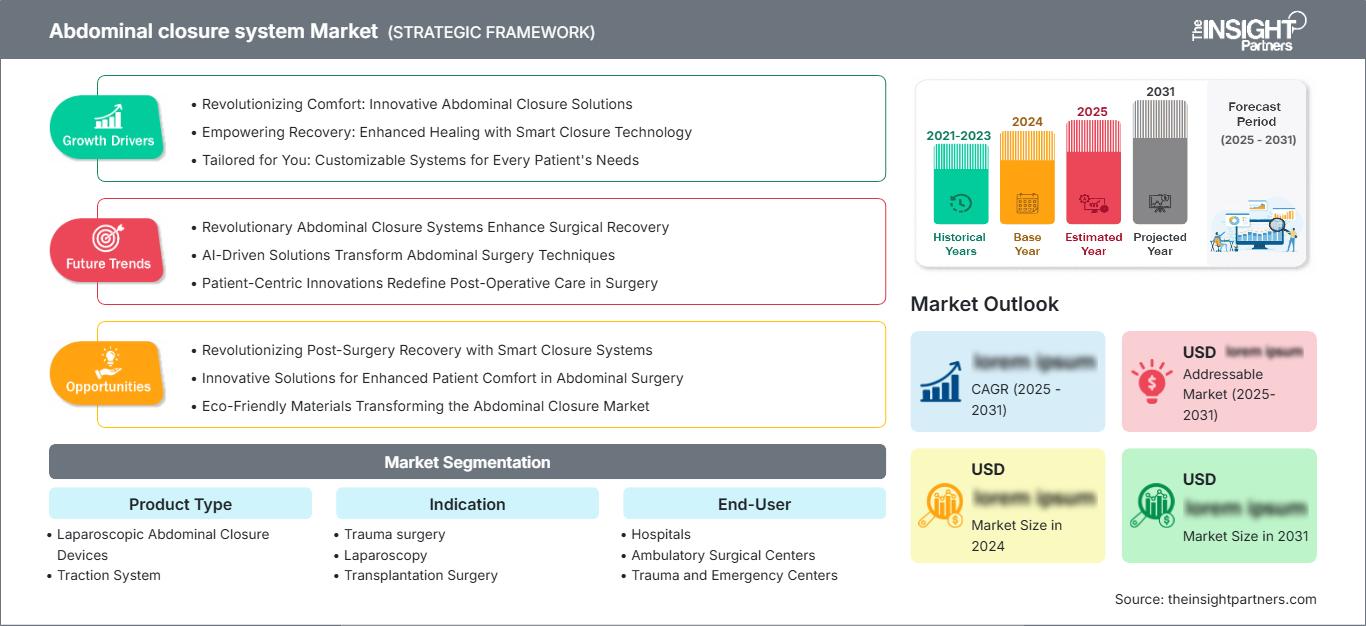
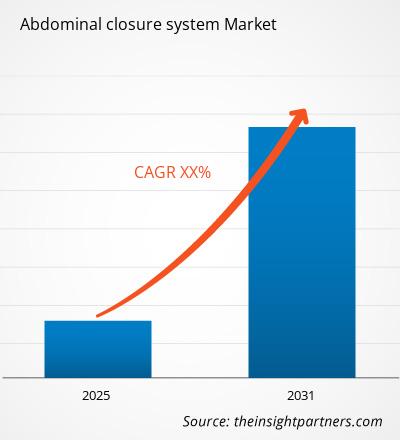
The abdominal closure system market size is projected to grow from US$ 3.47 Billion in 2025 to US$ 5.36 Billion by 2034; it is expected to register a CAGR of 4.93% during 2026–2034. Demand is supported by higher abdominal surgery volumes, wider laparoscopic adoption, open abdomen management needs, and hospital focus on reducing surgical site complications, fascial dehiscence, readmissions, and prolonged wound care costs.
North America is expected to expand at a CAGR of 4.6–5.2% during 2026–2034, supported by advanced trauma surgery capacity, high use of negative pressure and laparoscopic closure technologies, and established operating room procurement systems. The region also benefits from infection prevention programs, ambulatory surgery migration, and standardized postoperative wound surveillance across large hospital networks.
Abdominal closure system Market Assessment and Insights
- North America: Share in 2025 is estimated at 37–41%, with CAGR between 2026–2034 at 4.6–5.2%, supported by trauma readiness, laparoscopic procedure volumes, and advanced wound closure protocols.
- US: Share in 2025 is estimated at 84–88% of North America, with CAGR between 2026–2034 at 4.5–5.1%, reflecting strong hospital purchasing and surgical site infection prevention focus.
- Europe: Share in 2025 is estimated at 28–32%, with CAGR between 2026–2034 at 4.1–4.7%; Germany, the UK, France, Italy, and Spain lead adoption through mature surgical systems.
- Asia Pacific: Share in 2025 is estimated at 20–24%, with CAGR between 2026–2034 at 5.6–6.4%; China, Japan, India, South Korea, and Australia advance through surgical infrastructure expansion.
- Largest Segment: Hospitals hold 61–65% market share in 2025, with CAGR between 2026–2034 at 4.7–5.3%, due to complex laparotomy, trauma, transplant, and high-acuity closure demand.
- High Growth Segment: Ambulatory Surgical Centers account for 13–17% market share in 2025, with CAGR between 2026–2034 at 5.8–6.6%, supported by outpatient laparoscopy expansion.
- Key companies analyzed in detail: Solventum Corporation, Abbott Laboratories, B. Braun SE, Medtronic plc, Johnson & Johnson Services, Inc., Smith & Nephew plc, Baxter International Inc., Integra LifeSciences Holdings Corporation, Essity Aktiebolag, MiMedx Group, Inc.
Source: The Insight Partners' analysis based on proprietary research, government publications, company annual reports, investor presentations, industry databases, and expert interviews.
The abdominal closure system market forecast is growing from traditional suturing methods and temporary closures to system-specific products which cater to issues such as tension management, contamination control, exudates, and fascial approximation. Product development in the market is primarily being driven by port closure during laparoscopy procedures, negative pressure temporary abdominal closure, antimicrobial wound support and bioactive matrices. Factors driving production include sterile packaging, access to operating rooms, materials tracking, and the surgeon's preference for a reliable closure device.
Future demand drivers include elective laparoscopy, standardization of emergency laparotomies and healthcare system push towards reduction of surgical site complications. New markets are focusing on development of trauma centers, transplant programs and minimally invasive surgery platforms. Regulatory tailwinds favor clinical proven devices which help with infection prevention, quick closures, and reduced readmission rate.
Abdominal closure system Market Report Scope
| Report Attribute | Details |
|---|---|
| Market size in 2025 | US$ 3.47 Billion |
| Market Size by 2034 | US$ 5.36 Billion |
| Global CAGR (2026 - 2034) | 4.93% |
| Historical Data | 2021-2024 |
| Forecast period | 2026-2034 |
Abdominal closure system Market Analysis
The demand for the closures arises out of cases of abdominal trauma, bariatric surgeries, colorectal surgeries, gynecological laparoscopy, transplant surgeries, and emergency laparotomies. It can be seen from the analysis of the abdominal closures market that the selection of closure device is based on wound contamination, fascial tension, incision length, patient body habitus, and possibility of future access to the abdomen.
The value chain in this industry consists of raw materials suppliers, sutures and meshes manufacturers, negative pressure devices manufacturers, sterile package manufacturers, distributors, hospitals, ambulatory surgical centers, and trauma networks. Supply consistency is very important since these closure devices are used near the end of the procedure and any disruption in the supply chain may hamper the process.
Competition is broad and technology-led. Solventum Corporation competes through open abdomen negative pressure platforms, while Johnson & Johnson Services, Inc. and B. Braun SE are strong in sutures, tissue control, and surgical closure consumables. The abdominal closure system market report also focuses on companies such as Medtronic plc, Baxter International Inc., Smith & Nephew plc, Integra LifeSciences Holdings Corporation, Essity Aktiebolag, Abbott Laboratories, and MiMedx Group, Inc. that strengthen the ecosystem through wound care, biologics, hemostasis, and surgical support portfolios.
Investment trends are concentrated in lower-profile laparoscopic closure, tension-distribution systems, antimicrobial materials, portable negative pressure therapy, and biologic adjuncts for difficult wounds. The abdominal closure system market trends show increasing preference for bundled perioperative solutions rather than isolated closure products. Companies that combine operating room usability, evidence-based outcomes, and post-discharge wound management are better positioned to protect abdominal closure system market share.
● REPORT CUSTOMIZATION
Tailor This Report To Align With Your Specific Business Requirements
This report can be customized to align precisely with your business objectives, scope, and target markets. Customization options include tailored segmentation, geography, competitive analysis, and strategic insights to support informed decision-making.
Customize This Report →WHAT YOU CAN ADJUST
- ● Segmentations
- ● Geography
- ● Competitive Analysis
- ● Language Preferences
Abdominal closure system Market: Strategic Insights
Regional Insights
North America abdominal closure system market
The North American segment captures 37–41% share in 2025 and will experience a growth rate of CAGR of 4.6–5.2% in the forecast period of 2026–2034. Demand will be driven by a high volume of abdominal procedures, organized trauma care, and hospital infection control measures. North America is also favored by an advanced level of wound management, constant availability of devices, and laparoscopic surgery.
The scope of the abdominal closure systems market through hospitals can be widened via hybrid emergency surgery, negative pressure therapy for open abdomen care, and operating room protocols for high risk incisions. Dehiscence prevention, readmission, and length of stay are key criteria while procuring these products.
U.S. abdominal closure system market
The US represents 84–88% of North America in 2025 and is expected to grow at a CAGR of 4.5–5.1% during 2026–2034. Demand is supported by large inpatient surgical volumes, ambulatory laparoscopy, trauma center networks, and reimbursement pressure to reduce avoidable wound complications. Surgical site infection surveillance also influences product selection.
Company presence is strong, with Solventum Corporation, Johnson & Johnson Services, Inc., Medtronic plc, Smith & Nephew plc, Baxter International Inc., Integra LifeSciences Holdings Corporation, and MiMedx Group, Inc. serving hospitals and outpatient centers. Application trends emphasize laparoscopic port closure, temporary abdominal closure after damage-control surgery, and advanced dressings for high-risk incisions.
Europe abdominal closure system market
Europe holds 28–32% share in 2025 and is projected to grow at a CAGR of 4.1–4.7% during 2026–2034. The UK benefits from centralized surgical pathways, infection prevention guidance, and steady use of laparoscopic closure devices across colorectal, gynecologic, and bariatric procedures. Adoption is shaped by National Health Service procurement, evidence review, and pressure to reduce postoperative readmissions.
Germany is the leading European country, supported by high surgical capacity, specialist hospitals, and broad availability of advanced wound care technologies. Hospitals emphasize secure fascial closure, contamination control, and standardized emergency laparotomy management. Procurement decisions favor clinically validated products that can reduce variation across high-volume surgical departments.
France, Italy, and Spain contribute stable demand through public hospitals, private surgical centers, and growing minimally invasive surgery adoption. Uptake differs by reimbursement, local tendering, and surgeon training. Across Europe, abdominal closure system market adoption remains evidence-led, with infection prevention, shorter hospitalization, and operating room efficiency shaping purchasing priorities.
APAC abdominal closure system market
Asia Pacific accounts for 20–24% share in 2025 and the abdominal closure system market forecast is expected to register a CAGR of 5.6–6.4% during 2026–2034. China leads regional demand through hospital expansion, domestic device manufacturing, and higher surgical throughput.
Japan and South Korea show mature laparoscopic adoption and structured wound care practices. Australia maintains strong trauma and emergency surgery protocols.
India is scaling as private hospitals invest in minimally invasive surgery, transplant programs, and trauma services. Policy support for local medical device production, broader insurance access, and operating room modernization reinforces abdominal closure system market size expansion across the region.
Middle East & Africa abdominal closure system market
The Middle East & Africa market is expected to grow at a CAGR of 3.9–4.6% during 2026–2034. Saudi Arabia leads adoption through investment in tertiary hospitals, trauma services, and surgical infrastructure modernization.
The UAE supports demand through private hospitals, medical tourism, and imported advanced wound management products. High-acuity closure systems remain concentrated in premium centers.
South Africa anchors Sub-Saharan demand, while Rest of MEA adoption is limited by reimbursement gaps, emergency care variability, and specialist availability. Energy-linked public investment and healthcare infrastructure programs support selective growth in trauma and complex abdominal surgery capacity.
Segmentation Analysis
Product Type
The Product Type segment in the abdominal closure system market is expected to grow at a CAGR of 4.8–5.4% during 2026–2034. Product selection is shaped by procedure type, incision size, contamination risk, and need for temporary or definitive closure. Laparoscopic closure devices support minimally invasive workflows, while traction systems remain essential in open abdomen management where fascial retraction, edema, and repeat exploration complicate closure.
- Laparoscopic Abdominal Closure Devices support port-site fascial approximation, reduce manual suturing difficulty, and align with rising minimally invasive surgery volumes across bariatric, gynecologic, colorectal, and general surgery.
- Traction System products serve complex open abdomen cases by applying controlled medial tension, limiting fascial retraction, and supporting staged closure after trauma, sepsis, or abdominal compartment syndrome.
Indication
The Indication segment in the abdominal closure system market is expected to grow at a CAGR of 4.7–5.2% during 2026–2034. Demand varies by clinical urgency and wound risk. Laparoscopy generates recurring volume through elective procedures, trauma surgery requires rapid and secure closure options, and transplantation surgery needs products that accommodate immunosuppression, fluid shifts, and high postoperative infection sensitivity.
- Trauma surgery requires rapid closure, temporary abdominal management, and durable fascial support because patients often present with contamination, edema, bleeding, and need for planned re-exploration.
- Laparoscopy drives consistent device demand through high elective procedure volumes, smaller incisions, port-site closure needs, and hospital preference for faster recovery and lower wound morbidity.
- Transplantation Surgery requires careful closure because immunosuppression, fluid management, and prolonged operative time increase wound complication risk, making reliable closure and postoperative monitoring essential.
End-User
The End-User segment in the abdominal closure system market is expected to grow at a CAGR of 4.9–5.5% during 2026–2034. Hospitals dominate because they handle emergency laparotomy, complex abdominal wounds, transplant surgery, and intensive care follow-up. Ambulatory surgical centers are gaining relevance in elective laparoscopy, while trauma and emergency centers rely on closure systems for high-acuity, contamination-prone cases.
- Hospitals generate the highest revenue contribution because they manage complex abdominal surgery, open abdomen cases, transplant procedures, intensive care, and multidisciplinary postoperative wound care.
- Ambulatory Surgical Centers are expanding in elective laparoscopy, where efficient port closure, standardized kits, and lower-acuity patient selection support faster turnover and cost-controlled care.
- Trauma and Emergency Centers require immediate availability of temporary and definitive closure systems for damage-control surgery, abdominal compartment syndrome, penetrating trauma, and contaminated emergency laparotomy.
Opportunity Snapshot
| End Users | Revenue Contribution | Trend Tag | Adoption Stage |
| Hospitals | High | Complex Closure | Mature |
| Ambulatory Surgical Centers | Medium | Outpatient Laparoscopy | Scaling |
| Trauma and Emergency Centers | Medium | Damage Control | Scaling |
Abdominal closure system Market Growth Drivers and Impact Analysis
Rising Volume of Abdominal and Minimally Invasive Surgery
The growth in minimally invasive surgery in the areas of laparoscopic, bariatric, colorectal, gynecological, and emergency abdominal surgery procedures has increased the need for effective closure devices. Although minimally invasive surgery is known to decrease the size of the incision required, port site fascial closure is still important in the cases of obese patients, large trocar sites, and high intra-abdominal pressures. Hospitals are implementing closure devices that are more efficient when it comes to decreasing suturing time, improving consistency, and reducing wounds associated with rework. This will have the most effect on the market by creating a higher demand for laparoscopic abdominal closure devices.
Focus on Reducing Surgical Site Complications
Complications at the surgical site continue to be a significant problem both clinically and economically, especially in abdominal surgery due to the risk factors associated with contamination, obesity, diabetes, being an emergency case, and prolonged operating time. The WHO states that the prevalence of surgical site infections is 11% among patients undergoing surgery in low- and middle-income countries, while CDC data indicates that colon surgery and abdominal hysterectomy infection surveillance is currently ongoing in US hospitals. This drives the need for closure products that help in even tension distribution, wound protection, exudate management, and early healing.
Greater Use of Temporary Abdominal Closure in Critical Care
Open abdomen management is increasingly used in damage-control surgery, abdominal compartment syndrome, severe sepsis, and planned re-exploration. These cases require temporary closure systems that protect viscera, remove fluid, reduce contamination, and preserve fascia for delayed primary closure. Negative pressure and traction-assisted systems are commercially important because they address high-acuity patients who otherwise face fistula, fascial retraction, and incisional hernia risk. The market impact is concentrated in Level I trauma centers, transplant units, and emergency surgery departments where outcomes depend on rapid access to specialized products. Suppliers benefit when they provide training, standardized kits, and critical care compatibility.
Abdominal closure system Market Future Trends
Procedure-Specific Closure Kits
Future purchases are likely to become more specific towards closure kits that will suit procedures such as laparoscopic surgeries, emergency surgeries like laparotomy, organ transplantation, and risky abdominal incision surgeries. These kits will enable the reduction of variations that occur during operations, ease in controlling inventory, and help in achieving compliance with checklists. The manufacturers are expected to integrate their closure devices with the other elements such as antibacterials, hemostatics, and wound care products. This would be important for institutions looking for standardized procedures for multiple surgical teams.
Digital Evidence and Postoperative Wound Surveillance
The next phase of abdominal closure system market trends will link products with stronger postoperative outcome tracking. Hospitals will increasingly evaluate closure systems using readmission rates, wound dehiscence, superficial infection, seroma, length of stay, and patient-reported recovery. Digital surveillance platforms, electronic health record integration, and real-world evidence studies can help suppliers demonstrate value beyond operating room usability. This trend will reshape competitive differentiation because products with measurable effects on wound outcomes will gain stronger formulary positions. It also supports value-based contracting where device cost is weighed against avoidable complications and downstream treatment costs.
Abdominal closure system Market Opportunities
Expansion of Outpatient Laparoscopic Closure Solutions
The ambulatory surgical center represents an attractive investment opportunity for suppliers since many procedures such as laparoscopic cholecystectomy, hernia repair, gynecological surgery, and post-bariatric surgery have been moved to ambulatory setting for cost savings. Suppliers should market their products to ambulatory centers since small closure device, kits, and training programs that allow fast turnover can be marketed in these centers. There are opportunities for devices that decrease the closure time but still provide fascial closure that is easy to perform. Pricing, outpatient compatibility, and the ability to decrease port site complication rates represent the key success factors.
Advanced Closure Systems for High-Risk Abdominal Wounds
The high-risk abdominal wounds present a premium opportunity in the sense that patients who are obese, have diabetes, are immunosuppressed, or are involved in trauma surgery require much more than mere stitching of wounds. The manufacturers can create opportunities by offering tension handling, negative pressure, antimicrobial, and biological wound products that aid in healing even in challenging circumstances. The hospitals do not mind exploring better value products as long as the readmission, re-operation, or long-term wound treatment is reduced. This particular segment represents an attractive market opportunity for tertiary hospitals and trauma centers.
Recent Developments
- October 2025: Smith & Nephew plc announced comparative real-world evidence involving more than 22,000 cardiovascular and orthopedic surgery patients, reporting that PICO single-use negative pressure wound therapy reduced wound dehiscence, length of stay, and healthcare costs versus another single-use system. The evidence strengthens its positioning in closed-incision management for high-risk surgical wounds.
- June 2025: Johnson & Johnson Services, Inc. launched the ETHICON 4000 Stapler in the US for open and laparoscopic surgery, emphasizing staple line integrity across tissue complexities and future compatibility with the OTTAVA robotic platform. The launch supports broader surgical closure workflows where leak and bleeding risk influence operating room technology choices.
- April 2025: Baxter International Inc. introduced Hemopatch Sealing Hemostat with room-temperature storage in Europe, making the absorbable collagen pad more accessible in operating rooms for tissue sealing, dura sealing, and hemostasis. The update removes refrigeration dependence, improves readiness in open and minimally invasive surgery, and supports surgeons managing bleeding or leakage during abdominal procedures.
Frequently Asked Questions

- Comprehensive Market Sizing and Forecast Analysis
- Detailed Segmentation Analysis
- In-Depth Market Dynamics Assessment
- Regional and Country-Level Insights
- Competitive Landscape and Company Benchmarking
- Strategic Business Intelligence
Recent Reports
Testimonials

The Insight Partners provided valuable market intelligence that supported our global go-to-market strategy. Their team was professional, responsive, and attentive to our feedback, providing thoughtful analysis and helpful methodological clarifications throughout the project.
Junmo Kim Chief Financial Officer (CFO), Enertech Co., Ltd.
The Insight Partners' SCADA System Market report is comprehensive, with valuable insights on current trends and future forecasts. The team was highly professional, responsive, and supportive throughout. We are very satisfied and highly recommend their services.
RAN KEDEM Partner, Reali Technologies LTDs
I requested a report on a very specific software market and the team produced the report in a few days. The information was very relevant and well presented. I then requested some changes and additions to the report. The team was again very responsive and I got the final report in less than a week.
JEAN-HERVE JENN Chairman, Future Analytica
We worked with The Insight Partners for an important market study and forecast. They gave us clear insights into opportunities and risks, which helped shape our plans. Their research was easy to use and based on solid data. It helped us make smart, confident decisions. We highly recommend them.
PIYUSH NAGPAL Sr. Vice President, High Beam Global
The Insight Partners delivered insightful, well-structured market research with strong domain expertise. Their team was professional and responsive throughout. The user-friendly website made accessing industry reports seamless. We highly recommend them for reliable, high-quality research services
YUKIHIKO ADACHI CEO, Deep Blue, LLC.
This is the first time I have purchased a market report from The Insight Partners.While I was unsure at first, I visited their web site and felt more comfortable to take the risk and purchase a market report.I am completely satisfied with the quality of the report and customer service. I had several questions and comments with the initial report, but after a couple of dialogs over email with their analyst I believe I have a report that I can use as input to our strategic planning process.Thank you so much for taking the extra time and making this a positive experience.I will definitely recommend your service to others and you will be my first call when we need further market data.
JOHN SUZUKI President and Chief Executive Officer, Board Director, BK Technologies
I wish to appreciate your support and the professionalism you displayed in the course of attending to my request for information regarding to infectious disease IVD market in Nigeria. I appreciate your patience, your guidance, and the fact that you were willing to offer a discount, which eventually made it possible for us to close a deal. I look forward to engaging The Insight Partners in the future, all thanks to the impression you have created in me as a result of this first encounter.
DR CHIJIOKE ONYIA MANAGING DIRECTOR, PineCrest Healthcare Ltd.Reason to Buy
- Informed Decision-Making
- Understanding Market Dynamics
- Competitive Analysis
- Identifying Emerging Markets
- Customer Insights
- Market Forecasts
- Risk Mitigation
- Boosting Operational Efficiency
- Strategic Planning
- Investment Justification
- Tracking Industry Innovations
- Aligning with Regulatory Trends





 Get Free Sample for