
Absorbable and Non-absorbable Sutures Market Size, Share & Forecast by 2034
Coverage: by Product Type (Absorbable Sutures, Non-absorbable Sutures); Application (Cardiovascular, Orthopedic, Gynecology, Opthalmolog, General surgery, Others); End User (Hospitals sector, Ambulatory centers sector, Clinics sector, Community healthcare sector, Others sector), and Geography (North America, Europe, Asia Pacific, and South and Central America)
- Status : Data Released
- Report Code : TIPRE00012139
- Category : Life Sciences
- No. of Pages : 150
- Available Report Formats :


- Last update date : July 15, 2026


2025 Market Size
US$ 4.39 Bn
Base year value
2034 Forecast
US$ 5.9 Bn
Projected by 2034
CAGR 2026-2034
3.34 %
Growth rate
Addressable Market
US$ 46.73 Bn
(2026-2034)
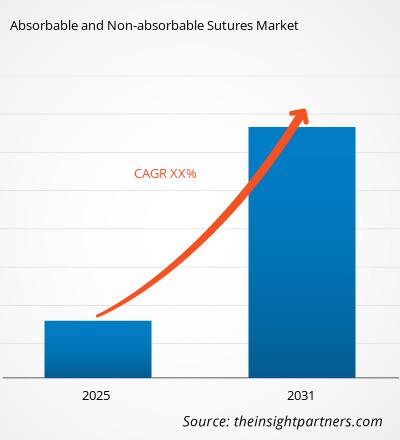
The global Absorbable and Non-absorbable Sutures market was valued at US$ 4.39 billion in 2025 and is expected to reach US$ 5.9 billion by 2034; it is estimated to record a CAGR of 3.34% during 2026-2034.
Absorbable and Non-absorbable Sutures Market Assessment and Insights
- North America held a 42–45% of the absorbable and non-absorbable sutures market share in 2025 and is growing at a CAGR between 2026–2034 of 3.3–3.8%, supported by advanced surgery volumes, group purchasing, and infection-control protocols.
- US represented 78–82% of North America in 2025 and is growing at a CAGR between 2026–2034 of 3.4–3.9%, led by hospitals, ASCs, and orthopedic surgery demand.
- Europe accounted for 25–28% share in 2025 and is growing at a CAGR between 2026–2034 of 3.0–3.5%, with Germany, the UK, and France leading procedure-based procurement.
- Asia Pacific held 20–23% share in 2025 and is growing at a CAGR between 2026–2034 of 4.5–5.1%, driven by China, India, Japan, South Korea, and Australia.
- Largest Segment Absorbable Sutures held 55–59% market share in 2025, growing at a CAGR range of 4.0–4.5% during 2026–2034 due to broad soft-tissue use.
- High Growth Segment Ambulatory centers sector held 15–18% market share in 2025, growing at a CAGR range of 4.8–5.4% during 2026–2034 as procedures shift outpatient.
- Key companies analyzed in detail: B. Braun Melsungen AG, CONMED Corporation, CP Medical, Inc., DemeTECH Corporation, Ethicon, Inc., META-BIOMED Co., Ltd., Smith & Nephew plc, Tepha Inc., W. L. Gore & Associates, Inc., Zimmer Biomet Holdings, Inc.
Source: The Insight Partners' analysis based on proprietary research, government publications, company annual reports, investor presentations, industry databases, and expert interviews.
The choice of materials has evolved from commodity silk and catgut towards synthetic polymers, monofilaments, antimicrobial coatings, and custom-designed needle configurations. Companies need to balance tensile strength, knot integrity, absorption characteristics, tissue drag properties, and stability during shelf life while dealing with sterilization validation and polymer acquisition issues. For both absorbable and non-absorbable suture manufacture, the focus is increasingly shifting to automation, swaging processes, sterile cleanroom packaging, and product families designed for standardized hospital trays.
The next growth cycle will be fueled by the advent of surgical capability in India, China, Southeast Asia, and Gulf healthcare systems as developed countries try to establish value-based contracting and lower infection rates. There will be good regulatory tailwinds with respect to traceability, biocompatibility, and post-market surveillance, which favor quality-focused firms. Capital will likely go into specialized wound closure technologies, minimally invasive technology, and outpatient packaging solutions.
Absorbable and Non-absorbable Sutures Market Report Scope
| Report Attribute | Details |
|---|---|
| Market size in 2025 | US$ 4.39 Billion |
| Market Size by 2034 | US$ 5.9 Billion |
| Global CAGR (2026 - 2034) | 3.34% |
| Historical Data | 2021-2024 |
| Forecast period | 2026-2034 |
Absorbable and Non-absorbable Sutures Market Analysis
Demand for procedures continues to be determined by surgical accessibility growth, burden of disease, trauma care, and obstetric care services. Market growth of absorbable and nonabsorbable sutures is also tied to the ongoing requirement of the world for safe surgery since the health care systems monitor numbers of surgical operations, perioperative mortality rate, and infection control measures.
Market supply is determined by polymer chemistry, metallurgy of needles, sterilization abilities, and cycles of tenders in hospitals. The absorbable and non-absorbable sutures market report highlights several key companies including Ethicon, Inc. and B. Braun Melsungen AG that have an edge in terms of wide range of products that provide wound closure solutions, whereas CP Medical, Inc., DemeTECH Corporation, META-BIOMED Co., Ltd., and Tepha Inc. offer their specialties as niche players.
Positioning is not price-based but process-oriented since market analysis of absorbable and non-absorbable sutures relies on surgeon experience, training, product reliability, and compliance. Smith & Nephew plc, CONMED Corporation, and Zimmer Biomet Holdings, Inc. engage by participating in orthopedic repair systems whereby sutures and anchors affect workflow.
Funding is shifting towards the development of antimicrobial coating technology, knotless fixation, strong tapes, absorbable materials, and channel-specific supply chain. W.L. Gore & Associates, Inc. continues to be relevant in cardiovascular materials science, while international companies are investing in sterilized packaging, SKU management, and manufacturing resilience for margin protection against hospital cost pressures.
● REPORT CUSTOMIZATION
Tailor This Report To Align With Your Specific Business Requirements
This report can be customized to align precisely with your business objectives, scope, and target markets. Customization options include tailored segmentation, geography, competitive analysis, and strategic insights to support informed decision-making.
Customize This Report →WHAT YOU CAN ADJUST
- ● Segmentations
- ● Geography
- ● Competitive Analysis
- ● Language Preferences
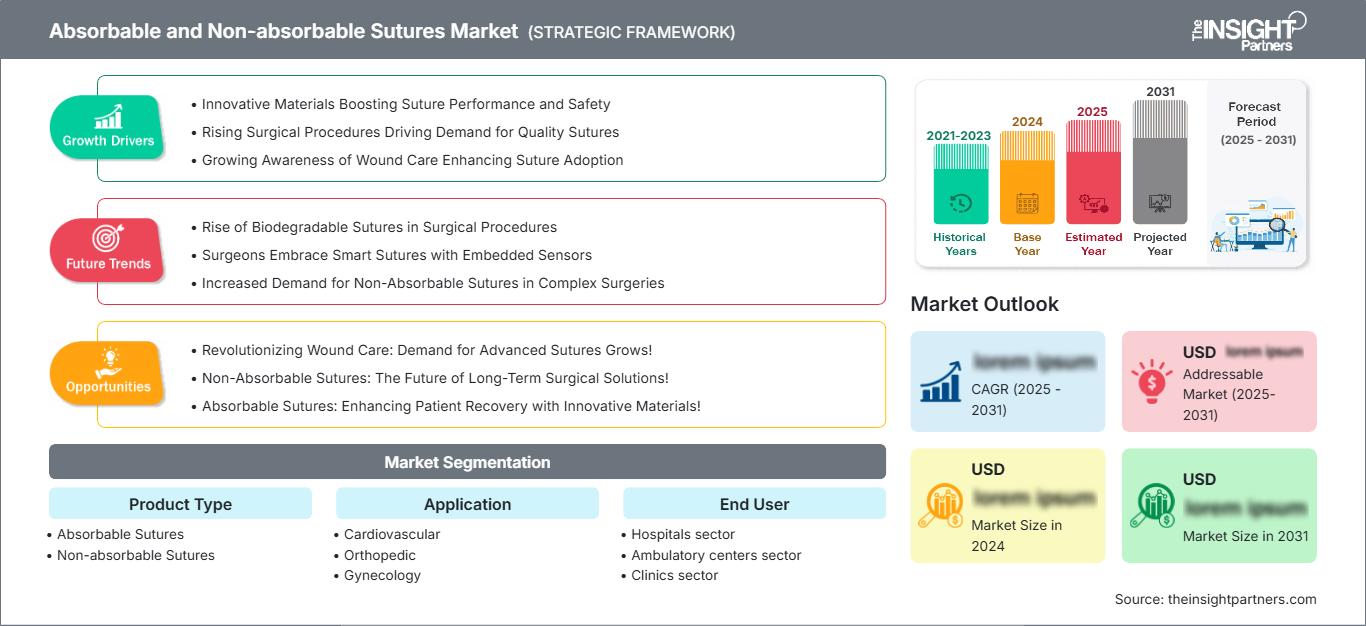
Absorbable and Non-absorbable Sutures Market: Strategic Insights
Regional Insights
North America Absorbable and non-absorbable sutures market
North America held a 42–45% share in 2025 and is forecast to expand at a CAGR range of 3.3–3.8% during 2026–2034. The region benefits from high surgical intensity, extensive hospital networks, established ambulatory surgery centers, and surgeon familiarity with antimicrobial and barbed closure technologies across abdominal, orthopedic, and cardiovascular procedures.
The absorbable and non-absorbable sutures market share in North America is reinforced by large purchasing organizations, predictable reimbursement, and strong availability of branded products from Ethicon, Inc., B. Braun Melsungen AG, CONMED Corporation, Smith & Nephew plc, and Zimmer Biomet Holdings, Inc. Institutional buyers increasingly evaluate total cost of care, including infection prevention, operating room efficiency, and reduced product variability.
U.S. Absorbable and non-absorbable sutures market
The U.S. represented 78–82% of North America in 2025 and is expected to grow at a CAGR range of 3.4–3.9% during 2026–2034. Demand is supported by high orthopedic, cardiovascular, obstetric, gynecological, and general surgery volumes, alongside expanding outpatient procedures in ambulatory centers and physician-owned surgical facilities.
Company presence is broad, with Ethicon, Inc., CONMED Corporation, CP Medical, Inc., DemeTECH Corporation, Smith & Nephew plc, W. L. Gore & Associates, Inc., and Zimmer Biomet Holdings, Inc. directly relevant to clinical procurement. Application trends favor absorbable sutures for internal soft-tissue closure, non-absorbable sutures for cardiovascular and orthopedic reinforcement, and specialty products for minimally invasive workflows.
Europe Absorbable and non-absorbable sutures market
Europe accounted for 25–28% share in 2025 and is projected to grow at a CAGR range of 3.0–3.5% during 2026–2034. Germany remains the leading country due to high procedure capacity, advanced hospital purchasing, and extensive medtech manufacturing linkages. The UK emphasizes surgical backlog reduction and cost-effective wound closure.
Germany’s market is shaped by procedural consistency, strict quality expectations, and strong uptake of standardized hospital kits. B. Braun Melsungen AG has regional relevance through its surgical specialties portfolio, while multinational suppliers compete on tender compliance, product breadth, and sterile logistics. France, Italy, and Spain provide stable demand, with public hospitals balancing price pressure against infection-prevention value.
APAC Absorbable and non-absorbable sutures market
APAC held 20–23% share in 2025 and is expected to grow at a CAGR range of 4.5–5.1% during 2026–2034. China is the leading country, supported by expanding hospital capacity, domestic procurement reforms, and large general surgery volumes. Japan and South Korea sustain premium demand through advanced surgical practice.
India and Australia add different growth vectors, with India driven by surgical access expansion and Australia by outpatient procedure quality standards. Policy emphasis on healthcare infrastructure, local manufacturing, and broader insurance coverage supports supplier localization, while international companies compete with regional producers on performance, safety documentation, and pricing flexibility.
Middle East & Africa Absorbable and non-absorbable sutures market
Middle East & Africa is projected to grow at a CAGR range of 3.6–4.2% during 2026–2034, led by Saudi Arabia. Hospital infrastructure investments, specialty surgery programs, and medical tourism strategies in Saudi Arabia and the UAE are strengthening demand for reliable wound-closure products across general, gynecology, and orthopedic procedures.
South Africa remains the most structured African market, supported by private hospital groups and established distributor networks. Rest of MEA demand is uneven, with procurement shaped by public budgets, import dependency, and trauma care needs. Energy-linked fiscal capacity in Gulf economies continues to support specialty facility development and surgical technology upgrades.
Segmentation Analysis
Product Type
Product Type is expected to grow at a CAGR range of 3.7–4.2% during 2026–2034. The absorbable and non-absorbable sutures market forecast under this segment reflects different clinical requirements for degradation, tensile retention, knot performance, and tissue reaction. Product selection is increasingly protocol-driven, with absorbable materials preferred for internal closure and non-absorbable products retained where long-term support is essential.
- Absorbable Sutures lead demand because they reduce the need for removal and support internal soft-tissue approximation in general surgery, gynecology, and gastrointestinal procedures.
- Non-absorbable Sutures remain strategically important in cardiovascular, orthopedic, ophthalmic, and skin closure applications where prolonged tensile strength and predictable handling are required.
Application
Application is expected to grow at a CAGR range of 3.6–4.1% during 2026–2034. Utilization varies by procedure complexity, tissue type, infection risk, and surgeon preference. General surgery creates volume stability, while cardiovascular and orthopedic procedures demand premium performance characteristics. Ophthalmology and gynecology require finer gauges, precise needle profiles, and low tissue trauma.
- Cardiovascular applications rely on high-strength, biocompatible sutures for vascular anastomosis, valve procedures, graft fixation, and long-term tissue support in complex surgical environments.
- Orthopedic use is tied to tendon repair, sports medicine, trauma fixation, and reconstructive procedures where suture strength and anchor compatibility influence procedural reliability.
- Gynecology demand reflects cesarean delivery, hysterectomy, pelvic repair, and minimally invasive procedures requiring absorbable materials with predictable handling and absorption.
- Opthalmolog applications require fine sutures, precision needles, and minimal tissue reaction, making specialty manufacturing quality central to surgeon trust and clinical outcomes.
- General surgery represents the broadest use base, covering abdominal, gastrointestinal, hernia, trauma, and skin closure procedures across hospitals and ambulatory surgical settings.
End-User
End User is expected to grow at a CAGR range of 3.8–4.3% during 2026–2034. Hospitals continue to dominate because of surgical complexity, emergency capability, and specialist concentration. Ambulatory centers are gaining strategic importance as payers and providers shift appropriate procedures to lower-cost settings requiring compact, reliable, and standardized closure inventories.
- Hospitals sector remains the core procurement channel because tertiary and secondary facilities handle complex procedures, emergency surgeries, and multidisciplinary cases requiring broad suture portfolios.
- Ambulatory centers sector is gaining relevance as orthopedic, gynecology, ophthalmology, and minor general surgery procedures migrate to outpatient environments with standardized product sets.
- Clinics sector supports recurring demand for minor wound closure, dermatologic procedures, small surgical interventions, and follow-up care requiring accessible and economical suture options.
- Community healthcare sector is important in basic surgical access, trauma stabilization, maternal care, and infection prevention where durable supply chains and simple product selection matter.
Opportunity Snapshot
| Segment Name | Revenue Contribution | Trend Tag | Adoption Stage |
| Hospitals sector | High | Surgical Bundles | Mature |
| Ambulatory centers sector | Medium | Outpatient Shift | Scaling |
| Clinics sector | Medium | Minor Closure | Scaling |
| Community healthcare sector | Low | Access Care | Emerging |
| Others sector | Low | Specialty Use | Emerging |
Absorbable and Non-absorbable Sutures Market Growth Drivers and Impact Analysis
Rising Global Surgical Volume and Procedure Diversification
High surgical volumes continue to be the most stable source of demand since any cut, anastomosis, tendon mending or soft tissue approximation needs a closure technique. Indicators of global surgery focus on accessibility, volume of procedures performed, number of workers, and perioperative results, which encourage governments to increase surgical capability. This will directly boost the baseline consumption of sutures in general surgery, obstetric surgery, trauma surgery, cardiology and orthopedic operations. The effect will be more pronounced in regions where elective care waiting list backlog is being addressed and where insurance cover is increasing. For suturing companies, the opportunities are not limited to the number of units sold but also include kit-based procedures, surgeon training, replenishment systems, and product differentiation.
Infection Prevention Pressure in Surgical Care Pathways
SSIs continue to pose both medical and financial challenges, pushing healthcare providers to consider closure systems in the context of their infection prevention strategy. Antimicrobial sutures, advanced monofilaments, and low tissue drag materials have been drawing interest due to wound closure being among the last medical interventions in any surgical process. Influence is seen in rigorous requirements that now incorporate clinical proof, sterilization validation, and material science studies. Companies with well-documented antibacterial products and post-launch evidence can justify their premium price over commodity solutions. Healthcare providers are able to achieve shorter lengths of stay, reduced readmission rates, and improved OR efficiency, while payers get lower complication costs from mass procedures.
Shift of Procedures Toward Ambulatory Surgical Settings
Ambulatory care facilities are changing the dynamics of procurement due to the need for standardization, compactness, and speed of delivery of surgical kits. Procedures that include orthopedic sports medicine, gynecology, ophthalmology, and certain general surgery procedures are shifting from the inpatient hospital setting to an ambulatory care facility. As a result, the market will have to supply closure products that are easy to order and that require minimal learning. The companies that are able to offer a more compact SKU range and configuration of their products will be favored by the market.
Absorbable and Non-absorbable Sutures Market Future Trends
Evidence-Led Adoption of Antimicrobial and Specialty Materials
The leading absorbable and non-absorbable sutures market trends in absorbable and non-absorbable sutures will revolve around evidence-based product differentiation as opposed to simple material substitution. Hospitals are expected to evaluate sutures on criteria such as infection risk, ease of handling, absorption properties, and cost of the procedure. Antimicrobial coatings, absorbable polymeric materials, and strong tapes will be adopted where there are clear clinical or procedural advantages to adopting them. There will be a need for more evidence regarding real-life performance, biocompatibility, and durability. This will make it difficult for low-cost producers while enabling existing players to sell more expensive items where mistakes are costly.
Digital Procurement and SKU Rationalization
The procurement teams will be able to leverage digital catalogs, consumption analysis at the procedure level, and automation for replenishment to manage stock outs and minimize expired inventory. The suture market has several thousand SKUs based on size, needle type, and material, and SKU rationalization will be an important factor in efficiency gains. The future procurement processes will require that the vendors provide electronic ordering capability, bar code tracking, and standardized surgical kits. It will impact the product development process as the vendors will need to simplify their portfolio while giving the surgeon options.
Absorbable and Non-absorbable Sutures Market Opportunities
Localized Manufacturing and Regional Supply Resilience
Surgical suture markets Absorbable and Non-Absorbable sutures Forecast suggests potential benefits for firms investing in localization of production, sterilization, packing, or distribution in emerging growth zones. India, China, South East Asia, and countries in the Gulf region have developed their surgical capabilities and look for secure supplies of healthcare products. Localization can enable faster delivery, quicker responses to tenders, and help with country-specific labeling. Areas to invest are polymer suppliers, automation of the needling process, sterile package, and testing laboratories. Firms with global quality standards and local cost structure can better compete in government tenders and cater to private hospitals through specialized sutures.
Procedure-Specific Kits for Outpatient and Specialty Surgery
Investment Opportunity in Procedure Specific Sutures Kit
The use of procedure specific sutures kit is an investment opportunity since it increases the predictability and reduces the variability. The kits also simplify the management of inventory and decrease operating room setup time. Procedures such as ambulatory care, orthopedics, ophthalmology, and women's healthcare can use the standardized kits that match specific cases. Manufacturers can increase the value of their products by offering combinations of absorbable and nonabsorbable sutures, needles, tapes, and closure accessories in validated configurations.
Recent Developments
- July 2025: Smith & Nephew plc released the Q-FIX KNOTLESS All-Suture Anchor for soft tissue-to-bone fixation across shoulder, hip, and foot and ankle indications. The launch expanded the Q-FIX family with knotless deployment, suture lock capability, and multiple suture options, including MINITAPE Suture Tape and ULTRABRAID #2 Suture.
- June 2025: CONMED Corporation received U.S. FDA 510(k) clearance for the CONMED Argo Knotless Anchor under submission K251530. The clearance supports commercialization of the smooth or threaded metallic bone fixation fastener for indicated orthopedic applications, strengthening CONMED’s position in knotless suture anchor systems for sports medicine repair.
- December 2024: Zimmer Biomet Holdings, Inc. received U.S. FDA 510(k) clearance for the OsseoFit Stemless Shoulder System, with commercial availability planned for the first quarter of 2025. The shoulder implant includes anterior reattachment suture holes to facilitate subscapularis repair, linking implant design with soft-tissue fixation needs in orthopedic reconstruction.
Frequently Asked Questions

- Comprehensive Market Sizing and Forecast Analysis
- Detailed Segmentation Analysis
- In-Depth Market Dynamics Assessment
- Regional and Country-Level Insights
- Competitive Landscape and Company Benchmarking
- Strategic Business Intelligence
Recent Reports
Testimonials

The Insight Partners' SCADA System Market report is comprehensive, with valuable insights on current trends and future forecasts. The team was highly professional, responsive, and supportive throughout. We are very satisfied and highly recommend their services.
RAN KEDEM Partner, Reali Technologies LTDs
I requested a report on a very specific software market and the team produced the report in a few days. The information was very relevant and well presented. I then requested some changes and additions to the report. The team was again very responsive and I got the final report in less than a week.
JEAN-HERVE JENN Chairman, Future Analytica
We worked with The Insight Partners for an important market study and forecast. They gave us clear insights into opportunities and risks, which helped shape our plans. Their research was easy to use and based on solid data. It helped us make smart, confident decisions. We highly recommend them.
PIYUSH NAGPAL Sr. Vice President, High Beam Global
The Insight Partners delivered insightful, well-structured market research with strong domain expertise. Their team was professional and responsive throughout. The user-friendly website made accessing industry reports seamless. We highly recommend them for reliable, high-quality research services
YUKIHIKO ADACHI CEO, Deep Blue, LLC.
This is the first time I have purchased a market report from The Insight Partners.While I was unsure at first, I visited their web site and felt more comfortable to take the risk and purchase a market report.I am completely satisfied with the quality of the report and customer service. I had several questions and comments with the initial report, but after a couple of dialogs over email with their analyst I believe I have a report that I can use as input to our strategic planning process.Thank you so much for taking the extra time and making this a positive experience.I will definitely recommend your service to others and you will be my first call when we need further market data.
JOHN SUZUKI President and Chief Executive Officer, Board Director, BK Technologies
I wish to appreciate your support and the professionalism you displayed in the course of attending to my request for information regarding to infectious disease IVD market in Nigeria. I appreciate your patience, your guidance, and the fact that you were willing to offer a discount, which eventually made it possible for us to close a deal. I look forward to engaging The Insight Partners in the future, all thanks to the impression you have created in me as a result of this first encounter.
DR CHIJIOKE ONYIA MANAGING DIRECTOR, PineCrest Healthcare Ltd.Reason to Buy
- Informed Decision-Making
- Understanding Market Dynamics
- Competitive Analysis
- Identifying Emerging Markets
- Customer Insights
- Market Forecasts
- Risk Mitigation
- Boosting Operational Efficiency
- Strategic Planning
- Investment Justification
- Tracking Industry Innovations
- Aligning with Regulatory Trends





 Get Free Sample for