
Absorbable Sutures Market Regional Share, Global Size, Trends, and Forecast by 2034
Coverage: by Product Type (Catgut, Polymer Chemistry, Collagen Suture, Other Product Types); Application (Cardiovascular Surgeries, General Surgeries, Orthopedic Surgeries, Gynecological Surgeries, Ophthalmic Surgeries, Other Applications); End User (Hospitals, Ambulatory Surgical Centers (ASCS), Clinics and Physician Offices) , and Geography (North America, Europe, Asia Pacific, and South and Central America)
- Status : Data Released
- Report Code : TIPRE00005520
- Category : Life Sciences
- No. of Pages : 150
- Available Report Formats :


- Last update date : July 14, 2026


2025 Market Size
US$ 3.04 Bn
Base year value
2034 Forecast
US$ 5.27 Bn
Projected by 2034
CAGR 2026-2034
6.3 %
Growth rate
Addressable Market
US$ 37.60 Bn
(2026-2034)
The absorbable sutures market size was valued at US$ 3.04 Billion in 2025 and is projected to reach US$ 5.27 Billion by 2034; it is expected to register a CAGR of 6.3% during 2026–2034. The demand is boosted by high surgical case loads, more usage of synthetic absorbable suture material, and a preference for sutures that offer closure of wounds without requiring any follow-ups. In North America, the absorbable sutures market size is characterized by maturity and innovation in the market, estimated CAGR growth rate of 5.5–6.0% during the period of 2026 to 2034. The market growth is fueled by high inpatient and outpatient surgery case loads, high adoption of anti-bacterial sutures, and monofilament sutures.
Absorbable Sutures Market Assessment and Insights
- North America held an estimated 38–40% of the absorbable sutures market share in 2025 and is expected to grow at a CAGR of 5.5–6.0% during 2026–2034, supported by advanced surgical infrastructure, standardized infection-prevention protocols, and high use of premium synthetic sutures.
- US accounted for 82–85% of North America in 2025 and is projected to expand at a CAGR of 5.6–6.1% during 2026–2034, led by ambulatory procedures and strong supplier access.
- Europe represented 25–27% share in 2025 and is forecast to grow at a CAGR of 5.0–5.6% during 2026–2034, with Germany, the UK, and France leading demand through hospital modernization and procedural quality standards.
- Asia Pacific captured 23–25% share in 2025 and is expected to grow at a CAGR of 7.2–7.8% during 2026–2034, led by China, India, Japan, South Korea, and Australia through rising surgical capacity.
- Largest Segment Hospitals held 62–66% market share in 2025 and are projected to grow at a CAGR of 5.8–6.3% during 2026–2034 due to high surgical throughput.
- High Growth Segment Ambulatory Surgical Centers held 20–23% market share in 2025 and are projected to grow at a CAGR of 7.0–7.6% during 2026–2034 as same-day procedures rise.
- Key companies analyzed in detail: B. Braun SE, DemeTECH Corporation, Dolphin Sutures, EndoEvolution, LLC, Ethicon US, LLC, Internacional Farmacéutica, S.A. de C.V., Medtronic plc, Peters Surgical, Sutures India Pvt. Ltd., W. L. Gore & Associates, Inc.
Source: The Insight Partners' analysis based on proprietary research, government publications, company annual reports, investor presentations, industry databases, and expert interviews.
From natural gut to artificial absorbables, which allow for predictable absorption rates, minimal tissue reaction, and improved tensile strength maintenance. Production depends on sterile production facilities, needle-suture connections, polymers, and resin availability. Absorbable sutures have additionally been experiencing growth owing to antimicrobial properties, barbs for greater securing, and monofilaments that reduce friction and are utilized in minimally invasive closures in general surgery, gynecological, orthopedic, and cardiological surgeries.
Forthcoming growth will come from new surgical centers and private hospitals as well as from public sector reforms. Markets such as the Asia Pacific and some Middle Eastern regions have seen investments in operating rooms, training of surgeons, and local manufacturing of devices. Regulations favoring infection control and traceability of devices have further increased the supplier qualifications requirements.
Absorbable Sutures Market Report Scope
| Report Attribute | Details |
|---|---|
| Market size in 2025 | US$ 3.04 Billion |
| Market Size by 2034 | US$ 5.27 Billion |
| Global CAGR (2026 - 2034) | 6.3% |
| Historical Data | 2021-2024 |
| Forecast period | 2026-2034 |
Absorbable Sutures Market Analysis
The absorbable sutures market growth is primarily driven by the increase in surgical treatment for diseases, traumas, obstetric cases, and age-related disorders. Providers are looking to have products that provide sufficient tissue support in the healing period and then disintegrate without any need for retrieval. The demand will also be driven by the shift of certain procedures of general surgery, gynecology, ophthalmology, and orthopedics to the outpatient setting due to the financial and operational benefits of fewer post-operative visits.
The supply will still depend on polymer chemical composition, needles’ manufacturing process, sterilization with ethylene oxide or gamma irradiation, and proper packaging. Suture suppliers that have stable access to their raw materials and clean room operation processes can withstand healthcare supplies shortages. Procurement departments are now evaluating suture products based on handling ability, absorbability, infection risk reduction, SKU availability, and cost per procedure.
Competitive positioning is influenced by broad portfolio and physician awareness. The Ethicon US, LLC and Medtronic plc retain influence with their wide portfolio for wound closures. Meanwhile, B. Braun SE, Peters Surgical, DemeTECH Corporation, Dolphin Sutures, Sutures India Pvt. Ltd., and Internacional Farmacéutica, S.A. de C.V. differentiate on specialized product lines and effective manufacturing in regional markets. EndoEvolution, LLC and W. L. Gore & Associates, Inc. provide innovation in related closures and surgical products technology.
Priorities in investment focus on automated quality checking, antibacterial coatings, barbed sutures, and regulatory registration in emerging markets. Based on the absorbable sutures market report, it can be concluded that companies with surgeon educational initiatives, tender preparation, and balanced premium value portfolios would be able to protect market share amid hospitals' cost cutting policies. Competitive advantage would be achieved through performance data, supply chain, and regional production capabilities.
● REPORT CUSTOMIZATION
Tailor This Report To Align With Your Specific Business Requirements
This report can be customized to align precisely with your business objectives, scope, and target markets. Customization options include tailored segmentation, geography, competitive analysis, and strategic insights to support informed decision-making.
Customize This Report →WHAT YOU CAN ADJUST
- ● Segmentations
- ● Geography
- ● Competitive Analysis
- ● Language Preferences
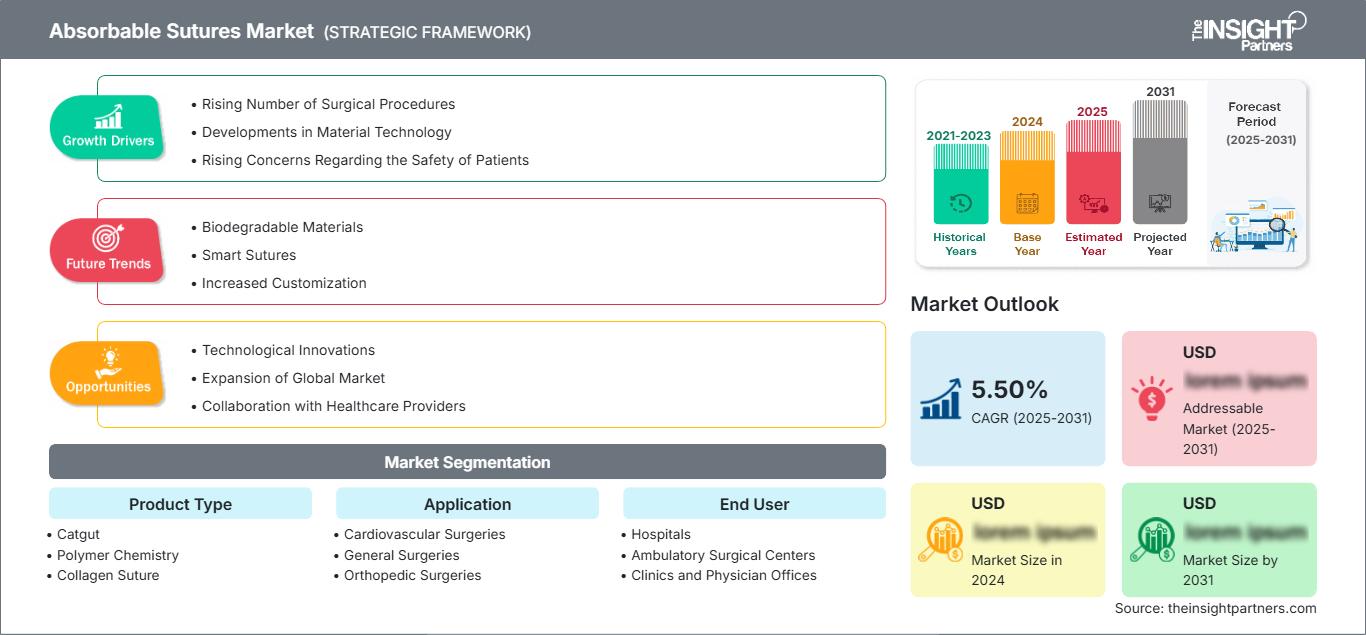
Absorbable Sutures Market: Strategic Insights
Regional Insights
North America Absorbable sutures market
North America accounted for an estimated 38–40% share in 2025 and is expected to grow at a CAGR of 5.5–6.0% during 2026–2034. The region benefits from high surgical procedure intensity, advanced infection-prevention bundles, and strong adoption of synthetic absorbable materials. The absorbable sutures market share remains supported by hospital group purchasing organizations that favor clinically validated portfolios with reliable supply continuity.
Demand is also reinforced by outpatient migration, especially in general surgery, gynecology, ophthalmology, and orthopedic repair. Suppliers with extensive SKU breadth, rapid logistics, and educational support hold an advantage in North America because surgeons require consistent needle geometry and predictable absorption. Antibacterial and monofilament products are expected to gain incremental use as facilities pursue lower surgical site infection rates.
U.S. Absorbable sutures market
The U.S. represented 82–85% of North America in 2025 and is projected to grow at a CAGR of 5.6–6.1% during 2026–2034. Surgical volume concentration across integrated delivery networks, ambulatory surgical centers, and specialty hospitals supports stable demand. The absorbable sutures market benefits from wide availability of Ethicon US, LLC, Medtronic plc, B. Braun SE, DemeTECH Corporation, and W. L. Gore & Associates, Inc.
Application trends are shifting toward advanced wound closure for cardiovascular, minimally invasive general surgery, and gynecological procedures. U.S. providers increasingly assess sutures through infection prevention, handling consistency, and compatibility with standardized operating room kits. Ambulatory centers are particularly important because predictable absorption reduces callback visits and supports streamlined post-discharge workflows.
Europe Absorbable sutures market
Europe held an estimated 25–27% share in 2025 and is expected to expand at a CAGR of 5.0–5.6% during 2026–2034. Germany is the leading country, supported by high surgical specialization, hospital quality programs, and local strength from B. Braun SE. Procurement remains value-sensitive, but premium sutures are retained where clinical evidence supports lower complications.
The UK market is shaped by infection-prevention guidance, centralized procurement, and pressure to reduce postoperative burden. Hospitals increasingly use antibacterial absorbable sutures within broader surgical site infection bundles. Germany’s demand is supported by advanced specialty surgery and established supplier relationships, while France benefits from specialty cardiovascular and general surgery adoption, including Peters Surgical’s domestic legacy.
France, Italy, and Spain collectively contribute meaningful demand through public hospital networks, private clinics, and expanding day-surgery activity. Italy and Spain show stronger recovery-linked uptake as elective procedure backlogs normalize. Across Europe, synthetic polymer sutures continue replacing natural options where absorption predictability and lower inflammatory response are required.
APAC Absorbable sutures market
APAC represented 23–25% share in 2025 and is forecast to grow at a CAGR of 7.2–7.8% during 2026–2034. China is the leading country by scale, while India shows strong volume expansion through private hospitals, medical tourism, and domestic manufacturing. Japan, South Korea, and Australia contribute premium demand through high surgical standards.
Policy drivers include healthcare infrastructure investment, broader insurance coverage, and local medical device production incentives. The region’s growth is also supported by rising orthopedic, obstetric, cardiovascular, and general surgery volumes. Suppliers with affordable synthetic portfolios and regulatory execution are well positioned as hospitals upgrade from basic natural sutures.
Middle East & Africa Absorbable sutures market
Middle East & Africa is expected to grow at a CAGR of 5.8–6.4% during 2026–2034, led by Saudi Arabia and the UAE. Healthcare infrastructure investment, specialty hospital development, and medical tourism support demand for advanced wound closure products. South Africa remains the most established sub-Saharan market due to private hospital networks.
Energy-linked fiscal capacity in Gulf countries continues to fund surgical infrastructure, procurement digitization, and tertiary care expansion. Rest of MEA demand is more uneven, shaped by import dependence, tender cycles, and affordability constraints. Suppliers offering dependable distribution, clinician training, and tiered pricing can capture incremental adoption.
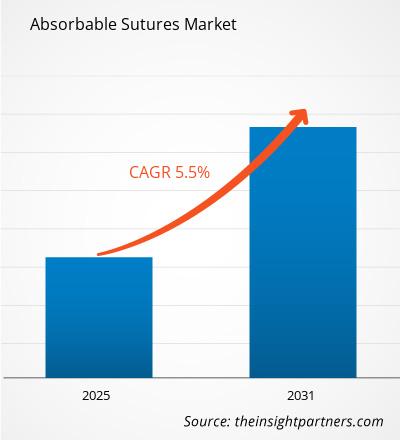
Segmentation Analysis
Product Type
Product Type is expected to grow at a CAGR of 6.0–6.6% during 2026–2034. The absorbable sutures market forecast across products is increasingly defined by synthetic polymer performance, absorption predictability, and surgeon handling preferences. Catgut retains cost-sensitive use, but polymer chemistry dominates higher-value applications because hospitals prioritize lower tissue reaction and consistent tensile support.
- Catgut remains relevant in price-sensitive settings and selected routine closures, though demand is gradually moderated by synthetic alternatives offering more predictable degradation and reduced inflammatory response.
- Polymer Chemistry holds the strongest strategic position because polyglycolic acid, polydioxanone, and related materials support predictable absorption, tensile strength retention, and broader specialty use.
- Collagen Suture serves procedures where biologically derived materials are preferred, but adoption depends on surgeon familiarity, tissue response expectations, and institutional procurement standards.
Application
Application is projected to grow at a CAGR of 6.1–6.7% during 2026–2034. General surgeries continue to account for broad procedural use, while cardiovascular, gynecological, and orthopedic applications drive premium product selection. Growth is supported by minimally invasive procedures, higher operating room throughput, and clinical preference for closure materials aligned with tissue healing timelines.
- Cardiovascular Surgeries require sutures with dependable tensile retention and precise needle performance, making supplier reliability and specialist surgeon preference especially important for procurement decisions.
- General Surgeries represent the broadest demand base, covering abdominal, gastrointestinal, hernia, and soft-tissue procedures where absorbable closure reduces removal needs and supports routine healing.
- Orthopedic Surgeries use absorbable sutures for soft-tissue approximation and layered closure, with demand tied to sports injury repair, trauma care, and aging-related musculoskeletal procedures.
- Gynecological Surgeries remain a strong application area due to obstetric, pelvic, and minimally invasive procedures that benefit from predictable absorption and reduced follow-up management.
- Ophthalmic Surgeries require fine-gauge, low-reactivity sutures with controlled absorption, making precision manufacturing and high-quality needle attachment important competitive factors.
End-User
End User is expected to grow at a CAGR of 6.2–6.8% during 2026–2034. Hospitals remain the largest purchasing channel because of complex surgical case mix and bulk procurement, while ambulatory surgical centers are expanding quickly through same-day procedures. Clinics and physician offices contribute smaller but stable demand in minor surgical and specialty care settings.
- Hospitals dominate revenue contribution through high-volume operating rooms, specialty departments, emergency surgeries, and institutional tenders requiring broad suture portfolios with validated sterility and supply assurance.
- Ambulatory Surgical Centers are scaling rapidly as payers and providers shift suitable procedures outside inpatient settings, increasing demand for efficient, predictable wound closure products.
- Clinics and Physician Offices support localized demand for minor procedures, dermatologic closures, and specialty interventions where ease of use and smaller pack configurations matter.
Opportunity Snapshot
| Segment Name | Revenue Contribution | Trend Tag | Adoption Stage |
| Hospitals | High | Infection Control | Mature |
| Ambulatory Surgical Centers | Medium | Day Surgery | Scaling |
| Clinics and Physician Offices | Low | Minor Procedures | Emerging |
Absorbable Sutures Market Growth Drivers and Impact Analysis
Rising surgical volumes across chronic and acute care
The rise of surgical cases due to heart problems, cancer, diabetes ulcers, accidents, obstetric surgeries, and orthopedic disorders leads to an increase in the patient base receiving such surgeries. The global burden caused by noncommunicable diseases has been noted by the World Health Organization on various occasions, while the aging population of the developed and developing countries creates a rising demand for surgical procedures. This has a direct implication on the demand for sutures since most of the surgeries performed involve layered suturing or soft tissue approximation. The market dynamics are more significant in hospital and ambulatory surgery settings due to the cost-effectiveness and reliability trade-off among others.
Expansion of ambulatory and minimally invasive procedures
ASCs are emerging as an important segment in the healthcare industry, looking for cost-effective alternatives to perform the right procedures. Similarly, minimally invasive surgery requires closure devices with improved maneuverability through small ports and shorter procedures. Absorbable sutures are ideal in such a scenario since they negate the requirement of follow-up visits and promote standardization of the post-procedure pathway. Such an effect on the market can be seen in various procedures, including gynecology, ophthalmology, orthopedic surgery, hernia repair, and some general surgical procedures. With an increasing emphasis on same-day care, it is necessary for the device manufacturers to provide packs in smaller quantities and procedure-specific kits.
Shift toward synthetic and antibacterial wound closure
Synthetic absorbable sutures are now gaining favor with clinicians due to their more consistent performance with respect to absorbability and tensile strength compared to natural gut alternatives. Anti-bacterial coated sutures also complement the initiative by hospitals to minimize infection rates following surgeries that have become an important quality and cost issue for hospitals. This development has implications on driving the average value of suture portfolios up and making suppliers make investments in polymer science, coating science, and clinician training. The business impact of this development does not only affect premium hospitals, but outpatient facilities as well, where faster discharge and reduced post-surgery complications make for better economics.
Absorbable Sutures Market Future Trends
Procedure-specific absorbable suture designs
The absorbable sutures market trends will move in the direction of procedure-specific sutures as opposed to general-purpose and interchangeable product lines. Future product lines will have to be distinguished by the curvature of the needles used, coating properties, the time taken for absorption, knot security, and minimally invasive instrumentation compatibility. There will be an increased need for proof linking product line selection to reduced complications, closure speed, and readmission rates. The above trend will lead to increased collaboration between the product manufacturer and specialist surgeons and operating theater staff.
Localized manufacturing and supply assurance
Supply resilience will emerge as a competitive advantage, as healthcare systems move away from the reliance on sources within one region. Regulatory approval, sterilization capability, transparency in inventory management, and regional manufacturing are all expected to be a part of the purchasing decision-making process going forward. Nations in the Asia Pacific and the Middle East regions are working to establish indigenous capacity for the manufacture of medical devices, potentially altering the competitive landscape for manufacturers. Partnerships between manufacturers and regional manufacturers or packagers can help to mitigate risk and increase responsiveness.
Absorbable Sutures Market Opportunities
ASC-focused product bundles and service models
The ASC is a definite place for an investment opportunity, which is characterized by speed, standardization, and predictability of post-operative outcomes. Suppliers may produce procedure-specific closure kits for hernia repairs, gynecological laparoscopy, ophthalmology, and orthopedic soft tissue procedures. Forecasting of the absorbable sutures market shows that the value will be moving to those suppliers that could ensure small inventory, fast restocking, and education of the staff. Sales forces need to approach their ASC business differently, designing their contracts not only on the case-mix but not on the hospital-based bulk purchases.
Emerging-market conversion from natural to synthetic sutures
There is a significant opportunity that exists within the emerging market environment due to the changing trend in hospital practices of moving away from using catgut and basic suturing materials towards using synthetic absorbables. These changes are brought about by the increasing complexity of surgery, the increase in private hospitals and the need for predictable absorption among others. It is important for the manufacturers to exploit this opportunity through providing portfolio products which are balanced in terms of cost effectiveness and clinical effectiveness. In India, China, Southeast Asia, Saudi Arabia and Latin America, there is a great opportunity that exists.
Recent Developments
- October 2025: Mesh Suture, Inc. announced EU MDR and MDSAP certifications for DURAMESH, strengthening regulatory access across Europe, the US, Canada, Brazil, and Australia. Although DURAMESH is non-absorbable, the approval reflects broader momentum in advanced surgical closure technologies and reinforces buyer attention on regulatory compliance and differentiated wound repair platforms.
- September 2025: B. Braun SE announced the full acquisition of True Digital Surgery, expanding its digital microsurgery and visualization capabilities. The move strengthens B. Braun’s surgical ecosystem and complements its Aesculap portfolio, including sutures and surgical specialties, by improving its position in operating room technology and specialty procedure support.
- July 2024: Advanced Medical Solutions completed the acquisition of Peters Surgical after regulatory approval, a European specialty surgical sutures, mechanical haemostasis, and internal cyanoacrylate portfolio. The transaction strengthened AMS’s tissue repair and skin closure platform while expanding direct sales channels, manufacturing access, and global cross-selling potential.
Frequently Asked Questions

- Comprehensive Market Sizing and Forecast Analysis
- Detailed Segmentation Analysis
- In-Depth Market Dynamics Assessment
- Regional and Country-Level Insights
- Competitive Landscape and Company Benchmarking
- Strategic Business Intelligence
Recent Reports
Testimonials

The Insight Partners provided valuable market intelligence that supported our global go-to-market strategy. Their team was professional, responsive, and attentive to our feedback, providing thoughtful analysis and helpful methodological clarifications throughout the project.
Junmo Kim Chief Financial Officer (CFO), Enertech Co., Ltd.
The Insight Partners' SCADA System Market report is comprehensive, with valuable insights on current trends and future forecasts. The team was highly professional, responsive, and supportive throughout. We are very satisfied and highly recommend their services.
RAN KEDEM Partner, Reali Technologies LTDs
I requested a report on a very specific software market and the team produced the report in a few days. The information was very relevant and well presented. I then requested some changes and additions to the report. The team was again very responsive and I got the final report in less than a week.
JEAN-HERVE JENN Chairman, Future Analytica
We worked with The Insight Partners for an important market study and forecast. They gave us clear insights into opportunities and risks, which helped shape our plans. Their research was easy to use and based on solid data. It helped us make smart, confident decisions. We highly recommend them.
PIYUSH NAGPAL Sr. Vice President, High Beam Global
The Insight Partners delivered insightful, well-structured market research with strong domain expertise. Their team was professional and responsive throughout. The user-friendly website made accessing industry reports seamless. We highly recommend them for reliable, high-quality research services
YUKIHIKO ADACHI CEO, Deep Blue, LLC.
This is the first time I have purchased a market report from The Insight Partners.While I was unsure at first, I visited their web site and felt more comfortable to take the risk and purchase a market report.I am completely satisfied with the quality of the report and customer service. I had several questions and comments with the initial report, but after a couple of dialogs over email with their analyst I believe I have a report that I can use as input to our strategic planning process.Thank you so much for taking the extra time and making this a positive experience.I will definitely recommend your service to others and you will be my first call when we need further market data.
JOHN SUZUKI President and Chief Executive Officer, Board Director, BK Technologies
I wish to appreciate your support and the professionalism you displayed in the course of attending to my request for information regarding to infectious disease IVD market in Nigeria. I appreciate your patience, your guidance, and the fact that you were willing to offer a discount, which eventually made it possible for us to close a deal. I look forward to engaging The Insight Partners in the future, all thanks to the impression you have created in me as a result of this first encounter.
DR CHIJIOKE ONYIA MANAGING DIRECTOR, PineCrest Healthcare Ltd.Reason to Buy
- Informed Decision-Making
- Understanding Market Dynamics
- Competitive Analysis
- Identifying Emerging Markets
- Customer Insights
- Market Forecasts
- Risk Mitigation
- Boosting Operational Efficiency
- Strategic Planning
- Investment Justification
- Tracking Industry Innovations
- Aligning with Regulatory Trends





 Get Free Sample for