
Absorbent Dressing Market Demand, Share & Growth by 2034
Coverage: By Product Type (Adherent, Non-Adherent); Dressing Type ( Sterile Dressing, Non-Sterile Dressing ); End User (Hospitals and Clinics, Ambulatory Surgical Centers, Homecare), and Geography (North America, Europe, Asia Pacific, and South and Central America)
- Status : Data Released
- Report Code : TIPRE00017669
- Category : Life Sciences
- No. of Pages : 150
- Available Report Formats :


- Last update date : July 14, 2026


2025 Market Size
US$ 11.13 Bn
Base year value
2034 Forecast
US$ 26.68 Bn
Projected by 2034
CAGR 2026-2034
10.20 %
Growth rate
Addressable Market
US$ 167.96 Bn
(2026-2034)
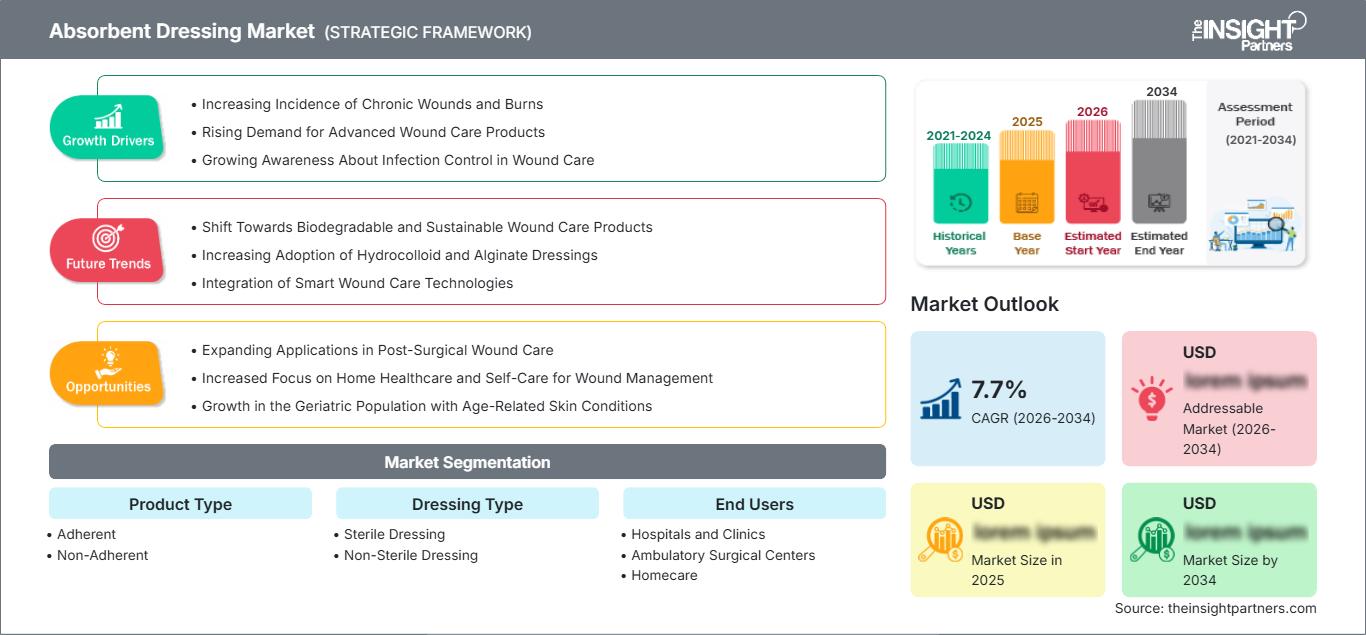
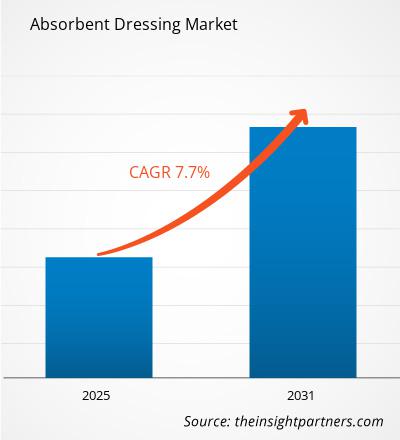
The absorbent dressing market size was valued at US$ 11.13 Billion in 2025 and is projected to reach US$ 26.68 Billion by 2034; it is expected to register a CAGR of 10.2% during 2026–2034. Expansion is supported by sustained wound care utilization, rising chronic wound incidence, and wider use of dressings designed to manage exudate while protecting wound beds during structured healing pathways.
Within North America, the absorbent dressing market size reflects strong demand from hospitals, wound clinics, and homecare programs, with an estimated CAGR range of 9.2–9.8% during 2026–2034. Growth is supported by high diabetes prevalence, pressure injury prevention protocols, payer-backed home health models, and clinician preference for dressings that reduce dressing-change frequency and limit maceration risk.
Absorbent Dressing Market Assessment and Insights
- North America held an estimated 39–41% of the absorbent dressing market share in 2025 and is expected to grow at a CAGR between 2026–2034 of 9.2–9.8%, supported by wound clinic density, reimbursement coverage, and homecare adoption.
- US accounted for 84–87% of North America in 2025 and is projected to grow at a CAGR between 2026–2034 of 9.3–9.9%, led by diabetic wounds, post-surgical care, and pressure injury protocols.
- Europe represented 26–28% share in 2025 and is forecast to grow at a CAGR between 2026–2034 of 8.4–9.0%, with Germany, the UK, and France leading through advanced wound management pathways.
- Asia Pacific captured 21–23% share in 2025 and is expected to grow at a CAGR between 2026–2034 of 11.5–12.2%, led by China, India, Japan, South Korea, and Australia through hospital modernization.
- Largest Segment Hospitals and Clinics held 58–62% market share in 2025 and are projected to grow at a CAGR range of 9.5–10.1% during 2026–2034 due to high wound caseloads.
- High Growth Segment Homecare held 18–21% market share in 2025 and is projected to grow at a CAGR range of 12.0–12.8% during 2026–2034 as chronic wound management shifts outward.
- Key companies analyzed in detail: Solventum Corporation, Johnson & Johnson Services, Inc., Smith & Nephew plc, Medtronic plc, Cardinal Health, Inc., PAUL HARTMANN AG, Derma Sciences, Inc., Mölnlycke Health Care AB, Coloplast A/S, Avery Dennison Corporation.
Source: The Insight Partners' analysis based on proprietary research, government publications, company annual reports, investor presentations, industry databases, and expert interviews.
From traditional cotton gauze and pads, dressing has advanced to multi-layered absorbents comprising foams, super absorbent polymers, silicone contacts, hydrofiber dressings, and breathable film dressings. Current production dynamics are more focused on qualities like the quality of the nonwoven substrate, the nature of adhesives, sterilization process, and packaging. Improvements in exudate-locking, dwell time, and ease of removing have been achieved to cater for pressure injury, diabetic foot ulcers, venous leg ulcers, burns, and surgical wounds.
Future growth will be driven by new wound care networks, home-based health care delivery, and increased scrutiny during procurement in relation to clinical results. Specialty clinics and nursing led wound care programs are being invested in the Asia Pacific, Gulf regions, and some Latin American markets. Sterility, biocompatibility, and reduced infections make regulations favorable for those who have capabilities to manufacture, document, and distribute their products.
Absorbent Dressing Market Report Scope
| Report Attribute | Details |
|---|---|
| Market size in 2025 | US$ 11.13 Billion |
| Market Size by 2034 | US$ 26.68 Billion |
| Global CAGR (2026 - 2034) | 10.20% |
| Historical Data | 2021-2024 |
| Forecast period | 2026-2034 |
Absorbent Dressing Market Analysis
The absorbent dressing market growth include higher wound loads caused by diabetes, obesity, vascular disorders, aging population, and surgeries. WHO and the diabetes associations keep emphasizing the increased rates of metabolic diseases, thus increasing the number of people that are at risk of developing poorly-healing wounds. Highest demand occurs when clinicians need to have better exudate management and moisture balance without frequent dressing changes to avoid maceration.
The players within the value chain include polymer suppliers, non-woven producers, foam converters, adhesives manufacturers, sterilizers, medical packaging companies, distributors, hospitals, and home care organizations. The reliability of the supply chain is determined by absorbent cores, silicone and acrylic adhesives, automatic converting processes, and sterile manufacturing techniques. Absorbency, conformity, atraumatic removal, wear-time, microbial barrier function, and compressive and negative pressure protocols compliance are the product criteria considered by procurement departments.
The level of competitive intensity is also relatively high due to the inclusion of both advanced wound care specialists and wide medical supplies suppliers in the absorbent dressings market report. The competition for the former group includes Smith & Nephew plc, Mölnlycke Health Care AB, Solventum Corporation, and PAUL HARTMANN AG with clinical evidence and superior wound care portfolio, whereas Cardinal Health, Inc. and Medtronic plc are competitors for the latter group providing institutional coverage through large-scale distribution and procedure-based products.
Advanced foam dressing technologies, antimicrobial interface technology, super absorbent core technology, and digital wound documentation are strategic investments being made now. The company that is expanding its advanced wound care through biologics adjacency is Coloplast A/S, whereas Avery Dennison Corporation plays the role of medical adhesives and materials innovator.
● REPORT CUSTOMIZATION
Tailor This Report To Align With Your Specific Business Requirements
This report can be customized to align precisely with your business objectives, scope, and target markets. Customization options include tailored segmentation, geography, competitive analysis, and strategic insights to support informed decision-making.
Customize This Report →WHAT YOU CAN ADJUST
- ● Segmentations
- ● Geography
- ● Competitive Analysis
- ● Language Preferences
Absorbent Dressing Market: Strategic Insights
Regional Insights
North America absorbent dressing market
North America accounted for an estimated 39–41% share in 2025 and is expected to grow at a CAGR of 9.2–9.8% during 2026–2034. The region benefits from established wound care clinics, strong home health utilization, pressure injury prevention policies, and purchasing systems that reward products reducing dressing changes. The absorbent dressing market share is reinforced by chronic wound prevalence and reliable reimbursement pathways.
Demand is particularly strong for foam, silicone-border, superabsorbent, and sterile post-surgical dressings used across hospitals and outpatient wound centers. Manufacturers with evidence demonstrating exudate retention, skin protection, and longer wear times gain traction among providers facing nursing shortages. North America also supports faster adoption of branded dressings because clinical protocols increasingly link product choice with readmission reduction and total wound episode cost.
U.S. absorbent dressing market
The U.S. represented 84–87% of North America in 2025 and is projected to grow at a CAGR of 9.3–9.9% during 2026–2034. Demand is concentrated across hospital wound programs, long-term care networks, ambulatory surgical centers, and home health agencies. Solventum Corporation, Smith & Nephew plc, Cardinal Health, Inc., Mölnlycke Health Care AB, and Medtronic plc maintain strong visibility through broad commercial access.
The absorbent dressing market trends in terms of application emphasize diabetic foot ulcers, venous leg ulcers, pressure injuries, burns, and post-operative incisions. U.S. providers increasingly choose dressings that support fewer dressing changes because wound care labor capacity is constrained. Homecare adoption is also rising as payers encourage lower-cost sites of care, increasing demand for absorbent products that are easy for nurses and caregivers to apply consistently.
Europe absorbent dressing market
Europe accounted for 24–27% share in 2025 and is forecast to grow at a CAGR range of 7.5–8.1% during Europe held an estimated 26–28% share in 2025 and is expected to expand at a CAGR of 8.4–9.0% during 2026–2034. Germany is the leading country, supported by specialist wound care services, high chronic disease burden, and strong domestic and regional supply from PAUL HARTMANN AG and other established medical product companies.
The UK market is shaped by NHS wound care pathways, community nursing pressure, and formal efforts to reduce variation in dressing selection. Germany benefits from structured outpatient wound management and reimbursement-supported use of advanced dressings in chronic wounds. France shows stable demand through hospital and community channels, with clinician preference for products that balance absorption and atraumatic removal.
Italy and Spain contribute meaningful volume through aging populations, diabetes-related wounds, and expanding day surgery activity. Procurement remains cost-sensitive, but advanced products gain acceptance when they reduce visit frequency or prevent leakage. Across Europe, sterile dressings are favored for post-operative and high-risk wounds, while non-adherent formats remain important where fragile skin and pain reduction influence clinical decisions.
APAC absorbent dressing market
APAC represented 21–23% share in 2025 and is forecast to grow at a CAGR of 11.5–12.2% during 2026–2034. China is the leading country by scale, while India shows rapid volume expansion through private hospitals and diabetic wound clinics. Japan, South Korea, and Australia sustain premium demand through advanced wound care standards.
Policy drivers include hospital infrastructure spending, broader insurance coverage, local device production incentives, and wound care training programs. Industrial capabilities in nonwovens, medical textiles, and packaging also support regional supply. Suppliers offering tiered products can address premium wound centers and price-sensitive public hospitals simultaneously.
Middle East & Africa absorbent dressing market
Middle East & Africa is expected to grow at a CAGR of 8.8–9.5% during 2026–2034, led by Saudi Arabia and the UAE. Hospital expansion, medical tourism, diabetes prevalence, and specialty care investment support demand for sterile and advanced absorbent dressings. South Africa remains the most developed market in sub-Saharan Africa.
Energy-linked fiscal capacity in Gulf countries is supporting tertiary care infrastructure and digital procurement. Rest of MEA demand is uneven because import dependence, tender timing, and affordability limit uniform adoption. Suppliers with distributor training, multilingual clinical education, and tiered pricing can improve access across public and private channels.
Segmentation Analysis
Product Type
Product Type is expected to grow at a CAGR of 9.8–10.6% during 2026–2034. The absorbent dressing market scope across products is increasingly influenced by skin protection, adhesion control, and exudate-handling performance. Non-adherent products are gaining preference for painful, fragile, and chronic wounds, while adherent products remain important for routine fixation, post-operative care, and lower-complexity wounds requiring secure placement.
- Adherent dressings remain widely used in surgical and acute care settings where secure fixation, ease of application, and standardized inventory management are important for routine wound coverage.
- Non-Adherent dressings are strategically important for chronic wounds, burns, and fragile skin because they reduce trauma during removal while supporting moisture balance and patient comfort.
Dressing Type
Dressing Type is projected to grow at a CAGR of 10.0–10.7% during 2026–2034. Sterile dressing demand is strongest in hospitals, surgical centers, and wounds with elevated infection risk. Non-sterile products remain relevant for secondary absorption, lower-risk outpatient care, and cost-sensitive settings where clinicians use them within supervised protocols.
- Sterile Dressing holds a strong clinical position in post-operative wounds, burns, ulcers, and inpatient care because sterility assurance supports infection prevention and standardized hospital quality requirements.
- Non-Sterile Dressing supports economical wound coverage, padding, and secondary absorption where infection risk is lower and clinicians require flexible use across high-volume care routines.
End Users
End Users are expected to grow at a CAGR of 10.4–11.1% during 2026–2034. Hospitals and clinics remain the largest channel because complex wounds require clinician assessment and frequent product switching. Ambulatory surgical centers generate demand for post-operative dressings, while homecare is becoming increasingly strategic as chronic wound episodes move into community and household settings.
- Hospitals and Clinics dominate volume because they manage complex wounds, surgical incisions, burns, and pressure injuries requiring professional assessment, sterile supplies, and broad dressing portfolios.
- Ambulatory Surgical Centers are scaling demand for sterile post-procedure dressings that support quick discharge, predictable absorption, and standardized recovery instructions for same-day surgical patients.
- Homecare is gaining strategic importance as chronic wounds are managed outside hospitals, requiring user-friendly dressings with longer wear times, leakage control, and caregiver-compatible application.
Opportunity Snapshot
| End Users | Revenue Contribution | Trend Tag | Adoption Stage |
| Hospitals and Clinics | High | Wound Clinics | Mature |
| Ambulatory Surgical Centers | Medium | Post-Surgical | Scaling |
| Homecare | Medium | Remote Care | Scaling |
Absorbent Dressing Market Growth Drivers and Impact Analysis
Rising chronic wound burden and diabetes-linked complications
The growth of chronic wounds is rising due to the prevalence of conditions such as diabetes, obesity, vascular diseases, and the aging population, who have difficulty with wound healing. Chronic wounds including diabetic foot ulcers, venous leg ulcers, and pressure injuries lead to an extended period of wound care, hence requiring products that will deal with moderate to heavy drainage. This is highly impactful due to the fact that leakage, maceration, and the need for multiple dressings increases costs and nursing workload. For this reason, health care providers focus on dressings that help to achieve moisture balance as well as protect the adjacent healthy skin.
Pressure injury prevention as a quality and cost priority
Pressure sores continue to be an important indicator of quality within hospitals, nursing homes, and rehabilitation centers. Prophylactic application of dressings to high-risk areas has been increasingly incorporated into prevention practices, particularly among immobile patients, seniors, surgery patients, and ICU patients. Foam and multilayer dressings may assist in managing microclimate, friction, and shear along with repositioning and skin assessment programs. The absorbent dressing market influence is not just about sales volumes since dressing evaluations occur based on complications avoided, nursing effort reduced, and reduced readmission risks. Manufacturers who offer clinical education, documentation packages, and facility-based application guidance can help produce better results with providers considering clinical and financial risks.
Shift of wound management toward homecare and community settings
Healthcare providers are transferring appropriate candidates for wound care from hospitals to home-based care services, clinics in communities, and tele-monitoring programs to cut down costs and hospital capacity. It results in a growing need for dressings that are easy to use, reliable, comfortable, and able to stay on longer without leaking. Home health nurses require dressings that will be easy to use to follow protocols for various kinds of wounds including diabetic ulcers, venous wounds, surgical wounds, and pressure ulcers. The practical consequence is changing criteria in purchases from only hospital requirements to user-friendliness and logistical convenience.
Absorbent Dressing Market Future Trends
Multilayer dressings designed around biomechanical protection
The trends in the absorbent dressing market will focus increasingly on biomechanical protection instead of just being focused on absorbency. The future dressings will be designed in such a way that they incorporate exudate containment, shear protection, cushioning, breathable back film, and silicone atraumatic interfaces in one design. These are especially important when it comes to preventing pressure injuries and for fragile skin and post-surgical sites where the movement of the dressing may interfere with the process of healing. The research and development process of the products will make use of modeling, evidence, and health economics.
Digital wound care integration with product selection
Wound documentation through digital means is going to be more closely tied to the choice of dressings as health professionals strive for standardization and quantification of wound care process. Assessment using images, scoring of exudate, and assessment by clinicians remotely can aid in determining which type of dressing (foam, super absorbent, non-adhering, or sterile postoperative) the patient requires. In the long run, this is bound to push companies to provide dressings together with educational material, protocols in digital form, and outcome reports. Purchasing decisions will no longer depend on unit cost alone but will take into account healing process data as well.
Absorbent Dressing Market Opportunities
Homecare-oriented dressing kits and reimbursement support
There is an enormous potential for investment within the sector of homecare due to the fact that there are growing numbers of sophisticated but predictable wounds being treated within the non-hospital environment. Absorbent dressings market forecast suggest increasing importance of kit products for venous leg ulcers, diabetic foot ulcers, pressure sores, and post-surgical wounds. Companies will be able to include absorbent dressings, fixation elements, skin barrier, information, and clinical documentation in their kits. Companies’ success will be based on convenience of use, packaging, coding by payers, and replenishing capabilities. Companies that can educate homecare organizations about their products and simplify ordering process can decrease product variety.
Emerging-market expansion through tiered advanced wound portfolios
Emerging countries present a scalable opportunity as hospitals move from gauze to more structured absorbent dressing strategies. Manufacturers should target this opportunity through portfolio approaches that range from low-cost sterile pads to non-adherent dressings, foam dressings, and finally super-absorbent dressing options. The best strategy here would not be a high-end only growth, but a staged move according to the complexity of wounds and budget available. Partnerships of distributors and training of clinicians and adaptation of evidence in line with the local burden of wounds would be important. India, China, Southeast Asia, Saudi Arabia, and South Africa appear especially promising.
Recent Developments
- July 2026: Mölnlycke Health Care AB announced three U.S. product innovations launched since the start of 2026, including Granudacyn Wound Wash Solution, Tortoise Lite Turning and Positioning System, and Mepi Press 2 compression systems. The update supports its U.S. wound care expansion strategy across acute and out-of-hospital care settings.
- March 2026: Smith+Nephew launched ALLEVYN COMPLETE CARE Foam Dressing, a five-layer dressing designed for wound management and pressure injury prevention. The company stated that the dressing keeps over 99% of bacteria away from the wound bed and uses internal sliding layers to absorb up to 93% of mechanical energy.
- April 2024: 3M completed the spin-off of its healthcare business, formally launching Solventum Corporation as an independent company listed on the New York Stock Exchange. The separation created a focused healthcare company with wound care among its core areas, enabling more targeted capital allocation and commercial execution.
Frequently Asked Questions

- Comprehensive Market Sizing and Forecast Analysis
- Detailed Segmentation Analysis
- In-Depth Market Dynamics Assessment
- Regional and Country-Level Insights
- Competitive Landscape and Company Benchmarking
- Strategic Business Intelligence
Recent Reports
Testimonials

The Insight Partners provided valuable market intelligence that supported our global go-to-market strategy. Their team was professional, responsive, and attentive to our feedback, providing thoughtful analysis and helpful methodological clarifications throughout the project.
Junmo Kim Chief Financial Officer (CFO), Enertech Co., Ltd.
The Insight Partners' SCADA System Market report is comprehensive, with valuable insights on current trends and future forecasts. The team was highly professional, responsive, and supportive throughout. We are very satisfied and highly recommend their services.
RAN KEDEM Partner, Reali Technologies LTDs
I requested a report on a very specific software market and the team produced the report in a few days. The information was very relevant and well presented. I then requested some changes and additions to the report. The team was again very responsive and I got the final report in less than a week.
JEAN-HERVE JENN Chairman, Future Analytica
We worked with The Insight Partners for an important market study and forecast. They gave us clear insights into opportunities and risks, which helped shape our plans. Their research was easy to use and based on solid data. It helped us make smart, confident decisions. We highly recommend them.
PIYUSH NAGPAL Sr. Vice President, High Beam Global
The Insight Partners delivered insightful, well-structured market research with strong domain expertise. Their team was professional and responsive throughout. The user-friendly website made accessing industry reports seamless. We highly recommend them for reliable, high-quality research services
YUKIHIKO ADACHI CEO, Deep Blue, LLC.
This is the first time I have purchased a market report from The Insight Partners.While I was unsure at first, I visited their web site and felt more comfortable to take the risk and purchase a market report.I am completely satisfied with the quality of the report and customer service. I had several questions and comments with the initial report, but after a couple of dialogs over email with their analyst I believe I have a report that I can use as input to our strategic planning process.Thank you so much for taking the extra time and making this a positive experience.I will definitely recommend your service to others and you will be my first call when we need further market data.
JOHN SUZUKI President and Chief Executive Officer, Board Director, BK Technologies
I wish to appreciate your support and the professionalism you displayed in the course of attending to my request for information regarding to infectious disease IVD market in Nigeria. I appreciate your patience, your guidance, and the fact that you were willing to offer a discount, which eventually made it possible for us to close a deal. I look forward to engaging The Insight Partners in the future, all thanks to the impression you have created in me as a result of this first encounter.
DR CHIJIOKE ONYIA MANAGING DIRECTOR, PineCrest Healthcare Ltd.Reason to Buy
- Informed Decision-Making
- Understanding Market Dynamics
- Competitive Analysis
- Identifying Emerging Markets
- Customer Insights
- Market Forecasts
- Risk Mitigation
- Boosting Operational Efficiency
- Strategic Planning
- Investment Justification
- Tracking Industry Innovations
- Aligning with Regulatory Trends





 Get Free Sample for