
Actigraphy Sensors and Polysomnography Devices Market Size, Share & Growth by 2034
Actigraphy Sensors and Polysomnography Devices Market Size and Forecasts (2021–2034), Global and Regional Share, Trends, and Growth Opportunity Analysis Report Coverage : by Product Type (Actigraphy Sensors and Polysomnography Devices); Technology Type (USB, Wireless Technology, GPS, Other Technology Types); Distribution Channel (Hospitals, Pharmacies, Diagnostic Labs); and Geography (North America, Europe, Asia Pacific, and South and Central America)
- Status : Data Released
- Report Code : TIPRE00040704
- Category : Life Sciences
- No. of Pages : 150
- Available Report Formats :


- Last update date : July 15, 2026


2025 Market Size
US$ 3.23 Bn
Base year value
2034 Forecast
US$ 6.9 Bn
Projected by 2034
CAGR 2026-2034
8.8 %
Growth rate
Addressable Market
US$ 45.38 Bn
(2026-2034)
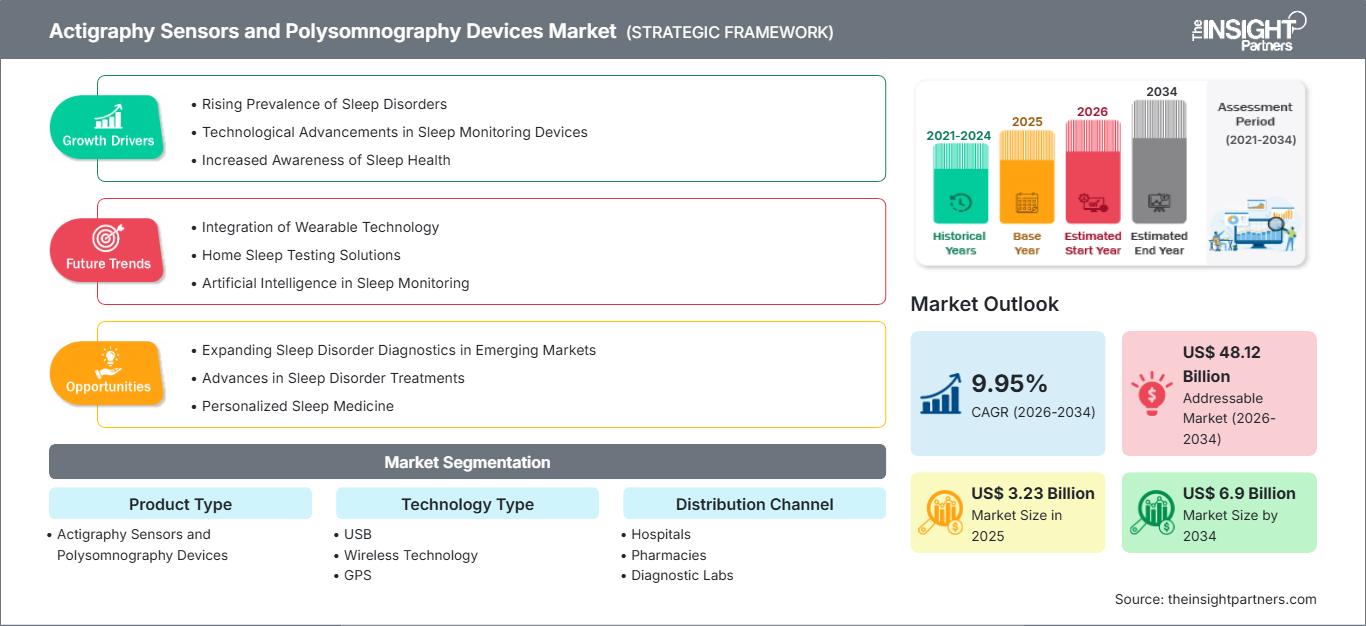
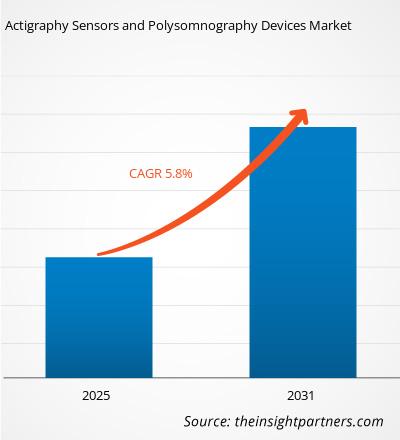
The Actigraphy Sensors And Polysomnography Devices market was valued at US$ 3.23 billion in 2025 and is expected to reach US$ 6.9 billion by 2034; it is estimated to record a CAGR of 8.8% during 2026-2034.
Actigraphy Sensors and Polysomnography Devices Market Assessment and Insights
- North America: The Actigraphy sensors and polysomnography devices market share in 2025 is estimated at 37–39%, with CAGR between 2026–2034 at 9.4–9.8%, supported by sleep lab density, connected home testing, physician referrals, and payer-backed diagnostic pathways.
- US: Share in 2025 is estimated at 84–88% of North America, with CAGR between 2026–2034 at 9.3–9.7%, reflecting strong device availability, diagnostic lab networks, and wearable adoption.
- Europe: Share in 2025 is estimated at 25–27%, with CAGR between 2026–2034 at 8.5–8.9%; Germany, the UK, France, Italy, and Spain lead through specialist sleep centers and public reimbursement.
- Asia Pacific: Share in 2025 is estimated at 24–26%, with CAGR between 2026–2034 at 11.1–11.5%; China, Japan, India, South Korea, and Australia benefit from hospital expansion and consumer health tracking.
- Largest Segment: Polysomnography Devices held a market share range of 56–60% in 2025, with CAGR between 2026–2034 at 8.9–9.3%, due to clinical diagnostic reliability.
- High Growth Segment: Wireless Technology held a market share range of 39–43% in 2025, with CAGR between 2026–2034 at 11.4–11.8%, supported by home monitoring and cloud-based workflows.
- Key companies analyzed in detail: Koninklijke Philips N.V., ResMed Inc., F. Hoffmann-La Roche Ltd, Compumedics Limited, Natus Medical Incorporated, Google LLC, Garmin Ltd., Medtronic plc, SomnoMed Limited, Sleep.ai Inc.
Source: The Insight Partners' analysis based on proprietary research, government publications, company annual reports, investor presentations, industry databases, and expert interviews.
The development of technology has driven the actigraphy sensors and polysomnography devices industry from lab-based overnight diagnosis to hybrid approaches that incorporate lab-based polysomnography, sleep apnea testing in the home environment, wrist-mounted actigraphy, cloud-based scoring and patient-oriented apps. The production drivers include miniature sensors, disposability, battery efficiency, wireless communication, and software validation. Diagnostic companies have started paying attention to usability, signal quality, sleep staging accuracy, and connectivity to reporting systems.
Future growth will come from underdeveloped regions, which need to improve their sleep disorder diagnosis practices. Favorable regulatory trends will be medical devices quality, digital healthcare, and home sleep tests standardization. Investments will go to disposable products, AI-powered scoring, pharmacy-based screening, diagnostic labs’ capacity building, and consumer to physician data pipelines that save time but ensure clinical credibility.
Actigraphy Sensors and Polysomnography Devices Market Report Scope
| Report Attribute | Details |
|---|---|
| Market size in 2025 | US$ 3.23 Billion |
| Market Size by 2034 | US$ 6.9 Billion |
| Global CAGR (2026 - 2034) | 8.8% |
| Historical Data | 2021-2024 |
| Forecast period | 2026-2034 |
Actigraphy Sensors and Polysomnography Devices Market Analysis
Increased demand comes due to growing sleep apnea awareness, obesity associated risks, cardiometabolic co-morbid conditions, and increased understanding of the importance of diagnosing sleep disorders in terms of decreased productivity and health impacts in the long run. It will be beneficial for the actigraphy sensors and polysomnography devices market trends, since more patients will require not only the symptom assessment, but the diagnosis and monitoring of their condition. The system consists of sleep medicine practitioners, sleep laboratories, hospitals, pharmacies, wearable devices providers, respiratory care facilities, and digital health platforms.
Changing supply factors relate to the transition towards connectivity and scalability of sleep tests. Traditional polysomnography is still crucial for complicated cases, children’s evaluation, neurological sleep disorders and non-informative home tests. Actigraphy sensors and wireless devices provide more opportunities for insomnia, circadian rhythm, treatment compliance and decentralized studies.
The actigraphy sensors and polysomnographic devices market report is based on the convergence of diagnostic devices used in healthcare practices and consumer goods that operate in sleep health ecosystem. The firms which have influenced the clinical path include ResMed Inc., Compumedics Limited, Natus Medical Incorporated, SomnoMed Limited, and Koninklijke Philips N.V. The firms which have influenced the consumer interaction include Google LLC, Garmin Ltd., and Sleep.ai Inc.
Data capture and dissemination have been of greater importance strategically. Medtronic plc and F. Hoffmann-La Roche Ltd have retained their relevance due to advanced medical technologies and monitoring in healthcare ecosystems. Investments in disposables in home-testing devices, artificial intelligence in data analytics, dashboard technology, and collaboration between pharmacies, laboratories, and physicians are made.
● REPORT CUSTOMIZATION
Tailor This Report To Align With Your Specific Business Requirements
This report can be customized to align precisely with your business objectives, scope, and target markets. Customization options include tailored segmentation, geography, competitive analysis, and strategic insights to support informed decision-making.
Customize This Report →WHAT YOU CAN ADJUST
- ● Segmentations
- ● Geography
- ● Competitive Analysis
- ● Language Preferences
Actigraphy Sensors and Polysomnography Devices Market: Strategic Insights
Regional Insights
North America Actigraphy sensors and polysomnography devices market
North America accounted for an estimated 37–39% share in 2025 and is projected to grow at a 9.4–9.8% CAGR during 2026–2034. The territory has high awareness about sleep apnea, presence of sleep labs, approved reimbursement of home tests, as well as good penetration of connected devices. The demand is driven by obesity, cardiovascular risk assessment, and employer attention to wellness programs.
The territory’s market shares of actigraphy and PSG devices benefit from the network of diagnostics labs, prescription-driven home sleep tests, as well as willingness of consumers to wear connected devices for sleep monitoring. Hospitals keep using polysomnography for complicated cases, whereas pharmacies and e-commerce make diagnostics equipment more available. Cloud technologies alleviate administrative load for high-volume clinics.
U.S. Actigraphy sensors and polysomnography devices market
The U.S. represented 84–88% of North America in 2025 and is expected to expand at a 9.3–9.7% CAGR through 2034. The demand is backed by sleep medicine experts, independent diagnostic testing centers, health insurance coverage, and the widespread consumer adoption of smart watches and respiratory connected devices. Home-based testing is preferred in cases where the clinical risk is clear.
Market penetration is extensive both in clinical diagnostic testing solutions and consumer applications. Some of the leading competitors include ResMed Inc., Compumedics Limited, Natus Medical Incorporated, Google LLC, Garmin Ltd., and Sleep.ai Inc. The application trend is focused on the detection of obstructive sleep apnea and insomnia monitoring patterns.
Europe Actigraphy sensors and polysomnography devices market
Europe held an estimated 25–27% share in 2025 and is forecast to grow at an 8.5–8.9% CAGR during 2026–2034. There are well-structured respiratory and sleep medicine pathways in the UK, whereas Germany is the most advanced country in terms of specialty density, hospital sleep laboratories, and reimbursement for diagnostics tests.
France, Italy, and Spain are contributing through public healthcare systems, private diagnostic centers, and by adopting home sleep apnea testing in order to lower waiting lists. There is disciplined adoption in Europe because there is a focus on device validation, privacy issues, and clinical evaluation. The adoption will continue to be strong because sleep testing will have more links with cardiology, neurology, occupational health, and respiratory diseases.
APAC Actigraphy sensors and polysomnography devices market
APAC accounted for an estimated 24–26% share in 2025 and is projected to grow at an 11.1–11.5% CAGR during 2026–2034. China is dominant in terms of volume, whereas Japan and South Korea exhibit high level of device sophistication as well as expertise in clinical sleep testing.
The presence of India and Australia adds to the growth owing to the involvement of private hospitals, diagnostics chains, pharmacies, and increasing wearable adoption. The industrial factors that can contribute to growth are electronics manufacturing, software development, and low cost of sensors.
Middle East & Africa Actigraphy sensors and polysomnography devices market
Middle East & Africa is expected to grow at a 7.3–7.7% CAGR during 2026–2034, led by Saudi Arabia. The UAE, South Africa, and Rest of MEA contribute through tertiary hospitals, imported diagnostic systems, and expanding sleep medicine awareness.
Investments in healthcare by Gulf nations powered by energy resources have been aiding hospital improvements, specialized clinics, and use of digital technologies for healthcare. In addition, South Africa is a key subregional diagnostic center. Some of the limitations are shortage of sleep doctors, inconsistency in coverage, and dependency on equipment from other nations.
Segmentation Analysis
Product Type
The Product Type segment is expected to grow at a 9.6–10.0% CAGR during 2026–2034. The actigraphy sensors and polysomnography devices market scope across this segment is shaped by diagnostic complexity, care setting, mobility needs, and clinician confidence in recorded signals. Polysomnography remains the reference pathway for complex sleep disorders, while actigraphy expands use in ambulatory monitoring and longitudinal sleep behavior assessment.
- Actigraphy Sensors: This sub-segment is gaining relevance for circadian rhythm assessment, insomnia monitoring, pediatric sleep evaluation, and decentralized research where continuous wrist-based movement data supports longitudinal interpretation.
- Polysomnography Devices: This sub-segment remains the clinical anchor because multi-channel recording captures EEG, airflow, oxygen saturation, respiratory effort, limb movement, and cardiac signals for definitive sleep evaluation.
Technology Type
The Technology Type segment is projected to grow at a 10.2–10.6% CAGR during 2026–2034. Technology selection depends on patient setting, data-transfer speed, portability, and security requirements. Wireless technology is advancing fastest because home testing, remote uploads, and cloud scoring reduce operational friction. USB and GPS-enabled features remain relevant where controlled transfer, traceability, or movement context supports sleep interpretation.
- USB: This sub-segment remains useful for secure local data transfer, controlled clinical workflows, and diagnostic labs requiring predictable device download, archiving, and technician review.
- Wireless Technology: This sub-segment leads growth because Bluetooth, Wi-Fi, and cloud connectivity support home sleep testing, remote monitoring, faster reporting, and lower patient return burden.
- GPS: This sub-segment is selectively relevant for activity-linked sleep assessment, circadian research, travel-related disruption studies, and outdoor movement context in advanced actigraphy applications.
- Other Technology Types: This sub-segment includes complementary sensor and connectivity approaches that support specialized recording, hybrid monitoring, and evolving device configurations.
Distribution Channel
The Distribution Channel segment is forecast to grow at a 9.7–10.1% CAGR during 2026–2034, supported by diversified access points for sleep testing and monitoring. Hospitals remain essential for complex cases, pharmacies are emerging as screening and referral nodes, and diagnostic labs drive high-volume testing. Channel strategy increasingly depends on device training, disposable supply, patient logistics, and software reporting integration.
- Hospitals: This sub-segment holds strong clinical authority because complex sleep disorders, pediatric cases, neurological comorbidities, and inconclusive home tests often require full laboratory-based evaluation.
- Pharmacies: This sub-segment is emerging as a convenient screening and device distribution point, especially where consumers seek accessible sleep health guidance before specialist referral.
- Diagnostic Labs: This sub-segment is strategically important because independent and hospital-affiliated labs manage high test volumes, scoring workflows, device inventory, and physician report delivery.
Opportunity Snapshot
| Segment Name | Revenue Contribution | Trend Tag | Adoption Stage |
| Hospitals | High | Complex Testing | Mature |
| Pharmacies | Medium | Sleep Screening | Scaling |
| Diagnostic Labs | High | Home Testing | Scaling |
Actigraphy Sensors and Polysomnography Devices Market Growth Drivers and Impact Analysis
Rising Burden of Sleep-Disordered Breathing
Sleep disordered breathing serves as one of the key demand triggers due to the connection between sleep apnea and heart disease, stroke, diabetes, fatigue, and occupational problems. The heightened knowledge of physicians is driving an increase in referrals from cardiology, pulmonology, neurology, bariatric treatment, and primary care specialists. Market implication includes increased utilization of H-SAT for uncomplicated cases and the continued need for polysomnography for complicated patients. Device companies will profit through repeat testing, replacement sensors, disposables, and software subscriptions, while diagnostic labs will gain through efficient workflows and hospital through advanced assessments.
Shift From Sleep Labs to Home-Based Testing
Home testing has been growing due to the limitations that many health care facilities have regarding the availability of laboratory space, long waiting periods, and preference for testing at home. With the help of wireless devices, disposable sensors, application and upload capabilities, providers are now able to do more testing without having to add extra bed capacity. Market impacts of this trend include increased product turnover, growing single-use tests, and the need for software that automates testing scoring and results. This driver also affects distribution economics since laboratories and pharmacies are able to assist with the logistical needs of patients.
Consumer Wearables Moving Toward Clinical Referral Pathways
The advent of consumer wearables is making consumers more aware of their sleep through provision of constant data regarding the duration of sleep, movements, levels of oxygen, and any anomalies with their breathing. While these devices may not be able to diagnose the problem directly, they will push consumers to consult with health professionals when there are trends that might point toward problems with their sleep. In practice, the implication is an expanding funnel at the diagnostic side, particularly amongst young adults. Data from wearables can also help monitor individuals longitudinally post-clinical tests.
Actigraphy Sensors and Polysomnography Devices Market Future Trends
AI-Assisted Scoring and Continuous Sleep Phenotyping
Future trends in the market of actigraphy and PSG technologies would focus on the development of AI-based scoring and quality assessment along with continuous sleep phenotyping. The algorithms would allow clinicians to utilize technology which would focus more on technologist evaluation, low-quality signals, daily variations, and reporting in an efficient manner. This technology may prove helpful in gaining access to such services without negating technologist evaluation. It may also be helpful in integrating sleep phenotypes with cardiometabolic risks, adherence to therapies, and behavioral interventions. The vendors that succeed in proving the effectiveness of their algorithms among varied populations will earn greater credibility among physicians and insurers.
Convergence of Medical Devices and Consumer Sleep Platforms
Convergence between diagnostic devices under regulation and consumer sleep platforms is anticipated to be even stronger during the forecast period. Consumers will come with more wearables, but the physicians will require clinically meaningful results instead of mere wellness parameters. It is envisaged that the future diagnostic processes will encompass screening, prescription testing, specialists' review, and follow-up treatment. It is clear that this development will facilitate collaborations between the manufacturers of devices, software vendors, pharmacies, and laboratories for diagnostics. Successful competitive strategies will consist of data management, integration, and demarcation of wellness and diagnostics.
Actigraphy Sensors and Polysomnography Devices Market Opportunities
Single-Use Home Sleep Testing at Scale
Single-use home sleep testing represents an opportunity due to the desire for quick turn-around times, reduced concerns about infection control, and simplicity in terms of logistics. The opportunities for the actigraphy sensors and polysomnography devices market forecast lie in the creation of value through the use of disposable sensors along with cloud scoring, patient instructions automation, and laboratory diagnostics reporting. It is possible to sell devices through subscription-based services to independent labs, pharmacies, and telehealth companies. It would be most successful in the United States, Australia, Japan, and APAC urban regions where there is testing demand higher than the lab capability.
Pharmacy-Led Screening and Referral Networks
Screening through pharmacists will increase accessibility by bringing the process of sleep health evaluation close to consumers. Pharmacies will be able to provide devices for home testing, conduct survey of symptoms, help with setting up devices, and forward test results to diagnostic centers or doctors. The approach is appealing in those cases when there are not enough sleep specialists available and patients procrastinate on visiting a doctor. Companies manufacturing such devices will be able to collaborate with pharmacy chains for training, software and educational tools. It is beneficial for diagnostic centers to have a referral process.
Recent Developments
- December 2025: ResMed Inc. received U.S. FDA clearance for Personalized Therapy Comfort Settings, marketed as Smart Comfort, an AI-enabled digital medical device designed to recommend personalized CPAP comfort settings for obstructive sleep apnea users. The company said the solution draws on more than 100 million nights of de-identified real-world sleep data and will begin limited U.S. beta launch in early 2026.
- September 2025: Compumedics Limited received U.S. FDA 510(k) clearance for Somfit-D, a single-use home sleep testing device for adults suspected of sleep-related breathing disorders. The company stated the device records forehead-based signals and supports sleep staging, snoring level assessment, and sleep-related breathing disorder detection, complementing its reusable Somfit platform.
- August 2025: Sleep.ai Inc. formerly SleepScore Labs, announced a US$ 5.5 million venture funding round and unified rebrand to accelerate commercialization of its AI-powered sleep intelligence platform. The company cited more than 800 million hours of proprietary sleep data, over 250 scientific studies, and 90+ scientific publications supporting partner integrations across health, wellness, insurance, and lifestyle channels.
Frequently Asked Questions

- Comprehensive Market Sizing and Forecast Analysis
- Detailed Segmentation Analysis
- In-Depth Market Dynamics Assessment
- Regional and Country-Level Insights
- Competitive Landscape and Company Benchmarking
- Strategic Business Intelligence
Recent Reports
Testimonials

The Insight Partners' SCADA System Market report is comprehensive, with valuable insights on current trends and future forecasts. The team was highly professional, responsive, and supportive throughout. We are very satisfied and highly recommend their services.
RAN KEDEM Partner, Reali Technologies LTDs
I requested a report on a very specific software market and the team produced the report in a few days. The information was very relevant and well presented. I then requested some changes and additions to the report. The team was again very responsive and I got the final report in less than a week.
JEAN-HERVE JENN Chairman, Future Analytica
We worked with The Insight Partners for an important market study and forecast. They gave us clear insights into opportunities and risks, which helped shape our plans. Their research was easy to use and based on solid data. It helped us make smart, confident decisions. We highly recommend them.
PIYUSH NAGPAL Sr. Vice President, High Beam Global
The Insight Partners delivered insightful, well-structured market research with strong domain expertise. Their team was professional and responsive throughout. The user-friendly website made accessing industry reports seamless. We highly recommend them for reliable, high-quality research services
YUKIHIKO ADACHI CEO, Deep Blue, LLC.
This is the first time I have purchased a market report from The Insight Partners.While I was unsure at first, I visited their web site and felt more comfortable to take the risk and purchase a market report.I am completely satisfied with the quality of the report and customer service. I had several questions and comments with the initial report, but after a couple of dialogs over email with their analyst I believe I have a report that I can use as input to our strategic planning process.Thank you so much for taking the extra time and making this a positive experience.I will definitely recommend your service to others and you will be my first call when we need further market data.
JOHN SUZUKI President and Chief Executive Officer, Board Director, BK Technologies
I wish to appreciate your support and the professionalism you displayed in the course of attending to my request for information regarding to infectious disease IVD market in Nigeria. I appreciate your patience, your guidance, and the fact that you were willing to offer a discount, which eventually made it possible for us to close a deal. I look forward to engaging The Insight Partners in the future, all thanks to the impression you have created in me as a result of this first encounter.
DR CHIJIOKE ONYIA MANAGING DIRECTOR, PineCrest Healthcare Ltd.Reason to Buy
- Informed Decision-Making
- Understanding Market Dynamics
- Competitive Analysis
- Identifying Emerging Markets
- Customer Insights
- Market Forecasts
- Risk Mitigation
- Boosting Operational Efficiency
- Strategic Planning
- Investment Justification
- Tracking Industry Innovations
- Aligning with Regulatory Trends





 Get Free Sample for