
Adhesion Barrier Market Drivers, Opportunities, Trends, and Forecasts by 2034
Coverage: by Product (Synthetic Adhesion Barriers and Natural Adhesion Barriers); Formulation (Liquid Formulations, Film Formulations and Gel Formulations); Application (General Abdominal Surgeries, Gynecological Surgeries, Orthopedic Surgeries, Cardiovascular Surgeries and Other Surgeries), and Geography (North America, Europe, Asia Pacific, and South and Central America)
- Status : Data Released
- Report Code : TIPRE00004917
- Category : Life Sciences
- No. of Pages : 150
- Available Report Formats :


- Last update date : July 15, 2026


2025 Market Size
US$ 893.76 Mn
Base year value
2034 Forecast
US$ 1,562.34 Mn
Projected by 2034
CAGR 2026-2034
6.4 %
Growth rate
Addressable Market
US$ 11,110.36 Mn
(2026-2034)
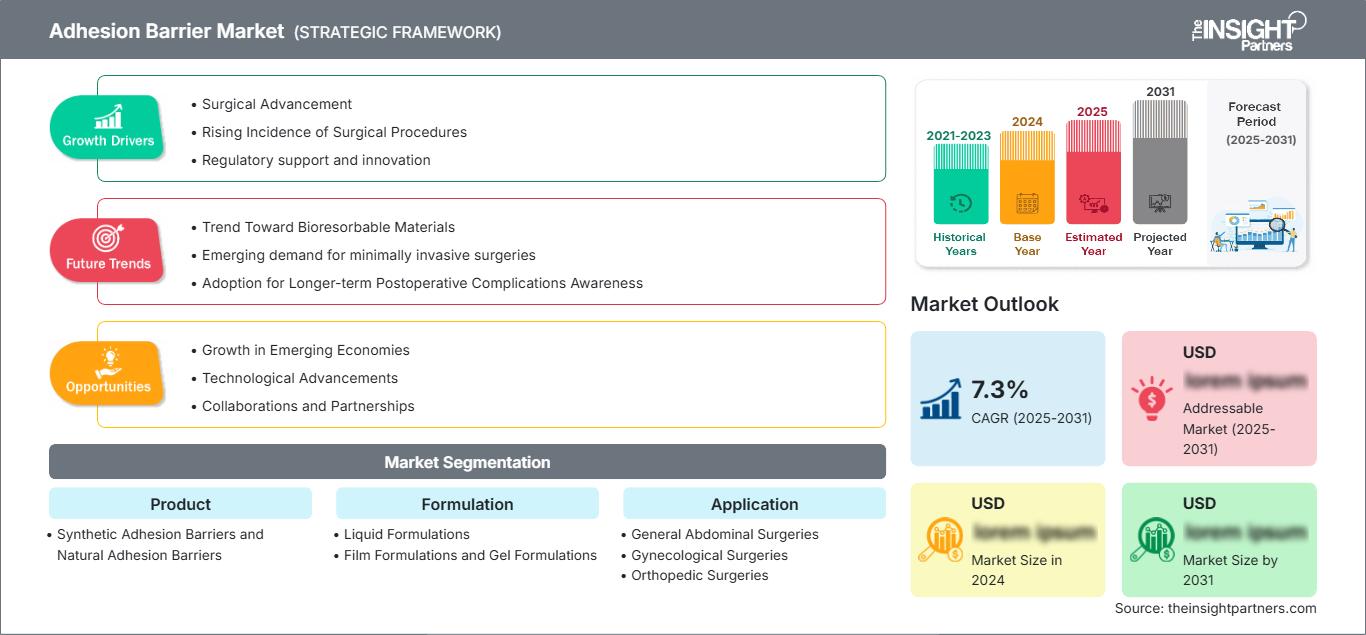
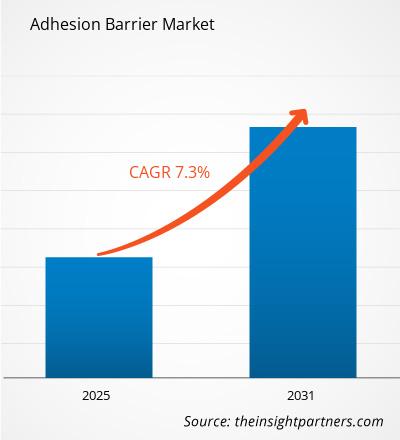
The Adhesion Barrier Market size was valued at US$ 893.76 Million in 2025 and is projected to reach US$ 1,562.34 Million by 2034, expanding at a CAGR of 6.4% from 2026 to 2034. Growth is supported by rising surgical volumes, increasing post-operative complication awareness, and expanding adoption of minimally invasive procedures across abdominal, gynecological, and orthopedic interventions. Demand is further reinforced by improved biomaterial innovation enhancing safety and efficacy profiles of adhesion prevention products.
According to the adhesion barrier market report, North America is expected to lead expansion with an estimated CAGR of 6.6–7.2%, driven by high surgical procedure rates and strong hospital adoption of advanced adhesion prevention solutions. Increasing prevalence of chronic diseases requiring surgical intervention and favorable reimbursement frameworks are accelerating product penetration. The region also benefits from strong presence of leading medical device manufacturers and early adoption of synthetic barrier technologies.
Adhesion Barrier Market Assessment and Insights
- North America: Holds 40–44% Adhesion Barrier Market share in 2025, growing at 6.6–7.2% CAGR (2026–2034). High surgical volumes, strong healthcare infrastructure, and rapid adoption of synthetic adhesion barriers support regional dominance across hospitals and ambulatory centers.
- US: Accounts for 80–85% of North America share in 2025, expanding at 6.7–7.3% CAGR (2026–2034). Advanced surgical protocols and strong insurance coverage accelerate adhesion prevention product usage.
- Europe: Represents 25–28% share in 2025, growing at 6.0–6.5% CAGR (2026–2034). Germany, France, UK, Italy, and Spain lead adoption due to structured surgical safety guidelines and aging population-driven surgeries.
- Asia Pacific: Holds 20–24% share in 2025, growing at 7.0–7.8% CAGR (2026–2034). China, India, Japan, and South Korea drive demand due to rising surgical procedures and expanding healthcare infrastructure.
- Largest Segment (Synthetic Adhesion Barriers): Contributes 55–60% share in 2025, growing at 6.3–6.8% CAGR (2026–2034) due to superior efficacy and ease of application in major surgeries.
- High Growth Segment (Gel Formulations): Holds 30–34% share in 2025, growing at 6.8–7.5% CAGR (2026–2034) due to increasing minimally invasive surgical adoption.
- Key companies analyzed: Anika Therapeutics, Inc., Baxter International Inc., Becton, Dickinson and Company, Betatech Medical, FzioMed, Inc., Innocoll Holdings plc, Integra LifeSciences Holdings Corporation, MAST Biosurgery AG, Johnson & Johnson Services, Inc., Sanofi-aventis U.S. LLC.
Source: The Insight Partners' analysis based on proprietary research, government publications, company annual reports, investor presentations, industry databases, and expert interviews.
The adhesion barrier market growth has been driven by remarkable developments in biomaterial science and surgical procedures. In addition to the former reliance on surgical procedures alone, the present day has seen the incorporation of standard guidelines for adhesion prevention using both bioresorbable and synthetic or natural barriers. Surgeons have been made aware of post-surgery problems such as infertility and intestinal blockage, which have made their use more popular. Regulatory authorities and surgical associations have also put emphasis on adhesion prevention in complex abdominal and gynecological surgeries.
The adhesion barrier market forecast indicates that future growth in the market would depend on technological developments in hybrid biomaterials and drug-eluting barrier systems. The increased availability of surgical facilities in developing countries, along with the growing number of minimally invasive surgeries, would further increase market penetration. The integration of new polymer technologies and biologically active coatings would increase the efficacy of adhesion barriers.
Adhesion Barrier Market Report Scope
| Report Attribute | Details |
|---|---|
| Market size in 2025 | US$ 893.76 Million |
| Market Size by 2034 | US$ 1,562.34 Million |
| Global CAGR (2026 - 2034) | 6.4% |
| Historical Data | 2021-2024 |
| Forecast period | 2026-2034 |
Adhesion Barrier Market Analysis
Adhesion barrier market trends show continuous growth in an ecosystem fueled by the rising number of surgical procedures worldwide, as well as by increasing awareness of postoperative complications. Market demand is highly dependent on abdominal, gynecological, and orthopedic surgical procedures that carry a significant risk of developing adhesions. Hospitals continue to be the major end-users, while ambulatory surgery centers are gaining popularity due to faster recovery times and cost-efficiency. Biomaterial manufacturers, medical device suppliers, and healthcare organizations make up the supply chain.
The supply side of the market is affected by innovations in polymer science, like those based on polyethylene glycol and hyaluronic acid. Companies are working on making adhesion barrier materials more biodegradable, biocompatible, and user-friendly. Cooperation between research institutes and device manufacturers contributes significantly to innovation in the market. Approvals from regulatory agencies such as the FDA and the EMA have become increasingly important for product commercialization.
The competitive landscape is moderately consolidated, with companies such as Baxter International Inc., Integra LifeSciences Holdings Corporation, and Johnson & Johnson Services, Inc. leading in synthetic barrier innovation. Meanwhile, Anika Therapeutics, Inc. and FzioMed, Inc. are strengthening portfolios in hydrogel-based solutions. Investment trends show increasing funding in next-generation anti-adhesion biomaterials and combination products. Strategic partnerships and product pipeline expansion are central to competitive positioning across global markets.
● REPORT CUSTOMIZATION
Tailor This Report To Align With Your Specific Business Requirements
This report can be customized to align precisely with your business objectives, scope, and target markets. Customization options include tailored segmentation, geography, competitive analysis, and strategic insights to support informed decision-making.
Customize This Report →WHAT YOU CAN ADJUST
- ● Segmentations
- ● Geography
- ● Competitive Analysis
- ● Language Preferences
Adhesion Barrier Market: Strategic Insights
Regional Insights
North America adhesion barrier market
North America dominates the adhesion barrier market due to advanced surgical infrastructure and high procedural volumes. The region holds 40–44% share in 2025, growing at a 6.6–7.2% CAGR (2026–2034). Increasing prevalence of chronic diseases requiring surgical intervention, including gastrointestinal and gynecological conditions, significantly drives demand. Hospitals and ambulatory surgical centers widely adopt synthetic adhesion barriers due to improved clinical outcomes and reduced postoperative complications.
The USA and Canada benefit greatly from their advanced payment methods and higher adoption rates of MIS surgery procedures. Bioresorbable and hydrogel adhesion barrier products have become very popular among surgeons since they help to reduce patient recovery time. Ongoing advancements by leading medical device companies, along with evolving surgical protocols, continue to drive regional market growth.
U.S. Adhesion Barrier Market
The high rate of surgeries, along with the developed infrastructure in hospitals, results in high use of these preventive products. The growing trend towards safer surgeries and the minimization of post-surgery complications encourages their widespread clinical use.
Usage is mainly prevalent in hospitals and specialized surgical centers especially for abdominal and gynecological operations. A high level of insurance coverage, along with the introduction of FDA-approved biomaterials, speeds up the adoption process. Companies like Baxter International Inc. and Johnson & Johnson Services, Inc. play a prominent role here.
Europe Adhesion Barrier Market
Germany, France, the UK, Italy, and Spain are considered key contributors because of their highly organized healthcare and surgical procedures standards. An aging population and elective surgeries are factors driving increased demand for adhesion prevention products.
Germany is known for its advances in surgery and hospitals’ implementation of such technologies, whereas France has strict regulations concerning clinical safety. The UK gains advantages because of its NHS-led standards for surgical operations, whereas Italy and Spain are seeing increasing adoption of minimally invasive procedures.
APAC Adhesion Barrier Market
Asia Pacific accounts for 20–24% share in 2025, growing at a 7.0–7.8% CAGR (2026–2034). China, India, Japan, South Korea, and Australia are key markets. Rising healthcare expenditure, increasing surgical awareness, and expanding hospital infrastructure support growth.
China leads due to large patient base and rapid hospital expansion, while India shows strong growth in surgical accessibility. Japan and South Korea focus on advanced minimally invasive procedures, and Australia benefits from high surgical safety standards. Government healthcare investments further strengthen regional expansion.
Middle East & Africa Adhesion Barrier Market
MEA holds a smaller but steadily growing share, supported by healthcare modernization initiatives. Saudi Arabia and the UAE lead due to advanced hospital infrastructure and rising surgical volumes. South Africa shows gradual adoption, while other regions remain in early development stages.
The region grows at 5.8–6.4% CAGR (2026–2034) driven by expanding private healthcare facilities and increasing medical tourism in Gulf countries. Investments in surgical infrastructure and rising awareness of postoperative complications are improving product penetration across hospitals and specialty clinics.
Segmentation Analysis
Product
The Product segment, including synthetic and natural adhesion barriers, grows due to increasing surgical complexity and demand for effective adhesion prevention. Synthetic barriers dominate due to superior biocompatibility and ease of application, while natural barriers are preferred in sensitive surgical cases. Rising clinical awareness and regulatory support are strengthening product adoption globally.
- Synthetic Adhesion Barriers: Widely used in high-risk surgeries due to strong clinical efficacy and predictable degradation profiles, supporting reduced postoperative adhesion formation and improved surgical outcomes.
- Natural Adhesion Barriers: Derived from biological materials, these are preferred in procedures requiring enhanced biocompatibility and reduced inflammatory response, especially in gynecological and soft tissue surgeries.
Formulation
The Formulation segment growth driven by innovation in application methods and improved surgical usability. Gel formulations are gaining traction due to ease of application, while films remain widely used in open surgeries.
- Liquid Formulations: Applied in complex surgical fields, offering uniform coverage and adaptability in minimally invasive procedures with irregular anatomical surfaces.
- Film Formulations: Preferred in open surgeries due to ease of placement and strong physical barrier formation over tissue surfaces.
- Gel Formulations: Rapidly growing due to minimally invasive surgery adoption, offering superior adaptability and controlled application in confined surgical spaces.
Application
The Application segment growth driven by rising surgical volumes across multiple specialties. Gynecological and abdominal surgeries remain key contributors due to high adhesion risk.
- General Abdominal Surgeries: High adoption due to frequent adhesion complications post gastrointestinal procedures requiring preventive intervention.
- Gynecological Surgeries: Strong demand driven by fertility preservation concerns and high risk of postoperative adhesions.
- Orthopedic Surgeries: Increasing adoption due to joint reconstruction and implant-related adhesion risks.
- Cardiovascular Surgeries: Moderate adoption focused on preventing tissue adhesions near critical structures.
- Other Surgeries: Includes urological and neurosurgical applications with growing preventive usage.
Opportunity Snapshot
| Application | Revenue Contribution (High/Medium/Low) | Trend Tag | Adoption Stage |
| General Abdominal Surgeries | High | Post Surgery | Mature |
| Gynecological Surgeries | High | Fertility Care | Scaling |
| Orthopedic Surgeries | Medium | Joint Repair | Scaling |
| Cardiovascular Surgeries | Medium | Cardiac Protection | Emerging |
| Other Surgeries | Low | Specialty Use | Emerging |
Adhesion Barrier Market Growth Drivers and Impact Analysis
Rising global surgical volume and postoperative complication burden
The increase in the number of global surgeries performed in the areas of abdominoplasty, gynecology, and orthopedics constitutes another important factor driving the uptake of adhesion barriers. The problem of post-surgical adhesions continues to be one of the most frequent post-operative conditions associated with problems such as pain, infertility, and bowel blockage. Adhesion prevention procedures are being incorporated into hospitals' regular operations. Increased awareness among both surgeons and healthcare organizations regarding patient outcomes contributes to increased use of these products.
Advancements in biomaterial-based adhesion prevention technologies
Continued innovations in the biomaterials sector, such as hyaluronic acid, polyethylene glycol, and bioresorbable polymers, have introduced new approaches to preventing adhesions. Biomaterials have improved biocompatibility, degradation, and ease of handling during surgery. Companies have focused on developing the next generation of hydrogels and films, which offer better tissue coverage and lower inflammation. Clinical trials and approvals are assisting in product development. The innovations are making surgeries safer and enabling greater use in complex procedures.
Expansion of minimally invasive and outpatient surgical procedures
Increasing demand for application-friendly adhesion barrier systems is being driven by the trend toward less-invasive and ambulatory surgeries worldwide. Laparoscopy and robotic surgeries will necessitate unique adhesion barrier systems that include gels and liquids and can be easily administered at surgical sites. There is increased use of these systems in ambulatory surgical centers to reduce hospital readmission rates. Cost-cutting strategies in health care are also boosting the usage of these adhesion barriers.
Adhesion Barrier Market Future Trends
Shift toward bioactive and drug-eluting adhesion barriers
Emerging research focuses on bioactive adhesive barriers that release anti-inflammatory and anti-fibrotic substances at surgical sites. The next generation of such materials is expected to reduce the incidence of adhesions while promoting wound healing. The convergence of pharmaceuticals and devices is driving the development of combination technologies to enhance treatment effectiveness. There will be increased use of such products as clear paths for their regulation come into view. Such developments will prove especially important in high-risk surgeries.
Integration of advanced hydrogels and smart biomaterials
Biomaterials and hydrogel systems are becoming popular owing to their capacity to respond to complicated surgical settings. The materials offer controlled swelling, adhesion prevention, and better tissue compatibility. Research organizations and materials companies are working together to develop materials that respond to physiological changes, such as pH and temperature. The development is anticipated to significantly enhance surgical outcomes. Increased demand for personalized medical treatment is driving the adoption of intelligent adhesion-prevention methods.
Adhesion Barrier Market Opportunities
Expansion in emerging healthcare markets
There are positive prospects for development in emerging countries due to rapid advances in healthcare facilities and greater availability of surgeries. Emerging countries across the Asia-Pacific, Latin America, and parts of the MEA region are experiencing a growing use of modern surgery. Government investment in hospital upgrades and the growth of the private sector in healthcare facilities have created favorable conditions for market entry. Growing awareness of post-surgery complications is also driving the use of surgeries.
Integration of adhesion barriers in standard surgical protocols
There is increasing potential to integrate adhesion barriers into established surgical protocols across several medical fields. There is an increase in the adoption of protocols based on scientific findings that incorporate adhesions as a standard part of high-risk surgery. This trend is driven by scientific research demonstrating lower complication rates and cost savings with the use of adhesion barriers. Surgical training and expanded insurance coverage will be additional drivers of increased use.
Recent Developments
- April 2026: Baxter International Inc. expanded its surgical product portfolio with enhanced hydrogel-based adhesion barrier formulations designed to improve tissue separation efficiency in complex abdominal procedures.
- September 2025: Integra LifeSciences Holdings Corporation announced regulatory progress for next-generation bioresorbable adhesion prevention products targeting minimally invasive surgical applications.
- February 2025: Anika Therapeutics, Inc. advanced clinical studies on hyaluronic acid-based adhesion barrier systems aimed at improving postoperative recovery outcomes in orthopedic surgeries.
Frequently Asked Questions

- Comprehensive Market Sizing and Forecast Analysis
- Detailed Segmentation Analysis
- In-Depth Market Dynamics Assessment
- Regional and Country-Level Insights
- Competitive Landscape and Company Benchmarking
- Strategic Business Intelligence
Recent Reports
Testimonials

The Insight Partners' SCADA System Market report is comprehensive, with valuable insights on current trends and future forecasts. The team was highly professional, responsive, and supportive throughout. We are very satisfied and highly recommend their services.
RAN KEDEM Partner, Reali Technologies LTDs
I requested a report on a very specific software market and the team produced the report in a few days. The information was very relevant and well presented. I then requested some changes and additions to the report. The team was again very responsive and I got the final report in less than a week.
JEAN-HERVE JENN Chairman, Future Analytica
We worked with The Insight Partners for an important market study and forecast. They gave us clear insights into opportunities and risks, which helped shape our plans. Their research was easy to use and based on solid data. It helped us make smart, confident decisions. We highly recommend them.
PIYUSH NAGPAL Sr. Vice President, High Beam Global
The Insight Partners delivered insightful, well-structured market research with strong domain expertise. Their team was professional and responsive throughout. The user-friendly website made accessing industry reports seamless. We highly recommend them for reliable, high-quality research services
YUKIHIKO ADACHI CEO, Deep Blue, LLC.
This is the first time I have purchased a market report from The Insight Partners.While I was unsure at first, I visited their web site and felt more comfortable to take the risk and purchase a market report.I am completely satisfied with the quality of the report and customer service. I had several questions and comments with the initial report, but after a couple of dialogs over email with their analyst I believe I have a report that I can use as input to our strategic planning process.Thank you so much for taking the extra time and making this a positive experience.I will definitely recommend your service to others and you will be my first call when we need further market data.
JOHN SUZUKI President and Chief Executive Officer, Board Director, BK Technologies
I wish to appreciate your support and the professionalism you displayed in the course of attending to my request for information regarding to infectious disease IVD market in Nigeria. I appreciate your patience, your guidance, and the fact that you were willing to offer a discount, which eventually made it possible for us to close a deal. I look forward to engaging The Insight Partners in the future, all thanks to the impression you have created in me as a result of this first encounter.
DR CHIJIOKE ONYIA MANAGING DIRECTOR, PineCrest Healthcare Ltd.Reason to Buy
- Informed Decision-Making
- Understanding Market Dynamics
- Competitive Analysis
- Identifying Emerging Markets
- Customer Insights
- Market Forecasts
- Risk Mitigation
- Boosting Operational Efficiency
- Strategic Planning
- Investment Justification
- Tracking Industry Innovations
- Aligning with Regulatory Trends





 Get Free Sample for