
Adhesive Bandages Market Opportunities, Forecast, Size, Competitive Analysis till 2034
Coverage: By Type (Fabric Adhesive Bandages, Paper Adhesive Bandages, Plastic Adhesive Bandages, Transdermal Patches Market, Butterfly Closures, And Waterproof Adhesive Bandages) Application (Surgical Wound Treatment, Ulcers, Sports Injury And Other Injuries) End user (Hospital, Clinics, Ambulatory Surgery Centers And Homecare) , and Geography (North America, Europe, Asia Pacific, and South and Central America)
- Status : Data Released
- Report Code : TIPMD00002607
- Category : Life Sciences
- No. of Pages : 150
- Available Report Formats :


- Last update date : July 15, 2026


2025 Market Size
US$ 3.50 Bn
Base year value
2034 Forecast
US$ 4.89 Bn
Projected by 2034
CAGR 2026-2034
3.8 %
Growth rate
Addressable Market
US$ 38.13 Bn
(2026-2034)
The Adhesive bandages market was valued at US$ 3.37 Billion in 2025 and is projected to reach US$ 4.38 Billion by 2034, registering a CAGR of 3.8% during 2026–2034. Growth continues to be supported by increasing first-aid awareness, expanding outpatient care, rising participation in sports and recreational activities, and broader availability of wound care products through institutional and retail channels. Manufacturers are also introducing skin-friendly materials and improved adhesive technologies to enhance comfort and clinical performance.
North America remains the most established regional marketplace, supported by high healthcare expenditure, widespread adoption of advanced wound care practices, and a mature retail pharmacy network. The adhesive bandages market size across the region is expected to expand at an estimated CAGR of 3.2–3.8% through 2034, aided by growing home healthcare adoption, increasing minor surgical procedures, and continuous product innovation targeting sensitive skin, pediatric applications, and infection prevention.
Adhesive Bandages Market Assessment and Insights
- North America: North America accounted for an estimated 34–38% of the Adhesive bandages market share in 2025 and is anticipated to grow at a CAGR of 3.2–3.8% during 2026–2034. Strong healthcare infrastructure, high first-aid awareness, and established reimbursement frameworks continue supporting stable regional demand.
- US: The United States represented approximately 82–86% of the North American market in 2025 and is expected to register a CAGR of 3.2–3.7% during 2026–2034, supported by extensive retail distribution and strong institutional purchasing.
- Europe: Europe held an estimated 26–30% share in 2025 and is projected to expand at a CAGR of 3.3–3.9% during 2026–2034, led by Germany, the United Kingdom, France, Italy, and Spain, where preventive healthcare and aging populations sustain demand.
- Asia Pacific: Asia Pacific accounted for approximately 24–28% share in 2025 and is expected to record the fastest regional expansion with a CAGR of 4.5–5.2% during 2026–2034, driven primarily by China, Japan, India, South Korea, and Australia.
- Largest Segment: Non-Medicated Bandages represented an estimated 58–62% market share in 2025 and are projected to grow at a CAGR of 3.4–4.0% during 2026–2034, supported by widespread household, workplace, and sports first-aid applications.
- High Growth Segment: Online Pharmacies accounted for approximately 14–18% market share in 2025 and are anticipated to expand at a CAGR of 6.0–6.8% during 2026–2034, benefiting from digital healthcare adoption and expanding e-commerce penetration.
- Key companies analyzed in detail: Medline Industries, LP, Smith & Nephew plc, Cardinal Health, Inc., 3M Company, Mölnlycke Health Care AB, Johnson & Johnson, B. Braun Melsungen AG, Essity Aktiebolag, Beiersdorf AG, Convatec Group PLC, Hartmann USA, Inc., Dynarex Corporation, Goldwin Medicare Ltd., Detectaplast NV, Derma Sciences, Inc.
Source: The Insight Partners' analysis based on proprietary research, government publications, company annual reports, investor presentations, industry databases, and expert interviews.
Innovations in the area of wound care products have altered the Adhesive bandages market trends such that manufacturers need to concentrate more on breathable fabrics, hypoallergenic adhesives, moisture handling capabilities and antibacterial formulations. Automating the conversion and packaging processes has increased the efficiency of production without compromising the product quality. At the same time, healthcare professionals are increasingly opting for standardized wound care products that minimize the infection risk and ensure patient comfort, compelling manufacturers to diversify their product range.
In the future, developing nations will become a larger contributor to additional demand due to better access to healthcare and organized retail networks. The investments in the primary health infrastructure, occupational safety laws and digital pharmacy ecosystem will ensure better product availability. Moreover, manufacturers can be expected to build up regional production facilities and establish strategic alliances in order to ensure supply reliability and comply with changing regulations concerning product safety and performance.
Adhesive Bandages Market Report Scope
| Report Attribute | Details |
|---|---|
| Market size in 2025 | US$ 3.50 Billion |
| Market Size by 2034 | US$ 4.89 Billion |
| Global CAGR (2026 - 2034) | 3.8% |
| Historical Data | 2021-2024 |
| Forecast period | 2026-2034 |
Adhesive Bandages Market Analysis
The growing concerns about wound hygiene, increased number of procedures being carried out on an outpatient basis, and the growing engagement in recreational activities all play into adhesive bandages market development in developed and developing countries. Growing numbers of elderly patients and growing incidences of diabetes add to the need for efficient wound-protection products. The value chain is characterized by the presence of supply chains linking up raw material producers, adhesive makers, converters, distributors of health-care products, pharmacies, hospitals, and online retailers. Product differentiation is becoming more common in terms of comfort, breathability, water resistance, and compatibility with skin.
Resilience of supply chains has become an issue of growing importance due to recent interruptions in supplies of medical disposables. The producers of adhesive bandages have been looking into diversifying their supply chains, regionalizing production facilities, and automating their operations. Eco-friendly packaging and recyclable materials have also become priorities for manufacturers.
The competition still remains intense, as various multinationals compete using innovative products, territorial expansion, mergers and acquisitions, and partnerships within channels. The Adhesive bandages market report shows that existing players such as 3M Company, Johnson & Johnson, Smith & Nephew plc, Cardinal Health, Inc., Medline Industries, LP, and Mölnlycke Health Care AB constantly improve their portfolio through innovations in terms of wound care solutions, while regional producers compete through affordable prices and efficient distribution networks. The focus is being put on differentiation through materials, pediatric ranges of products, and antimicrobial solutions to ensure customer retention.
Investments continue being made in terms of manufacturing process modernization, increased digital visibility of the supply chain, and geographical expansion in rapidly growing healthcare sectors. Partnerships with hospitals and retail pharmacies, as well as online healthcare portals, are used to increase the q Adhesive bandages market presence and ensure ongoing sales. Diversification of the portfolio through specialized wound care solutions and premium adhesive products allows companies to meet changing healthcare needs.
● REPORT CUSTOMIZATION
Tailor This Report To Align With Your Specific Business Requirements
This report can be customized to align precisely with your business objectives, scope, and target markets. Customization options include tailored segmentation, geography, competitive analysis, and strategic insights to support informed decision-making.
Customize This Report →WHAT YOU CAN ADJUST
- ● Segmentations
- ● Geography
- ● Competitive Analysis
- ● Language Preferences
Adhesive Bandages Market: Strategic Insights
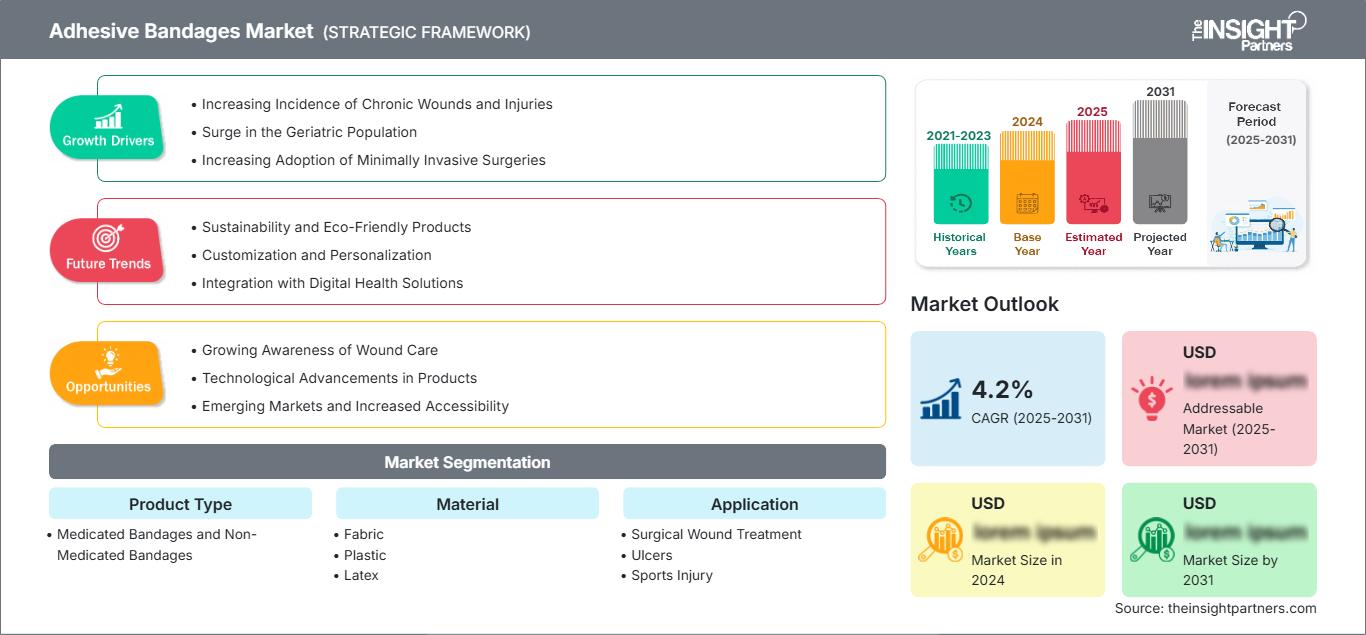
Regional Insights
North America Adhesive Bandages Market
North America accounted for an estimated 34–38% share in 2025 and is projected to expand at a CAGR of 3.2–3.8% during 2026–2034. The region continues to benefit from advanced healthcare infrastructure, high awareness of wound management, and strong penetration of first-aid products across hospitals, ambulatory surgical centers, schools, workplaces, and households. Rising outpatient procedures, an aging population, and increasing participation in recreational sports are supporting consistent demand. The adhesive bandages market share remains comparatively high because healthcare providers emphasize infection prevention and rapid treatment of minor injuries through standardized wound care protocols.
Public health initiatives encouraging first-aid preparedness and occupational safety regulations further reinforce regional consumption. Manufacturers continue investing in hypoallergenic adhesives, breathable fabrics, waterproof materials, and antimicrobial technologies to address evolving clinical and consumer requirements. Digital pharmacy expansion and omnichannel retail strategies have also strengthened product accessibility, while procurement contracts with healthcare systems provide stable institutional demand throughout the forecast period.
U.S. Adhesive Bandages Market
The United States represented approximately 82–86% of the North American market in 2025 and is expected to register a CAGR of 3.2–3.7% during 2026–2034. High healthcare expenditure, extensive retail pharmacy networks, and widespread consumer awareness sustain demand across clinical and homecare settings. Routine emergency care visits, sports participation, school health programs, and increasing use of home first-aid kits continue supporting recurring product purchases. Large procurement volumes from hospitals and integrated delivery networks further strengthen national consumption.
Major industry participants including Medline Industries, LP, Cardinal Health, Inc., Johnson & Johnson, 3M Company, Hartmann USA, Inc., and Dynarex Corporation maintain extensive manufacturing, distribution, or commercial operations within the country. Product innovation increasingly focuses on skin-friendly adhesives, flexible fabrics, pediatric designs, and waterproof performance, while online pharmacy growth complements traditional retail channels by improving product availability and consumer convenience across urban and rural markets.
Europe Adhesive Bandages Market
Europe captured an estimated 26–30% share in 2025 and is forecast to grow at a CAGR of 3.3–3.9% during 2026–2034. Germany remains the leading national market owing to its strong medical device manufacturing base, comprehensive healthcare coverage, and sustained investment in advanced wound management. Hospitals and outpatient facilities continue adopting premium adhesive products that improve patient comfort while supporting infection prevention and efficient clinical workflows.
The United Kingdom benefits from expanding community healthcare services, increasing homecare adoption, and strong consumer awareness regarding preventive wound management. Retail pharmacies and online healthcare platforms continue broadening product accessibility, while healthcare providers emphasize effective management of minor injuries and chronic wounds. These factors collectively support stable market expansion throughout the assessment period.
France, Italy, and Spain collectively contribute substantial regional demand through expanding outpatient treatment, improving healthcare accessibility, and growing elderly populations requiring routine wound care. Public healthcare investments and stronger workplace safety compliance also encourage product adoption. International manufacturers continue strengthening partnerships with regional distributors to improve supply continuity and introduce differentiated adhesive technologies across institutional and consumer healthcare channels.
APAC Adhesive Bandages Market
Asia Pacific accounted for approximately 24–28% share in 2025 and is expected to record the fastest regional expansion with a CAGR of 4.5–5.2% during 2026–2034. China leads regional demand through its large healthcare manufacturing ecosystem, while Japan maintains strong consumption supported by advanced healthcare services and an aging population.
India, South Korea, and Australia continue contributing to regional expansion through improving healthcare infrastructure, rising disposable incomes, expanding retail pharmacy networks, and supportive public health policies. Local manufacturing investments and increasing awareness regarding first-aid preparedness further strengthen long-term regional growth prospects.
Middle East & Africa Adhesive Bandages Market
The Middle East and Africa is projected to register a CAGR of 4.0–4.6% during 2026–2034. Saudi Arabia and the United Arab Emirates continue investing in healthcare modernization, hospital capacity expansion, and primary care services, supporting greater adoption of essential wound care products across institutional and retail healthcare settings.
South Africa remains an important regional market supported by an established healthcare sector, while other MEA countries benefit from gradual improvements in healthcare accessibility and infrastructure development. Expanding occupational safety initiatives, construction activities, and healthcare investments are expected to strengthen long-term demand for adhesive bandages across the region.
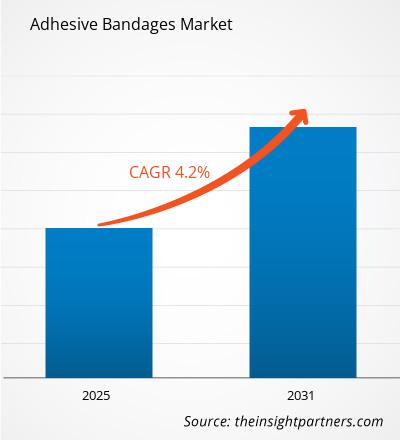
Segmentation Analysis
Product Type
The Product Type segment is expected to register a CAGR of 3.8–4.4% during 2026–2034. Product innovation continues to strengthen adoption across healthcare institutions and consumer markets as manufacturers introduce advanced adhesives, breathable substrates, and enhanced wound protection features. The adhesive bandages market forecast continues to broaden with growing emphasis on infection prevention, patient comfort, and specialized products designed for pediatric, sports, and sensitive-skin applications.
- Medicated Bandages – These products are increasingly preferred for wounds requiring antimicrobial protection or enhanced healing support. Healthcare providers frequently utilize medicated variants in outpatient treatment, while consumers value their convenience for managing cuts, abrasions, and minor burns.
- Non-Medicated Bandages – Representing the largest product category, these bandages remain widely adopted for everyday first-aid applications across households, workplaces, educational institutions, and sports facilities because of affordability, versatility, and broad product availability.
Material
The Material segment in the Adhesive bandages market is projected to expand at a CAGR of 3.6–4.2% during 2026–2034. Material selection significantly influences durability, flexibility, skin compatibility, moisture control, and user comfort. Manufacturers increasingly invest in breathable fabrics, latex-free alternatives, and sustainable materials to address evolving regulatory expectations and consumer preferences while improving overall product performance across clinical and consumer applications.
- Fabric – Fabric-based bandages remain highly preferred because they provide flexibility, breathability, and reliable adhesion during daily activities. Their durability makes them suitable for both healthcare settings and routine household first-aid requirements.
- Plastic – Plastic bandages are commonly selected where waterproof performance and contamination resistance are important. Their transparent appearance and resistance to moisture make them suitable for bathing, food preparation, and active outdoor lifestyles.
- Latex – Latex materials continue serving specific product categories requiring strong adhesion and elasticity. However, manufacturers increasingly provide latex-free alternatives to accommodate allergy concerns and changing procurement preferences among healthcare organizations.
Application
The Application segment in the Adhesive bandages market is anticipated to record a CAGR of 4.0–4.6% during 2026–2034. Expanding outpatient procedures, increasing sports participation, and higher incidence of minor injuries continue supporting demand across multiple clinical and consumer environments. Growing awareness regarding timely wound management further encourages routine use of adhesive bandages across healthcare systems and homecare settings.
- Surgical Wound Treatment – Hospitals and ambulatory surgical centers utilize adhesive bandages to protect incision sites following minor procedures. Demand remains supported by increasing day-care surgeries and greater emphasis on reducing post-procedure infection risks.
- Ulcers – Bandages designed for ulcer management support protection of superficial wounds while complementing broader treatment protocols. Rising prevalence of diabetes and an expanding elderly population continue encouraging greater utilization within community and home healthcare services.
- Sports Injury – Sports-related applications continue expanding because of increasing recreational participation, organized athletics, and fitness awareness. Flexible, waterproof, and breathable bandages are increasingly preferred to support mobility while protecting minor cuts and abrasions sustained during physical activity.
Distribution Channel
The Distribution Channel segment in the Adhesive bandages market is expected to grow at a CAGR of 4.2–4.9% during 2026–2034. Distribution strategies continue evolving as healthcare providers and consumers increasingly combine traditional pharmacy purchases with digital ordering platforms. Manufacturers are strengthening omnichannel capabilities to improve product accessibility, inventory management, and customer engagement across institutional and retail markets.
- Hospital Pharmacies – Hospital pharmacies remain important distribution points because they support immediate patient treatment, post-procedure care, and standardized procurement practices. Institutional purchasing agreements continue ensuring consistent product demand from healthcare providers.
- Retail Pharmacies – Retail pharmacies continue representing one of the most accessible purchasing channels, supported by strong consumer trust, convenient locations, and expanding first-aid product portfolios targeting families, travelers, and active lifestyles.
- Online Pharmacies – Online pharmacies continue gaining strategic importance through broader product selection, competitive pricing, subscription purchasing models, and convenient home delivery. Digital health adoption and expanding e-commerce infrastructure are expected to sustain long-term channel development.
Opportunity Snapshot
| Segment Name | Revenue Contribution | Trend Tag | Adoption Stage |
| Surgical Wound Treatment | High | Day Surgery | Mature |
| Ulcers | Medium | Chronic Care | Scaling |
| Sports Injury | Medium | Sports Care | Scaling |
| Other Injuries | High | Home FirstAid | Mature |
Adhesive Bandages Market Growth Drivers and Impact Analysis
Increasing Incidence of Minor Injuries and Outpatient Procedures
The rising frequency of small-scale surgeries, hospital visits, work-related incidents, and sporting injuries is contributing to the consistent growth in the demand for adhesive bandages in the global Adhesive bandages market. Healthcare facilities have gradually been making efforts to move suitable cases to outpatient care, leading to consistent needs for effective wound protection products. The home healthcare industry has also been witnessing growth due to increasing management of small wounds in the homes with proper health professionals’ guidance. Adhesive bandage manufacturers are now working on innovative breathability, water resistance, and skin-friendly adhesives to increase compliance with the use of these products among their consumers.
Expansion of Retail and Digital Healthcare Distribution
Improved accessibility due to organized retail pharmacies, hospital pharmacies, and e-healthcare websites has greatly increased the availability of the products within developed and developing nations. The customers are now using the Internet to buy their first-aid kits for the reason that there is increased convenience, better pricing and choice of products. Digital procurement systems have proved useful for the health service providers as well since they allow efficient management and smooth supply chain processes. The manufacturers are still working on omnichannel distribution, regional warehouses, and demand forecasting systems to avoid shortages in their inventory. With increasing digitization in health care procurement industry, those companies who have an omnichannel distribution system will be able to increase their competitiveness.
Advancements in Material Science and Product Innovation
Advancements in adhesive formulas, breathable fabrics, flexibility, and antimicrobial coatings are enhancing the performance of products in the healthcare sector and even general consumers. Manufacturers are designing hypoallergenic products that do not cause skin irritations and at the same time provide consistent adherence even after many hours. Products with waterproofing, moisture management, and comfort are also becoming popular for premium offerings. Other factors such as sustainability are driving the use of recyclable packaging and eco-friendly production practices. This is enabling manufacturers to cater to the varying demands of the clinical environment and even venture into special areas such as pediatric applications, sports medicine, and chronic wound dressing among others.
Adhesive Bandages Market Future Trends
Greater Adoption of Smart and Specialized Wound Care Products
It is anticipated that manufacturers should move towards developing specialty adhesive bandages that will meet the needs of delicate skin, pediatrics, geriatrics, and active life consumers. The current trend in the adhesive bandage industry suggests that there is an increasing need for adhesive bandages that have antimicrobial properties, moisture management capabilities, and prolonged use time. Future research in this regard will ensure not only more comfortable products but also fewer dressing changes. Companies that have developed product differentiation and proved performance of their products will definitely gain competitive advantage in the future.
Sustainability Becoming a Core Product Development Priority
In the future, environmental factors are anticipated to be an essential part of the product development process because stakeholders will opt for environmentally friendly solutions. Companies are making efforts toward developing recyclable packages, sourcing eco-friendly raw materials, and minimizing waste and energy use throughout the production cycle. Sustainability expectations on the part of the regulatory authorities are also driving increased transparency along the medical product value chain. Companies that can successfully combine their environmental agenda with the performance and cost aspects of products are going to build solid relationships with customers.
Adhesive Bandages Market Opportunities
Expansion Across Emerging Healthcare Systems
There are immense long-term investment opportunities available to manufacturers for improving the healthcare infrastructure in the Asia Pacific, Latin America, Middle East, and some regions of Africa. The increase in disposable incomes, insurance penetration, and programs for supporting basic healthcare services is making it possible for more people to buy necessary wound care products. Adhesive bandages Market Forecasts suggest that those firms which develop regional manufacturing capabilities, establish local distribution networks, and offer cost-effective product lines will be very well equipped for future needs.
Development of Premium Consumer-Centric Product Portfolios
Expectations among consumers have moved towards the provision of superior comfort, appearance, waterproof features, and specific functionality. There is a possibility for companies to offer more premium products that would be latex-free, clear, designed for children, sport-related, and anti-microbial in accordance with changing customer needs. Online trading provides companies with the possibility of targeting the right consumer groups and learning from purchases and reviews provided by customers. Companies that will successfully combine innovation, brand building, clinical proof and omnichannel distribution are supposed to be able to achieve differentiation in the market and succeed in the future.
Recent Developments
- July 2025: Smith & Nephew plc announced the launch of the Q-FIX KNOTLESS All-Suture Anchor, expanding its soft tissue repair portfolio with enhanced fixation strength and streamlined deployment capabilities. Although developed for orthopedic applications, the launch reflects the company's continued investment in wound management and advanced medical technologies that complement its broader healthcare portfolio.
- April 2025: Smith & Nephew plc reported continued growth in its Advanced Wound Management business during its first-quarter trading update, supported by strong performance of foam dressings and negative pressure wound therapy products while reaffirming plans for additional product launches throughout 2025.
- August 2024: Johnson & Johnson continued expanding availability of consumer wound care products under its BAND-AID portfolio through retail and digital distribution initiatives, strengthening accessibility across key international markets while supporting ongoing innovation in everyday wound protection solutions.
Frequently Asked Questions

- Comprehensive Market Sizing and Forecast Analysis
- Detailed Segmentation Analysis
- In-Depth Market Dynamics Assessment
- Regional and Country-Level Insights
- Competitive Landscape and Company Benchmarking
- Strategic Business Intelligence
Recent Reports
Testimonials

The Insight Partners provided valuable market intelligence that supported our global go-to-market strategy. Their team was professional, responsive, and attentive to our feedback, providing thoughtful analysis and helpful methodological clarifications throughout the project.
Junmo Kim Chief Financial Officer (CFO), Enertech Co., Ltd.
The Insight Partners' SCADA System Market report is comprehensive, with valuable insights on current trends and future forecasts. The team was highly professional, responsive, and supportive throughout. We are very satisfied and highly recommend their services.
RAN KEDEM Partner, Reali Technologies LTDs
I requested a report on a very specific software market and the team produced the report in a few days. The information was very relevant and well presented. I then requested some changes and additions to the report. The team was again very responsive and I got the final report in less than a week.
JEAN-HERVE JENN Chairman, Future Analytica
We worked with The Insight Partners for an important market study and forecast. They gave us clear insights into opportunities and risks, which helped shape our plans. Their research was easy to use and based on solid data. It helped us make smart, confident decisions. We highly recommend them.
PIYUSH NAGPAL Sr. Vice President, High Beam Global
The Insight Partners delivered insightful, well-structured market research with strong domain expertise. Their team was professional and responsive throughout. The user-friendly website made accessing industry reports seamless. We highly recommend them for reliable, high-quality research services
YUKIHIKO ADACHI CEO, Deep Blue, LLC.
This is the first time I have purchased a market report from The Insight Partners.While I was unsure at first, I visited their web site and felt more comfortable to take the risk and purchase a market report.I am completely satisfied with the quality of the report and customer service. I had several questions and comments with the initial report, but after a couple of dialogs over email with their analyst I believe I have a report that I can use as input to our strategic planning process.Thank you so much for taking the extra time and making this a positive experience.I will definitely recommend your service to others and you will be my first call when we need further market data.
JOHN SUZUKI President and Chief Executive Officer, Board Director, BK Technologies
I wish to appreciate your support and the professionalism you displayed in the course of attending to my request for information regarding to infectious disease IVD market in Nigeria. I appreciate your patience, your guidance, and the fact that you were willing to offer a discount, which eventually made it possible for us to close a deal. I look forward to engaging The Insight Partners in the future, all thanks to the impression you have created in me as a result of this first encounter.
DR CHIJIOKE ONYIA MANAGING DIRECTOR, PineCrest Healthcare Ltd.Reason to Buy
- Informed Decision-Making
- Understanding Market Dynamics
- Competitive Analysis
- Identifying Emerging Markets
- Customer Insights
- Market Forecasts
- Risk Mitigation
- Boosting Operational Efficiency
- Strategic Planning
- Investment Justification
- Tracking Industry Innovations
- Aligning with Regulatory Trends





 Get Free Sample for