
Advanced Wound Care Market Share, Size & Demand by 2034
Coverage: By Product (Dressings, Devices, and Bioactives), Wound Type (Surgical, Trauma, Burns, Ulcers, Diabetic Foot, and Others), and End User (Hospitals & Clinics, Ambulatory Surgical Centers, Wound Care Centers, and Others), and Geography (North America, Europe, Asia Pacific, and South and Central America)
- Status : Data Released
- Report Code : TIPHE100000825
- Category : Life Sciences
- No. of Pages : 150
- Available Report Formats :


- Last update date : July 22, 2026


2025 Market Size
US$ 13.14 Bn
Base year value
2034 Forecast
US$ 21.11 Bn
Projected by 2034
CAGR 2026-2034
5.41 %
Growth rate
Addressable Market
US$ 155.33 Bn
(2026-2034)
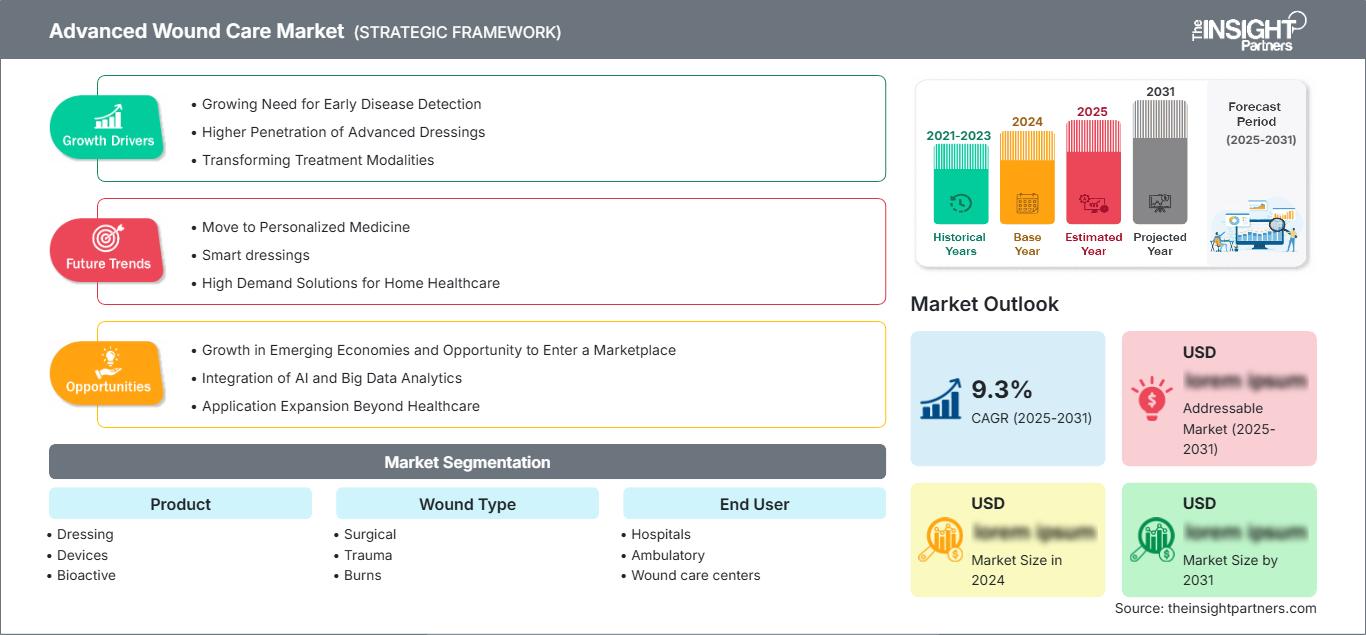
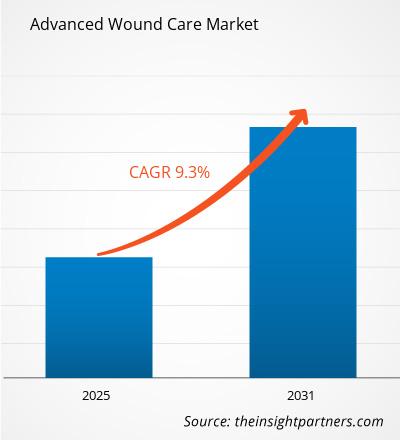
The Advanced Wound Care Market was valued at US$ 13.14 Billion in 2025 and is projected to reach US$ 21.11 billion by 2034, advancing at a CAGR of 5.41% during 2026–2034. Rising prevalence of chronic wounds, increasing surgical volumes, and broader adoption of bioactive therapies continue to support revenue expansion. Healthcare systems are increasingly emphasizing faster healing outcomes, lower infection rates, and reduced hospital stays, reinforcing demand across acute and chronic wound management applications.
Across North America, reimbursement support, high diabetes prevalence, and growing elderly populations continue to create favorable operating conditions. The Advanced Wound Care Market size in the region benefits from widespread use of negative pressure wound therapy, antimicrobial dressings, and advanced biologics. Regional demand is expected to expand at an estimated CAGR range of 4.8–5.6% through 2034, supported by hospital modernization and increasing chronic ulcer management programs.
Advanced Wound Care Market Assessment and Insights
- North America: Accounted for 38–42% of the Advanced Wound Care Market share in 2025 and is expected to grow at a CAGR of 4.8–5.6% during 2026–2034. Strong reimbursement coverage, established wound care infrastructure, and increasing prevalence of diabetic ulcers continue to support regional leadership.
- US: Represented 72–76% of North American revenue in 2025 and is projected to expand at a CAGR of 4.9–5.7% during 2026–2034. Demand is driven by high procedural volumes, advanced hospital networks, and technology adoption.
- Europe: Held 27–31% share in 2025 and is likely to progress at a CAGR of 4.7–5.5% during 2026–2034. Germany, the UK, and France remain major contributors due to aging populations and established wound management protocols.
- Asia Pacific: Captured 22–26% share in 2025 and is forecast to grow at a CAGR of 6.2–7.0% during 2026–2034. China, Japan, India, and South Korea are leading growth centers supported by expanding healthcare investments.
- Largest Segment: Dressing products contributed 48–52% market share in 2025 and are expected to advance at a CAGR of 4.9–5.7% during 2026–2034 owing to broad clinical applicability.
- High Growth Segment: Bioactive products represented 17–21% share in 2025 and are projected to register a CAGR of 7.2–8.0% during 2026–2034 due to increasing use in chronic wound healing.
- Key companies analyzed in detail: Smith & Nephew plc, Acelity L.P., B. Braun Melsungen AG, Integra LifeSciences Holdings Corporation, Convatec Group Plc, 3M Company, MiMedx Group, Inc., Mölnlycke Health Care AB, PAUL HARTMANN AG, Cardinal Health, Inc.
Source: The Insight Partners' analysis based on proprietary research, government publications, company annual reports, investor presentations, industry databases, and expert interviews.
The continuous development in wound care technology has shifted wound treatment strategies from a defensive approach to an offensive strategy. Improved rates of recovery have been recorded through the use of foam dressings, antiseptic solution, collagen gels, bioengineered tissues, and negative pressure wound therapy systems. Manufacturers have increased their production capacity, in addition to high quality requirements. Health care providers are now measuring the performance of products by evaluating their impact in addition to treatment costs.
Future developments include greater adoption in Southeast Asian countries, Latin American countries, and selected Middle Eastern health care markets. Investments made in chronic disease management and hospital infrastructure have generated demand for such products. Innovations in biologics and regenerative technologies have created regulatory incentives for companies to commercialize their products.
Advanced Wound Care Market Report Scope
| Report Attribute | Details |
|---|---|
| Market size in 2025 | US$ 13.14 Billion |
| Market Size by 2034 | US$ 21.11 billion |
| Global CAGR (2026 - 2034) | 5.41% |
| Historical Data | 2021-2024 |
| Forecast period | 2026-2034 |
Advanced Wound Care Market Analysis
Factors such as increasing cases of diabetes, obesity, vascular diseases, and pressure sores drive the growth path of the Advanced Wound Care Market. Millions of patients around the world suffer from chronic wounds, making there be a constant need for treatment in hospitals and clinics. This includes raw material vendors, dressing manufacturers, biologics producers, distributors, healthcare service providers, and long-term care facilities.
In the case of supply drivers, the market favors organizations that incorporate wound assessment technology into their treatment products. This has been made possible through the integration of digital recording systems, wound monitoring systems, and clinical decision pathways to ensure more consistency in treatment. Additionally, healthcare service providers prefer products that reduce the chances of infections and quicken the healing process.
The Advanced Wound Care Market report indicates an increasingly competitive environment characterized by innovation, clinical evidence generation, and portfolio expansion. The market players highlight the significance of differentiated technologies for managing diabetic foot ulcers, venous leg ulcers, burns, and surgical wounds. It is essential to have strong collaborations with hospitals and payers for the survival and accessibility of the market.
Smith & Nephew plc, Convatec Group Plc, Mölnlycke Health Care AB, and 3M Company are some of the companies with a significant market presence owing to their diversified product line and worldwide distribution network. However, the company MiMedx Group, Inc. and Integra LifeSciences Holdings Corporation is still focused on developing regenerative and biological products.
● REPORT CUSTOMIZATION
Tailor This Report To Align With Your Specific Business Requirements
This report can be customized to align precisely with your business objectives, scope, and target markets. Customization options include tailored segmentation, geography, competitive analysis, and strategic insights to support informed decision-making.
Customize This Report →WHAT YOU CAN ADJUST
- ● Segmentations
- ● Geography
- ● Competitive Analysis
- ● Language Preferences
Advanced Wound Care Market: Strategic Insights
Regional Insights
North America Advanced Wound Care Market
North America accounted for 38–42% Advanced Wound Care Market share in 2025 and is anticipated to expand at a CAGR of 4.8–5.6% through 2034. High prevalence of diabetes-related wounds, favorable reimbursement frameworks, and extensive adoption of negative pressure wound therapies underpin demand. Hospitals continue to invest in outcome-focused wound management pathways to reduce readmission rates and treatment costs.
The region also benefits from strong clinical research activity and rapid commercialization of advanced biologics. Chronic wound prevalence among aging populations remains a significant structural driver. Increased utilization of antimicrobial dressings, specialty foams, and digital wound monitoring solutions further supports market expansion, while large healthcare providers increasingly standardize wound care protocols across care settings.
U.S. Advanced Wound Care Market
The United States represented 72–76% of North American revenue in 2025 and is projected to record a CAGR of 4.9–5.7%. Strong presence of Smith & Nephew plc, 3M Company, Convatec Group Plc, MiMedx Group, Inc., and Cardinal Health, Inc. contributes to product availability and innovation. Growing numbers of diabetic foot ulcer and pressure injury cases continue supporting demand.
Healthcare institutions increasingly adopt evidence-based treatment pathways emphasizing rapid healing and infection prevention. Outpatient wound care programs have expanded significantly, creating additional opportunities for advanced dressings, biologics, and portable therapy systems. Integration of telehealth and digital wound documentation platforms is improving clinical monitoring, benefiting both providers and patients through better continuity of care.
Europe Advanced Wound Care Market
Europe held 27–31% share in 2025 and is forecast to grow at a CAGR of 4.7–5.5% through 2034. Germany remains the leading country due to advanced healthcare infrastructure and strong reimbursement systems. The region benefits from growing awareness regarding chronic wound management and increasing use of evidence-based treatment protocols across hospitals and community care settings.
The UK demonstrates steady demand supported by national wound management initiatives and efforts to reduce healthcare expenditure associated with chronic wounds. Germany continues investing in advanced dressings and negative pressure wound therapy solutions, maintaining a leading regional position. France, Italy, and Spain experience rising adoption of bioactive wound products as healthcare providers seek improved healing outcomes and reduced treatment durations across expanding elderly populations.
APAC Advanced Wound Care Market
Asia Pacific captured 22–26% share in 2025 and is expected to register the fastest regional CAGR of 6.2–7.0%. China represents the leading country, supported by healthcare infrastructure development and increasing chronic disease prevalence. Japan and South Korea maintain strong demand for technologically advanced wound management products.
India and Australia also contribute substantially through expanding healthcare access and growing awareness of chronic wound complications. Government initiatives supporting healthcare modernization and broader insurance coverage are encouraging adoption of advanced wound therapies across hospitals and ambulatory environments.
Middle East & Africa Advanced Wound Care Market
The Middle East & Africa market is projected to record a CAGR of 5.0–5.8% between 2026 and 2034. Saudi Arabia leads regional demand due to healthcare transformation programs and increased investment in specialized treatment capabilities. The UAE continues expanding advanced clinical services for chronic disease management.
South Africa remains an important market within Africa owing to growing demand for wound treatment products and increasing clinical awareness. Infrastructure expansion and healthcare capacity investments across the wider region are gradually supporting greater adoption of advanced treatment modalities.
Segmentation Analysis
Product
The product segment is expected to grow at a CAGR of 5.4–6.2% during 2026–2034. The Advanced Wound Care Market scope across product categories continues to expand as clinicians prioritize treatments that improve healing efficiency, infection control, and patient comfort. Innovation remains concentrated in advanced dressings, therapy devices, and regenerative bioactive solutions that address growing chronic wound burdens.
- Dressing: Largest product category driven by extensive use in acute and chronic wound management. Foam, hydrocolloid, antimicrobial, and alginate solutions remain essential across hospitals and outpatient settings.
- Devices: Demand is supported by increasing adoption of negative pressure wound therapy systems and advanced monitoring technologies that improve treatment consistency and healing outcomes.
- Bioactive: Growing use of collagen matrices, skin substitutes, growth factors, and regenerative therapies is strengthening the strategic importance of this category in chronic wound treatment.
Wound Type
The wound type segment is projected to expand at a CAGR of 5.5–6.3% through 2034. Rising incidences of chronic diseases, trauma cases, and surgical procedures continue to influence demand patterns. Healthcare providers increasingly select advanced products based on wound complexity and healing requirements.
- Surgical: High procedure volumes worldwide sustain demand, particularly for infection prevention and post-operative recovery management products.
- Trauma: Emergency care facilities rely on advanced solutions that support rapid healing while minimizing complications and long-term treatment burdens.
- Burns: Specialized dressings and regenerative products are gaining adoption to improve healing quality and reduce scar formation.
- Ulcers: Chronic venous and pressure ulcers remain significant demand generators because of lengthy treatment cycles and recurrence risks.
- Diabetic food: Increasing diabetes prevalence globally is driving demand for specialized treatment technologies focused on limb preservation and improved healing outcomes.
End user
The end user segment is anticipated to grow at a CAGR of 5.6–6.4% during 2026–2034. Treatment delivery increasingly involves multidisciplinary care models. Hospitals remain primary revenue contributors, while specialized centers and outpatient facilities continue expanding their role in chronic wound management.
- Hospitals: Largest end-user category due to extensive patient volumes, advanced treatment capabilities, and broad product utilization across departments.
- Ambulatory: Growing preference for cost-efficient outpatient care is increasing adoption of advanced products in ambulatory environments.
- Wound care centers: Specialized facilities continue gaining importance through focused expertise, improved outcomes, and multidisciplinary treatment approaches.
Opportunity Snapshot
| End User | Revenue Contribution | Trend Tag | Adoption Stage |
|---|---|---|---|
| Hospitals | High | Outcome Care | Mature |
| Ambulatory | Medium | Day Procedures | Scaling |
| Wound care centers | High | Chronic Healing | Scaling |
| others | Low | Community Care | Emerging |
Advanced Wound Care Market Growth Drivers and Impact Analysis
Growing Burden of Diabetes and Chronic Ulcers
The rising trend of the incidence of diabetes globally results in an ever-growing population that requires wound management over a sustained period of time. Diabetic foot ulcers have the characteristics of needing extended periods of treatment, high probability of infections, and large healthcare expenses. Increasingly, medical practitioners have been using innovative wound dressing products and therapies to enhance the effectiveness of treatment while reducing instances of amputations. With the rising occurrence of chronic diseases in both developed and developing nations, the demand for wound management products is only bound to grow further.
Rising Surgical Procedure Volumes Worldwide
An increasing number of orthopedic, cardiac, bariatric, and general surgical operations are creating continuous demand for more advanced wound care solutions. Healthcare providers require solutions that will be able to help prevent surgical site infection and accelerate the healing process. Advanced dressings and post-operative wound care devices have thus become critical elements of any surgical pathway. Increased accessibility of healthcare services in emerging markets and the aging population are driving procedure volumes higher. Constant attempts to achieve better results in shorter hospitalization periods drive the adoption of novel wound care technologies.
Expansion of Regenerative and Bioactive Therapies
Innovations in the areas of tissue regeneration, biologics, collagen matrix, and cell therapies have been transforming the wound care industry. These products cater to difficult-to-heal wounds which cannot be healed through regular treatments. Demonstrated clinical success in terms of enhanced healing efficacy has been drawing attention and investments from healthcare professionals. The regulatory environment is also helping the growth of innovative treatments in many big markets, leading to increased activities in the commercial sector. With changing reimbursement policies and greater awareness levels, bioactive therapies will gain significance in chronic wounds care management in the future.
Advanced Wound Care Market Future Trends
Integration of Digital Monitoring Platforms
The Advanced Wound Care Market trends increasingly reflect integration of digital wound assessment technologies, artificial intelligence, and remote monitoring capabilities. Healthcare providers are adopting image-based documentation systems that support objective wound measurement and treatment tracking. These platforms may improve clinical consistency and facilitate earlier interventions. Growing use of telehealth services further strengthens demand for connected wound management tools. Future development is expected to focus on predictive analytics, automated healing assessment, and interoperability with electronic health record systems, supporting more personalized and efficient care pathways.
Shift Toward Personalized Regenerative Care
It is anticipated that customized treatments will become more prevalent as healthcare practitioners explore customized healing solutions for their patients. There is growing interest in advanced biologics, autologous treatments, and customized regenerative treatments among clinicians. The future of innovation will focus on personalized treatments which consider the unique wound conditions and the health condition of each individual. Growing clinical evidence along with advancements in technologies related to biomaterials and tissue engineering will drive this trend.
Advanced Wound Care Market Opportunities
Expansion of Specialized Outpatient Networks
Growth in specialized wound care centers offers another lucrative option for investing. Specialized centers are favored by healthcare organizations because of the level of expertise offered and better results achieved through such centers. Such centers are also known to offer cost-effective operations as well as multidisciplinary treatment options. Investment in expanding networks of specialized centers can be done in areas that do not have enough centers through the increase in number of patients. Increasing payment and recognition of chronic wounds are factors that support this type of investment.
Commercialization of Next-Generation Bioactive Solutions
Advanced Wound Care Market Forecasts indicate substantial opportunity for companies developing regenerative and bioactive products targeting complex chronic wounds. Innovations involving growth factors, tissue matrices, engineered skin substitutes, and cellular therapies continue moving toward broader clinical adoption. Strategic investments in manufacturing infrastructure, clinical studies, and reimbursement engagement can accelerate commercialization success. Companies capable of demonstrating measurable healing improvements and cost-effectiveness are likely to strengthen competitive positioning. Expanding physician familiarity with regenerative technologies further enhances long-term market potential and partnership opportunities.
Recent Developments
- September 2025: Smith & Nephew plc – launched the CENTRIO Platelet-Rich-Plasma System in the United States, expanding its advanced wound bioactives portfolio for chronic wound management and strengthening access to autologous PRP-based treatments for diabetic foot ulcers and related chronic wounds.
- August 2025: Convatec Group Plc – received regulatory clearance across the US and Europe for Aquacel ConvaFiber, a next-generation Hydrofiber dressing designed for venous leg ulcers, diabetic foot ulcers, pressure injuries, surgical wounds, and burns.
- June 2025: Mölnlycke Health Care AB – announced a major manufacturing expansion investment in Maine, United States, aimed at increasing global production capacity for wound care products and enhancing supply resilience.
Frequently Asked Questions

- Comprehensive Market Sizing and Forecast Analysis
- Detailed Segmentation Analysis
- In-Depth Market Dynamics Assessment
- Regional and Country-Level Insights
- Competitive Landscape and Company Benchmarking
- Strategic Business Intelligence
Recent Reports
Testimonials

The Insight Partners provided valuable market intelligence that supported our global go-to-market strategy. Their team was professional, responsive, and attentive to our feedback, providing thoughtful analysis and helpful methodological clarifications throughout the project.
Junmo Kim Chief Financial Officer (CFO), Enertech Co., Ltd.
The Insight Partners' SCADA System Market report is comprehensive, with valuable insights on current trends and future forecasts. The team was highly professional, responsive, and supportive throughout. We are very satisfied and highly recommend their services.
RAN KEDEM Partner, Reali Technologies LTDs
I requested a report on a very specific software market and the team produced the report in a few days. The information was very relevant and well presented. I then requested some changes and additions to the report. The team was again very responsive and I got the final report in less than a week.
JEAN-HERVE JENN Chairman, Future Analytica
We worked with The Insight Partners for an important market study and forecast. They gave us clear insights into opportunities and risks, which helped shape our plans. Their research was easy to use and based on solid data. It helped us make smart, confident decisions. We highly recommend them.
PIYUSH NAGPAL Sr. Vice President, High Beam Global
The Insight Partners delivered insightful, well-structured market research with strong domain expertise. Their team was professional and responsive throughout. The user-friendly website made accessing industry reports seamless. We highly recommend them for reliable, high-quality research services
YUKIHIKO ADACHI CEO, Deep Blue, LLC.
This is the first time I have purchased a market report from The Insight Partners.While I was unsure at first, I visited their web site and felt more comfortable to take the risk and purchase a market report.I am completely satisfied with the quality of the report and customer service. I had several questions and comments with the initial report, but after a couple of dialogs over email with their analyst I believe I have a report that I can use as input to our strategic planning process.Thank you so much for taking the extra time and making this a positive experience.I will definitely recommend your service to others and you will be my first call when we need further market data.
JOHN SUZUKI President and Chief Executive Officer, Board Director, BK Technologies
I wish to appreciate your support and the professionalism you displayed in the course of attending to my request for information regarding to infectious disease IVD market in Nigeria. I appreciate your patience, your guidance, and the fact that you were willing to offer a discount, which eventually made it possible for us to close a deal. I look forward to engaging The Insight Partners in the future, all thanks to the impression you have created in me as a result of this first encounter.
DR CHIJIOKE ONYIA MANAGING DIRECTOR, PineCrest Healthcare Ltd.Reason to Buy
- Informed Decision-Making
- Understanding Market Dynamics
- Competitive Analysis
- Identifying Emerging Markets
- Customer Insights
- Market Forecasts
- Risk Mitigation
- Boosting Operational Efficiency
- Strategic Planning
- Investment Justification
- Tracking Industry Innovations
- Aligning with Regulatory Trends





 Get Free Sample for