
Aerial Ladder Fire-Fighting Vehicle Market Growth, Trends & Demand by 2034
Coverage: By Product Type (Tower Ladder, Turntable Ladder, Tiller Truck, Hydraulic Platform); Application (Fire-fighting, Non-fire rescue operations, Others) , and Geography (North America, Europe, Asia Pacific, and South and Central America)
- Status : Data Released
- Report Code : TIPRE00007321
- Category : Automotive and Transportation
- No. of Pages : 150
- Available Report Formats :


- Last update date : August 06, 2026


2025 Market Size
US$ 1.82 Bn
Base year value
2034 Forecast
US$ 2.1 Bn
Projected by 2034
CAGR 2026-2034
1.6 %
Growth rate
Addressable Market
US$ 17.75 Bn
(2026-2034)
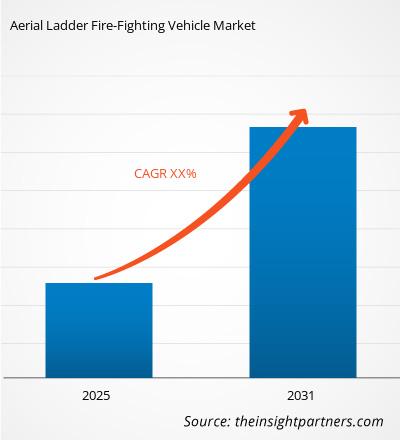
The global Aerial Ladder Fire-Fighting Vehicle market was valued at US$ 1.82 billion in 2025 and is expected to reach US$ 2.1 billion by 2034; it is estimated to record a CAGR of 1.6% during 2026-2034.
Aerial Ladder Fire-Fighting Vehicle Market Assessment and Insights
- North America: Share in 2025 estimated at 34–38%, growing at a CAGR of 1.6–2.1% between 2026–2034. Strong municipal procurement budgets, structured replacement cycles, and extensive emergency-response infrastructure continue supporting regional demand.
- US: Represents 78–82% of North American demand in 2025, expanding at a CAGR of 1.7–2.2% through 2026–2034. Fleet modernization and advanced rescue platform adoption drive procurement activity.
- Europe: Accounts for approximately 29–33% share in 2025 and is expected to grow at a CAGR of 1.4–1.9%. Germany, France, the UK, Italy, and Spain remain the leading markets owing to mature firefighting networks.
- Asia Pacific: Holds an estimated 23–27% share in 2025 and is projected to register a CAGR of 2.0–2.6% through 2034. China, Japan, South Korea, India, and Australia remain the primary contributors.
- Largest Segment: Fire-fighting application accounted for 72–76% market share in 2025 and is expected to expand at a CAGR of 1.5–2.0% owing to its mandatory role in municipal emergency services.
- High Growth Segment: Non-fire rescue operations represented 24–28% share in 2025 and is forecast to grow at a CAGR of 2.3–2.8% as departments expand technical rescue and disaster-response capabilities.
- Key companies analyzed in detail: Albert Ziegler GmbH, Bronto Skylift Oy Ab, KARBA Automotive Machine Industry and Trade Ltd. Co., Magirus GmbH, Morita Holdings Corporation, Oshkosh Corporation, Rosenbauer International AG, Shenyang Jietong Fire Truck Co., Ltd., Zoomlion Heavy Industry Science and Technology Co., Ltd., CIMC Vehicles Group.
Source: The Insight Partners' analysis based on proprietary research, government publications, company annual reports, investor presentations, industry databases, and expert interviews.
The market has evolved from conventional ladder-based firefighting equipment toward technologically integrated aerial rescue systems. Manufacturers increasingly deploy advanced ladder stabilization systems, electronic monitoring platforms, telematics, and lightweight structural materials. Production approaches now emphasize modular platform architecture that enables easier customization while reducing maintenance complexity. These developments have improved operational performance and lifecycle economics, supporting replacement demand among municipalities seeking long-term efficiency improvements.
Future growth will be impacted by the dynamics of urbanization in Asia, the Middle East, and certain cities in Latin America that are upgrading their emergency response capabilities along with their infrastructure. Investments in more robust public safety systems, stricter building codes, and an emphasis on fireman safety are expected to foster purchase decisions. Companies that can leverage both their technological capabilities and local support services are better poised for success.
Aerial Ladder Fire-Fighting Vehicle Market Report Scope
| Report Attribute | Details |
|---|---|
| Market size in 2025 | US$ 1.82 Billion |
| Market Size by 2034 | US$ 2.1 Billion |
| Global CAGR (2026 - 2034) | 1.6% |
| Historical Data | 2021-2024 |
| Forecast period | 2026-2034 |
Aerial Ladder Fire-Fighting Vehicle Market Analysis
The aerial ladder fire-fighting vehicle market growth is driven by increasing urban density, expansion of vertical infrastructure, and rising operational complexity facing emergency response agencies. The fire services need equipment that will facilitate fast mobilization, raise rescues, and effectively suppress fires in urban settings. With cities developing high-rise buildings, the need for such aerial equipment is becoming increasingly associated with urbanization programs in city safety agencies.
There is also demand due to the replacement cycle arising from the age of the fleets in operation in North America and Europe. Fire agencies tend to focus on upgrading their equipment to enhance the safety of their firefighters and to ensure effectiveness in operation. The market ecosystem includes chassis makers, hydraulics firms, aerial ladders makers, body builders, electronics firms, and municipal purchasing organizations.
The aerial ladder fire-fighting vehicle market analysis indicates a competitive environment characterized by product differentiation, engineering expertise, and extensive aftersales support networks. Rosenbauer International AG, Oshkosh Corporation, Magirus GmbH, Morita Holdings Corporation, and Bronto Skylift Oy Ab maintain strong competitive positions through broad product portfolios and long-standing relationships with municipal customers. Regional firms continue competing through customization capabilities and localized service offerings.
The trends of investments are moving towards more emphasis on digitized diagnostics, improved safety systems, assistance to the driver and light weight materials that improve the performance of the vehicle. The companies are increasing their flexibility in production and developing aftermarket capabilities to increase their customer retention. Competitive advantage is not about the price of procurement anymore.
● REPORT CUSTOMIZATION
Tailor This Report To Align With Your Specific Business Requirements
This report can be customized to align precisely with your business objectives, scope, and target markets. Customization options include tailored segmentation, geography, competitive analysis, and strategic insights to support informed decision-making.
Customize This Report →WHAT YOU CAN ADJUST
- ● Segmentations
- ● Geography
- ● Competitive Analysis
- ● Language Preferences
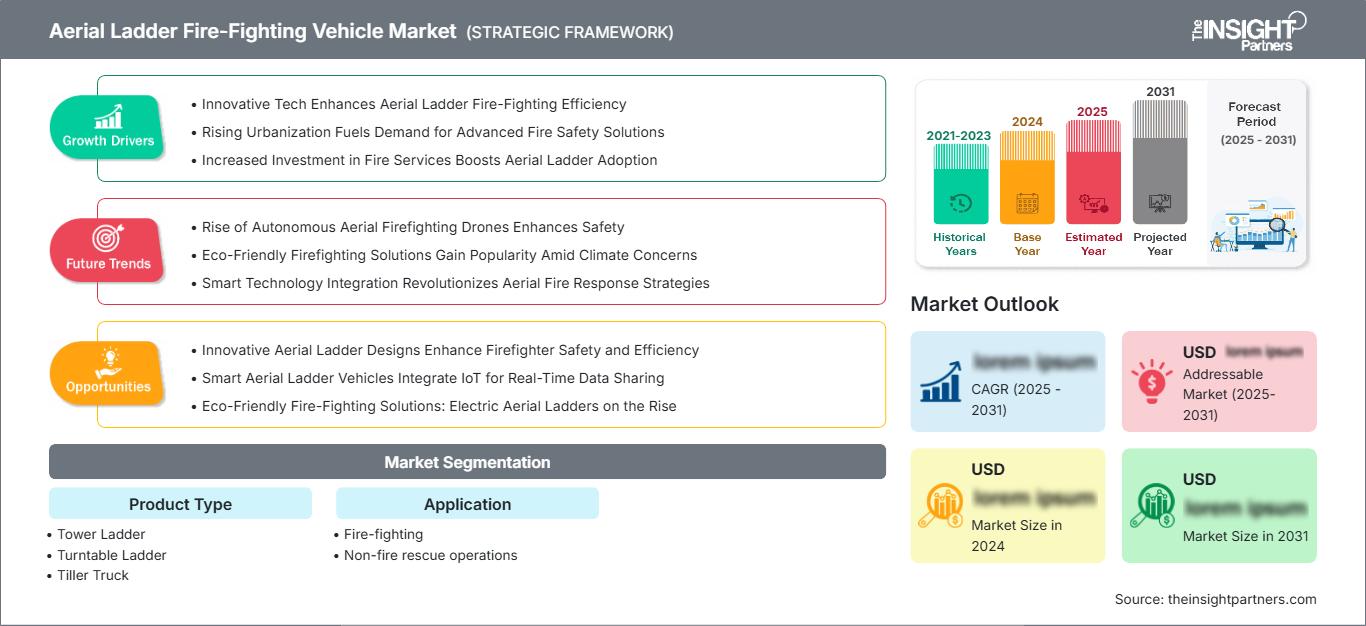
Aerial Ladder Fire-Fighting Vehicle Market: Strategic Insights
Regional Insights
North America Aerial Ladder Fire-Fighting Vehicle Market
North America accounted for approximately 34–38% of global revenue in 2025 and is projected to grow at a 1.6–2.1% CAGR during 2026–2034. The region is known for having good firefighting facilities, adequate municipal budgets, and replacement plans for aging aerial firefighting truck fleets. Demand is especially high in urban centers with extensive high-rise construction and commercial activity. Fire departments prefer buying all-in-one fire trucks capable of supporting rescue, elevated water supply, evacuations, and disaster management activities.
The aerial ladder fire-fighting vehicle market share in North America continues to reflect a highly mature procurement environment in which lifecycle reliability and operational safety receive significant emphasis. Municipal organizations regularly consider the operational efficiency, maintenance needs, and longevity of services provided by the supplier in their evaluation process. The continuous efforts being made to prepare for emergencies, wildfire response, and infrastructural resiliency serve to add another layer of stability to the industry. The existence of large-scale manufacturing units within the country and service networks helps in making the equipment support efficient.
U.S. Aerial Ladder Fire-Fighting Vehicle Market
The United States contributes approximately 78–82% of North American demand in 2025 and is forecast to expand at a 1.7–2.2% CAGR through 2034. Large municipal fire departments, extensive infrastructure in urban areas, and apparatus replacement programs with good funding still fuel procurement. Large cities have been making more investments in sophisticated aerial vehicles that can deal with high-rise fires, industrial fires, and disasters. Safety, flexibility, uniformity of the fleet, and maintenance considerations often influence procurement decisions.
The country also represents one of the most competitive environments for aerial firefighting apparatus manufacturers. Domestic manufacturing capacities and robust dealership networks contribute to extensive market penetration and provide after-sales support and training to operators. The increasing focus on fireman safety norms drives the use of advanced ladder stabilization systems, electronic surveillance systems, and rescue features. With the expansion of urban redevelopment schemes in large metropolises, the requirement for aerial rescue trucks will remain steady during the forecast period.
Europe Aerial Ladder Fire-Fighting Vehicle Market
Europe represented approximately 29–33% of global revenue in 2025 and is expected to register a 1.4–1.9% CAGR through 2034. Germany remains the leading national market due to its strong domestic manufacturing base, advanced fire-service infrastructure, and frequent municipal fleet modernization initiatives. German municipalities continue investing in technologically sophisticated aerial rescue vehicles capable of addressing increasingly complex urban response requirements.
The United Kingdom sustains its demand for fire trucks by using replacement-based procurement programs and investment in sophisticated rescue equipment. France, Italy, and Spain work together to promote their regional growth through projects focused on the modernization of fire trucks, taking into account their safety, reliability, and adherence to new emergency response standards. The advantages of regional fire truck producers include the presence of strong engineering knowledge and possibilities of exports in different foreign markets.
APAC Aerial Ladder Fire-Fighting Vehicle Market
Asia Pacific accounted for approximately 23–27% of global revenue in 2025 and is projected to advance at a 2.0–2.6% CAGR during 2026–2034. China remains the largest regional market due to continuing urban development, expansion of metropolitan infrastructure, and growing investment in emergency-response modernization. Municipal authorities increasingly procure advanced aerial rescue vehicles to address high-rise firefighting requirements in rapidly developing urban centers.
Other countries contributing significantly to regional demand include Japan, South Korea, India, and Australia. In Japan and South Korea, existing firefighting organizations have a focus on reliability and technology integration while India and Australia are still improving their emergency response services. The growing commercial construction and industrial growth also fuel regional purchases.
Middle East & Africa Aerial Ladder Fire-Fighting Vehicle Market
The Middle East & Africa market is forecast to grow at a 1.8–2.3% CAGR through 2034. Regional demand is primarily driven by urban infrastructure projects, commercial real-estate development, and government-backed investments in public-safety modernization. Several countries are expanding emergency-response capabilities to support larger populations and increasingly complex urban environments.
Saudi Arabia and the United Arab Emirates remain the leading markets due to large-scale construction activity and infrastructure development programs. South Africa contributes through fleet replacement requirements and municipal modernization initiatives. Growing emphasis on operational readiness and emergency preparedness continues supporting procurement of advanced aerial rescue equipment across key markets.
Segmentation Analysis
Product Type
The Product Type segment is expected to expand at a 1.7–2.2% CAGR during the forecast period. Product selection depends on urban infrastructure characteristics, rescue requirements, operating conditions, and municipal budget allocations. Manufacturers continue introducing advanced stabilization systems, lightweight structures, and digital monitoring capabilities to improve operational efficiency. The aerial ladder fire-fighting vehicle market scope continues broadening as departments seek multifunctional platforms capable of supporting firefighting, rescue, and disaster-response operations through a single apparatus.
- Tower Ladder – Maintains a strong market position due to superior rescue capability, elevated water-stream operation, and enhanced personnel access. These vehicles are widely deployed in dense urban environments where high-rise response capacity is essential.
- Turntable Ladder – Continues to experience steady demand because of its operational flexibility and proven effectiveness in municipal firefighting applications. Many fire departments favor these systems for routine emergency-response requirements.
- Tiller Truck – Remains strategically important in congested metropolitan areas where maneuverability is critical. Its articulated configuration enables efficient navigation through restricted streets while maintaining elevated rescue performance.
- Hydraulic Platform – Experiences increasing adoption as departments expand technical rescue and disaster-response capabilities. Enhanced platform stability and multifunctional operating characteristics support its growing strategic relevance.
Application
The Application segment is forecast to grow at a 1.8–2.3% CAGR through 2034. Rising operational complexity is encouraging departments to acquire apparatus capable of performing multiple emergency-response functions. Improved aerial platform technologies continue enhancing operational safety, mission flexibility, and equipment utilization rates. While traditional firefighting remains the primary demand source, rescue-oriented deployments are becoming increasingly important across both developed and emerging markets.
- Fire-fighting – Represents the dominant application category, accounting for 72–76% market share in 2025 and expanding at a 1.5–2.0% CAGR. Demand is driven by municipal emergency services, high-rise suppression requirements, and mandatory firefighting infrastructure investments.
- Non-fire rescue operations – Accounts for 24–28% market share in 2025 and is projected to register a 2.3–2.8% CAGR. Growth reflects increasing deployment for evacuation support, disaster response, technical rescue missions, and emergency-access operations.
Opportunity Snapshot
| Application | Revenue Contribution | Trend Tag | Adoption Stage |
|---|---|---|---|
| Fire-fighting | High | High-Rise Safety | Mature |
| Non-fire rescue operations | Medium | Technical Rescue | Scaling |
Aerial Ladder Fire-Fighting Vehicle Market Growth Drivers and Impact Analysis
Expansion of High-Rise Construction Across Urban Centers
As urban populations continue rising, cities increasingly rely on vertical construction to optimize land utilization. High-rise residential complexes, mixed-use developments, commercial towers, and industrial complexes create operational challenges that conventional firefighting equipment cannot address effectively. Municipal authorities are therefore investing in advanced aerial ladder vehicles capable of elevated rescue, evacuation support, and suppression activities at significant heights. Building-code enhancements and stricter public-safety requirements further reinforce procurement demand. In many developing markets, emergency-response modernization is occurring alongside urban expansion, creating opportunities for first-time deployment of advanced aerial platforms. The growing prevalence of complex building structures is expected to remain one of the most influential long-term drivers supporting demand for specialized aerial firefighting and rescue vehicles.
Municipal Fleet Replacement and Infrastructure Modernization
A substantial portion of firefighting apparatus operating across developed economies has been in service for decades, creating recurring replacement requirements. Older vehicles often involve higher maintenance expenses, reduced operational efficiency, and lower compliance with current safety expectations. Municipal governments increasingly allocate capital toward fleet modernization programs designed to improve emergency-response effectiveness and firefighter protection. New aerial ladder vehicles provide enhanced reliability, digital diagnostics, improved stabilization systems, and greater mission versatility. In addition, public-sector investments in resilient infrastructure and disaster preparedness initiatives continue strengthening procurement activity. These modernization trends provide manufacturers with relatively predictable demand patterns while supporting broader adoption of advanced rescue technologies capable of addressing evolving emergency-response requirements across diverse operational environments.
Growing Integration of Safety and Digital Technologies
Technology integration has become a major purchasing consideration for emergency-response agencies seeking improved operational outcomes. Modern aerial ladder vehicles increasingly incorporate telematics, electronic monitoring systems, predictive maintenance tools, remote diagnostics, and sophisticated stabilization technologies. These capabilities help improve vehicle uptime, reduce maintenance uncertainty, and support safer field operations. Fire departments are also placing greater importance on data-driven fleet management practices that optimize resource utilization and lifecycle planning. Suppliers able to combine advanced technology with practical operational functionality gain a competitive advantage in procurement processes. Continued investment in intelligent vehicle systems is likely to strengthen product differentiation while encouraging broader adoption of digitally enabled aerial rescue equipment throughout both mature and developing firefighting markets.
Aerial Ladder Fire-Fighting Vehicle Market Future Trends
Transition Toward Smart Connected Emergency Response Platforms
The aerial ladder fire-fighting vehicle market trends increasingly point toward the adoption of connected vehicle ecosystems that improve operational visibility and fleet efficiency. Manufacturers are integrating telematics, remote diagnostics, predictive maintenance platforms, and digital performance monitoring into next-generation apparatus designs. These technologies enable departments to track equipment health, reduce downtime, and optimize maintenance scheduling. Future procurement specifications are expected to emphasize data-driven operational management as municipalities seek greater accountability and lifecycle value from capital investments. Connected emergency-response systems may also support enhanced training, asset utilization analysis, and incident readiness. As digital transformation initiatives accelerate across public-safety organizations, suppliers capable of providing comprehensive software and service ecosystems alongside physical vehicles are expected to strengthen their competitive positions and create new recurring revenue opportunities.
Increasing Preference for Multifunctional Rescue Vehicles
Emergency-response agencies are steadily moving toward apparatus capable of performing multiple operational roles through a single platform. Future vehicle designs are expected to combine firefighting, evacuation, technical rescue, disaster response, and elevated access capabilities while maintaining high operational reliability. This transition reflects growing pressure on municipal budgets and the need to maximize asset utilization. Departments increasingly prefer versatile equipment that can be deployed across a broader range of emergency scenarios rather than maintaining separate specialized units. Future product development is therefore likely to focus on improved platform adaptability, enhanced operator safety, and greater mission flexibility. These evolving requirements are expected to drive innovation in aerial platform design while creating opportunities for manufacturers able to deliver multifunctional solutions that address diverse emergency-response challenges.
Aerial Ladder Fire-Fighting Vehicle Market Opportunities
Expansion Opportunities in Rapidly Urbanizing Municipal Markets
The aerial ladder fire-fighting vehicle market Forecasts suggest substantial opportunities in rapidly urbanizing cities where emergency-response infrastructure is being developed alongside commercial and residential construction activity. Many municipal authorities continue expanding firefighting capabilities to accommodate increasing population density and vertical development. Suppliers that establish local distribution networks, training programs, and aftermarket support capabilities can strengthen market penetration in these emerging regions. Long-term procurement requirements are expected to increase as governments emphasize public safety, disaster preparedness, and infrastructure resilience. Strategic partnerships with regional agencies and local service providers may improve competitiveness while enabling manufacturers to address specific operational requirements. These conditions create favorable opportunities for sustained expansion beyond traditional replacement-driven demand centers.
Investment Potential in Low-Emission and Advanced Safety Solutions
Environmental priorities and operational efficiency objectives are creating opportunities for manufacturers to invest in advanced vehicle technologies. Development of energy-efficient hydraulic systems, electrified subsystems, intelligent stabilization controls, and enhanced safety monitoring capabilities may provide meaningful product differentiation. Municipal agencies increasingly evaluate environmental performance alongside operational functionality when considering long-term fleet investments. Suppliers that successfully introduce innovative low-emission solutions can strengthen their positioning as regulatory expectations evolve. Furthermore, investment in advanced safety technologies aligns with broader efforts to reduce operational risk and improve firefighter protection. Continued research and development in these areas is expected to generate competitive advantages while opening access to future procurement programs emphasizing sustainability and operational excellence.
Frequently Asked Questions

- Comprehensive Market Sizing and Forecast Analysis
- Detailed Segmentation Analysis
- In-Depth Market Dynamics Assessment
- Regional and Country-Level Insights
- Competitive Landscape and Company Benchmarking
- Strategic Business Intelligence
Recent Reports
Testimonials

The Insight Partners' SCADA System Market report is comprehensive, with valuable insights on current trends and future forecasts. The team was highly professional, responsive, and supportive throughout. We are very satisfied and highly recommend their services.
RAN KEDEM Partner, Reali Technologies LTDs
I requested a report on a very specific software market and the team produced the report in a few days. The information was very relevant and well presented. I then requested some changes and additions to the report. The team was again very responsive and I got the final report in less than a week.
JEAN-HERVE JENN Chairman, Future Analytica
We worked with The Insight Partners for an important market study and forecast. They gave us clear insights into opportunities and risks, which helped shape our plans. Their research was easy to use and based on solid data. It helped us make smart, confident decisions. We highly recommend them.
PIYUSH NAGPAL Sr. Vice President, High Beam Global
The Insight Partners delivered insightful, well-structured market research with strong domain expertise. Their team was professional and responsive throughout. The user-friendly website made accessing industry reports seamless. We highly recommend them for reliable, high-quality research services
YUKIHIKO ADACHI CEO, Deep Blue, LLC.
This is the first time I have purchased a market report from The Insight Partners.While I was unsure at first, I visited their web site and felt more comfortable to take the risk and purchase a market report.I am completely satisfied with the quality of the report and customer service. I had several questions and comments with the initial report, but after a couple of dialogs over email with their analyst I believe I have a report that I can use as input to our strategic planning process.Thank you so much for taking the extra time and making this a positive experience.I will definitely recommend your service to others and you will be my first call when we need further market data.
JOHN SUZUKI President and Chief Executive Officer, Board Director, BK Technologies
I wish to appreciate your support and the professionalism you displayed in the course of attending to my request for information regarding to infectious disease IVD market in Nigeria. I appreciate your patience, your guidance, and the fact that you were willing to offer a discount, which eventually made it possible for us to close a deal. I look forward to engaging The Insight Partners in the future, all thanks to the impression you have created in me as a result of this first encounter.
DR CHIJIOKE ONYIA MANAGING DIRECTOR, PineCrest Healthcare Ltd.Reason to Buy
- Informed Decision-Making
- Understanding Market Dynamics
- Competitive Analysis
- Identifying Emerging Markets
- Customer Insights
- Market Forecasts
- Risk Mitigation
- Boosting Operational Efficiency
- Strategic Planning
- Investment Justification
- Tracking Industry Innovations
- Aligning with Regulatory Trends





 Get Free Sample for