
Aerial Ladder Platform Vehicle Market Size, Share & Demand by 2034
Coverage: by Type (Elevating Vehicle, Conventional Vehicle, Others); Application (Aircraft Rescue and Firefighting (ARFF), Industrial, Municipal) , and Geography (North America, Europe, Asia Pacific, and South and Central America)
- Status : Data Released
- Report Code : TIPRE00007312
- Category : Manufacturing and Construction
- No. of Pages : 150
- Available Report Formats :


- Last update date : July 10, 2026


2025 Market Size
US$ 2.42 Bn
Base year value
2034 Forecast
US$ 3.78 Bn
Projected by 2034
CAGR 2026-2034
5.08 %
Growth rate
Addressable Market
US$ 28.13 Bn
(2026-2034)
The global Aerial Ladder Platform Vehicle market was valued at US$ 2.42 billion in 2025 and is expected to reach US$ 3.78 billion by 2034; it is estimated to record a CAGR of 5.08% during 2026-2034.
Aerial Ladder Platform Vehicle Market Assessment and Insights
- North America: The region held 28–31% share in 2025 and is growing at a 4.9–5.4% CAGR between 2026–2034, supported by replacement planning and airport rescue investments.
- US: The US represented 77–81% of North America in 2025 and is growing at a 4.8–5.3% CAGR between 2026–2034, led by municipal fleet renewal.
- Europe: Europe accounted for 24–27% aerial ladder platform vehicle market share in 2025 and is growing at a 4.7–5.2% CAGR between 2026–2034, led by Germany, the UK, France, Italy, and Spain.
- Asia Pacific: Asia Pacific held 30–34% share in 2025 and is growing at a 6.4–6.9% CAGR between 2026–2034, led by China, India, Japan, South Korea, and Australia.
- Largest Segment: Municipal applications held 52–56% market share in 2025 and are growing at a 5.2–5.7% CAGR between 2026–2034, driven by urban rescue readiness.
- High Growth Segment: Industrial applications held 20–24% market share in 2025 and are growing at a 6.2–6.8% CAGR between 2026–2034, supported by energy and manufacturing safety spending.
- Key companies analyzed in detail: Albert Ziegler GmbH, Bronto Skylift Oy Ab, Karba Automotive Machine Industry and Trade Ltd. Co., Magirus GmbH, Morita Holdings Corporation, Oshkosh Corporation, REV Group, Inc., Rosenbauer International AG, Schlingmann GmbH and Co. KG, Sutphen Corporation.
Source: The Insight Partners' analysis based on proprietary research, government publications, company annual reports, investor presentations, industry databases, and expert interviews.
The Aerial Ladder Platform Vehicle market has transitioned from mechanically complex units to electronic units with improved jacking mechanisms, rescue cages, integration with waterways, and enhanced operator interfaces. The production approach has also changed with the standardization of chassis interfaces, a reduction in engineering time, and improved after-sales services. Buyers are considering total lifecycle factors such as reliability, availability of parts, accessibility for maintenance, and emission compliance, along with reach and maneuverability.
Between 2024 and 2034, there is potential procurement momentum in the Asia Pacific and Middle East regions, where high-rise construction, airport construction, and energy infrastructure necessitate specialized elevated-response equipment. Regulatory pressures concerning firefighter safety regulations, airport emergency requirements, and industrial risk management practices would be favorable towards the purchase of diagnostic units, improved stabilization technology, and service network. This expands the application range for aerial ladder platform vehicles in replacement purchases and new fleet purchases.
Aerial Ladder Platform Vehicle Market Report Scope
| Report Attribute | Details |
|---|---|
| Market size in 2025 | US$ 2.42 Billion |
| Market Size by 2034 | US$ 3.78 Billion |
| Global CAGR (2026 - 2034) | 5.08% |
| Historical Data | 2021-2024 |
| Forecast period | 2026-2034 |
Aerial Ladder Platform Vehicle Market Analysis
Demand in the aerial ladder platform vehicle market is driven by the need for greater building heights, aging municipal fleets, airport traffic recovery, and fire risk management. Aerial equipment needs to have a high lift height, the capability to carry out rescues, spray water, set up safely, and be controlled safely. Thus, purchasing depends on budgetary constraints, airport safety regulations, insurance requirements, and refinery, chemical plant, logistics park, and manufacturing cluster investments.
The supply chain involves chassis suppliers, aerial frame producers, suppliers of hydraulics and electronics systems, pumps, body manufacturers, dealers, and maintenance providers. The supply dynamics will still depend on specialized steels, aluminum construction, heavy-duty drives, electronics, and production time. For this reason, the aerial ladder platform vehicle market growth is increasingly linked to standardization, modular engineering, and regional service capabilities.
Competition arises among suppliers of certified aerial engineering, extensive dealer networks, and municipal references. Companies such as Rosenbauer International AG, Bronto Skylift Oy Ab, Oshkosh Corporation, REV Group, Inc., Magirus GmbH, Morita Holdings Corporation, and Sutphen Corporation compete through reach classes, platform stability, interface design, and full service life cycle. Albert Ziegler GmbH, Schlingmann GmbH and Co. KG, and Karba Automotive Machine Industry and Trade Ltd. Co. complement the market by enhancing local reach.
Investment trends include electric readiness in aerial vehicles, lightweight boom designs, sophisticated controls, and higher capacity in refurbished products. Suppliers are focusing on resilient fleets in view of lengthy delivery times and budgetary limitations to maintain equipment uptime. The study of aerial ladder platform vehicles suggests that buyers would choose vendors that can provide maintenance, operator training, certified components, and flexible designs for use by airports, municipalities, and industry.
● REPORT CUSTOMIZATION
Tailor This Report To Align With Your Specific Business Requirements
This report can be customized to align precisely with your business objectives, scope, and target markets. Customization options include tailored segmentation, geography, competitive analysis, and strategic insights to support informed decision-making.
Customize This Report →WHAT YOU CAN ADJUST
- ● Segmentations
- ● Geography
- ● Competitive Analysis
- ● Language Preferences
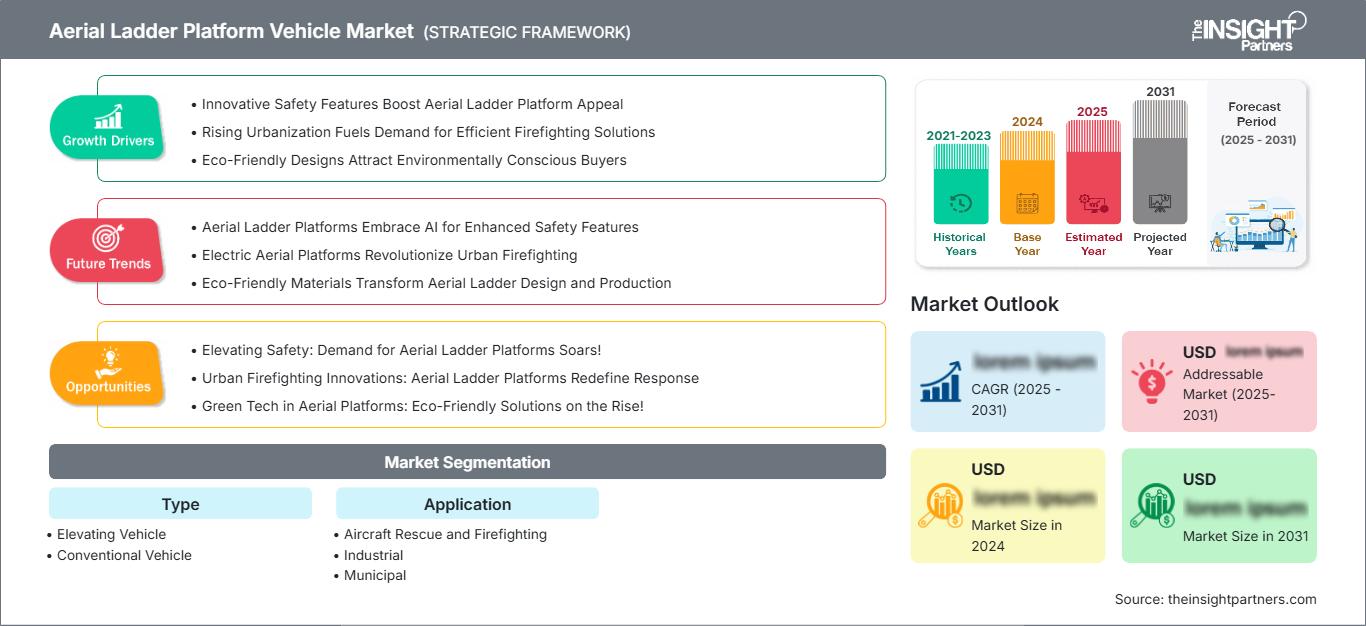
Aerial Ladder Platform Vehicle Market: Strategic Insights
Regional Insights
North America aerial ladder platform vehicle market
In North America, market share was around 28–31% in 2025, and the market is projected to grow at a compound annual growth rate of 4.9–5.4% through 2034. North America will benefit from formal fleet replacement plans, large municipal tax bases, safety enhancements at airports, and robust aftermarket support. Guidance from the NFPA on apparatus service life facilitates the decision-making process regarding replacements when ladder trucks outlive their frontline service life.
Procurement is also influenced by wildfire-urban interface risk, dense downtown redevelopment, and industrial corridors requiring elevated water application. Fire departments require articulating platforms, stabilization, and digitized controls. Hence, the market share of the aerial ladder platform vehicle in North America continues to grow due to replacements rather than additions to fleets.
U.S. aerial ladder platform vehicle Market
The US accounted for 77-81% of the North American market in 2025 and is estimated to grow at a CAGR of 4.8-5.3% from 2026 to 2034. The demand comes mostly from metropolitan city departments, airport agencies, and industrial fire brigades. Some of the companies that offer US-focused apparatus include Oshkosh Corporation, REV Group, Inc., Rosenbauer International AG, and Sutphen Corporation.
Some of the notable aerial ladder platform vehicle market trends include the adoption of 100-foot-tall aerials, compact urban ladders, and apparatus that combine pump, foam, and command modules. Airport rescue apparatus is driven by increased passenger traffic and improved airport infrastructure. Municipal buyers continue to be the largest adopters, but industrial buyers are seeking more advanced rescue and fire apparatus.
Europe aerial ladder platform vehicle Market
Europe had a market share of 24-27% in 2025, and will experience a CAGR of 4.7-5.2%. Germany has the largest share due to its already established apparatus manufacturing industry, city specifications, and the need for small, high-quality rescue vehicles.
In the UK market, the drivers include the renewal of the fire and rescue service fleet, building safety standards, and the need for platforms capable of reaching mid-rise residential and commercial buildings. The procurement process involves total cost of ownership, operator safety, and service considerations.
The aerial ladder platform vehicle market forecast indicates that France, Italy, and Spain are among the countries that drive demand through airport modernization, increased industrial safety, and municipal replacement cycles. Buyers in Europe increasingly desire low-emission chassis, narrow body designs, and sophisticated jacking systems.
APAC aerial ladder platform vehicle Market
Asia Pacific held 30–34% share in 2025 and is projected to grow at a 6.4–6.9% CAGR. China leads regional demand, supported by high-rise construction, industrial zones, and large municipal procurement programs.
Japan and South Korea emphasize technologically advanced, compact, and reliable aerial apparatus for dense urban environments. India is scaling procurement as metro expansion, airports, and industrial corridors raise demand for elevated emergency response.
Australia contributes through municipal replacement and industrial fire protection in mining, energy, and logistics. Policy focus on urban safety, airport capacity, and industrial compliance positions APAC as the fastest regional contributor to aerial ladder platform vehicle growth.
Middle East & Africa aerial ladder platform vehicle Market
Middle East and Africa is expected to grow at a 4.1–4.7% CAGR through 2034. Saudi Arabia leads regional procurement as airport expansion, industrial cities, and energy infrastructure require high-reach emergency response capability.
The UAE supports demand through high-rise urban districts, aviation hubs, and civil defense modernization. Buyers emphasize premium aerial platforms, rapid setup, and strong supplier support for mission-critical readiness.
South Africa and the rest of MEA show selective purchases linked to ports, petrochemicals, mining, and urban fire services. Budget constraints limit volumes, but large infrastructure and energy assets sustain specialized aerial ladder platform vehicle demand.
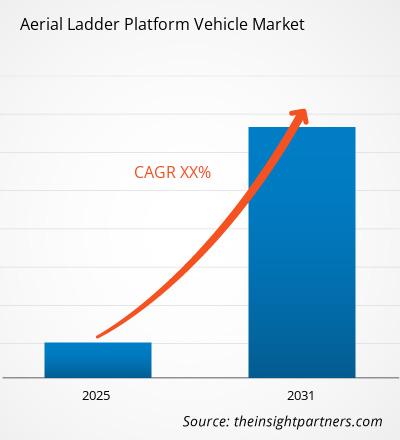
Segmentation Analysis
Type
The Type segment is expected to grow at a 5.3–5.9% CAGR during 2026–2034. Selection depends on mission profile, city geometry, payload needs, and budget. Elevating vehicles gain interest where rescue cages, articulated reach, and up-and-over capability are essential, while conventional vehicles remain important for standardized municipal firefighting and cost-controlled replacement programs.
- Elevating Vehicle: Elevating vehicles are strategically important for dense urban, airport, and industrial sites where rescue cages, water monitors, and articulated boom movement improve access to elevated or obstructed hazards.
- Conventional Vehicle: Conventional vehicles maintain strong demand among municipal departments prioritizing proven ladder architecture, lower specification complexity, standardized operator training, and predictable lifecycle maintenance across established fleet platforms.
Application
The Application segment is expected to grow at a 5.6–6.1% CAGR during 2026–2034. Municipal use provides the demand base, while industrial and airport applications add specialized requirements. Buyers increasingly align specifications with response time, facility height, foam capability, rescue cage payload, and interoperability with existing emergency fleets.
- Aircraft Rescue and Firefighting: ARFF demand is tied to airport capacity expansion, aircraft traffic growth, and emergency response standards requiring rapid elevated access, foam support, and reliable operation on airside infrastructure.
- Industrial: Industrial users deploy aerial platforms for refineries, chemical plants, warehouses, and manufacturing campuses where elevated fire attack, rescue access, and asset protection justify specialized apparatus investment.
- Municipal: Municipal departments remain the demand anchor because urban density, high-rise buildings, public safety expectations, and apparatus replacement schedules require dependable aerial ladder platforms for rescue and suppression.
Opportunity Snapshot
| Application | Revenue Contribution | Trend Tag | Adoption Stage |
| Aircraft Rescue and Firefighting | Medium | Airside Safety | Scaling |
| Industrial | Medium | Hazard Response | Scaling |
| Municipal | High | Urban Rescue | Mature |
Aerial Ladder Platform Vehicle Market Growth Drivers and Impact Analysis
Fleet Replacement and Apparatus Age Management
The age of fleets remains the primary driver of replacement needs, as aerial apparatus have greater mechanical, hydraulic, and safety complexity than regular pumpers. In departments operating vehicles that have exceeded their suggested service life, there is a higher likelihood of their vehicles being down, difficulty sourcing parts, and a lack of stability and safety features such as seats and lights. The effect is most notable in mature markets, where additional units are few, and there is only a need for replacement.
High-Rise Urbanization and Vertical Rescue Requirements
Urban construction is increasing the need for high-reach rescue and suppression equipment that can operate around narrow streets, overhead obstructions, and dense traffic. Municipalities require platforms capable of rapid setup, reliable load handling, and safe access to balconies, rooftops, and elevated industrial structures. The commercial impact is a shift toward compact aerial ladder platforms with improved outrigger control, up-and-over capability, and digital operator assistance. This driver expands demand in Asia Pacific and the Middle East while sustaining replacement specifications in North America and Europe.
Airport and Industrial Emergency Preparedness Investment
Airport and industrial operators are investing in specialized emergency fleets as passenger traffic, energy assets, and manufacturing capacity expand. Aerial ladder platforms complement ARFF and industrial foam units by adding elevated rescue, observation, and water application capability. This matters where terminals, hangars, storage tanks, warehouses, and process units create access challenges. The impact is stronger specification diversity, with buyers requesting corrosion-resistant materials, larger rescue cages, integrated communication points, and service support. Vendors able to configure vehicles for non-municipal missions gain a broader revenue base.
Aerial Ladder Platform Vehicle Market Future Trends
Electric-Ready and Low-Emission Aerial Platforms
Low-emission aerial platforms are moving from demonstration concepts toward procurement consideration, particularly in Europe and large North American cities. Fully electric or hybrid chassis remain constrained by weight, duty cycle, charging, and cost, yet buyers are beginning to request electric-ready architectures and auxiliary electric operation. Over time, this trend will reshape specifications around battery placement, hydraulic efficiency, charging access, and maintenance skills. The aerial ladder platform vehicle Market will not electrify uniformly, but premium urban departments and airport authorities are likely to adopt early where emissions policies and public visibility are strongest.
Digital Controls, Diagnostics, and Operator Assistance
Digital control systems are becoming central to aerial ladder platform vehicle design because they improve safety, training consistency, and maintenance visibility. Future platforms will increasingly integrate load monitoring, collision awareness, ground-bearing assessment, remote diagnostics, and simplified human-machine interfaces. These features reduce operator workload during complex rescues and support predictive maintenance planning. The commercial effect will be greater differentiation among premium suppliers and rising demand for software-supported service contracts. Dealers and maintenance partners with diagnostic capability will become more important in purchase decisions.
Aerial Ladder Platform Vehicle Market Opportunities
Lifecycle Services and Refurbishment Programs
Lifecycle service is an attractive opportunity because many buyers cannot immediately replace every aging aerial unit. Manufacturers can generate recurring revenue through inspections, hydraulic rebuilds, control upgrades, corrosion remediation, operator training, and certified parts supply. Refurbishment also helps departments bridge long production lead times while maintaining compliance and readiness. Companies that package condition assessment with financing or phased replacement planning can deepen customer relationships. This opportunity is especially relevant in North America and Europe, where mature fleets and budget scrutiny make total cost of ownership a decisive procurement factor.
Localized Assembly in Emerging Urban Markets
Emerging markets offer opportunity for localized assembly, specification adaptation, and service partnerships. Cities in Asia Pacific, the Middle East, and parts of Africa need high-reach capability but often face import duties, currency pressure, and limited maintenance infrastructure. Suppliers can improve competitiveness by partnering with local body builders, training service technicians, and offering modular designs suited to regional road conditions. This model can reduce delivery risk while building government trust. It also expands the aerial ladder platform vehicle size opportunity beyond premium imported units into scalable procurement programs.
Recent Developments
- June 2026: Rosenbauer International AG — Rosenbauer and MAN announced a world debut for the L32A-XS electric aerial ladder on MAN’s eTGM chassis for INTERSCHUTZ 2026, signaling stronger movement toward electrified aerial rescue vehicles for urban fire services.
- May 2025: Bronto Skylift Oy Ab — Bronto Skylift highlighted delivery of the F28ALR three-in-one aerial firefighting platform to Mira-Bhayandar, combining aerial rescue, firefighting, and water tower capability for a growing Indian urban municipality.
- May 2026: E-ONE, Inc— kicked off the $23.5 million expansion of its aerial manufacturing campus with a special program. This 80,000 sq. ft. expansion will increase the company’s aerial production capacity by approximately 35 percent and help reduce lead times for E-ONE’s products.
Frequently Asked Questions

- Comprehensive Market Sizing and Forecast Analysis
- Detailed Segmentation Analysis
- In-Depth Market Dynamics Assessment
- Regional and Country-Level Insights
- Competitive Landscape and Company Benchmarking
- Strategic Business Intelligence
Recent Reports
Testimonials

The Insight Partners' SCADA System Market report is comprehensive, with valuable insights on current trends and future forecasts. The team was highly professional, responsive, and supportive throughout. We are very satisfied and highly recommend their services.
RAN KEDEM Partner, Reali Technologies LTDs
I requested a report on a very specific software market and the team produced the report in a few days. The information was very relevant and well presented. I then requested some changes and additions to the report. The team was again very responsive and I got the final report in less than a week.
JEAN-HERVE JENN Chairman, Future Analytica
We worked with The Insight Partners for an important market study and forecast. They gave us clear insights into opportunities and risks, which helped shape our plans. Their research was easy to use and based on solid data. It helped us make smart, confident decisions. We highly recommend them.
PIYUSH NAGPAL Sr. Vice President, High Beam Global
The Insight Partners delivered insightful, well-structured market research with strong domain expertise. Their team was professional and responsive throughout. The user-friendly website made accessing industry reports seamless. We highly recommend them for reliable, high-quality research services
YUKIHIKO ADACHI CEO, Deep Blue, LLC.
This is the first time I have purchased a market report from The Insight Partners.While I was unsure at first, I visited their web site and felt more comfortable to take the risk and purchase a market report.I am completely satisfied with the quality of the report and customer service. I had several questions and comments with the initial report, but after a couple of dialogs over email with their analyst I believe I have a report that I can use as input to our strategic planning process.Thank you so much for taking the extra time and making this a positive experience.I will definitely recommend your service to others and you will be my first call when we need further market data.
JOHN SUZUKI President and Chief Executive Officer, Board Director, BK Technologies
I wish to appreciate your support and the professionalism you displayed in the course of attending to my request for information regarding to infectious disease IVD market in Nigeria. I appreciate your patience, your guidance, and the fact that you were willing to offer a discount, which eventually made it possible for us to close a deal. I look forward to engaging The Insight Partners in the future, all thanks to the impression you have created in me as a result of this first encounter.
DR CHIJIOKE ONYIA MANAGING DIRECTOR, PineCrest Healthcare Ltd.Reason to Buy
- Informed Decision-Making
- Understanding Market Dynamics
- Competitive Analysis
- Identifying Emerging Markets
- Customer Insights
- Market Forecasts
- Risk Mitigation
- Boosting Operational Efficiency
- Strategic Planning
- Investment Justification
- Tracking Industry Innovations
- Aligning with Regulatory Trends





 Get Free Sample for