
Air Crane Helicopter Market Share, Size & Demand by 2034
Coverage: By Endurance (Up to 5000 Feet, Up to 10000 Feet); External Load Capacity (Up to 3000 Pounds, Up to 6000 Pounds, Up to 12000 Pounds, Up to 15000 Pounds); End User (Civil and Commercial, Military) , and Geography (North America, Europe, Asia Pacific, and South and Central America)
- Status : Data Released
- Report Code : TIPRE00018331
- Category : Aerospace and Defense
- No. of Pages : 150
- Available Report Formats :


- Last update date : October 30, 2026


2025 Market Size
US$ 6.52 Bn
Base year value
2034 Forecast
US$ 14.32 Bn
Projected by 2034
CAGR 2026-2034
9.13 %
Growth rate
Addressable Market
US$ 93.15 Bn
(2026-2034)
The Air crane helicopter market is valued at US$ 6.52 Billion in 2025 and is projected to reach US$ 14.32 Billion by 2034, expanding at a CAGR of 9.13% from 2026 to 2034. Demand is supported by the use of heavy-lift rotorcraft for construction, firefighting, powerline work, disaster response, logging, military logistics, and infrastructure projects where conventional ground transportation is constrained by terrain, access, or deployment time.
In North America, the air crane helicopter market size is supported by established utility, forestry, firefighting, construction, and defense operators, alongside a substantial installed base requiring refurbishment and replacement. The region is expected to expand at ~8% CAGR, with demand strengthened by infrastructure modernization, wildfire-response requirements, and military heavy-lift procurement.
Air Crane Helicopter Market Assessment and Insights
Regional Outlook
- North America: ~36% of the global market in 2025 | ~8% CAGR through 2034. Market position: North America represents the largest regional revenue base, supported by established heavy-lift operators, utility construction, wildfire suppression, energy infrastructure, and military procurement. Mature fleet infrastructure also supports recurring maintenance and replacement demand.
- US: ~78% of North American market revenue in 2025 | ~8% CAGR through 2034. Market position: The US represents the largest country market within North America because of its extensive commercial helicopter fleet, federal and state firefighting requirements, utility infrastructure, construction activity, and sustained demand for military heavy-lift aircraft.
- Europe: ~24% of the global market in 2025 | ~8% CAGR through 2034. Market position: Europe has a mature aerial-work ecosystem supported by firefighting, offshore energy, construction, and public-service applications. France and Germany are leading countries within Europe, while Italy, Spain, and the UK contribute through specialized utility and emergency operations.
- Asia Pacific: ~28% of the global market in 2025 | ~11% CAGR through 2034. Market position: Asia Pacific is the fastest-growing region, driven by infrastructure expansion, disaster-response requirements, energy development, and modernization of military helicopter fleets. China, Japan, South Korea, India, and Australia provide diverse sources of demand.
Segment Outlook
- Civil and Commercial: ~65% Share in 2025 | ~9% CAGR through 2034. Market position: Civil and commercial operations account for the largest market contribution because air cranes provide efficient access to remote construction sites, power infrastructure, forests, firefighting zones, and disaster-affected locations where ground logistics are slower or impractical.
- Military: ~35% Share in 2025 | ~10% CAGR through 2034. Market position: Military demand is expanding through fleet modernization, long-range logistics, expeditionary operations, humanitarian assistance, and heavy equipment transport. Procurement programs increasingly emphasize payload, range, survivability, digital flight systems, and compatibility with evolving mission systems.
Competitive Coverage
Airbus S.A.S., Aircrane, Inc., Columbia Helicopters, Erickson Incorporated, High Performance Helicopters Corp, Kaman Corporation, Lockheed Martin Corporation, Russian Helicopters, Textron Aviation Inc., The Boeing Company
Methodology
The Insight Partners follows Data Collection & Secondary Research, Primary Research, Data Analysis, and Data Triangulation & Final Review to validate market estimates and insights.
Source: The Insight Partners' analysis based on proprietary research, government publications, company annual reports, investor presentations, industry databases, and expert interviews.
The helicopter air crane industry has moved on from specialized external lift configurations into more multi-role designs incorporating increased lift capacity, improved flight control and avionics systems and specific mission equipment. Today’s helicopters like the Airbus H215 show that the ability to carry loads is still important for firefighting, construction and external loads services while the heavy military types continue to evolve towards better structure, drivetrain, digital flight controls and open system architecture. The supply chain therefore includes aircraft manufacturers, engines and transmissions makers, avionics providers, maintenance and repair organizations, specialty operators and government buyers.
The future outlook will be impacted by investments in infrastructure and fleet renewal in emerging aviation markets. The region of Asia Pacific is particularly significant in terms of development of disaster response capabilities, utility networks, energy facilities and logistics in remote regions. Also the investments will flow into digital flight aids, improved pilot work load, autonomous or remote-assisted operation and modular aircraft design. Safety and certification regulations and noise/emissions legislation will affect fleet renewals while defense acquisitions will ensure that heavy lift aircraft remain in demand.
Air Crane Helicopter Market Report Scope
| Report Attribute | Details |
|---|---|
| Market size in 2025 | US$ 6.52 Billion |
| Market Size by 2034 | US$ 14.32 Billion |
| Global CAGR (2026 - 2034) | 9.13% |
| Historical Data | 2021-2024 |
| Forecast period | 2026-2034 |
Air Crane Helicopter Market Analysis
Air crane helicopter market expansion is strongly dependent on applications where the ability to operate in a vertical direction provides access. Construction companies use helicopters for carrying towers, cables, structures, and equipment in mountains or congested environments, whereas utility companies use helicopters for constructing and maintaining power lines. Firefighting companies need heavy helicopters able to carry water or retardant over difficult territory. This results in value chain that includes aircraft OEMs, parts manufacturers, specialized operators, maintenance services, leasing providers and government authorities. Availability of well-trained crews and maintenance capacity is critical because utilization and operability affect fleet economics.
Supply structure becomes increasingly diversified between new aircraft development and aircraft refurbishing projects. Existing aircraft benefit from the presence of big fleets, established maintenance routines and pilots' experience, whereas new aircraft rely on payload capacity, better fuel economy, modern control systems and low pilot workload. Airbus develops the H215 and H225 series for the heavy civil market, Boeing improves the performance of its Chinook series and Sikorsky – which is currently part of Lockheed Martin company – is increasing the CH-53K production. Specialized operators like Erickson and Columbia Helicopters are still relevant when clients need aerial lift services.
Factors that affect competitive positioning in the Air crane helicopter market report include the capabilities of aircraft and the capacity to provide support for high-demanding operating environments. Airbus has combined the production of heavy lift helicopters and support network globally, while Boeing and Lockheed Martin cater to the needs of the large military logistics. K-MAX of Kaman has been specifically designed for repetitive operations of external load, such as fire-fighting, logging, infrastructure construction, and humanitarian tasks. Erickson and Columbia Helicopters bring in their expertise and specialized heavy-lift services, while Aircrane, Inc. and High Performance Helicopters Corp are involved in aerial work operations. The Bell helicopter range from Textron Aviation Inc. adds competition to the market.
The focus of investments is on fleet modernization, sustenance, digitization, and mission adaptability and not just on the acquisition of aircraft. Large defense deals have a potential to give visibility of production for many years ahead. Civil operators judge the economic feasibility of aircraft with respect to their utilization, maintenance cost, availability of pilots and revenue generation potential of projects.
● REPORT CUSTOMIZATION
Tailor This Report To Align With Your Specific Business Requirements
This report can be customized to align precisely with your business objectives, scope, and target markets. Customization options include tailored segmentation, geography, competitive analysis, and strategic insights to support informed decision-making.
Customize This Report →WHAT YOU CAN ADJUST
- ● Segmentations
- ● Geography
- ● Competitive Analysis
- ● Language Preferences
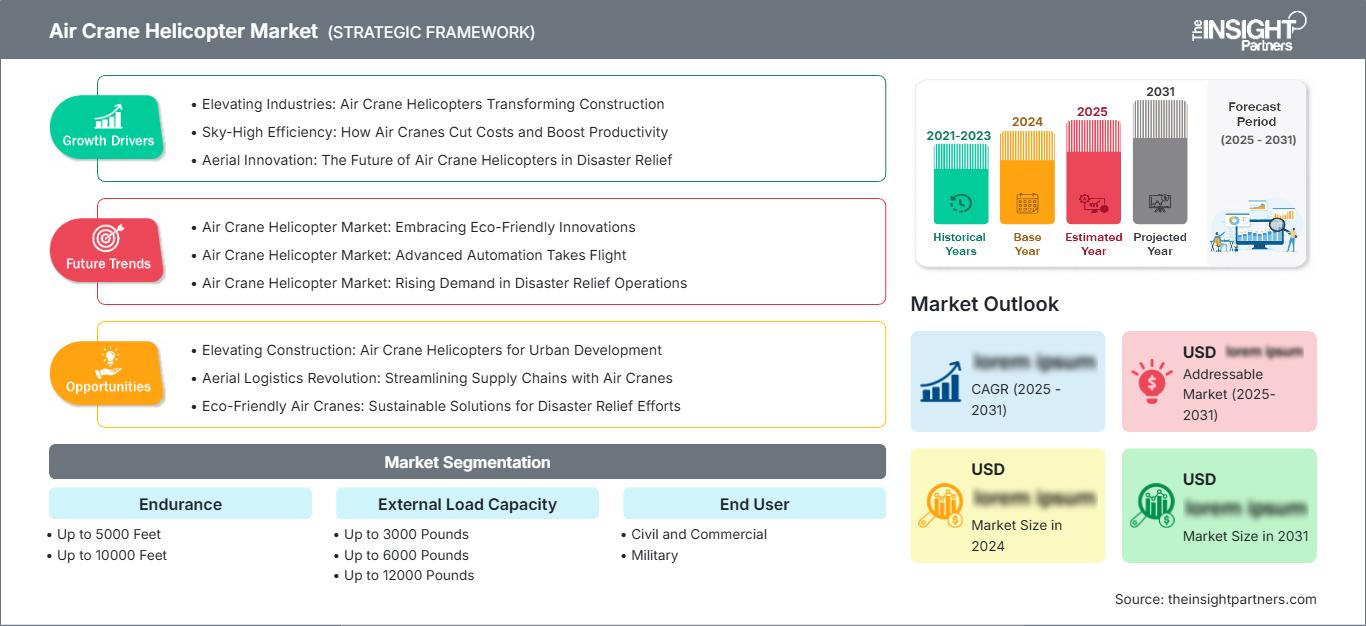
Air Crane Helicopter Market: Strategic Insights
Regional Insights
North America air crane helicopter market
North America constituted ~36% of worldwide Air crane helicopter market revenue in 2025 and is forecast to witness ~8% CAGR until 2034. The regional footprint is aided by well-established aerial work activities in the US and Canada, wherein helicopters are employed for fire fighting, utility construction, forestation, placement of heavy equipment, and inspection of infrastructure. In addition to this, the regional footprint is supplemented owing to the existence of several aerospace companies and their maintenance facilities.
US forms the major center of demand generation in the region, owing to several procurement channels for federal, state, commercial, and defense customers. There exist specialized operators, which can use the services of heavy lift aircraft for missions in mountainous locations, remote locations, and disaster-prone regions. In addition to this, military modernization enhances the addressable fleet through heavy lift programs, while civil operators assess aircraft on payload effectiveness, reliability, availability, and digital flight control systems.
U.S. air crane helicopter market
The US constitutes ~78% of the revenue in North America in 2025 and will grow at ~8% CAGR till 2034. Wide coverage of the installed fleet in the country enables its use in applications such as aerial construction, powerline operations, firefighting, foresting, emergency services, and governmental purposes. In addition, an extensive infrastructure base drives a need for precision in external load placement in the commercial sector.
Competitive players include Boeing, Lockheed Martin, Airbus, Kaman Corporation, Erickson Incorporated, Columbia Helicopters, Aircrane, Inc., and High Performance Helicopters Corp. The military segment plays a critical role for heavy helicopters, whereas the civil one favors those helicopters that are designed for repeated loading and quick deployment. In addition, the US enjoys a wide range of applications due to the infrastructure rebuilding, wildfires, and military modernization programs.
Europe air crane helicopter market
Europe accounted for around 24% of the total Air crane helicopter market share in 2025 and is forecast to grow at around 8% CAGR up to 2034. France leads in Europe driven by aircraft manufacturing facilities, public service helicopters, infrastructural activities, and specialist aerial work applications. Germany also makes a significant contribution from industrial infrastructures, emergency services, and military modernizations. UK has a specialized market in relation to offshore activities, utility services, emergency services, and construction.
Italian and Spanish demand comes from civil protection services, firefighting services, infrastructure developments, and public service activities. European customers have a focus on availability of aircraft, certification of aircraft, environmental regulations, and mission flexibility due to varying operating conditions from mountainous to urban to offshore and remote areas. The Super Puma family exemplifies the relevance of heavy helicopters in firefighting and public service missions.
Fleet renewal is another factor that forms part of the regional demand, where mature companies are starting to strike a balance between acquiring more advanced aircraft and maintaining existing equipment through modernization and life extension activities. Advanced cockpits, autopilot technology, transmission improvements, and specialized equipment will help in reducing the workload while increasing the flexibility of operation of the aircraft.
APAC air crane helicopter market
The Asia-Pacific region contributed about 28% to the global revenue in 2025 and is expected to grow at about 11% CAGR to become the fastest growing region in the world. The most prominent country in the Asia-Pacific region is China, while Japan, South Korea, India, and Australia are involved due to their military needs, disaster management, energy, construction, and utility activities. Huge infrastructure projects generate the need for helicopters that can carry machinery where road connectivity is difficult.
China and India provide special significance from the perspective of demand in the long run due to their infrastructure development and modernization. Disaster preparedness and public service activities are given importance in Japan and South Korea, while Australia is involved in firefighting, mining, utility, and remote areas operations.
Middle East & Africa air crane helicopter market
The Middle East & Africa market is projected to grow at ~8% CAGR through 2034. Saudi Arabia is the leading country in the Middle East & Africa region where evidence supports the position, with infrastructure development, energy projects, construction, and emergency-response requirements creating demand for heavy external-load capability. The UAE contributes through construction, logistics, energy, and specialized aviation services.
South Africa boasts an ecosystem of diversified air-work operations that involve utilities, firefighting, mining, infrastructures, and logistics in remote areas. The RoMEA market is still reliant on the pipeline of projects as well as government procurement because of terrain and lack of ground infrastructure, which means that helicopters become useful in certain operations. Energy and infrastructure spending will remain key drivers of demand, especially where there is a need to transport large equipment to difficult-to-reach areas.
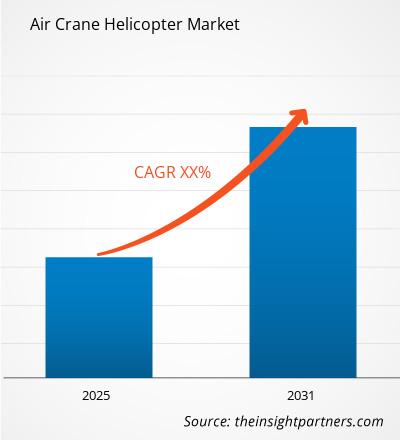
Segmentation Analysis
Endurance
Endurance influences the economics of missions requiring extended hovering, repeated external-load cycles, or operations far from support bases. The segment is projected to expand at ~9% CAGR through 2034. Operators increasingly value endurance because longer mission cycles can reduce repositioning requirements and improve aircraft utilization across infrastructure, firefighting, and remote-area applications.
- Up to 5000 Feet: Up to 5000 Feet remains important for construction, utility, firefighting, and infrastructure missions conducted at lower elevations. Its operational relevance is strongest where payload efficiency, maneuverability, and repetitive lifting are prioritized over high-altitude performance.
- Up to 10000 Feet: Up to 10000 Feet addresses operations where terrain and atmospheric conditions increase performance requirements. The sub-segment is strategically important for mountain construction, disaster response, forestry, and infrastructure projects requiring reliable external-load capability at elevated operating locations.
External Load Capacity
External Load Capacity is central to aircraft selection because payload determines the type of infrastructure component, equipment, material, or emergency cargo that can be transported during a single sortie. The segment is projected to grow at ~9% CAGR through 2034 as customers seek higher productivity and fewer lifting cycles.
- Up to 3000 Pounds: Up to 3000 Pounds serves lighter aerial-work requirements, including selected utility, construction, forestry, and maintenance tasks. It can provide economical deployment where projects require precision placement rather than maximum lifting capacity.
- Up to 6000 Pounds: Up to 6000 Pounds supports a broad range of repetitive external-load missions and occupies an important position between light utility helicopters and heavier platforms. Its flexibility makes it relevant for powerline, construction, firefighting, and forestry applications.
- Up to 12000 Pounds: Up to 12000 Pounds targets demanding infrastructure and industrial operations where heavier equipment must be transported without extensive ground access. Its strategic importance increases as projects move into remote or difficult terrain.
- Up to 15000 Pounds: Up to 15000 Pounds addresses the highest-capacity missions within the supplied taxonomy, including large structural components, military logistics, and specialized construction. Operators select this capability when payload productivity outweighs the additional acquisition and operating requirements of heavier aircraft.
End User
End User is projected to expand at ~9% CAGR through 2034, with civil and commercial operators representing the larger demand base and military customers providing an important source of higher-growth procurement. Requirements differ substantially because commercial operators prioritize utilization and operating economics, while military customers emphasize payload, range, survivability, and mission flexibility.
- Civil and Commercial: Civil and Commercial represents the largest demand pool, covering construction, utilities, firefighting, forestry, energy, disaster response, and specialized aerial work. Operators increasingly select aircraft according to payload productivity, availability, crew requirements, and mission-specific equipment.
- Military: Military demand is increasingly linked to fleet modernization and the replacement of aging heavy-lift aircraft. Mission requirements include troop and equipment transport, expeditionary logistics, humanitarian assistance, search and rescue, and support for distributed operations.
Opportunity Snapshot
| End User | Revenue Contribution | Trend Tag | Adoption Stage |
|---|---|---|---|
| Civil and Commercial | High | Infrastructure Lift | Mature |
| Military | Medium | Fleet Modernization | Scaling |
Air Crane Helicopter Market Growth Drivers and Impact Analysis
Expansion of infrastructure and utility construction
Large infrastructure projects create demand for aircraft that can move equipment, structural components, cables, and machinery directly to locations that lack adequate roads or lifting infrastructure. Power transmission construction is particularly suitable for external-load helicopters because towers and line components can be positioned across mountainous or environmentally constrained corridors without extensive ground preparation. Similar requirements occur in wind, telecommunications, industrial construction, and remote energy projects. The market impact is strongest where project schedules depend on rapid placement and where conventional cranes face terrain restrictions. As infrastructure networks age, replacement and reinforcement work creates recurring rather than purely project-based demand, supporting utilization for specialized operators and maintenance providers.
Rising wildfire and disaster-response requirements
Wildfire suppression, flood response, storm recovery, and humanitarian logistics increasingly require aircraft capable of reaching isolated areas rapidly. Air cranes can transport water, firefighting equipment, relief supplies, generators, and construction materials while bypassing damaged roads and bridges. This expands the value proposition beyond traditional construction and forestry operations. Governments and commercial operators may therefore prioritize aircraft availability and rapid deployment capability even when annual utilization varies. The requirement also strengthens the aftermarket because aircraft assigned to emergency-response missions must remain operationally ready. Fleet planning increasingly incorporates mission equipment, trained crews, maintenance support, and geographic positioning, creating opportunities for both aircraft manufacturers and specialist operators.
Military heavy-lift modernization and logistics requirements
Defense procurement is increasing the importance of payload, range, survivability, digital avionics, and mission flexibility in heavy-lift rotorcraft. Modern military operations require rapid movement of personnel, vehicles, ammunition, engineering equipment, and supplies across dispersed locations where fixed infrastructure may be unavailable or vulnerable. Heavy-lift platforms therefore remain relevant to expeditionary logistics and humanitarian assistance as well as combat support. Programs such as the CH-53K and CH-47F modernization demonstrate how manufacturers are combining higher lift capability with digital flight systems and improved sustainment. These programs also generate multiyear demand for components, training, MRO, upgrades, and supply-chain services.
Air Crane Helicopter Market Future Trends
Digital flight controls and supervised autonomy
Future air crane helicopter market trends are likely to include deeper integration of digital flight-control systems, automated approaches, enhanced navigation, and supervised autonomy. Heavy-lift missions often involve precise positioning close to structures, terrain, cables, or other obstacles, making reductions in pilot workload commercially and operationally relevant. Digital systems can also support repeatable approaches and improve consistency during demanding external-load operations. Boeing's recent Chinook development illustrates the direction of travel toward automated landing assistance, open architectures, digital backbones, and technology that can be inserted without redesigning an entire aircraft. For civil air cranes, comparable technologies could support safer precision lifting and more efficient mission execution as certification frameworks mature.
Modular platforms for multi-mission operations
Another structural trend is the development of helicopters that can transition efficiently between construction, firefighting, logistics, rescue, and utility missions. Operators face variable project pipelines, making aircraft utilization a key determinant of profitability. Modular cabins, interchangeable mission equipment, improved autopilot functions, and adaptable cargo systems can allow one aircraft to support several revenue streams. This trend may encourage customers to favor platforms with broad certification and support ecosystems rather than highly specialized configurations. Manufacturers that combine payload capability with flexible mission architecture can address a wider customer base, while operators can reduce the risk associated with dependence on a single end-use sector.
Air Crane Helicopter Market Opportunities
Fleet modernization and specialized aftermarket services
Fleet modernization provides an opportunity across aircraft replacement, refurbishment, component upgrades, digital avionics, transmission work, engine support, and mission-equipment integration. Many operators compare the cost of extending an established airframe with acquiring a new platform, particularly when aircraft remain structurally capable but require updated systems. Suppliers that provide certified retrofit packages can therefore address demand without relying solely on new aircraft production. Specialized MRO providers can also build recurring revenue through inspection programs, component repair, training, and spare-parts management. Investment in regional maintenance hubs could be particularly valuable in Asia Pacific and other markets where the installed fleet is expanding but local heavy-lift support capacity remains comparatively limited.
Emerging-market aerial logistics and infrastructure services
The expansion of infrastructure across emerging economies creates opportunities for operators that can offer complete aerial logistics services rather than aircraft alone. Utility construction, renewable-energy projects, mining infrastructure, telecommunications, disaster response, and remote industrial development can each require temporary heavy-lift capability. Service providers can reduce customer capital requirements by supplying aircraft, crews, maintenance, project planning, and specialized lifting equipment as a package. This Air crane helicopter market Forecast is particularly relevant where demand is project-based and ownership utilization would be uncertain. Companies with international operating experience, local partnerships, and strong regulatory capabilities can establish scalable service networks around infrastructure programs.
Recent Developments
- July 2026: The Boeing Company announced an agreement with Lufthansa Technik Defense to establish a parts and logistics framework supporting Germany's future CH-47F Block II fleet, with support planned to begin in 2027. The arrangement highlights the growing role of regional sustainment infrastructure alongside new heavy-lift aircraft procurement and is relevant to the lifecycle economics of military rotorcraft.
- April 2026: Airbus S.A.S. reported continued development and operational expansion around its heavy helicopter portfolio, while its H225 platform continued to serve offshore, security, disaster-response, and other demanding missions. Airbus also reported strong helicopter activity in 2025, including 536 net orders and 392 deliveries, reinforcing the importance of services and military demand within the broader helicopter industry.
- September 2025: Lockheed Martin Corporation announced that Sikorsky received a five-year US Navy contract worth $10.855 billion to build up to 99 CH-53K King Stallion heavy-lift helicopters for the US Marine Corps. The award supports production continuity from 2029 through 2034 and strengthens the supplier ecosystem supporting the heavy-lift platform.
Frequently Asked Questions

- Comprehensive Market Sizing and Forecast Analysis
- Detailed Segmentation Analysis
- In-Depth Market Dynamics Assessment
- Regional and Country-Level Insights
- Competitive Landscape and Company Benchmarking
- Strategic Business Intelligence
Recent Reports
Testimonials

The Insight Partners provided valuable market intelligence that supported our global go-to-market strategy. Their team was professional, responsive, and attentive to our feedback, providing thoughtful analysis and helpful methodological clarifications throughout the project.
Junmo Kim Chief Financial Officer (CFO), Enertech Co., Ltd.
The Insight Partners' SCADA System Market report is comprehensive, with valuable insights on current trends and future forecasts. The team was highly professional, responsive, and supportive throughout. We are very satisfied and highly recommend their services.
RAN KEDEM Partner, Reali Technologies LTDs
I requested a report on a very specific software market and the team produced the report in a few days. The information was very relevant and well presented. I then requested some changes and additions to the report. The team was again very responsive and I got the final report in less than a week.
JEAN-HERVE JENN Chairman, Future Analytica
We worked with The Insight Partners for an important market study and forecast. They gave us clear insights into opportunities and risks, which helped shape our plans. Their research was easy to use and based on solid data. It helped us make smart, confident decisions. We highly recommend them.
PIYUSH NAGPAL Sr. Vice President, High Beam Global
The Insight Partners delivered insightful, well-structured market research with strong domain expertise. Their team was professional and responsive throughout. The user-friendly website made accessing industry reports seamless. We highly recommend them for reliable, high-quality research services
YUKIHIKO ADACHI CEO, Deep Blue, LLC.
This is the first time I have purchased a market report from The Insight Partners.While I was unsure at first, I visited their web site and felt more comfortable to take the risk and purchase a market report.I am completely satisfied with the quality of the report and customer service. I had several questions and comments with the initial report, but after a couple of dialogs over email with their analyst I believe I have a report that I can use as input to our strategic planning process.Thank you so much for taking the extra time and making this a positive experience.I will definitely recommend your service to others and you will be my first call when we need further market data.
JOHN SUZUKI President and Chief Executive Officer, Board Director, BK Technologies
I wish to appreciate your support and the professionalism you displayed in the course of attending to my request for information regarding to infectious disease IVD market in Nigeria. I appreciate your patience, your guidance, and the fact that you were willing to offer a discount, which eventually made it possible for us to close a deal. I look forward to engaging The Insight Partners in the future, all thanks to the impression you have created in me as a result of this first encounter.
DR CHIJIOKE ONYIA MANAGING DIRECTOR, PineCrest Healthcare Ltd.Reason to Buy
- Informed Decision-Making
- Understanding Market Dynamics
- Competitive Analysis
- Identifying Emerging Markets
- Customer Insights
- Market Forecasts
- Risk Mitigation
- Boosting Operational Efficiency
- Strategic Planning
- Investment Justification
- Tracking Industry Innovations
- Aligning with Regulatory Trends





 Get Free Sample for