
Aircraft Extruded Seals Market Size, Share & Trends by 2034
Coverage: By Application (Doors, Windows, Others); Aircraft Type (Commercial Aircraft, Military Aircraft, Helicopters, General Aviation); Fit Type (Retro Fit, Line Fit) , and Geography (North America, Europe, Asia Pacific, and South and Central America)
- Status : Data Released
- Report Code : TIPRE00025080
- Category : Aerospace and Defense
- No. of Pages : 150
- Available Report Formats :


- Last update date : October 30, 2026


2025 Market Size
US$ 113.78 Mn
Base year value
2034 Forecast
US$ 157.48 Mn
Projected by 2034
CAGR 2026-2034
3.68 %
Growth rate
Addressable Market
US$ 1,232.17 Mn
(2026-2034)
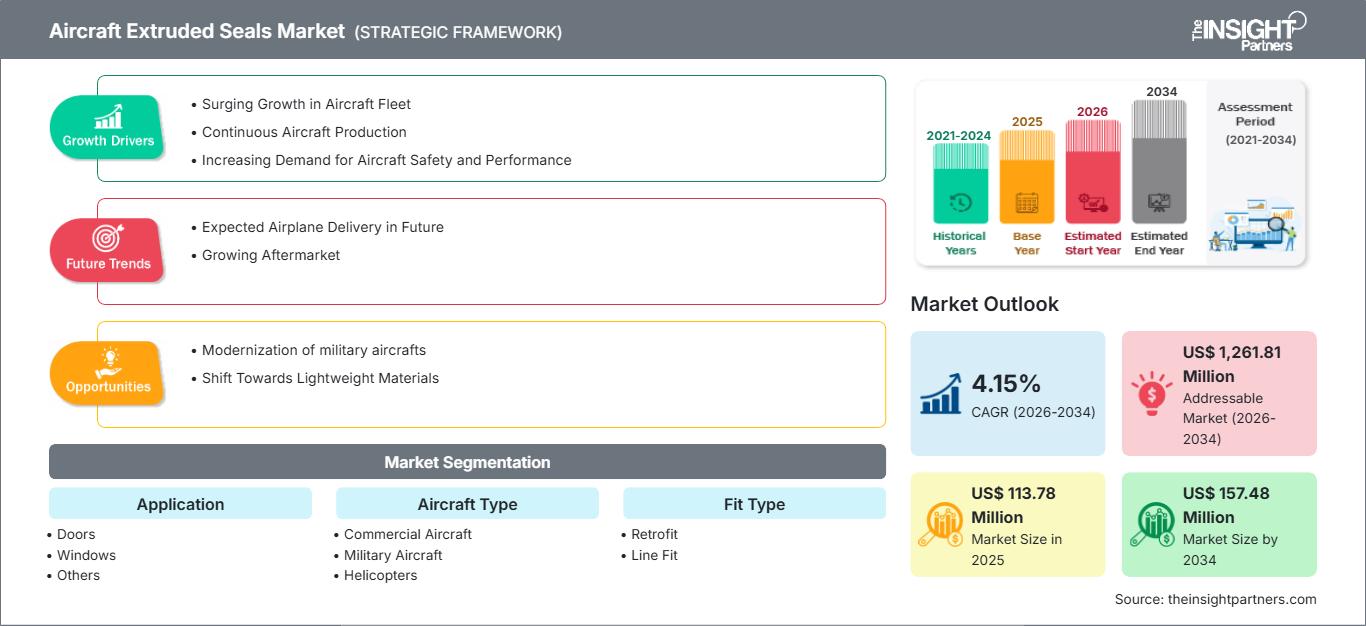
The aircraft extruded seals market was valued at US$ 113.78 Million in 2025 and is projected to reach US$ 157.48 Million by 2034, registering a CAGR of 3.68% during 2026–2034. The market covers engineered extruded sealing profiles used to maintain environmental separation, pressure integrity, contamination resistance, and component protection across aircraft structures and systems. Demand is supported by new aircraft production, fleet utilization, aftermarket replacement, and requirements for durable sealing performance under temperature, vibration, pressure, and chemical exposure.
Rising aircraft utilization and continued fleet renewal are supporting the North American aircraft extruded seals market, with an estimated CAGR of ~3% through 2034. The region benefits from a large installed commercial and general aviation fleet, extensive MRO infrastructure, military procurement, and established aerospace component manufacturing. Increasing requirements for lightweight sealing profiles and the replacement of aging door and window seals also support recurring demand across OEM and aftermarket channels.
Aircraft Extruded Seals Market Assessment and Insights
Regional Outlook
- North America: ~34% of the global market in 2025 | ~3% CAGR through 2034. Market position: North America represents the largest regional market, supported by its established aerospace manufacturing base, extensive installed fleet, high MRO activity, military aviation demand, and concentration of qualified suppliers serving OEM and aftermarket requirements.
- US: ~78% of North American market revenue in 2025 | ~3% CAGR through 2034. Market position: The US is the leading country in North America, supported by commercial aircraft production, military aviation programs, general aviation fleets, and a mature aftermarket ecosystem requiring certified replacement seals for doors, windows, and related airframe applications.
- Europe: ~29% of the global market in 2025 | ~3% CAGR through 2034. Market position: Europe is a mature aerospace manufacturing and MRO center. Germany, France, the UK, Italy, and Spain provide a broad industrial base, with France representing the leading country in Europe through strong aircraft production and supplier activity.
- Asia Pacific: ~24% of the global market in 2025 | ~5% CAGR through 2034. Market position: Asia Pacific is the fastest-growing region, supported by expanding commercial fleets, increasing MRO capabilities, aerospace localization, and rising aircraft manufacturing activity. China is the leading country in Asia Pacific, while India and other markets contribute to fleet and maintenance expansion.
Segment Outlook
- Commercial Aircraft: ~62% Share in 2025 | ~4% CAGR through 2034. Market position: Commercial aircraft represent the largest aircraft-type segment because high fleet volumes generate recurring demand across door, window, panel, and other sealing applications. New deliveries and replacement cycles reinforce demand across OEM and MRO channels.
- Retrofit: ~44% Share in 2025 | ~5% CAGR through 2034. Market position: Retrofit is the high-growth fit type as operators maintain aging fleets, replace degraded sealing profiles, and upgrade aircraft components during scheduled maintenance. MRO activity provides recurring replacement demand independent of new-aircraft delivery cycles.
Competitive Coverage
Freudenberg, Trelleborg Group, Kismet Rubber Products, Technetics Group, Rubbercraft, Saint-Gobain, Kirkhill, Elastostar Rubber Corporation, Northwest Rubber Extruders, Inc., McFarlane Aviation, Inc.
Methodology
The Insight Partners follows Data Collection & Secondary Research, Primary Research, Data Analysis, Data Triangulation & Final Review to validate market estimates and insights.
Source: The Insight Partners' analysis based on proprietary research, government publications, company annual reports, investor presentations, industry databases, and expert interviews.
The Aircraft Extruded Seals Market share has evolved alongside changes in aircraft design, elastomer formulation, manufacturing precision, and certification requirements. Extrusion is a process whereby continuous profiles with well-defined geometrical dimensions are manufactured for use in doors, windows, access panels, aerodynamic interfaces, and other similar parts. Material selection is also done based on considerations such as operating temperatures, fluids, ozone resistance, compressibility recovery, flame properties, and dimensional stability over time. Manufacturing has become more sophisticated to enable process control, tooling customization, automatic inspection, and application-specific compound development. This helps manufacturers serve the complex geometry of the aircraft structure and minimize losses and vibrations.
Looking ahead, the Aircraft Extruded Seals Market forecast is expected to benefit from expanding aerospace production in Asia Pacific and continued investment in regional MRO capacity. North America and Europe will retain their significance due to the existing fleets, programs for producing aircraft, and well-developed systems for the replacement of parts. In addition, the localization of supply chains will become an important issue as companies in the aerospace industry will start looking for appropriate sources of supply for polymers in their regions. Airworthiness, traceability, fire resistance, and qualification will be emphasized by regulation.
Aircraft Extruded Seals Market Report Scope
| Report Attribute | Details |
|---|---|
| Market size in 2025 | US$ 113.78 Million |
| Market Size by 2034 | US$ 157.48 Million |
| Global CAGR (2026 - 2034) | 3.68% |
| Historical Data | 2021-2024 |
| Forecast period | 2026-2034 |
Aircraft Extruded Seals Market Analysis
The aircraft extruded seals market growth is closely linked to aircraft production, fleet utilization, maintenance cycles, and the need to preserve sealing performance throughout an aircraft’s operating life. Commercial aircraft constitute a large share of demand due to the presence of many sealing interfaces on each aircraft, as well as the replacement process, as seals go through a compression set and get worn out due to aging and exposure to environmental elements.
Some of the links in the value chain include elastomer and polymer manufacturers, compounders, extruders, tooling suppliers, finishers, fabricators, aircraft OEMs, Tier 1 and Tier 2 suppliers, distributors, and MRO service providers. The supply environment is determined by factors such as compound qualification, tooling intricacy, production reliability, and certification needs. Companies that have an internal capability in terms of compound development, extrusion, curing, splicing, inspection, and value-added finishing are able to meet tighter tolerances and demands.
The aircraft extruded seals market features diversified sealing companies alongside specialized aerospace rubber manufacturers. Freudenberg, Trelleborg Group, Technetics Group, Saint-Gobain, and Kirkhill operate via diversified engineered materials or aerospace sealing product lines, whereas Rubbercraft, Kismet Rubber Products, Elastostar Rubber Corporation, and Northwest Rubber Extruders, Inc., focus on niche elastomer components and custom extrusion technologies. McFarlane Aviation, Inc. is a strongly aftermarket-oriented company that specializes in door and window seals for general aviation.
The competitive advantage today relies more on the ability to formulate, qualify, flexibly manufacture, reliably deliver, and be geographically close to aerospace customers. Trelleborg has significantly increased its presence in the aerospace market via acquisitions and capital investments, whereas the specialty companies are still competing through custom profiles, smaller runs, application engineering, and aftermarket support. Investment in capacity is thus combined with investment in material, tooling, inspection, production control technologies, and regional manufacturing facilities.
● REPORT CUSTOMIZATION
Tailor This Report To Align With Your Specific Business Requirements
This report can be customized to align precisely with your business objectives, scope, and target markets. Customization options include tailored segmentation, geography, competitive analysis, and strategic insights to support informed decision-making.
Customize This Report →WHAT YOU CAN ADJUST
- ● Segmentations
- ● Geography
- ● Competitive Analysis
- ● Language Preferences
Aircraft Extruded Seals Market: Strategic Insights
Regional Insights
North America aircraft extruded seals market
North America accounted for ~34% of the global aircraft extruded seals market in 2025 and is expected to expand at a CAGR of ~3% through 2034. The region benefits from a large commercial and general aviation installed base, extensive aircraft maintenance infrastructure, and established aerospace manufacturing clusters. Demand is generated through both line-fit programs and replacement requirements, with door and window sealing applications representing recurring areas of consumption. Military aviation and rotorcraft programs further diversify regional demand.
North America is led in terms of demand by the United States, backed by aircraft OEMs, military procurements, MRO organizations, and a large number of general aviation planes. Canada contributes to the demand through commercial aviation, business aviation, and aerospace manufacturing activities. Qualification, FAA airworthiness specifications, and existing distribution channels make this market a bit difficult to enter. This market also creates opportunities for the aftermarket, as the older aircraft need regular seal replacements due to compression, UV radiation, temperature variation, and fluid interaction.
U.S. aircraft extruded seals market
The US represented ~78% of North American aircraft extruded seals market revenue in 2025 and is expected to register a CAGR of ~3% through 2034. The standing of the country depends on the size of the commercial airliner fleet, military aircraft programs, general aviation aircraft fleet, and MRO network. The demand is created by both original equipment manufacturing and replacement, using the sealing profiles in door systems, exit systems, windows, cargo areas, and other aircraft interfaces.
The US market has access to a wide range of suppliers as well. Rubbercraft, Kismet Rubber Products, Northwest Rubber Extruders, Inc., Kirkhill, and McFarlane Aviation, Inc. have capabilities for the production of rubber profiles, aerospace parts, custom extrusions, and replacement parts. General aviation provides a highly varied replacement market since there are aircraft from various manufacturers and various generations operating today. The use of the aircraft fleet, maintenance activities, and replacement of FAA-approved parts should ensure stable consumption till 2034.
Europe aircraft extruded seals market
Europe accounted for ~29% of the global aircraft extruded seals market in 2025 and is projected to grow at a CAGR of ~3% through 2034. France is the leading country in Europe, supported by major commercial aircraft production, aerospace engineering, and a dense supplier network. Germany also contributes substantially through aerospace manufacturing, advanced materials, component production, and MRO. The UK remains important through aircraft systems, defense aviation, maintenance, and specialized component manufacturing.
The French and German markets provide robust demand for civil and defense aerospace programs, with the UK providing support to the industry through commercial aviation, military aviation, and after-sales. Italy is supported through the manufacture of aircraft and helicopters, defense programs, and parts suppliers, while Spain enjoys aerospace manufacturing clusters and European aircraft programs. The developed aviation environment in Europe provides consistent demand for certified polymer parts, and high-quality, traceable and environmental considerations benefit manufacturers with technical and manufacturing processes in place. Replacement demand from mature fleets complements new aircraft development and reduces dependence on one demand stream.
APAC aircraft extruded seals market
Asia Pacific represented ~24% of the global aircraft extruded seals market in 2025 and is expected to expand at a CAGR of ~5% through 2034, making it the fastest-growing region. China leads in Asia Pacific due to increased fleet capacity, a homegrown aerospace industry, and the localization of aviation manufacturing. The countries of Japan and South Korea offer contributions through aerospace manufacturing and high-value components.
The importance of India in the Asia Pacific region continues to grow owing to fleet expansion, which has been paralleled by MRO and aerospace manufacturing. In addition, there is demand from Australia in the areas of civil aviation, military and MRO. Increased passenger capacity, aircraft deliveries, utilization rates, and local supply chain development are all contributing factors to the increase in the addressable base for sealing components.
Middle East & Africa aircraft extruded seals market
The Middle East and Africa aircraft extruded seals market is expected to grow at a CAGR of ~4% through 2034. Saudi Arabia and the UAE are important demand centers in the Middle East because of their expanding aviation infrastructure, airline fleets, airport investment, and MRO ambitions. The UAE has a particularly established aviation ecosystem supported by major airlines, airports, maintenance operations, and aerospace services.
South Africa is significant as an aerospace and maintenance hub within Africa, while RoMEA demand is driven by fleet upgrades, defense aviation, helicopters, and airport construction. Tough operating conditions in some areas in the region enhance the significance of heat, UV, dust, moisture, and fluid resistance. Localization of maintenance and components can present business prospects for seal suppliers, although the market size is smaller than in North America, Europe, and Asia Pacific.
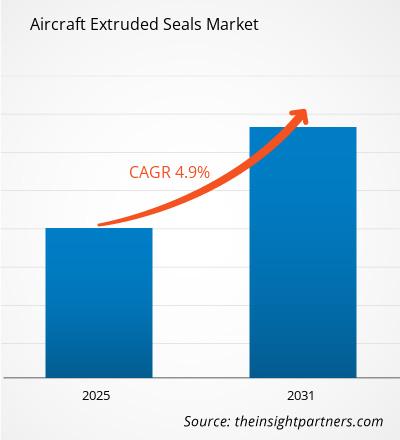
Segmentation Analysis
Application
Application represents a core segmentation dimension for the aircraft extruded seals market. Door and window sealing interfaces require profiles that maintain compression, environmental protection, and dimensional stability through repeated opening cycles and temperature variation. Other applications broaden demand across access panels, aerodynamic surfaces, cargo areas, and specialized aircraft structures. The application mix is therefore shaped by aircraft architecture, sealing geometry, operating environment, and maintenance schedules. The main segment is expected to expand at a CAGR of ~4% during 2026–2034.
- Doors: Door seals address pressure retention, weather protection, acoustic isolation, and contamination control. Their recurring exposure to compression and mechanical movement creates replacement demand across commercial, military, helicopter, and general aviation fleets.
- Windows: Window seals provide environmental separation and help maintain cabin integrity around glazing interfaces. Demand is influenced by aircraft production, window configuration, fleet age, and replacement requirements during maintenance events.
- Others: Other applications include access panels, aerodynamic interfaces, cargo areas, and specialized structural locations. Their importance comes from application-specific sealing requirements and the need to match complex aircraft geometries.
Aircraft Type
Aircraft Extruded Seals Market trends are influenced by Aircraft Type, which determines the scale and technical profile of sealing demand. Commercial aircraft generate the largest requirement because of production volumes and extensive installed fleets, while military aircraft, helicopters, and general aviation require specialized profiles adapted to distinct operating conditions. The segment is expected to register a CAGR of ~4% during 2026–2034. Aircraft age, utilization, production rates, and maintenance intensity influence demand across the fleet spectrum.
- Commercial Aircraft: Commercial aircraft generate substantial demand because each platform contains multiple sealing interfaces and operates under intensive utilization. New deliveries and replacement cycles together provide a broad recurring demand base.
- Military Aircraft: Military aircraft require sealing profiles capable of supporting demanding temperature, vibration, chemical, and environmental conditions. Long service lives and fleet sustainment programs provide continuing aftermarket requirements.
- Helicopters: Helicopters require specialized seals for doors, windows, access areas, and exposed structures. High vibration and diverse operating environments increase the importance of flexibility, compression recovery, and durability.
- General Aviation: General aviation creates a fragmented aftermarket opportunity across aging aircraft fleets. Replacement door and window seals are particularly relevant because operators maintain older platforms for extended service periods.
Fit Type
Fit Type divides demand between components installed during aircraft production and products supplied for aircraft already in service. Retrofit demand benefits from maintenance cycles, fleet aging, component degradation, and replacement requirements. The segment is expected to expand at a CAGR of ~4% during 2026–2034, while retrofit is expected to grow at ~5% as operators maintain older fleets and replace worn sealing profiles.
- Retrofit: Retrofit demand is supported by scheduled maintenance and aging aircraft. Operators replace seals affected by compression set, weathering, chemical exposure, and repeated mechanical movement, creating recurring aftermarket opportunities.
- Line Fit: Line-fit demand is tied to aircraft production schedules and supplier qualification. Consistent quality, repeatable extrusion geometry, traceability, and integration with OEM manufacturing processes are critical competitive requirements.
Opportunity Snapshot
| Application | Revenue Contribution | Trend Tag | Adoption Stage |
|---|---|---|---|
| Doors | High | Fleet Retrofit | Mature |
| Windows | Medium | Glazing Renewal | Mature |
| Others | Low | Profile Expansion | Scaling |
Aircraft Extruded Seals Market Growth Drivers and Impact Analysis
Fleet Expansion and Rising Aircraft Utilization
Commercial fleet expansion directly increases the installed base requiring sealing components across doors, windows, access panels, and other interfaces. Higher aircraft utilization also increases exposure to compression cycling, temperature changes, vibration, fluid contact, and environmental contamination, accelerating maintenance requirements over time. The impact is therefore twofold: new aircraft production creates line-fit demand, while increased utilization supports replacement demand. Growth in commercial aviation is particularly important because commercial aircraft combine high production volumes with intensive operating schedules. Military and general aviation fleets provide additional demand through sustainment and maintenance programs. For manufacturers, the resulting market opportunity favors suppliers able to support both production-scale requirements and replacement orders while maintaining consistent extrusion geometry, qualified materials, traceability, and reliable delivery.
Growing MRO Activity and Aging Aircraft Fleets
Aging aircraft fleets create a structural requirement for replacement sealing profiles because elastomeric components can lose elasticity or dimensional stability after prolonged exposure to environmental and mechanical stresses. Door and window seals are particularly relevant because they undergo repeated compression and movement while also being exposed to temperature, moisture, ultraviolet radiation, and cleaning chemicals. MRO providers therefore represent an important route to recurring demand beyond new-aircraft production. The impact is strongest in mature aviation markets where older aircraft remain operational for extended periods. Specialized suppliers can capture this opportunity through approved replacement parts, custom extrusion capabilities, rapid tooling, small-batch manufacturing, and distribution coverage. This demand structure also reduces dependence on annual aircraft delivery volumes.
Demand for Lightweight and Application-Specific Sealing Profiles
Aircraft manufacturers increasingly seek component designs that meet performance requirements without adding unnecessary weight or complexity. Extruded sealing profiles can be engineered around specific geometries and material characteristics, allowing manufacturers to address environmental sealing while optimizing installation and component interfaces. Material formulation can be adapted to temperature, chemical, flame, weathering, and compression requirements, making application-specific engineering an important competitive factor. The impact extends beyond material substitution because improved sealing performance can reduce leakage, moisture ingress, vibration transmission, and premature component degradation. Suppliers that combine compound development with extrusion, precision tooling, testing, and value-added fabrication can therefore address higher-value programs and strengthen relationships with OEMs, Tier 1 suppliers, and MRO customers.
Aircraft Extruded Seals Market Future Trends
Advanced Elastomer Formulations and Multifunctional Profiles
Future aircraft extruded seals are likely to incorporate increasingly specialized elastomer formulations designed for narrower operating windows and multifunctional performance requirements. Materials will need to balance flexibility, compression recovery, environmental resistance, fire performance, and long-term stability while meeting increasingly demanding qualification requirements. Profile design is also expected to become more application-specific, with complex geometries developed around modern airframe structures and tighter installation constraints. As aircraft architectures evolve toward greater electrification and improved energy efficiency, sealing components will increasingly be evaluated as part of system-level performance rather than as simple passive barriers. This trend should encourage investment in compound development, simulation, precision extrusion, automated inspection, and traceability systems capable of producing consistent profiles across complex production programs.
Regionalization of Aerospace Seal Manufacturing
The aircraft extruded seals market is likely to experience greater regionalization of production as aerospace manufacturers seek resilient supply chains and shorter logistics paths. New manufacturing capacity in emerging aerospace clusters can support local customers while reducing dependence on distant production sites. Asia Pacific is positioned to benefit from this trend because of fleet expansion, aerospace industrialization, and growing MRO investment. The Middle East and North Africa can also attract component manufacturing and maintenance activity where aerospace clusters provide infrastructure, skilled labor, and customer proximity. Regionalization will not eliminate global qualification requirements, but it can change sourcing patterns by encouraging suppliers to establish production, engineering, and service capabilities closer to aircraft OEMs and MRO centers.
Aircraft Extruded Seals Market Opportunities
Expansion of Aftermarket and Retrofit Product Portfolios
Aftermarket and retrofit products provide suppliers with an opportunity to capture recurring demand from aging aircraft and scheduled maintenance. Manufacturers can expand their portfolios by developing qualified replacement profiles for frequently serviced door, window, baggage, and access applications. Standardized product families combined with aircraft-specific part references can simplify procurement for MRO organizations and distributors. Digital catalogs, configuration tools, and application-specific engineering support can further improve aftermarket accessibility. The opportunity is particularly relevant for suppliers capable of producing short and medium production runs economically, because aftermarket requirements can be fragmented across aircraft models and generations. Companies with existing certification, tooling, and distribution infrastructure can use these capabilities to broaden coverage without relying solely on new aircraft production programs.
Localized Production Near Emerging Aerospace Clusters
Establishing manufacturing or finishing capabilities near expanding aerospace clusters can create opportunities to shorten lead times and improve customer responsiveness. Asia Pacific, the Middle East, and North Africa offer potential because aircraft fleets, MRO infrastructure, and aerospace manufacturing ecosystems are developing alongside government-backed industrial programs. Localized production can also support customer-specific tooling, engineering assistance, inspection, and small-batch requirements. However, aerospace qualification and traceability requirements mean that localization must be accompanied by consistent material controls and quality systems. Suppliers that combine regional capacity with established formulation technology and certification experience can position themselves closer to OEM and MRO purchasing decisions while reducing logistical complexity.
Frequently Asked Questions

- Comprehensive Market Sizing and Forecast Analysis
- Detailed Segmentation Analysis
- In-Depth Market Dynamics Assessment
- Regional and Country-Level Insights
- Competitive Landscape and Company Benchmarking
- Strategic Business Intelligence
Recent Reports
Testimonials

The Insight Partners provided valuable market intelligence that supported our global go-to-market strategy. Their team was professional, responsive, and attentive to our feedback, providing thoughtful analysis and helpful methodological clarifications throughout the project.
Junmo Kim Chief Financial Officer (CFO), Enertech Co., Ltd.
The Insight Partners' SCADA System Market report is comprehensive, with valuable insights on current trends and future forecasts. The team was highly professional, responsive, and supportive throughout. We are very satisfied and highly recommend their services.
RAN KEDEM Partner, Reali Technologies LTDs
I requested a report on a very specific software market and the team produced the report in a few days. The information was very relevant and well presented. I then requested some changes and additions to the report. The team was again very responsive and I got the final report in less than a week.
JEAN-HERVE JENN Chairman, Future Analytica
We worked with The Insight Partners for an important market study and forecast. They gave us clear insights into opportunities and risks, which helped shape our plans. Their research was easy to use and based on solid data. It helped us make smart, confident decisions. We highly recommend them.
PIYUSH NAGPAL Sr. Vice President, High Beam Global
The Insight Partners delivered insightful, well-structured market research with strong domain expertise. Their team was professional and responsive throughout. The user-friendly website made accessing industry reports seamless. We highly recommend them for reliable, high-quality research services
YUKIHIKO ADACHI CEO, Deep Blue, LLC.
This is the first time I have purchased a market report from The Insight Partners.While I was unsure at first, I visited their web site and felt more comfortable to take the risk and purchase a market report.I am completely satisfied with the quality of the report and customer service. I had several questions and comments with the initial report, but after a couple of dialogs over email with their analyst I believe I have a report that I can use as input to our strategic planning process.Thank you so much for taking the extra time and making this a positive experience.I will definitely recommend your service to others and you will be my first call when we need further market data.
JOHN SUZUKI President and Chief Executive Officer, Board Director, BK Technologies
I wish to appreciate your support and the professionalism you displayed in the course of attending to my request for information regarding to infectious disease IVD market in Nigeria. I appreciate your patience, your guidance, and the fact that you were willing to offer a discount, which eventually made it possible for us to close a deal. I look forward to engaging The Insight Partners in the future, all thanks to the impression you have created in me as a result of this first encounter.
DR CHIJIOKE ONYIA MANAGING DIRECTOR, PineCrest Healthcare Ltd.Reason to Buy
- Informed Decision-Making
- Understanding Market Dynamics
- Competitive Analysis
- Identifying Emerging Markets
- Customer Insights
- Market Forecasts
- Risk Mitigation
- Boosting Operational Efficiency
- Strategic Planning
- Investment Justification
- Tracking Industry Innovations
- Aligning with Regulatory Trends





 Get Free Sample for