
Aircraft Soft Goods Market Trends, Size & Forecast by 2034
Coverage: by Aircraft Type (Commercial Aircraft, Regional Jet, Business Jet, Helicopter); Product (Carpets, Seat Covers, Curtains, Others); Material (Wool/Nylon Blend Fabric, Natural Leather, Synthetic Leather, Others); Distribution Channel (OEM, Aftermarket) , and Geography (North America, Europe, Asia Pacific, and South and Central America)
- Status : Data Released
- Report Code : TIPRE00007937
- Category : Aerospace and Defense
- No. of Pages : 150
- Available Report Formats :


- Last update date : November 02, 2026


2025 Market Size
US$ 748.97 Mn
Base year value
2034 Forecast
US$ 990.04 Mn
Projected by 2034
CAGR 2026-2034
3.15 %
Growth rate
Addressable Market
US$ 7,896.68 Mn
(2026-2034)
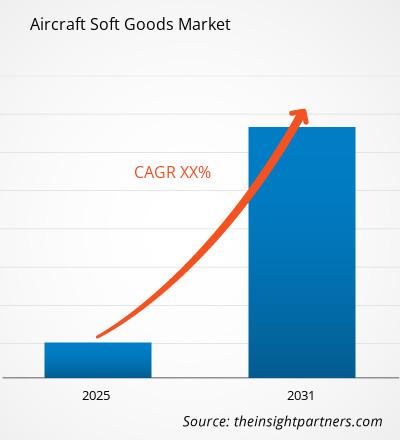
The aircraft soft goods market size is shaped by commercial aircraft production, cabin refurbishment, passenger comfort requirements, material substitution, and rising emphasis on lightweight and lower-impact interior materials. The market was valued at US$ 748.97 Million in 2025 and is projected to reach US$ 990.04 Million by 2034, registering a CAGR of 3.15% from 2026 to 2034. Demand is supported by new aircraft deliveries, replacement of worn cabin textiles, premium cabin upgrades, and increasing use of durable and recyclable soft goods.
North America remains an important demand center, with the aircraft soft goods market expected to expand at approximately ~3% CAGR through 2034. Replacement activity across established commercial fleets, business aviation demand, aircraft refurbishment programs, and established interior-material supply networks support regional expansion. The concentration of airlines, MRO providers, aircraft interior specialists, and material suppliers also enables shorter qualification and procurement cycles for new soft-good solutions.
Aircraft Soft Goods Market Assessment and Insights
Regional Outlook
- North America: ~35% of the global Aircraft Soft Goods Market share in 2025 | ~3% CAGR through 2034. Market position: North America holds the largest regional position, supported by a substantial installed aircraft base, established airline and business aviation fleets, refurbishment programs, and a mature ecosystem of cabin interior manufacturers, distributors, and MRO providers.
- US: ~75% of North American market revenue in 2025 | ~3% CAGR through 2034. Market position: The US accounts for most regional demand because of its large commercial and business aviation fleet, extensive aftermarket activity, aircraft completion ecosystem, and continued investment in passenger-facing cabin upgrades.
- Europe: ~31% of the global market in 2025 | ~2% CAGR through 2034. Market position: Europe represents a mature market supported by major airlines, aircraft manufacturers, MRO networks, and specialist textile producers. Germany is the leading country in Europe, followed by established demand centers in the UK, France, Italy, and Spain.
- Asia Pacific: ~24% of the global market in 2025 | ~5% CAGR through 2034. Market position: Asia Pacific is the fastest-growing region as fleet expansion, rising passenger traffic, airline modernization, and new aircraft deliveries increase demand. China is the leading country in Asia Pacific, supported by fleet growth and expanding aviation infrastructure.
Segment Outlook
- Carpets: ~43% Share in 2025 | ~3% CAGR through 2034. Market position: Carpets represent the largest product segment because they cover substantial cabin areas and require recurring replacement due to high passenger and service exposure. Lightweight construction, stain resistance, customization, and recycled fibers increasingly influence procurement.
- Synthetic Leather: ~31% Share in 2025 | ~4% CAGR through 2034. Market position: Synthetic leather has a comparatively higher growth outlook because operators seek durable, easy-to-maintain surfaces with consistent appearance and lower weight. Its applicability across commercial, regional, and business aircraft supports broader adoption.
Competitive Coverage
Aircraft Interior Products, Botany Weaving Mill Ltd., Desso Group, E-Leather Ltd., Fellfab, Hong Kong Aircraft Engineering Co. Ltd. (HAECO), Lantal Textiles AG, Mohawk Group, Tapis Corporation, The Anker Company
Methodology
The Insight Partners follows Data Collection & Secondary Research, Primary Research, Data Analysis, and Data Triangulation & Final Review to validate market estimates and insights.
Source: The Insight Partners' analysis based on proprietary research, government publications, company annual reports, investor presentations, industry databases, and expert interviews.
Aircraft soft goods have evolved from primarily decorative cabin components into engineered interior materials that must balance aesthetics, durability, weight, cleanability, flame resistance, maintainability, and passenger comfort. Carpet construction has moved toward lighter and more design-flexible formats, while upholstery suppliers increasingly develop fabrics and synthetic surfaces that tolerate intensive cleaning and repeated use. Production is also becoming more responsive to airline customization requirements, with suppliers integrating design, material development, testing, cutting, sewing, and finishing capabilities into shorter development cycles.
The outlook through 2034 is influenced by fleet growth in emerging aviation markets, refurbishment of established fleets, and investment in cabin differentiation. Airlines increasingly evaluate material choices against lifecycle considerations rather than appearance alone, creating opportunities for suppliers offering recycled fibers, lower-waste processes, lightweight constructions, and traceable material inputs. Regulatory requirements for aircraft interior flammability, smoke, and toxicity performance continue to make qualification capability important, while expanding aftermarket channels create opportunities for suppliers that can support both high-volume standardized programs and smaller customized cabin projects.
Aircraft Soft Goods Market Report Scope
| Report Attribute | Details |
|---|---|
| Market size in 2025 | US$ 748.97 Million |
| Market Size by 2034 | US$ 990.04 Million |
| Global CAGR (2026 - 2034) | 3.15% |
| Historical Data | 2021-2024 |
| Forecast period | 2026-2034 |
Aircraft Soft Goods Market Analysis
Market growth for aircraft soft goods industry is tied directly to production of new aircrafts and replacement cycles of cabin materials. New aircraft need to have certified carpets, seat coverings, curtains and other soft interior products installed and used aircrafts create recurring demand due to high level of usage, maintenance, wear and tear, cabin layout changes and periodic refurbishing. In case of business aviation, customization-driven demand takes place where aesthetics and tactile feel of materials can become more important factors for purchasing decisions.
The Aircraft Soft Goods Market report indicates that value chain in this industry starts from producers of fibers, leather, artificial materials and textiles and ends with specialized aircraft interior manufacturers, seat makers, MRO providers, airlines, completion centers and distributors. Suppliers are required to provide consistent materials and documentation, as well as adaptation of products to the needs of particular aircraft. Consequently, supplier resilience is dependent on the availability of raw materials, production capacities, test equipment and ties with OEM and aircraft operators.
Aircraft soft goods competition includes specialized textile manufacturers as well as wider aircraft interior and MRO firms. Lantal Textiles AG has a diverse range of aviation textiles, while Tapis Corporation specializes in performance fabrics and surfaces for both commercial and private aviation applications. Botany Weaving Mill Ltd. specializes in aviation seat fabric, carpet, and curtain products, while E-Leather Ltd. tackles lightweight leather substitutes. HAECO brings value from the wider aircraft interiors and MRO context.
Increasing investment is being made in material technology, sustainability, customizability, and manufacturing agility. Some firms like Mohawk Group, Desso Group, Fellfab, The Anker Company, and Aircraft Interior Products are competing based on their specialized materials or cabin finish expertise. Thus, competitive positioning is based not just on pricing but also on the provision of certifications, designs, durability, lead times, and ability to develop materials alongside airline or seat program needs.
● REPORT CUSTOMIZATION
Tailor This Report To Align With Your Specific Business Requirements
This report can be customized to align precisely with your business objectives, scope, and target markets. Customization options include tailored segmentation, geography, competitive analysis, and strategic insights to support informed decision-making.
Customize This Report →WHAT YOU CAN ADJUST
- ● Segmentations
- ● Geography
- ● Competitive Analysis
- ● Language Preferences
Aircraft Soft Goods Market: Strategic Insights

Regional Insights
North America Aircraft Soft Goods Market
The Aircraft Soft Goods Market forecast shows that North America represented approximately ~35% of the global aircraft soft goods market in 2025 and is expected to expand at approximately ~3% CAGR through 2034. There is an advantage of having an existing number of commercial aircraft as well as business aviation activities, aircraft completion centers, and MRO services. The need for replacement parts will play a big role as the soft goods will show signs of wearing out and will need to be replaced although the aircraft is still structurally and mechanically sound.
The United States is considered the main demand center for the region where the buyers include major airlines, aircraft lessors, business jet operators, and interior specialists. In terms of procurement, durability, turnaround time, cleanliness, and weight have become key factors. The North American region has the benefit of being closer to aircraft manufacturers, seat makers, completion centers, and aftermarket customers. North America has a relatively diverse market for the carpets, seat covers, curtains, and leather or textile substitutes.
U.S. Aircraft Soft Goods Market
The US accounted for approximately ~75% of North American aircraft soft goods market revenue in 2025, with an estimated ~3% CAGR through 2034. This positioning strategy results from the size of operations in commercial aviation and the wide range of its installed base in terms of mainline air carriers, regional carriers, cargo carriers, biz jets, and private aviation. Regular use of aircraft leads to the need for regular renewal of upholstery, carpeting, and other interior textiles.
The American market also benefits from the presence of well-developed supplier and application ecosystem. Tapis Corporation covers commercial seats and private jets segment, while domestic and international textile providers cater to needs of airlines, aircraft completers, seats manufacturers, and MROs. Growing differentiation between the applications is observed on the basis of cabin class and aircraft type, with customization becoming more significant for premium and private segments.
Europe Aircraft Soft Goods Market
Europe accounted for approximately ~31% of the global aircraft soft goods market in 2025 and is projected to register approximately ~2% CAGR through 2034. The region has a mature aircraft interiors ecosystem supported by major aircraft manufacturers, airlines, MRO organizations, seat suppliers, and specialist textile producers. Germany is the leading country in Europe, supported by its aerospace manufacturing base, supplier ecosystem, and aircraft interior activity.
The UK continues to be an important market due to its extensive airline and MRO community and robust aerospace supply chain. Germany will leverage its aircraft building and interior engineering abilities, while France will benefit from aerospace manufacturing, airline needs, and cabin industry suppliers. Italy will make contributions based on its aircraft interiors and design, premium cabin customization, and textile manufacturing capabilities. Spain will continue to be an established aviation market supported by airline operations, MRO needs, and growing cabin interior refurbishment needs.
Sustainable materials, material traceability, light-weighted products, and efficient manufacturing have become priorities for procurement in Europe. These challenges are met by recycled fiber content, improved dyeing methods, reduced waste generation during manufacturing, and long-lasting materials. Being a relatively mature market in terms of the installed base, Europe has a balanced structure including aftermarket replacements and refurbishments besides new aircraft deliveries.
APAC Aircraft Soft Goods Market
Asia Pacific accounted for approximately ~24% of the global aircraft soft goods market in 2025 and is expected to expand at approximately ~5% CAGR through 2034. China is the leading country in Asia Pacific, supported by expanding airline fleets, airport infrastructure, domestic aviation activity, and increasing demand for aircraft cabin modernization.
Japan and South Korea have established aviation and manufacturing industries, whereas India is one of the critical markets for expansion because of increasing passenger traffic and increasing sizes of the airline fleet. Australia is contributing to the sector through its established commercial aviation, regional aviation, and aftermarket requirements. Overall, the manufacturers in the region are facing a challenge of cost-conscious purchasing amid higher demands for cabin quality, customization, and sustainability.
Middle East & Africa Aircraft Soft Goods Market
The Middle East & Africa market is projected to expand at approximately ~4% CAGR through 2034. Saudi Arabia and the UAE are important demand centers because aviation development, airport investment, airline fleet expansion, and premium passenger services are increasing requirements for cabin refurbishment and differentiated interior materials. The UAE has a particularly developed aviation ecosystem around major international carriers and MRO services.
South Africa remains an established aviation market in the region, while the rest of MEA includes smaller but developing airline and MRO markets. Premium cabin demand in the Gulf creates opportunities for high-quality leather alternatives, custom fabrics, carpets, and curtains. At the same time, fleet modernization and maintenance programs support aftermarket requirements. Infrastructure investment and expanding international connectivity provide a foundation for continued soft-goods demand.
Segmentation Analysis
Aircraft Type
Aircraft type determines cabin configuration, utilization intensity, material specifications, and replacement frequency. Commercial aircraft represent the core demand base because of their large installed fleet and high utilization, while regional jets require solutions optimized for compact cabins and frequent operating cycles. Business jets emphasize customization, premium materials, and design flexibility. Helicopter applications are more specialized, with demand shaped by cabin configuration, mission profile, and bespoke refurbishment. Within the category, commercial aircraft-related demand is expected to maintain approximately ~3% CAGR through 2034 as fleet additions and cabin refurbishment support recurring requirements.
- Commercial Aircraft: High utilization and large cabin areas create recurring demand for durable carpets, seat-cover materials, and curtains, with airlines prioritizing cleanability, weight, lifecycle cost, and standardized replacement programs.
- Regional Jet: Regional aircraft require compact, durable interior materials capable of withstanding frequent flight cycles. Procurement tends to emphasize serviceability, rapid replacement, and material performance under intensive short-haul operations.
- Business Jet: Business aviation places greater emphasis on bespoke design, tactile quality, premium finishes, and brand-specific cabin environments, supporting demand for customized textiles, leather alternatives, and specialty carpets.
- Helicopter: Helicopter interiors require specialized soft goods adapted to smaller cabins, varied mission configurations, and customized seating arrangements. Demand is influenced by VIP, utility, offshore, emergency, and government applications.
Product
Product selection determines how soft goods contribute to cabin appearance, passenger comfort, maintenance requirements, and aircraft weight. Carpets constitute the largest product category because of extensive cabin-area coverage and recurring replacement needs, while seat covers combine aesthetic requirements with high abrasion exposure. Curtains support privacy, zoning, and visual differentiation across cabin configurations. Product development increasingly incorporates stain resistance, lightweight construction, recyclability, and simplified replacement procedures. Within the product category, carpet-related demand is expected to maintain approximately ~3% CAGR through 2034.
- Carpets: Cabin carpets cover significant floor areas and must withstand intensive foot traffic, cleaning, spills, and repeated maintenance. Design flexibility and lightweight construction increasingly influence airline procurement decisions.
- Seat Covers: Seat-cover materials combine passenger-facing aesthetics with abrasion resistance, cleanability, dimensional stability, and comfort. Requirements vary significantly between economy, premium, regional, and private aircraft applications.
- Curtains: Curtains provide privacy and cabin zoning while contributing to visual identity. Their construction must balance appearance, durability, cleaning requirements, flame performance, and ease of installation or replacement.
Material
Material selection is becoming more strategic as aircraft operators seek to balance passenger experience, durability, weight, environmental performance, and procurement cost. Wool and nylon blends remain relevant where textile performance and traditional cabin aesthetics are priorities, while natural leather continues to serve premium applications. Synthetic leather is gaining attention because it can provide consistent appearance, cleanability, and design flexibility while supporting weight and lifecycle considerations. Within the category, synthetic leather is expected to register approximately ~4% CAGR through 2034 as its application base broadens.
- Wool/Nylon Blend Fabric: Wool and nylon blends provide a combination of textile resilience, appearance retention, comfort, and established aviation performance, making them relevant for seat coverings and selected premium cabin applications.
- Natural Leather: Natural leather remains associated with premium cabins and private aviation where tactile quality, appearance, and perceived material authenticity are important elements of cabin design and refurbishment.
- Synthetic Leather: Synthetic leather provides consistent finishes, broad color options, cleanability, and design flexibility. Its suitability for high-use seating and vertical surfaces supports wider adoption across aircraft categories.
Distribution Channel
Distribution channel affects how suppliers manage certification, production scheduling, customization, and replacement demand. OEM procurement typically involves longer qualification cycles and closer integration with aircraft or seat production programs, creating stable demand when platforms reach sustained production. Aftermarket activity is more fragmented and depends on fleet utilization, refurbishment schedules, cabin reconfiguration, and operator maintenance practices. Suppliers with flexible manufacturing and established airline relationships can address both channels, while specialized distributors can support smaller replacement orders and rapid turnaround requirements. The category therefore combines program-based demand with recurring maintenance-driven purchases.
- OEM: OEM demand is tied to new aircraft and seat production programs, where suppliers must meet qualification, documentation, delivery, and consistency requirements before materials enter serial production.
- Aftermarket: Aftermarket demand is driven by replacement, refurbishment, reconfiguration, and cabin refresh activity. Shorter lead times, flexible order quantities, and material availability are particularly important to operators.
Opportunity Snapshot
| Product | Revenue Contribution | Trend Tag | Adoption Stage |
|---|---|---|---|
| Carpets | High | Recycled Flooring | Mature |
| Seat Covers | High | Lightweight Upholstery | Mature |
| Curtains | Medium | Modular Privacy | Scaling |
Aircraft Soft Goods Market Growth Drivers and Impact Analysis
Fleet Expansion and Aircraft Delivery Requirements
Growth in commercial aircraft production creates a direct requirement for cabin soft goods because every new aircraft requires finished interior surfaces, seating materials, carpets, curtains, and related cabin textiles. It is not only limited to the time of installation since new aircraft are introduced into operational fleets, creating demand for replacement and refurbishment in the future. Higher use of aircraft will cause higher wear of material with high contact, such as seat covers and floor surfaces. Those suppliers who are able to sustain their serial production at a high level of quality may have a chance to participate in long-term projects. For the aftermarket suppliers, more aircraft in the installed base will create a larger replacement pool in the future.
Cabin Refurbishment and Passenger Experience Investment
Refurbishment of the cabin is becoming an important differentiator in terms of passenger experience without having to invest in a whole new aircraft. Soft goods offer airlines an easier way of revamping their cabin interiors without changing any structure. In addition, premium cabin programs can incorporate a new look by using a range of colors and patterns that reflect the airline’s brand identity. Refurbishment offers opportunities for all types of fleets irrespective of whether they are young or old and remains consistent even in periods when the delivery of aircraft is restricted. As a result, suppliers who offer design assistance coupled with manufacturing facilities can meet the demands of an airline from concept to installation.
Lightweight and Sustainable Material Requirements
Material innovation is becoming an important purchasing consideration as airlines and aircraft manufacturers examine cabin weight, resource use, waste, and end-of-life treatment. Soft goods suppliers are developing recycled fibers, lightweight fabrics, alternative leather constructions, and processes intended to reduce material waste while retaining required performance. Lower-mass products can contribute to aircraft efficiency when deployed at scale across large cabin areas, although certification and durability requirements remain fundamental constraints. Sustainable materials also create differentiation for suppliers that can document composition and lifecycle attributes. The market impact is therefore broader than product aesthetics: material selection increasingly influences procurement, qualification, manufacturing efficiency, cabin maintenance, and the long-term environmental profile of interior products.
Aircraft Soft Goods Market Future Trends
Digital Design and Rapid Cabin Customization
The Aircraft Soft Goods Market trends indicate that future aircraft interiors are likely to place greater emphasis on rapid customization, digital design workflows, and shorter development cycles. Textile and surface suppliers can increasingly use digital color management, pattern development, sampling, and visualization to reduce the time between airline design approval and production. This can be particularly valuable for business aviation and premium cabins, where customers expect differentiated interiors in smaller order quantities. Digital processes may also support more precise material traceability and repeatability during refurbishment. As airlines seek frequent cabin refreshes without extensive aircraft downtime, suppliers capable of translating digital concepts into certified physical products can become more deeply integrated into cabin design programs. The trend shifts competition toward design responsiveness as well as conventional manufacturing scale.
Circular Materials and End-of-Life Cabin Strategies
Circularity is likely to become increasingly embedded in aircraft soft-goods development as manufacturers and operators evaluate material sourcing, production waste, service life, and disposal. Future products may increasingly use recycled fibers, mono-material constructions, recoverable components, and manufacturing processes designed to minimize offcuts. The challenge is that aircraft interiors must satisfy stringent safety, durability, cleaning, and traceability requirements, limiting the speed at which novel materials can enter service. Suppliers that solve these qualification constraints can create differentiated offerings for airlines seeking lower-impact cabin materials. Circularity can also influence aftermarket procurement because operators may prefer materials that simplify replacement, refurbishment, recovery, or recycling at the end of their useful life.
Aircraft Soft Goods Market Opportunities
Integrated Material and Cabin-Service Solutions
A significant opportunity exists for suppliers to expand beyond individual fabrics or carpets into integrated cabin soft-goods packages. Airlines and MRO providers can benefit from coordinated sourcing of seat covers, carpets, curtains, cutting, sewing, finishing, replacement kits, and technical support. Such integration can reduce coordination requirements and improve consistency across a refurbishment program. Suppliers with testing, design, manufacturing, and installation capabilities can strengthen their position by providing a single interface for multiple cabin-material requirements. The opportunity is particularly relevant to aftermarket programs involving mixed aircraft configurations, where rapid adaptation and dependable delivery can be more valuable than large-volume production alone. Partnerships between textile specialists and MRO organizations can further broaden market access.
Localized Production for Emerging Aviation Fleets
Growing aviation markets in Asia Pacific and selected Middle Eastern economies create opportunities for localized soft-goods production, finishing, distribution, and refurbishment support. Local capacity can reduce transportation lead times, improve responsiveness to airline specifications, and support growing fleets without relying entirely on distant suppliers. Regional production can also facilitate customized cabin programs for airlines seeking locally differentiated designs. Companies entering these markets must still address aircraft certification, material traceability, quality consistency, and established supplier relationships. Strategic partnerships with airlines, MRO providers, aircraft completion centers, and distributors can provide a route into the market while limiting the capital required for wholly owned facilities. This creates scope for regional manufacturing and service hubs as fleet bases expand.
Frequently Asked Questions

- Comprehensive Market Sizing and Forecast Analysis
- Detailed Segmentation Analysis
- In-Depth Market Dynamics Assessment
- Regional and Country-Level Insights
- Competitive Landscape and Company Benchmarking
- Strategic Business Intelligence
Recent Reports
Testimonials

The Insight Partners provided valuable market intelligence that supported our global go-to-market strategy. Their team was professional, responsive, and attentive to our feedback, providing thoughtful analysis and helpful methodological clarifications throughout the project.
Junmo Kim Chief Financial Officer (CFO), Enertech Co., Ltd.
The Insight Partners' SCADA System Market report is comprehensive, with valuable insights on current trends and future forecasts. The team was highly professional, responsive, and supportive throughout. We are very satisfied and highly recommend their services.
RAN KEDEM Partner, Reali Technologies LTDs
I requested a report on a very specific software market and the team produced the report in a few days. The information was very relevant and well presented. I then requested some changes and additions to the report. The team was again very responsive and I got the final report in less than a week.
JEAN-HERVE JENN Chairman, Future Analytica
We worked with The Insight Partners for an important market study and forecast. They gave us clear insights into opportunities and risks, which helped shape our plans. Their research was easy to use and based on solid data. It helped us make smart, confident decisions. We highly recommend them.
PIYUSH NAGPAL Sr. Vice President, High Beam Global
The Insight Partners delivered insightful, well-structured market research with strong domain expertise. Their team was professional and responsive throughout. The user-friendly website made accessing industry reports seamless. We highly recommend them for reliable, high-quality research services
YUKIHIKO ADACHI CEO, Deep Blue, LLC.
This is the first time I have purchased a market report from The Insight Partners.While I was unsure at first, I visited their web site and felt more comfortable to take the risk and purchase a market report.I am completely satisfied with the quality of the report and customer service. I had several questions and comments with the initial report, but after a couple of dialogs over email with their analyst I believe I have a report that I can use as input to our strategic planning process.Thank you so much for taking the extra time and making this a positive experience.I will definitely recommend your service to others and you will be my first call when we need further market data.
JOHN SUZUKI President and Chief Executive Officer, Board Director, BK Technologies
I wish to appreciate your support and the professionalism you displayed in the course of attending to my request for information regarding to infectious disease IVD market in Nigeria. I appreciate your patience, your guidance, and the fact that you were willing to offer a discount, which eventually made it possible for us to close a deal. I look forward to engaging The Insight Partners in the future, all thanks to the impression you have created in me as a result of this first encounter.
DR CHIJIOKE ONYIA MANAGING DIRECTOR, PineCrest Healthcare Ltd.Reason to Buy
- Informed Decision-Making
- Understanding Market Dynamics
- Competitive Analysis
- Identifying Emerging Markets
- Customer Insights
- Market Forecasts
- Risk Mitigation
- Boosting Operational Efficiency
- Strategic Planning
- Investment Justification
- Tracking Industry Innovations
- Aligning with Regulatory Trends





 Get Free Sample for