
Airway Clearance Devices System Market Trends, Demand & Growth by 2034
Coverage: By Type (Positive Expiratory Pressure (PEP), Oscillatory Positive Expiratory Pressure (OPEP), High Frequency ChestWall Compression, Intrapulmonary Percussive Ventilation, Mechanical Cough Assist); Application (Cystic Fibrosis, Chronic Bronchitis, Bronchiectasis, Immotile Cilia Syndrome, Others); End user (Hospitals and Clinics, Ambulatory Surgical Centers, Homecare Settings), and Geography (North America, Europe, Asia Pacific, and South and Central America)
- Status : Data Released
- Report Code : TIPRE00018783
- Category : Life Sciences
- No. of Pages : 150
- Available Report Formats :


- Last update date : July 22, 2026


2025 Market Size
US$ 1.36 Bn
Base year value
2034 Forecast
US$ 2.52 Bn
Projected by 2034
CAGR 2026-2034
7.09 %
Growth rate
Addressable Market
US$ 17.51 Bn
(2026-2034)
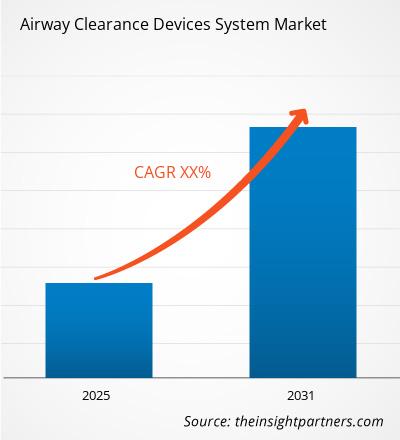
The Airway Clearance Devices System Market was valued at US$ 1.36 Billion in 2025 and is projected to reach US$ 2.52 Billion by 2034, expanding at a CAGR of 7.09% during 2026–2034. The market outlook reflects rising adoption of non-invasive respiratory support, broader clinical use across chronic pulmonary conditions, and sustained demand for devices that support mucus mobilization and secretion clearance.
Across North America, reimbursement support, established pulmonology networks, and higher homecare penetration continue to shape device adoption. The Airway Clearance Devices System Market size in the region is supported by structured respiratory disease pathways and patient access to advanced airway therapy, with an estimated growth positioned at 6.8–7.5% CAGR during 2026–2034.
Airway Clearance Devices System Market Assessment and Insights
- North America: The region held 38–42% share in 2025 and is expected to grow at 6.8–7.5% CAGR between 2026–2034, led by reimbursement access, specialist care density, and home respiratory therapy adoption.
- US: The country represented 78–82% share of North America in 2025 and is projected to grow at 6.9–7.6% CAGR between 2026–2034, supported by strong clinical awareness and manufacturer presence.
- Europe: The region accounted for 27–31% share in 2025 and is forecast to grow at 6.5–7.2% CAGR between 2026–2034, with Germany, the UK, and France leading adoption.
- Asia Pacific: The region captured 21–25% share in 2025 and is expected to expand at 8.1–8.8% CAGR between 2026–2034, led by China, Japan, India, and South Korea.
- Largest Segment: Hospitals and Clinics held 52–56% market share in 2025 and are projected to grow at 6.5–7.2% CAGR during 2026–2034, owing to specialist treatment concentration.
- High Growth Segment: Homecare Settings accounted for 24–28% market share in 2025 and are expected to grow at 8.4–9.1% CAGR during 2026–2034, driven by long-term therapy convenience.
- Key companies analyzed in detail: AbbVie Inc., Hill-Rom Holdings, Inc., Koninklijke Philips N.V., HINOR Medical Industry Co., Ltd., Monaghan Medical Corporation, VORTRAN Medical Technology 1, Inc., Thayer Medical Corporation, Electromed, Inc., Dymedso Inc., PARI GmbH.
Source: The Insight Partners' analysis based on proprietary research, government publications, company annual reports, investor presentations, industry databases, and expert interviews.
The manufacturing process has moved from device creation in facility-centric equipment to the production of portable and user-friendly equipment to allow repetitive treatment in non-acute settings. Oscillatory pressure devices, compression vests, and cough assist devices are being developed with enhanced ergonomic design, adherence technology, and reduced noise. Manufacturing processes have become more flexible since suppliers use a variety of electronic parts, interface materials, and pneumatic parts to cope with the demand.
Innovative demand is projected to rise in the new healthcare setups, where the detection rate of respiratory diseases is getting better and where there is an increasing ability for the provision of pulmonary rehabilitation. The regulatory environment that favors safe non-invasive technologies, coupled with the importance of chronic respiratory care in public health, will enable investment in distribution, training of clinicians, and local solutions.
Airway Clearance Devices System Market Report Scope
| Report Attribute | Details |
|---|---|
| Market size in 2025 | US$ 1.36 Billion |
| Market Size by 2034 | US$ 2.52 Billion |
| Global CAGR (2026 - 2034) | 7.09% |
| Historical Data | 2021-2024 |
| Forecast period | 2026-2034 |
Airway Clearance Devices System Market Analysis
The Airway Clearance Devices System Market growth is being shaped by rising diagnosis of bronchiectasis, chronic bronchitis, cystic fibrosis, and neuromuscular conditions that impair natural cough effectiveness. WHO and national respiratory organizations continue to stress the importance of chronic respiratory disease management; more doctors use airway clearance devices to prevent secretion retention, complications, and re-admission to hospitals.
This value chain consists of manufacturers of materials, pneumatic/electronic components, device assembly companies, distributors, doctors who prescribe the devices, insurance companies and post-sales support specialists. The supply structure favors companies that can provide reliable devices along with technical support and insurance assistance. It is especially important since adherence is highly dependent on the comfort of device usage and proper technique.
The Airway Clearance Devices System Market analysis indicates a moderately consolidated competitive environment, where established respiratory care companies compete with focused airway clearance specialists. Product differentiation among Hill-Rom Holdings, Inc., Koninklijke Philips N.V., Electromed, Inc., PARI GmbH, and Monaghan Medical Corporation arises from product lines, clinical evidence, and service offerings both in hospitals and in home care settings.
Positioning strategy is becoming more focused on connectivity in therapy, reduced patient burden, and clinically evidenced outcomes. Examples of companies that fit into the wider treatment ecosystem include AbbVie Inc., VORTRAN Medical Technology 1, Inc., Thayer Medical Corporation, Dymedso Inc., and HINOR Medical Industry Co., Ltd.
● REPORT CUSTOMIZATION
Tailor This Report To Align With Your Specific Business Requirements
This report can be customized to align precisely with your business objectives, scope, and target markets. Customization options include tailored segmentation, geography, competitive analysis, and strategic insights to support informed decision-making.
Customize This Report →WHAT YOU CAN ADJUST
- ● Segmentations
- ● Geography
- ● Competitive Analysis
- ● Language Preferences
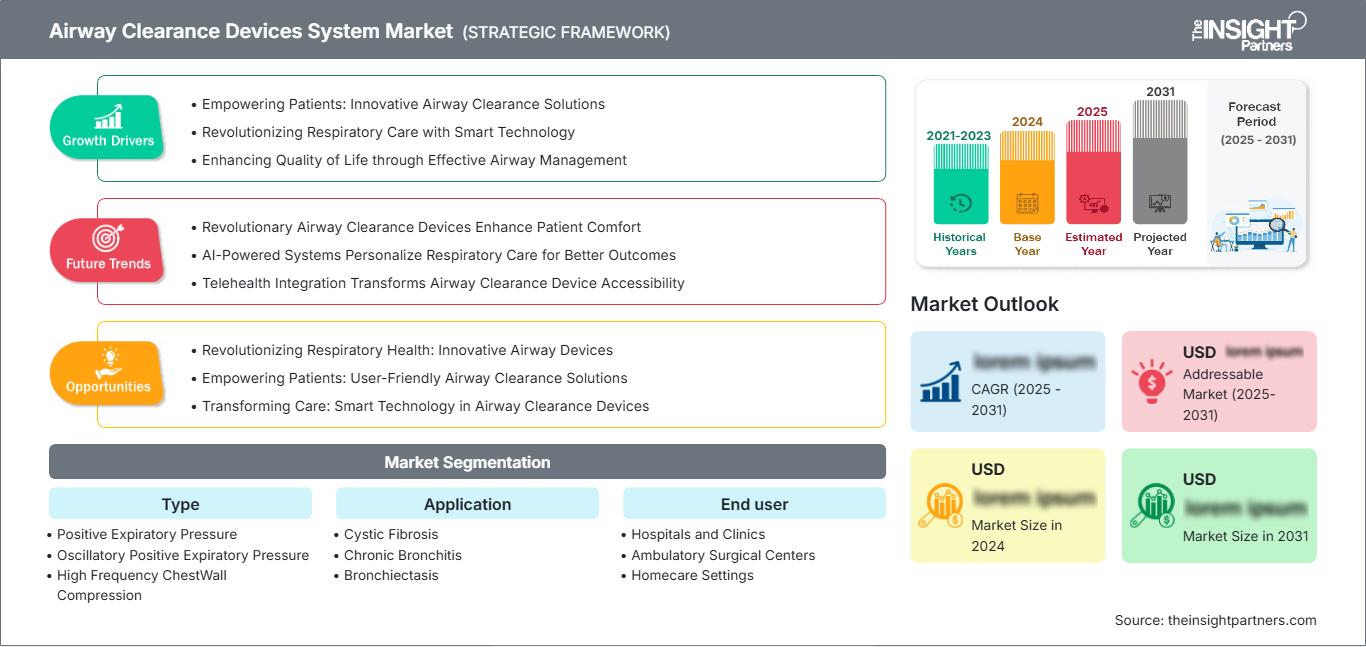
Airway Clearance Devices System Market: Strategic Insights
Regional Insights
North America Airway Clearance Devices System Market
North America accounted for 38–42% share in 2025 and is projected to grow at 6.8–7.5% CAGR during 2026–2034. The Airway Clearance Devices System Market share remains highest in this region due to mature reimbursement structures, advanced pulmonary care networks, and strong clinical familiarity with noninvasive secretion management.
Demand is reinforced by bronchiectasis identification, cystic fibrosis care pathways, and home health programs designed to reduce avoidable hospitalization. Manufacturers benefit from specialist referral networks, payer engagement, and direct patient support models. The region also leads the adoption of therapy tracking tools that improve adherence monitoring and support value-based respiratory care decisions.
U.S. Airway Clearance Devices System Market
The U.S. represented 78–82% share of North America in 2025 and is expected to expand at 6.9–7.6% CAGR during 2026–2034. Growth reflects high penetration of pulmonology practices, widespread insurance-based therapy access, and well-developed homecare distribution channels for chronic respiratory patients.
Company presence is particularly strong across high-frequency chest wall compression, oscillatory positive expiratory pressure, and cough assist platforms. Applications in bronchiectasis, chronic bronchitis, cystic fibrosis, and neuromuscular disease management remain central to adoption. Veterans' health programs, hospital discharge planning, and outpatient respiratory clinics further support recurring device use.
Europe Airway Clearance Devices System Market
Europe held 27–31% share in 2025 and is forecast to grow at 6.5–7.2% CAGR during 2026–2034. Germany is the leading country, supported by structured respiratory care pathways, specialist clinics, and access to advanced noninvasive therapy options.
The UK shows steady adoption through integrated respiratory services and greater emphasis on chronic obstructive pulmonary disease and bronchiectasis management. Germany benefits from strong clinical infrastructure and established device evaluation practices, while France maintains demand through specialist centers and reimbursement-linked pulmonary care.
Italy and Spain are developing as important markets as awareness of mucus clearance management improves among clinicians. Aging populations, hospital capacity optimization, and growing use of home respiratory therapy are expected to support gradual adoption across Southern Europe during the forecast period.
APAC Airway Clearance Devices System Market
Asia Pacific accounted for 21–25% share in 2025 and is projected to grow at 8.1–8.8% CAGR during 2026–2034. China is the leading country due to expanding hospital infrastructure, broader respiratory diagnosis, and increasing adoption of advanced medical devices.
Japan, South Korea, India, and Australia are strengthening demand through specialist care development, policy attention to chronic disease management, and home healthcare expansion. Industrial capacity and local distribution partnerships are expected to improve price accessibility and support wider device availability.
Middle East & Africa Airway Clearance Devices System Market
Middle East & Africa is projected to grow at 6.3–7.0% CAGR during 2026–2034. Saudi Arabia is the leading country, driven by healthcare modernization, specialty hospital investment, and stronger respiratory care capacity.
The UAE is expanding access through private hospital networks, while South Africa supports demand through tertiary care centers and respiratory clinics. Rest of MEA markets remain earlier stage, but infrastructure investment and broader chronic disease planning are gradually improving market readiness.
Segmentation Analysis
Type
Type is projected to expand at 7.1–7.8% CAGR during 2026–2034. The Airway Clearance Devices System Market scope is widening as clinicians select device types according to mucus burden, disease severity, patient age, mobility, and care setting. Portability, therapy comfort, and usability are becoming central product selection criteria.
- Positive Expiratory Pressure: Maintains broad clinical acceptance because it is portable, relatively simple to use, and suitable for structured outpatient and home-based respiratory therapy programs.
- Oscillatory Positive Expiratory Pressure: Holds strategic importance in chronic mucus management by combining expiratory resistance with airway vibration, supporting patient-controlled therapy and strong outpatient relevance.
- High Frequency ChestWall Compression: Remains important for patients requiring intensive secretion mobilization, particularly where long-term daily therapy and clinician-supervised protocols are essential.
- Intrapulmonary Percussive Ventilation: Serves specialized respiratory care environments where percussive airflow and ventilation support are needed for complex airway clearance requirements.
- Mechanical Cough Assist: Addresses patients with impaired cough function, especially neuromuscular populations, making it strategically important in assisted secretion clearance.
Application
Application is expected to grow at 7.3–8.0% CAGR during 2026–2034. Demand is shaped by disease-specific treatment pathways, clinician familiarity, and patient reliance on long-term secretion management. Adoption is strongest where mucus retention contributes to exacerbations, infection risk, and reduced respiratory function.
- Cystic Fibrosis: Represents a clinically established application where routine airway clearance remains embedded in disease management and long-term respiratory function preservation.
- Chronic Bronchitis: Shows steady demand as providers focus on mucus hypersecretion, exacerbation reduction, and supportive care for chronic obstructive respiratory conditions.
- Bronchiectasis: Holds strong strategic relevance because persistent airway dilation and mucus retention create recurring needs for effective secretion mobilization.
- Immotile Cilia Syndrome: Represents a smaller but important application where impaired mucociliary clearance requires consistent, structured respiratory support throughout life.
End user
End user is projected to grow at 7.4–8.2% CAGR during 2026–2034. Purchasing patterns are shifting as hospitals manage acute and specialist cases while homecare settings support long-term treatment continuity. Reimbursement, patient training, and remote follow-up are increasingly influencing adoption decisions.
- Hospitals and Clinics: Remain the dominant end users because they concentrate pulmonary specialists, diagnostic workflows, and access to advanced therapy initiation.
- Ambulatory Surgical Centers: Support selective adoption where respiratory optimization is required before or after procedures, particularly for patients with secretion management challenges.
- Homecare Settings: Are gaining strategic importance as compact devices, caregiver training, and telehealth-enabled monitoring improve adherence and continuity of care.
Opportunity Snapshot
| Segment Name | Revenue Contribution | Trend Tag | Adoption Stage |
| Hospitals and Clinics | High | Specialist Care | Mature |
| Ambulatory Surgical Centers | Medium | Outpatient Prep | Scaling |
| Homecare Settings | High | Remote Therapy | Scaling |
Airway Clearance Devices System Market Growth Drivers and Impact Analysis
Rising burden of chronic respiratory diseases
The incidence of chronic bronchitis, bronchiectasis, cystic fibrosis, and neuromuscular diseases has made secretion removal a necessity more often. The importance of these devices is highest in people with recurring infections, poor secretion removal, or flare-ups. Since prevention and management of symptoms are the focus of respiratory care, these devices have become important at an early stage rather than waiting till the condition worsens. This makes the market prospects brighter due to the consistent usage required. It also motivates the companies to train patients and clinicians regarding the choice and usage of the equipment.
Shift from inpatient treatment toward home respiratory care
There has been an increased focus on healthcare delivery models that limit hospitalizations, minimize the risk of re-admission, and help patients stay in a more comfortable environment. Airway clearance devices fit well within this paradigm, as most treatments can be done at home under the guidance of healthcare professionals. The influence of this driver is very strong for companies that have smaller hardware, patient training, replaceable supplies, and reimbursement forms. Buying criteria become different for patients and caregivers who prefer easy-to-clean equipment, low noise, reminder features, and comfort.
Technology improvements supporting adherence and monitoring
Developments in design are contributing towards creating airway clearance devices that are lighter, more convenient to use, and more compatible with routine activities. Digital technology, treatment records, and portals of connection are becoming more common as ways for healthcare practitioners to determine compliance and adapt their strategies. Such innovations have real market implications due to the increasing focus of payers and providers on results rather than mere supply of devices. Companies that can offer both the hardware and the information-driven services can gain a competitive edge in procurement bids and at-home healthcare channels.
Airway Clearance Devices System Market Future Trends
Connected airway clearance ecosystems
The Airway Clearance Devices System Market trends will increasingly center on connected therapy ecosystems that combine devices, adherence records, clinician portals, and patient coaching. Future platforms are expected to move beyond basic usage tracking toward actionable insights, such as missed-session alerts, therapy pattern analysis, and integration with broader respiratory monitoring tools. Providers will likely use these systems to personalize therapy intensity and identify patients at risk of deterioration. Manufacturers that design secure, interoperable, and user-friendly platforms can improve differentiation while supporting payer expectations for documented clinical value and improved chronic disease management.
Personalized therapy protocols for complex patients
The trend toward a greater level of individualization of treatment strategies based on matching airway clearance modalities to the patient’s phenotype, mucous properties, disease state, and tolerability is anticipated. This will lead to new directions in product development focused on variable pressure capabilities, various modes of therapy, devices suitable for children, and even guidance by the caregiver during therapy. Individualized treatment plans may increase patient adherence because the patient will be more prone to keep up the treatment regimen if the procedure itself feels good and is visibly effective.
Airway Clearance Devices System Market Opportunities
Emerging market expansion through clinical education
Emerging healthcare systems present an opportunity for manufacturers that pair device access with structured physician training and distributor support. Many markets in Asia Pacific, the Middle East, and parts of Africa are expanding respiratory care capacity, but adoption depends on awareness, affordability, and service reliability. Airway Clearance Devices System Market Forecasts indicate stronger potential where companies support local clinical workshops, reimbursement engagement, and after-sales maintenance. A practical investment approach includes tiered product portfolios, partnerships with specialist hospitals, and patient education materials tailored to chronic bronchitis, bronchiectasis, and neuromuscular care pathways.
Integrated homecare service models
Value capture can be achieved through home care ecosystem solutions that include device technology, remote assistance, replacement of consumables, therapy coaching, and regular feedback from the clinicians. This value capture proposition is different from the selling of the products since it provides engagement associated with services throughout the course of the therapy process. The models that provide adherence, minimize unnecessary visits, and increase patient confidence will most probably be preferred by the providers and payers. The companies having the capabilities of providing direct support, digital platforms, and knowledge of reimbursement will be able to compete effectively with the hardware competitors.
Recent Developments
- August 2025: Electromed, Inc. announced record fiscal 2025 results, with strong annual revenue growth and continued investment in manufacturing optimization, sales force expansion, and operational systems. The company highlighted SmartVest-related market development initiatives and bronchiectasis awareness programs as important contributors to its airway clearance strategy.
- February 2026: Monaghan Medical Corporation’s Aerobika oscillating positive expiratory pressure device was profiled for its role in secretion clearance among patients with chronic respiratory conditions. The update emphasized clinical evidence around reduced exacerbation risk, lower related care costs, and use in bronchiectasis, cystic fibrosis, and mucus management pathways.
- September 2024: Baxter International Inc., parent company of Hill-Rom Holdings, Inc., launched The Vest Advanced Pulmonary Experience System for airway clearance. The next-generation system introduced enhanced comfort, a user-friendly touch screen, and new garment design options for patients with chronic lung conditions and retained secretions.
Frequently Asked Questions

- Comprehensive Market Sizing and Forecast Analysis
- Detailed Segmentation Analysis
- In-Depth Market Dynamics Assessment
- Regional and Country-Level Insights
- Competitive Landscape and Company Benchmarking
- Strategic Business Intelligence
Recent Reports
Testimonials

The Insight Partners' SCADA System Market report is comprehensive, with valuable insights on current trends and future forecasts. The team was highly professional, responsive, and supportive throughout. We are very satisfied and highly recommend their services.
RAN KEDEM Partner, Reali Technologies LTDs
I requested a report on a very specific software market and the team produced the report in a few days. The information was very relevant and well presented. I then requested some changes and additions to the report. The team was again very responsive and I got the final report in less than a week.
JEAN-HERVE JENN Chairman, Future Analytica
We worked with The Insight Partners for an important market study and forecast. They gave us clear insights into opportunities and risks, which helped shape our plans. Their research was easy to use and based on solid data. It helped us make smart, confident decisions. We highly recommend them.
PIYUSH NAGPAL Sr. Vice President, High Beam Global
The Insight Partners delivered insightful, well-structured market research with strong domain expertise. Their team was professional and responsive throughout. The user-friendly website made accessing industry reports seamless. We highly recommend them for reliable, high-quality research services
YUKIHIKO ADACHI CEO, Deep Blue, LLC.
This is the first time I have purchased a market report from The Insight Partners.While I was unsure at first, I visited their web site and felt more comfortable to take the risk and purchase a market report.I am completely satisfied with the quality of the report and customer service. I had several questions and comments with the initial report, but after a couple of dialogs over email with their analyst I believe I have a report that I can use as input to our strategic planning process.Thank you so much for taking the extra time and making this a positive experience.I will definitely recommend your service to others and you will be my first call when we need further market data.
JOHN SUZUKI President and Chief Executive Officer, Board Director, BK Technologies
I wish to appreciate your support and the professionalism you displayed in the course of attending to my request for information regarding to infectious disease IVD market in Nigeria. I appreciate your patience, your guidance, and the fact that you were willing to offer a discount, which eventually made it possible for us to close a deal. I look forward to engaging The Insight Partners in the future, all thanks to the impression you have created in me as a result of this first encounter.
DR CHIJIOKE ONYIA MANAGING DIRECTOR, PineCrest Healthcare Ltd.Reason to Buy
- Informed Decision-Making
- Understanding Market Dynamics
- Competitive Analysis
- Identifying Emerging Markets
- Customer Insights
- Market Forecasts
- Risk Mitigation
- Boosting Operational Efficiency
- Strategic Planning
- Investment Justification
- Tracking Industry Innovations
- Aligning with Regulatory Trends





 Get Free Sample for