
Ambulatory Cardiac Monitoring Market Growth, Size & Forecast by 2034
Coverage: By Device Type ( ECG Monitors, Event Recorders, Implantable Cardiac Loop Recorders, Mobile Cardiac Telemetry, Others ); Application ( Arrhythmia, Congenital Heart Diseases, Coronary Artery Diseases, Heart Attack, Heart Failure, Others ) , and Geography (North America, Europe, Asia Pacific, and South and Central America)
- Status : Data Released
- Report Code : TIPRE00020832
- Category : Life Sciences
- No. of Pages : 150
- Available Report Formats :


- Last update date : July 15, 2026


2025 Market Size
US$ 7.69 Bn
Base year value
2034 Forecast
US$ 18.42 Bn
Projected by 2034
CAGR 2026-2034
10.20 %
Growth rate
Addressable Market
US$ 116.05 Bn
(2026-2034)
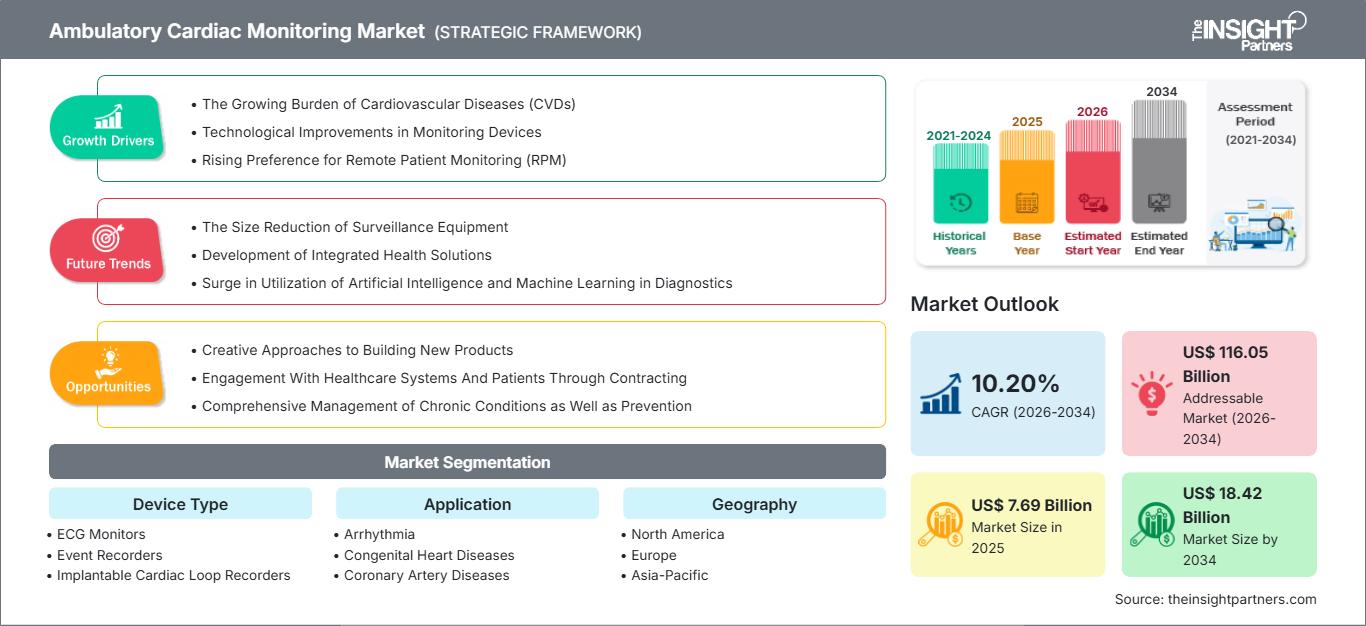
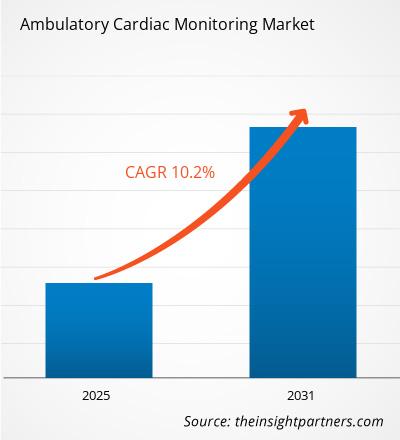
The Ambulatory Cardiac Monitoring Market was valued at US$ 7.69 Billion in 2025 and is projected to reach US$ 18.42 Billion by 2034; it is expected to register a CAGR of 10.20% during 2026–2034. Expansion in the market is being witnessed as the issues of cardiac rhythm disturbances, outpatient testing, remote monitoring, reimbursement, and wearable platforms for ECG are becoming an integral part of early detection and management of cardiac problems.
The North American region represents the most developed market due to the existence of robust electrophysiology infrastructure and reimbursement policies covering longer durations of Holter and telemetry monitoring. The Ambulatory Cardiac Monitoring Market size in the region is expected to advance at a CAGR range of 9.6–10.1% during 2026–2034, driven by high atrial fibrillation screening volumes, ambulatory care expansion, and digitally enabled cardiology workflows.
Ambulatory Cardiac Monitoring Market Assessment and Insights
- North America accounted for 42–45% share in 2025 and is growing at a CAGR range of 9.6–10.1% during 2026–2034, supported by reimbursement depth, mature device distribution, and high use of extended ECG monitoring.
- US represented 82–85% of North America in 2025 and is growing at a CAGR range of 9.7–10.2% during 2026–2034, led by patch monitoring, MCT, and outpatient cardiology platforms.
- Europe held 25–28% share in 2025 and is growing at a CAGR range of 8.8–9.4% during 2026–2034, with Germany, the UK, France, Italy, and Spain leading adoption through national cardiac care pathways.
- Asia Pacific captured 22–25% share in 2025 and is growing at a CAGR range of 11.5–12.2% during 2026–2034, with China, Japan, India, South Korea, and Australia expanding connected diagnostics capacity.
- Largest Segment ECG Monitors held 38–42% market share in 2025 and is growing at a CAGR range of 9.1–9.8% during 2026–2034 due to broad clinical utility and established purchasing.
- High Growth Segment Mobile Cardiac Telemetry held 17–20% market share in 2025 and is growing at a CAGR range of 11.8–12.6% during 2026–2034 as real-time arrhythmia detection gains preference.
- Key companies analyzed in detail: Medtronic plc, Abbott Laboratories, Boston Scientific Corporation, GE HealthCare Technologies Inc., iRhythm Technologies, Inc., BIOTRONIK SE & Co. KG, SCHILLER AG, Medicomp, Inc., MicroPort Scientific Corporation, BioTelemetry, Inc.
Source: The Insight Partners' analysis based on proprietary research, government publications, company annual reports, investor presentations, industry databases, and expert interviews.
These technology shifts will shift the market towards devices with shorter lifespans like adhesive patches, cloud-enabled ECG analytics, implantable loop recorders, and telemetry. These trends are also seen in production as companies take into account the process of sensor miniaturization, validation of algorithms, and secure data transfer during device production. Health care facilities and service providers find that it is more beneficial to have devices that minimize the need for human ECG analysis and report the results of a rhythm test while not increasing staff.
In the forecasted period, developing countries are predicted to become major markets due to network expansion, telemedicine policies, and private diagnostic chains. Devices with good signal quality, cybersecurity, and validated arrhythmia algorithms are also going to benefit from regulatory headwinds. Platforms that unite hardware, analytical tools, service provision, and physician reporting are going to attract investments especially when there is an increasing demand for remote rhythm monitoring in old-age demographics with chronic disease management programs.
Ambulatory Cardiac Monitoring Market Report Scope
| Report Attribute | Details |
|---|---|
| Market size in 2025 | US$ 7.69 Billion |
| Market Size by 2034 | US$ 18.42 Billion |
| Global CAGR (2026 - 2034) | 10.20% |
| Historical Data | 2021-2024 |
| Forecast period | 2026-2034 |
Ambulatory Cardiac Monitoring Market Analysis
Rising atrial fibrillation prevalence, more frequent post-stroke rhythm evaluation, and growth in outpatient cardiac diagnostics are strengthening Ambulatory Cardiac Monitoring Market growth. Cardiovascular disease is listed as the number-one killer worldwide by WHO, with professional cardiology organizations still stressing the importance of early discovery of silent arrhythmias. Value chain participants include sensor companies, device assembly firms, cloud analytics providers, diagnosis service companies, cardiologists, payers, and hospitals in search of more rapid diagnostics.
Supply considerations include the supply of components, battery effectiveness, the efficacy of adhesives, and connectivity. Device companies are now focusing on maximizing wear time, automation of diagnosis, and reduction of false positives to minimize the burden on clinics. Increasingly, the decision about purchasing involves total diagnosis capability rather than device cost alone, favoring integrated services whereby monitoring, management of data, and preparation of the report by the physician are done in one process.
The competitive environment reflects software-led differentiation, making Ambulatory Cardiac Monitoring Market analysis increasingly focused on algorithm accuracy, reimbursement access, and service scalability. Enhanced monitoring by patches is available from iRhythm Technologies, Inc., while Medtronic plc, Abbott Laboratories, Boston Scientific Corporation, and BIOTRONIK SE & Co. KG are competing on the basis of implantable cardiac monitoring and rhythm management systems. GE HealthCare Technologies Inc. and SCHILLER AG are also involved in the diagnostic ECG systems.
Strategic positioning is evolving in favor of longitudinal care compared to episodic testing. Both Abbott Laboratories and Medtronic plc gain due to their portfolios of implantable devices, while BioTelemetry, Inc. and Medicomp, Inc. have their advantages in remote telemetry services. MicroPort Scientific Corporation is building up its position in the cardiac rhythm area, especially in markets sensitive to costs.
● REPORT CUSTOMIZATION
Tailor This Report To Align With Your Specific Business Requirements
This report can be customized to align precisely with your business objectives, scope, and target markets. Customization options include tailored segmentation, geography, competitive analysis, and strategic insights to support informed decision-making.
Customize This Report →WHAT YOU CAN ADJUST
- ● Segmentations
- ● Geography
- ● Competitive Analysis
- ● Language Preferences
Ambulatory Cardiac Monitoring Market: Strategic Insights
Regional Insights
North America Ambulatory Cardiac Monitoring Market
North America accounted for 42–45% share in 2025 and is forecast to expand at a CAGR range of 9.6–10.1% during 2026–2034. The Ambulatory Cardiac Monitoring Market share is supported by established reimbursement codes, high cardiologist density, and rapid integration of patch ECG services into primary care, stroke workups, and electrophysiology follow-up.
There is a robust corporate presence in the area such as Medtronic plc, Abbott Laboratories, Boston Scientific Corporation, iRhythm Technologies, Inc., GE HealthCare Technologies Inc., BioTelemetry, Inc. and Medicomp, Inc. There has been a shift from demand for hospital-based diagnostics to a more decentralized one due to early diagnosis which will save emergency cases, strokes costs and improve chronic heart condition.
U.S. Ambulatory Cardiac Monitoring Market
The share of U.S. in North America was around 82–85% in 2025 and the region is expected to witness a compound annual growth rate (CAGR) in the range of 9.7–10.2% from 2026 to 2034. The growth drivers include widespread adoption of extended Holter patch, mobile cardiac telemetry (MCT), and implantable loop recorder in arrhythmia, syncope, post-ablation and cryptogenic stroke assessment indications.
There is presence of leading companies in the U.S., including iRhythm Technologies, Inc., BioTelemetry, Inc., Abbott Laboratories, Medtronic plc, Boston Scientific Corporation, GE HealthCare Technologies Inc., and Medicomp, Inc. Demand for the application is more in arrhythmia management whereas heart failure and coronary artery disease monitoring applications are gaining importance through remote cardiac monitoring initiatives.
Europe Ambulatory Cardiac Monitoring Market
Market Share of Europe in 2025 is expected to be in the range of 25%-28%, while growth in the CAGR is estimated at 8.8%-9.4% between 2026 and 2034. Germany leads the market due to superior electrophysiology infrastructure, procurement skills of hospitals, and implantation of cardiac loop recorders.
The demand for the technology is fueled in Germany and the UK due to the existence of structured arrhythmia clinics, stroke prevention plans, and remote patient management plans. France, Italy, and Spain are seeing an improvement in adoption due to changes in their outpatient diagnostics and digital health reimbursement system. Key players include SCHILLER AG, BIOTRONIK SE & Co. KG, Medtronic plc, Abbott Laboratories, and Boston Scientific Corporation.
APAC Ambulatory Cardiac Monitoring Market
APAC accounted for 22–25% share in 2025 and is forecast to expand at a CAGR range of 11.5–12.2% during 2026–2034. China is the leading country, supported by hospital modernization, rising cardiovascular disease burden, and domestic digital health investment. Japan and South Korea show strong adoption of advanced diagnostics.
Both India and Australia are increasing ambulatory ECG monitoring using private diagnostic facilities, telecardiology, and post-hospital discharge care strategies. The policy initiative in developing health care infrastructure, urban hospitals, and increased insurance coverages is making access easier. Companies such as MicroPort Scientific Corporation, GE HealthCare Technologies Inc., Medtronic plc, Abbott Laboratories, and regional distributors are enhancing cardiac monitoring availability.
Middle East & Africa Ambulatory Cardiac Monitoring Market
MEA’s forecast CAGR range during 2026-2034 is projected to be 8.4%-9.1%. Saudi Arabia will be the leader in regional growth due to transformation initiatives in healthcare, tertiary hospital development, and increasing number of cardiology procedures. The UAE is developing private specialty services and digitally integrated hospitals.
South Africa will be the leading country in the sub-Saharan region, and the Rest of MEA will exhibit selected penetration in urban-based cardiology centers. Public investment in healthcare infrastructure for energy needs will boost purchases of devices, remote monitoring trials, and specialist services. There is great variability in uptake across countries, as there are different levels of coverage and electrophysiology expertise available.
Segmentation Analysis
Device Type
The Device Type Segment is anticipated to witness a CAGR growth rate between 10.0% - 10.6% from 2026 to 2034. There is an expansion in the ambit of the Ambulatory Cardiac Monitoring Market owing to selection of devices on the basis of monitoring time, diagnostic benefits, convenience, and effect on the workflow of data.
- ECG Monitors dominate routine rhythm assessment because they are widely available, clinically familiar, and cost-effective for short-term monitoring, hospital discharge evaluation, and first-line arrhythmia investigation.
- Event Recorders serve patients with intermittent symptoms, supporting patient-triggered documentation when palpitations, dizziness, or brief rhythm disturbances occur outside clinical environments.
- Implantable Cardiac Loop Recorders are strategically important for unexplained syncope, cryptogenic stroke, and long-term atrial fibrillation detection where external monitoring may miss infrequent events.
- Mobile Cardiac Telemetry is gaining preference for higher-risk patients because real-time transmission and rapid clinician notification improve clinical response during active arrhythmia monitoring periods.
Application
The application market is projected to experience growth at a rate of CAGR between 9.8-10.4% from 2026 to 2034. Arrhythmia detection is driving demand, although other applications within cardiovascular monitoring are becoming increasingly prominent due to the adoption of remote monitoring technology in chronic care. Physicians are utilizing ambulatory information for anticoagulation, post-ablation, risk stratification, and optimal pathways of treatment.
- Arrhythmia remains the primary application because atrial fibrillation, bradycardia, tachycardia, and intermittent rhythm disturbances often require extended monitoring beyond standard in-clinic ECG testing.
- Congenital Heart Diseases create specialized monitoring needs for children and adults requiring periodic rhythm surveillance after surgical correction or long-term structural heart management.
- Coronary Artery Diseases generate demand where symptoms overlap with rhythm disturbances and clinicians need ambulatory evidence to differentiate ischemic episodes from electrical abnormalities.
- Heart Attack monitoring supports post-event risk evaluation, medication adjustment, and detection of rhythm instability during recovery outside acute-care settings.
- Heart Failure use is rising as care teams track arrhythmic burden, therapy response, and deterioration signals in patients vulnerable to hospitalization.
Opportunity Snapshot
| Segment Name | Revenue Contribution (High/Medium/Low) | Trend Tag (MAX 2 words, specific) | Adoption Stage (Emerging/Scaling/Mature) |
| Arrhythmia | High | AF Detection | Mature |
| Congenital Heart Diseases | Medium | Pediatric Follow-up | Scaling |
| Coronary Artery Diseases | Medium | Ischemia Triage | Scaling |
| Heart Attack | Medium | Post-Acute | Scaling |
| Heart Failure | Medium | Decompensation Risk | Scaling |
| Others | Low | Specialty Monitoring | Emerging |
Ambulatory Cardiac Monitoring Market Growth Drivers and Impact Analysis
Rising Burden of Atrial Fibrillation and Silent Arrhythmias
Silent rhythm disorders such as atrial fibrillation are rising due to the increase in aging population, obesity, diabetes, high blood pressure, and chronic kidney disease. Most cases remain undetected because patients do not experience any symptoms and the irregular rhythms occur intermittently, which means ECG is not a reliable diagnostic method since it takes only one point of time. This need has led to the rise of ambulatory monitoring, which enables physicians to observe the rhythm for days and even years, depending on the type of the device used. The impact will be seen mainly in stroke prevention, monitoring after ablation, and decisions on anticoagulation therapy.
Shift from Inpatient Testing to Decentralized Cardiac Diagnostics
The trend towards ambulatory and home care for cardiac monitoring reflects the need of hospitals to cope with shortages of beds, manpower, and higher volumes of chronic diseases. Through the use of ambulatory devices, ECG information can be gathered when patients are engaged in daily activities, thus increasing the chances of picking up abnormal rhythms in everyday situations. Such a development is reducing the reliance on in-patient telemetry, enabling early discharge, and opening up new diagnostic pathways through primary care and specialist referrals. The business implications of the trend are seen in increased demand for patches, reports, and reimbursable monitoring programs.
Advances in Sensor Design, Algorithms, and Connectivity
Device miniaturization, advanced adhesives, increased battery performance, and artificial intelligence-driven ECG interpretation are helping increase adherence and efficiency in the interpretation of diagnostic results. More accurate signal processing leads to fewer false positives, while cloud-based solutions offer quick analysis and integration into medical files. All of these developments are especially critical when it comes to high-scale monitoring programs where manual ECG interpretation could cause bottlenecks. Examples of the practical implications include more timely diagnosis, less repeat testing, and increased confidence in long-term monitoring results. Companies which prove the efficacy of their algorithms in various populations and meet cybersecurity requirements may enjoy an advantage in procurement decisions.
Ambulatory Cardiac Monitoring Market Future Trends
AI-Enabled Longitudinal Rhythm Intelligence
Future ambulatory Cardiac Monitoring market trends will revolve around the transformation of ECG signals to longitudinal rhythm intelligence. It is envisaged that future offerings in the market will bring together arrhythmia detection, arrhythmia burden measurement, correlation with symptoms, medications, risk score and clinical ready reporting. This is important in view of the rising monitoring volume for cardiologists without corresponding rise in their staffing. The AI algorithms will require clear validations, explainable reporting and linkage to electronic medical records.
Expansion of Hybrid Monitoring Pathways
The new trends in monitoring devices are going to include short-term solutions, mobile telemetric solutions, implantable loop recorders, and smartphone-based follow-up solutions into staged diagnostic systems. Rather than choosing just one device initially, the doctors will gradually increase the monitoring intensity depending on the symptoms, the risk of stroke, previous findings, and treatment options. This is going to benefit those companies which offer a wide range of products or platforms that make it easy to change the monitoring duration.
Ambulatory Cardiac Monitoring Market Opportunities
Scaling Remote Monitoring Programs in Emerging Cardiology Networks
Emerging cardiology networks in Asia Pacific, the Middle East, and parts of Latin America offer strong opportunities for device manufacturers and service providers. Ambulatory Cardiac Monitoring Market Forecasts indicate that adoption will benefit from private hospital expansion, digital health policy, and growing insurance penetration. Companies can act by building local distribution, clinician training, cloud-compliant data infrastructure, and service models adapted to regional price sensitivity. Partnerships with diagnostic chains and telecardiology providers can reduce market-entry friction. The strongest returns are likely where suppliers combine affordable devices with reliable reporting services and local-language patient support.
Developing Integrated Service Models for Payers and Providers
There is demand from both sides to see proof that ambulatory monitoring will lower costs thanks to earlier detection, less testing, and improved stroke prevention. This presents an opportunity for integrated services that include all the steps from shipping the devices to enrolling patients and capturing their data, to analyzing the results. The vendors can distinguish themselves through their adherence levels, diagnostics success rate, time efficiency, and lowered administrative load. Future contracting may shift to per-episode billing, enterprise monitoring capabilities, or risk-based models. Those companies who demonstrate value will be able to withstand hardware price pressure.
Recent Developments
- March 2026: iRhythm Technologies, Inc. presented retrospective analyses at ACC.26 supporting its Zio ambulatory ECG portfolio across cardiovascular-kidney-metabolic populations and launched iRhythm Academy, a clinician education platform intended to scale learning in ambulatory cardiac monitoring. The announcement reinforced the company’s evidence-generation strategy around extended ECG monitoring and AI-supported cardiology workflows.
- September 2025: BioTelemetry, Inc. – Paret company Philips entered a U.S. national partnership with Optum Healthcare, making Philips Mobile Cardiac Telemetry and ePatch ambulatory monitoring services available to 3.4 million Optum policyholders across 22 states. The development expanded payer access for outpatient cardiac monitoring and strengthened Philips’ connected care position.
- August 2025: GE HealthCare Technologies Inc. company showcased integrated cardiology care pathway innovations at ESC 2025, including ViewPoint EchoPilot, CardIQ Suite, Revolution Vibe, and ComboLab AltiX AI.i. The portfolio emphasized AI-enabled workflow efficiency, earlier cardiovascular diagnosis, and connected decision support across screening, diagnosis, intervention, and follow-up.
Frequently Asked Questions

- Comprehensive Market Sizing and Forecast Analysis
- Detailed Segmentation Analysis
- In-Depth Market Dynamics Assessment
- Regional and Country-Level Insights
- Competitive Landscape and Company Benchmarking
- Strategic Business Intelligence
Recent Reports
Testimonials

The Insight Partners provided valuable market intelligence that supported our global go-to-market strategy. Their team was professional, responsive, and attentive to our feedback, providing thoughtful analysis and helpful methodological clarifications throughout the project.
Junmo Kim Chief Financial Officer (CFO), Enertech Co., Ltd.
The Insight Partners' SCADA System Market report is comprehensive, with valuable insights on current trends and future forecasts. The team was highly professional, responsive, and supportive throughout. We are very satisfied and highly recommend their services.
RAN KEDEM Partner, Reali Technologies LTDs
I requested a report on a very specific software market and the team produced the report in a few days. The information was very relevant and well presented. I then requested some changes and additions to the report. The team was again very responsive and I got the final report in less than a week.
JEAN-HERVE JENN Chairman, Future Analytica
We worked with The Insight Partners for an important market study and forecast. They gave us clear insights into opportunities and risks, which helped shape our plans. Their research was easy to use and based on solid data. It helped us make smart, confident decisions. We highly recommend them.
PIYUSH NAGPAL Sr. Vice President, High Beam Global
The Insight Partners delivered insightful, well-structured market research with strong domain expertise. Their team was professional and responsive throughout. The user-friendly website made accessing industry reports seamless. We highly recommend them for reliable, high-quality research services
YUKIHIKO ADACHI CEO, Deep Blue, LLC.
This is the first time I have purchased a market report from The Insight Partners.While I was unsure at first, I visited their web site and felt more comfortable to take the risk and purchase a market report.I am completely satisfied with the quality of the report and customer service. I had several questions and comments with the initial report, but after a couple of dialogs over email with their analyst I believe I have a report that I can use as input to our strategic planning process.Thank you so much for taking the extra time and making this a positive experience.I will definitely recommend your service to others and you will be my first call when we need further market data.
JOHN SUZUKI President and Chief Executive Officer, Board Director, BK Technologies
I wish to appreciate your support and the professionalism you displayed in the course of attending to my request for information regarding to infectious disease IVD market in Nigeria. I appreciate your patience, your guidance, and the fact that you were willing to offer a discount, which eventually made it possible for us to close a deal. I look forward to engaging The Insight Partners in the future, all thanks to the impression you have created in me as a result of this first encounter.
DR CHIJIOKE ONYIA MANAGING DIRECTOR, PineCrest Healthcare Ltd.Reason to Buy
- Informed Decision-Making
- Understanding Market Dynamics
- Competitive Analysis
- Identifying Emerging Markets
- Customer Insights
- Market Forecasts
- Risk Mitigation
- Boosting Operational Efficiency
- Strategic Planning
- Investment Justification
- Tracking Industry Innovations
- Aligning with Regulatory Trends





 Get Free Sample for