
Anesthesia & Respiratory Devices Market Size, Trends & Demand by 2034
Coverage: By Product Type (Dual Channel and Single Channel); Application (Alzheimer's Disease, Dystonia, Epilepsy, Essential Tremor, Epilepsy, Obsessive-Compulsive Disorder, and Other Applications); End User (Ambulatory Surgical Centers, Hospitals & Clinics and Other End Users) , and Geography (North America, Europe, Asia Pacific, and South and Central America)
- Status : Data Released
- Report Code : TIPRE00008563
- Category : Life Sciences
- No. of Pages : 150
- Available Report Formats :


- Last update date : August 04, 2026


2025 Market Size
US$ 5.81 Bn
Base year value
2034 Forecast
US$ 9.95 Bn
Projected by 2034
CAGR 2026-2034
6.15 %
Growth rate
Addressable Market
US$ 71.31 Bn
(2026-2034)
The anesthesia & respiratory devices market is projected to grow from US$ 5.81 Billion in 2025 to US$ 9.95 Billion by 2034, registering a CAGR of 6.15% during 2026–2034. Demand is supported by rising surgical volumes, higher use of respiratory support in acute care, broader anesthesia workstation replacement cycles, and growing emphasis on connected monitoring across operating rooms, intensive care units, emergency departments, and ambulatory surgical environments.
North America remains a leading commercial region as hospitals invest in perioperative safety, respiratory monitoring, and critical care capacity. The anesthesia & respiratory devices market size in the region is supported by technology refresh cycles, high procedural volumes, and adoption of connected ventilation and anesthesia platforms. Regional expansion is expected to remain within a 5.5–6.1% CAGR range through 2034, with the US accounting for most procurement activity.
Anesthesia & Respiratory Devices Market Assessment and Insights
- North America: North America accounted for 35–39% share in 2025 and is projected to grow at 5.5–6.1% CAGR between 2026–2034, supported by hospital modernization, surgical recovery, respiratory care demand, and connected device adoption.
- US: The US represented 83–87% of North America in 2025 and is expected to grow at 5.4–6.0% CAGR between 2026–2034, driven by surgical centers, ICUs, and advanced care networks.
- Europe: Europe held 25–29% share in 2025 and is forecast to grow at 5.3–5.9% CAGR between 2026–2034, led by Germany, the UK, France, Italy, and Spain.
- Asia Pacific: Asia Pacific captured 24–28% share in 2025 and is projected to expand at 7.2–7.9% CAGR between 2026–2034, with China, Japan, India, South Korea, and Australia leading adoption.
- Largest Segment: Hospitals & Clinics held 70–75% market share in 2025 and is expected to grow at 5.8–6.4% CAGR between 2026–2034, owing to intensive care and surgical procedure concentration.
- High Growth Segment: Ambulatory Surgical Centers accounted for 25–30% market share in 2025 and is projected to grow at 6.8–7.5% CAGR between 2026–2034, supported by outpatient procedure migration.
- Key companies analyzed in detail: Drägerwerk AG & Co. KGaA, GE HealthCare Technologies Inc., Getinge AB, Koninklijke Philips N.V., Masimo Corporation, Medtronic plc, ResMed Inc., Smiths Group plc, SunMed LLC, and Teleflex Incorporated.
Source: The Insight Partners' analysis based on proprietary research, government publications, company annual reports, investor presentations, industry databases, and expert interviews.
The advancement in technology will drive the integration of anesthesia delivery, respiratory monitoring, non-invasive ventilation, and workflow enabled with data into care delivery settings. The devices will be reengineered to accommodate alarm management, gas conservation, infection prevention, and enhanced usability. The production landscape will change, as well as there will be localization of service networks, improvement in device cybersecurity, and development of software-enabled platforms facilitating long-term contracts.
Demand in the future will depend on surgical infrastructure development, disease burden of respiratory diseases, and device performance as per regulatory requirements. The Asia Pacific and the Middle East regions will be focusing on expanding their hospital infrastructure, whereas North America and Europe will be concentrating on upgrading the existing systems with improved compatibility.
Anesthesia & Respiratory Devices Market Report Scope
| Report Attribute | Details |
|---|---|
| Market size in 2025 | US$ 5.81 Billion |
| Market Size by 2034 | US$ 9.95 Billion |
| Global CAGR (2026 - 2034) | 6.15% |
| Historical Data | 2021-2024 |
| Forecast period | 2026-2034 |
Anesthesia & Respiratory Devices Market Analysis
The anesthesia & respiratory devices market growth is driven by rising elective surgery recovery, expansion of intensive care capabilities, and increased respiratory monitoring across hospital departments. Patients suffering from chronic respiratory diseases, perioperative issues, and older and more susceptible patients have created demand for ventilators, anesthesia equipment, oxygen delivery devices, airway management devices, and monitoring devices that enhance the safety of procedures.
The value chain encompasses the device itself, sensors, breathing circuits, masks, disposable supplies, vapor delivery mechanisms, servicing, and connectivity. The supply chain is affected by electronics, medical plastics, regulatory testing, and field services capabilities. Hospitals are increasingly looking at uptime, training, systems integration, and total lifecycle cost of the equipment, not just the acquisition cost.
The anesthesia & respiratory devices market analysis shows competition is concentrated among companies with broad hospital relationships and validated clinical portfolios. Anesthesia workstations market leaders are Drägerwerk AG & Co. KGaA and GE HealthCare Technologies Inc., whereas the key players for monitoring and respiratory workflows within institutional and home-related environments are Koninklijke Philips N.V., ResMed Inc., and Masimo Corporation.
Connected care, software enhancements, and respiratory care outside of operating rooms are becoming increasingly significant factors shaping the strategic positioning of companies. Airway management, ventilation devices, disposables, and procedural support products are areas where companies like Getinge AB, Medtronic plc, Smiths Group plc, SunMed LLC, and Teleflex Incorporated are competing. Investment drivers consist of ergonomics, reduction in alarms, low-flow anesthesia, and remote monitoring.
● REPORT CUSTOMIZATION
Tailor This Report To Align With Your Specific Business Requirements
This report can be customized to align precisely with your business objectives, scope, and target markets. Customization options include tailored segmentation, geography, competitive analysis, and strategic insights to support informed decision-making.
Customize This Report →WHAT YOU CAN ADJUST
- ● Segmentations
- ● Geography
- ● Competitive Analysis
- ● Language Preferences
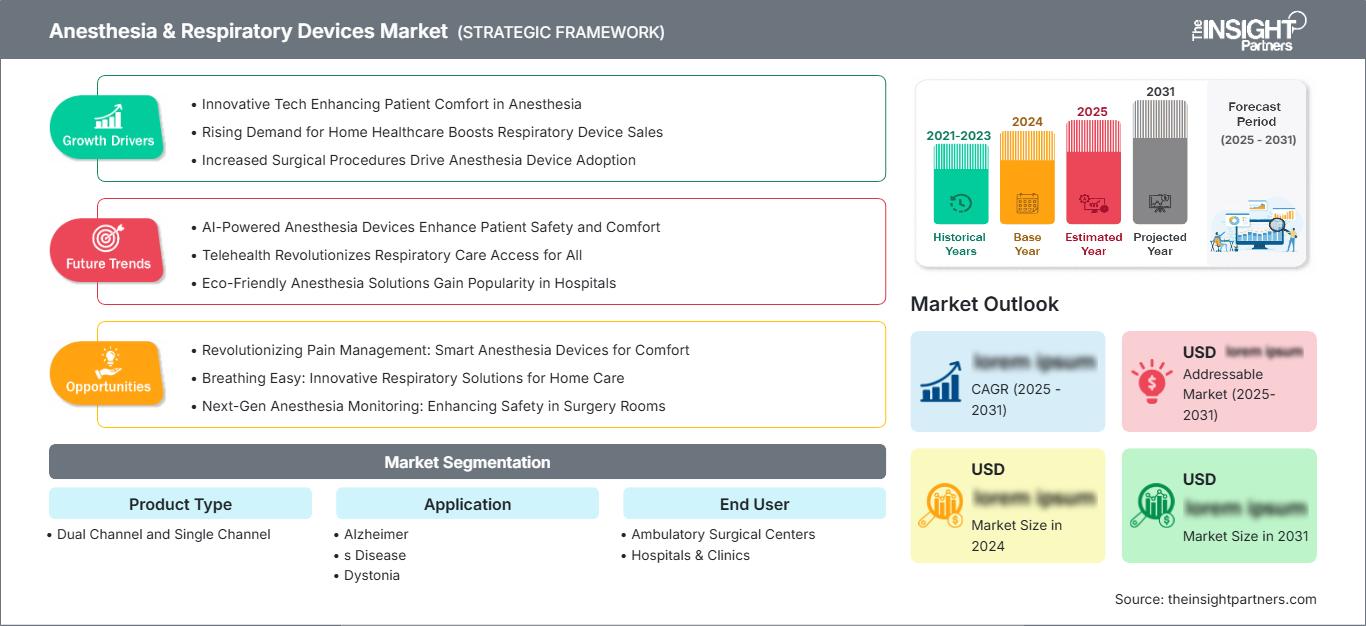
Anesthesia & Respiratory Devices Market: Strategic Insights
Regional Insights
North America anesthesia & respiratory devices market
North America accounted for 35–39% share in 2025 and is projected to grow at 5.5–6.1% CAGR during 2026–2034. The region benefits from advanced hospital infrastructure, high anesthesia workstation penetration, and strong demand for respiratory monitoring in intensive care. Replacement spending is concentrated around connected platforms that improve workflow, alarm management, and post-procedure respiratory surveillance.
The anesthesia & respiratory devices market share in North America is reinforced by established reimbursement systems, large health networks, and strong vendor service coverage. Hospitals are replacing aging systems with low-flow anesthesia workstations, advanced ventilators, and pulse oximetry solutions. Procurement is also influenced by cybersecurity requirements, interoperability expectations, and operating room efficiency programs.
U.S. anesthesia & respiratory devices Market
The US represented 83–87% of North America in 2025 and is expected to grow at 5.4–6.0% CAGR during 2026–2034. Demand is driven by tertiary hospitals, ambulatory surgical centers, emergency departments, and critical care units requiring reliable anesthesia delivery and respiratory support. Technology adoption is shaped by staffing pressure and patient safety protocols.
Major suppliers maintain strong commercial and service operations across the country, including GE HealthCare Technologies Inc., Drägerwerk AG & Co. KGaA, Masimo Corporation, Teleflex Incorporated, and ResMed Inc. Hospitals are emphasizing connected monitoring, noninvasive ventilation, airway management, and anesthesia systems designed for diverse patient groups, including pediatric, adult, and high-acuity populations.
Europe anesthesia & respiratory devices Market
Europe held 25–29% share in 2025 and is forecast to grow at 5.3–5.9% CAGR during 2026–2034. Demand stimulation in the UK comes through operating room modernization, NHS capacity planning, and interest in emission-reducing anesthesia protocols. The country is currently exploring devices that help minimize anesthetic gas emissions and monitor respiration post-surgery.
Germany continues to be the dominant European nation on account of its strong hospital infrastructure, medical equipment skills, and wide adoption of state-of-the-art anesthesia and ventilation systems. Local production by Drägerwerk AG & Co. KGaA ensures deeper supply penetration into the region, while the university hospitals continue to implement advanced OR and ICU technologies.
Demand stimulation in France, Italy, and Spain comes through the modernization of public hospitals, private surgical centers, and respiratory care facilities. In these countries, demand is driven by an aging population, safety requirements for anesthesia, and the growing volume of procedures performed. Energy efficiency, device durability, and compliance with medical device regulations are typical purchase criteria in Europe.
APAC anesthesia & respiratory devices Market
Asia Pacific accounted for 24–28% share in 2025 and is expected to grow at 7.2–7.9% CAGR during 2026–2034. Reasons behind China being the regional frontrunner include the expansion of hospitals, an increase in surgical capacity, and better respiratory care. Adoption of high-end devices by Japan and South Korea continues in advanced surgical and critical care units.
India and Australia provide additional impetus via private hospital developments, ambulatory surgery centers, and critical care enhancements. Policies favoring the development of health care infrastructure, increased insurance coverage, and greater procedure volumes are driving device adoption. Local distributors continue to play an essential role in providing installation, training, and consumable availability.
Middle East & Africa anesthesia & respiratory devices Market
The Middle East & Africa is expected to grow at 6.4–7.0% CAGR during 2026–2034. Saudi Arabia and the UAE lead regional demand through hospital construction, surgical capacity expansion, and intensive care investment. Large medical cities and specialty hospitals are purchasing anesthesia and respiratory platforms suitable for high-acuity workflows.
South Africa remains the most established regional market, supported by private healthcare systems, academic hospitals, and respiratory care needs. The rest of MEA demand is emerging from operating room upgrades, emergency care development, and international hospital partnerships. Procurement is often shaped by tender cycles, financing constraints, and the availability of trained biomedical engineers.
Segmentation Analysis
Product Type
Product Type is projected to grow at 5.7–6.3% CAGR during 2026–2034 as buyers assess device configuration, monitoring flexibility, and workflow suitability. The anesthesia & respiratory devices market scope across product type is shaped by care-site complexity, patient acuity, and the need for redundancy in respiratory support. Dual channel systems are favored in higher acuity environments, while single channel products remain relevant in cost-sensitive and routine care settings.
- Dual Channel: Dual Channel systems are preferred where parallel monitoring, multi-parameter respiratory assessment, or higher workflow flexibility is required, particularly in hospitals managing complex surgeries and critical care patients.
- Single Channel: Single Channel products remain important for focused monitoring, lower-complexity respiratory support, and outpatient settings where cost control, ease of operation, and compact device footprint influence procurement.
Application
Application is expected to grow at 5.9–6.5% CAGR during 2026–2034 as respiratory and anesthesia support expands across neurological, procedural, and high-risk patient management pathways. The category reflects device use in patients requiring controlled ventilation, perioperative monitoring, airway support, or respiratory surveillance. Demand is strongest where clinical risk, procedural complexity, and post-anesthesia observation needs are high.
- Alzheimer's Disease: Alzheimer's Disease applications require careful perioperative respiratory monitoring because older patients often have comorbidities, higher anesthesia sensitivity, and elevated risk of postoperative respiratory complications.
- Dystonia: Dystonia procedures may require precise airway and ventilation support, especially when patients undergo neurological interventions or sedation-dependent procedures requiring stable respiratory management.
- Epilepsy: Epilepsy applications benefit from controlled anesthesia, respiratory monitoring, and perioperative safety systems during diagnostic procedures, surgical interventions, and emergency care episodes.
- Essential Tremor: Essential Tremor procedures often require stable sedation, airway control, and respiratory observation, particularly when patients undergo interventional neurological or surgical treatment pathways.
- Epilepsy: Epilepsy remains strategically relevant because repeat evaluations, surgical candidates, and acute seizure-related admissions can create demand for respiratory monitoring and anesthesia-ready care environments.
- Obsessive-Compulsive Disorder: Obsessive-Compulsive Disorder applications are niche, but selected interventional or sedation-linked procedures may require anesthesia supervision, patient monitoring, and reliable respiratory support.
End User
End User is projected to grow at 6.1–6.8% CAGR during 2026–2034 as care delivery shifts across hospitals, clinics, and outpatient centers. Hospitals remain the largest buyers due to surgical and ICU complexity, while ambulatory sites show faster growth through procedure migration. Purchasing decisions are influenced by device reliability, compact design, clinician training needs, and post-procedure monitoring capability.
- Ambulatory Surgical Centers: Ambulatory Surgical Centers are expanding demand for compact anesthesia systems, airway products, and monitoring devices as orthopedic, ophthalmic, gastroenterology, and pain procedures move into outpatient environments.
- Hospitals & Clinics: Hospitals & Clinics remain the core revenue base because complex surgeries, emergency care, intensive care, and respiratory failure management require advanced anesthesia and respiratory platforms.
Opportunity Snapshot
| Segment Name | Revenue Contribution | Trend Tag | Adoption Stage |
| Ambulatory Surgical Centers | Medium | Outpatient Surgery | Scaling |
| Hospitals & Clinics | High | ICU Integration | Mature |
Anesthesia & Respiratory Devices Market Growth Drivers and Impact Analysis
Rising Surgical Volumes and Perioperative Safety Requirements
Surgical pathways across the world have become increasingly complicated due to increased requirements of surgeries related to cardiovascular issues, orthopedic issues, cancers, and emergencies among aging patients. Such an increase requires more anesthesia workstations, airway management devices, ventilatory support, and respiratory monitors, among other services. There is a need for a product that allows low flow anesthesia, ensures stable ventilation, fast turnaround of patients, and improved alarm visibility, among others. This is evident in the form of the recurring need for replacements in hospitals and the adoption of a complete anesthesia solution. Companies that provide not only durable devices but also service and training will benefit from this trend.
Expansion of Critical Care and Respiratory Support Capacity
Hospitals are working towards increasing their respiratory capacity, following stress seen in their intensive care and emergency departments recently. Ventilators, oxygen therapy equipment, masks, breathing circuits, and pulse oximeters are increasingly being adopted in intensive care units, step-down facilities, and emergency departments. It is not just about treating patients with acute respiratory failure because other applications, such as chronic respiratory diseases, surgery monitoring, and non-invasive ventilation, have increased their adoption as well. This will drive more demand for consumables and services. Those manufacturers with product lines that scale up and down can help hospitals achieve this.
Shift Toward Connected and Workflow-Efficient Devices
There is a trend towards using devices that decrease the need for manual documentation, enable continuous monitoring, and assist in decision-making. Systems for anesthesia and ventilation can send information about the therapy, alarms, and patients' characteristics to the hospital information system, making it easier for healthcare professionals to control their workload. It is especially relevant in situations when there is a lack of personnel in operating theaters and intensive care units. It is significant not only from the point of view of selling equipment but also because updates to the software, cybersecurity, and interoperability will create ongoing interaction.
Anesthesia & Respiratory Devices Market Future Trends
Low-Flow Anesthesia and Sustainability-Focused Operating Rooms
Low-flow anesthesia will become one of the key anesthesia & respiratory devices market trends as hospitals address cost, gas consumption, and environmental performance. Future anesthesia systems will place greater emphasis on precise gas delivery, agent consumption visibility, leak detection, and decision support that helps clinicians maintain safe low-flow practices. This trend will gain momentum in Europe and North America, where sustainability reporting and hospital energy programs are more structured. Manufacturers that provide validated low-flow tools, efficient vaporizers, and user training will be well-positioned as procurement increasingly includes environmental and operating cost criteria.
Remote Respiratory Monitoring Extends Beyond Acute Care
Respiratory monitoring is evolving into a continuous process involving hospital-based, ambulatory, and home environments. Upcoming devices will provide more opportunities for data exchange about oxygen saturation levels, compliance, adjustments to the treatment, and early signs of deterioration. This trend will prevail in cases of sleep apnea, COPD, post-hospitalization care, and outpatient rehabilitation. The device providers will have to integrate hardware, sensors, cloud software, and patient engagement solutions. Implementation will depend on data security, interoperability, insurance, and proof of effectiveness in reducing re-admission rates or improving the therapy compliance rate.
Anesthesia & Respiratory Devices Market Opportunities
Outpatient Procedure Migration Creates Compact Platform Demand
Ambulatory surgical centers are becoming a high-value opportunity as more procedures shift away from inpatient hospitals. These sites need compact anesthesia systems, portable respiratory devices, reliable airway products, and simple monitoring interfaces that support fast turnover and limited staff resources. The anesthesia & respiratory devices market Forecasts indicate that outpatient buyers will prioritize systems with lower maintenance needs, easy cleaning, and flexible service models. Suppliers can expand their share by offering bundled devices, disposables, and training packages tailored for multi-specialty surgical centers. Financing options and standardized procurement programs can further accelerate adoption among independent outpatient networks.
Emerging Hospital Infrastructure Supports Device Standardization
In the Asian Pacific region, Gulf countries, and select African countries, new hospitals represent an opportunity for the development of standard anesthesia and respiratory technology solutions. In countries where governments and private health organizations are developing surgical theaters, intensive care units, and specialty hospitals, it is essential for vendors to provide a well-functioning device ecosystem right from the start. It is possible to build on one’s strengths with the provision of installation services, training of biomedical engineers, continuous supplies of consumables, and service contracts. This is particularly true if health organizations prefer to deal with fewer suppliers.
Recent Developments
- July 2026: Koninklijke Philips N.V. received FDA 510(k) clearance for its next-generation reusable SpO₂ clip sensor. The sensor includes internal optical refinements to improve signal quality and measurement consistency, achieved an ARMS value of 1.6%, and demonstrated accuracy variation of less than 0.5% between light and dark skin pigmentation groups.
- June 2026: Drägerwerk AG & Co. KGaA announced FDA clearance for Evita V800 Software 3.10, advancing its ventilation technology portfolio. The update strengthens Dräger’s critical care ventilator offering and supports hospitals seeking improved respiratory support, device performance, and workflow consistency across high-acuity ventilation environments.
- December 2025: ResMed Inc. received FDA clearance for Personalized Therapy Comfort Settings, to be marketed as Smart Comfort. The AI-enabled digital medical device uses real-world sleep data and machine learning to recommend individualized CPAP comfort settings for AirSense 11 users, supporting therapy initiation and adherence in obstructive sleep apnea management.
Frequently Asked Questions

- Comprehensive Market Sizing and Forecast Analysis
- Detailed Segmentation Analysis
- In-Depth Market Dynamics Assessment
- Regional and Country-Level Insights
- Competitive Landscape and Company Benchmarking
- Strategic Business Intelligence
Recent Reports
Testimonials

The Insight Partners' SCADA System Market report is comprehensive, with valuable insights on current trends and future forecasts. The team was highly professional, responsive, and supportive throughout. We are very satisfied and highly recommend their services.
RAN KEDEM Partner, Reali Technologies LTDs
I requested a report on a very specific software market and the team produced the report in a few days. The information was very relevant and well presented. I then requested some changes and additions to the report. The team was again very responsive and I got the final report in less than a week.
JEAN-HERVE JENN Chairman, Future Analytica
We worked with The Insight Partners for an important market study and forecast. They gave us clear insights into opportunities and risks, which helped shape our plans. Their research was easy to use and based on solid data. It helped us make smart, confident decisions. We highly recommend them.
PIYUSH NAGPAL Sr. Vice President, High Beam Global
The Insight Partners delivered insightful, well-structured market research with strong domain expertise. Their team was professional and responsive throughout. The user-friendly website made accessing industry reports seamless. We highly recommend them for reliable, high-quality research services
YUKIHIKO ADACHI CEO, Deep Blue, LLC.
This is the first time I have purchased a market report from The Insight Partners.While I was unsure at first, I visited their web site and felt more comfortable to take the risk and purchase a market report.I am completely satisfied with the quality of the report and customer service. I had several questions and comments with the initial report, but after a couple of dialogs over email with their analyst I believe I have a report that I can use as input to our strategic planning process.Thank you so much for taking the extra time and making this a positive experience.I will definitely recommend your service to others and you will be my first call when we need further market data.
JOHN SUZUKI President and Chief Executive Officer, Board Director, BK Technologies
I wish to appreciate your support and the professionalism you displayed in the course of attending to my request for information regarding to infectious disease IVD market in Nigeria. I appreciate your patience, your guidance, and the fact that you were willing to offer a discount, which eventually made it possible for us to close a deal. I look forward to engaging The Insight Partners in the future, all thanks to the impression you have created in me as a result of this first encounter.
DR CHIJIOKE ONYIA MANAGING DIRECTOR, PineCrest Healthcare Ltd.Reason to Buy
- Informed Decision-Making
- Understanding Market Dynamics
- Competitive Analysis
- Identifying Emerging Markets
- Customer Insights
- Market Forecasts
- Risk Mitigation
- Boosting Operational Efficiency
- Strategic Planning
- Investment Justification
- Tracking Industry Innovations
- Aligning with Regulatory Trends





 Get Free Sample for