
Anesthesia Masks Professional Market Size, Demand & Growth by 2034
Coverage: By Type (Pediatric Mask, Adult Mask); Material (Plastic, Rubber, Others); End-user (Hospitals, Clinics, Ambulatory Surgical Units, Others) , and Geography (North America, Europe, Asia Pacific, and South and Central America)
- Status : Data Released
- Report Code : TIPRE00024856
- Category : Life Sciences
- No. of Pages : 150
- Available Report Formats :


- Last update date : August 03, 2026


2025 Market Size
US$ 2.57 Bn
Base year value
2034 Forecast
US$ 3.87 Bn
Projected by 2034
CAGR 2026-2034
4.65 %
Growth rate
Addressable Market
US$ 29.23 Bn
(2026-2034)
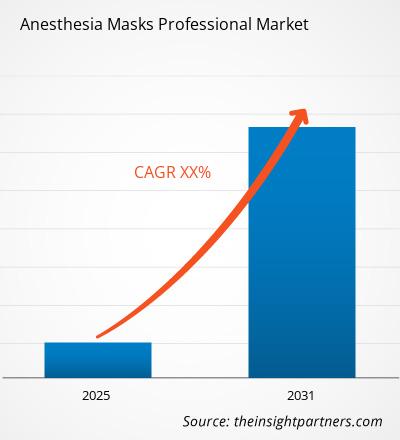
The Anesthesia Masks Professional market was valued at US$ 2.57 billion in 2025 and is expected to reach US$ 3.87 billion by 2034; it is estimated to record a CAGR of 4.65% during 2026-2034.
Anesthesia Masks Professional Market Assessment and Insights
- North America: North America accounted for 35–39% share in 2025 and is projected to grow at 4.7–5.3% CAGR between 2026–2034, supported by surgical procedure density, disposable mask adoption, and hospital supply standardization.
- US: The US represented 84–88% of North America in 2025 and is expected to grow at 4.6–5.2% CAGR between 2026–2034, driven by hospitals, ambulatory surgery, and emergency airway use.
- Europe: Europe held 26–30% share in 2025 and is forecast to grow at 4.5–5.1% CAGR between 2026–2034, led by Germany, the UK, France, Italy, and Spain.
- Asia Pacific: Asia Pacific captured 23–27% share in 2025 and is projected to expand at 6.2–6.9% CAGR between 2026–2034, with China, Japan, India, South Korea, and Australia leading adoption.
- Largest Segment: Adult Mask held 68–73% market share in 2025 and is expected to grow at 4.9–5.5% CAGR between 2026–2034, reflecting adult surgical and emergency airway volumes.
- High Growth Segment: Ambulatory Surgical Units accounted for 18–23% market share in 2025 and is projected to grow at 6.0–6.7% CAGR between 2026–2034, supported by outpatient procedure migration.
- Key companies analyzed in detail: Fisher & Paykel Healthcare Corporation Limited, ResMed Inc., Ambu A/S, Teleflex Incorporated, Mercury Medical, Medline Industries, LP, Koninklijke Philips N.V., Smiths Medical, Intersurgical Ltd., and GE HealthCare Technologies Inc.
Source: The Insight Partners' analysis based on proprietary research, government publications, company annual reports, investor presentations, industry databases, and expert interviews.
Clinical airways have moved beyond reusable rubber interfaces to disposable transparent masks that are anatomical and allow for good seals, visual inspection, and infection control. The buying processes of clinical airways will increasingly be focused on the fit of the mask, its cushion, range of sizes, safety of materials, connectivity to other devices, and packaging. The manufacturing process is being moved toward scalability of polymer molding, supply chain strength, and breadth of portfolio of neonatal, pediatric, and adult clinical airways.
Future demand will be driven by the increased use of anesthesia in the ambulatory setting, emergency preparedness, and greater standardization of perioperative disposables. Increased volume in the Asia-Pacific region and the Middle East will come from hospital builds, while replacement purchases and conversions to disposables will be driving demand in North America and Europe.
Anesthesia Masks Professional Market Report Scope
| Report Attribute | Details |
|---|---|
| Market size in 2025 | US$ 2.57 Billion |
| Market Size by 2034 | US$ 3.87 Billion |
| Global CAGR (2026 - 2034) | 4.65% |
| Historical Data | 2021-2024 |
| Forecast period | 2026-2034 |
Anesthesia Masks Professional Market Analysis
The anesthesia masks professional market growth is driven by rising surgical procedures, procedural sedation, emergency ventilation, and post-anesthesia respiratory support. Masks continue to be important in oxygenation, preoxygenation, ventilation, and administration of anesthesia during induction and short surgical procedures. Recurring demand is experienced because a number of institutions have opted to use disposable masks for easier sterilization, better infection control, and inventory management.
The supply chain includes resin polymers, rubber materials, cushions, domes, valves, hook rings, connectors, packaging, sterilization/clean production, and distribution. Supply determinants include healthcare supplies procurement, availability of raw materials, labeling, and contracts between hospitals. The buyer's evaluation criteria include sealing efficiency, patient size range, compatibility with breathing systems, and cost per procedure.
The anesthesia masks professional market analysis indicates a competitive field shaped by airway management specialists, respiratory interface companies, and large hospital supply distributors. Ambu A/S, Intersurgical Ltd., Teleflex Incorporated, and Mercury Medical offer competitive portfolios of products that cater to the airway category, whereas Medline Industries, LP, offers a wide hospital purchasing platform and private label purchasing channels.
The strategic position of the company can also be affected by other platforms in the respiratory therapy domain. Fisher & Paykel Healthcare Corporation Limited and ResMed Inc. provide expertise in patient interface and oxygenation processes, whereas Koninklijke Philips N.V., Smiths Medical, and GE HealthCare Technologies Inc. provide perioperative and monitoring platforms.
● REPORT CUSTOMIZATION
Tailor This Report To Align With Your Specific Business Requirements
This report can be customized to align precisely with your business objectives, scope, and target markets. Customization options include tailored segmentation, geography, competitive analysis, and strategic insights to support informed decision-making.
Customize This Report →WHAT YOU CAN ADJUST
- ● Segmentations
- ● Geography
- ● Competitive Analysis
- ● Language Preferences
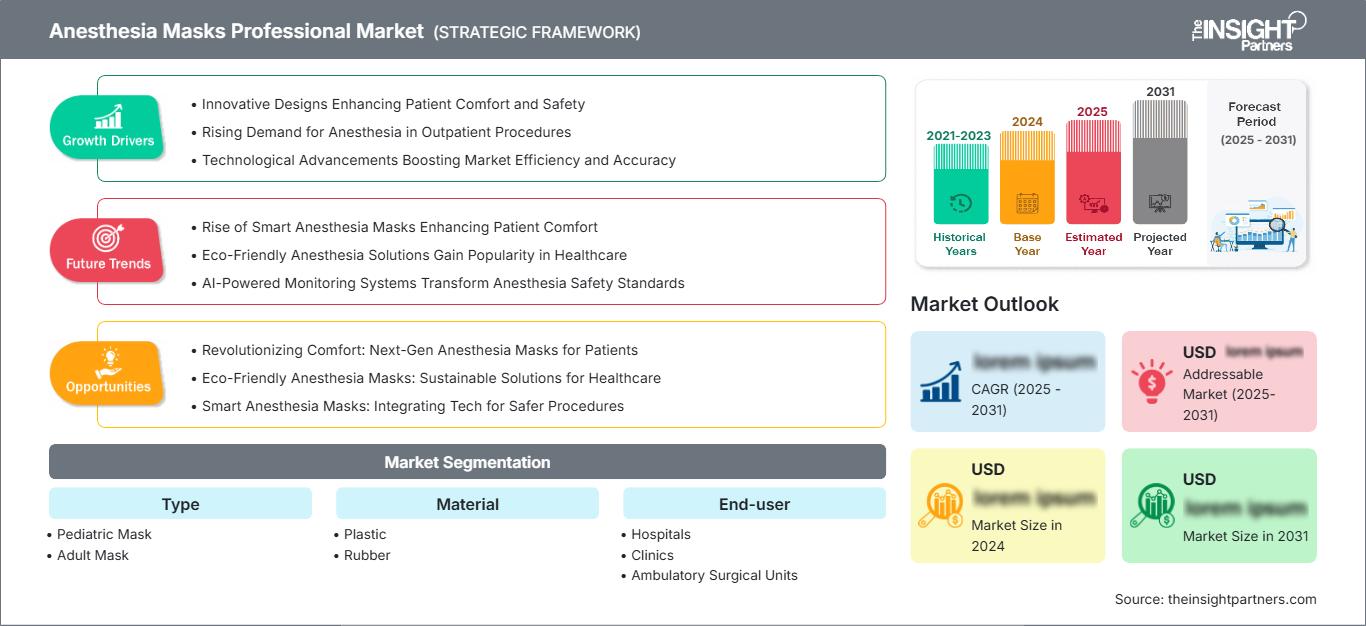
Anesthesia Masks Professional Market: Strategic Insights
Regional Insights
North America anesthesia masks professional market
North America accounted for 35–39% share in 2025 and is projected to grow at 4.7–5.3% CAGR during 2026–2034. Demand is supported by operating rooms, ambulatory surgical centers, emergency departments, intensive care units, and procedural sedation suites. The region benefits from high clinical awareness of airway safety and consistent purchasing of disposable respiratory interfaces.
The anesthesia masks professional market share in North America is reinforced by strong hospital group purchasing, established supply chains, and rising outpatient procedure utilization. Facilities prioritize transparent domes, soft cushions, adult and pediatric size availability, and single-use packaging. Procurement is also shaped by infection prevention policies, clinician familiarity, and compatibility with anesthesia breathing circuits and resuscitation systems.
U.S. anesthesia masks professional Market
The US represented 84–88% of North America in 2025 and is expected to grow at 4.6–5.2% CAGR during 2026–2034. Demand is driven by large hospital networks, ambulatory surgical units, endoscopy centers, emergency departments, and specialty clinics requiring reliable mask ventilation products. Adult masks dominate unit consumption because adult surgical and emergency airway events are more frequent.
Supplier presence is strong through manufacturers, distributors, and group purchasing organizations. Ambu A/S, Teleflex Incorporated, Medline Industries, LP, Mercury Medical, Fisher & Paykel Healthcare Corporation Limited, and Smiths Medical maintain visibility across hospital and outpatient channels. US buyers typically emphasize consistent fit, rapid availability, latex or phthalate considerations, and case-level logistics.
Europe anesthesia masks professional Market
Europe held 26–30% share in 2025 and is forecast to grow at 4.5–5.1% CAGR during 2026–2034. Demand in the UK is created via NHS surgical operations, elective procedures recovery, and the use of disposable airway consumables. Purchasers prioritize standardization, materials safety, traceability, and procurement reliability in public and private healthcare facilities.
Germany still stays the market leader owing to a huge number of surgeries, modern hospitals, and organized procurement of perioperative consumables. More and more hospitals and ambulatory centers employ masks featuring cushioning, domes made of clear material, and several sizes suitable for adult and pediatric anesthesiology procedures.
France, Italy, and Spain stimulate the market via investments in public hospitals, private surgical facilities, and upgrades of the respiratory care sector. The demand in France, Italy, and Spain is influenced by the aging population, growth of day surgery cases, and infection control in perioperative care.
APAC anesthesia masks professional Market
Asia Pacific accounted for 23–27% share in 2025 and is expected to grow at 6.2–6.9% CAGR during 2026–2034. The Chinese market is dominated by hospital expansion, an increase in the number of surgeries, and the use of disposable items. Japan and South Korea continue to require masks of high specification used in sophisticated surgical procedures.
India and Australia contribute to growth through the development of private hospitals, ambulatory surgeries, and emergency departments. Public and private investment in operating rooms increases the consumption of masks. It continues to be necessary for local distributors to supply masks due to the requirements of sizing, training, consistency, and economical packaging.
Middle East & Africa anesthesia masks professional Market
Middle East & Africa is expected to grow at 5.4–6.1% CAGR during 2026–2034. Saudi Arabia and the UAE drive demand via hospital construction, specialty surgical units, and investments in medical tourism. The new facilities usually purchase anesthesia masks as part of the comprehensive airway management and respiratory consumables packages.
The South African market is the most advanced in the region due to private hospitals, teaching hospitals, and emergency care setups. Adoption in RoMEA occurs via operating room development, donor-funded health institutions, and private clinics. Tender pricing, distributor network, preference of the clinicians, and adult and pediatric sizes determine procurement.
Segmentation Analysis
Type
Type is projected to grow at 5.0–5.6% CAGR during 2026–2034 as clinical demand remains split between adult surgical volume and pediatric airway specialization. The anesthesia masks professional market scope by type is led by adult masks because they are used across general anesthesia, emergency ventilation, and procedural sedation. Pediatric masks remain vital where fit, dead space, and gentle seal pressure influence safety.
- Pediatric Mask: Pediatric Mask demand is supported by pediatric surgery, emergency care, and anesthesia induction needs where smaller facial anatomy requires precise sizing, soft cushions, and low-dead-space designs.
- Adult Mask: Adult Mask remains the largest category because adult surgical procedures, emergency ventilation events, and procedural sedation volumes generate frequent use across hospitals and outpatient facilities.
Material
Material is expected to grow at 4.8–5.4% CAGR during 2026–2034 as buyers balance disposability, patient comfort, transparency, and cost. Plastic masks are gaining share due to single-use adoption, clear patient visibility, and scalable production. Rubber masks remain relevant in selected reusable or specialty settings where durability, cushion response, and familiarity continue to influence clinical preference.
- Plastic: Plastic masks are widely adopted because they support transparency, single-use formats, lightweight handling, standardized packaging, and efficient supply for high-volume hospitals and ambulatory surgical units.
- Rubber: Rubber masks retain demand in selected facilities where reusable workflows, cushion flexibility, and long-standing clinician familiarity remain important, although reprocessing burden limits faster adoption.
End-user
End-user is anticipated to grow at 5.2–5.8% CAGR during 2026–2034 as demand expands across hospitals, clinics, and ambulatory surgical units. Hospitals remain the largest buyers because they manage complex surgeries, emergency ventilation, and intensive care support. Ambulatory surgical units are growing faster as outpatient procedures require compact, reliable, and easy-to-stock airway consumables.
- Hospitals: Hospitals generate the highest demand because operating rooms, emergency departments, recovery areas, and intensive care units require continuous availability of adult and pediatric anesthesia masks.
- Clinics: Clinics use masks for minor procedures, sedation support, respiratory assistance, and emergency preparedness, where compact inventories and dependable product availability are operational priorities.
- Ambulatory Surgical Units: Ambulatory Surgical Units are expanding purchases as day surgeries, endoscopy, ophthalmology, orthopedics, and pain procedures move into outpatient settings requiring standardized airway supplies.
Opportunity Snapshot
| Segment Name | Revenue Contribution | Trend Tag | Adoption Stage |
| Hospitals | High | OR Consumables | Mature |
| Clinics | Medium | Sedation Rooms | Scaling |
| Ambulatory Surgical Units | Medium | Day Surgery | Scaling |
Anesthesia Masks Professional Market Growth Drivers and Impact Analysis
Expansion of Surgical and Procedural Sedation Volumes
The growing number of elective, emergency, endoscopic, dental sedation, and short-term surgeries is boosting the need for masks employed for preoxygenation, ventilatory support, and anesthesia induction. Adult masks are still the core product within high-volume surgical processes, whereas pediatric masks are important for pediatric hospitals and emergency cases. This effect is recurring rather than isolated because many healthcare institutions opt for single-use products. Manufacturers have the opportunity to count on predictable consumables that correlate with the schedule of operating rooms and outpatient procedures.
Infection Prevention and Shift Toward Single-Use Interfaces
Health care providers are using disposable airway devices in order to cut down the time spent on reprocessing, eliminate cross-contamination risks, and streamline operating room turnovers. The use of single-use masks enables standardization of packaging, ease of access, and predictable performance without the need for validation of cleaning processes. This trend is especially prevalent in hospital environments and ambulatory surgery centers, where fast turnover of cases and stringent infection control protocols affect product purchases. The implications of the trend include increased purchases of plastic masks, large volume purchases, and larger sizes.
Better Fit, Visualization, and Clinician Handling Requirements
Anesthesia mask manufacturers must now meet expectations of seal integrity, visualization, and easy handling during induction and ventilation. Properties like see-through domes, anatomically shaped cushions, thumb grips, color coding, and hook-rings help in increasing ease-of-use in high-pressure environments. It can be seen in the preference for products that will minimize the chances of leaks and quick mask deployment. Pediatric anesthesia will especially gain from precise fitting and minimal pressure on the seal. Manufacturers who take the effort to design ergonomic solutions and prove their effectiveness can stand out in price-only competitive bidding.
Anesthesia Masks Professional Market Future Trends
Interface Design Moves Toward Fit and Compatibility
Fit optimization will be one of the key anesthesia masks professional market trends as anesthesia teams seek safer ventilation across diverse patient anatomies. Future products will emphasize softer cushions, better grip surfaces, broader size ranges, and compatibility with oxygenation interfaces used during airway management. This direction is supported by innovations such as the F&P Optiflow Switch, which allows anesthesia mask placement over a nasal interface for mask ventilation during oxygenation workflows. Design improvements will increasingly address both adult and pediatric needs, helping clinicians maintain ventilation continuity while reducing device changes during critical airway moments.
Sustainability and Packaging Efficiency Gain Procurement Attention
Hospitals have started assessing the sustainability of disposable airway consumables based on criteria related to handling waste, and the efficiency of storage. Future buying decisions regarding masks will be based increasingly on factors such as minimal packaging size, material solutions for recycling where possible, and appropriate sizing of cases to avoid excessive storage pressure. While this change in focus is unlikely to roll back single-use, which is important for infection control reasons, it will impact the supplier competition.
Anesthesia Masks Professional Market Opportunities
Ambulatory Surgical Units Need Standardized Airway Kits
Ambulatory surgical units represent a strong opportunity because they need compact, reliable airway supplies that support fast turnover and limited storage capacity. The anesthesia masks professional market Forecasts indicate that outpatient buyers will favor standardized kits containing adult masks, selected pediatric sizes, breathing circuit components, and emergency backup supplies. Suppliers can increase account value by bundling masks with resuscitation bags, filters, and circuits matched to high-volume procedures. The opportunity is particularly strong in endoscopy, ophthalmology, orthopedics, pain management, and dental sedation centers where predictable inventory supports operational efficiency.
Pediatric Airway Safety Creates Premium Product Demand
There are many reasons why pediatric anesthesia represents prime opportunities, as mask fit, dead space, cushion softness, and vision play important roles in the quality of induction and ventilation safety. Hospitals for children, emergency rooms, and pediatric surgery wards need masks of various sizes to provide seals from infancy up to adolescents. It is possible to compete with color-coding of mask sizes, soft anatomically shaped cushions, see-through domes, and training of the medical staff. This demand is fostered by worldwide spending on pediatric care facilities and requirements for device provision per age group.
Recent Developments
- July 2026: Koninklijke Philips N.V. received FDA 510(k) clearance for its next-generation reusable SpO₂ clip sensor, strengthening perioperative and respiratory monitoring support for diverse patient populations. The sensor achieved an ARMS value of 1.6% in desaturation studies and demonstrated accuracy variation of less than 0.5% across evaluated skin pigmentation groups.
- December 2025: ResMed Inc. received FDA clearance for Personalized Therapy Comfort Settings, marketed as Smart Comfort, an AI-enabled medical device for AirSense 11 users. The system uses more than 100 million nights of de-identified sleep data to recommend comfort settings, reinforcing digital personalization across respiratory interface and breathing therapy workflows.
- August 2024: Fisher & Paykel Healthcare Corporation Limited received FDA 510(k) clearance for the F&P Optiflow Filtered Nasal Interface with Anesthesia Mask Compatibility. The device supports nasal high flow or low-flow oxygen delivery and allows an anesthesia mask to be placed over the nasal interface for mask ventilation during airway management.
Frequently Asked Questions

- Comprehensive Market Sizing and Forecast Analysis
- Detailed Segmentation Analysis
- In-Depth Market Dynamics Assessment
- Regional and Country-Level Insights
- Competitive Landscape and Company Benchmarking
- Strategic Business Intelligence
Recent Reports
Testimonials

The Insight Partners' SCADA System Market report is comprehensive, with valuable insights on current trends and future forecasts. The team was highly professional, responsive, and supportive throughout. We are very satisfied and highly recommend their services.
RAN KEDEM Partner, Reali Technologies LTDs
I requested a report on a very specific software market and the team produced the report in a few days. The information was very relevant and well presented. I then requested some changes and additions to the report. The team was again very responsive and I got the final report in less than a week.
JEAN-HERVE JENN Chairman, Future Analytica
We worked with The Insight Partners for an important market study and forecast. They gave us clear insights into opportunities and risks, which helped shape our plans. Their research was easy to use and based on solid data. It helped us make smart, confident decisions. We highly recommend them.
PIYUSH NAGPAL Sr. Vice President, High Beam Global
The Insight Partners delivered insightful, well-structured market research with strong domain expertise. Their team was professional and responsive throughout. The user-friendly website made accessing industry reports seamless. We highly recommend them for reliable, high-quality research services
YUKIHIKO ADACHI CEO, Deep Blue, LLC.
This is the first time I have purchased a market report from The Insight Partners.While I was unsure at first, I visited their web site and felt more comfortable to take the risk and purchase a market report.I am completely satisfied with the quality of the report and customer service. I had several questions and comments with the initial report, but after a couple of dialogs over email with their analyst I believe I have a report that I can use as input to our strategic planning process.Thank you so much for taking the extra time and making this a positive experience.I will definitely recommend your service to others and you will be my first call when we need further market data.
JOHN SUZUKI President and Chief Executive Officer, Board Director, BK Technologies
I wish to appreciate your support and the professionalism you displayed in the course of attending to my request for information regarding to infectious disease IVD market in Nigeria. I appreciate your patience, your guidance, and the fact that you were willing to offer a discount, which eventually made it possible for us to close a deal. I look forward to engaging The Insight Partners in the future, all thanks to the impression you have created in me as a result of this first encounter.
DR CHIJIOKE ONYIA MANAGING DIRECTOR, PineCrest Healthcare Ltd.Reason to Buy
- Informed Decision-Making
- Understanding Market Dynamics
- Competitive Analysis
- Identifying Emerging Markets
- Customer Insights
- Market Forecasts
- Risk Mitigation
- Boosting Operational Efficiency
- Strategic Planning
- Investment Justification
- Tracking Industry Innovations
- Aligning with Regulatory Trends





 Get Free Sample for