
Anime Merchandising Market Size, Share & Forecast by 2034
Coverage: By Product (Figurines, Apparel, Books, Posters, and Toys, and Digital Products), Component (Physical Merchandise and Digital Merchandise), Distribution Channel (Online Shopping and Offline Retail), End-Use (Individual Consumers and Commercial Buyers), and Geography (North America, Europe, Asia Pacific, the Middle East and Africa, and South and Central America)
- Status : Data Released
- Report Code : TIPRE00043066
- Category : Technology, Media and Telecommunications
- No. of Pages : 150
- Available Report Formats :


- Last update date : August 26, 2026


2025 Market Size
US$ 12.45 Bn
Base year value
2034 Forecast
US$ 23.66 Bn
Projected by 2034
CAGR 2026-2034
7.4 %
Growth rate
Addressable Market
US$ 162.85 Bn
(2026-2034)
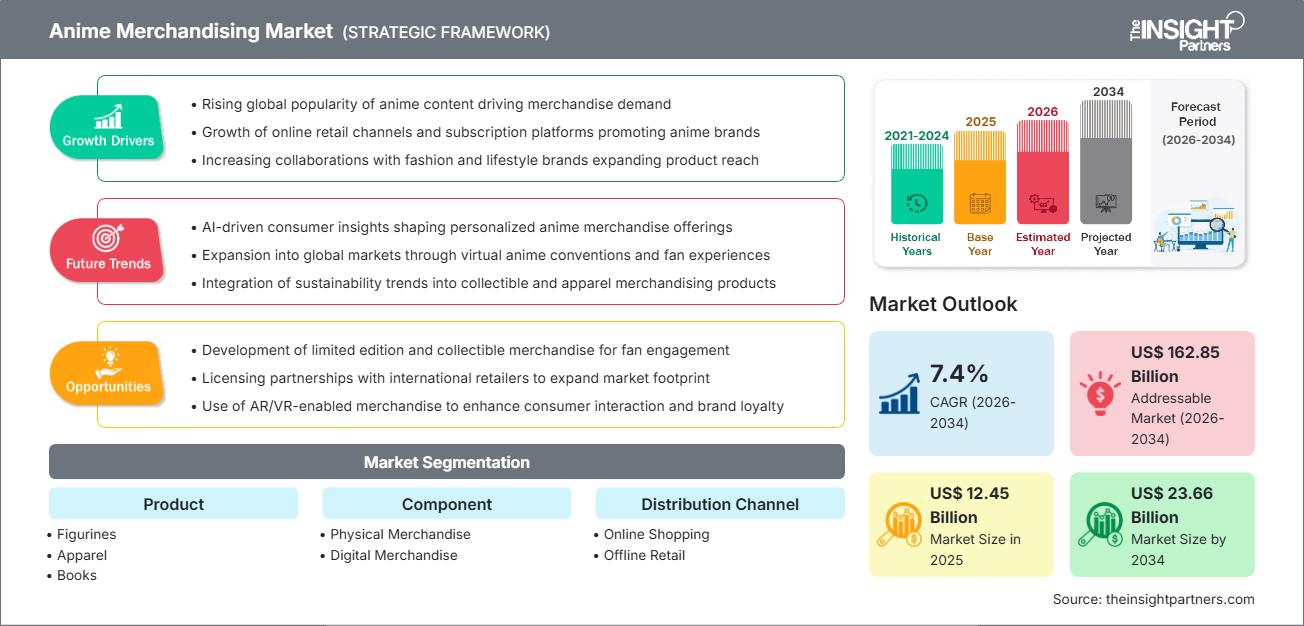
The anime merchandising market was valued at US$ 12.45 Billion in 2025 and is projected to reach US$ 23.66 Billion by 2034, advancing at a CAGR of 7.4% during 2026–2034. The market is benefiting from the globalization of anime intellectual property, expanding licensing ecosystems, and increasing consumer spending on collectibles, apparel, and digital merchandise linked to premium franchises and streaming-led fan communities.
Across North America, the anime merchandising market size continues to expand as streaming adoption strengthens franchise visibility and licensed product penetration. The region is expected to grow at a CAGR of 6.8–7.3% through 2034, supported by strong e-commerce infrastructure, rising convention participation, and broader retail availability of officially licensed merchandise through specialty stores, entertainment chains, and online marketplaces.
Anime Merchandising Market Assessment and Insights
- North America: Accounted for 28–32% share in 2025 and is anticipated to grow at a CAGR of 6.8–7.3% during 2026–2034. Growth is supported by premium collectibles demand, strong licensing programs, and widespread adoption of anime streaming platforms.
- US: Represented 72–76% of North America in 2025 and is projected to expand at a CAGR of 6.9–7.4% during 2026–2034. Collectibles, apparel collaborations, and convention-driven purchases remain major contributors.
- Europe: Held 22–26% share in 2025 and is expected to register a CAGR of 6.6–7.1% during 2026–2034. The UK, Germany, and France remain leading markets, supported by retail partnerships and convention culture.
- Asia Pacific: Accounted for 34–38% share in 2025 and is forecast to grow at a CAGR of 8.0–8.6% during 2026–2034. Japan, China, South Korea, and India drive regional demand through strong consumer engagement.
- Largest Segment: Physical Merchandise represented a 68–72% market share in 2025 and is anticipated to record a CAGR of 6.8–7.3% during 2026–2034, led by figurines and licensed collectibles.
- High Growth Segment: Digital Merchandise accounted for 28–32% market share in 2025 and is projected to grow at a CAGR of 9.3–9.9% during 2026–2034, supported by gaming integration and virtual collectibles.
- Key companies analyzed in detail: Crunchyroll, LLC; Bandai Namco Holdings Inc.; Good Smile Company, Inc.; Kotobukiya Co., Ltd.; Toei Animation Co., Ltd.; Studio Ghibli, Inc.; Aniplex Inc.; VIZ Media, LLC; Tokyo Otaku Mode Inc.; Animate Ltd.; AmiAmi (Oh-ami Inc.).
Source: The Insight Partners' analysis based on proprietary research, government publications, company annual reports, investor presentations, industry databases, and expert interviews.
The market has grown from being traditionally oriented towards retail to having a diverse licensing market involving collectible items, digital assets, apparel, and other types of products. Manufacturing capacity in Japan, China, and Southeast Asia has become more synchronized with the international supply chains. Manufacturers are using data-based franchise management, limited editions, and influencer marketing to monetize their brands while keeping fans engaged at the same time.
In the future, increased investment is anticipated in emerging markets such as India, Southeast Asia, Latin America, and the Middle East. The growing popularity of anime amongst mainstream consumers, improved anti-counterfeit efforts, and the widespread presence of licensed products present favorable conditions. Digital commerce platforms and franchises will help increase access to the global market and improve monetization for IP holders.
Anime Merchandising Market Report Scope
| Report Attribute | Details |
|---|---|
| Market size in 2025 | US$ 12.45 Billion |
| Market Size by 2034 | US$ 23.66 Billion |
| Global CAGR (2026 - 2034) | 7.4% |
| Historical Data | 2021-2024 |
| Forecast period | 2026-2034 |
Anime Merchandising Market Analysis
This growth in demand is being driven by increased global consumption of anime-related content via streaming sites, social media fan communities, gaming environments, and entertainment events. The demand is now not only for hardcore enthusiasts but also for mainstream customers who buy clothing, furnishings, books, and lifestyle items themed from franchises.
There are very sophisticated supply chains involving animation production companies, licensing firms, producers, distributors, convention planners, and e-commerce sites. Licensing of characters is extremely important as an economic value generator in the system. The production of animated content in East Asia allows cost savings, whereas local fulfillment and online retailing facilitate distribution in North America and Europe.
The findings from the market analysis suggest the rising competition between licensors, specialty retailers, and entertainment firms that have intentions to have more control over their fan base and product distribution. While Crunchyroll, LLC and VIZ Media, LLC keep capitalizing on the power of media ecosystems, Bandai Namco Holdings Inc., Good Smile Company, Inc., and Kotobukiya Co., Ltd. benefit from premium collectibles and franchises.
In terms of strategic investments, there is an increasing tendency to make them with regard to exclusive product releases, direct-to-consumer services, regional warehousing, and omnichannel retailing. Firms such as Toei Animation Co., Ltd., Aniplex Inc., Studio Ghibli, Inc., Tokyo Otaku Mode Inc., Animate Ltd., and AmiAmi are increasingly relying on international expansion via online stores and event-based sales.
● REPORT CUSTOMIZATION
Tailor This Report To Align With Your Specific Business Requirements
This report can be customized to align precisely with your business objectives, scope, and target markets. Customization options include tailored segmentation, geography, competitive analysis, and strategic insights to support informed decision-making.
Customize This Report →WHAT YOU CAN ADJUST
- ● Segmentations
- ● Geography
- ● Competitive Analysis
- ● Language Preferences
Anime Merchandising Market: Strategic Insights
Regional Insights
North America Anime Merchandising Market
North America accounted for 28–32% anime merchandising market share in 2025 and is projected to grow at a CAGR of 6.8–7.3% through 2034. Consumer expenditure remains high in collectibles, licensed merchandise, and convention exclusive items. The area enjoys the advantage of matured e-commerce channels, existing specialty stores, and easy access to streaming which ensures increased awareness of the franchises.
Fans of these franchises have developed a preference for high-end figures, rare figures, and franchises. Collaborations of the licensors and entertainment chains ensure better exposure, while conventions offer direct interaction. The growth of licensing agreements ensures fewer counterfeit sales and better monetization of key anime franchises.
U.S. Anime Merchandising Market
The United States represented 72–76% of North American revenue in 2025 and is anticipated to expand at a CAGR of 6.9–7.4%. The consumer demand is backed up by massive conventions, rising subscriptions to anime streaming services, and the increasing availability of licensed goods via e-commerce platforms and chain stores.
Major players in the industry operate a huge network of business centers across the country, ensuring effective product distribution and marketing for franchises. Figurines, clothes, manga-related goods, and collector’s editions still attract strong consumer interest. High involvement of influencers and community-oriented purchases continue to fuel market growth.
Europe Anime Merchandising Market
Europe accounted for 22–26% share in 2025 and is forecast to grow at a CAGR of 6.6–7.1% through 2034. The UK dominates in regional demand due to well-developed anime conventions, specialized stores, and significant online buying trends. Consumers tend to buy more premium merchandise and official clothes that relate to popular franchises.
Germany is still one of the biggest markets because of its large readership of manga and developing fandoms. France still occupies an important place as one of the leading anime-consuming regions in Europe due to cultural events. Italy and Spain have been showing positive demand trends through online selling and mainstream presence.
APAC Anime Merchandising Market
Asia Pacific held 34–38% share in 2025 and is projected to register a CAGR of 8.0–8.6% through 2034. Japan remains the leading revenue contributor, while China and South Korea support large-scale collectible and digital merchandise demand.
India and Australia are emerging as attractive growth markets due to expanding streaming penetration and rising interest among younger consumers. Strong regional intellectual property ownership and licensing infrastructure support sustained growth across merchandise categories.
Middle East & Africa Anime Merchandising Market
The Middle East & Africa market is expected to grow at a CAGR of 6.2–6.8% during 2026–2034. Saudi Arabia and the UAE are leading demand centers, benefiting from digital retail development and growing entertainment sector investments.
South Africa remains an important market within the region, while broader adoption across MEA is supported by increasing access to streaming content and improved distribution networks. Youth-oriented consumer demographics contribute to expanding merchandise demand.
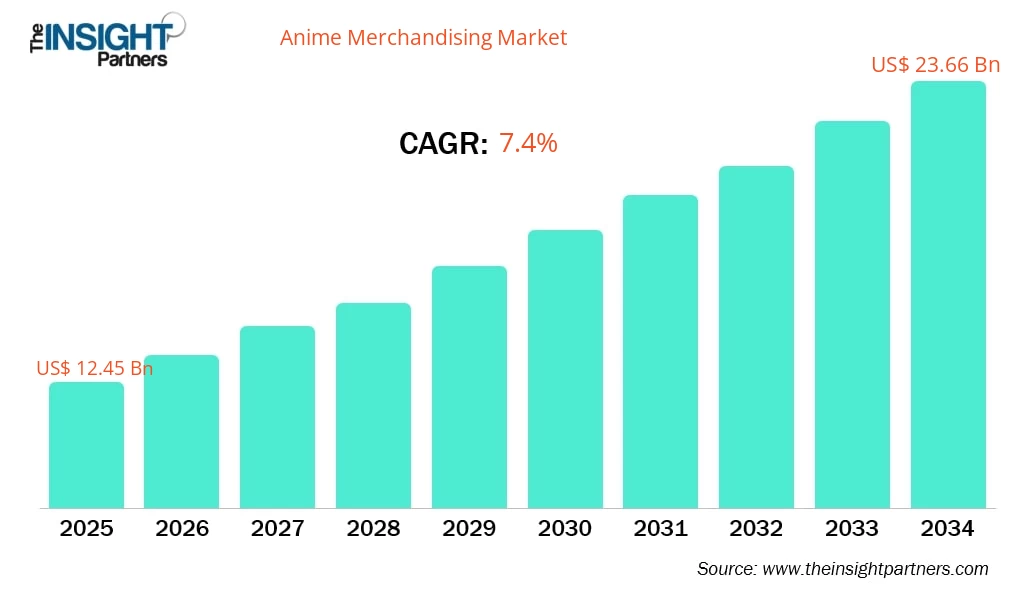
Segmentation Analysis
Product
Product segment is expected to grow at a CAGR of 7.2–7.7% during 2026–2034. The anime merchandising market scope continues to widen as product diversity expands across traditional collectibles and digital formats. Consumer preferences increasingly favor licensed, character-driven merchandise tied to major franchises and exclusive releases.
- Figurines: Premium collectibles remain central to enthusiast spending, benefiting from limited editions, character authenticity, and strong secondary market activity.
- Apparel: Fashion collaborations and everyday wearable merchandise broaden franchise visibility while attracting both core enthusiasts and mainstream consumers.
- Books: Manga, artbooks, and franchise guides support fan engagement and strengthen cross-selling opportunities within broader merchandise ecosystems.
- Posters: Affordable memorabilia options continue attracting entry-level consumers while supporting promotional activities around popular titles.
- Toys: Character-based toys maintain relevance through younger demographics and franchise-driven licensing partnerships.
- Digital Products: Digital collectibles and virtual assets gain traction among technologically engaged consumers seeking interactive experiences.
Component
Component segment is anticipated to expand at a CAGR of 7.4–7.9% during 2026–2034. Merchandise demand remains heavily influenced by collectible culture, although digital formats are becoming increasingly important in franchise monetization strategies.
- Physical Merchandise: Maintains the dominant revenue position through collectibles, apparel, toys, printed materials, and convention-exclusive products.
- Digital Merchandise: Benefits from gaming ecosystems, virtual goods, digital ownership models, and direct online distribution.
Distribution Channel
The Distribution Channel segment is expected to grow at a CAGR of 7.6–8.1% during 2026–2034. Omnichannel purchasing behavior continues to reshape customer journeys, with online retail delivering broader product access and convenience.
- Online Shopping: Expands global accessibility through dedicated anime retailers, marketplaces, and direct-to-consumer platforms.
- Offline Retail: Retains importance through specialty stores, convention sales, experiential shopping environments, and collector communities.
End-Use
The end-use segment is projected to register a CAGR of 7.3–7.8% during 2026–2034. Individual purchasing remains the foundation of demand, while institutional buyers contribute through promotional and commercial applications.
- Individual Consumers: Represent the primary demand base owing to fandom-driven purchasing, collecting activities, and recurring franchise engagement.
- Commercial Buyers: Include retailers, event organizers, promotional agencies, and entertainment businesses sourcing licensed products.
Opportunity Snapshot
| Segment Name | Revenue Contribution | Trend Tag | Adoption Stage |
| Individual Consumers | High | Premium Collecting | Mature |
| Commercial Buyers | Medium | Event Retail | Scaling |
Anime Merchandising Market Growth Drivers and Impact Analysis
Expansion of Global Anime Streaming Ecosystems
The streaming services keep opening up more opportunities for people to view Japanese anime in both advanced and developing nations. More availability of the content means that there is increased awareness of the brands and faster decision-making for the purchase of merchandise. The international release, multi-language approach to the distribution, and localization of franchises result in better consumer engagement. Conversions in the merchandise tend to become better where there is more visibility of popular series over a number of seasons and formats.
Rising Consumer Interest in Collectibles and Limited Editions
Authenticity, rarity, and association with franchises have become more important than ever before for collectors who buy merchandise. Limited edition figures and merchandise that are exclusive to an event receive a lot of interest from established fan communities. Producers use limited edition runs, artist collaborations, and special packaging for collectors to make higher margins and repeat sales possible.
Growth of Direct-to-Consumer Commerce Channels
The growth of specialized e-commerce platforms enables intellectual property owners as well as merchandise experts to interact with customers without any intermediary. Direct interaction makes it easier for businesses to know about customers’ information, improve their inventory management, and promote themselves using geography-based promotions. In addition, it minimizes the reliance on physical retail intermediaries. Improved fulfillment functions and digital marketing campaigns facilitate the growth of businesses in other geographic locations as well.
Anime Merchandising Market Future Trends
Digital Collectibles and Virtual Ownership Models
Anime merchandising market trends increasingly reflect the convergence of entertainment content, gaming ecosystems, and digital ownership experiences. Future commercialization strategies are expected to emphasize virtual collectibles, avatar customization assets, and digitally authenticated merchandise. As younger consumers participate in online communities and immersive digital environments, licensors are likely to launch integrated merchandise experiences connecting physical products with digital benefits. This trend supports recurring revenue generation while expanding engagement opportunities beyond conventional retail transactions.
Regional Content Localization Supporting Merchandise Demand
Localization approaches have become more crucial for franchise development abroad. It is required that merchandise lines be comprised of region-specific art, language adaptation, consumer preferences, and retail collaboration. Market penetration could be increased with the help of the localization of products instead of depending only on imports. This strategy will assist in gaining more brand loyalty and acceptance among first-time users of the category.
Anime Merchandising Market Opportunities
Expansion into High-Potential Emerging Economies
Anime merchandising market Forecasts indicate a significant commercial opportunity across India, Southeast Asia, the Middle East, and parts of Latin America. Growth in Internet usage, increased streaming penetration, and growing numbers of youth will help to create an environment that is conducive for merchandise licensing. Companies that build distribution channels, infrastructure, and partnerships specific to these regions can enhance accessibility while lowering delivery costs. Positioning early in such regions can provide significant competitive advantage.
Premium Franchise Collaboration and Lifestyle Products
Cross-industry partnerships present attractive opportunities for market participants seeking revenue diversification. Collaborations involving fashion brands, gaming companies, entertainment venues, and lifestyle product manufacturers can extend franchise reach beyond traditional collectors. Premium positioning strategies improve margins and strengthen consumer loyalty. Companies capable of securing exclusive licensing rights and executing targeted collaboration programs are likely to benefit from stronger differentiation and higher-value customer engagement.
Frequently Asked Questions

- Comprehensive Market Sizing and Forecast Analysis
- Detailed Segmentation Analysis
- In-Depth Market Dynamics Assessment
- Regional and Country-Level Insights
- Competitive Landscape and Company Benchmarking
- Strategic Business Intelligence
Recent Reports
Testimonials

The Insight Partners provided valuable market intelligence that supported our global go-to-market strategy. Their team was professional, responsive, and attentive to our feedback, providing thoughtful analysis and helpful methodological clarifications throughout the project.
Junmo Kim Chief Financial Officer (CFO), Enertech Co., Ltd.
The Insight Partners' SCADA System Market report is comprehensive, with valuable insights on current trends and future forecasts. The team was highly professional, responsive, and supportive throughout. We are very satisfied and highly recommend their services.
RAN KEDEM Partner, Reali Technologies LTDs
I requested a report on a very specific software market and the team produced the report in a few days. The information was very relevant and well presented. I then requested some changes and additions to the report. The team was again very responsive and I got the final report in less than a week.
JEAN-HERVE JENN Chairman, Future Analytica
We worked with The Insight Partners for an important market study and forecast. They gave us clear insights into opportunities and risks, which helped shape our plans. Their research was easy to use and based on solid data. It helped us make smart, confident decisions. We highly recommend them.
PIYUSH NAGPAL Sr. Vice President, High Beam Global
The Insight Partners delivered insightful, well-structured market research with strong domain expertise. Their team was professional and responsive throughout. The user-friendly website made accessing industry reports seamless. We highly recommend them for reliable, high-quality research services
YUKIHIKO ADACHI CEO, Deep Blue, LLC.
This is the first time I have purchased a market report from The Insight Partners.While I was unsure at first, I visited their web site and felt more comfortable to take the risk and purchase a market report.I am completely satisfied with the quality of the report and customer service. I had several questions and comments with the initial report, but after a couple of dialogs over email with their analyst I believe I have a report that I can use as input to our strategic planning process.Thank you so much for taking the extra time and making this a positive experience.I will definitely recommend your service to others and you will be my first call when we need further market data.
JOHN SUZUKI President and Chief Executive Officer, Board Director, BK Technologies
I wish to appreciate your support and the professionalism you displayed in the course of attending to my request for information regarding to infectious disease IVD market in Nigeria. I appreciate your patience, your guidance, and the fact that you were willing to offer a discount, which eventually made it possible for us to close a deal. I look forward to engaging The Insight Partners in the future, all thanks to the impression you have created in me as a result of this first encounter.
DR CHIJIOKE ONYIA MANAGING DIRECTOR, PineCrest Healthcare Ltd.Reason to Buy
- Informed Decision-Making
- Understanding Market Dynamics
- Competitive Analysis
- Identifying Emerging Markets
- Customer Insights
- Market Forecasts
- Risk Mitigation
- Boosting Operational Efficiency
- Strategic Planning
- Investment Justification
- Tracking Industry Innovations
- Aligning with Regulatory Trends





 Get Free Sample for