
Anti Epilepsy Drugs Market Size, Share & Trends by 2034
Coverage: By Treatment (First Generation Anti-epileptics, Second Generation Anti-epileptics, Third Generation Anti-epileptics); Channel of Distribution (Hospital Pharmacies, Retail Pharmacies, Others) , and Geography (North America, Europe, Asia Pacific, and South and Central America)
- Status : Data Released
- Report Code : TIPRE00018082
- Category : Life Sciences
- No. of Pages : 150
- Available Report Formats :


- Last update date : August 13, 2026


2025 Market Size
US$ 12,054.6 Mn
Base year value
2034 Forecast
US$ 18,985.77 Mn
Projected by 2034
CAGR 2026-2034
5.18 %
Growth rate
Addressable Market
US$ 140,846.82 Mn
(2026-2034)
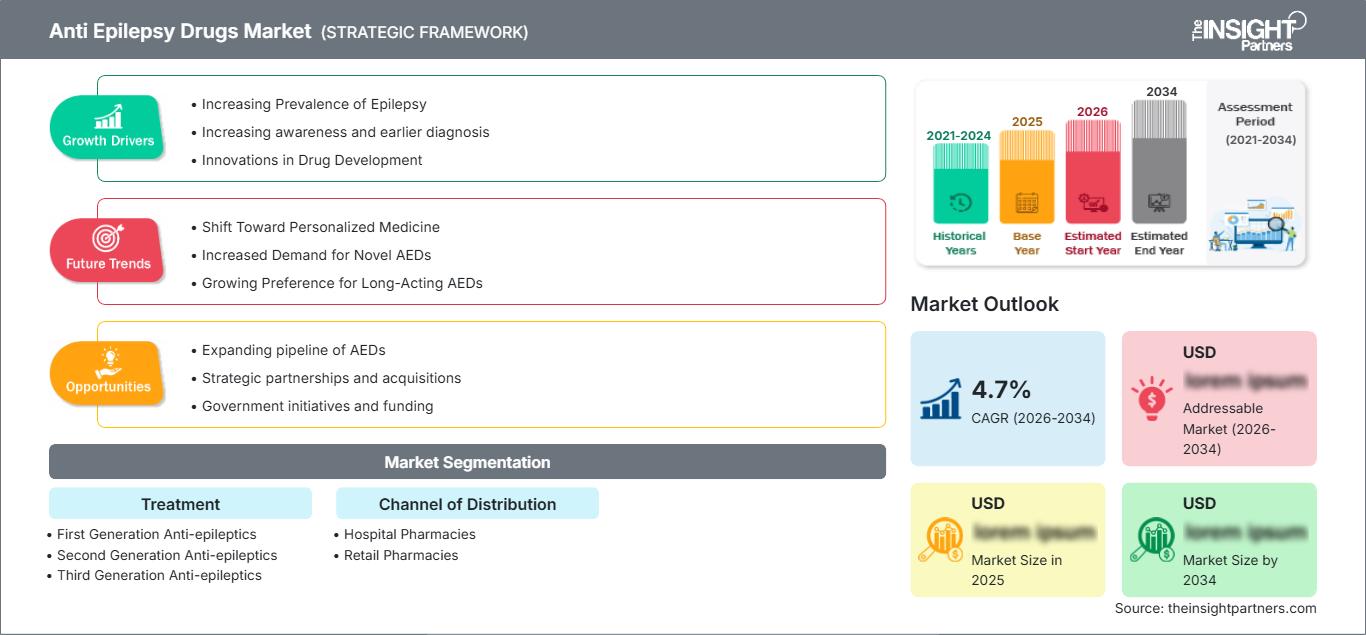
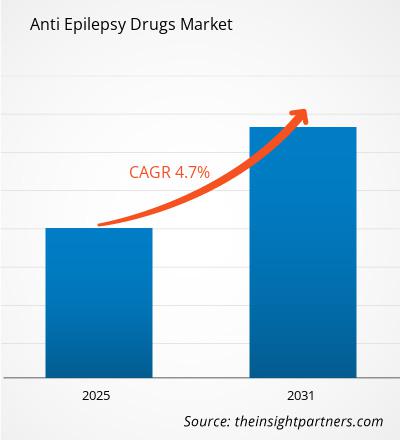
The anti epilepsy drugs market was valued at US$ 12,054.6 Million in 2025 and is projected to reach US$ 18,985.77 Million by 2034, registering a CAGR of 5.18% during 2026–2034. Market expansion reflects sustained therapy use across chronic seizure disorders, broader diagnosis, growing use of newer antiseizure medicines, and continued reliance on prescription distribution through hospital and retail pharmacy channels.
Across North America, the anti epilepsy drugs market size is supported by high neurologist access, mature reimbursement, strong specialty pharmacy systems, and evidence-based seizure management. The region is estimated to grow at a CAGR range of 4.7–5.1% during 2026–2034, driven by treatment optimization for drug-resistant epilepsy and improved continuity of refills after specialist diagnosis.
Anti Epilepsy Drugs Market Assessment and Insights
- North America held 39–42% share in 2025 and is expected to grow at a CAGR between 2026–2034 of 4.7–5.1%, supported by neurologist density, chronic prescription coverage, specialty pharmacies, and clinical guideline adherence.
- US accounted for 83–87% of North America in 2025 and is projected to grow at a CAGR between 2026–2034 of 4.6–5.0%, led by premium brands and refill persistence.
- Europe held 28–31% share in 2025 and is expected to grow at a CAGR between 2026–2034 of 4.3–4.7%, with Germany, France, the UK, Italy, and Spain leading adoption.
- Asia Pacific represented 21–24% share in 2025 and is expected to grow at a CAGR between 2026–2034 of 6.1–6.5%, led by China, Japan, India, South Korea, and Australia.
- Largest Segment Treatment held 87–91% market share in 2025 and is expected to grow at a CAGR range of 5.0–5.4% during 2026–2034, supported by chronic therapy duration.
- High Growth Segment Third Generation Anti-epileptics recorded 18–22% market share in 2025 and are projected to grow at a CAGR range of 6.4–6.8% during 2026–2034.
- Key companies analyzed in detail: UCB Pharma Limited, Sanofi S.A., Bausch Health Companies Inc., Pfizer Inc., Johnson & Johnson Services, Inc., Eisai Co., Ltd., Abbott Laboratories, Novartis AG, GSK plc, Jazz Pharmaceuticals plc.
Source: The Insight Partners' analysis based on proprietary research, government publications, company annual reports, investor presentations, industry databases, and expert interviews.
The current practice in therapy consists in personalized selection according to types of seizures, age, presence of other conditions, pregnancy, possible drug interactions, and resistance to treatments. The market of anti-epilepsy drugs is formed through oral solid dosage production, capabilities of controlled release preparations, pharmacovigilance, and reliable supply from pharmacies. Manufacturing should pay attention to consistent generic supply of first generation drugs and innovation for newer drugs with improved tolerance.
In the future, new regions are expected to increase prevalence due to general practice training, referrals to neurologists, and medicine availability. Regulatory backing is associated with access to essential medicines and neurological disorders strategy of the country. According to WHO, over 50 million patients around the globe have epilepsy, and up to 70% can be seizure-free if the right diagnostics and treatment are provided.
Anti Epilepsy Drugs Market Report Scope
| Report Attribute | Details |
|---|---|
| Market size in 2025 | US$ 12,054.6 Million |
| Market Size by 2034 | US$ 18,985.77 Million |
| Global CAGR (2026 - 2034) | 5.18% |
| Historical Data | 2021-2024 |
| Forecast period | 2026-2034 |
Anti Epilepsy Drugs Market Analysis
The increasing incidence, lifetime treatment requirements, and enhanced adherence programs will be critical in driving the anti epilepsy drugs market. The demand will be influenced by the prevalence of epilepsy, risk of seizure recurrence, prescribing practices of neurologists, transition from pediatric to adult care, and drug resistance cases that necessitate change in the type of therapy. The supply chain consists of API suppliers, formulation manufacturers, neurologists, hospital pharmacies, retail pharmacies, payers, patient assistance programs, and pharmacovigilance networks.
The supply side dynamics are highly dependent on the quality of generics, laws governing the use of selected drugs due to their controlled nature, formulation equivalence, and supply continuity. Retail pharmacies will play an important role in facilitating lifetime supply of drugs, while hospital pharmacies will facilitate the initiation of treatment following emergencies or diagnosis.
Analysis of the anti-epilepsy drug market considers the rivalry among existing antiseizure portfolios, proprietary speciality drugs, generic drugs, and rare-epilepsy therapies. UCB Pharma Limited, Eisai Co., Ltd., Jazz Pharmaceuticals plc, Pfizer Inc., Sanofi S.A., and GSK plc possess experience in neurology and central nervous system treatment, while Novartis AG, Abbott Laboratories, Johnson & Johnson Services, Inc., and Bausch Health Companies Inc. provide wider experience in healthcare.
Strategic positioning is becoming more and more focused on scientific data in refractory epilepsy, pediatric syndromes, tolerability, convenience of dosing and adherence to therapy. Companies are spending on the digital assistance, education for caregivers, and pharmacy management. The most differentiation potential is shown by medicines, which demonstrate seizure control without cognitive side effects, sedation, or difficult titration schemes.
● REPORT CUSTOMIZATION
Tailor This Report To Align With Your Specific Business Requirements
This report can be customized to align precisely with your business objectives, scope, and target markets. Customization options include tailored segmentation, geography, competitive analysis, and strategic insights to support informed decision-making.
Customize This Report →WHAT YOU CAN ADJUST
- ● Segmentations
- ● Geography
- ● Competitive Analysis
- ● Language Preferences
Anti Epilepsy Drugs Market: Strategic Insights
Regional Insights
North America anti epilepsy drugs market
North America held 39–42% share in 2025 and is projected to grow at a CAGR range of 4.7–5.1% during 2026–2034. The anti epilepsy drugs market share is supported by established neurology networks, epilepsy centers, insurance coverage, and widespread access to electroencephalography and neuroimaging. CDC indicates that about 2.9 million U.S. adults and 456,000 children have active epilepsy, reinforcing a large treated population.
Demand is concentrated in the US, with Canada contributing through public coverage and specialist referral systems. Regional adoption favors second- and third-generation therapies for tolerability and interaction management. Pharmacy benefit design, generic substitution rules, and prior authorization can influence brand retention, yet chronic refill behavior sustains baseline demand.
U.S. anti epilepsy drugs Market
The U.S. accounted for 83–87% of North America in 2025 and is projected to grow at a CAGR range of 4.6–5.0% during 2026–2034. The country’s demand base reflects epilepsy center networks, pediatric neurology programs, specialty pharmacies, and high use of newer antiseizure medicines in drug-resistant patients.
Company presence is strong through UCB Pharma Limited, Pfizer Inc., Eisai Co., Ltd., Jazz Pharmaceuticals plc, Abbott Laboratories, and Johnson & Johnson Services, Inc. Application trends include therapy switching for adverse-event control, extended-release preference, caregiver-supported pediatric regimens, and growing use of real-world evidence to guide formulary decisions.
Europe anti epilepsy drugs Market
Europe held 28–31% share in 2025 and is forecast to grow at a CAGR range of 4.3–4.7% during 2026–2034. Germany leads regional value because of specialist access, reimbursement depth, and high utilization of newer medicines. The UK combines National Health Service pathways with epilepsy specialist nurses and structured prescribing protocols.
France, Italy, and Spain add steady demand through hospital neurology clinics, community pharmacy networks, and public reimbursement. Market development is shaped by European Medicines Agency approvals, national formulary reviews, generic competition, and safety guidance for women of childbearing potential receiving antiseizure medicines.
APAC anti epilepsy drugs Market
APAC held 21–24% share in 2025 and is projected to grow at a CAGR range of 6.1–6.5% during 2026–2034. China leads regional expansion through hospital neurology investment, branded medicine launches, and improving distribution networks. Japan and South Korea support premium therapy use, while India and Australia add volume and guideline-based care growth.
Policy drivers include neurological disorder planning, public hospital upgrading, and wider essential medicine access. Industrial strengths in generics, contract manufacturing, and digital health platforms support broader availability, particularly where treatment gaps remain high.
Middle East & Africa anti epilepsy drugs Market
The Middle East & Africa is projected to grow at a CAGR range of 5.2–5.6% during 2026–2034. Saudi Arabia leads regional adoption through tertiary hospitals, neurology clinics, and government healthcare investment, while the UAE supports specialist private care and prescription access for branded therapies.
South Africa remains the key sub-Saharan contributor, with demand centered on urban hospitals and retail pharmacies. Rest of MEA growth is limited by neurologist shortages, affordability barriers, and inconsistent access to electroencephalography, although infrastructure investment is gradually improving diagnosis and medicine continuity.
Segmentation Analysis
Treatment
The Treatment segment is projected to grow at a CAGR range of 5.0–5.4% during 2026–2034. The anti epilepsy drugs market scope by treatment is determined by seizure type, patient age, comorbidities, reproductive risk, formulation tolerance, and previous treatment response. First-generation medicines remain important for cost access, while second- and third-generation therapies gain relevance through broader tolerability and fewer interaction concerns.
- First Generation Anti-epileptics remain important in cost-sensitive settings, emergency protocols, and long-established regimens, although monitoring needs and interaction profiles influence clinician selection.
- Second Generation Anti-epileptics are widely used because they balance efficacy, tolerability, and familiarity, supporting both new starts and therapy switches after adverse events.
- Third Generation Anti-epileptics are strategically important for refractory cases, differentiated mechanisms, improved dosing convenience, and premium positioning in specialist-managed epilepsy care.
Channel of Distribution
The Channel of Distribution segment is projected to grow at a CAGR range of 4.8–5.2% during 2026–2034. Hospital pharmacies are critical for acute initiation, inpatient titration, and specialist protocols, while retail pharmacies account for recurring chronic dispensing. Channel performance depends on refill adherence, stock reliability, payer rules, patient counseling, and safe handling of prescription changes.
- Hospital Pharmacies support treatment initiation after first seizures, status epilepticus, injury-related admissions, pediatric evaluations, and difficult medication transitions requiring specialist supervision.
- Retail Pharmacies dominate long-term dispensing, helping patients maintain daily adherence, manage generic substitutions, receive refill reminders, and avoid seizure recurrence from missed doses.
Opportunity Snapshot
| Segment Name | Revenue Contribution | Trend Tag | Adoption Stage |
|---|---|---|---|
| Hospital Pharmacies | High | Acute Initiation | Mature |
| Retail Pharmacies | High | Refill Continuity | Mature |
Anti Epilepsy Drugs Market Growth Drivers and Impact Analysis
High global epilepsy burden and persistent treatment gap
Epilepsy continues to be the most prevalent neurological condition, afflicting more than 50 million individuals around the world, with an estimated 80% of patients residing in developing nations. The World Health Organization (WHO) states that three quarters of individuals suffering from epilepsy in low-income nations lack adequate treatment, which can be as high as 90% in some cases. This provides ample room for the use of cost-effective anti-seizure medications through the pharmacy model of dispensing and the prescriber model for commercial success.
Rising use of newer therapies for drug-resistant cases
A significant number of patients suffer from seizures even on first-line treatment, necessitating the need for switch therapy, adjunct therapy, and novel mechanisms of action. Neurologists now consider efficacy together with cognitive, psychiatric, sleep-related, and pharmacodynamic aspects. The use of third generation drugs becomes advantageous when refractory epilepsy, focal seizures, uncommon syndromes, or complicated comorbid diseases necessitate individualized approaches. Market implications include the increased value of prescriptions per patient, better retention due to improved tolerability, and research into clinical studies proving sustained reduction of seizures in real-life population.
Strengthening pharmacy adherence and continuity systems
Because antiseizure therapy is typically long term, continuity of dispensing is a practical market driver. Missed doses can trigger breakthrough seizures, injuries, emergency visits, and loss of driving or work eligibility. Hospital pharmacies influence initial regimen choice, but retail pharmacies sustain adherence through refill synchronization, counseling, inventory management, and payer navigation. Digital refill reminders and medication therapy management are becoming more relevant in mature markets. This improves persistence for branded and generic products, supports patient safety, and gives manufacturers a channel-based opportunity to reduce therapy discontinuation.
Anti Epilepsy Drugs Market Future Trends
Precision selection using seizure phenotype and real-world data
Precision prescribing will become one of the most important anti epilepsy drugs market trends as clinicians combine seizure type, electroencephalography findings, genetics, comorbidities, adverse-event history, and patient lifestyle when selecting therapy. Real-world datasets will help compare persistence, emergency visits, dose changes, and seizure control across medicine classes. This approach may reduce trial-and-error prescribing, improve formulary confidence, and strengthen evidence for newer medicines. Companies that build data packages beyond pivotal trials will be better positioned in specialist centers and payer reviews.
Digital tools supporting adherence and seizure tracking
Digital health will increasingly support seizure diaries, medication reminders, caregiver alerts, and clinician review between visits. Integration with pharmacy systems can identify late refills before missed doses lead to breakthrough seizures. Wearables and mobile platforms may not replace medicine, but they can improve care coordination and treatment adjustment. The most practical adoption will occur in patients with frequent seizures, pediatric dependence on caregivers, and refractory disease requiring close monitoring. Commercial models may pair therapy access with digital adherence support.
Anti Epilepsy Drugs Market Opportunities
Retail pharmacy-led adherence programs
Retail pharmacy networks can create high-value adherence programs for chronic antiseizure therapy, focusing on refill timing, interaction alerts, brand-to-generic transition counseling, and caregiver education. anti epilepsy drugs market Forecasts indicate that stable prescription continuity will remain a core commercial lever because most patients require daily medication for years. Programs that reduce missed refills and provide neurologist feedback can improve seizure control, lower emergency utilization, and strengthen payer support. Manufacturers and pharmacy chains can jointly build patient-support models around persistence rather than one-time dispensing.
Access expansion in underserved neurology systems
Companies can invest in affordable portfolios, physician education, and public procurement partnerships in regions where epilepsy treatment gaps remain high. Opportunity areas include primary-care training, simplified treatment algorithms, reliable generic supply, and distribution models reaching rural pharmacies. Evidence from WHO access frameworks shows that medicine availability, financing, and provider training are essential barriers in neurological disorders. Firms that align with national essential medicine policies and maintain dependable supply can expand volume while improving access for patients who are currently untreated or inconsistently treated.
Recent Developments
- June 2026: SK Life Science, Inc. announced FDA acceptance for review of a New Drug Application for cenobamate oral suspension, strengthening formulation options for patients who may benefit from non-tablet administration and advancing the company’s epilepsy portfolio beyond its existing cenobamate tablet franchise.
- April 2026: UCB Pharma Limited announced an agreement to acquire Neurona Therapeutics, including NRTX-1001, a lead investigational neuronal cell therapy being evaluated in phase I/II trials for drug-resistant mesial temporal lobe epilepsy, with total transaction value of up to US$ 1.15 billion.
- April 2026: Jazz Pharmaceuticals plc announced that it would present six abstracts at the 2026 American Academy of Neurology Annual Meeting, including research on Epidiolex in Lennox-Gastaut syndrome, Dravet syndrome, tuberous sclerosis complex, and other refractory epilepsies.
Frequently Asked Questions

- Comprehensive Market Sizing and Forecast Analysis
- Detailed Segmentation Analysis
- In-Depth Market Dynamics Assessment
- Regional and Country-Level Insights
- Competitive Landscape and Company Benchmarking
- Strategic Business Intelligence
Recent Reports
Testimonials

The Insight Partners' SCADA System Market report is comprehensive, with valuable insights on current trends and future forecasts. The team was highly professional, responsive, and supportive throughout. We are very satisfied and highly recommend their services.
RAN KEDEM Partner, Reali Technologies LTDs
I requested a report on a very specific software market and the team produced the report in a few days. The information was very relevant and well presented. I then requested some changes and additions to the report. The team was again very responsive and I got the final report in less than a week.
JEAN-HERVE JENN Chairman, Future Analytica
We worked with The Insight Partners for an important market study and forecast. They gave us clear insights into opportunities and risks, which helped shape our plans. Their research was easy to use and based on solid data. It helped us make smart, confident decisions. We highly recommend them.
PIYUSH NAGPAL Sr. Vice President, High Beam Global
The Insight Partners delivered insightful, well-structured market research with strong domain expertise. Their team was professional and responsive throughout. The user-friendly website made accessing industry reports seamless. We highly recommend them for reliable, high-quality research services
YUKIHIKO ADACHI CEO, Deep Blue, LLC.
This is the first time I have purchased a market report from The Insight Partners.While I was unsure at first, I visited their web site and felt more comfortable to take the risk and purchase a market report.I am completely satisfied with the quality of the report and customer service. I had several questions and comments with the initial report, but after a couple of dialogs over email with their analyst I believe I have a report that I can use as input to our strategic planning process.Thank you so much for taking the extra time and making this a positive experience.I will definitely recommend your service to others and you will be my first call when we need further market data.
JOHN SUZUKI President and Chief Executive Officer, Board Director, BK Technologies
I wish to appreciate your support and the professionalism you displayed in the course of attending to my request for information regarding to infectious disease IVD market in Nigeria. I appreciate your patience, your guidance, and the fact that you were willing to offer a discount, which eventually made it possible for us to close a deal. I look forward to engaging The Insight Partners in the future, all thanks to the impression you have created in me as a result of this first encounter.
DR CHIJIOKE ONYIA MANAGING DIRECTOR, PineCrest Healthcare Ltd.Reason to Buy
- Informed Decision-Making
- Understanding Market Dynamics
- Competitive Analysis
- Identifying Emerging Markets
- Customer Insights
- Market Forecasts
- Risk Mitigation
- Boosting Operational Efficiency
- Strategic Planning
- Investment Justification
- Tracking Industry Innovations
- Aligning with Regulatory Trends





 Get Free Sample for