
Anti-inflammatory Therapeutics Market Growth, Share & Trends by 2034
Coverage: By Drug Type (Non-steroidal Anti-inflammatory Drugs, Anti-inflammatory Biologics, Corticosteroids); Indication (Multiple Sclerosis, Inflammatory Bowel Disease, Respiratory Diseases, Asthma); Distribution Channel (Retail Pharmacies, Hospital Pharmacies, Online Distribution) , and Geography (North America, Europe, Asia Pacific, and South and Central America)
- Status : Data Released
- Report Code : TIPRE00007248
- Category : Life Sciences
- No. of Pages : 150
- Available Report Formats :


- Last update date : August 13, 2026


2025 Market Size
US$ 118.86 Bn
Base year value
2034 Forecast
US$ 182.02 Bn
Projected by 2034
CAGR 2026-2034
4.85 %
Growth rate
Addressable Market
US$ 1,365.72 Bn
(2026-2034)
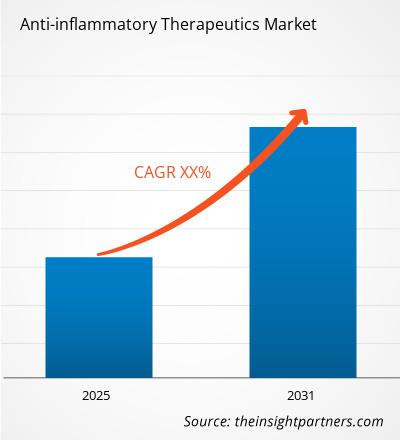
The anti-inflammatory therapeutics market is projected to grow from US$ 118.86 Billion in 2025 to US$ 182.02 Billion by 2034, registering a CAGR of 4.85% during 2026–2034. Demand is shaped by chronic immune-mediated disorders, respiratory inflammation, gastrointestinal disease burden, and continued reliance on NSAIDs, corticosteroids, and biologics across primary care, specialty clinics, and hospital treatment pathways.
In North America, advanced diagnosis, payer coverage for specialty therapies, and high biologic penetration support stable demand. The anti-inflammatory therapeutics market size in the region is expected to expand at a CAGR of 4.2–4.8% during 2026–2034, supported by rheumatology, gastroenterology, pulmonology, and neurology treatment pathways, along with wider use of targeted agents for relapsing and refractory inflammatory conditions.
Anti-inflammatory Therapeutics Market Assessment and Insights
- North America held 40–43% share in 2025 and is growing at a CAGR of 4.2–4.8% between 2026–2034, supported by specialty drug access, biologic utilization, and strong chronic disease diagnosis rates.
- US represented 86–90% share of North America in 2025 and is growing at a CAGR of 4.1–4.7% between 2026–2034, driven by specialty pharmacy networks and branded biologic uptake.
- Europe accounted for 27–30% share in 2025 and is growing at a CAGR of 4.0–4.6% between 2026–2034, led by Germany, the UK, France, Italy, and Spain.
- Asia Pacific captured 21–24% share in 2025 and is growing at a CAGR of 5.8–6.4% between 2026–2034, led by China, Japan, India, South Korea, and Australia.
- Largest Segment non-steroidal anti-inflammatory drugs held 42–47% market share in 2025, growing at a CAGR of 3.6–4.2% between 2026–2034, due to broad access and chronic pain use.
- High Growth Segment anti-inflammatory biologics held 31–36% market share in 2025, growing at a CAGR of 6.0–6.7% between 2026–2034, supported by targeted immune pathway innovation.
- Key companies analyzed in detail: AbbVie Inc., Pfizer Inc., GSK plc, Merck & Co., Inc., Novartis AG, F. Hoffmann-La Roche Ltd, Eli Lilly and Company, AstraZeneca PLC, Amgen Inc., and Johnson & Johnson Services, Inc.
Source: The Insight Partners' analysis based on proprietary research, government publications, company annual reports, investor presentations, industry databases, and expert interviews.
The evolution of treatments is from the blanket management of symptoms to pathway-targeted immunity modification. The use of NSAIDs for pain and inflammation is still common; however, more patients are being treated with biologics and targeted drugs where control of the condition, reducing the need for steroids, and achieving remission are key objectives. The manufacturing environment is also evolving in line with the need for greater precision for sterile biologics, pre-filled products, biosimilars, and cold chain.
Future growth drivers include the evolution of specialty care systems, biosimilar uptake, and regulatory approval of biomarker-based therapy. Asia-Pacific is set to benefit more rapidly through improved diagnosis of inflammatory bowel disease, asthma, and autoimmune diseases. Investment is going to be made into differentiated biologics, oral immunomodulators, and better patient adherence mechanisms.
Anti-inflammatory Therapeutics Market Report Scope
| Report Attribute | Details |
|---|---|
| Market size in 2025 | US$ 118.86 Billion |
| Market Size by 2034 | US$ 182.02 Billion |
| Global CAGR (2026 - 2034) | 4.85% |
| Historical Data | 2021-2024 |
| Forecast period | 2026-2034 |
Anti-inflammatory Therapeutics Market Analysis
Market growth drivers for anti-inflammatory treatments include increased prevalence of chronic inflammatory disorders, extended duration of therapy and growing adoption of maintenance therapy by doctors. WHO considers the treatment of noncommunicable diseases to be a key challenge for healthcare systems, and asthma, IBD, MS and respiratory inflammation are diseases that require ongoing treatment instead of intermittent. Thus, there will be recurring demand through prescriptions.
Value chain consists of active pharmaceutical ingredients, biologic cell culture, formulation, fill-finish, device manufacturing, cold storage logistics, specialty pharmacy distribution, formulary placement in hospitals, as well as electronic prescribing. Drivers of supply vary widely depending on drug type. For NSAIDs, supply is driven by economies of scale and competitive pricing, while corticosteroids depend on consistent availability of generics.
The anti-inflammatory therapeutics market analysis shows competition across blockbuster biologics, mature oral therapies, biosimilars, and emerging targeted products. AbbVie Inc., Johnson & Johnson Services, Inc., Eli Lilly and Company, Novartis AG, and Amgen Inc. continue to shape immunology portfolios through biologics and pathway-selective therapies.
Pfizer Inc., GSK plc, Merck & Co., Inc., F. Hoffmann-La Roche Ltd, and AstraZeneca PLC strengthen market breadth through respiratory, autoimmune, gastrointestinal, and hospital medicine channels. Strategic positioning depends on indication expansion, lifecycle management, biosimilar defense, payer negotiation, and evidence that therapies reduce exacerbations, relapses, steroid exposure, or hospital utilization.
● REPORT CUSTOMIZATION
Tailor This Report To Align With Your Specific Business Requirements
This report can be customized to align precisely with your business objectives, scope, and target markets. Customization options include tailored segmentation, geography, competitive analysis, and strategic insights to support informed decision-making.
Customize This Report →WHAT YOU CAN ADJUST
- ● Segmentations
- ● Geography
- ● Competitive Analysis
- ● Language Preferences
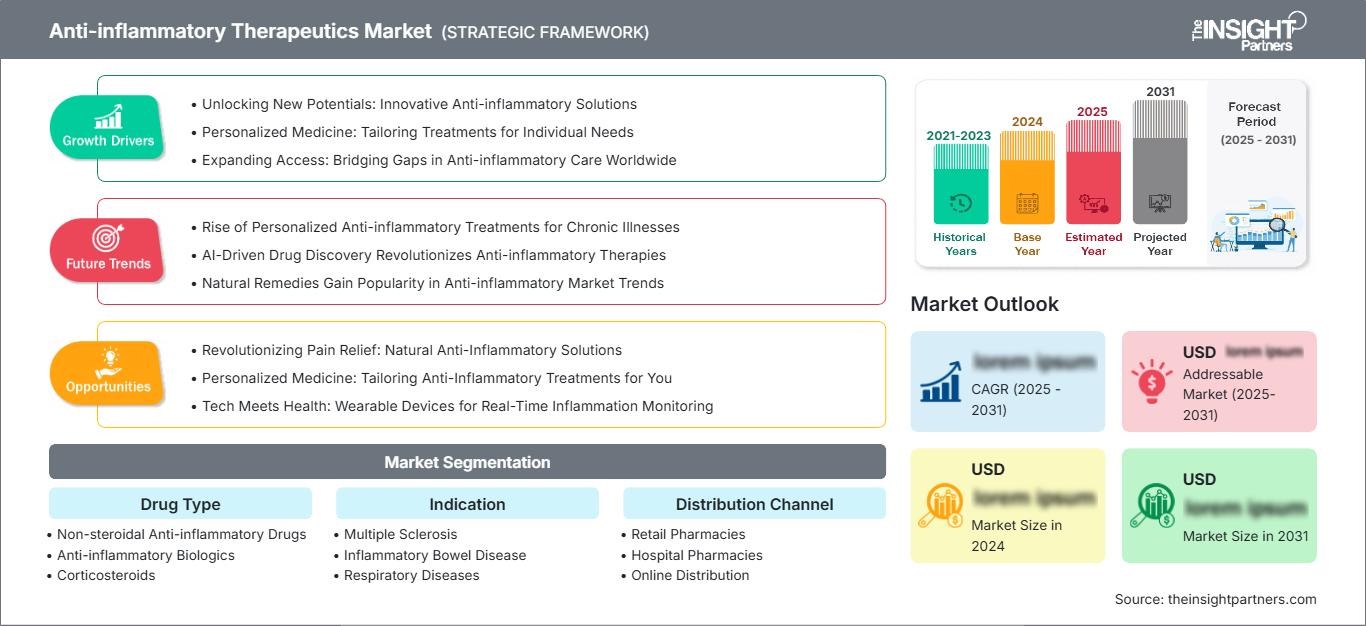
Anti-inflammatory Therapeutics Market: Strategic Insights
Regional Insights
North America anti-inflammatory therapeutics market
North America accounted for 40–43% share in 2025, giving the region the largest anti-inflammatory therapeutics market share globally. The region is growing at a CAGR of 4.2–4.8% during 2026–2034, supported by strong specialty physician access, advanced biologic prescribing, and payer systems that cover high-cost inflammatory disease therapies after step-edit evaluation.
The strengths in the region lie in its specialized pharmacies, its infusions, and strong diagnostics in asthma, inflammatory bowel disease, multiple sclerosis, and auto-immune conditions. The demand is high for biologics and targeted therapies, whereas the need for NSAIDS and corticosteroids is still present in primary care. Canada is the source of regular volume due to its drug plans, biosimilars, and chronic diseases programs.
U.S. anti-inflammatory therapeutics Market
The US represented 86–90% of North America in 2025 and is expanding at a CAGR of 4.1–4.7% during 2026–2034. Usage is concentrated across specialty clinics, hospital outpatient departments, retail pharmacies, and online refill channels serving patients with chronic inflammatory and immune-mediated diseases.
Company presence is deep. AbbVie Inc., Pfizer Inc., Eli Lilly and Company, Amgen Inc., Johnson & Johnson Services, Inc., GSK plc, and AstraZeneca PLC maintain strong commercial networks across immunology and respiratory treatment areas. Application trends are moving toward earlier biologic use in severe disease, steroid-sparing strategies, self-administration, and payer-managed treatment sequencing.
Europe anti-inflammatory therapeutics Market
Europe held a 27–30% share in 2025 and will register a CAGR of 4.0–4.6% during 2026–2034. The UK exhibits consistent demand via NHS pathways for asthma, inflammatory bowel disease, and multiple sclerosis. Usage of biosimilars and health technology assessment impacts prescription decisions in the public sector.
Germany is the market leader, driven by specialist density, high pharmaceutical expenditure, and wide availability of biologics. Prescribing is selective with NSAIDs and corticosteroids, and biologics are prescribed mainly in severe or refractory conditions. France, Italy, and Spain provide additional volume via hospital pharmacy sourcing, respiratory disease treatment, and increased outpatient biologic prescribing. Negotiation on prices and biosimilars drive biologic prescriptions in Europe.
The market environment in Europe is favorable towards those who can show comparative effectiveness, adherence value, and impact on the budget. Market players like Novartis AG, F. Hoffmann-La Roche Ltd, AstraZeneca PLC, GSK plc, and Johnson & Johnson Services, Inc. are benefited by their established experience in regulation, while biosimilars affect the matured biologic franchises.
APAC anti-inflammatory therapeutics Market
APAC accounted for 21–24% share in 2025 and is growing at a CAGR of 5.8–6.4% during 2026–2034, the fastest regional pace. China is the leading country by treated population scale, while Japan and South Korea lead in biologic adoption and specialist care maturity.
India and Australia add growth through expanding retail pharmacy networks, asthma treatment programs, and rising access to gastroenterology and neurology care. Industrial drivers include domestic biologic manufacturing, biosimilar development, and digital pharmacy adoption. Policy focuses on broader medicine access and chronic disease control supports expansion beyond major metropolitan centers.
Middle East & Africa anti-inflammatory therapeutics Market
Middle East & Africa is growing at a CAGR of 4.9–5.5% during 2026–2034, with Saudi Arabia as the leading country. The UAE remains a premium specialty-care hub, supported by private insurance, advanced hospitals, and demand for biologics in respiratory and autoimmune conditions.
South Africa and the Rest of MEA show more uneven access because biologics remain concentrated in tertiary hospitals and private channels. Energy-linked healthcare investment in Gulf countries supports specialty medicine procurement, while broader adoption depends on affordability, physician availability, cold-chain infrastructure, and consistent public-sector reimbursement.
Segmentation Analysis
Drug Type
The Drug Type segment is growing at a CAGR of 4.5–5.1% during 2026–2034. The anti-inflammatory therapeutics market scope by drug type is defined by cost, disease severity, route of administration, and treatment duration. NSAIDs dominate volume because of broad use, while biologics drive value in severe immune-mediated disease. Corticosteroids remain indispensable for acute control despite toxicity concerns.
- Non-steroidal Anti-inflammatory Drugs remain the largest volume category because they are widely prescribed for pain, fever, musculoskeletal inflammation, and short-term symptom control across retail and hospital settings.
- Anti-inflammatory Biologics are strategically important where targeted immune modulation, remission induction, and steroid reduction are required in severe asthma, inflammatory bowel disease, and autoimmune disorders.
- Corticosteroids retain clinical relevance for acute flares, respiratory exacerbations, and induction regimens, although long-term use is constrained by metabolic, bone, infection, and cardiovascular risks.
Indication
The Indication segment is growing at a CAGR of 4.8–5.4% during 2026–2034. Demand differs by disease burden and treatment intensity. Multiple sclerosis and inflammatory bowel disease require long-term specialty management, respiratory diseases create broad prescribing volume, and asthma is shifting toward phenotype-guided biologic use in severe uncontrolled patients.
- Multiple Sclerosis demand is driven by relapse prevention, neuroinflammation control, specialist monitoring, and high-value therapies that aim to slow disability progression in chronic immune-mediated disease.
- Inflammatory Bowel Disease is a major value contributor because ulcerative colitis and Crohn’s disease increasingly require biologics, targeted oral agents, endoscopic monitoring, and long-term maintenance therapy.
- Respiratory Diseases generate broad demand through COPD, chronic airway inflammation, and exacerbation management, with corticosteroids and biologics used according to disease severity and phenotype.
- Asthma is gaining strategic importance as severe eosinophilic and type 2 inflammation patients move toward biologics that reduce exacerbations, emergency visits, and oral steroid dependence.
Distribution Channel
The Distribution Channel segment is growing at a CAGR of 4.6–5.2% during 2026–2034. Retail pharmacies dominate routine NSAID, corticosteroid, and maintenance prescription access, while hospital pharmacies remain central for infusion biologics and complex inpatient care. Online distribution is scaling as chronic therapy refills, home delivery, and digital adherence support become more accepted.
- Retail Pharmacies lead broad access because they support recurring prescriptions, OTC anti-inflammatory products, pharmacist counseling, and community-level continuity for chronic and acute inflammatory conditions.
- Hospital Pharmacies remain essential for biologic initiation, infusion therapy, severe exacerbation care, formulary control, and complex patients requiring specialist-supervised treatment.
- Online Distribution is expanding through digital prescription refills, home delivery, specialty pharmacy coordination, and adherence support for stable patients using long-term anti-inflammatory therapies.
Opportunity Snapshot
| Segment Name | Revenue Contribution | Trend Tag | Adoption Stage |
|---|---|---|---|
| Multiple Sclerosis | High | Neuroimmune Care | Mature |
| Inflammatory Bowel Disease | High | Gut Remission | Scaling |
| Respiratory Diseases | Medium | Airway Control | Mature |
| Asthma | High | Type2 Biologics | Scaling |
Anti-inflammatory Therapeutics Market Growth Drivers and Impact Analysis
Rising Chronic Immune-Mediated Disease Burden
Inflammation conditions involve repeated treatments, regular checkups, and long-term changes in medication, which makes them structurally valuable in generating revenues. Conditions like asthma, inflammatory bowel disease, multiple sclerosis, and respiratory inflammation become the demand source due to the possibility of having exacerbations and worsening of quality of life without treatment. The economic value of this structural feature can be seen in an increased number of maintenance biologics, targeted immunomodulators, and steroids-sparing approaches. It is also worth mentioning that companies who can prove their ability to reduce relapses, emergency room visits, endoscopy activity, and/or exacerbations attract payers' attention more.
Expansion of Targeted Biologics and Oral Immunomodulators
The innovation in therapeutic treatments is gradually moving from broad inhibition to inhibition of particular cytokines, receptors, and intracellular inflammatory pathways. Treatments that focus on interleukin inhibitors, TNF inhibitors, B cell depleters, and type 2 inflammation have altered the perspective of specialists in dealing with severe conditions, whereas oral targeted medications have helped in enhancing the accessibility of drugs for selected patients. The market implications of innovation include higher value per patient and rapid transition from symptomatic control to disease modification. Nevertheless, adoption is dependent on relative efficacy data, safety surveillance, and payers’ sequencing.
Improved Access Through Specialty and Digital Pharmacy Models
Distribution is becoming a strategic growth driver as more inflammatory disease treatments require refrigeration, injection training, adherence tracking, and reimbursement support. Specialty pharmacies help coordinate biologic delivery, patient education, and refill persistence, while online platforms improve convenience for chronic prescriptions. This matters because missed doses can increase relapse, flare, or exacerbation risk. The commercial impact is stronger therapy continuity and higher patient retention, especially for self-administered biologics and long-term respiratory or gastrointestinal treatments. Companies with patient support programs, digital reminders, and payer documentation tools are better positioned to reduce drop-off during therapy initiation and maintenance.
Anti-inflammatory Therapeutics Market Future Trends
Biomarker-Guided Treatment Selection
The next phase of anti-inflammatory therapeutics market trends will emphasize biomarkers that identify which patients benefit from specific therapies. Eosinophil counts, C-reactive protein, fecal calprotectin, imaging, endoscopy, genetic markers, and immune signatures can help physicians choose treatment earlier and avoid ineffective sequences. This trend will influence trial design and payer decisions because validated markers can improve response rates and reduce wasted spending. Companies with companion diagnostics, real-world evidence, and disease stratification tools will gain stronger positioning. Biomarker use will be especially relevant in asthma, inflammatory bowel disease, and multiple sclerosis.
Lower-Burden Dosing and Home Administration
Future competition will increasingly focus on reducing treatment burden through longer dosing intervals, prefilled devices, autoinjectors, and home administration support. Patients with chronic inflammatory diseases often remain on therapy for years, making convenience a major factor in adherence and brand preference. Manufacturers are expected to optimize formulations that reduce clinic visits while maintaining efficacy and safety. The trend will also shift revenue capture toward specialty pharmacy and online distribution channels. Health systems may prefer therapies that lower infusion center demand, reduce nursing time, and improve continuity for stable patients.
Anti-inflammatory Therapeutics Market Opportunities
Biosimilar-Led Access Expansion
Biosimilar adoption creates an investment opportunity by widening access to biologic anti-inflammatory therapy while reducing payer pressure. The anti-inflammatory therapeutics market Forecasts support greater use of biosimilars in rheumatology, gastroenterology, dermatology-adjacent inflammatory care, and respiratory immunology where originator biologics have high budget impact. Companies can capture value through reliable supply, physician education, interchangeability strategies, and patient support. Hospitals and payers benefit from lower acquisition costs, while manufacturers can expand volume in price-sensitive regions. Success will depend on trust, pharmacovigilance, tender performance, and consistent outcomes compared with reference products.
Integrated Severe Asthma and IBD Care Pathways
Severe asthma and inflammatory bowel disease offer strong opportunities because both require specialist diagnosis, objective monitoring, and long-term treatment optimization. Companies can support care pathways with biomarker testing, patient identification tools, nurse education, and adherence programs. In asthma, biologics can reduce exacerbations and oral steroid exposure, while in IBD, therapy goals increasingly include mucosal healing and sustained remission. Commercial teams should focus on centers that can track outcomes and manage therapy transitions efficiently. This opportunity favors companies with differentiated mechanisms, convenient dosing, and evidence that supports earlier intervention in high-risk patients.
Recent Developments
- January 2026: Novartis AG received US FDA Breakthrough Therapy designation for ianalumab in Sjögren’s disease. The company stated that the designation was supported by clinical evidence from phase III trials and that global regulatory submissions were planned from early 2026 for a potential first targeted treatment in this autoimmune disease.
- December 2025: GSK plc received FDA approval for Exdensur, depemokimab, as an add-on maintenance therapy for severe eosinophilic asthma in patients aged 12 years and older. The ultra-long-acting anti-IL-5 biologic is administered every 6 months and was supported by SWIFT trial exacerbation reduction data.
- October 2025: Eli Lilly and Company received US FDA approval for a single-injection, once-monthly maintenance regimen of Omvoh for adults with moderately to severely active ulcerative colitis. The company said the simplified formulation would replace the prior two-injection maintenance regimen and become available for US patients in early 2026.
Frequently Asked Questions

- Comprehensive Market Sizing and Forecast Analysis
- Detailed Segmentation Analysis
- In-Depth Market Dynamics Assessment
- Regional and Country-Level Insights
- Competitive Landscape and Company Benchmarking
- Strategic Business Intelligence
Recent Reports
Testimonials

The Insight Partners' SCADA System Market report is comprehensive, with valuable insights on current trends and future forecasts. The team was highly professional, responsive, and supportive throughout. We are very satisfied and highly recommend their services.
RAN KEDEM Partner, Reali Technologies LTDs
I requested a report on a very specific software market and the team produced the report in a few days. The information was very relevant and well presented. I then requested some changes and additions to the report. The team was again very responsive and I got the final report in less than a week.
JEAN-HERVE JENN Chairman, Future Analytica
We worked with The Insight Partners for an important market study and forecast. They gave us clear insights into opportunities and risks, which helped shape our plans. Their research was easy to use and based on solid data. It helped us make smart, confident decisions. We highly recommend them.
PIYUSH NAGPAL Sr. Vice President, High Beam Global
The Insight Partners delivered insightful, well-structured market research with strong domain expertise. Their team was professional and responsive throughout. The user-friendly website made accessing industry reports seamless. We highly recommend them for reliable, high-quality research services
YUKIHIKO ADACHI CEO, Deep Blue, LLC.
This is the first time I have purchased a market report from The Insight Partners.While I was unsure at first, I visited their web site and felt more comfortable to take the risk and purchase a market report.I am completely satisfied with the quality of the report and customer service. I had several questions and comments with the initial report, but after a couple of dialogs over email with their analyst I believe I have a report that I can use as input to our strategic planning process.Thank you so much for taking the extra time and making this a positive experience.I will definitely recommend your service to others and you will be my first call when we need further market data.
JOHN SUZUKI President and Chief Executive Officer, Board Director, BK Technologies
I wish to appreciate your support and the professionalism you displayed in the course of attending to my request for information regarding to infectious disease IVD market in Nigeria. I appreciate your patience, your guidance, and the fact that you were willing to offer a discount, which eventually made it possible for us to close a deal. I look forward to engaging The Insight Partners in the future, all thanks to the impression you have created in me as a result of this first encounter.
DR CHIJIOKE ONYIA MANAGING DIRECTOR, PineCrest Healthcare Ltd.Reason to Buy
- Informed Decision-Making
- Understanding Market Dynamics
- Competitive Analysis
- Identifying Emerging Markets
- Customer Insights
- Market Forecasts
- Risk Mitigation
- Boosting Operational Efficiency
- Strategic Planning
- Investment Justification
- Tracking Industry Innovations
- Aligning with Regulatory Trends





 Get Free Sample for