
Arterial Cannulae Market Growth, Demand & Size by 2034
Coverage: By Product (Optiflow Arterial Cannulae, Standard Arterial Cannulae, Soft-flow Arterial Cannulae); Material (Silicone, Metals, Others); End User (Hospitals, Ambulatory Surgical Centers, Others); , and Geography (North America, Europe, Asia Pacific, and South and Central America)
- Status : Data Released
- Report Code : TIPRE00006868
- Category : Life Sciences
- No. of Pages : 150
- Available Report Formats :


- Last update date : September 01, 2026


2025 Market Size
US$ 22.46 Mn
Base year value
2034 Forecast
US$ 37.26 Mn
Projected by 2034
CAGR 2026-2034
5.79 %
Growth rate
Addressable Market
US$ 270.68 Mn
(2026-2034)
The global Arterial Cannulae market was valued at US$ 22.46 million in 2025 and is expected to reach US$ 37.26 million by 2034; it is estimated to record a CAGR of 5.79% during 2026-2034.
Arterial Cannulae Market Assessment and Insights
- North America: North America is expected to account for a 34–38% share in 2025 and grow at a 5.5–6.5% CAGR between 2026–2034, supported by mature cardiac surgery centers, specialized perfusion services, and established procurement channels.
- US: The US is estimated to represent 82–86% of North American revenue in 2025 and expand at a 5.4–6.4% CAGR during 2026–2034, led by advanced cardiac centers and replacement demand.
- Europe: Europe is projected to hold a 27–31% share in 2025 and register a 5.8–6.8% CAGR through 2034, with Germany, the UK, France, Italy, and Spain supporting demand through established cardiovascular surgery networks.
- Asia Pacific: Asia Pacific is expected to capture a 21–25% share in 2025 and grow at a 7.0–8.0% CAGR during 2026–2034, led by China, Japan, India, South Korea, and Australia as cardiac procedure capacity expands.
- Largest Segment: Standard Arterial Cannulae are estimated to hold a 42–47% market share in 2025 and expand at a 5.5–6.5% CAGR, reflecting broad procedural applicability.
- High Growth Segment: Optiflow Arterial Cannulae are estimated to hold a 23–28% market share in 2025 and grow at a 7.0–8.0% CAGR, supported by flow optimization.
- Key companies analyzed in detail: MC3 Cardiopulmonary, Getinge AB, Becton, Dickinson and Company, Edwards Lifesciences Corporation, LivaNova PLC, Sorin Group Italia S.r.l., Braile Biomédica, Eurosets, Andocor N.V., Cardinal Health.
Source: The Insight Partners' analysis based on proprietary research, government publications, company annual reports, investor presentations, industry databases, and expert interviews.
From rigid cannulae and basic flexible cannulae, the arterial cannulae market has moved to more advanced versions that emphasize on flow control, resistance to kinking, ease of insertion and compatability with extracorporeal circuits. Differentiation among products includes geometry of the tip, reinforcement methods, coatings and cannula size. For instance, LivaNova currently sells its Optiflow arterial products with reinforced tubing together with its PureFlex arterial cannulae range.
Future development will revolve around smaller access profiles, superior flow characteristics, better biocompatibility and customized design for specific procedures. Emerging healthcare delivery systems in Asia Pacific and select Latin American regions provide potential growth avenues as the capability for performing cardiovascular surgeries grows. Regulation will be important considering that the cannula's performance has an effect on perfusion, vascular integrity, blood compatibility and extracorporeal circuit safety.
Arterial Cannulae Market Report Scope
| Report Attribute | Details |
|---|---|
| Market size in 2025 | US$ 22.46 Million |
| Market Size by 2034 | US$ 37.26 Million |
| Global CAGR (2026 - 2034) | 5.79% |
| Historical Data | 2021-2024 |
| Forecast period | 2026-2034 |
Arterial Cannulae Market Analysis
The growth in the arterial cannulae market will be driven by cardiopulmonary bypass procedures, extracorporeal circulation, minimally invasive cardiac surgery, and perfusion applications. The demand is created primarily by the hospitals and cardiovascular centers that choose between types of cannula depending on the procedure being conducted, anatomy of the patient, target flow rate, the location of cannulation and the suitability of the product for the extracorporeal circuit.
The supply chain includes the suppliers of polymers and metals, component suppliers, cannula molding and forming, coating services, sterilization partners, distributors, hospitals and perfusion teams. The economics of manufacturing will depend on the choice of material, type of reinforcement, sterilization, quality control requirements and volume. Size-portfolio suppliers will benefit from better procurement efficiencies as they would enable multiple procedures from one platform while specialized designs get attention when flow management and difficult access is clinically important.
According to the market analysis, there is a competitive environment in the market for arterial cannulae with a number of large cardiovascular device producers along with specialist extracorporeal technology manufacturers. The market leaders include Edwards Lifesciences Corporation, Getinge AB, LivaNova PLC, and Becton, Dickinson and Company as they have the scale, regulatory capabilities and hospital contacts. The specialist manufacturers include MC3 Cardiopulmonary and Eurosets. Braile Biomédica and Andocor N.V. offer additional competitive pressures to the market.
Portfolio becomes the most important aspect of strategic positioning rather than just a configuration of the cannulae. The portfolio of LivaNova PLC consists of multiple geometries of arterial cannulae including reinforced ones. On the other hand, Getinge AB puts an emphasis on arterial and venous HLS cannulae suitable for extracorporeal circulation. The Getinge portfolio includes different sizes, insertion lengths, reinforcement and coating properties. Therefore, the investment in the product is oriented towards its development, regulation, manufacturing and usability by surgeons and perfusionists.
● REPORT CUSTOMIZATION
Tailor This Report To Align With Your Specific Business Requirements
This report can be customized to align precisely with your business objectives, scope, and target markets. Customization options include tailored segmentation, geography, competitive analysis, and strategic insights to support informed decision-making.
Customize This Report →WHAT YOU CAN ADJUST
- ● Segmentations
- ● Geography
- ● Competitive Analysis
- ● Language Preferences
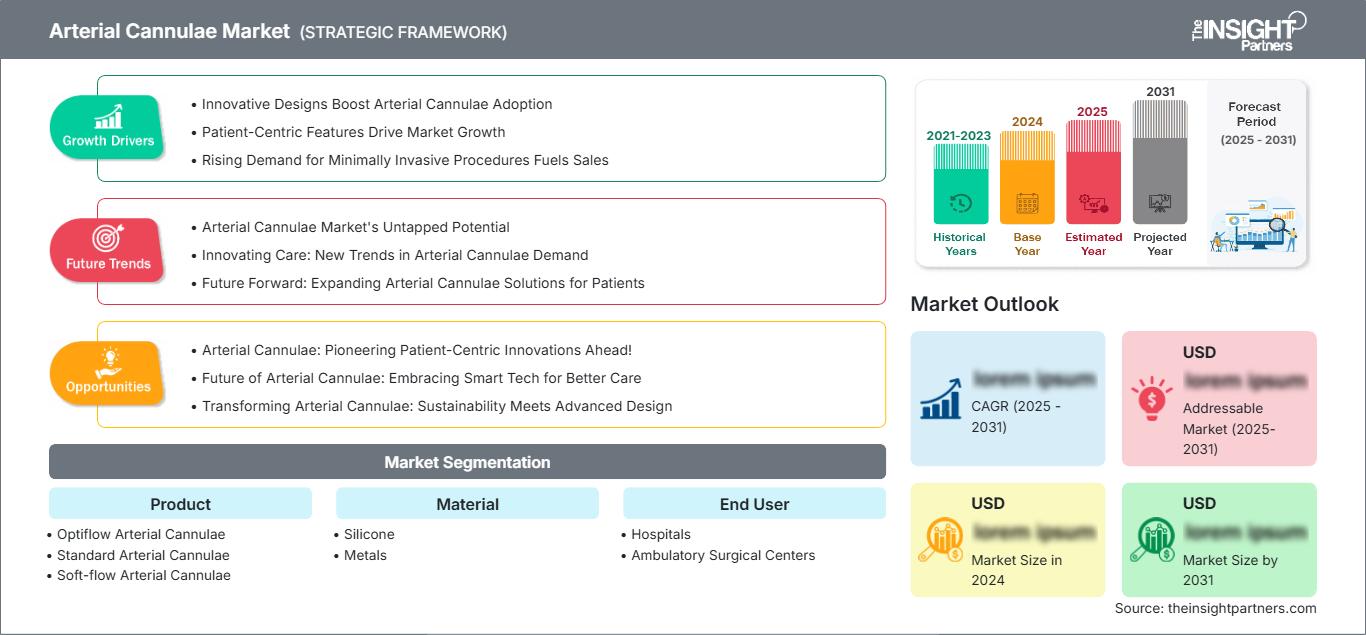
Arterial Cannulae Market: Strategic Insights
Regional Insights
North America arterial cannulae market
North America is estimated to represent 34–38% of the arterial cannulae market share in 2025 and is projected to grow at a 5.5–6.5% CAGR through 2034. US dominance in the regional market can be attributed to the availability of state-of-the-art cardiovascular surgery facilities, dedicated perfusion units, and efficient procurement mechanisms. The contributions from Canada include tertiary cardiac centers and the need for reliable supply of standard extracorporeal products in the nationalized health care systems.
Structural factors underlying demand in the region include widespread adoption of advanced cardiopulmonary techniques and regular replacement cycles for disposable products. Hospitals increasingly assess the performance of cannulas based on their flow characteristics, reinforcement, and compatibility with existing circuits. Recalls and product surveillance further emphasize the importance of quality and traceability during the procurement process. The region will continue to offer favorable prospects with manufacturers competing on the basis of clinical support, product offering, compliance, and supply efficiency.
U.S. arterial cannulae market Market
The US is estimated to account for 82–86% of North American arterial cannulae market revenue in 2025, with a projected 5.4–6.4% CAGR through 2034. The demand exists among hospitals that offer heart surgery, vascular surgery, and extracorporeal therapy. Edwards Lifesciences Corporation, Getinge AB, and LivaNova PLC have appropriate product portfolios for cardiovascular and cannulation products.
Use has been shifting to favor products chosen based on perfusion needs, cannulation sites, nature of blood vessels, and surgical time. Quality, sterile packaging, regulatory compliance, and availability are part of the considerations when choosing products along with the clinical consideration. Edwards Lifesciences has faced a corrective action from the US FDA in May 2025 regarding some of its arterial cannula due to possible wire exposure.
Europe arterial cannulae market Market
Europe is estimated to hold a 27–31% share in 2025 and expand at a 5.8–6.8% CAGR through 2034. Germany is the leading country, followed by the UK, France, Italy, and Spain, supported by established cardiac centers and sophisticated extracorporeal therapy infrastructure.
The UK and Germany continue to be crucial market opportunities due to the presence of cardiac specialists who have organized perfusion services and procurement processes. The German economy profits from its robust device industry, while the UK focuses on centralization and clinical management of procurement activities. Other markets in Europe that include France, Italy, and Spain can be tapped through the presence of surgical operations in cardiology and public health systems. Procurement in Europe now focuses on reliability, compliance documents, sterilization, and compatibility with the existing bypass systems.
APAC arterial cannulae market Market
APAC is estimated to account for 21–25% of the arterial cannulae market in 2025 and is projected to expand at a 7.0–8.0% CAGR through 2034. China is the leading market, followed by Japan, South Korea, India, and Australia.
Expansion of cardiac surgery capacity, upgrading of hospitals, indigenous production of medical devices, and government spending on healthcare form the base for growth. Both China and India have huge potential volume wise whereas Japan and South Korea are more concerned about quality-based specialized cardiovascular products. Tertiary healthcare facilities are already in place in Australia. The growth of industries has also boosted local production.
Middle East & Africa arterial cannulae market Market
Middle East and Africa represent a smaller but increasingly relevant demand pool, with Saudi Arabia leading regional adoption, followed by the UAE and South Africa. The region is projected to expand at a 5.0–6.0% CAGR through 2034 as cardiac centers and specialized hospitals expand.
Saudi Arabia and the UAE are investing in advanced hospital infrastructure and specialist surgical capacity, while South Africa serves as an important referral market. Rest of MEA demand remains more fragmented and dependent on imported devices, distributor capabilities, and tertiary hospital availability. Infrastructure investment, healthcare localization, and specialist training are likely to influence adoption more strongly than standalone demographic expansion, creating opportunities for manufacturers able to provide dependable supply and technical support.
Segmentation Analysis
Product
The Product segment is expected to expand at a 6.0–7.0% CAGR during 2026–2034. Product selection is strongly influenced by required blood flow, cannulation site, procedural duration, surgeon preference, and compatibility with extracorporeal circuits. Manufacturers are increasingly differentiating products through reinforced bodies, optimized tips, and flow-oriented designs.
- Optiflow Arterial Cannulae: These products address procedures requiring controlled arterial perfusion and efficient flow characteristics. Their strategic importance is increasing as perfusion teams evaluate cannula geometry, pressure behavior, reinforcement, and insertion performance.
- Standard Arterial Cannulae: Standard designs remain important because they address routine cardiopulmonary bypass requirements across established hospitals. Broad size availability and familiar handling support continued procurement, particularly where clinicians prioritize predictable performance.
- Soft-flow Arterial Cannulae: Soft-flow designs emphasize gentler blood handling and controlled perfusion characteristics. Their relevance is associated with procedure-specific preferences where cannula tip behavior, flow distribution, and tissue interaction require careful consideration.
- Others: These configurations serve specialized procedural requirements and niche anatomical or extracorporeal applications. Their importance is linked to customized clinical workflows and demand for alternatives to conventional arterial access designs.
Material
The Material segment is forecast to grow at a 5.5–6.5% CAGR between 2026–2034. Material engineering affects flexibility, structural integrity, blood-contacting behavior, manufacturability, and resistance to deformation. Product developers balance these properties against sterilization requirements and procedural handling.
- Silicone: Silicone-based components provide flexibility and established biocompatibility characteristics. Demand is supported by applications requiring soft handling and controlled mechanical behavior, although design requirements differ according to cannula construction and reinforcement.
- Metals: Metals are primarily relevant where structural support, rigidity, or reinforcement is required. Their strategic role is strongest in specialized constructions where mechanical stability must be balanced against insertion characteristics and device geometry.
End User
The End User segment is projected to grow at a 6.0–7.0% CAGR during 2026–2034. Hospitals remain the principal purchasing environment because arterial cannulae are closely associated with complex cardiac and extracorporeal procedures. Ambulatory Surgical Centers are gaining relevance selectively as procedural decentralization progresses.
- Hospitals: Hospitals represent the core demand base because cardiac surgery, extracorporeal circulation, and complex cardiovascular interventions require specialized operating-room and perfusion infrastructure. Procurement is influenced by clinical protocols, product availability, and quality assurance.
- Ambulatory Surgical Centers: Ambulatory Surgical Centers provide a smaller opportunity pool, primarily where cardiovascular procedures can be safely performed outside major inpatient settings. Adoption depends on procedure complexity, physician capability, equipment availability, and reimbursement structures.
Opportunity Snapshot
| End User | Revenue Contribution (High/Medium/Low) | Trend Tag | Adoption Stage |
|---|---|---|---|
| Hospitals | High | Cardiac Bypass | Mature |
| Ambulatory Surgical Centers | Medium | Outpatient Cardiac | Scaling |
Arterial Cannulae Market Growth Drivers and Impact Analysis
Expansion of Cardiopulmonary Bypass Procedures
The underlying requirement for arterial cannulae is reinforced by continued utilization of cardiopulmonary bypass in cardiac surgery. With hospitals increasingly offering their services for complex coronary, valve, aortic and hybrid surgeries, the need for reliable arterial access devices will be on the rise. Impact of the market will go beyond the volume of sales, since procedural complexities will favor the adoption of special sizes, reinforced construction, and flow-optimization in the design. Increased complexities of the procedures will increase the influence of surgeons and perfusionists’ preferences, thus making technically different devices competitive in winning procurement deals. Companies with wide product range will be able to cater to various cannulation techniques without having hospitals deal with different suppliers.
Preference for Safer and More Controlled Cannulation
The growing clinical focus on device reliability in the arterial cannulae market is making the strategic value of certain design elements more evident, including the predictability of their insertion, stable placement, resistance to kinking, and controlled perfusion. The behavior of arterial cannulas can affect the quality of the extracorporeal circuit as well as the stability of the blood flow during bypass surgery. This leads to increased investments by the manufacturers in such components as reinforcement, geometry of the tip, coatings, connectors, and insertion devices. The result is a slow but steady move away from price-only consideration in choosing arterial cannulas to assessments that include process and risk management issues.
Growth of Specialized Cardiovascular Infrastructure
Expansion of tertiary cardiac hospitals in emerging economies is broadening the addressable customer base for advanced perfusion products. New cardiovascular centers require complete procedural ecosystems, including heart-lung machines, oxygenators, tubing systems, cannulae, monitoring devices, and related disposables. Arterial cannulae therefore benefit from infrastructure expansion even when they represent a relatively small portion of total procedural expenditure. The commercial opportunity is particularly relevant in Asia Pacific and selected Middle Eastern markets, where hospital modernization can increase demand for imported and locally manufactured cardiovascular devices. Suppliers can capture this opportunity through regional distributors, training programs, localized regulatory registrations, and portfolio configurations aligned with local surgical practice. These strategies can also reduce dependence on mature replacement markets.
Arterial Cannulae Market Future Trends
Greater Integration of Flow-Optimized Cannula Designs
The arterial cannulae market trends are expected to increasingly emphasize flow optimization rather than basic access functionality. Future designs may combine thinner walls, reinforced structures, optimized internal diameters, improved tip profiles, and application-specific curvature to support efficient perfusion while maintaining mechanical stability. Manufacturers are also likely to refine coating technologies and blood-contacting surfaces as hospitals seek products that integrate reliably with extracorporeal circuits. Product development will increasingly use simulation, bench testing, and procedural feedback to assess pressure behavior and flow distribution before commercialization. These developments could expand premium product categories and encourage hospitals to segment procurement according to procedural requirements rather than relying on a single standard cannula configuration across all cardiac procedures.
Increasing Product Customization for Procedure-Specific Access
The arterial cannulae market report shows that future product portfolios are likely to become more modular and procedure-specific, particularly as minimally invasive and peripheral cannulation techniques evolve. Manufacturers may differentiate configurations by access location, patient size, flow requirement, insertion method, and reinforcement profile. This could increase the number of commercially viable product variants while reducing the relevance of one-size-fits-all procurement strategies. Digital product catalogs and configuration tools may also simplify selection by allowing clinicians to compare dimensions, connectors, coatings, and insertion characteristics before ordering. Such customization can strengthen supplier relationships because hospitals may value clinical workflow compatibility over the lowest acquisition price. The result could be a gradual premiumization of specialized arterial cannula products in mature cardiovascular markets.
Arterial Cannulae Market Opportunities
Localized Manufacturing in High-Growth Healthcare Markets
The arterial cannulae market Forecasts indicate that localization can become an important strategic opportunity in countries where cardiovascular procedure volumes are expanding but imported medical devices remain exposed to currency, logistics, and procurement constraints. Local manufacturing or regional assembly can shorten supply chains, improve tender competitiveness, and support faster product customization. India, China, Brazil, and selected Middle Eastern economies offer potential platforms for manufacturing partnerships because they combine growing healthcare infrastructure with established medical-device ecosystems. Companies entering these markets should prioritize regulatory registration, sterile manufacturing capability, quality systems, and surgeon education. Partnerships with domestic distributors or contract manufacturers can reduce market-entry risk while enabling international companies to retain technology and quality oversight.
Strategic Partnerships Around Extracorporeal Procedure Ecosystems
An attractive investment pathway is to build partnerships that connect arterial cannula suppliers with broader extracorporeal and cardiovascular procedure platforms. Hospitals increasingly procure interoperable combinations of oxygenators, tubing sets, perfusion accessories, cannulae, and monitoring technologies. Suppliers can therefore create greater account value by ensuring compatibility across products rather than selling cannulae as isolated components. Partnerships with heart-lung machine manufacturers, perfusion technology providers, regional distributors, and specialized cardiac centers can accelerate adoption and generate clinical feedback for product development. The arterial cannulae Report can support such strategies by mapping product portfolios, regional procurement structures, competitor capabilities, and potential white spaces. Strategic alliances should prioritize regulatory compatibility and documented clinical usability.
Recent Developments
- July 2025: LivaNova PLC received US FDA clearance for the RAP Femoral Venous Cannulae, following a January 2025 submission. Although the device is venous rather than arterial, the regulatory action demonstrates continued portfolio development within LivaNova's cannula franchise and supports its broader extracorporeal access strategy.
- July 2025: Getinge AB issued an updated Instructions for Use following a Class I correction involving the VasoView HemoPro 2 endoscopic vessel harvesting systems. The action illustrates continued post-market quality management for cardiovascular devices and reinforces the importance of product-use documentation, material integrity, and risk controls across Getinge's cardiovascular portfolio.
- May 2025: Edwards Lifesciences Corporation initiated a field corrective action for selected OptiSite arterial perfusion and peripheral femoral arterial cannulae because of a potential wire-exposure risk. The FDA stated that the affected products were intended for adult cardiopulmonary bypass and that no serious injuries or deaths had been reported as of May 20, 2025.
Frequently Asked Questions

- Comprehensive Market Sizing and Forecast Analysis
- Detailed Segmentation Analysis
- In-Depth Market Dynamics Assessment
- Regional and Country-Level Insights
- Competitive Landscape and Company Benchmarking
- Strategic Business Intelligence
Recent Reports
Testimonials

The Insight Partners' SCADA System Market report is comprehensive, with valuable insights on current trends and future forecasts. The team was highly professional, responsive, and supportive throughout. We are very satisfied and highly recommend their services.
RAN KEDEM Partner, Reali Technologies LTDs
I requested a report on a very specific software market and the team produced the report in a few days. The information was very relevant and well presented. I then requested some changes and additions to the report. The team was again very responsive and I got the final report in less than a week.
JEAN-HERVE JENN Chairman, Future Analytica
We worked with The Insight Partners for an important market study and forecast. They gave us clear insights into opportunities and risks, which helped shape our plans. Their research was easy to use and based on solid data. It helped us make smart, confident decisions. We highly recommend them.
PIYUSH NAGPAL Sr. Vice President, High Beam Global
The Insight Partners delivered insightful, well-structured market research with strong domain expertise. Their team was professional and responsive throughout. The user-friendly website made accessing industry reports seamless. We highly recommend them for reliable, high-quality research services
YUKIHIKO ADACHI CEO, Deep Blue, LLC.
This is the first time I have purchased a market report from The Insight Partners.While I was unsure at first, I visited their web site and felt more comfortable to take the risk and purchase a market report.I am completely satisfied with the quality of the report and customer service. I had several questions and comments with the initial report, but after a couple of dialogs over email with their analyst I believe I have a report that I can use as input to our strategic planning process.Thank you so much for taking the extra time and making this a positive experience.I will definitely recommend your service to others and you will be my first call when we need further market data.
JOHN SUZUKI President and Chief Executive Officer, Board Director, BK Technologies
I wish to appreciate your support and the professionalism you displayed in the course of attending to my request for information regarding to infectious disease IVD market in Nigeria. I appreciate your patience, your guidance, and the fact that you were willing to offer a discount, which eventually made it possible for us to close a deal. I look forward to engaging The Insight Partners in the future, all thanks to the impression you have created in me as a result of this first encounter.
DR CHIJIOKE ONYIA MANAGING DIRECTOR, PineCrest Healthcare Ltd.Reason to Buy
- Informed Decision-Making
- Understanding Market Dynamics
- Competitive Analysis
- Identifying Emerging Markets
- Customer Insights
- Market Forecasts
- Risk Mitigation
- Boosting Operational Efficiency
- Strategic Planning
- Investment Justification
- Tracking Industry Innovations
- Aligning with Regulatory Trends





 Get Free Sample for