
Arthropod- borne Viral Infections testing Market Trends, Size & Forecast by 2034
Coverage: By Test Type (Cultural tests, Immunoassays, Molecular tests, Others); End User (Research Centers, Hospitals, Diagnostic Centers), and Geography (North America, Europe, Asia Pacific, and South and Central America)
- Status : Data Released
- Report Code : TIPRE00014434
- Category : Life Sciences
- No. of Pages : 150
- Available Report Formats :


- Last update date : September 09, 2026


2025 Market Size
US$ 1.54 Bn
Base year value
2034 Forecast
US$ 2.49 Bn
Projected by 2034
CAGR 2026-2034
5.51 %
Growth rate
Addressable Market
US$ 18.30 Bn
(2026-2034)
The arthropod- borne viral infections testing market size was valued at US$ 1.54 Billion in 2025 and is projected to reach US$ 2.49 Billion by 2034, expanding at a 5.51% CAGR from 2026 to 2034. Growth reflects persistent dengue transmission, increasing recognition of chikungunya and Zika, broader laboratory surveillance, and rising adoption of molecular and immunological diagnostic technologies across hospitals, diagnostic centers, and research institutions.
Increasing diagnostic demand in North America is supported by surveillance infrastructure, preparedness programs, travel-associated infections, and improved access to laboratory confirmation. The regional market is expected to expand at approximately 4.8–5.3% CAGR during 2026–2034, with hospitals and public health laboratories remaining important testing locations as molecular confirmation and serological differentiation become increasingly integrated into clinical workflows.
Arthropod- borne Viral Infections testing Market Assessment and Insights
- North America: North America is expected to account for 38–42% Arthropod- borne viral infections testing market share in 2025 and expand at a 4.8–5.3% CAGR between 2026–2034, supported by established laboratory networks, surveillance capacity, and diagnostic preparedness.
- US: The US represents 82–86% of North America in 2025 and is projected to grow at a 4.7–5.2% CAGR during 2026–2034, led by public health and hospital testing.
- Europe: Europe is estimated at 27–31% share in 2025, growing at a 5.0–5.5% CAGR during 2026–2034, with France, Germany, Italy, Spain, and the UK supporting regional demand.
- Asia Pacific: Asia Pacific is projected to hold 23–27% share in 2025 and grow at a 6.2–6.8% CAGR during 2026–2034, led by China, India, Japan, South Korea, and Australia.
- Largest Segment: Immunoassays represent the largest segment, with a 45–49% market share in 2025 and a 5.0–5.5% CAGR from 2026–2034, reflecting broad serological utilization.
- High Growth Segment: Molecular tests are positioned as the high-growth segment, with a 30–34% market share in 2025 and a 6.1–6.7% CAGR from 2026–2034, supported by confirmation needs.
- Key companies analyzed in detail: Abbott, Becton, Dickinson and Company, Merck KGaA, Bio-Rad Laboratories, Hologic, Inc., bioMérieux SA, MedMira Inc., Danaher Corporation, Thermo Fisher Scientific Inc., and QuidelOrtho Corporation.
Source: The Insight Partners' analysis based on proprietary research, government publications, company annual reports, investor presentations, industry databases, and expert interviews.
The arthropod- borne viral infections testing market has shifted from traditional methods of virus isolation and broad serological verification to multiplexed immunoassays, nucleic acid amplification technologies, automation, and decentralization of testing. The WHO guidelines emphasize test selection in consideration of disease stage, sample, epidemiology, and previous exposure. This has led to increased relevance of combined workflows featuring molecular methods at the acute stage and immunodiagnostics at a later one.
The Arthropod- borne viral infections testing market forecast shows that further development will increasingly rely on diagnostic testing in decentralized settings, especially in Asia, Latin America, Africa, and the Middle East where dengue fever is endemic. Regulatory activity is rising as well, with WHO initiating an Expert Review Panel for Diagnostics and including seven products for dengue diagnostics in 2025. All these factors should increase procurement confidence while encouraging producers to solve issues of cost-effectiveness and performance.
Arthropod- borne Viral Infections testing Market Report Scope
| Report Attribute | Details |
|---|---|
| Market size in 2025 | US$ 1.54 Billion |
| Market Size by 2034 | US$ 2.49 Billion |
| Global CAGR (2026 - 2034) | 5.51% |
| Historical Data | 2021-2024 |
| Forecast period | 2026-2034 |
Arthropod- borne Viral Infections testing Market Analysis
Demand in the Arthropod- borne viral infections testing market is strongly associated with dengue outbreak cycles and the spread of Aedes vector mosquitoes. According to WHO, approximately half of the global population lives under dengue risk, whereas its 2025 guidelines emphasize the importance of laboratory diagnosis of dengue due to overlapping symptomatology between dengue, chikungunya, Zika, and other febrile diseases. It results in the growing demand for diagnostic approaches capable of differentiating between acute infection and prior exposure.
The Arthropod- borne viral infections testing market ecosystem consists of developers of assays, manufacturers of reagents, suppliers of instruments, reference laboratories, hospitals, public health authorities, and buyers. Supply trends are increasingly shifting toward solutions that allow running several infectious diseases assays using existing analyzers. Molecular approaches require special equipment and qualified personnel, while immunoassays offer wider deployment in laboratories. Rapid tests offer decentralization but are still faced with technical and regulatory challenges especially in procurement-driven markets.
Competition within the Arthropod- borne viral infections testing market is influenced by test platform diversity, automation, analytical performance, base of instruments installed, geographical reach, and approvals obtained. Abbott uses both molecular and immunoassay methods for its laboratory and near-patient solutions, while bioMérieux offers dedicated dengue and chikungunya solutions using its VIDAS line of products. Bio-Rad, Thermo Fisher Scientific, Danaher, and Becton, Dickinson and Company compete based on their laboratory platforms and molecular/immunological technologies.
The strategic focus in the Arthropod- borne viral infections testing market has increasingly become more about expanding menus of tests than offering single pathogen solutions. Merck KGaA and Hologic Inc. offer technologies that are pertinent to molecular and laboratory processes while MedMira Inc. specializes in rapid detection methods. QuidelOrtho brings automated laboratory and molecular technologies into the competition. The focus for investments in future has, therefore, been moving toward multiplexing, workflow automation, decentralization, digital surveillance integration, and assays for multiple clinically similar arboviral infections at once.
● REPORT CUSTOMIZATION
Tailor This Report To Align With Your Specific Business Requirements
This report can be customized to align precisely with your business objectives, scope, and target markets. Customization options include tailored segmentation, geography, competitive analysis, and strategic insights to support informed decision-making.
Customize This Report →WHAT YOU CAN ADJUST
- ● Segmentations
- ● Geography
- ● Competitive Analysis
- ● Language Preferences
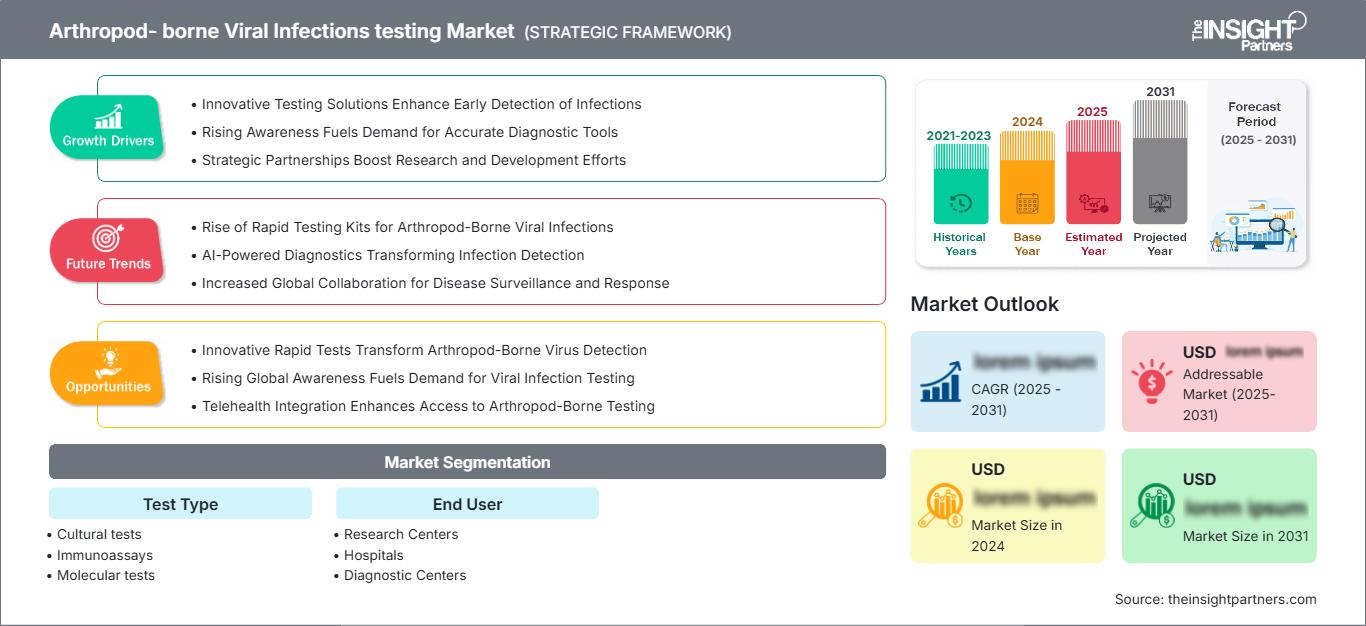
Arthropod- borne Viral Infections testing Market: Strategic Insights
Regional Insights
North America Arthropod- borne viral infections testing market
North America is expected to maintain a 38–42% share in 2025 and grow at a 4.8–5.3% CAGR through 2034. The US represents the principal regional market because of extensive public health laboratory infrastructure, established hospital networks, molecular diagnostic capacity, and routine surveillance for imported and locally acquired arboviral infections. CDC guidance recommends molecular and serological approaches for suspected dengue, reinforcing the role of laboratory confirmation in clinical decision-making.
Readiness to combat diseases transmitted by mosquitoes is another way in which the regional market is able to capitalize. Testing facilities for confirming the presence of such pathogens can be found in public health laboratories, whereas hospitals use commercial molecular and immunoassay tests for the first line of testing. Canadian testing is also done via surveillance facilities and infectious disease laboratories for travelers but their volume is much smaller compared to that of the United States.
U.S. Arthropod- borne viral infections testing market Market
The US accounts for 82–86% of North America's 2025 market and is projected to expand at a 4.7–5.2% CAGR through 2034. Testing guidelines from the CDC recommend a combination of NAAT along with IgM testing and NS1 antigen testing as part of acute dengue testing. There is also a need for confirmatory testing in arbovirus laboratories for rare diseases, which results in demand for such tests within hospital and public health laboratories.
Current trends indicate that application will be different depending on the symptoms and patient exposure to the disease. The first week of the disease can be analyzed using molecular tests, whereas serology testing becomes relevant as antibodies are formed. The presence of an installed base of automated analyzers provides opportunities for suppliers capable of offering new tests without the need for additional investment in technology.
Europe Arthropod- borne viral infections testing market Market
Europe is projected to represent 27–31% share in 2025 and grow at a 5.0–5.5% CAGR, with France, Germany, Italy, Spain, and the UK forming major national markets. France has the advantage of having well-developed infectious disease surveillance programs, whereas Germany has well-equipped hospital laboratories along with research facilities. The importance of recognizing cases of imported or local cases of arboviral diseases will make more testing prevalent.
The UK has well-developed public health laboratory services as well as travel-related testing requirements. Germany and France are still significant countries owing to their highly developed diagnostic facilities, while Italy and Spain have become more relevant due to vector transmission in the Mediterranean area. The top countries of the region increasingly appreciate multiplexing and automation techniques that can discriminate between dengue, chikungunya, and Zika from other fever cases.
APAC Arthropod- borne viral infections testing market Market
APAC is estimated at 23–27% share in 2025 and is forecast to grow at a 6.2–6.8% CAGR, making it the fastest-growing major region. Contributions include growing surveillance efforts, laboratory testing, public health initiatives, and diagnostics capacity. Dengue disease burden and urbanization represent key drivers on the demand side.
India and the Southeast Asia region represent significant testing needs during outbreak periods, whereas Japan, South Korea, and Australia focus on surveillance and laboratory preparedness. China has large health care network and diagnostics manufacturing capacity. There is need for policy makers to pay attention to surveillance of infectious diseases, thus moving away from symptom-based testing towards laboratory confirmation.
Middle East & Africa Arthropod- borne viral infections testing market Market
MEA is expected to expand at a 6.0–6.6% CAGR, supported by improving laboratory infrastructure, vector-borne disease surveillance, and healthcare investment. Saudi Arabia and the UAE represent important Gulf markets because of advanced healthcare systems and substantial international travel, while South Africa provides a major regional diagnostic and research base.
Saudi Arabia's healthcare modernization and the UAE's laboratory infrastructure support adoption of automated testing. South Africa contributes through established infectious disease research capabilities, while the rest of MEA remains more dependent on centralized laboratories and public health procurement. Infrastructure investment, outbreak preparedness, and expanding access to molecular and serological testing are expected to support gradual market formalization.
Segmentation Analysis
Test Type
Test Type remains the central technology segmentation because assay selection depends strongly on disease stage, laboratory infrastructure, turnaround requirements, and clinical purpose. Immunoassays currently hold the largest position and are projected to grow at a 5.0–5.5% CAGR from 2026–2034, while molecular testing is gaining share as confirmation and surveillance requirements increase. WHO guidance recognizes molecular detection, antigen testing, and antibody testing as complementary approaches rather than interchangeable technologies.
- Cultural tests: Cultural tests retain strategic relevance for specialized laboratories and research applications requiring virus isolation. Their role is more concentrated because they generally demand greater technical expertise, controlled laboratory conditions, and longer turnaround times than molecular or immunological methods.
- Immunoassays: Immunoassays remain the largest technology category because IgM, IgG, and antigen detection can support diagnosis across different stages of infection. Their compatibility with established laboratory workflows supports broad hospital and diagnostic-center adoption.
- Molecular tests: Molecular tests are increasingly important for early-stage confirmation because viral nucleic acid can be detected during the acute phase. Their analytical specificity and utility in surveillance strengthen demand for automated NAAT and RT-PCR workflows.
End User
End User segmentation reflects differences in testing volume, infrastructure, clinical responsibility, and research intensity. Hospitals are expected to remain a major user group, supported by acute febrile disease evaluation and centralized laboratory services. The category is projected to grow at a 5.3–5.8% CAGR from 2026–2034, with diagnostic centers benefiting from broader outpatient testing and research centers supporting assay validation and surveillance.
- Research Centers: Research centers remain strategically important for assay development, epidemiological surveillance, genomic characterization, and validation of emerging diagnostic technologies. Their requirements increasingly include molecular platforms, reference materials, and testing approaches suitable for novel or re-emerging arboviruses.
- Hospitals: Hospitals generate substantial testing demand because suspected arboviral infections require differentiation from other febrile illnesses. Automated immunoassays and molecular platforms support faster clinical decisions while enabling laboratories to manage seasonal increases in specimen volumes.
- Diagnostic Centers: Diagnostic centers expand access beyond hospitals by providing centralized and outpatient testing. Their purchasing priorities increasingly emphasize automation, reagent stability, throughput, turnaround time, and compatibility with existing laboratory information systems.
Opportunity Snapshot
| End User | Revenue Contribution (High/Medium/Low) | Trend Tag (MAX 2 words) | Adoption Stage (Emerging/Scaling/Mature) |
| Research Centers | Medium | Genomic Surveillance | Scaling |
| Hospitals | High | Acute Testing | Mature |
| Diagnostic Centers | High | Decentralized Access | Scaling |
Arthropod- borne Viral Infections testing Market Growth Drivers and Impact Analysis
Rising Dengue Burden and Diagnostic Confirmation Needs
The factor that drives the demand the most is the prevalence of Dengue since there is a consistent need for testing. According to the World Health Organization (WHO), the year 2024 saw record-breaking spread of dengue infections globally and stressed the need for lab confirmation due to the clinical signs being shared by malaria, chikungunya, and Zika, among other diseases. The commercial implication here would be that of the need for a combination of tests, rather than depending on a single type. Quick confirmation is needed in hospitals when the disease is presented acutely, while reliable tests are needed by public health laboratories for surveillance and outbreaks.
Expansion of Vector Habitats and Geographic Exposure
Changing vector distribution is broadening the geographic relevance of arboviral testing. WHO identifies climate change, urbanization, population growth, and human mobility as factors contributing to the spread of Aedes-transmitted diseases into new regions. For diagnostic manufacturers, this expands the addressable customer base beyond traditionally endemic countries. Hospitals in newly exposed areas need protocols for imported infections, while national laboratories require surveillance capabilities capable of distinguishing local transmission from travel-associated cases. The commercial impact is particularly meaningful for suppliers offering flexible assay menus and scalable instruments that can be introduced before testing volumes become high. Greater preparedness also encourages stockpiling and reference laboratory capacity, creating demand that can persist between outbreaks rather than being restricted to peak transmission periods.
Strengthening Regulatory and Procurement Standards
The Arthropod- borne viral infections testing market report shows that regulatory scrutiny is becoming an important market-shaping factor because diagnostic performance directly affects outbreak response and public health decisions. WHO's 2025 Expert Review Panel for Diagnostics assessed dengue products against defined quality and performance criteria and listed seven products to support informed procurement. This creates a clearer framework for evaluating products in settings where national regulatory capacity may vary. Manufacturers are therefore incentivized to strengthen analytical validation, clinical evidence, manufacturing consistency, and documentation. Procurement organizations can increasingly compare products using standardized performance considerations rather than relying solely on price. Over time, this dynamic should favor established manufacturers and technically differentiated specialists while encouraging suppliers to improve affordability and usability for decentralized laboratories and resource-constrained healthcare systems.
Arthropod- borne Viral Infections testing Market Future Trends
Multiplex Arbovirus Panels
The Arthropod- borne viral infections testing market trends show that multiplex testing is likely to become a more important purchasing criterion as clinicians face overlapping presentations from dengue, chikungunya, Zika, and other febrile infections. Instead of ordering isolated assays sequentially, laboratories can increasingly use panels capable of addressing multiple pathogens or biomarkers within a coordinated workflow. The strategic benefit is improved laboratory utilization and faster differential diagnosis, particularly during seasonal outbreaks when specimen volumes rise sharply. Future platforms are expected to combine molecular targets with antigen or serological markers where technically feasible, creating broader diagnostic coverage. This trend should also support informatics integration, allowing laboratories to connect test results with epidemiological surveillance systems. Suppliers that can balance panel breadth with analytical specificity, cost control, and simple workflow design will be better positioned to address public health and hospital requirements.
Decentralized and Digitally Connected Testing
Decentralized testing is expected to progress as manufacturers address the need for faster decisions in remote, rural, and outbreak-affected settings. Portable molecular systems, rapid immunoassays, connected readers, and digital reporting can reduce dependence on centralized laboratories while improving visibility of disease activity. The next stage will involve linking near-patient results with laboratory information systems, public health dashboards, and epidemiological surveillance networks. Such integration can make individual test results useful for both patient management and outbreak detection. However, adoption will depend on analytical reliability, reagent stability, quality control, operator training, and sustainable procurement models. Vendors that design systems for low-resource environments without sacrificing connectivity or performance can access new customer groups in endemic countries and emerging transmission zones.
Arthropod- borne Viral Infections testing Market Opportunities
Integrated Testing Platforms for Endemic Markets
Manufacturers have an opportunity to build integrated platforms combining dengue, chikungunya, Zika, and related infectious disease assays for laboratories serving high-burden populations. Such portfolios can increase instrument utilization while simplifying procurement and staff training. The opportunity is particularly relevant in Asia Pacific, Latin America, and selected African markets where laboratories may experience large seasonal fluctuations in demand. Suppliers can differentiate through compact instrumentation, stable reagents, flexible sample requirements, and tiered pricing. Partnerships with public health agencies, reference laboratories, and regional distributors can further support market entry. A portfolio approach also reduces dependence on a single pathogen and provides laboratories with greater resilience when disease incidence shifts between seasons or geographic areas. Investment should therefore prioritize scalable systems rather than isolated test kits.
Surveillance-Linked Molecular Diagnostics
A second opportunity lies in connecting molecular diagnostic testing with genomic surveillance and outbreak intelligence. WHO's updated dengue guidance explicitly recognizes genomic surveillance as an important component of modern diagnostic systems. Manufacturers can therefore develop workflows that preserve specimens or extracts for downstream sequencing while maintaining rapid clinical testing. Such solutions could be particularly valuable to reference laboratories, research centers, and national surveillance programs seeking to identify emerging strains and transmission patterns. Commercial models may combine instruments, reagents, software, data management, and technical services instead of relying solely on test-kit sales. Companies that establish partnerships with sequencing providers, public health institutions, and epidemiological networks can create differentiated solutions with recurring consumables revenue and stronger customer retention.
Recent Developments
- July 2025: bioMérieux SA highlighted its VIDAS DENGUE Panel and VIDAS CHIKUNGUNYA Panel at ASTMH 2025, reinforcing its automated serological portfolio for differential diagnosis of mosquito-borne infections. The dengue offering comprises three serological tests covering NS1, IgM, and IgG, supporting diagnosis across different stages of infection and strengthening the company's positioning in automated laboratory testing.
- June 2025: QuidelOrtho Corporation announced a strategic refocusing of its molecular diagnostics business, including an intended acquisition of LEX Diagnostics following FDA clearance and the planned discontinuation of Savanna platform development. The move illustrates continuing consolidation and portfolio prioritization in molecular diagnostics, with implications for platform strategy, assay development, and future infectious disease testing capabilities.
- 2026: Abbott continued expanding its diagnostics strategy around rapid and decentralized testing, while its India operations highlighted point-of-care dengue testing capable of producing results within 15–20 minutes. The company has emphasized broader access to rapid diagnostics in tropical and underserved settings, reinforcing the relevance of decentralized testing for mosquito-borne disease surveillance and outbreak response.
Frequently Asked Questions

- Comprehensive Market Sizing and Forecast Analysis
- Detailed Segmentation Analysis
- In-Depth Market Dynamics Assessment
- Regional and Country-Level Insights
- Competitive Landscape and Company Benchmarking
- Strategic Business Intelligence
Recent Reports
Testimonials

The Insight Partners' SCADA System Market report is comprehensive, with valuable insights on current trends and future forecasts. The team was highly professional, responsive, and supportive throughout. We are very satisfied and highly recommend their services.
RAN KEDEM Partner, Reali Technologies LTDs
I requested a report on a very specific software market and the team produced the report in a few days. The information was very relevant and well presented. I then requested some changes and additions to the report. The team was again very responsive and I got the final report in less than a week.
JEAN-HERVE JENN Chairman, Future Analytica
We worked with The Insight Partners for an important market study and forecast. They gave us clear insights into opportunities and risks, which helped shape our plans. Their research was easy to use and based on solid data. It helped us make smart, confident decisions. We highly recommend them.
PIYUSH NAGPAL Sr. Vice President, High Beam Global
The Insight Partners delivered insightful, well-structured market research with strong domain expertise. Their team was professional and responsive throughout. The user-friendly website made accessing industry reports seamless. We highly recommend them for reliable, high-quality research services
YUKIHIKO ADACHI CEO, Deep Blue, LLC.
This is the first time I have purchased a market report from The Insight Partners.While I was unsure at first, I visited their web site and felt more comfortable to take the risk and purchase a market report.I am completely satisfied with the quality of the report and customer service. I had several questions and comments with the initial report, but after a couple of dialogs over email with their analyst I believe I have a report that I can use as input to our strategic planning process.Thank you so much for taking the extra time and making this a positive experience.I will definitely recommend your service to others and you will be my first call when we need further market data.
JOHN SUZUKI President and Chief Executive Officer, Board Director, BK Technologies
I wish to appreciate your support and the professionalism you displayed in the course of attending to my request for information regarding to infectious disease IVD market in Nigeria. I appreciate your patience, your guidance, and the fact that you were willing to offer a discount, which eventually made it possible for us to close a deal. I look forward to engaging The Insight Partners in the future, all thanks to the impression you have created in me as a result of this first encounter.
DR CHIJIOKE ONYIA MANAGING DIRECTOR, PineCrest Healthcare Ltd.Reason to Buy
- Informed Decision-Making
- Understanding Market Dynamics
- Competitive Analysis
- Identifying Emerging Markets
- Customer Insights
- Market Forecasts
- Risk Mitigation
- Boosting Operational Efficiency
- Strategic Planning
- Investment Justification
- Tracking Industry Innovations
- Aligning with Regulatory Trends





 Get Free Sample for