
Atrial Fibrillation Devices Market Trends, Share & Demand by 2034
Coverage: By Product (Non-Surgical Devices, Surgical Devices); End User (Hospitals and Clinics, Cardiac Centers, Ambulatory Surgical Centers) , and Geography (North America, Europe, Asia Pacific, and South and Central America)
- Status : Data Released
- Report Code : TIPRE00008769
- Category : Life Sciences
- No. of Pages : 150
- Available Report Formats :


- Last update date : September 08, 2026


2025 Market Size
US$ 13.55 Bn
Base year value
2034 Forecast
US$ 36.40 Bn
Projected by 2034
CAGR 2026-2034
11.61 %
Growth rate
Addressable Market
US$ 219.80 Bn
(2026-2034)
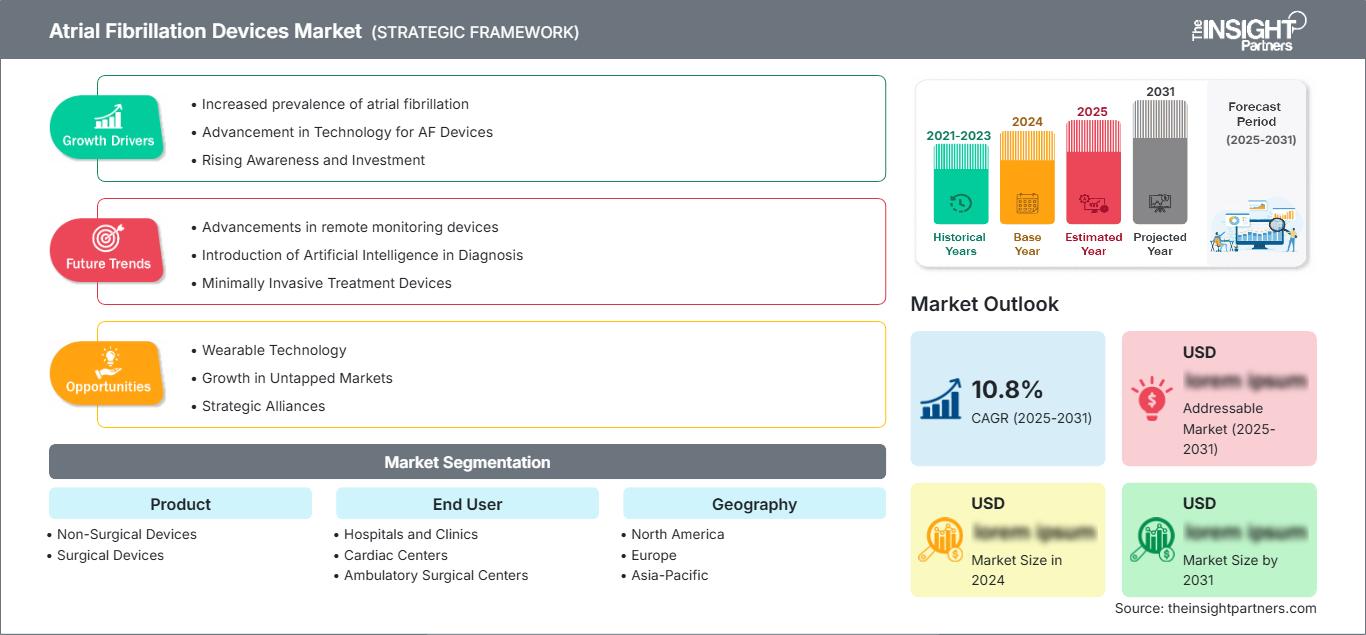
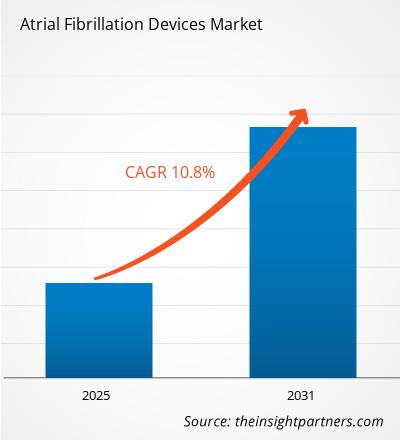
The atrial fibrillation devices market is projected to expand from US$ 13.55 Billion in 2025 to US$ 36.40 Billion by 2034, registering a CAGR of 11.61% during 2026–2034. The market encompasses devices used for rhythm monitoring, catheter-based intervention, surgical treatment, and related procedural support. Increasing utilization of minimally invasive electrophysiology procedures, technological advances in ablation, and broader adoption of integrated cardiac treatment platforms are reshaping purchasing priorities across hospitals and specialized cardiovascular facilities.
North America remains a structurally attractive market, supported by established electrophysiology infrastructure, specialist availability, reimbursement mechanisms, and high procedure volumes. The regional atrial fibrillation devices market size is expected to grow at a 10.20–11.40% CAGR through 2034. Increasing use of pulsed field ablation, three-dimensional mapping, and minimally invasive treatment pathways is strengthening demand for sophisticated procedural platforms.
Atrial Fibrillation Devices Market Assessment and Insights
- North America: North America is expected to account for a 39–43% share in 2025 and expand at a 10.20–11.40% CAGR between 2026–2034, supported by advanced electrophysiology infrastructure, reimbursement coverage, high procedure volumes, and rapid adoption of next-generation ablation systems.
- US: The US is estimated to represent 84–88% of North America's 2025 market, with a 10.30–11.50% CAGR during 2026–2034, reflecting strong specialist capacity and accelerated adoption of pulsed field ablation.
- Europe: Europe is expected to hold a 27–31% share in 2025 and grow at a 10.60–11.80% CAGR, led by Germany, the UK, France, Italy, and Spain, where electrophysiology capacity and minimally invasive cardiac intervention continue expanding.
- Asia Pacific: Asia Pacific is projected to represent a 17–21% share in 2025 and register a 13.20–14.60% CAGR between 2026–2034, led by China, Japan, South Korea, India, and Australia amid expanding cardiovascular infrastructure.
- Largest Segment: Non-Surgical Devices are estimated to hold a 79–83% market share in 2025 and grow at a 11.40–12.20% CAGR, reflecting catheter ablation and electrophysiology demand.
- High Growth Segment: Cardiac Centers are estimated to represent a 16–20% share in 2025 and expand at a 12.30–13.40% CAGR, supported by specialized procedural capacity.
- Key companies analyzed in detail: Abbott, MicroPort Scientific Corporation, Boston Scientific Corporation, Medtronic, BIOTRONIK SE & Co. KG, Koninklijke Philips N.V., Siemens AG, AtriCure, Inc., CardioFocus, Biosense Webster, Inc. (Johnson & Johnson Services, Inc.)
Source: The Insight Partners' analysis based on proprietary research, government publications, company annual reports, investor presentations, industry databases, and expert interviews.
The advancement of technology in the atrial fibrillation devices market is shifting the focus of treatments from traditional thermal ablation to those which combine the aspects of mapping, navigation, sensing, imaging, and energy delivery. The pulsed field ablation is becoming one of the key innovation paths since it employs the use of non-thermal electrical energy, whereas the mapping platforms are enhancing visualization of the process. Catheter design, workflow efficiency, and ecosystem capability are also becoming key areas of emphasis in manufacturing companies.
During the forecast period, the investments are expected to be directed to technologies which are capable of reducing procedure duration, increasing consistency of lesions, and facilitating the treatment of increasingly complex patients. The emerging markets will also receive increased interest due to the expansion of cardiovascular centers and the improvement in specialist training. The approval of new systems and the accumulation of more clinical evidence for the purchase decision can also have significant influence on the purchases made by hospitals.
Atrial Fibrillation Devices Market Report Scope
| Report Attribute | Details |
|---|---|
| Market size in 2025 | US$ 13.55 Billion |
| Market Size by 2034 | US$ 36.40 Billion |
| Global CAGR (2026 - 2034) | 11.61% |
| Historical Data | 2021-2024 |
| Forecast period | 2026-2034 |
Atrial Fibrillation Devices Market Analysis
The demand will be driven by the increased clinical prevalence of atrial fibrillation and increased inclination towards procedure-based treatment among the appropriate candidates. The atrial fibrillation devices market growth for atrial fibrillation devices will be directly proportional to the increasing number of procedures, availability of electrophysiology services and advanced mapping and energy delivery tools. Procedural efficiency, risk, and compatibility with existing facilities have become key criteria for the evaluation of systems by hospitals.
The value chain includes device manufacturers, component manufacturers, software providers, distributors, hospitals, electrophysiologists, and cardiovascular specialists. Supply issues are increasingly becoming complicated due to the requirement to integrate catheters, generators, mapping solutions, imaging solutions, and accessories. Device manufacturers that have wide product portfolios can ensure the coordination in equipment compatibility and support services, while specialized manufacturers can differentiate through their catheters, energy sources, or procedures.
Positioning strategies will continue to be influenced by clinical proof, infrastructure for laboratories, regulatory approvals, and providing integrated workflows. The companies that are positioning themselves through ablation, mapping, and electrophysiology technologies are Abbott, Boston Scientific Corporation, Medtronic, and Biosense Webster, Inc. AtriCure, Inc. is sustaining its position through surgical treatments while the competition comes from MicroPort Scientific Corporation and BIOTRONIK SE & Co. KG in certain cardiovascular device categories.
The areas where investments will need to go in the future include pulsed field ablation, more advanced mapping, intracardiac imaging, and technologies that increase procedural reproducibility. CardioFocus stands out with its focus on ablation technology while Koninklijke Philips N.V. and Siemens AG bring in imaging and visualization capabilities related to cardiovascular interventions. Advantage will need to be gained by bringing together clinical evidence with economics of installed base and geographic reach.
● REPORT CUSTOMIZATION
Tailor This Report To Align With Your Specific Business Requirements
This report can be customized to align precisely with your business objectives, scope, and target markets. Customization options include tailored segmentation, geography, competitive analysis, and strategic insights to support informed decision-making.
Customize This Report →WHAT YOU CAN ADJUST
- ● Segmentations
- ● Geography
- ● Competitive Analysis
- ● Language Preferences
Atrial Fibrillation Devices Market: Strategic Insights
Regional Insights
North America atrial fibrillation devices market
North America is expected to account for a 39–43% share of the global market in 2025 and grow at a 10.20–11.40% CAGR up until 2034. The US continues to be the leading country due to a vast electrophysiology laboratory presence, reimbursement options, availability of specialists, and relative high rates of catheter-based treatments. Canada represents a smaller but technologically advanced market driven by the existence of tertiary cardiovascular centers and growth of procedure capabilities. The regional atrial fibrillation devices market share corresponds to the presence of specialized cardiac facilities and purchasing relationships with leading device providers.
The clinical adoption trends are becoming more dependent on pulsed field ablation, advanced mapping, and workflow technologies. Abbott, Boston Scientific Corporation, Medtronic, and Biosense Webster, Inc. represent the major strategic importance owing to their electrophysiology portfolio, and AtriCure, Inc. covers surgical treatment approaches. North American healthcare facilities are currently assessing technologies based on procedure time, re-do procedures, clinical data, and integration with existing laboratory systems. This will drive the regional demand throughout 2034.
U.S. atrial fibrillation devices Market
US is projected to occupy the share of 84-88% of the North American market by 2025 and grow at a CAGR of 10.30-11.50% until 2034. This market dominance will be driven by the existence of advanced electrophysiology infrastructure, high presence of specialists, well-established payment system and early commercialization of innovative technologies of ablation. The list of key manufacturers includes Abbott, Medtronic, Boston Scientific Corporation, and Biosense Webster, Inc. The market of atrial fibrillation devices in the US is now dominated by efficient treatment processes and scientific evidences of new energy modalities.
One of the main applications trends of the market includes the pulsed field ablation, three-dimensional mapping, and catheter systems. In December 2025, Abbott's Volt PFA System was approved by the FDA for the treatment of symptomatic, recurrent, drug-refractory paroxysmal or persistent atrial fibrillation. Besides, the hospitals require the systems capable of performing complicated operations and increasing workflow consistency.
Europe atrial fibrillation devices Market
Europe is expected to account for a 27-31% of the atrial fibrillation devices market share in 2025 and register a 10.60-11.80% CAGR. Germany is predicted to retain its position as the largest national market, owing to the presence of specialist cardiovascular centers and electrophysiology capabilities. The UK has strong procedural capabilities while France, Italy, and Spain present significant growth opportunities owing to their tertiary hospitals along with improved access to catheter-based rhythm management. Reimbursement policies and national purchasing strategies will affect technology adoption within the region.
Germany enjoys advanced hospital infrastructure and specialization, providing positive environment for the use of advanced ablation and mapping systems. The UK focuses on clinical pathways and procedures while France combines specialty hospitals with growing minimally invasive procedures. Italy and Spain have continued to increase electrophysiology capabilities through their cardiovascular centers. Next-generation ablation systems including pulsed field and dual energy technologies will also drive demand within Europe.
APAC atrial fibrillation devices Market
APAC is projected to hold a 17–21% share in 2025 and grow at a 13.20–14.60% CAGR, making it the fastest-growing major region. China is expected to lead regional revenue, followed by Japan, South Korea, India, and Australia. Expanding cardiac infrastructure, rising specialist capacity, and increasing investment in minimally invasive procedures are improving access to advanced rhythm-management technologies.
There are good possibilities with the existing tertiary care centers in China and Japan, whereas South Korea and Australia have high capabilities in electrophysiology. India holds good future possibilities due to increasing facilities in cardiovascular centers to perform procedures. Med-tech localization, hospital investments, medical education, and improved access to cardiac care facilities are some factors which will help in the adoption of the technology in the region.
Middle East & Africa atrial fibrillation devices Market
Middle East and Africa is expected to expand at an 8.70–10.10% CAGR through 2034, with Saudi Arabia representing a leading opportunity within the region. The UAE benefits from advanced private healthcare infrastructure, while South Africa remains a key market for specialized cardiovascular services. Rest-of-MEA demand is more uneven because specialist capacity and reimbursement vary considerably between countries.
Health care investment, medical tourism, and development of tertiary care centers will contribute to increased access to advanced cardiac care. Higher levels of health care investments and high concentration of specialists will allow the countries such as Saudi Arabia and UAE to implement electrophysiology systems faster. South Africa will serve as an important access point for cardiovascular services in the region.
Segmentation Analysis
Product
Product segmentation divides the market into Non-Surgical Devices and Surgical Devices. Non-Surgical Devices are expected to remain dominant, supported by catheter ablation, mapping, and other minimally invasive technologies. The atrial fibrillation devices market scope increasingly reflects movement toward catheter-based intervention, while surgical approaches remain important for selected patients and concomitant cardiac procedures. Product innovation is therefore concentrated on procedural precision, safety, integration, and workflow efficiency. The main segment is expected to register an 11.40–12.20% CAGR during 2026–2034.
- Non-Surgical Devices: These devices represent the principal technology base because catheter-based interventions can be performed through established electrophysiology laboratories. Demand is supported by mapping integration, improved catheter designs, and expanding use of pulsed field ablation.
- Surgical Devices: Surgical devices remain strategically important for patients requiring concomitant cardiac surgery or selected rhythm-management procedures. Their role is supported by specialized cardiac centers and technologies designed to simplify lesion creation.
End User
End-user segmentation comprises Hospitals and Clinics, Cardiac Centers, and Ambulatory Surgical Centers. Hospitals and clinics remain the principal purchasers because they possess broad diagnostic and procedural infrastructure. Cardiac Centers are positioned for faster expansion because specialized electrophysiology environments can support higher procedural concentration. The main segment is expected to record a 11.80–12.60% CAGR from 2026–2034. This atrial fibrillation devices market report indicates that specialized facilities will increasingly influence technology adoption.
- Hospitals and Clinics: These facilities provide the broadest installed base and manage diagnosis, intervention, follow-up, and complex cardiovascular cases. Procurement is increasingly linked with integrated platforms and service support.
- Cardiac Centers: Specialized cardiac centers concentrate electrophysiology expertise and high-value procedures, creating favorable conditions for advanced mapping, ablation, and imaging systems.
- Ambulatory Surgical Centers: ASCs represent an emerging setting for selected procedures where clinical complexity, reimbursement, anesthesia requirements, and infrastructure permit outpatient treatment.
Opportunity Snapshot
| End User | Revenue Contribution | Trend Tag | Adoption Stage |
|---|---|---|---|
| Hospitals and Clinics | High | Integrated Labs | Mature |
| Cardiac Centers | Medium | PFA Adoption | Scaling |
| Ambulatory Surgical Centers | Low | Outpatient Ablation | Emerging |
Atrial Fibrillation Devices Market Growth Drivers and Impact Analysis
Increasing Preference for Minimally Invasive Rhythm Management
The shift toward minimally invasive rhythm management is expanding the addressable procedure base for advanced electrophysiology devices. Catheter ablation can provide a procedural alternative when medication is inadequate, poorly tolerated, or insufficient for selected patients. This transition increases demand for mapping systems, ablation catheters, generators, imaging support, and procedural accessories. Hospitals are consequently evaluating equipment not only by acquisition cost but also by procedural throughput, physician usability, and downstream resource utilization. The commercial impact is particularly significant for manufacturers with integrated portfolios because purchasing decisions increasingly encompass multiple components of an electrophysiology laboratory. As clinical confidence improves and specialist capacity expands, minimally invasive treatment should remain an important contributor to device utilization.
Rapid Adoption of Pulsed Field Ablation Platforms
Pulsed field ablation is creating a significant technology transition within cardiac electrophysiology by introducing non-thermal energy delivery for pulmonary vein isolation and related applications. Abbott, Boston Scientific Corporation, Medtronic, and Biosense Webster, Inc. are among companies advancing competing platforms, increasing technology choice for electrophysiologists. Boston Scientific received FDA approval in July 2025 for expanded FARAPULSE labeling covering pulmonary vein and posterior wall ablation in persistent atrial fibrillation. Such regulatory expansion broadens the eligible patient population and supports commercial utilization. The market impact extends beyond generators and catheters because PFA adoption also stimulates demand for compatible mapping, imaging, training, and laboratory infrastructure.
Expansion of Electrophysiology Infrastructure in Emerging Markets
Investment in cardiovascular infrastructure is creating new opportunities beyond established North American and European markets. China, India, South Korea, Australia, and selected Middle Eastern countries are expanding tertiary hospitals and specialist cardiac services, increasing the number of facilities capable of performing advanced rhythm procedures. This infrastructure effect is important because device adoption depends on trained electrophysiologists, catheterization laboratories, imaging support, and reimbursement or institutional funding. Manufacturers can therefore capture growth by combining product commercialization with physician training, technical support, and local partnerships. In emerging markets, procurement decisions may also prioritize capital efficiency and service availability over premium specifications alone. The resulting opportunity favors suppliers able to adapt portfolio configuration and commercialization models to differing healthcare environments.
Atrial Fibrillation Devices Market Future Trends
AI-Enabled Electrophysiology and Personalized Mapping
Artificial intelligence and machine learning are likely to become increasingly embedded within electrophysiology workflows, particularly for mapping interpretation, procedural planning, image integration, and identification of clinically relevant electrical patterns. Future systems may combine patient-specific anatomical information with historical rhythm data to guide ablation strategy and improve consistency. Biosense Webster's CARTO platform already demonstrates the direction of software-enhanced electrophysiology, with machine-learning capabilities incorporated into newer mapping software. Over time, software differentiation could become as important as catheter hardware because hospitals seek measurable improvements in procedure efficiency, reproducibility, and physician decision support. This trend could also increase recurring revenue opportunities through software updates, analytics, and service contracts.
Convergence of Ablation, Mapping, and Imaging Platforms
Future device development is likely to emphasize convergence between ablation, mapping, imaging, and navigation rather than isolated technology improvements. Integrated platforms can reduce workflow fragmentation and enable electrophysiologists to visualize anatomy, electrical activity, catheter position, and treatment delivery within a coordinated environment. This direction may encourage manufacturers to pursue partnerships, acquisitions, software interoperability, and proprietary ecosystems. Intracardiac echocardiography is also becoming strategically relevant because real-time visualization can complement advanced ablation procedures. Medtronic's 2026 investment in intracardiac echocardiography technologies illustrates how companies are positioning imaging alongside cardiac ablation portfolios. Such convergence could increase switching costs while improving laboratory productivity.
Atrial Fibrillation Devices Market Opportunities
Localized Commercial Models for High-Growth APAC Markets
Manufacturers can pursue localized commercial strategies in APAC by combining regional distribution, physician education, clinical evidence generation, and service infrastructure. China and India offer particularly differentiated opportunities because market access, procurement, regulatory requirements, and hospital economics differ substantially from established Western markets. A standardized global commercialization model may therefore leave addressable demand underserved. Companies can improve penetration by developing tiered product portfolios, strengthening local technical support, and partnering with leading cardiac centers for training and evidence development. The atrial fibrillation devices market forecast is particularly relevant for pulsed field ablation and advanced mapping technologies, where physician familiarity influences adoption. Localized strategies can also help manufacturers understand reimbursement constraints and procurement preferences before committing to broader capital deployment.
Integrated EP Laboratory Solutions and Recurring Software Revenue
An additional opportunity lies in developing integrated electrophysiology laboratory solutions that combine capital equipment with software, consumables, service, and training. Hospitals increasingly require predictable workflows rather than individual devices, creating room for suppliers to offer coordinated technology packages. Recurring software and service contracts can provide a more stable revenue component while strengthening customer retention. Companies with complementary imaging, mapping, navigation, and ablation capabilities can use interoperability to create differentiated laboratory ecosystems. The opportunity also extends to data analytics, remote technical support, and predictive maintenance. Such offerings could help hospitals manage utilization and operating costs while giving manufacturers additional channels to monetize installed systems beyond initial capital equipment sales.
Recent Developments
- June 2026: Medtronic announced strategic investments supporting expansion of its cardiac ablation portfolio, including intracardiac echocardiography technologies. The initiative reflects increasing physician demand for integrated ablation workflows and strengthens Medtronic's positioning across mapping, ablation, and visualization. The company is using portfolio expansion to support broader adoption of Affera technologies and enhance its ability to provide complementary procedural capabilities.
- February 2026: Abbott reported 12-month clinical data supporting its Volt Pulsed Field Ablation System and additional evidence for the TactiFlex Duo Ablation Catheter. The company stated that Volt had received FDA approval and CE Mark, while commercial cases had begun in the US and European expansion was continuing. The update strengthened Abbott's clinical positioning in advanced AF ablation.
- July 2025: Boston Scientific Corporation received FDA approval for expanded FARAPULSE PFA labeling to include pulmonary vein and posterior wall ablation in patients with drug-refractory symptomatic persistent atrial fibrillation. The regulatory expansion broadened the system's approved clinical use and strengthened the company's position in the rapidly developing pulsed field ablation segment.
Frequently Asked Questions

- Comprehensive Market Sizing and Forecast Analysis
- Detailed Segmentation Analysis
- In-Depth Market Dynamics Assessment
- Regional and Country-Level Insights
- Competitive Landscape and Company Benchmarking
- Strategic Business Intelligence
Recent Reports
Testimonials

The Insight Partners' SCADA System Market report is comprehensive, with valuable insights on current trends and future forecasts. The team was highly professional, responsive, and supportive throughout. We are very satisfied and highly recommend their services.
RAN KEDEM Partner, Reali Technologies LTDs
I requested a report on a very specific software market and the team produced the report in a few days. The information was very relevant and well presented. I then requested some changes and additions to the report. The team was again very responsive and I got the final report in less than a week.
JEAN-HERVE JENN Chairman, Future Analytica
We worked with The Insight Partners for an important market study and forecast. They gave us clear insights into opportunities and risks, which helped shape our plans. Their research was easy to use and based on solid data. It helped us make smart, confident decisions. We highly recommend them.
PIYUSH NAGPAL Sr. Vice President, High Beam Global
The Insight Partners delivered insightful, well-structured market research with strong domain expertise. Their team was professional and responsive throughout. The user-friendly website made accessing industry reports seamless. We highly recommend them for reliable, high-quality research services
YUKIHIKO ADACHI CEO, Deep Blue, LLC.
This is the first time I have purchased a market report from The Insight Partners.While I was unsure at first, I visited their web site and felt more comfortable to take the risk and purchase a market report.I am completely satisfied with the quality of the report and customer service. I had several questions and comments with the initial report, but after a couple of dialogs over email with their analyst I believe I have a report that I can use as input to our strategic planning process.Thank you so much for taking the extra time and making this a positive experience.I will definitely recommend your service to others and you will be my first call when we need further market data.
JOHN SUZUKI President and Chief Executive Officer, Board Director, BK Technologies
I wish to appreciate your support and the professionalism you displayed in the course of attending to my request for information regarding to infectious disease IVD market in Nigeria. I appreciate your patience, your guidance, and the fact that you were willing to offer a discount, which eventually made it possible for us to close a deal. I look forward to engaging The Insight Partners in the future, all thanks to the impression you have created in me as a result of this first encounter.
DR CHIJIOKE ONYIA MANAGING DIRECTOR, PineCrest Healthcare Ltd.Reason to Buy
- Informed Decision-Making
- Understanding Market Dynamics
- Competitive Analysis
- Identifying Emerging Markets
- Customer Insights
- Market Forecasts
- Risk Mitigation
- Boosting Operational Efficiency
- Strategic Planning
- Investment Justification
- Tracking Industry Innovations
- Aligning with Regulatory Trends





 Get Free Sample for