
Automotive Headrest Market Demand, Trends & Forecast by 2034
Coverage: By Product Type (Active Headrest, Automatically Adjusting Headrest, Manually Adjustable Headrest); Application (Front Seat, Rear Seat); Vehicle Type (Passenger Cars, Light Commercial Vehicles (LCV), Heavy Commercial Vehicles (HCV), Electric Vehicles) , and Geography (North America, Europe, Asia Pacific, and South and Central America)
- Status : Data Released
- Report Code : TIPRE00021967
- Category : Automotive and Transportation
- No. of Pages : 150
- Available Report Formats :


- Last update date : August 04, 2026


2025 Market Size
US$ 4.32 Bn
Base year value
2034 Forecast
US$ 5.43 Bn
Projected by 2034
CAGR 2026-2034
2.56 %
Growth rate
Addressable Market
US$ 44.21 Bn
(2026-2034)
The Automotive Headrest Market is projected to grow from US$ 4.32 Billion in 2025 to US$ 5.43 Billion by 2034, registering a CAGR of 2.56% during 2026–2034. Demand is supported by head restraint safety compliance, premium seating packages, vehicle production recovery, and gradual adoption of active and automatically adjusting systems across passenger cars, commercial fleets, and electric vehicles.
North America remains a safety-led demand base, with the Automotive Headrest Market size supported by federal head restraint requirements, SUV and pickup production, and seating upgrades in premium trims. The region is expected to grow at a CAGR of 2.3–2.8% during 2026–2034 as OEMs refine whiplash protection, seating ergonomics, and rear-seat comfort specifications.
Automotive Headrest Market Assessment and Insights
- North America: North America held 22–25% share in 2025 and is projected to grow at a CAGR of 2.3–2.8% during 2026–2034, supported by regulated head restraint geometry and premium seating adoption.
- US: The US accounted for 80–84% of North American demand in 2025 and is expected to grow at a CAGR of 2.2–2.7% during 2026–2034.
- Europe: Europe represented 21–24% share in 2025 and is forecast to grow at a CAGR of 2.0–2.5%, led by Germany, the UK, France, Italy, and Spain.
- Asia Pacific: Asia Pacific accounted for 43–47% share in 2025 and is expected to grow at a CAGR of 2.8–3.4%, led by China, Japan, South Korea, and India.
- Largest Segment: Manually Adjustable Headrest held 60–64% market share in 2025 and is projected to grow at a CAGR of 2.1–2.6% during 2026–2034.
- High Growth Segment: Active Headrest held 18–22% market share in 2025 and is projected to grow at a CAGR of 3.4–4.1% during 2026–2034.
- Key companies analyzed in detail: Shanghai Daimay Automotive Interior Co., Ltd., Kwang Myung Industry Co., Ltd., Ningbo Jifeng Auto Parts Co., Ltd., Adient plc, GRAMMER AG, Futaba Industrial Co., Ltd., Lear Corporation, Yanfeng International Automotive Technology Co., Ltd., Huntsman International LLC, and Magna International Inc.
Source: The Insight Partners' analysis based on proprietary research, government publications, company annual reports, investor presentations, industry databases, and expert interviews.
Headrests have evolved from basic comfort pads into engineered restraint components that support whiplash mitigation, seating posture, and interior quality perception. The Automotive Headrest Market is shaped by foam chemistry, guide sleeve design, metal support structures, trim integration, and compatibility with active safety systems. Production dynamics favor suppliers that can coordinate with seat frame makers, foam processors, upholstery teams, and OEM launch schedules while maintaining repeatable dimensional performance.
Forward demand will be influenced by emerging vehicle production in the Asia Pacific, stricter safety validation, and investment in lightweight seating modules. Active and automatically adjusting headrests are expected to gain selective adoption in premium and electric vehicles, while manually adjustable systems remain essential for cost control. Regulatory emphasis on head restraint height, backset, and dynamic performance supports steady long-term sourcing requirements.
Automotive Headrest Market Report Scope
| Report Attribute | Details |
|---|---|
| Market size in 2025 | US$ 4.32 Billion |
| Market Size by 2034 | US$ 5.43 Billion |
| Global CAGR (2026 - 2034) | 2.56% |
| Historical Data | 2021-2024 |
| Forecast period | 2026-2034 |
Automotive Headrest Market Analysis
Automotive Headrest Market growth is supported by rising safety awareness, comfort-focused interior design, and higher seating content per vehicle. OEMs must balance head restraint compliance with styling, rear visibility, and seat packaging. Demand also follows passenger vehicle output, because every seating row requires engineered head support. Commercial fleets add replacement and durability needs where driver fatigue and long operating hours make ergonomic seating important.
The automotive seating value chain links foam material suppliers, trim manufacturers, metal structure producers, mechanism specialists, and tier-one seat integrators.
The Automotive Headrest Market analysis shows that quality consistency is important because poor height adjustment, loose locking, or weak support can affect safety ratings and consumer satisfaction. Suppliers must manage polyurethane foam density, fabric fit, guide rod strength, tooling cost, and assembly repeatability. Competition is led by seating and interior suppliers that combine design, manufacturing scale, and OEM relationships. Adient plc, Lear Corporation, GRAMMER AG, Magna International Inc., Ningbo Jifeng Auto Parts Co., Ltd., and Yanfeng International Automotive Technology Co., Ltd. support broad vehicle programs, while Shanghai Daimay Automotive Interior Co., Ltd., Kwang Myung Industry Co., Ltd., Futaba Industrial Co., Ltd., and Huntsman International LLC contribute component, foam, and material expertise.
Investment is moving toward lightweight frames, advanced foam formulations, integrated speakers, comfort cushions, and active head restraint mechanisms. Strategic positioning depends on the ability to support regional seat assembly plants, pass safety validation, and provide consistent trim quality. Suppliers that can reduce weight while improving perceived comfort are better placed for platform awards in passenger cars and electric vehicles.
● REPORT CUSTOMIZATION
Tailor This Report To Align With Your Specific Business Requirements
This report can be customized to align precisely with your business objectives, scope, and target markets. Customization options include tailored segmentation, geography, competitive analysis, and strategic insights to support informed decision-making.
Customize This Report →WHAT YOU CAN ADJUST
- ● Segmentations
- ● Geography
- ● Competitive Analysis
- ● Language Preferences
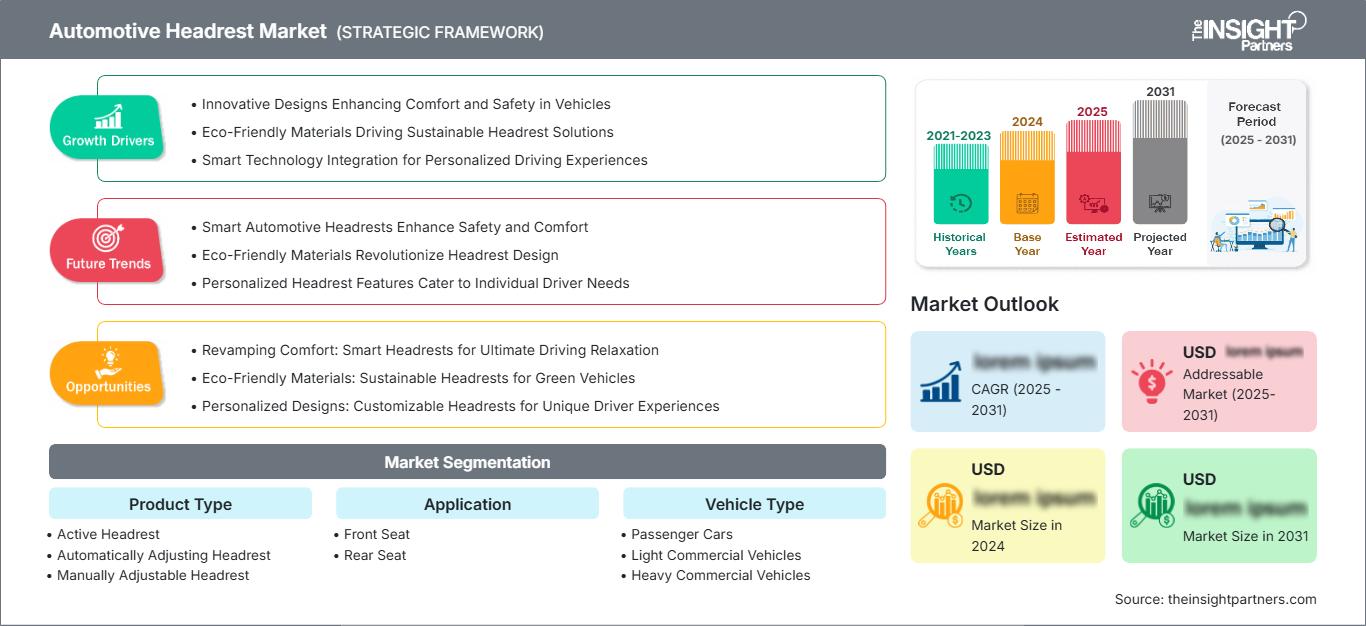
Automotive Headrest Market: Strategic Insights
Regional Insights
North America Automotive Headrest Market
North America accounted for 22–25% Automotive Headrest Market share in 2025 and is expected to grow at a CAGR of 2.3–2.8% during 2026–2034. Demand is concentrated in pickups, SUVs, crossovers, and premium passenger vehicles where seating comfort and restraint compliance are embedded in model positioning.
Regional growth is shaped by US safety standards, fleet replacement, and higher seating content in larger vehicles. Automakers continue to require head restraint systems that meet height, backset, gap, and strength expectations. Mexico-based seating assembly also supports cost-efficient supply into US vehicle platforms, while EV programs encourage lightweight headrest structures.
U.S. Automotive Headrest Market
The US represented 80–84% of North American demand in 2025 and is projected to grow at a CAGR of 2.2–2.7% during 2026–2034. Demand is led by SUVs, pickups, luxury vehicles, delivery vans, and ride-hailing fleets that require compliant, durable, and comfortable seating systems.
Company presence is supported by Adient plc, Lear Corporation, Magna International Inc., GRAMMER AG, and Yanfeng International Automotive Technology Co., Ltd. Application trends include active headrest options in premium trims, manually adjustable headrests in volume models, and rear-seat head restraints optimized for foldability, visibility, and crash protection.
Europe Automotive Headrest Market
Europe held 21–24% share in 2025 and is forecast to grow at a CAGR of 2.0–2.5% through 2034. Germany leads regional demand through premium vehicle production, safety engineering, and advanced seating programs. The UK supports specialist and premium models, while France focuses on compact, efficient vehicles.
Italy and Spain contribute through small car, light commercial vehicle, and regional assembly programs. European OEMs prioritize low-weight seat structures, recycled trim materials, and whiplash-focused restraint geometry. Supplier opportunities are strongest where headrests combine compliance, comfort, interior styling, and cost discipline across multiple platforms.
APAC Automotive Headrest Market
APAC accounted for 43–47% share in 2025 and is expected to grow at 2.8–3.4% during 2026–2034. China leads through high vehicle output, local seat suppliers, and EV production scale, while Japan and South Korea support safety-focused seating design.
India adds volume through passenger car growth and localization of interior components. Australia remains smaller but contributes import-linked replacement demand. Regional expansion benefits from vehicle ownership growth, domestic manufacturing incentives, and rising use of adjustable headrests in mid-priced passenger vehicles.
Middle East & Africa Automotive Headrest Market
The Middle East & Africa market is expected to grow at a CAGR of 1.8–2.3% during 2026–2034. Saudi Arabia and the UAE lead through premium vehicle imports, SUV demand, and fleet modernization, while South Africa supports assembly and aftermarket channels.
Rest of MEA demand remains price-sensitive, but replacement seating, commercial fleets, and harsh operating conditions support durable headrest demand. Buyers prioritize heat-resistant trims, robust foam, and reliable adjustment mechanisms that can withstand long use cycles and high cabin temperatures.
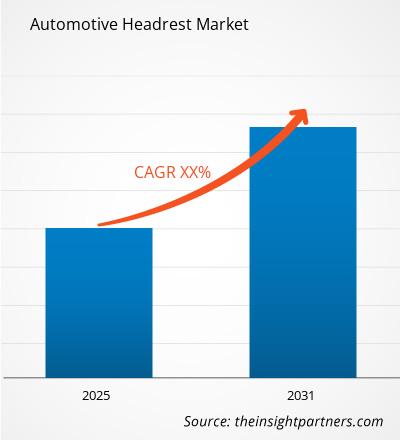
Segmentation Analysis
Product Type
Product Type defines Automotive Headrest Market scope because mechanism choice affects safety response, adjustment convenience, seat cost, and customer comfort perception. The segment is expected to grow at a CAGR of 2.5–3.0% during 2026–2034 as active systems expand gradually while manually adjustable products remain the volume standard.
- Active Headrest: Active headrests are used in safety-oriented trims where mechanisms move closer to the occupant during rear impact, helping reduce head movement and whiplash-related injury risk.
- Automatically Adjusting Headrest: Automatically adjusting headrests support comfort and personalization by aligning position through powered or sensor-linked adjustment, mainly in premium seats and technology-rich electric vehicles.
- Manually Adjustable Headrest: Manually adjustable headrests dominate volume demand because they provide compliant height positioning, low cost, proven durability, and easy integration across mass-market passenger and commercial vehicles.
Application
Application is expected to grow at a CAGR of 2.3–2.8% during 2026–2034 as automakers refine front-seat safety and rear-seat comfort. Front seats generate higher value because they carry more adjustment, trim, and active restraint requirements, while rear seats add unit volume.
- Front Seat: Front-seat headrests carry higher safety and comfort expectations because occupants spend longer time in these positions and OEMs often integrate active, adjustable, or premium trim features.
- Rear Seat: Rear-seat headrests provide essential occupant protection and foldability, with demand tied to family vehicles, SUVs, ride-hailing fleets, and regulations requiring support across seating positions.
Vehicle Type
Vehicle Type is expected to grow at a CAGR of 2.4–2.9% during 2026–2034 as passenger cars remain the main unit base and electric vehicles create premium interior opportunities. Commercial vehicles add durability-led demand for driver comfort and fleet safety.
- Passenger Cars: Passenger cars generate the largest demand because each model requires multiple headrests, with safety compliance, seat comfort, trim quality, and rear-seat usability influencing OEM purchasing.
- Light Commercial Vehicles: Light commercial vehicles require robust front-seat headrests for delivery, service, and utility fleets where driver comfort, durability, and low maintenance cost affect ownership economics.
- Heavy Commercial Vehicles: Heavy commercial vehicles use durable headrests in driver and passenger seats to support long-distance operation, vibration exposure, and extended cabin service life.
- Electric Vehicles: Electric vehicles create selective opportunities for lightweight, premium, and integrated headrests that align with minimalist interiors, enhanced seat comfort, and differentiated passenger experience.
Opportunity Snapshot
| Vehicle Type | Revenue Contribution | Trend Tag | Adoption Stage |
| Passenger Cars | High | Comfort Safety | Mature |
| Light Commercial Vehicles | Medium | Driver Ergonomics | Scaling |
| Heavy Commercial Vehicles | Low | Fleet Durability | Mature |
| Electric Vehicles | Medium | Premium Interior | Scaling |
Automotive Headrest Market Growth Drivers and Impact Analysis
Safety Regulations and Whiplash Mitigation
Head restraints are required to limit rearward head movement during rear-end collisions, making compliance a stable demand driver. Height, backset, strength, gap, and dynamic requirements govern headrest design, affecting seat design at an early development stage. Thus, OEMs view the headrest as an essential seat safety element rather than an optional seat component for passenger comfort. This provides consistent sourcing for all types of vehicles while promoting improvements in locking systems, foam hardness, and seat geometry.
Premium Seating and Comfort Differentiation
Automakers use seating comfort to distinguish trims, especially in SUVs, electric vehicles, and premium passenger cars. Headrests affect cabin quality in terms of cushioning, upholstery quality, adjustability, and integration with additional components like speakers or comfort wings. The growing tendency among consumers to consider the level of support in seats during test drives turns headrests into an element of interior value. The effect will be most pronounced when the manufacturer sells expensive trim packages and needs high-quality components from suppliers.
Vehicle Production Growth in Asia Pacific
Asia Pacific vehicle output creates the largest unit opportunity because every passenger and commercial vehicle requires multiple headrests. High production volumes coupled with local supplies of seats give rise to China, India, Japan, and South Korea. The increasing number of vehicles and policies on the manufacture of these cars creates a need for cheap and compliant head restraint systems. The factor favors suppliers that have regional abilities in molding, trimming, and assembling the head restraints.
Automotive Headrest Market Future Trends
Integrated Comfort and Audio Functions
Automotive Headrest Market trends will increasingly include integrated comfort and infotainment functions in premium cabins. Speakers, neck-contour configurations, heating units, or custom-fit padding can be integrated into headrests without utilizing dashboard real estate. Such technologies are most probable in EVs, luxury SUVs, and executive-class seating arrangements in the back, where quiet cabins and a unique passenger experience are key. Collaboration between supplier companies and teams specializing in electronics, acoustics, foam, and trim will become essential.
Lightweight and Sustainable Seat Components
Future headrest design will prioritize lower weight and more sustainable materials as OEMs evaluate every interior component for efficiency and lifecycle impact. Metal rods will need to be optimized; bio-based foam and recyclable fabrics should be incorporated as well, along with reduced-thickness structural components that do not sacrifice safety performance. This will be most pronounced in Europe, Japan, and EV initiatives, since supplier scorecards will increasingly take into account carbon footprint, recyclability, and material traceability.
Automotive Headrest Market Opportunities
Platform Supply for EV Seating Programs
Automotive Headrest Market Forecasts indicate that electric vehicle seating programs create opportunities for suppliers offering lightweight, premium, and modular headrest designs. EV cabins usually prioritize silence, roominess, and unique seat construction. The headrest design and integration become more important due to that. The supplier can get a platform contract based on matching foam density, trim, adjustability features, and additional functionalities to the OEM brand image. Early engineering involvement allows better validation timing and reuse of components for several derivatives.
Localized Manufacturing Near Seat Assembly Hubs
Localized production provides a practical opportunity because headrests must match seat trim, foam shape, and launch timing precisely. Molding, stitching, metal rods forming, and assembling suppliers with capacity in proximity to vehicle plants can provide cheaper shipping and fast turnaround when there are any changes in design. China, India, Mexico, and Eastern Europe represent countries with promising options for regional sourcing. The firms that manage to deliver locally while maintaining a global quality system will become more competitive.
Frequently Asked Questions

- Comprehensive Market Sizing and Forecast Analysis
- Detailed Segmentation Analysis
- In-Depth Market Dynamics Assessment
- Regional and Country-Level Insights
- Competitive Landscape and Company Benchmarking
- Strategic Business Intelligence
Recent Reports
Testimonials

The Insight Partners' SCADA System Market report is comprehensive, with valuable insights on current trends and future forecasts. The team was highly professional, responsive, and supportive throughout. We are very satisfied and highly recommend their services.
RAN KEDEM Partner, Reali Technologies LTDs
I requested a report on a very specific software market and the team produced the report in a few days. The information was very relevant and well presented. I then requested some changes and additions to the report. The team was again very responsive and I got the final report in less than a week.
JEAN-HERVE JENN Chairman, Future Analytica
We worked with The Insight Partners for an important market study and forecast. They gave us clear insights into opportunities and risks, which helped shape our plans. Their research was easy to use and based on solid data. It helped us make smart, confident decisions. We highly recommend them.
PIYUSH NAGPAL Sr. Vice President, High Beam Global
The Insight Partners delivered insightful, well-structured market research with strong domain expertise. Their team was professional and responsive throughout. The user-friendly website made accessing industry reports seamless. We highly recommend them for reliable, high-quality research services
YUKIHIKO ADACHI CEO, Deep Blue, LLC.
This is the first time I have purchased a market report from The Insight Partners.While I was unsure at first, I visited their web site and felt more comfortable to take the risk and purchase a market report.I am completely satisfied with the quality of the report and customer service. I had several questions and comments with the initial report, but after a couple of dialogs over email with their analyst I believe I have a report that I can use as input to our strategic planning process.Thank you so much for taking the extra time and making this a positive experience.I will definitely recommend your service to others and you will be my first call when we need further market data.
JOHN SUZUKI President and Chief Executive Officer, Board Director, BK Technologies
I wish to appreciate your support and the professionalism you displayed in the course of attending to my request for information regarding to infectious disease IVD market in Nigeria. I appreciate your patience, your guidance, and the fact that you were willing to offer a discount, which eventually made it possible for us to close a deal. I look forward to engaging The Insight Partners in the future, all thanks to the impression you have created in me as a result of this first encounter.
DR CHIJIOKE ONYIA MANAGING DIRECTOR, PineCrest Healthcare Ltd.Reason to Buy
- Informed Decision-Making
- Understanding Market Dynamics
- Competitive Analysis
- Identifying Emerging Markets
- Customer Insights
- Market Forecasts
- Risk Mitigation
- Boosting Operational Efficiency
- Strategic Planning
- Investment Justification
- Tracking Industry Innovations
- Aligning with Regulatory Trends





 Get Free Sample for