
Biliary Lithotripter Professional Market Trends, Size & Forecast by 2034
Coverage: By Type (Mechanical, Ultrasonic.); Application (Hospital, Medical Center.) , and Geography (North America, Europe, Asia Pacific, and South and Central America)
- Status : Data Released
- Report Code : TIPRE00021851
- Category : Life Sciences
- No. of Pages : 150
- Available Report Formats :


- Last update date : October 30, 2026


2025 Market Size
US$ 489.14 Mn
Base year value
2034 Forecast
US$ 809.59 Mn
Projected by 2034
CAGR 2026-2034
5.76 %
Growth rate
Addressable Market
US$ 5,885.91 Mn
(2026-2034)
The biliary lithotripter professional market was valued at US$ 489.14 Million in 2025 and is projected to reach US$ 809.59 Million by 2034, registering a CAGR of 5.76% during 2026–2034. Growth is supported by increasing diagnosis of complex bile duct stones, wider adoption of minimally invasive endoscopy, expanding ERCP capacity, and demand for direct-visualization stone fragmentation. Improvements in mechanical and energy-based systems are also reducing dependence on open surgery.
Within North America, the biliary lithotripter professional market size is projected to expand at a CAGR of ~6% through 2034. The region benefits from advanced therapeutic endoscopy infrastructure, trained gastroenterologists, established reimbursement, and growing use of digital cholangioscopy for difficult stones. Hospitals increasingly invest in systems that support precise fragmentation, efficient stone clearance, shorter procedure pathways, and compatibility with existing endoscopic equipment.
Biliary Lithotripter Professional Market Assessment and Insights
Regional Outlook
- North America: ~36% of the global biliary lithotripter professional market share in 2025 | ~6% CAGR through 2034. Market position: North America leads through advanced therapeutic endoscopy, substantial healthcare expenditure, established ERCP infrastructure, specialist training, and early adoption of direct-visualization stone-fragmentation technologies.
- US: ~88% of North American market revenue in 2025 | ~6% CAGR through 2034. Market position: The US dominates regional revenue through extensive hospital capacity, specialist gastroenterology centers, procedure reimbursement, product availability, and adoption of cholangioscopy-guided management for difficult biliary stones.
- Europe: ~30% of the global market in 2025 | ~6% CAGR through 2034. Market position: Europe is a mature market supported by universal healthcare, specialist endoscopy units, established manufacturers, and significant procedural demand across Germany, the UK, France, Italy, and Spain.
- Asia Pacific: ~25% of the global market in 2025 | ~8% CAGR through 2034. Market position: Asia Pacific is the fastest-growing region as gastroenterology infrastructure, ERCP availability, hospital investment, professional training, and minimally invasive treatment expand across major economies.
Segment Outlook
- Mechanical: ~61% Share in 2025 | ~6% CAGR through 2034. Market position: Mechanical systems lead through established clinical familiarity, relatively accessible acquisition costs, compatibility with conventional ERCP workflows, and widespread use for stones that cannot be removed by standard balloon or basket extraction.
- Hospital: ~74% Share in 2025 | ~6% CAGR through 2034. Market position: Hospitals lead because complex biliary procedures require fluoroscopy, anesthesia, therapeutic endoscopy, surgical backup, infection management, specialized equipment, and trained multidisciplinary personnel within an integrated care environment.
Competitive Coverage
Olympus Corporation, Cook Group Incorporated, Boston Scientific Corporation, Siemens Healthineers AG, Dornier MedTech GmbH, DirexGroup, Richard Wolf GmbH, Medispec Ltd., KARL STORZ SE & Co. KG, Walz Elektronik GmbH
Methodology
The Insight Partners follows Data Collection & Secondary Research, Primary Research, Data Analysis, and Data Triangulation & Final Review to validate market estimates and insights.
Source: The Insight Partners' analysis based on proprietary research, government publications, company annual reports, investor presentations, industry databases, and expert interviews.
Biliary stone removal methods have shifted from surgical intervention and standard stone removal to minimally invasive methods using ERCP, cholangioscopy, or select percutaneous approaches. In equipment development, manual mechanical basket devices have made way for electrohydraulic, ultrasonic, shock wave, and laser technologies. Development requires precise generators, rugged probes, retrieval devices, imaging compatibility, electrical safety, controlled energy delivery, and sterilization or single use manufacturing process.
Up to 2034, investments will be made on direct visualization, compact generators, disposable probes, compatibility with cholangioscopes, and integrated stone management process. There are opportunities for growth in Asia Pacific and the Middle East with growing specialist endoscopy capabilities. Regulations that pertain to electrical safety, biocompatibility, device performance, reprocessing, labeling, adverse event reporting, and user training will favor suppliers offering equipment with accessories, training, maintenance, and procedure support.
Biliary Lithotripter Professional Market Report Scope
| Report Attribute | Details |
|---|---|
| Market size in 2025 | US$ 489.14 Million |
| Market Size by 2034 | US$ 809.59 Million |
| Global CAGR (2026 - 2034) | 5.76% |
| Historical Data | 2021-2024 |
| Forecast period | 2026-2034 |
Biliary Lithotripter Professional Market Analysis
Growth of biliary lithotripter professional market will be determined by the increase in common bile duct stone diagnosis, the aging of the population, and referrals of complicated cases to the therapeutic endoscopy centers. High demand will arise from the patients who suffer from large, impacted, intrahepatic, or anatomically challenging stones, which are not retrieved through the conventional process.
Value chain encompasses component producers, energy generator producers, probe and basket producers, endoscopy firms, distributors, hospitals, medical centers, and service providers. Economics of the equipment consist of capital cost, disposables, maintenance, training, sterilization, procedure duration, and re-intervention. The buyers will increasingly consider the cost of one stone clearance event rather than the lithotripter price.
Analysis of the professional market for biliary lithotripters reveals competition among mechanical systems, ultrasonic-assisted systems, electrohydraulic systems, extracorporeal systems, endoscopic imaging, accessories, and technical support. Olympus Corporation, Cook Group Incorporated, Boston Scientific Corporation, Richard Wolf GmbH, and KARL STORZ SE & Co. KG have significant expertise in endoscopy or stone removal.
Dornier MedTech GmbH, DirexGroup, Medispec Ltd., and Siemens Healthineers AG bring additional experience in lithotripsy, imaging, or capital equipment. Walz Elektronik GmbH is focused on electrohydraulic fragmentation systems. Investment in strategic positions will shift towards portability, disposable accessories, direct visualization systems, rapid fragmentation, local service, and training for hospitals to build their biliary programs.
● REPORT CUSTOMIZATION
Tailor This Report To Align With Your Specific Business Requirements
This report can be customized to align precisely with your business objectives, scope, and target markets. Customization options include tailored segmentation, geography, competitive analysis, and strategic insights to support informed decision-making.
Customize This Report →WHAT YOU CAN ADJUST
- ● Segmentations
- ● Geography
- ● Competitive Analysis
- ● Language Preferences
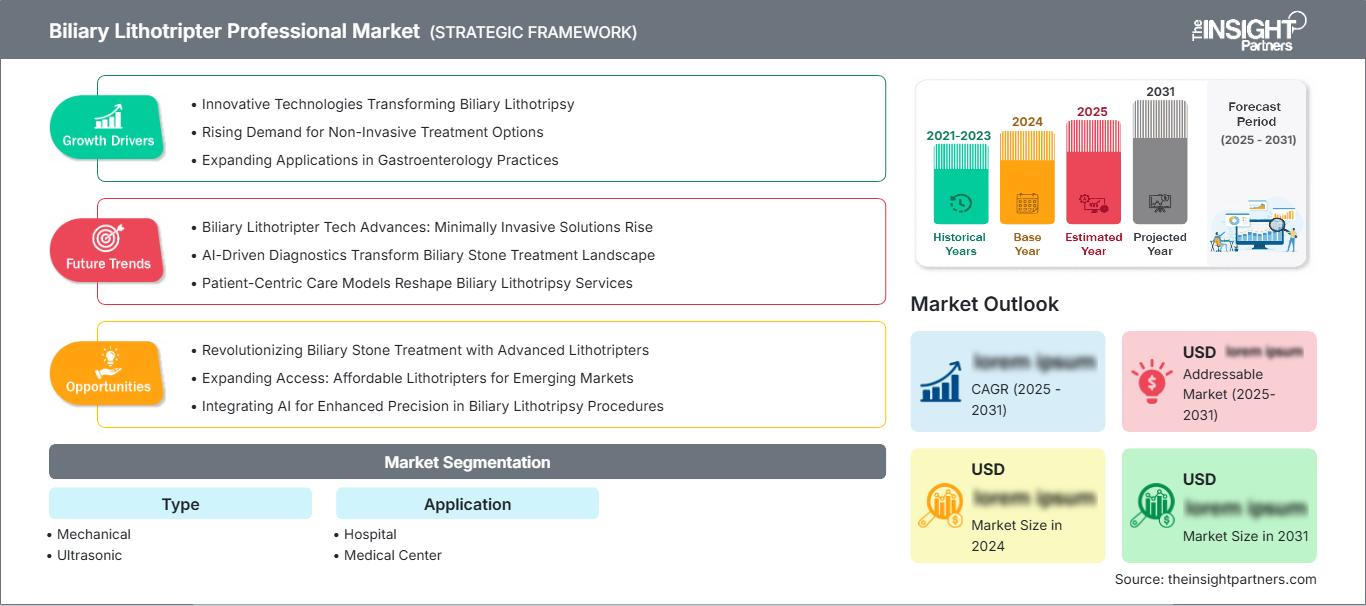
Biliary Lithotripter Professional Market: Strategic Insights
Regional Insights
North America Biliary Lithotripter Professional Market
North America accounted for approximately ~36% of global revenue in 2025 and is projected to register a CAGR of ~6% through 2034. The regional biliary lithotripter professional market share arises from developed endoscopy therapeutic infrastructure, procedure cost, wide availability of ERCP, and usage of cholangioscopy-guided lithotripsy procedure. There is strong demand in tertiary hospitals, research institutions, and gastroenterology centers that have complex cases being referred to them.
Canada adds its strength via provincial hospital networks, academic centers, and specialized endoscopy institutions. The market in Mexico comes from developing demand via private hospitals, medical tourism, and investments made in gastrointestinal treatments. There is focus in regional procurement on fragmentation efficiency, scope compatibility, probe availability, training, service response time, and evidences proving that the repeat procedures can be reduced. The usage still depends on specialized knowledge since it needs specialized lithotripsy skills.
U.S. Biliary Lithotripter Professional Market
The US represented approximately ~88% of North American revenue in 2025 and is projected to expand at a CAGR of ~6% through 2034. This is justified by the presence of a strong base of hospitals, specialty gastroenterological centers, advanced imaging, complex endoscopic procedures, and proper referral pathways for stones in the bile duct.
Boston Scientific Corporation, Olympus Corporation, Cook Group Incorporated, Dornier MedTech GmbH, Richard Wolf GmbH, and KARL STORZ SE & Co. KG have exposure within the market. More hospitals are now employing cholangioscopy combined with electrohydraulic and/or laser stone fragmentation for large or impacted stones. The factors that would influence purchase include compatibility with existing endoscopes, costs of disposables, clinical support, maintenance considerations, and chances of success without surgical intervention or repeat ERCP.
Europe Biliary Lithotripter Professional Market
Europe accounted for approximately ~30% of global revenue in 2025 and is projected to grow at a CAGR of ~6% through 2034. Universal healthcare developed gastrointestinal services, aging populations, and established interventional endoscopy support regional demand. Germany is assessed as the leading country in Europe because of its hospital infrastructure, medical-technology manufacturing, specialist gastroenterology services, and presence of established endoscopy and lithotripsy companies.
In the UK, demand is sustained by public hospitals, tertiary referral centers, and endoscopy training. France provides for wide coverage in healthcare and specialized hepatobiliary procedures. In Italy and Spain, procedure volume is sustained by regional hospitals, university hospitals, and increased gastrointestinal intervention using minimally invasive procedures.
Procurement in Europe focuses on clinical efficacy, conformity documentation, energy control safety, traceability, compatibility with endoscopes, reprocessing, and technical support. There are advantages for manufacturers due to availability of engineering expertise and local service. There are steady sales growth in Europe, despite its mature Western European systems. There are steady sales due to replacement of old equipment and increased cholangioscopy.
APAC Biliary Lithotripter Professional Market
Asia Pacific represented approximately ~25% of global revenue in 2025 and is the fastest-growing region, with a CAGR of ~8% through 2034. China leads Asia Pacific region on the basis of hospital size, number of procedures performed, indigenous medical devices manufacturing and growing therapeutic endoscopy. India has important biliary disease market along with rapidly growing private hospitals and gastroenterology practice.
Technology advancements in endoscopy are provided by Japan and South Korea. Australia has its speciality referral centers and established professional education. The regional growth is driven by new hospital construction, insurance coverage, local device manufacturing, medical tourism and ERCP availability.
Middle East & Africa Biliary Lithotripter Professional Market
The Middle East & Africa market is projected to register a CAGR of ~7% through 2034. Saudi Arabia is assessed as the leading country in the Middle East & Africa through hospital investment, specialist recruitment, healthcare transformation, and procurement of advanced endoscopy systems. The UAE contributes through private hospitals, medical tourism, and developed interventional gastroenterology.
South Africa maintains comparatively developed academic hospitals and private healthcare infrastructure. Across the Rest of MEA, limited ERCP capacity, equipment maintenance, accessory availability, and specialist training constrain adoption. Investment in referral hospitals, medical education, device distribution, and biomedical engineering support can widen access to advanced biliary stone management.
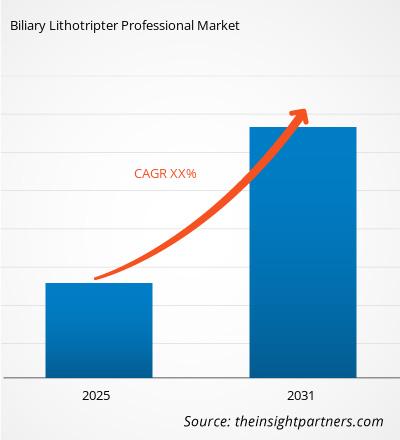
Segmentation Analysis
Type
The biliary lithotripter professional market scope covers systems differentiated by fragmentation mechanism, procedural workflow, equipment requirements, and suitability for complex stones. Technology selection depends on stone size, impaction, location, duct anatomy, endoscope compatibility, operator experience, and availability of energy-generating platforms. Mechanical systems are projected to register a CAGR of ~6% during 2026–2034 as established ERCP use, procedural familiarity, broad accessory availability, and relatively accessible costs sustain adoption.
- Mechanical: Mechanical systems capture and crush difficult stones using reinforced baskets and controlled traction. They remain strategically important where standard extraction fails but direct-visualization energy systems are unavailable, unnecessary, or economically difficult to justify.
- Ultrasonic: Ultrasonic systems transmit high-frequency mechanical energy to fragment calculi while supporting aspiration or fragment removal. Adoption depends on compatible probes, effective energy transmission, operator expertise, equipment cost, and the stone characteristics encountered during treatment.
Application
Application demand reflects differences in clinical infrastructure, case complexity, procedural volume, specialist availability, and investment capacity. Large institutions process referred cases requiring anesthesia, fluoroscopy, advanced imaging, endoscopy, and surgical backup. Hospital applications are projected to register a CAGR of ~6% during 2026–2034 as complex stone referrals, ERCP capacity, and adoption of direct-visualization treatment sustain equipment utilization.
- Hospital: Hospital demand is supported by high-acuity patients, multidisciplinary teams, emergency biliary drainage, inpatient monitoring, advanced cholangioscopy, and access to surgery when endoscopic clearance is incomplete or clinical complications occur.
- Medical Center: Medical Center adoption is concentrated in specialized gastroenterology and outpatient facilities with sufficient procedural infrastructure. Buyers prioritize compact equipment, predictable disposable costs, rapid setup, technical support, and clear transfer arrangements for high-risk cases.
Opportunity Snapshot
| Application | Revenue Contribution | Trend Tag | Adoption Stage |
| Hospital | High | Complex ERCP | Mature |
| Medical Center | Medium | Outpatient Endoscopy | Scaling |
Biliary Lithotripter Professional Market Growth Drivers and Impact Analysis
Increasing Use of Minimally Invasive Biliary Intervention
Modern healthcare trends tend to support the use of endoscopic stone removal rather than open surgical exploration, where possible. ERCP not only helps make diagnosis, but also performs sphincterotomy, drainage, lithotripsy and stone removal through an extremely small and painless channel. With the use of lithotripters, this is extended to even such stones which are either too big, or difficult to remove by regular baskets and balloons. Commercial effects of this technology include generators, probes, scopes, guidewires, baskets, extraction balloons, irrigation systems, and training. Successful adoption depends on the presence of therapeutic endoscopy and anesthesia departments.
Growth in Difficult Bile Duct Stone Referrals
A subset of common bile duct stones cannot be cleared through standard extraction because of stone size, hardness, impaction, location, duct narrowing, or altered anatomy. These cases are increasingly referred from community hospitals to specialist centers capable of mechanical, electrohydraulic, ultrasonic, laser, or extracorporeal fragmentation. Referral concentration improves equipment utilization and supports investment in advanced devices. The operational impact includes fewer surgical escalations, improved access to targeted fragmentation, and potential reduction in repeated conventional attempts. Hospitals must nevertheless maintain protocols covering antibiotic use, drainage, fragment retrieval, stenting, and follow-up imaging when complete clearance is not achieved.
Expansion of Direct-Visualization Cholangioscopy
Digital single-operator cholangioscopy allows clinicians to visualize stones directly and position energy probes against the target surface. This can improve fragmentation precision compared with procedures guided primarily by fluoroscopy. Boston Scientific Corporation’s SpyGlass platform supports electrohydraulic or laser use under direct visualization, demonstrating the increasing integration of imaging and lithotripsy within one procedural workflow.
Commercial demand consequently extends beyond lithotripters to imaging catheters, processors, probes, biopsy devices, retrieval accessories, and procedural training. The principal barriers are disposable cost, learning requirements, irrigation needs, and uneven reimbursement.
Biliary Lithotripter Professional Market Future Trends
Integrated Visualization and Energy Delivery
Biliary lithotripter professional market trends are moving toward platforms that combine high-resolution duct visualization, controlled energy delivery, irrigation, aspiration, and accessory exchange. Future systems may use smaller probes, larger working channels, improved scope maneuverability, and software-assisted energy settings. Integration can reduce repeated accessory exchanges and help clinicians confirm fragmentation and clearance during one procedure. Development will focus on compatibility across endoscopy platforms, disposable traceability, procedural simplicity, and protection of imaging sensors. Manufacturers able to combine visualization, lithotripsy, retrieval, and training within one commercially coherent ecosystem can strengthen adoption among centers building advanced biliary programs.
Greater Use of Laser and Electrohydraulic Fragmentation
Energy-based fragmentation is expected to gain importance for impacted or exceptionally hard stones that challenge mechanical systems. Clinical evidence published in 2026 compared newer extracorporeal shock-wave treatment with cholangioscopy-guided laser lithotripsy, showing high clearance with both approaches while illustrating differences in treatment sessions and workflow.
Future adoption will depend on single-session clearance, adverse-event performance, capital cost, disposable availability, service coverage, and operator training. Mechanical lithotripsy will remain relevant, but specialist centers may increasingly use energy-based methods earlier for cases with a low probability of conventional extraction success.
Biliary Lithotripter Professional Market Opportunities
Advanced Endoscopy Programs in Emerging Healthcare Markets
Biliary lithotripter professional market Forecasts support investment in therapeutic endoscopy centers across Asia Pacific, the Middle East, Africa, and Latin America. Manufacturers can combine equipment placement with physician training, biomedical engineering support, accessory inventory, preventive maintenance, and referral-network development. Commercial strategies should prioritize hospitals performing sufficient ERCP volumes to support sustainable utilization. Leasing, reagent-style accessory commitments, and managed-equipment arrangements can reduce initial capital barriers. Successful expansion requires dependable clinical support because incorrect probe positioning, inadequate visualization, or incomplete fragment retrieval can limit outcomes despite technically capable equipment.
Portable Systems and Medical Center Deployment
Compact generators and disposable probes create an opportunity to extend selected fragmentation procedures beyond major tertiary hospitals. Specialized medical centers may adopt portable systems where procedural volume does not justify large capital equipment, but trained gastroenterologists and appropriate emergency transfer pathways are available. Walz Elektronik GmbH’s electrohydraulic platform is marketed with portable cholangioscopy solutions, illustrating the potential for flexible deployment.
Suppliers should offer clear per-procedure economics, rapid technical support, loaner equipment, and compatible accessories. Medical centers must maintain patient-selection criteria and relationships with hospitals for surgery or intensive management when complications arise.
Recent Developments
- July 2026: Dornier MedTech GmbH was associated with newly reported clinical evidence evaluating the Dornier Delta III extracorporeal lithotripter against cholangioscopy-guided laser lithotripsy for difficult common bile duct stones. The analysis reported high duct-clearance performance and provided comparative evidence concerning treatment sessions, safety, and procedural selection.
- During 2025: Walz Elektronik GmbH expanded commercial visibility for its EL 27 electrohydraulic lithotripsy system through a cholangioscopy portfolio distributed for endoscopic stone management. The platform is positioned for fragmentation of large biliary stones under direct visualization and is supported by portable cholangioscope configurations and specialist clinical assistance.
- April 2025: Medtronic plc entered a US distribution agreement for the Dragonfly pancreaticobiliary system, which features enhanced maneuverability and a larger working channel designed to support robust electrohydraulic lithotripsy probes. Although not included in the competitive-coverage list, the development demonstrates increasing commercial investment in direct-visualization biliary stone treatment.
Frequently Asked Questions

- Comprehensive Market Sizing and Forecast Analysis
- Detailed Segmentation Analysis
- In-Depth Market Dynamics Assessment
- Regional and Country-Level Insights
- Competitive Landscape and Company Benchmarking
- Strategic Business Intelligence
Recent Reports
Testimonials

The Insight Partners provided valuable market intelligence that supported our global go-to-market strategy. Their team was professional, responsive, and attentive to our feedback, providing thoughtful analysis and helpful methodological clarifications throughout the project.
Junmo Kim Chief Financial Officer (CFO), Enertech Co., Ltd.
The Insight Partners' SCADA System Market report is comprehensive, with valuable insights on current trends and future forecasts. The team was highly professional, responsive, and supportive throughout. We are very satisfied and highly recommend their services.
RAN KEDEM Partner, Reali Technologies LTDs
I requested a report on a very specific software market and the team produced the report in a few days. The information was very relevant and well presented. I then requested some changes and additions to the report. The team was again very responsive and I got the final report in less than a week.
JEAN-HERVE JENN Chairman, Future Analytica
We worked with The Insight Partners for an important market study and forecast. They gave us clear insights into opportunities and risks, which helped shape our plans. Their research was easy to use and based on solid data. It helped us make smart, confident decisions. We highly recommend them.
PIYUSH NAGPAL Sr. Vice President, High Beam Global
The Insight Partners delivered insightful, well-structured market research with strong domain expertise. Their team was professional and responsive throughout. The user-friendly website made accessing industry reports seamless. We highly recommend them for reliable, high-quality research services
YUKIHIKO ADACHI CEO, Deep Blue, LLC.
This is the first time I have purchased a market report from The Insight Partners.While I was unsure at first, I visited their web site and felt more comfortable to take the risk and purchase a market report.I am completely satisfied with the quality of the report and customer service. I had several questions and comments with the initial report, but after a couple of dialogs over email with their analyst I believe I have a report that I can use as input to our strategic planning process.Thank you so much for taking the extra time and making this a positive experience.I will definitely recommend your service to others and you will be my first call when we need further market data.
JOHN SUZUKI President and Chief Executive Officer, Board Director, BK Technologies
I wish to appreciate your support and the professionalism you displayed in the course of attending to my request for information regarding to infectious disease IVD market in Nigeria. I appreciate your patience, your guidance, and the fact that you were willing to offer a discount, which eventually made it possible for us to close a deal. I look forward to engaging The Insight Partners in the future, all thanks to the impression you have created in me as a result of this first encounter.
DR CHIJIOKE ONYIA MANAGING DIRECTOR, PineCrest Healthcare Ltd.Reason to Buy
- Informed Decision-Making
- Understanding Market Dynamics
- Competitive Analysis
- Identifying Emerging Markets
- Customer Insights
- Market Forecasts
- Risk Mitigation
- Boosting Operational Efficiency
- Strategic Planning
- Investment Justification
- Tracking Industry Innovations
- Aligning with Regulatory Trends





 Get Free Sample for