
Bioactive Wound Dressing Market Size, Trends & Growth by 2034
Bioactive Wound Dressing Market Size and Forecasts (2021–2034), Global and Regional Share, Trends, and Growth Opportunity Analysis Report Coverage : by Product (Hydrocolloids, Alginate Dressing, Skin Substitutes, Antimicrobial Dressing, Other Products); Application (Wounds, Burns, Ulcers, Other Applications); and Geography (North America, Europe, Asia Pacific, and South and Central America)
- Status : Data Released
- Report Code : TIPRE00040823
- Category : Life Sciences
- No. of Pages : 150
- Available Report Formats :


- Last update date : November 03, 2026


2025 Market Size
US$ 13.18 Bn
Base year value
2034 Forecast
US$ 23.13 Bn
Projected by 2034
CAGR 2026-2034
6.45 %
Growth rate
Addressable Market
US$ 164.26 Bn
(2026-2034)
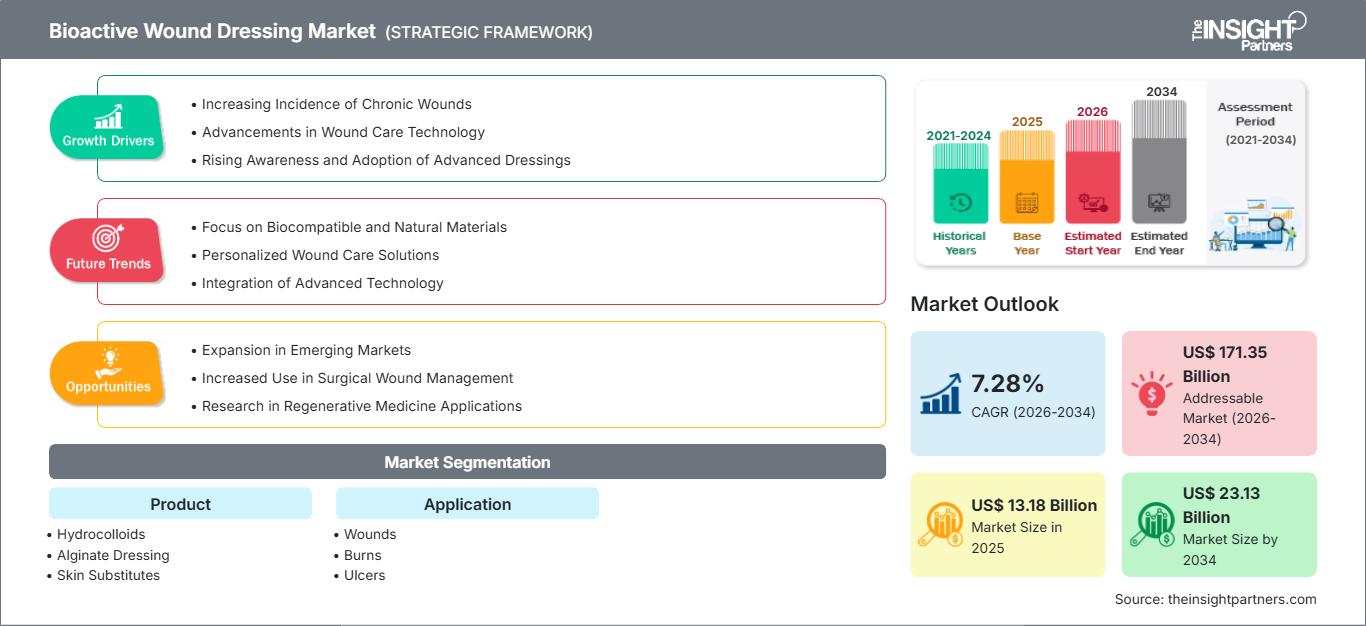
The bioactive wound dressing market was valued at US$ 13.18 Billion in 2025 and is expected to reach US$ 23.13 Billion by 2034, registering a CAGR of 6.45% during 2026–2034. Expansion is supported by the increasing prevalence of chronic wounds, rising surgical volumes, greater infection-control requirements, and continued development of biologically active materials. Clinical adoption is shifting toward dressings that manage moisture while addressing bioburden, inflammation, tissue regeneration, and difficult healing environments.
Within North America, the bioactive wound dressing market size is projected to expand at approximately ~6% CAGR through 2034. Growth is supported by established specialist wound-care networks, substantial diabetes-related ulcer management, and increasing use of advanced dressings across hospitals, outpatient clinics, and home care. Reimbursement scrutiny is encouraging products that demonstrate longer wear time, fewer dressing changes, effective exudate management, and measurable improvement in healing outcomes.
Bioactive Wound Dressing Market Assessment and Insights
Regional Outlook
- North America: ~40% of the global market in 2025 | ~6% CAGR through 2034. Market position: North America leads through developed wound-care infrastructure, high treatment expenditure, specialist clinical networks, advanced reimbursement pathways, and broad adoption of antimicrobial dressings, skin substitutes, and chronic-wound protocols.
- US: ~88% of North American market revenue in 2025 | ~6% CAGR through 2034. Market position: The US anchors regional demand through its large diabetes burden, extensive hospital and outpatient ecosystem, active product-development pipeline, and sustained utilization of bioactive products for ulcers, surgical wounds, and burns.
- Europe: ~31% of the global market in 2025 | ~6% CAGR through 2034. Market position: Europe combines mature wound-management practices with coordinated clinical guidance and evidence-based procurement. Germany leads within Europe, followed by the UK, France, Italy, and Spain.
- Asia Pacific: ~21% of the global market in 2025 | ~9% CAGR through 2034. Market position: Asia Pacific is the fastest-growing region as diabetes care, hospital capacity, clinician training, and local production expand. China leads within Asia Pacific, while Japan, India, South Korea, and Australia support broader adoption.
Segment Outlook
- Product: ~64% Share in 2025 | ~6% CAGR through 2034. Market position: Product leads because therapeutic performance depends on material composition, antimicrobial activity, moisture balance, conformability, tissue interaction, exudate capacity, wear duration, and suitability for specific wound conditions.
- Application: ~36% Share in 2025 | ~7% CAGR through 2034. Market position: Application has the higher growth outlook as chronic ulcer volumes increase and clinicians adopt diagnosis-specific protocols that connect dressing selection with infection status, tissue condition, exudate, and healing progress.
Competitive Coverage
3M Company, B. Braun SE, Essity Aktiebolag, Convatec Group Plc, Covalon Technologies Ltd., DermaRite Industries, LLC, Hollister Incorporated, Integra LifeSciences Holdings Corporation, Johnson & Johnson Services, Inc., Medtronic plc
Methodology
The Insight Partners follows Data Collection & Secondary Research, Primary Research, Data Analysis, and Data Triangulation & Final Review to validate market estimates and insights.
Source: The Insight Partners' analysis based on proprietary research, government publications, company annual reports, investor presentations, industry databases, and expert interviews.
From simple protective coverings, wound dressings have become therapeutic platforms meant to modify wound environments. The manufacture process involves hydrocolloid technology, alginate technology, collagen technology, scaffold technology, antimicrobial technology, silicone technology, absorption fibers, and moisture response technology. The supplier must control sterility, absorption capacity, fluid holding capacity, tensile capacity, conformation, biocompatibility, and shelf stability. The process of manufacturing becomes even complicated if there are ingredients like silver, iodine, nitric oxide, medical honey, and animal-derived matrices among others that need further regulatory evidences.
Up to 2034, innovations will concentrate on difficult-to-heal wounds, ambulatory settings, and at-home treatment. Asia Pacific provides market opportunity by investing in hospitals, diabetes programs, local production, and increasing availability of wound specialists. Antimicrobial regulation, animal derivatives regulation, tissue products regulation, and healing indication regulation will keep on influencing commercialization of the products. Those manufacturers that have the combination of clinical evidence, health economic outcome, clinician education, and reliable supply will be more advantageous compared to the competitors who are only relying on dressing prices.
Bioactive Wound Dressing Market Report Scope
| Report Attribute | Details |
|---|---|
| Market size in 2025 | US$ 13.18 Billion |
| Market Size by 2034 | US$ 23.13 Billion |
| Global CAGR (2026 - 2034) | 6.45% |
| Historical Data | 2021-2024 |
| Forecast period | 2026-2034 |
Bioactive Wound Dressing Market Analysis
The bioactive wound dressing market is influenced by increasing healthcare costs related to treatment of diabetic foot ulcers, pressure wounds, venous ulcers of legs, burns, surgery sites, and trauma wounds. Ecosystem spans from suppliers of biomaterials and active ingredients through converting, coating, sterilization, packaging, distribution, clinical use, and outcomes measurement. Demand is affected by the ability of products to control exudate, reduce microbiological activity, protect surrounding skin, and facilitate tissue regeneration.
Supply dynamics show great variations by product category. Hydrocolloid and alginate-based products are mature, whereas skin substitutes and complex antimicrobial matrices have complex supply dynamics. Buying decision takes into account not just the unit cost but also the time required for application, how often does one need to replace a product, healing speed, infection threats, waste production, and nursing considerations.
According to the bioactive wound dressing market report, the market sees the competition of diverse healthcare companies and specialized wound-care vendors. The competitive advantages of 3M Company, Convatec Group Plc, Essity Aktiebolag, B. Braun SE, and Medtronic plc include a wide range of institutional connections. Integra LifeSciences Holdings Corporation is known for regenerative matrices, while Covalon Technologies Ltd., DermaRite Industries, LLC, and Hollister Incorporated compete via specialized dressings and care setting expertise.
The investments go towards the biofilm disruption, nitric oxide creation, collagen matrices, placental tissue, atraumatic adhesion, and wound management process integration. Johnson & Johnson Services, Inc. remains relevant owing to the surgical ecosystem. Differentiation relies increasingly on the proof of healing improvement, decreased number of dressing replacements, reduced workload of clinicians, and applicability in various care settings.
● REPORT CUSTOMIZATION
Tailor This Report To Align With Your Specific Business Requirements
This report can be customized to align precisely with your business objectives, scope, and target markets. Customization options include tailored segmentation, geography, competitive analysis, and strategic insights to support informed decision-making.
Customize This Report →WHAT YOU CAN ADJUST
- ● Segmentations
- ● Geography
- ● Competitive Analysis
- ● Language Preferences
Bioactive Wound Dressing Market: Strategic Insights
Regional Insights
North America bioactive wound dressing market
The North American region contributed approximately ~40% towards total worldwide revenue in 2025 and is expected to grow at a ~6% CAGR over 2034. The share of the bioactive wound dressings market is a result of the huge number of treatments required for diabetic foot ulcers, pressure sores, surgical wounds, burns, and venous ulcers. Efficient hospital networks, wound centers, home care organizations, and skilled specialists ensure widespread use of these products.
Increasingly, regional acquisitions are looking for value in the entire therapy pathway, and not just cost of acquisition. Long wearing time, low leakage rate, less number of changeovers, and lesser nursing time can enable good adoption even at premium prices. While the Canadian market offers organized wound care services and public purchasing mechanisms, the Mexican market provides an emerging opportunity with its private hospitals and access to sophisticated products.
U.S. bioactive wound dressing market
The US is responsible for producing ~88% of North American bioactive wound dressing market share in 2025 and is anticipated to grow by ~6% CAGR up to 2034. This is enabled in North America by virtue of its robust inpatient and outpatient facilities, high need for chronic wounds management, regulatory filings, and commercialization of antimicrobial dressings, matrices and skin substitutes.
The companies with US exposure include: 3M Company, Convatec Group Plc, Covalon Technologies Ltd., Integra LifeSciences Holdings Corporation, DermaRite Industries, LLC, Hollister Incorporated, Johnson & Johnson Services, Inc., and Medtronic plc. Utilization trends are shifting towards evidence-based algorithmic approaches that classify the state of the tissue, infection risk, amount of exudates, wound depth and co-morbidities prior to product selection. Reimbursement policies and comparative effectiveness become significant, especially for expensive skin substitutes.
Europe bioactive wound dressing market
Europe was estimated to be holding approximately ~31% of global revenue in 2025 and is expected to account for ~6% CAGR through 2034. There are structured wound management guidelines, aged populations, community nursing care, and increased emphasis on antimicrobial stewardship in this region. Germany leads this region thanks to its hospital infrastructure, medical devices industry, and organized treatment of chronic wounds.
There is an already developed community care program in the United Kingdom and products that need fewer nursing visits are preferred there. Contribution from France includes hospitals and outpatient wound care centers whereas Italy shows a high demand for these products related to diabetes, vascular diseases, and elderly people.
B. Braun SE, Essity Aktiebolag, Convatec Group Plc, and others have substantial presence in Europe. Fluid handling, atraumatic removal, biofilm management, duration of wear, and compatibility with compression/negative pressure therapy are increasingly important criteria of regional procurement. Antimicrobial dressing, those with animal-originated materials, and those making claims beyond physical protection will be especially subject to regulatory scrutiny. Growth will be highest for clinically proven products that have health economic evidence.
APAC bioactive wound dressing market
Asia Pacific accounted for approximately ~21% of global revenue in 2025 and is projected to register the fastest regional CAGR of ~9% through 2034. China is the leading country in Asia Pacific, supported by hospital expansion, local manufacturing, diabetes-related wound demand, and improving access to advanced treatment.
Japan offers an existing base of clinical guidance and elderly patients, while South Korea is a mix of good hospitals and biomaterials development. There are great possibilities in India, which can be attributed to the increasing number of private hospitals and diabetic foot services. There is also developed standard of wound care and home care in Australia. Development in this region will depend on several factors.
Middle East & Africa bioactive wound dressing market
The Middle East & Africa region is projected to expand at approximately ~6% CAGR through 2034. Saudi Arabia is the leading country in the Middle East & Africa, supported by hospital investment, diabetes-management needs, and the development of specialist wound services. The UAE contributes premium private healthcare and medical tourism.
South Africa is the country which has developed its clinician base and distribution channels within Sub-Saharan Africa, whereas the Rest of MEA is inconsistent in terms of accessibility of trained clinicians and high-end products. The healthcare infrastructure, temperature controlled storage wherever necessary, electricity supply and the reach of distributors impact the accessibility of the product. A cost-based purchasing will prefer dressings that have less variability and reduce infections and nursing staff requirement.
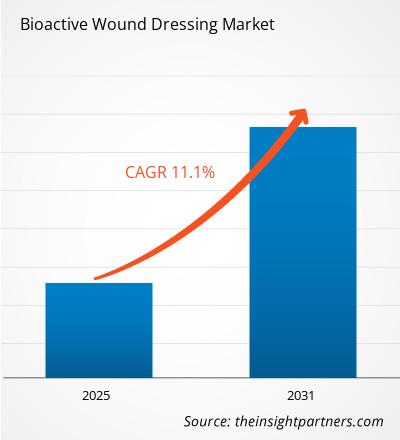
Segmentation Analysis
Product
The bioactive wound dressing market scope by Product includes materials designed to manage moisture, microbial burden, tissue protection, and regeneration across diverse wound conditions. Adoption depends on wound depth, exudate level, infection status, healing phase, periwound condition, and care setting. Skin Substitutes are projected to expand at approximately ~8% CAGR during 2026–2034 as clinicians use regenerative matrices for complex ulcers, burns, and wounds that do not respond adequately to conventional management.
- Hydrocolloids: These dressings form a moist gel after interacting with wound fluid and are commonly selected for low-to-moderately exuding wounds. Their occlusive structure, conformability, and extended wear support convenient management of suitable superficial wounds.
- Alginate Dressing: Calcium or sodium alginate fibers offer strong fluid absorption and gel formation. They are particularly relevant for moderately or heavily exuding wounds, irregular cavities, and situations requiring effective moisture control without frequent replacement.
- Skin Substitutes: Cellular, acellular, collagen-based, placental, or tissue-derived constructs provide structural support for difficult wounds. Their utilization depends on wound preparation, patient eligibility, clinical evidence, reimbursement, and careful monitoring of healing progression.
- Antimicrobial Dressing: Products incorporating silver, iodine, honey, polyhexamethylene biguanide, nitric oxide, or related technologies help manage wounds with elevated microbial or biofilm risk. Selection requires appropriate clinical justification and antimicrobial stewardship.
- Other Products: This category includes collagen dressings, hydrogels, foams with active components, composite matrices, and specialized contact layers. Adoption varies according to healing objective, anatomy, exudate, tissue condition, and treatment protocol.
Application
Application segment in the bioactive wound dressing market defines the clinical problem, healing environment, treatment duration, and evidence required for product selection. Providers evaluate wound cause, tissue viability, perfusion, infection, moisture, pressure, patient mobility, and comorbidities before choosing an advanced dressing. Ulcers are projected to grow at approximately ~8% CAGR through 2034 as aging, diabetes, vascular disease, immobility, and recurrent tissue breakdown increase demand for structured long-term management.
- Wounds: Surgical, traumatic, dehisced, and complex wounds require products matched to depth, drainage, contamination, and closure strategy. Effective dressings protect tissue while supporting granulation, epithelialization, and manageable change intervals.
- Burns: Burn care requires moisture control, antimicrobial protection, atraumatic removal, conformability, and preservation of viable tissue. Product selection depends on burn depth, total affected area, infection risk, and reconstructive requirements.
- Ulcers: Diabetic foot, venous leg, pressure, and vascular ulcers often involve prolonged treatment and recurrence risk. Dressings function within broader pathways involving debridement, offloading, compression, perfusion assessment, infection control, and metabolic management.
- Other Applications: Donor sites, graft sites, skin tears, radiation injury, and dermatological wounds create additional demand. Clinical requirements differ according to fragility, pain, anatomical location, healing potential, and frequency of professional supervision.
Opportunity Snapshot
| Application | Revenue Contribution | Trend Tag | Adoption Stage |
| Wounds | High | Incision Protection | Mature |
| Burns | Medium | Atraumatic Removal | Scaling |
| Ulcers | High | Biofilm Control | Scaling |
| Other Applications | Low | Tissue Preservation | Emerging |
Bioactive Wound Dressing Market Growth Drivers and Impact Analysis
Increasing Burden of Chronic and Hard-to-Heal Wounds
Diabetes, vascular disease, aging, immobility, and obesity are increasing the number of patients vulnerable to ulcers and delayed healing. These wounds often require repeated assessment, debridement, infection management, moisture control, pressure relief, and long-term follow-up. Bioactive dressings can address specific barriers by controlling exudate, maintaining a favorable wound environment, and supporting tissue formation. The commercial impact extends beyond product volume because persistent wounds consume nursing time, clinic capacity, and hospital resources. Demand will increasingly favor dressings integrated into condition-specific pathways rather than products selected solely by familiarity. Suppliers that provide clinical education and outcome documentation can help providers standardize treatment across complex patient populations.
Greater Focus on Infection and Biofilm Management
Microbial burden and biofilm can prolong inflammation, impair healing, and increase the risk of complications. This challenge is strengthening demand for antimicrobial dressings that deliver active agents while maintaining appropriate moisture balance. Silver, iodine, honey, polyhexamethylene biguanide, and nitric oxide technologies provide differentiated mechanisms, but successful adoption requires clinically appropriate use and evidence supporting efficacy. Health systems are also emphasizing antimicrobial stewardship, which encourages targeted application rather than indefinite treatment. The market impact is a shift toward products that combine antimicrobial performance with wound-bed preparation, exudate control, and measurable reassessment criteria. Manufacturers must demonstrate safety, compatibility, release behavior, and effectiveness across relevant wound types.
Expansion of Outpatient and Home-Based Wound Care
An increasing proportion of wound management occurs outside acute hospitals through outpatient centers, community nursing, long-term care, and home health services. These settings require dressings that are easy to apply, remain secure, manage fluid effectively, and reduce the frequency of professional visits. Longer wear time and atraumatic removal can improve patient experience while lowering nursing workload. Products must also tolerate movement and different anatomical locations without leakage or skin injury. Commercial strategies increasingly require education for caregivers and patients, simplified selection guidance, and packaging suitable for distributed care. Suppliers able to demonstrate fewer changes and consistent performance across care transitions can strengthen formulary access.
Bioactive Wound Dressing Market Future Trends
Multimodal Dressings Combining Healing and Infection Control
The bioactive wound dressing market trends indicate movement toward products that perform several therapeutic functions within one platform. Future dressings may combine exudate absorption, biofilm disruption, antimicrobial activity, extracellular support, inflammation management, and atraumatic adhesion. Nitric oxide-generating systems and regenerative matrices illustrate this convergence. Multimodal products could simplify treatment protocols and reduce the need to layer several materials, but their value must be established against existing combinations. Regulatory evaluation will become more complex when dressings make active healing or antimicrobial claims. Manufacturers will need robust evidence linking laboratory performance to wound closure, infection outcomes, quality of life, and resource utilization.
Smart Monitoring and Responsive Wound Materials
Sensor-enabled dressings are expected to move gradually from research toward selective clinical use. Materials capable of detecting temperature, pH, moisture, pressure, or biochemical markers could help clinicians identify infection risk or stalled healing without removing the dressing. Responsive platforms may subsequently release antimicrobial agents or modify moisture behavior according to wound conditions. Adoption will initially concentrate in high-risk wounds where earlier intervention justifies technology cost. Commercialization requires reliable sensors, flexible electronics, safe power sources, cybersecurity, clinical decision thresholds, and compatibility with routine care. Reimbursement will depend on whether monitoring prevents complications or reduces visits rather than merely generating additional information.
Bioactive Wound Dressing Market Opportunities
Integrated Diabetic Foot Ulcer Care Platforms
Diabetic foot ulcers offer a high-priority opportunity because treatment requires coordination among wound clinicians, podiatrists, vascular specialists, diabetes teams, and home-care providers. The bioactive wound dressing market Forecasts support investment in platforms that combine antimicrobial or regenerative dressings with standardized assessment, offloading, digital documentation, and treatment-escalation criteria. Manufacturers can partner with specialist clinics to generate evidence on closure, recurrence, amputation avoidance, dressing use, and nursing time. Commercial success will depend on demonstrating value within the complete ulcer pathway rather than positioning a dressing as an isolated intervention. Training and reliable supply are particularly important for sustained protocol adoption.
Affordable Advanced Dressings for Emerging Healthcare Systems
Asia Pacific, the Middle East, Africa, and Latin America offer expansion opportunities for products adapted to local purchasing power and care infrastructure. Manufacturers can invest in regional converting, sterilization, packaging, and distribution while maintaining internationally accepted quality systems. Simplified formats with dependable absorption, antimicrobial protection, and extended wear may achieve broader use than premium products requiring specialist application. Market development should include clinician education, evidence generated in local populations, and partnerships with diabetes or burn-care programs. Companies that balance clinical functionality with affordability can address unmet treatment needs beyond metropolitan hospitals and reduce dependence on imported high-cost products.
Recent Developments
- May 2026: Convatec Group Plc presented its advanced wound-care pipeline at the European Wound Management Association conference and introduced Aquacel ConvaFiber in Europe ahead of wider commercialization. The company also highlighted nitric oxide-generating ConvaNiox, ConvaMatrix, and next-generation foam technology, supported by clinical and real-world evidence addressing complex and hard-to-heal wounds.
- April 2026: Covalon Technologies Ltd. reported commercial and market-development milestones across advanced wound care, infection prevention, and vascular access. The update emphasized deeper engagement with hospitals, clinics, home-infusion organizations, and clinical decision-makers, supporting wider utilization of the company’s collagen-based and antimicrobial technology platforms across acute and chronic care environments.
- December 2025: Solventum Corporation announced publication of international consensus recommendations covering closed-incision negative pressure therapy with reticulated open-cell foam dressings. The recommendations addressed broader application across surgical specialties and highlighted the role of dressing design in fluid removal, incision protection, tension management, and prevention of surgical-site complications in high-risk patients.
Frequently Asked Questions

- Comprehensive Market Sizing and Forecast Analysis
- Detailed Segmentation Analysis
- In-Depth Market Dynamics Assessment
- Regional and Country-Level Insights
- Competitive Landscape and Company Benchmarking
- Strategic Business Intelligence
Recent Reports
Testimonials

The Insight Partners provided valuable market intelligence that supported our global go-to-market strategy. Their team was professional, responsive, and attentive to our feedback, providing thoughtful analysis and helpful methodological clarifications throughout the project.
Junmo Kim Chief Financial Officer (CFO), Enertech Co., Ltd.
The Insight Partners' SCADA System Market report is comprehensive, with valuable insights on current trends and future forecasts. The team was highly professional, responsive, and supportive throughout. We are very satisfied and highly recommend their services.
RAN KEDEM Partner, Reali Technologies LTDs
I requested a report on a very specific software market and the team produced the report in a few days. The information was very relevant and well presented. I then requested some changes and additions to the report. The team was again very responsive and I got the final report in less than a week.
JEAN-HERVE JENN Chairman, Future Analytica
We worked with The Insight Partners for an important market study and forecast. They gave us clear insights into opportunities and risks, which helped shape our plans. Their research was easy to use and based on solid data. It helped us make smart, confident decisions. We highly recommend them.
PIYUSH NAGPAL Sr. Vice President, High Beam Global
The Insight Partners delivered insightful, well-structured market research with strong domain expertise. Their team was professional and responsive throughout. The user-friendly website made accessing industry reports seamless. We highly recommend them for reliable, high-quality research services
YUKIHIKO ADACHI CEO, Deep Blue, LLC.
This is the first time I have purchased a market report from The Insight Partners.While I was unsure at first, I visited their web site and felt more comfortable to take the risk and purchase a market report.I am completely satisfied with the quality of the report and customer service. I had several questions and comments with the initial report, but after a couple of dialogs over email with their analyst I believe I have a report that I can use as input to our strategic planning process.Thank you so much for taking the extra time and making this a positive experience.I will definitely recommend your service to others and you will be my first call when we need further market data.
JOHN SUZUKI President and Chief Executive Officer, Board Director, BK Technologies
I wish to appreciate your support and the professionalism you displayed in the course of attending to my request for information regarding to infectious disease IVD market in Nigeria. I appreciate your patience, your guidance, and the fact that you were willing to offer a discount, which eventually made it possible for us to close a deal. I look forward to engaging The Insight Partners in the future, all thanks to the impression you have created in me as a result of this first encounter.
DR CHIJIOKE ONYIA MANAGING DIRECTOR, PineCrest Healthcare Ltd.Reason to Buy
- Informed Decision-Making
- Understanding Market Dynamics
- Competitive Analysis
- Identifying Emerging Markets
- Customer Insights
- Market Forecasts
- Risk Mitigation
- Boosting Operational Efficiency
- Strategic Planning
- Investment Justification
- Tracking Industry Innovations
- Aligning with Regulatory Trends





 Get Free Sample for