
Biomedical Ceramics Market Growth, Share & Trends by 2034
Coverage: By Type (Bioinert Ceramics, Bioactive Ceramics, Bioresorbable Ceramics); Application (Dental Applications, Orthopedic Applications, Cardiovascular Applications, Other Applications) , and Geography (North America, Europe, Asia Pacific, and South and Central America)
- Status : Data Released
- Report Code : TIPRE00020835
- Category : Chemicals and Materials
- No. of Pages : 150
- Available Report Formats :


- Last update date : July 09, 2026


2025 Market Size
US$ 3.2 Bn
Base year value
2034 Forecast
US$ 5.72 Bn
Projected by 2034
CAGR 2026-2034
6.68 %
Growth rate
Addressable Market
US$ 40.35 Bn
(2026-2034)
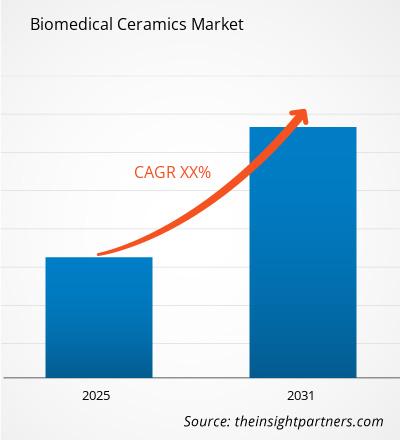
The biomedical ceramics market was valued at US$ 3.2 billion in 2025 and is projected to reach US$ 5.72 billion by 2034, expanding at a CAGR of 6.68% from 2026 to 2034. Rising adoption of advanced biomaterials for orthopedic, dental, and cardiovascular procedures, together with continuous improvements in ceramic processing technologies, is strengthening market expansion. Increasing demand for long-lasting implant materials with excellent biocompatibility and wear resistance is also supporting broader commercialization across healthcare systems worldwide.
North America is expected to remain a top regional biomedical ceramics market throughout the forecast period, with a projected CAGR of 6.2 to 6.8%. Strong reimbursement systems, improved healthcare infrastructure, and ongoing investments in orthopedic and dental implant innovation continue to boost regional demand. Increasing procedural volumes, a growing elderly population, and ongoing partnerships between medical device makers and healthcare providers further support long-term market growth.
Biomedical Ceramics Market Assessment and Insights
- North America: North America accounted for 36–40% market share in 2025 and is projected to expand at a CAGR of 6.2%–6.8% during 2026–2034. Growth is driven by increasing adoption of premium implants, rising volumes of surgical procedures, and ongoing innovation in medical technologies and biomaterials.
- U.S.: The U.S. represented 84–88% of the North American market in 2025 and is anticipated to register a CAGR of 6.3%–6.9% during 2026–2034, supported by strong healthcare expenditure, growing demand for advanced implant solutions, and continuous advancements in orthopedic and dental technologies.
- Europe: Europe held 27–31% market share in 2025 and is expected to grow at a CAGR of 6.0%–6.6% during 2026–2034. Germany, France, and the United Kingdom remain the leading regional markets, supported by established medical device manufacturing capabilities, increasing orthopedic procedures, and a strong healthcare infrastructure.
- Asia Pacific: Asia Pacific accounted for 24–28% market share in 2025 and is forecast to expand at a CAGR of 7.2%–7.8% during 2026–2034. China, Japan, and India drive regional growth through expanding healthcare infrastructure, increasing medical manufacturing investments, and improving patient access to advanced treatment options.
- Largest Segment – Orthopedic Applications: The Orthopedic Applications segment represented the largest market segment, accounting for 44–48% market share in 2025, and is expected to grow at a CAGR of 6.4%–7.0% during 2026–2034, driven by the rising number of hip and knee replacement procedures and growing demand for durable biocompatible implant materials.
- High Growth Segment – Bioresorbable Ceramics: The Bioresorbable Ceramics segment is projected to register the fastest growth, accounting for 18–22% market share in 2025 and advancing at a CAGR of 8.2%–8.8% during 2026–2034, supported by advancements in regenerative medicine, tissue engineering, and next-generation biomaterial technologies.
- Key companies analyzed in detail: CoorsTek, Inc.; Rauschert GmbH; Morgan Advanced Materials plc; CeramTec GmbH; Zimmer Biomet Holdings, Inc.; Kyocera Corporation; Materion Corporation; Johnson & Johnson MedTech; NGK Spark Plug Co., Ltd. (Niterra Co., Ltd.); and Institut Straumann AG.
Source: The Insight Partners' analysis based on proprietary research, government publications, company annual reports, investor presentations, industry databases, and expert interviews.
The biomedical ceramics market report has evolved from specialized implant materials into advanced biomaterials that support more complex medical uses. Improvements in powder synthesis, precise machining, 3D printing compatibility, and surface engineering have increased material reliability and reduced manufacturing differences. Meanwhile, closer teamwork among ceramic makers, implant manufacturers, and healthcare providers has sped up product development and made commercialization more efficient in the orthopedic, dental, and cardiovascular fields.
Future market growth is expected to stem from rising investments in emerging healthcare economies, increased local production of medical devices, and developing regulatory paths that support innovation while keeping safety standards high. Greater use of digital surgical planning, patient-specific implants, and advanced ceramic composites is likely to add more value throughout the healthcare system. This will help manufacturers set their products apart by achieving better clinical outcomes, durability, and long-term patient performance.
Biomedical Ceramics Market Report Scope
| Report Attribute | Details |
|---|---|
| Market size in 2025 | US$ 3.2 Billion |
| Market Size by 2034 | US$ 5.72 Billion |
| Global CAGR (2026 - 2034) | 6.68% |
| Historical Data | 2021-2024 |
| Forecast period | 2026-2034 |
Biomedical Ceramics Market Analysis
Growing healthcare spending, longer life expectancy, and the rising incidence of degenerative bone disorders continue to increase the demand for biomedical ceramics in various medical fields. Orthopedic implants are still the largest application because ceramic materials offer excellent hardness, corrosion resistance, and biocompatibility. Dental restorations also show significant demand as zirconia- and alumina-based ceramics steadily replace traditional materials for crowns, bridges, and implant components that need a long lifespan.
The value chain includes suppliers of raw ceramic powder, processors of advanced materials, manufacturers of precision components, developers of implants, regulatory bodies, healthcare institutions, and distribution partners. Ongoing investment in manufacturing automation, quality control systems, and modern sintering technologies is improving production consistency and reducing defect rates.
Growing collaboration among these stakeholders drives innovation and helps speed up the commercialization of high-performance ceramic solutions tailored for specialized medical uses. The biomedical ceramics market is defined by differences in technology, expertise in manufacturing, and established relationships with medical device companies. CeramTec GmbH, Kyocera Corporation, Morgan Advanced Materials plc, and CoorsTek, Inc. are investing in advanced ceramic processing to strengthen their positions in premium medical applications. At the same time, implant makers are focusing on proprietary ceramic technologies that enhance implant durability and patient outcomes.
Strategic investments target production expansion, research partnerships, precision manufacturing, and compliance with regulations. Zimmer Biomet Holdings, Inc., Johnson & Johnson MedTech, and Institut Straumann AG are incorporating advanced ceramic components into larger implant portfolios. Meanwhile, Rauschert GmbH, Materion Corporation, and NGK Spark Plug Co., Ltd. (Niterra Co., Ltd.) are working on material innovations that support specialized healthcare applications. These competitive strategies are expected to strengthen technological leadership while expanding opportunities in established and emerging healthcare markets.
● REPORT CUSTOMIZATION
Tailor This Report To Align With Your Specific Business Requirements
This report can be customized to align precisely with your business objectives, scope, and target markets. Customization options include tailored segmentation, geography, competitive analysis, and strategic insights to support informed decision-making.
Customize This Report →WHAT YOU CAN ADJUST
- ● Segmentations
- ● Geography
- ● Competitive Analysis
- ● Language Preferences
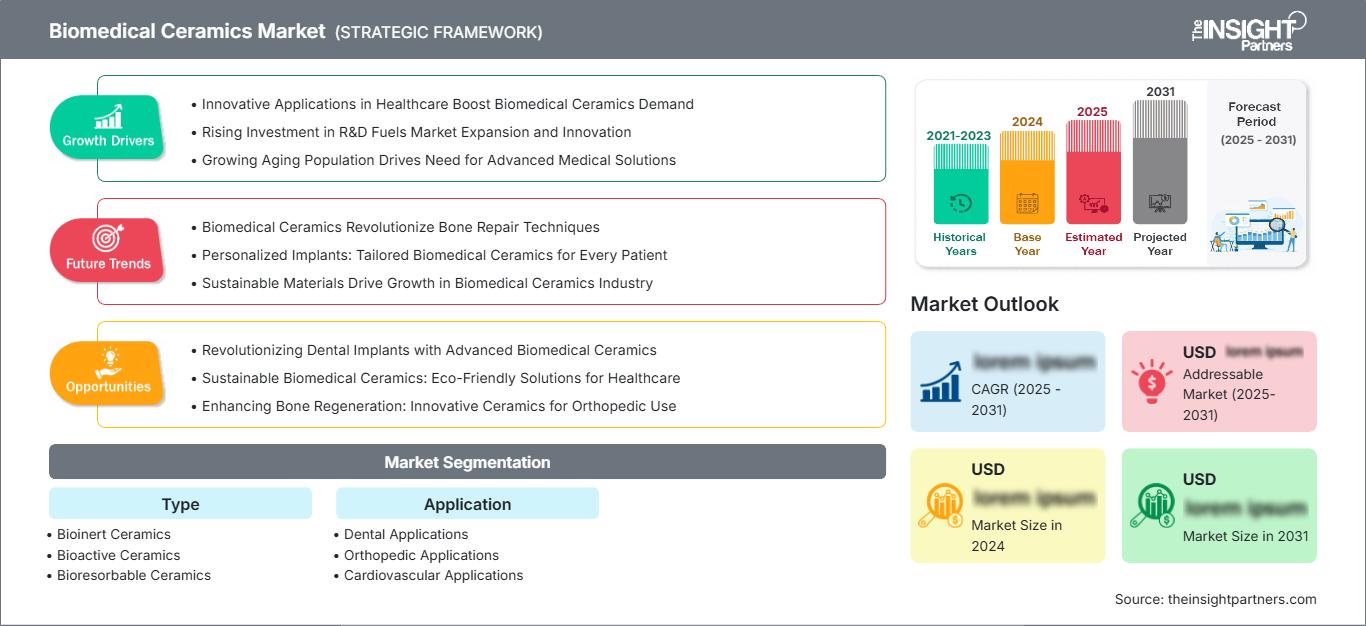
Biomedical Ceramics Market: Strategic Insights
Regional Insights
North America Biomedical Ceramics
North America is estimated to make up 36 to 40% of the global biomedical ceramics market in 2025. It is projected to grow at a rate of 6.2 to 6.8% through 2034. Strong demand for orthopedic reconstruction and dental restoration supports the regional need for advanced ceramic biomaterials.
Healthcare providers are increasingly using high-quality implant materials that improve wear resistance and long-term health outcomes. Ongoing investment in biomaterial research, favorable reimbursement plans, and established medical device manufacturing networks further promote biomedical ceramics market growth in the region.
U.S. Biomedical Ceramics Market
The United States accounts for about 84 to 88% of the North American biomedical ceramics market revenue. It is expected to grow at a rate of 6.3 to 6.9% during the forecast period. A well-developed healthcare system and high surgical procedure numbers drive the demand for advanced ceramic implants.
Major manufacturers conduct research, production, and commercialization throughout the country, supporting innovation in orthopedic, dental, and cardiovascular applications. The growing use of patient-specific implants and digitally planned surgeries further boosts long-term demand.
Europe Biomedical Ceramics Market
Europe represented around 27 to 31% of global biomedical ceramics market revenue in 2025 and is expected to see a growth rate of 6.0 to 6.6%. Germany leads the region due to its strong medical device manufacturing capabilities and a robust research environment.
The United Kingdom is expanding the use of biomedical ceramics through increasing dental implant procedures, research led by universities, and partnerships between healthcare providers and device manufacturers that encourage innovation in implant technologies.
France, Italy, and Spain also contribute significantly to biomedical ceramics market demand with their growing orthopedic surgeries, upgrades to healthcare facilities, and wider acceptance of ceramic-based restorative dentistry. Ongoing investment in medical technologies helps maintain regional competitiveness through the forecast period.
APAC Biomedical Ceramics Market
Asia Pacific accounted for 24 to 28% of global revenue in 2025 and is expected to grow the fastest regionally at a rate of 7.2 to 7.8%. China leads in regional demand because of its expanding healthcare capacity and growing domestic medical device production.
Japan remains a leader in advanced ceramics, while South Korea continues to enhance its precision medical manufacturing capabilities. India is increasing its healthcare investments, and Australia is fostering innovation through advanced clinical research and high-quality healthcare infrastructure.
Government initiatives that promote domestic medical manufacturing, broaden healthcare access, and increase funding for advanced biomaterials are likely to sustain strong regional growth throughout the forecast period.
Middle East & Africa Biomedical Ceramics Market
The Middle East and Africa biomedical ceramics market is expected to grow at a rate of 5.4 to 6.0% through 2034. This growth is supported by improving healthcare infrastructure and increasing investment in specialized medical services. Saudi Arabia is the largest market in the region due to significant healthcare modernization efforts.
The United Arab Emirates keeps investing in advanced medical technologies and specialized treatment centers, while South Africa boosts regional demand with its expanding orthopedic and dental care services. Other countries in the region are gradually improving their healthcare systems, creating further opportunities for advanced implant materials over the long term.
Segmentation Analysis
Type
- Bioinert Ceramics: Bioinert ceramics are widely used in orthopedic and dental implants due to their excellent wear resistance, chemical stability, and long-lasting structural integrity. Alumina and zirconia are the main materials chosen for high-load medical applications.
- Bioactive Ceramics: Bioactive ceramics are becoming more popular in regenerative medicine, bone graft substitutes, and implant coatings because they can stimulate direct bonding with living bone tissue and speed up healing.
- Bioresorbable Ceramics: Bioresorbable ceramics are being increasingly used in temporary implants and tissue engineering applications. Their controlled material breakdown supports natural bone regeneration and removes the need for secondary removal procedures.
Application
- Dental Applications: The rise in cosmetic dentistry procedures, higher acceptance of implants, and growing use of zirconia restorations continue to support steady demand in both developed and emerging healthcare markets.
- Orthopedic Applications: This area contributes the largest revenue, driven by an increase in hip, knee, and spinal implant procedures that need durable ceramic bearing surfaces to extend the life of implants.
- Cardiovascular Applications: The increasing use of ceramic biomaterials in heart valve components and specialized implantable devices shows a growing trust in these high-performance ceramics for vital medical uses.
Opportunity Snapshot
| Segment Name | Revenue Contribution | Trend Tag | Adoption Stage |
| Dental Applications | High | Zirconia Crowns | Mature |
| Orthopedic Applications | High | Joint Replacement | Mature |
| Cardiovascular Applications | Medium | Valve Components | Scaling |
| Other Applications | Low | Tissue Repair | Emerging |
Biomedical Ceramics Market Growth Drivers and Impact Analysis
Increasing Orthopedic Implant Procedures Worldwide
The rising number of joint replacement procedures is a major driver for biomedical ceramics. Longer life expectancy, the growing prevalence of osteoarthritis, sports injuries, and degenerative bone diseases continue to increase the demand for durable implant materials that can provide long-term performance.
Ceramic components offer better wear resistance, excellent compatibility with the body, and low friction compared to traditional materials. This makes them appealing for orthopedic devices. Ongoing improvements in implant design and surgical techniques are expanding their use, prompting manufacturers to boost production and create new ceramic solutions that enhance patient outcomes and lower the need for revision surgeries.
Advancements in Dental Restorative Materials
The demand for attractive and durable dental restorations is speeding up the use of biomedical ceramics in healthcare systems worldwide. Zirconia- and alumina-based materials provide excellent strength, resist corrosion, and look natural, making them increasingly popular for crowns, bridges, and implant-supported restorations.
The use of digital dentistry technologies, such as CAD/CAM and intra-oral scanners, improves precision and further reduces treatment time. The result of these improvements is that dentists recommend ceramics much more frequently, which stimulates investments in advanced processing techniques and provides opportunities for the dental implant market.
Continuous Innovation in Advanced Biomaterial Engineering
Innovations in materials science keep improving the biological performance and mechanical properties of biomedical ceramics. Manufacturers are increasingly creating engineered ceramic composites, advanced surface treatments, and precise manufacturing processes that enhance how implants integrate with surrounding tissues while ensuring structural durability.
Research partnerships among universities, healthcare institutions, and medical device companies are speeding up the market introduction of next-generation biomaterials. As regulatory approvals for new ceramic technologies grow, healthcare providers gain access to more treatment options, fostering wider use in orthopedic, dental, cardiovascular, and emerging regenerative medicine fields.
Biomedical Ceramics Market Future Trends
Patient-Specific Ceramic Implants Enabled by Digital Manufacturing
The combination of digital imaging, artificial intelligence-assisted surgical planning, additive manufacturing, and precision ceramic machining is changing how implants are developed. Healthcare providers are looking for implants that fit patients better, simplify surgery, and improve long-term results. In response, biomedical ceramic manufacturers are creating production systems that can produce customized parts while maintaining material quality and meeting regulations.
As digital workflows become increasingly integrated into orthopedic and dental procedures, manufacturers with strong design, simulation, and precision fabrication capabilities are gaining a competitive advantage. In line with biomedical ceramics market trends, advanced ceramic materials are being adopted for their superior biocompatibility, durability, and aesthetic properties. The growing use of computer-aided design (CAD), computer-aided manufacturing (CAM), and 3D printing technologies is further improving customization, production accuracy, and treatment outcomes. These innovations are enabling healthcare providers to deliver more efficient, patient-specific solutions while supporting the broader advancement of orthopedic and dental care.
Expansion of Multifunctional Bioactive Ceramic Technologies
Future product innovation will focus on multifunctional ceramics that integrate structural stability with enhanced biological functionality. Surface modifications, porosity design, and ceramic composite design have been developed to promote faster integration and ensure the mechanical stability of the bone.
The collaboration between research groups and medical device companies will continue to grow, introducing new biomaterials for regenerative medicine and complex reconstructions. These innovations will lead to new applications beyond implants, such as tissue engineering, minimally invasive surgery, and complex orthopedic reconstructions.
Biomedical Ceramics Market Opportunities
Expanding Manufacturing Capacity in Emerging Healthcare Economies
Rapid healthcare modernization across Asia Pacific, Latin America, and selected Middle Eastern countries presents significant opportunities for biomedical ceramic manufacturers. Governments continue to invest in domestic medical device production, encouraging the localization of high-value manufacturing and reducing dependence on imported healthcare products. Supporting the biomedical ceramics market forecast, these initiatives are expected to strengthen regional supply chains, expand advanced healthcare capabilities, and increase demand for high-performance biomedical ceramic solutions.
Investment in regional production, establishing technical support, and forming strategic alliances with regional device manufacturers will not only improve supply chain resilience but also increase responsiveness to regional demands. Such investments are believed to help ensure sustainable revenue growth and increase competitiveness.
Strategic Collaboration for Next-Generation Biomaterial Innovation
Collaborative research among ceramic experts, implant manufacturers, hospitals, and universities creates opportunities to accelerate the commercialization of new biomedical materials. Joint development programs focused on bioactive ceramics, antimicrobial surfaces, and hybrid ceramic composites can shorten innovation cycles and address changing clinical needs.
Companies that invest in partnerships across different fields are better positioned to create unique products that meet stricter regulatory and performance standards. These collaborations are also likely to improve intellectual property portfolios and strengthen long-term market presence.
Recent Developments
- October 2025: Kyocera Corporation officially opened a new production facility in Waiblingen, Germany, through KYOCERA Fineceramics Medical GmbH. The site focuses on manufacturing BIOCERAM AZUL® ceramic femoral heads for orthopedic implants and expands the company's European medical ceramics production capacity.
- September 2025: CeramTec GmbH announced its participation in Medical Technology Ireland 2025, highlighting high-performance ceramic components, ultrasonic assemblies, and structural ceramic solutions supporting next-generation medical devices used in surgery, diagnostics, and therapy.
- February 2025: CeramTec GmbH introduced lead-free BNT-BT piezoceramics designed for medical and industrial applications, offering performance comparable to conventional PZT materials while addressing increasing demand for environmentally responsible advanced ceramic technologies.
Frequently Asked Questions

- Comprehensive Market Sizing and Forecast Analysis
- Detailed Segmentation Analysis
- In-Depth Market Dynamics Assessment
- Regional and Country-Level Insights
- Competitive Landscape and Company Benchmarking
- Strategic Business Intelligence
Recent Reports
Testimonials

The Insight Partners' SCADA System Market report is comprehensive, with valuable insights on current trends and future forecasts. The team was highly professional, responsive, and supportive throughout. We are very satisfied and highly recommend their services.
RAN KEDEM Partner, Reali Technologies LTDs
I requested a report on a very specific software market and the team produced the report in a few days. The information was very relevant and well presented. I then requested some changes and additions to the report. The team was again very responsive and I got the final report in less than a week.
JEAN-HERVE JENN Chairman, Future Analytica
We worked with The Insight Partners for an important market study and forecast. They gave us clear insights into opportunities and risks, which helped shape our plans. Their research was easy to use and based on solid data. It helped us make smart, confident decisions. We highly recommend them.
PIYUSH NAGPAL Sr. Vice President, High Beam Global
The Insight Partners delivered insightful, well-structured market research with strong domain expertise. Their team was professional and responsive throughout. The user-friendly website made accessing industry reports seamless. We highly recommend them for reliable, high-quality research services
YUKIHIKO ADACHI CEO, Deep Blue, LLC.
This is the first time I have purchased a market report from The Insight Partners.While I was unsure at first, I visited their web site and felt more comfortable to take the risk and purchase a market report.I am completely satisfied with the quality of the report and customer service. I had several questions and comments with the initial report, but after a couple of dialogs over email with their analyst I believe I have a report that I can use as input to our strategic planning process.Thank you so much for taking the extra time and making this a positive experience.I will definitely recommend your service to others and you will be my first call when we need further market data.
JOHN SUZUKI President and Chief Executive Officer, Board Director, BK Technologies
I wish to appreciate your support and the professionalism you displayed in the course of attending to my request for information regarding to infectious disease IVD market in Nigeria. I appreciate your patience, your guidance, and the fact that you were willing to offer a discount, which eventually made it possible for us to close a deal. I look forward to engaging The Insight Partners in the future, all thanks to the impression you have created in me as a result of this first encounter.
DR CHIJIOKE ONYIA MANAGING DIRECTOR, PineCrest Healthcare Ltd.Reason to Buy
- Informed Decision-Making
- Understanding Market Dynamics
- Competitive Analysis
- Identifying Emerging Markets
- Customer Insights
- Market Forecasts
- Risk Mitigation
- Boosting Operational Efficiency
- Strategic Planning
- Investment Justification
- Tracking Industry Innovations
- Aligning with Regulatory Trends





 Get Free Sample for