
Blood Glucose Test Strips Market Share, Growth & Demand by 2034
Coverage: By Type (Thick Film Electrochemical Strips, Thin Film Electrochemical Strips, Optical Strips); Technology (Glucose Dehydrogenase, Glucose Oxidase); End User (Hospital, Homecare, Diagnostic Centers), and Geography (North America, Europe, Asia Pacific, and South and Central America)
- Status : Data Released
- Report Code : TIPRE00020476
- Category : Life Sciences
- No. of Pages : 150
- Available Report Formats :


- Last update date : July 30, 2026


2025 Market Size
US$ 29.01 Bn
Base year value
2034 Forecast
US$ 48.84 Bn
Projected by 2034
CAGR 2026-2034
5.96 %
Growth rate
Addressable Market
US$ 352.65 Bn
(2026-2034)
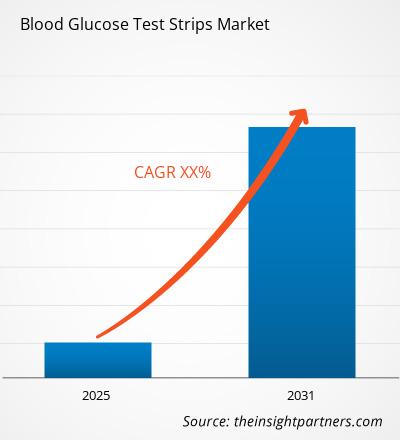
The Blood Glucose Test Strips Market size is influenced by high prevalence of diabetes, growing use of self-testing, and ongoing requirement for economical point-of-care blood sugar tests. The market is estimated to increase from US$ 29.01 Billion in 2025 to US$ 48.84 Billion by 2034, indicating a CAGR of 5.96% from 2026 to 2034.
In North America, the presence of insurance coverage, retail availability from pharmacies, and good homecare market penetration results in consistent uptake of blood sugar test strips. The market in the region is predicted to experience a CAGR of 5.3–5.7% from 2026 to 2034 due to insulin-dependent diabetes treatment and regular monitoring by elderly individuals and those using hybrid CGM plus fingerstick testing.
Blood Glucose Test Strips Market Assessment and Insights
- North America accounted for 37–39% share in 2025 and is expected to grow at a CAGR of 5.3–5.7% between 2026–2034, driven by reimbursed test-strip access, pharmacy distribution, and clinical reliance on confirmatory readings.
- US represented 82–84% of North America in 2025 and is projected to grow at a CAGR of 5.2–5.6% between 2026–2034, supported by strong homecare use.
- Europe held 26–28% share in 2025 and is expected to expand at a CAGR of 5.1–5.5% between 2026–2034, led by Germany, the UK, France, Italy, and Spain.
- Asia Pacific captured 24–26% share in 2025 and is forecast to grow at a CAGR of 6.7–7.3% between 2026–2034, with China, India, Japan, South Korea, and Australia driving volume.
- Largest Segment Thick Film Electrochemical Strips held 58–62% market share in 2025 and is expected to grow at a CAGR of 5.4–5.8% between 2026–2034 due to cost efficiency.
- High Growth Segment Homecare held 46–50% market share in 2025 and is expected to grow at a CAGR of 6.4–7.0% between 2026–2034 as testing shifts closer to patients.
- Key companies analyzed in detail: Abbott, F. Hoffmann-La Roche Ltd, Ascensia Diabetes Care Holdings AG, LifeScan IP Holdings, LLC, ARKRAY, Inc., AgaMatrix, Inc., Johnson & Johnson Services, Inc., Bionime Corporation, ACON Laboratories, Inc., Trividia Health, Inc., Rossmax International Ltd., OK Biotech Co., Ltd., and B. Braun SE.
Source: The Insight Partners' analysis based on proprietary research, government publications, company annual reports, investor presentations, industry databases, and expert interviews.
In terms of manufacturing in the Blood Glucose Test Strips Market, there has been a shift from chemistry to more consistency, smaller samples, and connectivity with blood glucose meters. Thick-film platforms will continue to play an important role in the market, as screen printing is ideal for scalable production and good product economics. However, thin film and enzymatic stability advancements in technology are allowing suppliers to control lot variability, increase shelf life, and improve performance in pharmacies, hospitals, and long term care settings.
In terms of future directions, the emerging markets will become more relevant as there are increased public screening, private pharmacy chains, and changes in home diagnosis practices. An emphasis on accuracy, lot traceability, and quality systems will make the suppliers with established manufacturing systems favorable. In addition, the investments will be focused on bundled products that include test strips, meters, lancing devices, mobile applications, and clinical service programs.
Blood Glucose Test Strips Market Report Scope
| Report Attribute | Details |
|---|---|
| Market size in 2025 | US$ 29.01 Billion |
| Market Size by 2034 | US$ 48.84 Billion |
| Global CAGR (2026 - 2034) | 5.96% |
| Historical Data | 2021-2024 |
| Forecast period | 2026-2034 |
Blood Glucose Test Strips Market Analysis
The market is driven by the repeated use of diabetes management devices due to the need for regular checks. In hospitals and clinics, strips are used for point-of-care triage, and at home, for insulin injection, self-monitoring of glucose levels and confirmation of symptoms.
Factors such as enzymes availability, conductive ink availability, package sealing and contracts between the manufacturer and the retailer still affect the supply of the product. Companies controlling calibration, quality checking, and distribution will be able to handle price pressures and ensure accuracy requirements better. Another benefit of the market is the existence of CGM, as fingerstick test will still be needed when there are any symptoms or sensor warming up period.
Competitive positioning is becoming more dependent on portfolio depth and payer reach. F. Hoffmann-La Roche Ltd, Abbott, Ascensia Diabetes Care Holdings AG, and LifeScan IP Holdings, LLC compete through branded meter platforms, strip performance, and broad pharmacy distribution. Experts like ARKRAY, Inc., Trividia Health, Inc., ACON Laboratories, Inc., and Bionime Corporation remain loyal to institutional and value-driven channels.
The trend in investments is ecosystem-based solutions as opposed to single use consumables. AgaMatrix, Inc., Rossmax International Ltd., OK Biotech Co., Ltd., and B. Braun SE position themselves based on affordability, professional testing needs, or geographic availability. Strategic differentiation is expected to revolve around convenience in sampling, connectivity, and quality assurance functionality.
● REPORT CUSTOMIZATION
Tailor This Report To Align With Your Specific Business Requirements
This report can be customized to align precisely with your business objectives, scope, and target markets. Customization options include tailored segmentation, geography, competitive analysis, and strategic insights to support informed decision-making.
Customize This Report →WHAT YOU CAN ADJUST
- ● Segmentations
- ● Geography
- ● Competitive Analysis
- ● Language Preferences
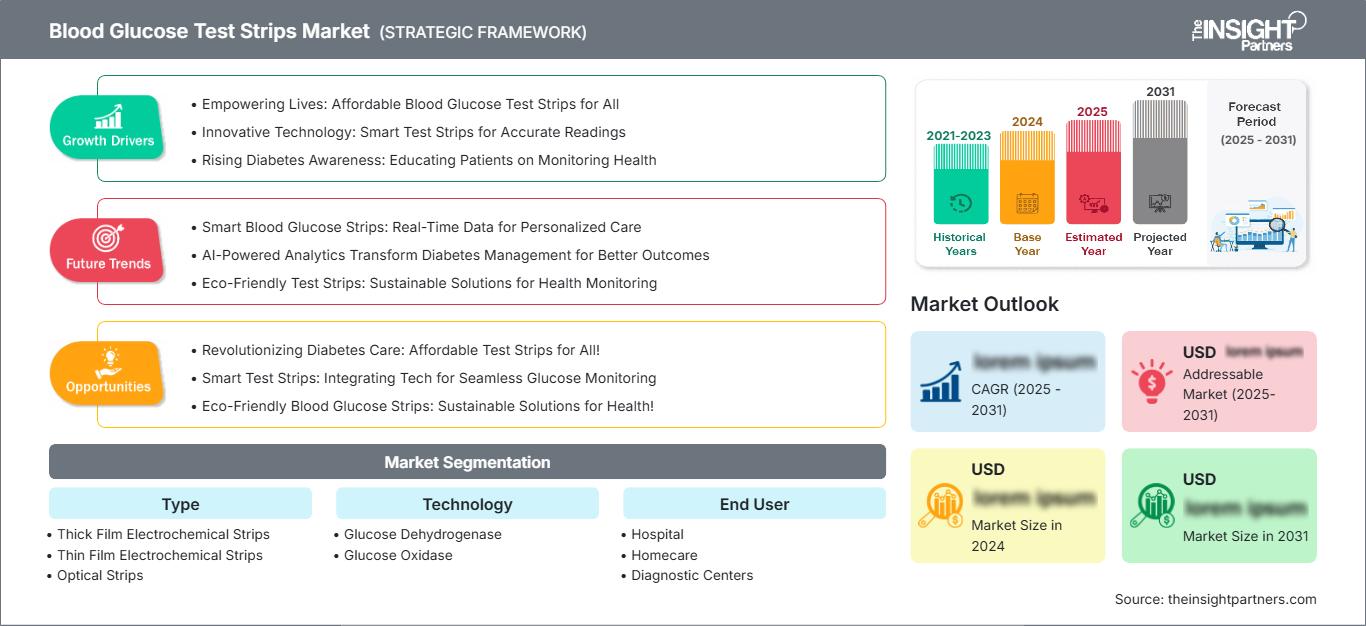
Blood Glucose Test Strips Market: Strategic Insights
Regional Insights
North America Blood Glucose Test Strips Market
North America accounted for 37-39% of the global revenue in 2025, thus being the top contributor of the Blood Glucose Test Strips Market share. This region is forecast to witness a growth rate of 5.3-5.7% CAGR from 2026 to 2034, attributed to higher diagnosis rates, pharmacy fillers, and regular testing by insulin users. Hospitals utilize test strips for glycemic control of inpatients, urgent glycemia checkup, and perioperative management.
This region's outlook is further driven by high brand awareness and payor-sponsored formularies. Abbott, F. Hoffmann-La Roche Ltd, Ascensia Diabetes Care Holdings AG, LifeScan IP Holdings, LLC, ARKRAY, Inc. and Trividia Health, Inc. have prominent presence in retail and professional segments. The region is poised for sustained growth as long-term care facilities, telemedicine and chronic disease management systems incorporate structured self-monitoring.
U.S. Blood Glucose Test Strips Market
North America comprises 82-84% of the U.S. share in 2025 and is forecast to see a CAGR of 5.2-5.6% from 2026 to 2034. Factors driving the segment include prescription filling, Medicare-based supplies of diabetic products, over-the-counter retail sales, and use by intermittent or intensive users who require continuous testing.
The presence of the company is comprehensive in national chain pharmacies, mail order providers, LTC distributors, and clinicians' diabetes programs. Trends in application are toward simple-to-read meters, tiny test sample sizes, tracking via Bluetooth capability, and compatibility with strips used for structured testing. The growth of CGMs has not displaced the need for strips, as some patients require confirmation with a finger stick when their symptoms conflict with digital readings.
Europe Blood Glucose Test Strips Market
The Europe market was valued at 26-28% in 2025 and is projected to achieve 5.1-5.5% CAGR through 2034. Germany dominates the region, with established payment mechanisms, developed diagnostics capabilities, and high physician participation in managing chronic conditions. The UK relies on diabetes pathways and pharmacist's cooperation; however, price pressures remain high due to procurement strictness.
Germany and the UK determine the market competition in Europe; suppliers focus on the quality and accuracy of the strip, lots, connected meters, and readiness for tendering. F. Hoffmann-La Roche Ltd operates well-developed networks in Europe; other key suppliers include Ascensia Diabetes Care Holdings AG, Abbott, LifeScan IP Holdings, LLC, and B. Braun SE, serving both consumers and institutions.
France, Italy, and Spain help the region to generate demand thanks to aging population, diabetes screening programs, and follow-up of the patients by physicians. These countries have stable adoption of self-testing among insulin-using patients and patients with selected type 2 diabetes. Prices are regulated, but standardized care pathways ensure regular volumes of clinical necessity testing.
APAC Blood Glucose Test Strips Market
The APAC region holds 24–26% of the market share in 2025 and will register a growth rate of 6.7–7.3% from 2026 to 2034. China has been a dominant country in terms of volume due to high numbers of diagnosed/undiagnosed diabetes patients, hospital-based testing, and increasing retail pharmacy availability.
Japan, South Korea, and Australia have made contributions to established testing practices, product quality regulations, and sound clinical guidance. China and India have been anticipated to provide incremental units due to increased access through screening programs, private diagnostics, and e-commerce sales.
Middle East & Africa Blood Glucose Test Strips Market
The MEA region is forecast to grow at a CAGR of 5.8%–6.4% from 2026–2034. This is driven by Saudi Arabia, owing to diabetes awareness, investment in hospitals, and modern pharmacies. The demand for premium meters and strips is strong in the UAE, driven by private healthcare and expatriates.
The demand in South Africa will be driven by access, provided via formal retail pharmacies and diagnostics centers in the subregion. Access for the rest of MEA region is irregular due to lack of reimbursement and affordability issues. Investment in infrastructure, diabetes education, and procurement of public-private organizations will play key roles.
Segmentation Analysis
Type
The Type segment is expected to grow at a CAGR of 5.6–6.0% during 2026–2034. Blood Glucose Test Strips Market scope across type categories is determined by accuracy requirements, production economics, shelf stability, and meter compatibility. Electrochemical platforms dominate because they deliver practical testing speed, low sample needs, and scalable cartridge-style manufacturing for both retail and professional environments.
- Thick Film Electrochemical Strips remain the largest sub-segment because screen-printed electrodes offer cost-effective production, broad meter compatibility, and dependable performance across high-volume retail and institutional purchasing channels.
- Thin Film Electrochemical Strips serve premium accuracy and miniaturization needs, using controlled electrode deposition to support consistent signal response, smaller sample volumes, and differentiated meter designs.
- Optical Strips occupy a smaller position but retain relevance in selected legacy systems, specialized testing environments, and applications where optical detection aligns with established device infrastructure.
Technology
The Technology segment is expected to grow at a CAGR of 5.8–6.2% during 2026–2034. Selection between enzyme systems depends on interference resistance, stability, manufacturing cost, and clinical preference. Manufacturers are improving mediator chemistry and packaging to protect strip performance across temperature, humidity, and storage conditions, especially in regions with variable supply chains.
- Glucose Dehydrogenase technology is valued for rapid response and reduced oxygen sensitivity, making it strategically important for modern electrochemical strips used in homecare and professional point-of-care settings.
- Glucose Oxidase technology remains widely adopted because of its long clinical history, established manufacturing knowledge, and dependable performance in many conventional blood glucose monitoring systems.
End User
The End User segment is expected to grow at a CAGR of 6.1–6.7% during 2026–2034. End-user demand is shifting toward decentralized testing, but clinical settings remain essential for diagnosis, treatment adjustment, and acute care. Homecare is gaining share as patients, caregivers, and telehealth teams use routine readings to guide diet, medication adherence, and clinician review.
- Hospital users depend on strips for bedside glucose checks, emergency assessment, perioperative monitoring, and inpatient insulin protocols where rapid results support time-sensitive treatment decisions.
- Homecare is the most strategically important sub-segment, supported by repeat purchasing, aging populations, insulin therapy, caregiver involvement, and digital tools that help interpret recurring glucose readings.
- Diagnostic Centers use test strips for screening, walk-in monitoring, and follow-up visits, particularly in markets where outpatient diagnostics act as the first access point for chronic disease management.
Opportunity Snapshot
| Segment Name | Revenue Contribution | Trend Tag | Adoption Stage |
| Hospital | High | Bedside Testing | Mature |
| Homecare | High | Self Monitoring | Scaling |
| Diagnostic Centers | Medium | Screening Access | Scaling |
Blood Glucose Test Strips Market Growth Drivers and Impact Analysis
Rising diabetes burden strengthens recurring consumable demand
The most persistent driving factor is the repetitive character of diabetes monitoring. Every single case of diagnosed diabetes can become a source of steady demand for strips, especially among those patients who require insulin, sulfonylurea medications, or regular testing routines. The need for finger stick tests is still clinically significant for symptom checking, detection of hypo-glycemia, and adjustment of medication therapy. With health care systems' attention concentrated on results in non-communicable diseases, the educational part of diabetes treatment involves increased importance of regular testing rather than occasional one. This provides stable demand base for strips in the pharmacy, hospital, and home care segments of the market.
Homecare expansion shifts purchasing closer to patients
Home-based chronic disease management is reshaping how strips are purchased and used. Patients increasingly expect compact meters, small blood samples, easy strip handling, and digital logs that can be shared with clinicians or caregivers. This benefits manufacturers that combine consumables with apps, education, customer support, and subscription or refill programs. The shift also reduces dependence on episodic diagnostic visits by placing monitoring responsibility in daily routines. For suppliers, the commercial impact is twofold: higher repeat engagement with users and stronger brand retention through meter-strip ecosystems. The market therefore benefits from consumer convenience, remote care models, and pharmacy-led diabetes management services.
Quality and accuracy standards favour established manufacturers
Accuracy expectations are rising as glucose readings influence medication decisions, emergency responses, and clinical documentation. Regulatory scrutiny, lot traceability, and quality control requirements place pressure on low-cost producers that lack robust validation systems. Hospitals and long-term care facilities increasingly prefer suppliers that can demonstrate reliable strip performance, training support, and consistent procurement availability. This strengthens the position of companies with validated manufacturing, recognized brands, and documented quality systems. Competitive impact is likely to include procurement consolidation, fewer tolerance for recalls, and stronger demand for professional-use systems with built-in controls. Over time, accuracy-led purchasing may limit purely price-based competition and reward dependable performance.
Blood Glucose Test Strips Market Future Trends
Connected strip ecosystems will support data-led diabetes management
Blood Glucose Test Strips Market trends will increasingly center on linking strip-based readings with mobile apps, cloud dashboards, and clinician workflows. Instead of serving only as disposable consumables, strips will become part of structured data ecosystems that support therapy conversations and adherence review. Meter connectivity can help patients identify patterns around meals, medication timing, and physical activity. For providers, downloadable or automatically shared data reduces reliance on handwritten logs. The future opportunity lies in converting routine fingerstick checks into actionable longitudinal records, particularly for primary care, elder care, and hybrid CGM users who still need confirmatory testing.
Value-tier products will expand access in emerging markets
Emerging markets are expected to see stronger demand for affordable, reliable strips as diabetes screening expands and private pharmacy chains reach secondary cities. Future competition will not be limited to premium brands, because many households make out-of-pocket purchasing decisions. Suppliers that balance accuracy, price, strip availability, and meter durability will be better placed to capture volume. Local distribution partnerships, smaller pack sizes, and climate-resistant packaging will also matter. This trend could reshape the Blood Glucose Test Strips Market by increasing unit volume in APAC, MEA, and parts of Latin America while keeping pricing discipline intense.
Blood Glucose Test Strips Market Opportunities
Bundled homecare programs can improve recurring revenue visibility
Manufacturers and distributors can build stronger revenue predictability by offering bundled homecare programs that combine meters, strips, lancets, app support, refill reminders, and clinician-facing reports. Blood Glucose Test Strips Market Forecasts indicate that homecare will remain one of the most attractive routes for recurring consumable sales, provided users can access strips without interruption. Subscription-style supply, pharmacy auto-refill, and payer-approved kits can reduce missed testing and improve brand loyalty. The most actionable opportunity is to align affordability with behavioral support, because consistent testing depends on both product availability and patient confidence in using readings correctly.
Professional-use systems can gain traction in long-term care
Long-term care facilities, skilled nursing centers, and post-acute providers need glucose testing systems that reduce workflow errors and support regulatory documentation. This creates an opportunity for suppliers offering professional-use meters, quality control lockouts, staff training, and reliable strip supply contracts. As older populations increase demand for institutional diabetes care, buyers will prioritize systems that protect residents and simplify compliance. Companies with established healthcare channels can differentiate through service responsiveness rather than strip price alone. The opportunity is especially relevant in the U.S., Europe, Japan, and wealthier Middle Eastern markets where facility-based chronic care is expanding.
Recent Developments
- December 2025: ARKRAY USA, Inc. launched the Assure Titanium Blood Glucose Monitoring System for long-term and post-acute care facilities in the U.S. The system was designed for skilled nursing facilities and endocrinology clinics, with FDA clearance, clinical validation in care settings, and a quality control lockout intended to reduce testing errors and support regulatory compliance.
- September 2025: F. Hoffmann-La Roche Ltd received CE Mark approval for integrating Accu-Chek SmartGuide continuous glucose monitoring with the mySugr diabetes management app. The launch plan supported broader access across Europe, Latin America, and Asia-Pacific, adding predictive glucose insights and connected diabetes data management capabilities to Roche’s established Accu-Chek ecosystem.
- July 2025: LifeScan IP Holdings, LLC announced a restructuring support agreement intended to reduce more than 75% of debt while maintaining continuity of OneTouch glucose measurement and management offerings. The company stated that the process would strengthen financial flexibility and support future investments across its global glucose monitoring business.
Frequently Asked Questions

- Comprehensive Market Sizing and Forecast Analysis
- Detailed Segmentation Analysis
- In-Depth Market Dynamics Assessment
- Regional and Country-Level Insights
- Competitive Landscape and Company Benchmarking
- Strategic Business Intelligence
Recent Reports
Testimonials

The Insight Partners' SCADA System Market report is comprehensive, with valuable insights on current trends and future forecasts. The team was highly professional, responsive, and supportive throughout. We are very satisfied and highly recommend their services.
RAN KEDEM Partner, Reali Technologies LTDs
I requested a report on a very specific software market and the team produced the report in a few days. The information was very relevant and well presented. I then requested some changes and additions to the report. The team was again very responsive and I got the final report in less than a week.
JEAN-HERVE JENN Chairman, Future Analytica
We worked with The Insight Partners for an important market study and forecast. They gave us clear insights into opportunities and risks, which helped shape our plans. Their research was easy to use and based on solid data. It helped us make smart, confident decisions. We highly recommend them.
PIYUSH NAGPAL Sr. Vice President, High Beam Global
The Insight Partners delivered insightful, well-structured market research with strong domain expertise. Their team was professional and responsive throughout. The user-friendly website made accessing industry reports seamless. We highly recommend them for reliable, high-quality research services
YUKIHIKO ADACHI CEO, Deep Blue, LLC.
This is the first time I have purchased a market report from The Insight Partners.While I was unsure at first, I visited their web site and felt more comfortable to take the risk and purchase a market report.I am completely satisfied with the quality of the report and customer service. I had several questions and comments with the initial report, but after a couple of dialogs over email with their analyst I believe I have a report that I can use as input to our strategic planning process.Thank you so much for taking the extra time and making this a positive experience.I will definitely recommend your service to others and you will be my first call when we need further market data.
JOHN SUZUKI President and Chief Executive Officer, Board Director, BK Technologies
I wish to appreciate your support and the professionalism you displayed in the course of attending to my request for information regarding to infectious disease IVD market in Nigeria. I appreciate your patience, your guidance, and the fact that you were willing to offer a discount, which eventually made it possible for us to close a deal. I look forward to engaging The Insight Partners in the future, all thanks to the impression you have created in me as a result of this first encounter.
DR CHIJIOKE ONYIA MANAGING DIRECTOR, PineCrest Healthcare Ltd.Reason to Buy
- Informed Decision-Making
- Understanding Market Dynamics
- Competitive Analysis
- Identifying Emerging Markets
- Customer Insights
- Market Forecasts
- Risk Mitigation
- Boosting Operational Efficiency
- Strategic Planning
- Investment Justification
- Tracking Industry Innovations
- Aligning with Regulatory Trends





 Get Free Sample for