
Body Sensors Market Size, Growth & Trends by 2034
Coverage: By Type (Blood Pressure Sensor, Respiration Sensor, Temperature Sensor, ECG Sensor, Others); Usability (Wearable, Implantable); End User (Hospitals and Clinics, Ambulatory Surgical Centers, Homecare Setting), and Geography (North America, Europe, Asia Pacific, and South and Central America)
- Status : Data Released
- Report Code : TIPRE00017784
- Category : Life Sciences
- No. of Pages : 150
- Available Report Formats :


- Last update date : July 29, 2026


2025 Market Size
US$ 12.97 Bn
Base year value
2034 Forecast
US$ 36.3 Bn
Projected by 2034
CAGR 2026-2034
12.11 %
Growth rate
Addressable Market
US$ 215.85 Bn
(2026-2034)
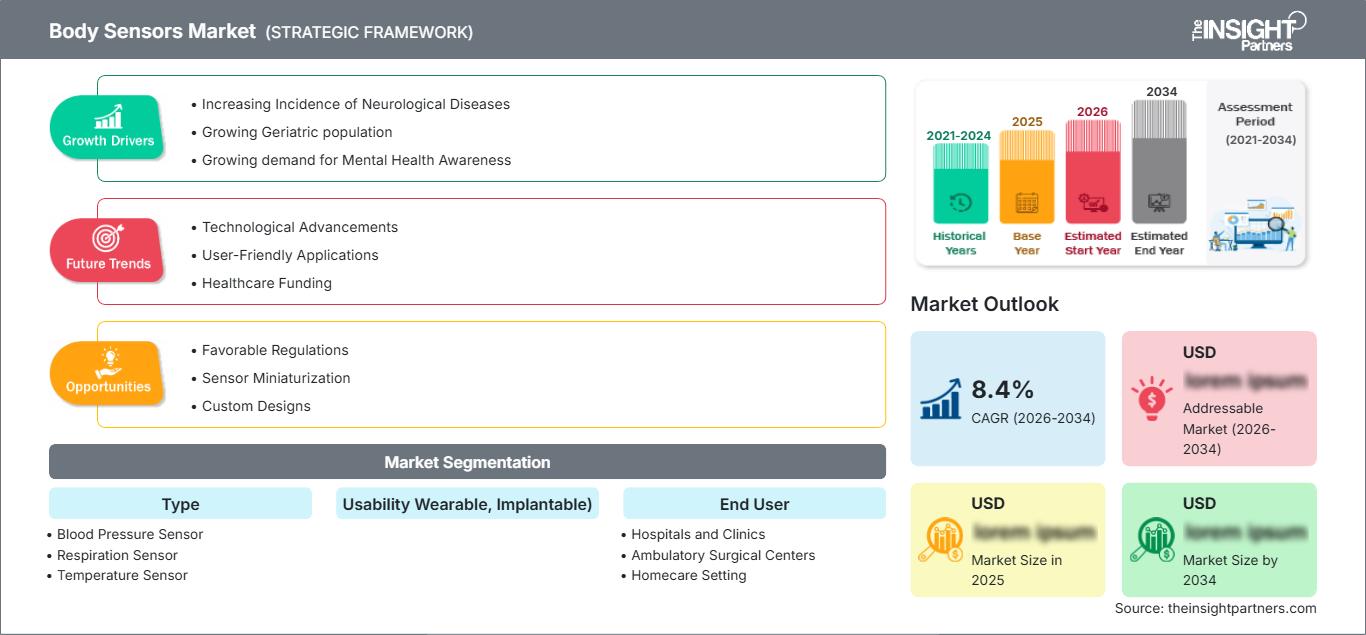
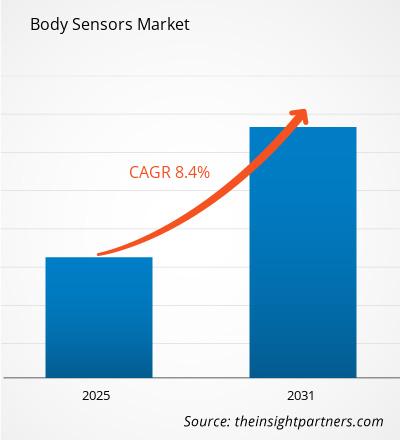
The Body Sensors Market size reached US$ 12.97 Billion in 2025 and will reach US$ 36.3 Billion in 2034, recording a CAGR of 12.11% in the period 2026–2034. Market dynamics are shifting away from fitness-oriented wearable device adoption to clinically useful sensing solutions including blood pressure, respiration, temperature, ECG, and implantable applications. Growing remote care, disease management programs, and connected care processes are supporting the need for body sensors across hospital, clinic, homecare, and ambulatory facilities.
North America continues to be the most advanced market, with the market driven by good reimbursement scenario, FDA approved digital technologies, and widespread use of smart watches and continuous monitoring devices. It is estimated to grow with a CAGR range of 10.8–11.6% in 2026–2034. Structural growth will be fueled by cardiometabolic monitoring, home telehealth services, company wellness programs, and increased use of sensor data in clinical decisions.
Body Sensors Market Assessment and Insights
- North America accounted for 37–40% share in 2025 and is expected to grow at a CAGR between 2026–2034 of 10.8–11.6%, supported by payer-backed remote monitoring, mature digital health regulation, and hospital-home care integration.
- US represented 79–82% of North America in 2025 and is projected to grow at a CAGR between 2026–2034 of 10.9–11.7%, led by ECG, glucose, and blood pressure screening adoption.
- Europe held 24–27% share in 2025 and is forecast to grow at a CAGR between 2026–2034 of 10.2–11.0%, with Germany, the UK, and France leading through digital therapeutics and aging-care programs.
- Asia Pacific captured 21–24% share in 2025 and is expected to grow at a CAGR between 2026–2034 of 13.6–14.8%, led by China, Japan, India, and South Korea as connected care platforms scale.
- Largest Segment Wearable sensors held 78–82% market share in 2025, with a CAGR range of 11.5–12.4% during 2026–2034, driven by watches, patches, rings, and connected vital-sign devices.
- High Growth Segment Homecare Setting held 28–31% market share in 2025, with a CAGR range of 13.4–14.6% during 2026–2034, as remote monitoring shifts chronic care outside hospitals.
- Key companies analyzed in detail: Fitbit LLC, Apple Inc., Abbott Laboratories, Texas Instruments Incorporated, Koninklijke Philips N.V., Garmin Ltd., ASC GmbH, NXP Semiconductors N.V., Proxy Technologies, Inc. (Motiv Inc.), Medtronic plc.
Source: The Insight Partners' analysis based on proprietary research, government publications, company annual reports, investor presentations, industry databases, and expert interviews.
Technological innovation is impacting the Body Sensors Market with miniaturization, lower energy consumption, and software-defined design of optical, electrochemical, pressure, temperature, and motion sensors. Sensor makers are improving the packaging of biosensors, their adhesion to the body surface, processing capabilities, and batteries to enable continuous monitoring. The production of devices is also undergoing changes to involve semiconductor cooperation, outsourcing, software validation, and cloud technology, leading to increased complexity but scalability of the consumer and medical devices market.
In the forecasted period, growth in the market should expand from premium consumer wearables to include hospital at home, ambulatory surgery center recovery, diabetes care, sports medicine, and elderly care applications. Geographies that are emerging should become more significant due to increased penetration of smartphones, digital health investments, and manufacturing capability. The regulatory environment should provide favorable winds for digital health sensors, while the procurement process will be more inclined toward devices with accuracy, connectivity, data privacy, and workflow integration.
Body Sensors Market Report Scope
| Report Attribute | Details |
|---|---|
| Market size in 2025 | US$ 12.97 Billion |
| Market Size by 2034 | US$ 36.3 Billion |
| Global CAGR (2026 - 2034) | 12.11% |
| Historical Data | 2021-2024 |
| Forecast period | 2026-2034 |
Body Sensors Market Analysis
Increasing levels of chronic diseases such as hypertension, diabetes, cardiovascular problems, sleep problems, and respiratory problems have been identified as the key factors influencing the growth of the Body Sensors Market. There is evidence of a high global burden of hypertension according to WHO estimates, which creates a consistent need for monitoring on a continuous and intermittent basis. The supply chain comprises of sensor component providers, body sensors providers, application software providers, cloud analytics providers, healthcare providers, payers, and regulators.
There is a marked improvement in supply factors, as semiconductor companies are increasing the production of low power analog front ends, wireless modules, and microcontrollers for smaller devices. It has been found through the Body Sensors Market research that value is shifting from differentiating with hardware only to validated algorithms, longitudinal interpretation, and service-based monitoring. Those who can provide high reliability of sensors along with an easy to use user experience stand to gain more.
The rivalry is split among consumer electronics players, medical device players, and component manufacturers. Multiparameter wearables enhance consumer engagement for Apple Inc. and Garmin Ltd., whereas clinically approved glucose and therapy platforms characterize Abbott Laboratories and Medtronic plc. Device manufacturers get support from the platforms for embedded systems and connectivity from Texas Instruments Incorporated and NXP Semiconductors N.V., while Koninklijke Philips N.V. matches the sensors to patient monitoring workflows.
Positioning strategies are heavily influenced by data trust, regulatory approval, partnerships, and channel access. Consumer products include Fitbit LLC and Proxy Technologies, Inc. (Motiv Inc.), while ASC GmbH offers precise motion sensing technology in the medical and industrial settings. Funding is going into miniature biosensors, artificial intelligence-based alert systems, patches, and implants, among others, where companies target subscription fees, clinical studies, and platform dependency.
● REPORT CUSTOMIZATION
Tailor This Report To Align With Your Specific Business Requirements
This report can be customized to align precisely with your business objectives, scope, and target markets. Customization options include tailored segmentation, geography, competitive analysis, and strategic insights to support informed decision-making.
Customize This Report →WHAT YOU CAN ADJUST
- ● Segmentations
- ● Geography
- ● Competitive Analysis
- ● Language Preferences
Body Sensors Market: Strategic Insights
Regional Insights
North America Body Sensors Market
North America occupied a 37–40% share in 2025 and is forecasted to grow at a CAGR of 10.8–11.6% for 2026-2034. Growth drivers include early adoption of FDA-approved sensor-enabled digital health solutions, high levels of wearables adoption by consumers, and reimbursement for remote physiological monitoring. Hospitals leverage the use of body-worn devices to decrease unnecessary patient visits, expand chronic care management programs, and monitor patients after discharge.
Canada adds value with virtual care programs, aging population monitoring, and public health system digital transformation. The U.S. still represents the anchor country of Body Sensors Market share. The highest demand is coming from ECG sensors, glucose biosensors, temperature monitoring, and blood pressure screening. More attention paid to the use of HIPAA-compliant solutions, validation, patient compliance, and data interoperability in regional purchasing practices.
U.S. Body Sensors Market
The U.S. makes up 79-82% of North America in 2025, but its CAGR in 2026-2034 is forecasted to be 10.9-11.7%. This technology is used in cardiology, diabetes management, sports medicine, sleep tracking, and employee wellness. Recognition from the FDA of sensor-based digital health technologies gives more clinical credibility, whereas health systems use connected sensors for the population monitoring and risk stratification.
The country is characterized by the strong presence of companies that serve all the layers of the value chain: Apple Inc., Abbott Laboratories, Medtronic plc, Garmin Ltd., Fitbit LLC, Texas Instruments Incorporated, and NXP Semiconductors N.V. The American consumers tend to prefer devices that have actionable alert features rather than just data. It means that there are also requirements regarding interoperability, cybersecurity, and outcome measurements.
Europe Body Sensors Market
Europe accounted for a share of 24-27% in 2025 and will experience a CAGR of 10.2-11.0% in the period between 2026 and 2034. Germany is the market leader owing to reimbursement programs, presence of digital health technology manufacturers, and prevalence of chronic illness screenings. The UK will use sensors for monitoring through virtual wards, prevention programs of cardiovascular ailments, and home-based recovery processes.
The highest demand in Germany is for ECGs, respiration, temperature, and implantable sensors for use in hospitals, rehabilitation centers, and geriatric facilities. France, Italy, and Spain will be expanding in connected care through investments in modernization of public hospitals and regional telehealth projects. Increased validation costs due to GDPR regulations and MDR in the EU benefit companies with clinical and post-marketing surveillance expertise.
APAC Body Sensors Market
The APAC region held 21-24% market share in 2025 and is expected to increase at CAGR of 13.6-14.8% from 2026 to 2034. The key countries are China owing to digital health platforms, electronics manufacturing capabilities, and increasing prevalence of chronic disease screenings, Japan and South Korea with aging care technologies, and India via mobile-based remote monitoring and private hospital networks.
In Australia, the use of remote monitoring devices and devices for sports health is steady. The key policies include digital health mission, insurance modernization, and hospital capacity management. Semiconductors, display technology, and electronics manufacturing capabilities are reducing the cost of the device and making the APAC region a significant region of manufacture and adoption.
Middle East & Africa Body Sensors Market
MEA is anticipated to witness a CAGR of 9.4% to 10.2% between 2026 and 2034, with Saudi Arabia being at the forefront of adoption. The demand from the UAE is fueled by its excellent healthcare facilities, wellness initiatives, and smart hospital developments. South Africa will be the most lucrative SSA market owing to the presence of a private healthcare system and the need to manage chronic diseases.
Employers in the energy sector and massive infrastructure projects are driving the demand for wearable sensors owing to the occupational hazards like heat stress, heart rate monitoring, and fatigue risk. RoMEA segment is still at an initial stage, which is limited by affordability and lack of digital infrastructure, but telemedicine and development of private hospitals will help address these limitations.
Segmentation Analysis
Type
The Type segment is expected to grow at a CAGR of 11.8–12.6% during 2026–2034 as monitoring needs become more condition-specific. The Body Sensors Market scope across type categories reflects demand for cardiovascular, respiratory, thermal, and metabolic insights. ECG and blood pressure sensors are gaining clinical relevance, while respiration and temperature sensors support infection monitoring, sleep care, and post-operative observation.
- Blood Pressure Sensor devices are gaining importance as hypertension screening moves into watches, cuffs, patches, and home monitoring kits, supporting prevention programs and earlier clinical referral.
- Respiration Sensor demand is rising in sleep tracking, post-surgical monitoring, pulmonary care, and remote patient observation where respiratory rate changes can indicate deterioration.
- Temperature Sensor adoption is supported by fever detection, fertility tracking, wound care, occupational health, and continuous wellness monitoring in both consumer and clinical devices.
- ECG Sensor products hold strategic value in atrial fibrillation detection, cardiac rhythm assessment, sports performance, and remote cardiology workflows requiring higher-quality electrophysiological signals.
Usability
The Usability segment is projected to grow at a CAGR of 12.0–12.8% during 2026–2034. Wearable devices dominate because they are non-invasive, scalable, and familiar to consumers, while implantables address high-acuity and chronic therapeutic use cases. Procurement decisions increasingly consider comfort, battery life, adhesive durability, data accuracy, and integration with care platforms.
- Wearable sensors dominate adoption across smartwatches, rings, patches, bands, and garments, benefiting from continuous data capture, consumer familiarity, and expanding hospital-at-home use.
- Implantable sensors serve specialized use cases such as glucose monitoring, cardiac rhythm management, neurostimulation, and long-term physiological tracking where continuous internal sensing is clinically necessary.
End User
The End User segment is expected to grow at a CAGR of 12.2–13.0% during 2026–2034 as care pathways shift across institutional and home environments. Hospitals and clinics remain major adopters due to acute monitoring needs, while homecare is becoming strategically critical for chronic disease management. Ambulatory surgical centers use sensors to improve perioperative safety and recovery visibility.
- Hospitals and Clinics remain mature users because sensors support inpatient monitoring, diagnostic workflows, cardiac assessment, diabetes management, rehabilitation, and data-driven post-discharge care pathways.
- Ambulatory Surgical Centers are adopting body sensors for anesthesia recovery, respiratory monitoring, temperature checks, and short-stay patient safety where fast throughput must not compromise oversight.
- Homecare Setting is the fastest-scaling end user as payers and providers shift hypertension, diabetes, cardiac recovery, and elderly monitoring into lower-cost home environments.
Opportunity Snapshot
| End User | Revenue Contribution | Trend Tag | Adoption Stage |
| Hospitals and Clinics | High | Acute Monitoring | Mature |
| Ambulatory Surgical Centers | Medium | Recovery Tracking | Scaling |
| Homecare Setting | High | Remote Care | Scaling |
Body Sensors Market Growth Drivers and Impact Analysis
Expansion of Chronic Disease Monitoring Across Care Settings
Conditions such as high blood pressure, diabetes, arrhythmias, respiratory problems, and sleep disorders are driving an increased demand for continuous and episodic monitoring outside the conventional medical setting. The efforts by WHO in the area of hypertension illustrate the extent of unaddressed and untreated high blood pressure, while an increase in the rate of occurrence of diabetes is driving demand for minimally invasive and implantable biosensors. This trend increases the potential application areas for ECG, blood pressure, glucose associated, respiration, and temperature sensors. Market traction will be seen most in scenarios where information collected by sensors triggers an intervention or medication adjustment, or reduces unnecessary visits.
Shift from Standalone Wearables to Connected Clinical Platforms
Healthcare buyers are moving beyond step counts and isolated wellness metrics toward connected platforms that integrate sensor outputs with care pathways. Devices are increasingly evaluated on algorithm performance, alert accuracy, privacy controls, and compatibility with electronic health records. This shift benefits companies that can combine hardware, cloud analytics, regulated software, and clinical workflow support. It also encourages hospitals, payers, and employers to standardize around validated platforms rather than fragmented device portfolios. The commercial impact is a higher average value per user, stronger retention, and expanded service revenue. It also raises barriers for low-cost entrants that lack evidence generation, cybersecurity readiness, or integration depth.
Miniaturization and Power Efficiency Improving User Adherence
Sensor miniaturization, flexible electronics, improved adhesives, and low-power wireless communication are making continuous monitoring more practical. Smaller devices reduce skin irritation, charging burden, and social discomfort, which directly improves adherence in homecare and chronic disease programs. Semiconductor advances from suppliers such as Texas Instruments Incorporated and NXP Semiconductors N.V. support longer battery life and reliable connectivity across compact form factors. This driver affects both consumer and medical channels because usability is a decisive factor in sustained data capture. Better adherence improves clinical usefulness, reduces data gaps, and strengthens payer confidence in remote monitoring programs, creating measurable value across hospitals, clinics, and home settings.
Body Sensors Market Future Trends
AI-Enabled Preventive Alerts
The next phase of Body Sensors Market trends will center on predictive alerts that identify risk patterns before acute events occur. Algorithms will increasingly analyze heart rhythm, respiration, sleep, skin temperature, activity, and blood pressure signals together rather than as separate measurements. This transition will move devices from descriptive dashboards to proactive health companions. Clinical adoption will depend on reducing false alerts, validating diverse population datasets, and defining clear escalation protocols. Companies with strong longitudinal data assets and medical partnerships will be best positioned to commercialize preventive monitoring.
Convergence of Consumer Devices and Regulated Medical Sensors
Consumer wearables and medical sensors will increasingly overlap as wellness devices add validated screening features and regulated devices improve user experience. This convergence will blur channel boundaries between retail, employer health, telehealth, and hospital procurement. Smartwatches, rings, patches, and biosensors will compete on accuracy, comfort, data ownership, and clinical usefulness. Regulators are expected to maintain clearer distinctions between wellness insights and diagnostic claims. Companies that manage this boundary effectively can expand adoption while avoiding compliance risk. The trend will also encourage partnerships between electronics brands, medical device manufacturers, and care delivery platforms.
Body Sensors Market Opportunities
Scaling Home-Based Monitoring Programs
Homecare offers one of the strongest investment opportunities as providers seek lower-cost ways to manage chronic disease, post-discharge recovery, and elderly care. Body Sensors Market Forecasts point to sustained demand for devices that combine ease of use, reliable connectivity, and clinician-facing dashboards. Vendors can capture value by offering bundled solutions that include devices, analytics, patient engagement, and support services. The most attractive opportunities are in hypertension, diabetes, cardiac rhythm, and respiratory monitoring, where early intervention can reduce avoidable admissions. Partnerships with payers, telehealth providers, and pharmacy networks can accelerate adoption.
Localized Manufacturing and Emerging Market Access
Emerging markets create opportunities for companies that can localize device assembly, reduce price points, and adapt monitoring platforms to mobile-first workflows. Public health systems in Asia, the Middle East, and parts of Africa need scalable tools for screening, maternal health, chronic disease, and occupational safety. Local partnerships can help companies navigate reimbursement, data hosting, language support, and distribution constraints. Manufacturers that balance affordability with acceptable clinical accuracy can build strong positions before premium solutions become widespread. This opportunity is especially relevant for wearable blood pressure, temperature, respiration, and ECG devices deployed through community health and private clinic networks.
Recent Developments
- September 2025: Garmin Ltd. announced the Venu 4 smartwatch with health status tracking, lifestyle logging, advanced sleep metrics, respiration, skin temperature, Pulse Ox, HRV, and 24/7 monitoring capabilities. The launch strengthened Garmin’s position in multiparameter wellness sensing and broadened its appeal across fitness, preventive health, and long-duration monitoring users.
- September 2025: Apple Inc. introduced Apple Watch Series 11 with hypertension notifications, sleep score, 5G cellular capability, and longer battery life. The device uses optical sensing and algorithmic analysis to identify signs of chronic high blood pressure, reinforcing Apple’s role in preventive health screening and expanding smartwatch relevance for cardiometabolic monitoring.
- April 2025: Medtronic plc received U.S. FDA approval for the Simplera Sync sensor for use with the MiniMed 780G system. The disposable all-in-one continuous glucose sensor expands Medtronic’s U.S. CGM portfolio and supports automated insulin delivery workflows with fewer user steps and broader flexibility for diabetes management.
Frequently Asked Questions

- Comprehensive Market Sizing and Forecast Analysis
- Detailed Segmentation Analysis
- In-Depth Market Dynamics Assessment
- Regional and Country-Level Insights
- Competitive Landscape and Company Benchmarking
- Strategic Business Intelligence
Recent Reports
Testimonials

The Insight Partners provided valuable market intelligence that supported our global go-to-market strategy. Their team was professional, responsive, and attentive to our feedback, providing thoughtful analysis and helpful methodological clarifications throughout the project.
Junmo Kim Chief Financial Officer (CFO), Enertech Co., Ltd.
The Insight Partners' SCADA System Market report is comprehensive, with valuable insights on current trends and future forecasts. The team was highly professional, responsive, and supportive throughout. We are very satisfied and highly recommend their services.
RAN KEDEM Partner, Reali Technologies LTDs
I requested a report on a very specific software market and the team produced the report in a few days. The information was very relevant and well presented. I then requested some changes and additions to the report. The team was again very responsive and I got the final report in less than a week.
JEAN-HERVE JENN Chairman, Future Analytica
We worked with The Insight Partners for an important market study and forecast. They gave us clear insights into opportunities and risks, which helped shape our plans. Their research was easy to use and based on solid data. It helped us make smart, confident decisions. We highly recommend them.
PIYUSH NAGPAL Sr. Vice President, High Beam Global
The Insight Partners delivered insightful, well-structured market research with strong domain expertise. Their team was professional and responsive throughout. The user-friendly website made accessing industry reports seamless. We highly recommend them for reliable, high-quality research services
YUKIHIKO ADACHI CEO, Deep Blue, LLC.
This is the first time I have purchased a market report from The Insight Partners.While I was unsure at first, I visited their web site and felt more comfortable to take the risk and purchase a market report.I am completely satisfied with the quality of the report and customer service. I had several questions and comments with the initial report, but after a couple of dialogs over email with their analyst I believe I have a report that I can use as input to our strategic planning process.Thank you so much for taking the extra time and making this a positive experience.I will definitely recommend your service to others and you will be my first call when we need further market data.
JOHN SUZUKI President and Chief Executive Officer, Board Director, BK Technologies
I wish to appreciate your support and the professionalism you displayed in the course of attending to my request for information regarding to infectious disease IVD market in Nigeria. I appreciate your patience, your guidance, and the fact that you were willing to offer a discount, which eventually made it possible for us to close a deal. I look forward to engaging The Insight Partners in the future, all thanks to the impression you have created in me as a result of this first encounter.
DR CHIJIOKE ONYIA MANAGING DIRECTOR, PineCrest Healthcare Ltd.Reason to Buy
- Informed Decision-Making
- Understanding Market Dynamics
- Competitive Analysis
- Identifying Emerging Markets
- Customer Insights
- Market Forecasts
- Risk Mitigation
- Boosting Operational Efficiency
- Strategic Planning
- Investment Justification
- Tracking Industry Innovations
- Aligning with Regulatory Trends





 Get Free Sample for