
Botanicals And Acupuncture Market Report 2034 by Segments, Geography, Dynamics, Recent Developments, and Strategic Insights
Coverage: By Intervention (Botanicals, Acupuncture); Distribution Method (Direct Sales, E sales, Distance Correspondence), and Geography (North America, Europe, Asia Pacific, and South and Central America)
- Status : Data Released
- Report Code : TIPRE00018823
- Category : Life Sciences
- No. of Pages : 150
- Available Report Formats :


- Last update date : July 29, 2026


2025 Market Size
US$ 87.38 Bn
Base year value
2034 Forecast
US$ 254 Bn
Projected by 2034
CAGR 2026-2034
12.59 %
Growth rate
Addressable Market
US$ 1,490.45 Bn
(2026-2034)
The global Botanicals And Acupuncture market was valued at US$ 87.38 billion in 2025 and is expected to reach US$ 254.0 billion by 2034; it is estimated to record a CAGR of 12.59% during 2026-2034.
Botanicals And Acupuncture Market Assessment and Insights
- North America accounted for 34–37% share in 2025 and is expected to grow at a CAGR range of 22.8–24.2% during 2026–2034, supported by integrative clinics, supplement subscriptions, and high chronic pain management needs.
- US represented 82–86% of North America share in 2025 and is projected to grow at a CAGR range of 22.9–24.4% during 2026–2034, led by wellness retail and acupuncture use for pain.
- Europe held 24–27% share in 2025 and is expected to expand at a CAGR range of 21.7–23.1% during 2026–2034, with Germany, the UK, France, Italy, and Spain leading regulated botanical adoption.
- Asia Pacific captured 29–32% share in 2025 and is forecast to grow at a CAGR range of 24.6–26.2% during 2026–2034, driven by China, Japan, South Korea, India, and Australia.
- Largest Segment Botanicals held 68–72% market share in 2025 and is expected to grow at a CAGR range of 22.5–24.0% during 2026–2034, supported by supplements, extracts, and functional formulations.
- High Growth Segment E sales held 30–34% market share in 2025 and is expected to grow at a CAGR range of 25.5–27.2% during 2026–2034, reflecting digital-first wellness purchasing.
- Key companies analyzed in detail: Modern Acupuncture, Chiropuncture, Inc. A Chiropractic and Acupuncture Corp., ARC Acupuncture & Physical Therapy Specialists Inc., Ayush Ayurvedic Pte Ltd., GC Biopharma Corp., NatureKue, Inc., Columbia Nutritional, LLC, Herb Pharm, LLC, Herbal Hills, and Pure Encapsulations, Inc.
Source: The Insight Partners' analysis based on proprietary research, government publications, company annual reports, investor presentations, industry databases, and expert interviews.
The market has evolved from fragmented wellness delivery towards a more organized and coordinated approach with clean ingredients and digital access for consumers. Standardization in extract manufacturing, testing by third parties, training for practitioners, and consumer analytics have been affecting the supply chains. Acupuncturists have also been bundling their services with physical therapy, cupping, massage, and consultations for herbs to enhance care coordination, while the botanics manufacturers have employed traceability systems, clinical literature, and dosages to increase credibility.
In terms of future development, the expansion of this market will be driven by new demands in ASEAN, India, Gulf countries, and digitally connected cities where there is increasing expenditure on preventive health. Favorable regulatory winds from traditional medicine initiatives, pharmacy-driven supplement sales, and wellness procurement programs will probably help increase market access. Future investments will target quality-certified botanics, hybrid clinics, teleconsultation-based herbals consultations, and condition-specific formulations for mobility, stress, sleep, metabolism, and immune support.
Botanicals And Acupuncture Market Report Scope
| Report Attribute | Details |
|---|---|
| Market size in 2025 | US$ 87.38 Billion |
| Market Size by 2034 | US$ 254 Billion |
| Global CAGR (2026 - 2034) | 12.59% |
| Historical Data | 2021-2024 |
| Forecast period | 2026-2034 |
Botanicals And Acupuncture Market Analysis
Growing demand exists as patients look for natural help for chronic pain, stress, sleep, immune response, and metabolic health issues. The market growth will be driven by WHO’s acknowledgment of the importance of traditional medicine, complementary medicine, and integrative medicine along with U.S. survey results showing that adult usage of acupuncture grew more than twofold from 2002 through 2022.
Supply-side participants consist of farmers, extract companies, contract supplement manufacturers, practitioner clinics, e-commerce sites, drug stores, and wellness chains. Growing supply-side challenges include the quality of the botanical, harvesting concerns, imported product compliance, and practitioner availability. Companies which can verify ingredient identification, contaminant management, and provide educational materials will be able to translate wellness into recurring use.
The competition is very heterogeneous, including branded supplements specialists, clinicians, and vertically-integrated botanical businesses. According to the Botanicals and Acupuncture Market report, Herb Pharm, LLC and NatureKue, Inc. specialize in established botanicals, while Pure Encapsulations, Inc. operates under the practitioner grade positioning strategy. Modern Acupuncture and ARC Acupuncture & Physical Therapy Specialists Inc. rely on service availability, appointment scheduling, and multi-modality.
Trends of investment include differentiation of formulations, subscriptions, education for practitioners, and retail partnerships. Columbia Nutritional, LLC provides manufacturing capacities for private label services, while Ayush Ayurvedic Pte Ltd. represents the service-oriented Ayurveda model in Singapore. Positioning strategies become more and more dependent on trust, alignment with evidence, channels reach, and capability to convey safety messages without making unfounded therapeutic claims.
● REPORT CUSTOMIZATION
Tailor This Report To Align With Your Specific Business Requirements
This report can be customized to align precisely with your business objectives, scope, and target markets. Customization options include tailored segmentation, geography, competitive analysis, and strategic insights to support informed decision-making.
Customize This Report →WHAT YOU CAN ADJUST
- ● Segmentations
- ● Geography
- ● Competitive Analysis
- ● Language Preferences
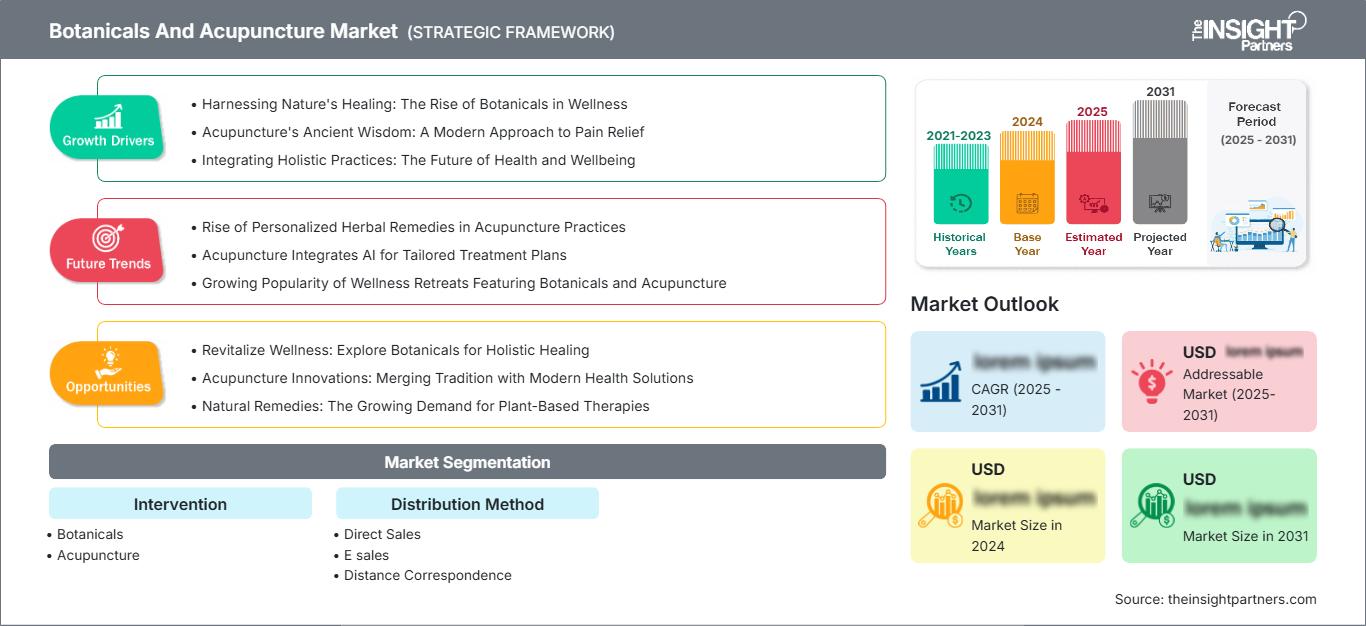
Botanicals And Acupuncture Market: Strategic Insights
Regional Insights
North America Botanicals and Acupuncture Market
North America is estimated to hold 34–37% share in 2025 and is expected to grow at a CAGR range of 22.8–24.2% during 2026–2034. The region benefits from high supplement penetration, established integrative health clinics, and growing consumer preference for non-opioid pain management. The Botanicals and Acupuncture Market share is also supported by pharmacy availability, practitioner referrals, and online wellness retail.
Structural demand is strongest in chronic pain, stress management, sleep support, and immune wellness. NCCIH data showing increased complementary health adoption provides a demand foundation, while WHO traditional medicine priorities reinforce policy relevance. Premium botanicals, subscription-based supplement models, and retail acupuncture concepts are expected to keep the region among the most commercially mature markets.
U.S. Botanicals and Acupuncture Market
The U.S. constituted 82–86% of the total North American share in 2025 and is expected to expand at a CAGR of 22.9–24.4% through 2026–2034. The penetration rate of adult acupuncture is low but growing, particularly with regard to back, joint, and neck pain. E-commerce sales, practitioner brands, and health-related positioning are drivers of consumer botanicals.
Companies are well represented, as shown by retail model clinics from Modern Acupuncture, Herbal supplements consumers from Herb Pharm, LLC, and practitioner products from Pure Encapsulations, Inc. Localized service-based model examples are provided by Chiropuncture, Inc. A Chiropractic and Acupuncture Corp. and ARC Acupuncture & Physical Therapy Specialists Inc.
Europe Botanicals and Acupuncture Market
Europe is projected to represent 24%-27% share in 2025 and is anticipated to register CAGR of 21.7%-23.1% in the forecast period of 2026-2034. Germany is one of the prominent countries owing to the use of herbal medicines driven by pharmacies, naturopathy practices, and credibility associated with the standardized botanical preparations.
The UK is growing owing to wellness retail stores, acupuncture clinics and online supplements market. France, Italy, and Spain are adding value through the use of herbal medicines in pharmacies, the demand for preventive wellness, and consumer inclination towards plant based stress and digestion solutions. Regulations may limit claims based marketing, but also provide advantages to firms making proper investments in quality systems and labeling.
APAC Botanicals and Acupuncture Market
Asia Pacific held 29–32% share in 2025 and is projected to grow at a CAGR range of 24.6–26.2% during 2026–2034. China is the leading country due to institutional use of traditional Chinese medicine, botanical ingredient production, and acupuncture heritage. Japan and South Korea add high-quality nutraceutical demand and aging population needs.
India supports herbal medicine scale through Ayurveda, while Australia contributes regulated complementary medicine retailing. Policy support for traditional systems, expanding middle-class wellness spending, and cross-border e-commerce are strengthening regional adoption. The Botanicals and Acupuncture Market is expected to benefit from both domestic heritage and export-oriented botanical innovation.
Middle East & Africa Botanicals and Acupuncture Market
MEA region is forecasted to expand at a CAGR rate of 20.8%-22.4% over 2026-2034. Saudi Arabia and UAE dominate adoption due to the trend of wellness tourism and investment in private healthcare, along with the sale of high-end supplements. South Africa makes contributions through its pharmacy sector, herbal history, and consumer health avenues.
Capital expenditure on integrated hospitals, wellness facilities, and online pharmacies facilitates the development of the market on a gradual basis. The energy-driven economies in the Gulf region diversify into healthcare and preventive wellness, thus offering scope for certified botanicals and acupuncture treatment by professionals.
Segmentation Analysis
Intervention
The intervention segment is expected to grow at a CAGR range of 23.0–24.6% during 2026–2034. The Botanicals and Acupuncture Market scope within intervention includes product-based wellness and practitioner-delivered therapeutic services. Botanicals dominate due to recurring purchase behavior, while acupuncture gains relevance as healthcare systems seek non-pharmacological options for pain, stress, and rehabilitation support.
- Botanicals hold the leading market position because extracts, tinctures, capsules, teas, and powders fit daily wellness routines, direct retail replenishment, and practitioner recommendations across immunity, sleep, digestion, stress, and mobility.
- Acupuncture is strategically important in pain management and rehabilitation settings, with demand rising through private clinics, franchise formats, physical therapy integration, and patient preference for drug-sparing care approaches.
Distribution Method
The distribution method segment is expected to grow at a CAGR range of 23.4–25.0% during 2026–2034. Direct sales remain important for practitioner trust and clinic-linked recommendations, while digital channels are expanding faster because consumers compare ingredients, reviews, certifications, and subscriptions. Distance correspondence is relevant where remote herbal guidance, follow-up consultations, and educational support improve retention.
- Direct Sales remain valuable for professional recommendation, clinic dispensing, and brand trust, especially where consumers seek guidance on dosage, interactions, body constitution, or use alongside conventional treatment.
- E sales are scaling quickly as wellness consumers shift to marketplaces, brand websites, subscription replenishment, and digital education before purchasing botanicals or booking integrative care appointments.
- Distance Correspondence supports remote consultations, follow-up care, and personalized herbal guidance, particularly for consumers in underserved locations or those seeking continuity after in-person assessment.
Opportunity Snapshot
| Segment Name | Revenue Contribution | Trend Tag | Adoption Stage |
| Botanicals | High | Clean Extracts | Mature |
| Acupuncture | Medium | Pain Care | Scaling |
Botanicals And Acupuncture Market Growth Drivers and Impact Analysis
Rising Preference for Non-Pharmacological Pain Care
Chronic pain continues to be one of the major demand anchors for acupuncture and herbal remedies. There has been a recorded increase in public health departments of patients seeking alternative pain relief options from the conventional methods of pain management. This brings about the commercial effect by way of increased clinic visits, referrals, and sales of herbs relating to mobility, anti-inflammatory and stress relieving herbs. The commercial effect is mainly achieved when acupuncture clinics are partnered with physical therapy clinics or chiropractic treatments or the wellness programs of employers. With regard to the positioning of herbal brands, pain management is key but other options such as joint comfort and active life herbs, are also key.
Quality Certification and Evidence-Led Product Differentiation
As botanical consumption expands, quality expectations are becoming a decisive purchasing factor. Consumers, practitioners, and retailers increasingly seek ingredient identity testing, contaminant screening, organic credentials, cGMP production, and clear dosage information. This driver benefits companies that can document raw material sourcing and finished-product consistency. In practical terms, certification improves retailer acceptance, reduces reputational risk, and supports premium pricing. The impact is also visible in private-label manufacturing, where brands rely on experienced producers to meet regulatory and quality thresholds. Acupuncture providers face a parallel need for practitioner credentials, hygiene compliance, and transparent treatment protocols, making trust a shared competitive asset across the market.
Digital Retail, Telewellness, and Subscription-Led Engagement
Digital channels are changing how consumers discover, compare, and repurchase botanicals, while telewellness enables ongoing communication between practitioners and patients. E-commerce supports ingredient education, review-based validation, and automatic replenishment, which is especially important for daily-use supplements. For acupuncture providers, online booking, membership plans, and digital follow-up improve convenience and utilization rates. The market impact includes lower customer acquisition friction, more granular demand data, and improved retention through tailored content. Companies that combine credible education with simplified ordering are likely to outperform fragmented operators. This driver also supports cross-border distribution, particularly for brands with compliant labels and recognizable quality credentials.
Botanicals And Acupuncture Market Future Trends
Condition-Specific Integrative Care Pathways
The Botanicals and Acupuncture Market trends indicate a shift from broad wellness claims to condition-adjacent care pathways focused on sleep, stress, mobility, metabolic balance, and healthy aging. Future offerings will likely combine acupuncture sessions, herbal protocols, nutrition guidance, and digital tracking within structured wellness plans. This model allows providers to improve adherence while keeping claims aligned with regulatory boundaries. Clinics can use assessment tools and follow-up schedules to personalize care, while botanical brands can develop practitioner education around ingredient selection. The trend favors companies that can integrate science communication, consumer experience, and repeat engagement rather than relying on single-product transactions.
Localized Botanicals and Sustainable Ingredient Sourcing
Future growth will increasingly depend on resilient, transparent, and regionally diversified botanical supply chains. Brands are expected to prioritize local cultivation, regenerative practices, and supplier traceability to address climate variability, adulteration risk, and consumer expectations around sustainability. This is particularly relevant for high-demand herbs, mushrooms, teas, and roots used in wellness formulations. Companies that invest in documented sourcing can reduce disruption risk and improve retailer confidence. For service providers, sustainable sourcing also supports clinic-level product recommendations. Over time, supply-chain credibility may become as important as formulation design in premium botanical positioning.
Botanicals And Acupuncture Market Opportunities
Practitioner-Grade Botanical Portfolios for Integrative Clinics
Integrative clinics offer a strong investment opportunity because they influence patient trust and repeat usage. Brands can develop practitioner-grade botanical portfolios with clear ingredient identity, supporting literature, allergen control, and dosage transparency. The Botanicals and Acupuncture Market Forecasts suggest that clinic-linked recommendations will remain influential even as online sales expand. Companies should invest in educational portals, sample programs, and compliant condition-support guides for acupuncturists, physical therapists, chiropractors, and Ayurveda practitioners. This approach can improve conversion from consultation to product adoption while preserving professional credibility. It also creates defensible differentiation against generic online supplements competing mainly on price.
Digital-First Access Models in Emerging Urban Markets
Emerging urban markets in ASEAN, India, the Gulf states, and parts of Africa present opportunities for digitally enabled access. Companies can combine e-commerce, remote wellness education, appointment booking, and localized product portfolios to reduce distribution barriers. Urban consumers are increasingly exposed to preventive health concepts but often need trusted content and convenient fulfilment. Botanical brands can test market-specific formulations through online channels before scaling retail partnerships, while acupuncture providers can use membership models and location analytics to improve clinic viability. The best opportunities will target educated consumers seeking stress, sleep, digestion, and mobility support through accessible, credible, and culturally familiar interventions.
Recent Developments
- November 2025: Pure Encapsulations, Inc. unveiled a creatine supplement designed to support muscle strength, performance, and recovery. The launch expanded the company’s practitioner-oriented supplement portfolio into a high-demand sports and active aging category, reflecting broader consumer interest in evidence-supported nutritional products within preventive wellness and performance management.
- July 2025: Nestlé Health Science stated that its vitamins, minerals, and supplements strategy would focus on premium brands, including Pure Encapsulations, while reviewing mainstream and value assets. The move reinforced the strategic importance of premium, science-led supplement brands in global consumer health portfolios and signaled continued investment emphasis on differentiated wellness products.
- November 2024: Herb Pharm, LLC launched its U.S.-grown Mushroom Wellness line, built around vertically integrated mushroom cultivation and formulations targeting immune health, cognitive function, energy, and broad wellness support. The launch strengthened the company’s botanical portfolio and reflected rising consumer interest in functional mushrooms, traceable sourcing, and clean-label supplement formats.
Frequently Asked Questions

- Comprehensive Market Sizing and Forecast Analysis
- Detailed Segmentation Analysis
- In-Depth Market Dynamics Assessment
- Regional and Country-Level Insights
- Competitive Landscape and Company Benchmarking
- Strategic Business Intelligence
Recent Reports
Testimonials

The Insight Partners provided valuable market intelligence that supported our global go-to-market strategy. Their team was professional, responsive, and attentive to our feedback, providing thoughtful analysis and helpful methodological clarifications throughout the project.
Junmo Kim Chief Financial Officer (CFO), Enertech Co., Ltd.
The Insight Partners' SCADA System Market report is comprehensive, with valuable insights on current trends and future forecasts. The team was highly professional, responsive, and supportive throughout. We are very satisfied and highly recommend their services.
RAN KEDEM Partner, Reali Technologies LTDs
I requested a report on a very specific software market and the team produced the report in a few days. The information was very relevant and well presented. I then requested some changes and additions to the report. The team was again very responsive and I got the final report in less than a week.
JEAN-HERVE JENN Chairman, Future Analytica
We worked with The Insight Partners for an important market study and forecast. They gave us clear insights into opportunities and risks, which helped shape our plans. Their research was easy to use and based on solid data. It helped us make smart, confident decisions. We highly recommend them.
PIYUSH NAGPAL Sr. Vice President, High Beam Global
The Insight Partners delivered insightful, well-structured market research with strong domain expertise. Their team was professional and responsive throughout. The user-friendly website made accessing industry reports seamless. We highly recommend them for reliable, high-quality research services
YUKIHIKO ADACHI CEO, Deep Blue, LLC.
This is the first time I have purchased a market report from The Insight Partners.While I was unsure at first, I visited their web site and felt more comfortable to take the risk and purchase a market report.I am completely satisfied with the quality of the report and customer service. I had several questions and comments with the initial report, but after a couple of dialogs over email with their analyst I believe I have a report that I can use as input to our strategic planning process.Thank you so much for taking the extra time and making this a positive experience.I will definitely recommend your service to others and you will be my first call when we need further market data.
JOHN SUZUKI President and Chief Executive Officer, Board Director, BK Technologies
I wish to appreciate your support and the professionalism you displayed in the course of attending to my request for information regarding to infectious disease IVD market in Nigeria. I appreciate your patience, your guidance, and the fact that you were willing to offer a discount, which eventually made it possible for us to close a deal. I look forward to engaging The Insight Partners in the future, all thanks to the impression you have created in me as a result of this first encounter.
DR CHIJIOKE ONYIA MANAGING DIRECTOR, PineCrest Healthcare Ltd.Reason to Buy
- Informed Decision-Making
- Understanding Market Dynamics
- Competitive Analysis
- Identifying Emerging Markets
- Customer Insights
- Market Forecasts
- Risk Mitigation
- Boosting Operational Efficiency
- Strategic Planning
- Investment Justification
- Tracking Industry Innovations
- Aligning with Regulatory Trends





 Get Free Sample for