
Bronchoscopes Market Share, Demand & Growth by 2034
Coverage: by Product (Rigid Bronchoscopes and Flexible Bronchoscopes); Application (Bronchial diagnosis and Bronchial treatment); End User (Hospitals and clinics and Ambulatory Surgical Centers), and Geography (North America, Europe, Asia Pacific, and South and Central America)
- Status : Data Released
- Report Code : TIPRE00003998
- Category : Life Sciences
- No. of Pages : 150
- Available Report Formats :


- Last update date : August 14, 2026


2025 Market Size
US$ 978.48 Mn
Base year value
2034 Forecast
US$ 1,710.44 Mn
Projected by 2034
CAGR 2026-2034
6.40 %
Growth rate
Addressable Market
US$ 12,163.52 Mn
(2026-2034)
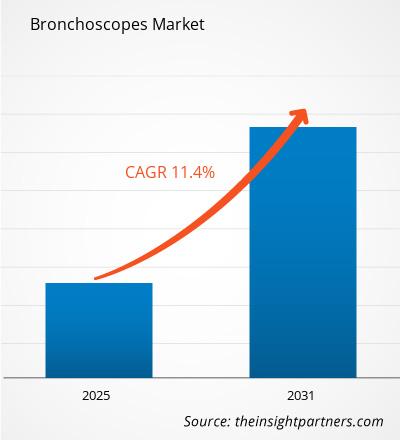
The Bronchoscopes Market size will witness its value growing from US$ 978.48 million in 2025 to US$ 1,710.44 million by 2034, recording a CAGR of 6.40%. Factors driving the growth of the Bronchoscopes Market include the adoption of technologically advanced visualization systems by hospitals, ambulatory centers, and specialized pulmonology centers to conduct early airway assessment, bronchoalveolar lavage, biopsy, foreign body retrieval, and minimal invasive procedures on the bronchus.
North America is considered the key commercial hub owing to the presence of advanced pulmonary treatment systems, the use of single-use devices in infection-susceptible areas, and good hospital purchasing power. North America is expected to experience growth in the Bronchoscopes Market at a CAGR of 5.9–6.4% range during the period of 2026–2034 due to lung cancer screening programs and ICU airway management requirements.
Bronchoscopes Market Assessment and Insights
- North America accounted for a 38–41% Bronchoscopes Market share in 2025 and is projected to grow at a 5.9–6.4% CAGR between 2026–2034, led by established pulmonology networks, high procedure volumes, and rapid adoption of disposable bronchoscopes.
- US represented 80–84% of North America in 2025 and is expected to expand at a 5.8–6.2% CAGR between 2026–2034 as hospitals prioritize infection control and lung cancer workups.
- Europe held a 27–30% share in 2025 and is forecast to post a 5.7–6.2% CAGR between 2026–2034, with Germany, the UK, France, Italy, and Spain driving procedure modernization.
- Asia Pacific captured a 22–25% share in 2025 and is projected to grow at a 7.1–7.8% CAGR between 2026–2034, led by China, Japan, South Korea, India, and Australia.
- Largest Segment: Flexible Bronchoscopes held a 78–82% market share in 2025 and is forecast to grow at a 6.5–7.0% CAGR between 2026–2034 due to broad diagnostic utility.
- High Growth Segment: Bronchial treatment accounted for a 35–39% market share in 2025 and is expected to grow at a 7.0–7.6% CAGR between 2026–2034.
- Key companies analyzed in detail: Teleflex Incorporated, Lymol Medical Corporation, EFER Endoscopy, Olympus Corporation, Ambu A/S, KARL STORZ SE & Co. KG, FUJIFILM Holdings Corporation, Boston Scientific Corporation, Cogentix Medical Inc., SCHÖLLY FIBEROPTIC GMBH.
Source: The Insight Partners' analysis based on proprietary research, government publications, company annual reports, investor presentations, industry databases, and expert interviews.
Migration of technology is bringing changes to the Bronchoscopes market, shifting from reusable products to HD video, sterile one-time use scope, advanced distal angulations, and usage with therapeutics. The production process itself is also changing in light of balancing between precision optics, disposables based on polymers, electronics, and paperwork required for regulation. Makers are building their portfolios on reusable scopes in high-traffic facilities and disposable ones in ICU, emergency rooms, isolation units, and outpatient clinics.
During the forecasted period, the developing geographical areas are going to contribute to the growing procurement in terms of disease screening in lungs, oncological diagnostics, and critical care infrastructure. Tailwinds of regulation concerning reprocessing validation, antimicrobial safety, and reduction of hospital-acquired infections increase the demand for sterile bronchoscope access. The investment will be made in flexible platforms, EBUS-based diagnostics, digital imaging, and supply system that reduces the downtime.
Bronchoscopes Market Report Scope
| Report Attribute | Details |
|---|---|
| Market size in 2025 | US$ 978.48 Million |
| Market Size by 2034 | US$ 1,710.44 Million |
| Global CAGR (2026 - 2034) | 6.40% |
| Historical Data | 2021-2024 |
| Forecast period | 2026-2034 |
Bronchoscopes Market Analysis
Growth in the demand is backed by growing clinical significance of airway visualization at an early stage. The Bronchoscopes Market Growth drivers are backed by high lung cancer incidence rates, COPD management, airway issues following infections, and increasing usage of bronchoscopy for biopsies. According to the WHO, lung cancer was the most frequent cause of cancer mortality in 2022, accounting for 2.5 million new cases and 1.8 million mortalities.
The value chain includes optical components, insertion tubes, illumination, sensors, processors, biopsy equipment, sterilization pack, and service capabilities. Hospitals prefer those manufacturers who guarantee reliable procedures, fast replacements, training services, and accessory equipment. The supply factors are still driven by electronic components procurement, polymer supplies, validation requirements for reusable and disposable equipment, and regulatory timeframes.
Competitive pressures revolve around performance in imaging, compatibility of the channel, scope diameter, lifecycle economics, and infection control at hospital level. Advanced visualization technologies are intensely competed by Olympus Corporation and FUJIFILM Holdings Corporation, while disposable positioning is bolstered by Ambu A/S and Boston Scientific Corporation. Teleflex Incorporated, KARL STORZ SE & Co. KG, EFER Endoscopy, Lymol Medical Corporation, Cogentix Medical Inc., and SCHÖLLY FIBEROPTIC GMBH target specialty requirements.
According to Bronchoscopes Market analysis, investments are shifting towards differentiated platforms and not only general purpose instruments. Positioning strategies focus on EBUS sampling capabilities, ICU preparedness for stock, ergonomic control, workflow management, and reduced reprocessing needs. Competitive advantage will rely on clinical performance, procurement considerations, regulatory clearance in each region, and the capability to cater to both large tertiary facilities and distributed respiratory care systems.
● REPORT CUSTOMIZATION
Tailor This Report To Align With Your Specific Business Requirements
This report can be customized to align precisely with your business objectives, scope, and target markets. Customization options include tailored segmentation, geography, competitive analysis, and strategic insights to support informed decision-making.
Customize This Report →WHAT YOU CAN ADJUST
- ● Segmentations
- ● Geography
- ● Competitive Analysis
- ● Language Preferences
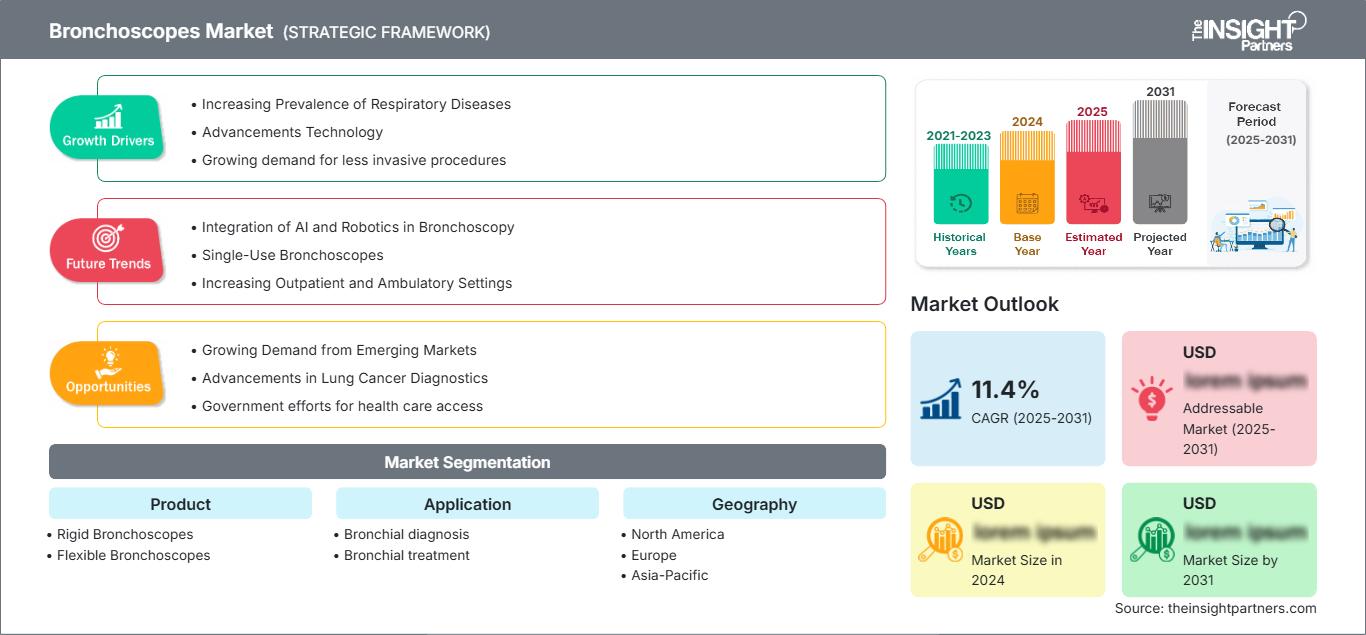
Bronchoscopes Market: Strategic Insights
Regional Insights
North America Bronchoscopes Market
Market share of North America was 38–41% in 2025 and expected to grow with a CAGR of 5.9–6.4% during 2026–2034. This is due to the presence of a large percentage of patients undergoing lung cancer screenings, use of ICU bronchoscopies, and availability of reimbursement facilities.
There is a presence of multiple device manufacturers, FDA approval, training, and multidisciplinary lung nodule clinics in this region. Decision factors include imaging capability, sterilization capability, uptime of services, and compatibility with biopsy forceps and therapeutic tools. Highest demand is expected to come from tertiary hospitals, ASCs, and airway management units.
U.S. Bronchoscopes Market
In 2025, the U.S. represented 80–84% of North America, and it will experience growth with 5.8–6.2% CAGR from 2026–2034. Procedure demand is driven by lung cancer diagnosis, enhanced pulmonology care, and policies of hospitals to prevent cross-contamination. Company representation is evident within Olympus Corporation, Ambu A/S, Boston Scientific Corporation, FUJIFILM Holdings Corporation, and Teleflex Incorporated.
Usage trends indicate growing application of procedures for bronchial diagnosis including biopsy, lavage, airway visualization, and staging, whereas the bronchial treatment is increasingly popular due to foreign bodies removal, secretions management, and interventional pulmonology. Also, the U.S. plays the role of regulatory benchmarking market when FDA clearances increase the likelihood of purchase and adoption of new platforms.
Europe Bronchoscopes Market
In terms of market size in 2025, Europe held a 27-30% share and is anticipated to register a 5.7-6.2% CAGR between 2026 and 2034. Germany is the top country due to the existing endoscopy structure, expertise of specialists, and purchasing power of hospitals. The UK is growing its capabilities in the diagnostic space due to cancer referral schemes and respiratory services modernization.
Germany still gives priority to reusability of video bronchoscopy in tertiary care and diagnosis through EBUS for lung oncology. The growth of the UK is associated with NHS capacity planning, infection control regulations, and outpatient respiratory assessment. France, Italy, and Spain are developing their oncology networks, aging population, and minimally invasive diagnostic devices in regional hospitals.
APAC Bronchoscopes Market
APAC accounted for 22-25% in 2025 and is expected to register a 7.1-7.8% CAGR between 2026 and 2034. APAC countries include China as the key market, followed by Japan, South Korea, India, and Australia. Growth is driven by growing cancer diagnosis capabilities, increasing hospital spending on endoscopy, and greater availability of specialists.
Increased industrial capacity in Japan and China enhances the availability of devices, and increasing investments made by hospitals both in the public and private sector contribute to the availability of bronchoscopy suites. In India and Southeast Asian markets, there is a shift from simple airways inspections to more structured pulmonology practices.
Middle East & Africa Bronchoscopes Market
The Middle East & Africa market is expected to grow at a 6.1–6.7% CAGR during 2026–2034. Saudi Arabia leads regional adoption, followed by the UAE, South Africa, and Rest of MEA. Growth is connected to tertiary hospital expansion, medical city investments, oncology services, and critical care infrastructure.
Energy revenue-backed healthcare investment in Gulf countries supports advanced device procurement, while South Africa anchors specialist respiratory care in sub-Saharan Africa. Access gaps remain outside major urban centers, but public-private hospital development and imported device availability are gradually improving diagnostic bronchoscopy capacity across selected markets.
Segmentation Analysis
Product
The product segment is expected to grow at a 6.2–6.8% CAGR during 2026–2034. Bronchoscopes Market scope within this segment is shaped by the shift from fiberoptic visualization to video-based platforms, plus selective adoption of sterile single-use devices. Buyers evaluate maneuverability, working channel performance, scope diameter, image clarity, lifecycle cost, and compatibility with biopsy or treatment accessories.
- Rigid Bronchoscopes remain strategically important for complex airway interventions, foreign body extraction, bleeding control, and procedures requiring strong airway access in operating rooms and specialized interventional pulmonology settings.
- Flexible Bronchoscopes dominate routine diagnostic use because they enable bedside access, deeper airway navigation, bronchoalveolar lavage, biopsy support, ICU procedures, and improved patient tolerance across broad clinical environments.
Application
The application segment is projected to advance at a 6.4–7.1% CAGR during 2026–2034. Diagnostic use remains the revenue anchor, but treatment applications are expanding as pulmonologists perform more minimally invasive airway procedures. Demand is shaped by lung nodule workups, infection assessment, secretion clearance, airway obstruction management, and the need to combine visualization with targeted sampling or intervention.
- Bronchial diagnosis accounts for the larger procedural base, supported by lung cancer evaluation, airway inspection, lavage, cytology, biopsy guidance, and early disease confirmation in hospitals and outpatient respiratory centers.
- Bronchial treatment is gaining strategic relevance as facilities use bronchoscopes for therapeutic suctioning, stent assistance, foreign body removal, bleeding management, and interventional support in complex airway cases.
End User
End User demand is projected to expand at a 6.3–7.0% CAGR during 2026–2034. Hospitals remain central because bronchoscopy often requires multidisciplinary diagnostic, anesthesia, pathology, imaging, and emergency support. Ambulatory facilities represent a smaller but faster-developing channel as selected procedures migrate toward lower-cost settings and portable or single-use systems reduce dependence on centralized endoscope reprocessing infrastructure.
- Hospitals and clinics: These facilities represent the principal purchasing channel owing to concentrated pulmonary caseloads, intensive care activity, lung cancer programs, emergency airway procedures, specialist personnel, and access to reusable endoscopy infrastructure.
- Ambulatory Surgical Centers: ASCs offer an expanding addressable channel for suitable outpatient procedures, particularly where predictable scheduling, rapid room turnover, compact imaging platforms, simplified workflows, and reduced dependence on extensive reprocessing infrastructure are priorities.
Opportunity Snapshot
| Application | Revenue Contribution | Trend Tag | Adoption Stage |
| Bronchial diagnosis | High | Early Sampling | Mature |
| Bronchial treatment | Medium | Airway Intervention | Scaling |
Bronchoscopes Market Growth Drivers and Impact Analysis
Rising Lung Cancer and Chronic Respiratory Disease Burden
The incidence of respiratory diseases is creating the demand for quick airway visualization and biopsy. Lung cancer continues to be one of the key procedures that drive the use of bronchoscope because lung cancer diagnosis usually involves procedures like bronchoscopy, direct visualization, cytology, lavage, needle aspiration, and biopsy. Another reason for the routine use of bronchoscope in the hospitals is the presence of chronic diseases like COPD, asthma complications, bronchiectasis, and post-infection airway disease. With an increased number of early diagnoses in screening programs, there is the requirement of devices which can access peripheral and segmental airways with greater maneuverability.
Infection Control Pressure and Single-Use Device Adoption
Policies for infection control in hospitals have been affecting the purchase decisions in a material way. Reusable scopes demand proven cleaning, sterilization, drying, storage and traceability and failure to do so poses health risks to the patient and the institution. Disposable equipment minimizes reprocessing issues while increasing availability for ICUs, emergencies, isolation and after hour's procedures. Such equipment is especially valuable where the volume of procedures is not known and the risk of contamination is critical. The effect is broader than just substitution of equipment as hospitals are changing their inventory management policies using fleets that include both equipment types.
Expansion of Interventional Pulmonology and EBUS Workflows
Interventional pulmonology is turning bronchoscopy from a largely diagnostic procedure into a broader therapeutic and staging platform. EBUS-guided procedures, airway stenting support, foreign body removal, secretion management, and treatment of obstructive lesions require better visualization, channel access, and scope control. The market impact is visible in higher demand for advanced scopes, compatible processors, needles, forceps, and procedural accessories. Hospitals seeking multidisciplinary lung cancer pathways are investing in platforms that improve sample adequacy and procedural efficiency. This shift favors manufacturers with integrated portfolios, physician education programs, and evidence supporting precision sampling in deeper or anatomically difficult airway regions.
Bronchoscopes Market Future Trends
Digital Bronchoscopy Platforms with Workflow Intelligence
Bronchoscopes Market trends are moving toward digital systems that support clearer imaging, standardized documentation, video capture, and closer integration with hospital information systems. Future platforms are expected to combine scope imaging with AI-assisted lesion identification, navigation support, and procedure analytics. These capabilities can reduce variability in sample targeting and improve training quality across centers with different expertise levels. Suppliers that offer software-enabled ecosystems will likely gain preference over standalone hardware providers. Over time, digital functionality may become a procurement differentiator as hospitals quantify procedure duration, repeat biopsy rates, equipment utilization, and clinical pathway efficiency.
Greater Use of Disposable Scopes in Distributed Care Settings
Disposable bronchoscopes are expected to gain stronger traction beyond intensive care and isolation environments. As outpatient pulmonary care expands, smaller facilities will value products that avoid reprocessing investment, reduce maintenance downtime, and enable predictable procedural scheduling. Future growth will depend on narrowing the performance gap against reusable systems, improving sustainability profiles, and offering multiple scope sizes for different airway anatomies. Procurement teams will increasingly compare total episode cost rather than device price alone. This trend may reshape competitive dynamics by favoring companies that can deliver sterile scope availability, reliable visualization, and scalable logistics across decentralized provider networks.
Bronchoscopes Market Opportunities
Localized Access Models for Emerging Hospital Networks
Emerging markets create a practical investment opportunity for suppliers that adapt commercialization to hospital tier, procedure volume, and reimbursement maturity. Bronchoscopes Market Forecasts indicate that demand will rise fastest where lung cancer diagnosis programs, critical care beds, and pulmonology training expand together. Companies can improve adoption by offering modular processors, durable flexible scopes, financing, service partnerships, and clinical education. This opportunity is strongest in China’s lower-tier cities, India’s private hospital chains, Gulf medical cities, and selected African referral centers. Local distribution reliability and post-sale maintenance will be as important as product specifications.
Integrated Diagnostic and Treatment Ecosystems
A second opportunity lies in building ecosystems that combine bronchoscopes with sampling tools, EBUS accessories, digital imaging, and therapeutic instruments. Hospitals increasingly prefer coordinated platforms that reduce compatibility uncertainty and improve workflow standardization. Suppliers can strengthen account retention by bundling scopes, processors, biopsy accessories, service contracts, and training around lung cancer or airway intervention pathways. This approach also supports premium positioning because buyers evaluate procedure success, not only capital cost. Companies with broad endoscopy portfolios and specialized respiratory accessories are well placed to capture higher wallet share as bronchoscopy becomes more central to pulmonary care delivery.
Recent Developments
- September 2025: Olympus Corporation launched the BF-UCP190F EBUS bronchoscope across EMEA and major APAC markets, offering a 5.9 mm outer diameter, 170-degree upward angulation, and improved reach for segmental and sub-segmental sampling. The development strengthened Olympus’ position in precision lung cancer diagnosis and EBUS-TBNA workflows.
- June 2025: FUJIFILM Corporation received FDA 510(k) clearance for the FUJIFILM Endoscope Model EB-710P and FUJIFILM Processor EP-8000 under product code EOQ. The clearance supported U.S. commercialization of its bronchoscope platform and reinforced regulatory momentum for next-generation flexible visualization systems.
- January 2024: Ambu A/S obtained FDA 510(k) clearance for Ambu aScope 5 Broncho 4.2/2.2 and associated aView 2 Advance configuration. The clearance expanded the company’s single-use bronchoscopy portfolio and supported broader sterile-scope adoption in hospitals prioritizing flexible inventory and infection prevention.
Frequently Asked Questions

- Comprehensive Market Sizing and Forecast Analysis
- Detailed Segmentation Analysis
- In-Depth Market Dynamics Assessment
- Regional and Country-Level Insights
- Competitive Landscape and Company Benchmarking
- Strategic Business Intelligence
Recent Reports
Testimonials

The Insight Partners provided valuable market intelligence that supported our global go-to-market strategy. Their team was professional, responsive, and attentive to our feedback, providing thoughtful analysis and helpful methodological clarifications throughout the project.
Junmo Kim Chief Financial Officer (CFO), Enertech Co., Ltd.
The Insight Partners' SCADA System Market report is comprehensive, with valuable insights on current trends and future forecasts. The team was highly professional, responsive, and supportive throughout. We are very satisfied and highly recommend their services.
RAN KEDEM Partner, Reali Technologies LTDs
I requested a report on a very specific software market and the team produced the report in a few days. The information was very relevant and well presented. I then requested some changes and additions to the report. The team was again very responsive and I got the final report in less than a week.
JEAN-HERVE JENN Chairman, Future Analytica
We worked with The Insight Partners for an important market study and forecast. They gave us clear insights into opportunities and risks, which helped shape our plans. Their research was easy to use and based on solid data. It helped us make smart, confident decisions. We highly recommend them.
PIYUSH NAGPAL Sr. Vice President, High Beam Global
The Insight Partners delivered insightful, well-structured market research with strong domain expertise. Their team was professional and responsive throughout. The user-friendly website made accessing industry reports seamless. We highly recommend them for reliable, high-quality research services
YUKIHIKO ADACHI CEO, Deep Blue, LLC.
This is the first time I have purchased a market report from The Insight Partners.While I was unsure at first, I visited their web site and felt more comfortable to take the risk and purchase a market report.I am completely satisfied with the quality of the report and customer service. I had several questions and comments with the initial report, but after a couple of dialogs over email with their analyst I believe I have a report that I can use as input to our strategic planning process.Thank you so much for taking the extra time and making this a positive experience.I will definitely recommend your service to others and you will be my first call when we need further market data.
JOHN SUZUKI President and Chief Executive Officer, Board Director, BK Technologies
I wish to appreciate your support and the professionalism you displayed in the course of attending to my request for information regarding to infectious disease IVD market in Nigeria. I appreciate your patience, your guidance, and the fact that you were willing to offer a discount, which eventually made it possible for us to close a deal. I look forward to engaging The Insight Partners in the future, all thanks to the impression you have created in me as a result of this first encounter.
DR CHIJIOKE ONYIA MANAGING DIRECTOR, PineCrest Healthcare Ltd.Reason to Buy
- Informed Decision-Making
- Understanding Market Dynamics
- Competitive Analysis
- Identifying Emerging Markets
- Customer Insights
- Market Forecasts
- Risk Mitigation
- Boosting Operational Efficiency
- Strategic Planning
- Investment Justification
- Tracking Industry Innovations
- Aligning with Regulatory Trends





 Get Free Sample for