
Capillary Blood Collection Market Share, Growth & Forecast by 2034
Coverage: By Device Type (Lancing Devices, Microcontainer Tubes, Microhematocrit Tubes, Sealants, Warming Devices, Others) ; Source (Infants and Young Children, Elderly Patients (With Fragile Veins), Severely Burned Patients, Point-Of-Care Testing) ; Application (Point-Of-Care Testing, Neonatal Screening, Blood Examination, Others) ; End User (Blood Banks, Hospitals, Diagnostic Centers, Others) , and Geography (North America, Europe, Asia Pacific, and South and Central America)
- Status : Data Released
- Report Code : TIPRE00008660
- Category : Life Sciences
- No. of Pages : 150
- Available Report Formats :


- Last update date : August 21, 2026


2025 Market Size
US$ 2.13 Bn
Base year value
2034 Forecast
US$ 3.98 Bn
Projected by 2034
CAGR 2026-2034
7.18 %
Growth rate
Addressable Market
US$ 27.55 Bn
(2026-2034)
The Capillary Blood Collection Market is projected to grow from US$ 2.13 Billion in 2025 to US$ 3.98 Billion by 2034, registering a CAGR of 7.18% during 2026–2034. The market reflects rising use of low-volume blood sampling for point-of-care testing, neonatal screening, and routine blood examination across hospitals, diagnostic centers, and blood banks, where minimally invasive specimen collection supports faster clinical workflows.
Across North America, the Capillary Blood Collection Market size is supported by decentralized testing, high diabetes screening volumes, and strong adoption of safety lancets in retail and hospital settings. The region is expected to advance at a CAGR of 6.7–7.2% during 2026–2034, with demand shaped by pharmacy-based diagnostics, pediatric testing protocols, and increasing preference for small-volume sampling among elderly patients.
Capillary Blood Collection Market Assessment and Insights
- North America accounted for 38–41% share in 2025 and is expected to grow at a CAGR of 6.7–7.2% during 2026–2034, supported by decentralized testing, mature reimbursement systems, and strong safety-device adoption.
- US represented 78–82% of North America in 2025 and is projected to grow at a CAGR of 6.8–7.3% during 2026–2034, driven by pharmacy testing and chronic disease monitoring.
- Europe held 26–29% share in 2025 and is forecast to grow at a CAGR of 6.2–6.8% during 2026–2034, led by Germany, the UK, and France through hospital digitization and neonatal screening.
- Asia Pacific captured 21–24% share in 2025 and is anticipated to expand at a CAGR of 8.0–8.8% during 2026–2034, with China, India, Japan, and South Korea leading demand for accessible diagnostics.
- Largest Segment: The largest segment is lancing devices, with 32–35% market share in 2025 and CAGR of 6.5–7.1% during 2026–2034, supported by recurring use in glucose, pediatric, and bedside testing.
- High Growth Segment: The high growth segment is point-of-care testing by source, with 23–26% share in 2025 and CAGR of 8.3–9.0% during 2026–2034, supported by decentralized diagnostics and home testing.
- Key companies analyzed in detail: Thermo Fisher Scientific Inc., B. Braun SE, Bio-Rad Laboratories, Inc., Ypsomed Holding AG, SARSTEDT AG & Co. KG, Terumo Corporation, Greiner Bio-One International GmbH, KABE LABORTECHNIK GmbH, Owen Mumford Limited, and Becton, Dickinson and Company.
Source: The Insight Partners' analysis based on proprietary research, government publications, company annual reports, investor presentations, industry databases, and expert interviews.
The Capillary Blood Collection Market has evolved from basic lancet-led sampling toward integrated collection systems that improve volume control, sample stability, and operator safety. Manufacturers are working on geometries, capillary action, additives, and closure systems to minimize hemolysis and pre-analytics variability. The manufacturing process is also leaning towards automation in molding, sterilization validation, and packaging, as there is procurement standardization at hospitals and diagnostics chains for pediatric, geriatric, and point-of-care applications.
Positive developments are anticipated in terms of growth in emerging healthcare networks in the Asia Pacific, the Middle East, and Africa, where growth in primary care will necessitate small and low-skill diagnostic tools. Improvements in regulatory support with regard to sharps safety, neonatal screening, and decentralization of chronic diseases will increase buying confidence. Money is being invested in comprehensive sampling kits and in the collaboration of sampling device manufacturers, diagnostic platform providers, and pharmacy diagnostic channels.
Capillary Blood Collection Market Report Scope
| Report Attribute | Details |
|---|---|
| Market size in 2025 | US$ 2.13 Billion |
| Market Size by 2034 | US$ 3.98 Billion |
| Global CAGR (2026 - 2034) | 7.18% |
| Historical Data | 2021-2024 |
| Forecast period | 2026-2034 |
Capillary Blood Collection Market Analysis
Capillary Blood Collection Market growth is being driven by the convergence of chronic disease monitoring, neonatal diagnostics, and decentralized care. Diabetes testing, heart diseases, anemia, and infections need to be retested; hence, low-volume sampling would be very efficient and effective for these clinical tests. The value chain will include safety lancets, micro-tube production, sterilization, distribution, laboratory testing, and training tools that reduce pre-analytical error in non-phlebotomy settings.
The supply side favors firms that can offer high-quality devices, international regulatory data, and combined consumables. For hospitals, failure rate reduction is important, while for laboratories, sample transportation is vital. This explains why there is a growing need for standardized capillary tubes, colored tubes, and compatible lancets for automated testing laboratories.
The Capillary Blood Collection market exhibits moderate consolidation in terms of its competitive landscape, featuring competition between global medtech players and dedicated capillary blood collection players. Becton, Dickinson and Company is working toward improving fingerstick collection devices, while SARSTEDT AG & Co. KG and Greiner Bio-One International GmbH are competing through their extensive offerings of microtubes and safety lancets. Owen Mumford Limited holds a dominant position in the space of safety lancets for point-of-care testing.
Investments are focused on safer puncture methods, improved collection volumes, and decentralization capabilities. Thermo Fisher Scientific Inc., Bio-Rad Laboratories, Inc., Terumo Corporation, B. Braun SE, Ypsomed Holding AG, and KABE LABORTECHNIK GmbH reinforce the ecosystem through their presence in diagnostics, devices, laboratory disposables, and specialized equipment. Positioning strategy increasingly focuses on evidence, training, and availability through hospital purchasing channels.
● REPORT CUSTOMIZATION
Tailor This Report To Align With Your Specific Business Requirements
This report can be customized to align precisely with your business objectives, scope, and target markets. Customization options include tailored segmentation, geography, competitive analysis, and strategic insights to support informed decision-making.
Customize This Report →WHAT YOU CAN ADJUST
- ● Segmentations
- ● Geography
- ● Competitive Analysis
- ● Language Preferences
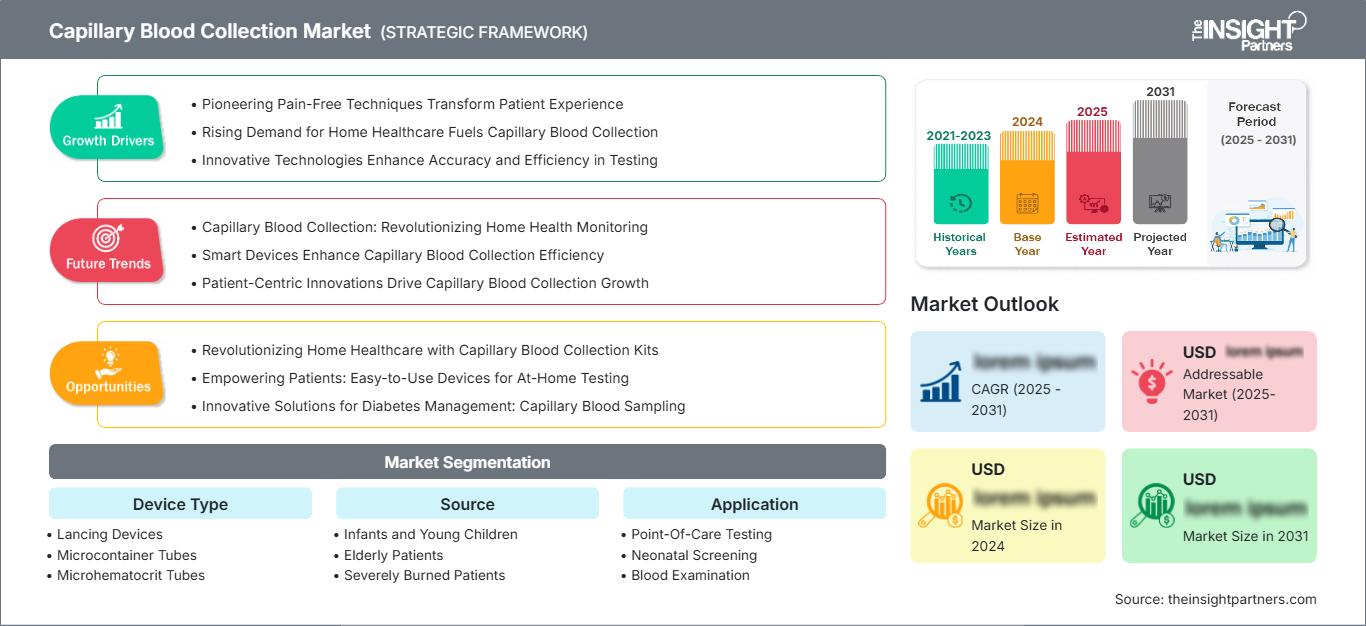
Capillary Blood Collection Market: Strategic Insights
Regional Insights
North America Capillary Blood Collection Market
North America represented 38–41% Capillary Blood Collection Market share in 2025 and is forecast to grow at a CAGR of 6.7–7.2% during 2026–2034. Clinical laboratory networks are well-developed in this geographical location; there are very high rates of preventive screenings and fast acceptance of collection outside hospitals. Urgent care clinics and retail clinics increase the need for safe, low-volume specimens.
The use of the product is increasing in diabetes screening, lipid testing, neonatal screening and elderly blood testing, when it can be difficult to draw venous samples. The industry is developing products that are adapted to CLIA-waived sites, pharmacy-based collections, and standardization in hospitals. Large purchasing capability enables the introduction of safety lancets, micro-vials with additives and other systems, reducing the need for re-collects.
U.S. Capillary Blood Collection Market
The U.S. accounted for 78–82% of North America in 2025 and is projected to grow at a CAGR of 6.8–7.3% during 2026–2034. The demand is bolstered by extensive chronic disease screenings, retail diagnosis, employee wellness programs, and increasing use of capillary sampling in point-of-care testing. The presence of vendors in the market is robust, with Becton, Dickinson and Company, Thermo Fisher Scientific Inc., and Bio-Rad Laboratories, Inc. providing clinical solutions.
Trends in applications indicate increased usage in wellness tests, neonatal bilirubin testing, glucose testing, and anemia testing. Diagnostic centers require instruments that reduce handling mistakes and keep the samples intact while being sent to central labs. Safety guidelines and hospital policies on infection control are driving the sales of retractable lancets, closed microsampling tubes, and collection kits.
Europe Capillary Blood Collection Market
Europe held 26–29% share in 2025 and is expected to grow at a CAGR of 6.2–6.8% during 2026–2034, with Germany as the leading country. Advantages for Germany include good hospital labs, high-end device adoption, and suppliers such as SARSTEDT AG & CO. KG and KABE LABORTECHNIK GMBH. Demands are prevalent in areas such as neonatal screening, geriatrics, and laboratory quality management.
In the UK, growth is being driven by community diagnostics, NHS screening processes, and patient-friendly outpatient redesign which includes fast specimen collection at the patient's location. Capillary sampling can be effective for pediatric, coagulation monitoring and blood glucose testing. Decisions on purchasing are affected by safety from sharps injuries, easy to use and suitability for the decentralized specimen collection process.
In France, Italy and Spain, good adoption is being witnessed through hospital upgrades, screening programs and expansion of diagnostic centers. In France, neonatal and metabolic screening is emphasized, in Italy, there are private diagnostic laboratories and in Spain, point-of-care testing capabilities are improving. In all three countries, demands include lancing devices and microcontainer tubes that meet European safety standards.
APAC Capillary Blood Collection Market
Asia Pacific captured 21–24% share in 2025 and is projected to grow at a CAGR of 8.0–8.8% during 2026–2034, with China leading regional revenue. China, Japan, South Korea, India, and Australia are expanding point-of-care testing, newborn screening, and chronic disease monitoring through public and private healthcare systems.
Industrial drivers include local device manufacturing, diagnostic chain expansion, and rising investment in primary care infrastructure. Policy emphasis on early diagnosis, diabetes management, and rural healthcare access supports wider use of low-volume sampling. Japan and South Korea favor premium quality systems, while India and China add scale through high testing volumes.
Middle East & Africa Capillary Blood Collection Market
The Middle East & Africa is expected to grow at a CAGR of 6.0–6.7% during 2026–2034, with Saudi Arabia leading regional adoption. Saudi Arabia and the UAE are investing in hospital infrastructure, national screening programs, and digital health pathways that require efficient specimen collection. South Africa anchors demand through diagnostic laboratories and public health testing.
Energy-backed healthcare spending in Gulf countries supports procurement of premium medical consumables, while infrastructure gaps in parts of Africa create a need for portable and low-training diagnostic tools. The rest of MEA demand is gradually increasing through maternal and child health programs, infectious disease screening, and decentralized primary care initiatives.
Segmentation Analysis
Device Type
Device Type is expected to grow at a CAGR of 6.8–7.4% during 2026–2034. Capillary Blood Collection Market scope across this segment is shaped by product reliability, ease of training, and compatibility with laboratory workflows. Demand is strongest where small-volume samples must be collected safely from infants, elderly patients, or users in decentralized testing environments.
- Lancing Devices dominate demand because they are used repeatedly across glucose monitoring, neonatal screening, anemia checks, and point-of-care testing while supporting operator safety through retractable or single-use designs.
- Microcontainer Tubes are strategically important for sample stabilization, additive compatibility, and transport to central laboratories, especially where capillary blood is used for chemistry or hematology testing.
- Microhematocrit Tubes retain relevance in hematocrit measurement, neonatal care, and small-volume blood examination, where rapid evaluation is required in laboratories, hospitals, or bedside settings.
- Sealants support safety and sample integrity by reducing leakage risk, improving tube handling, and enabling controlled transport of small-volume samples in clinical and diagnostic workflows.
- Warming Devices improve blood flow before collection, reducing failed attempts and supporting pediatric, geriatric, and low-perfusion patient groups where adequate capillary sample volume is difficult.
Source
Source is forecast to grow at a CAGR of 7.4–8.1% during 2026–2034. Adoption depends on patient physiology, collection setting, and the clinical need to avoid venipuncture. Demand is broadening as healthcare providers focus on less invasive sample collection for vulnerable groups and high-throughput point-of-care testing.
- Infants and Young Children represent a core demand base because low sample volumes reduce procedural burden while supporting neonatal screening, bilirubin testing, metabolic panels, and pediatric blood examination.
- Elderly Patients require capillary sampling, where fragile veins, repeat testing, and anticoagulation monitoring make venous collection less practical in hospitals, home care, and diagnostic centers.
- Severely Burned Patients benefit from low-volume collection when venous access is compromised, making capillary methods clinically valuable for monitoring, blood gas evaluation, and supportive care decisions.
- Point-Of-Care Testing is expanding rapidly as pharmacies, clinics, and bedside care teams require safe fingerstick collection for fast screening, chronic disease management, and decentralized diagnostics.
Application
Application is projected to grow at a CAGR of 7.0–7.7% during 2026–2034. The segment is driven by test frequency, sample volume requirements, and the shift from centralized-only workflows to faster near-patient diagnostics. Small-volume sampling is increasingly used where turnaround time and patient comfort are operational priorities.
- Point-Of-Care Testing leads application demand as clinicians and trained non-phlebotomy staff use capillary samples for glucose, lipid, coagulation, infectious disease, and wellness testing.
- Neonatal Screening maintains strategic importance because newborn testing relies on small samples, standardized heel-stick procedures, and strict quality expectations for early disease detection.
- Blood Examination supports routine hematology and chemistry needs where rapid, low-volume samples are adequate for screening, monitoring, and follow-up testing in outpatient settings.
End User
End User is expected to grow at a CAGR of 6.9–7.5% during 2026–2034. Hospitals remain central buyers, but diagnostic centers and blood banks are increasing procurement of standardized capillary collection products to improve throughput, sample consistency, and safety compliance. Purchasing favors suppliers offering reliable consumables and documentation.
- Blood Banks use capillary sampling mainly for preliminary testing, donor suitability checks, and hemoglobin screening, where fast, low-volume assessment can support operational efficiency.
- Hospitals are the largest end-user group because capillary blood collection supports neonatal units, emergency departments, wards, outpatient clinics, and chronic disease monitoring programs.
- Diagnostic Centers are scaling adoption through walk-in testing, wellness packages, and decentralized sample collection models that require standardized kits and reliable transport compatibility.
Opportunity Snapshot
| Segment Name | Revenue Contribution | Trend Tag | Adoption Stage |
| Point-Of-Care Testing | High | Retail Testing | Scaling |
| Neonatal Screening | Medium | Heel Sampling | Mature |
| Blood Examination | Medium | Rapid Panels | Scaling |
Capillary Blood Collection Market Growth Drivers and Impact Analysis
Expansion of Decentralized Diagnostic Testing
The decentralization of testing is altering the demand side, since there is an increase in blood collections taking place in pharmacies, urgent care facilities, homecare schemes, and community health centers. The true effect of the market change is that instead of venipuncture by skilled phlebotomists, there is a transition to trained operators utilizing fingerstick processes using easy-to-use and standardized lancing devices. There is a need for a constant demand for lancing devices, microtubes, and testing kits. Sample stability and ease of use, as well as compatibility with the central laboratories’ analyzing machines, are encouraged by suppliers.
Rising Need for Pediatric and Geriatric Sample Collection
Pediatrics and geriatrics are key areas for growth because these patient demographics tend to need low-volume, minimally invasive sampling. Babies will need heel sticks and microvolume blood sampling to test for metabolic diseases, bilirubin levels and other factors. The effect is the continuing demand for safety lancets, warmers, sealants, and microhematocrit tubes. In addition, hospitals are looking for sampling devices that ensure comfort, safety, and reliability. Manufacturers who offer specific products and training for the different patient demographics will be able to compete in these tenders.
Sharps Safety and Pre-Analytical Quality Requirements
Regulations concerning sharps safety and laboratory quality standards are forcing healthcare institutions to adopt safety syringes, closed blood collection systems, and other devices with reduced handling errors. Market implications of such requirements go beyond compliance since improper collection procedure may lead to hemolysis, inadequate sample size, and the need for repeated testing. In diagnostic centers and hospitals, the assessment of devices is increasingly being done in terms of activation control, consistent depth, adequate specimen volume, and correct closure of the tube. In this regard, the importance of validated device design and proper training becomes paramount.
Capillary Blood Collection Market Future Trends
Integrated Micro-Sampling Systems for Retail Care
Capillary Blood Collection Market trends indicate a move toward integrated micro-sampling systems that allow trained healthcare workers to collect, separate, transport, and process fingerstick samples with fewer manual steps. Retail care and workplace testing settings need devices that balance convenience with laboratory-grade reliability. Future systems will likely combine ergonomic puncture tools, microcontainers, stabilizing additives, and clear workflow instructions. This trend supports broader access to wellness panels and chronic disease monitoring without requiring full phlebotomy infrastructure. Adoption will depend on regulatory acceptance, analyzer compatibility, and evidence that capillary samples can meet defined clinical performance requirements.
Data-Linked Sampling Workflows
Workflow integration through digitalization will become increasingly relevant as diagnostic centers and hospitals link the sample collection process to laboratory information systems. Traceability by means of barcodes, lot tracking, and standardized procedures for sample collection will decrease errors in the labeling process. Future purchasing may be directed towards capillary products that are compatible with the connected test ecosystem, particularly in cases of remote sample collection and centralized testing processes. This development is less concerned with the lancet and more concerned with the entire process of verification, training, transportation control, and validity of results.
Capillary Blood Collection Market Opportunities
Scaling Pharmacy-Based Blood Testing Networks
Pharmacy-based diagnostics create a clear commercial opportunity because they extend access to preventive testing, lipid panels, diabetes monitoring, and wellness checks. Capillary Blood Collection Market Forecasts point to stronger adoption where collection systems allow trained pharmacy personnel to obtain adequate samples safely and send them to central laboratories. Manufacturers can target this channel with bundled kits, instructions, and validation data. Partnerships with pharmacy chains, diagnostic laboratories, and payer programs can convert occasional testing into recurring workflows. The opportunity is strongest for suppliers that prove ease of use, sample stability, and low retest rates.
Localized Manufacturing for Emerging Healthcare Systems
Emerging markets present the chance to produce safety lancets, microtubes, and collecting devices locally or regionally. The health systems of India, China, Southeast Asia, the Gulf, and Africa require diagnostic products that are affordable, dependable, and scalable. Local manufacturing could minimize delays, make tenders more competitive, and facilitate health screening campaigns. A company could choose to engage in contract manufacturing, regional sterilization arrangements, or packaging facilities. Quality management must be sustained, but packaging sizes and costs must be adapted for public hospitals, diagnostics chains, and health campaigns.
Recent Developments
- July 2025: Thermo Fisher Scientific Inc. showcased new clinical diagnostics workflow solutions at ADLM 2025, including LabLink360 and MAS Max quality controls, strengthening laboratory quality assurance and efficiency in environments that process small-volume and decentralized samples. The announcement supports broader diagnostic workflow modernization relevant to capillary blood testing pathways.
- May 2025: Becton, Dickinson and Company’s BD MiniDraw Capillary Blood Collection System was highlighted in Clinical Laboratory News after studies indicated clinical equivalence with conventional capillary and venous collection for selected analytes, alongside in-tube stability for up to 48 hours at refrigerated conditions.
- January 2024: Owen Mumford Limited expanded its Unistik Touch range with a 16G safety lancet designed for high-volume capillary blood sampling, targeting healthcare professionals and point-of-care test kit manufacturers that require larger fingerstick sample volumes with one-touch activation.
Frequently Asked Questions

- Comprehensive Market Sizing and Forecast Analysis
- Detailed Segmentation Analysis
- In-Depth Market Dynamics Assessment
- Regional and Country-Level Insights
- Competitive Landscape and Company Benchmarking
- Strategic Business Intelligence
Recent Reports
Testimonials

The Insight Partners' SCADA System Market report is comprehensive, with valuable insights on current trends and future forecasts. The team was highly professional, responsive, and supportive throughout. We are very satisfied and highly recommend their services.
RAN KEDEM Partner, Reali Technologies LTDs
I requested a report on a very specific software market and the team produced the report in a few days. The information was very relevant and well presented. I then requested some changes and additions to the report. The team was again very responsive and I got the final report in less than a week.
JEAN-HERVE JENN Chairman, Future Analytica
We worked with The Insight Partners for an important market study and forecast. They gave us clear insights into opportunities and risks, which helped shape our plans. Their research was easy to use and based on solid data. It helped us make smart, confident decisions. We highly recommend them.
PIYUSH NAGPAL Sr. Vice President, High Beam Global
The Insight Partners delivered insightful, well-structured market research with strong domain expertise. Their team was professional and responsive throughout. The user-friendly website made accessing industry reports seamless. We highly recommend them for reliable, high-quality research services
YUKIHIKO ADACHI CEO, Deep Blue, LLC.
This is the first time I have purchased a market report from The Insight Partners.While I was unsure at first, I visited their web site and felt more comfortable to take the risk and purchase a market report.I am completely satisfied with the quality of the report and customer service. I had several questions and comments with the initial report, but after a couple of dialogs over email with their analyst I believe I have a report that I can use as input to our strategic planning process.Thank you so much for taking the extra time and making this a positive experience.I will definitely recommend your service to others and you will be my first call when we need further market data.
JOHN SUZUKI President and Chief Executive Officer, Board Director, BK Technologies
I wish to appreciate your support and the professionalism you displayed in the course of attending to my request for information regarding to infectious disease IVD market in Nigeria. I appreciate your patience, your guidance, and the fact that you were willing to offer a discount, which eventually made it possible for us to close a deal. I look forward to engaging The Insight Partners in the future, all thanks to the impression you have created in me as a result of this first encounter.
DR CHIJIOKE ONYIA MANAGING DIRECTOR, PineCrest Healthcare Ltd.Reason to Buy
- Informed Decision-Making
- Understanding Market Dynamics
- Competitive Analysis
- Identifying Emerging Markets
- Customer Insights
- Market Forecasts
- Risk Mitigation
- Boosting Operational Efficiency
- Strategic Planning
- Investment Justification
- Tracking Industry Innovations
- Aligning with Regulatory Trends





 Get Free Sample for