
CPAP Devices Market Trends, Share & Demand by 2034
CPAP Devices Market Size and Forecasts (2021 - 2034), Global and Regional Share, Trends, and Growth Opportunity Analysis Report Coverage : by Product Type (CPAP Device and Consumable); Modality (Standalone and Portable); End User (Home Care, Hospitals, Private Clinics); and Geography (North America, Europe, Asia Pacific, and South and Central America)
- Status : Data Released
- Report Code : TIPRE00040840
- Category : Life Sciences
- No. of Pages : 150
- Available Report Formats :


- Last update date : August 04, 2026


2025 Market Size
US$ 5.04 Bn
Base year value
2034 Forecast
US$ 10.37 Bn
Projected by 2034
CAGR 2026-2034
8.35 %
Growth rate
Addressable Market
US$ 69.20 Bn
(2026-2034)
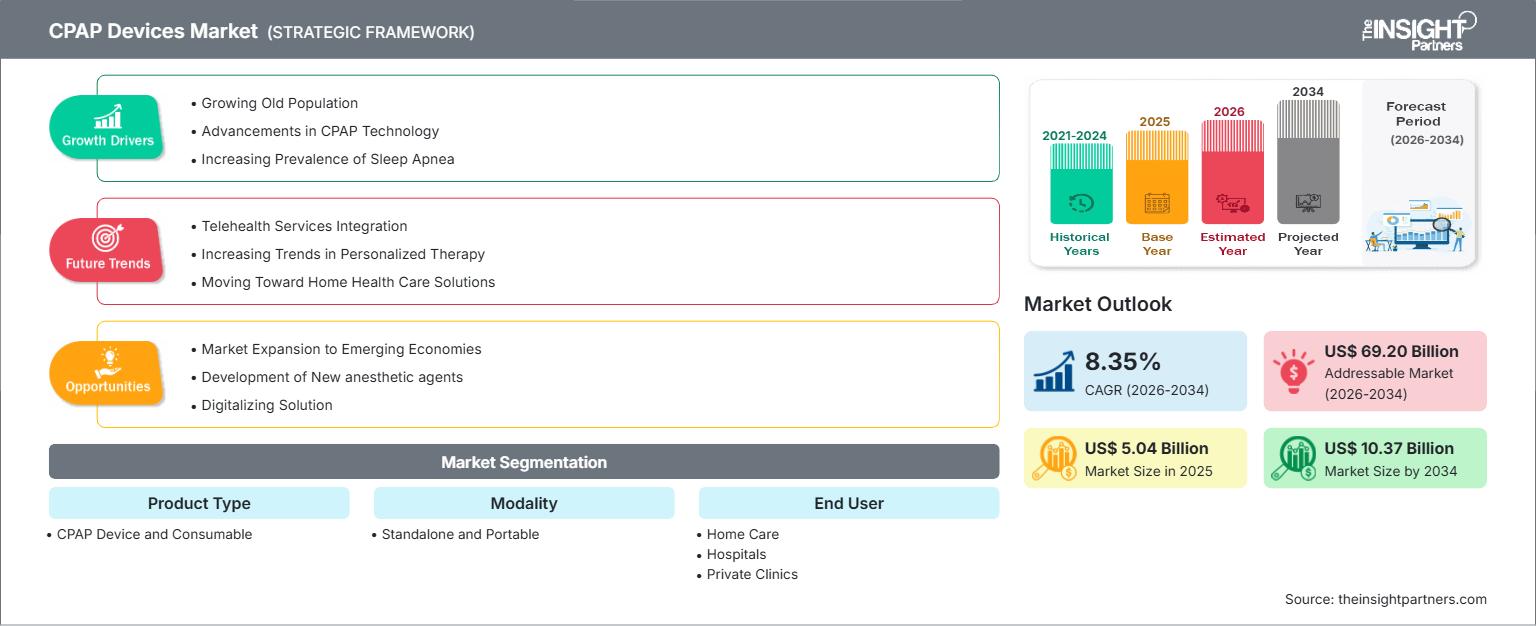
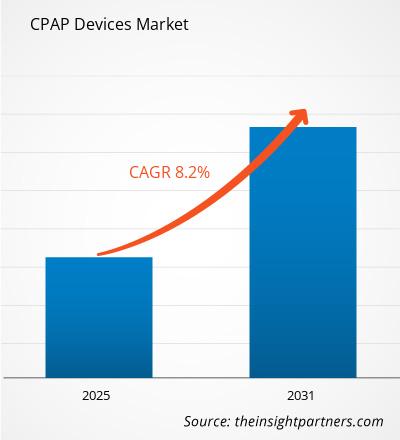
The CPAP Devices Market size is forecasted to reach US$ 10.37 billion in value from its current standing of US$ 5.04 billion by 2034, recording a CAGR of 8.35% between 2026 and 2034. The continued market expansion can be attributed to factors such as increasing prevalence of obstructive sleep apnea and growth in diagnosis along with the rise in use of home-based respiratory care solutions. Ongoing technological development to improve airflow management, patient comfort, and digital monitoring is increasing acceptance of these products in developed and developing healthcare markets.
North America is characterized by the continued emphasis by healthcare providers in the region on early detection of sleep-related breathing disorders, which is fostering a positive environment for the adoption of CPAP devices. The market value of the region is also driven by reimbursement policies, advancements in home healthcare facilities and increased awareness among patients regarding the risks of sleep apnea. It is estimated that the market demand in North America will record a CAGR of 7.8% to 8.3%.
CPAP Devices Market Assessment and Insights
- North America: Accounted for an estimated 39–42% share in 2025 and is projected to register a CAGR of 7.8%–8.3% during 2026–2034. Strong reimbursement systems, widespread sleep testing infrastructure, and rapid adoption of connected respiratory devices continue to reinforce regional leadership.
- US: Represented approximately 76–80% of the North American market in 2025 and is expected to grow at a CAGR of 7.9%–8.4% during 2026–2034, supported by advanced sleep laboratories, home healthcare expansion, and favorable insurance coverage.
- Europe: Held an estimated 27–30% share in 2025 and is anticipated to expand at a CAGR of 7.6%–8.1% between 2026–2034. Germany, France, the United Kingdom, Italy, and Spain continue investing in respiratory disease management and home-based sleep therapy.
- Asia Pacific: Captured approximately 22–25% share in 2025 and is forecast to record the fastest regional expansion with a CAGR of 9.4%–9.9% during 2026–2034. China, Japan, India, South Korea, and Australia are witnessing increasing diagnosis rates alongside expanding healthcare investments.
- Largest Segment: CPAP Device accounted for an estimated 63–67% market share in 2025 and is expected to grow at a CAGR of 8.0%–8.4% during 2026–2034, supported by replacement demand and continued product innovation.
- High Growth Segment: Portable modality represented approximately 29–33% market share in 2025 and is projected to register a CAGR of 10.0%–10.6% during 2026–2034, driven by travel-friendly designs, battery-operated systems, and expanding homecare adoption.
- Key companies analyzed in detail: ResMed, Koninklijke Philips N.V., Fisher & Paykel Healthcare Limited, Drive DeVilbiss International, Baird Respiratory, Transcend Inc., Armstrong Medical Ltd., NIDEK Medical India, Narang Medical Limited, Morpheus Healthcare, Löwenstein Medical SE & Co. KG.
Source: The Insight Partners' analysis based on proprietary research, government publications, company annual reports, investor presentations, industry databases, and expert interviews.
Digital advancements in respiratory care have revolutionized the competitive scenario in the CPAP Devices Market through the combination of cloud-based compliance monitoring, advanced flow technologies, automatic pressure adjustment, and ergonomic masks. The industry players are consistently working on developing integrated platforms that help clinicians to monitor the therapy adherence of patients and enhance their comfort. Improved cooperation among sleep clinics, telemedicine providers, distributors, and home health care providers has positively impacted the supply chain for products and their availability in both advanced and developing healthcare markets.
The future growth of the industry is likely to benefit from increased adoption in the Asia Pacific region, Latin America, and certain Middle Eastern healthcare markets, where diagnosis of sleep disorders is relatively less prevalent. Investment in public healthcare facilities, expansion of reimbursement facilities, digitalization of healthcare facilities, and supportive regulatory policies for connected respiratory care devices are likely to encourage product launch and manufacturing in the future.
CPAP Devices Market Report Scope
| Report Attribute | Details |
|---|---|
| Market size in 2025 | US$ 5.04 Billion |
| Market Size by 2034 | US$ 10.37 Billion |
| Global CAGR (2026 - 2034) | 8.35% |
| Historical Data | 2021-2024 |
| Forecast period | 2026-2034 |
CPAP Devices Market Analysis
The increased frequency of obstructive sleep apnea cases, obesity cases, cardiovascular diseases, and elderly patients will further reinforce the demand in the CPAP Devices Market. Clinical professionals continue to recommend that positive airway pressure therapy be the first choice for treating cases of moderate to severe obstructive sleep apnea, driving healthcare professionals to increase their diagnosis and treatment capabilities. Campaigns to increase awareness of sleep apnea, easy access to home sleep tests, and higher adoption of respiratory treatments over time have broadened the available pool of patients. Simultaneously, the integration of digital monitoring capabilities, automatic pressure adjustment, and user interfaces will facilitate treatment adherence, one of the most important factors influencing therapy success and replacement demand.
The market includes component suppliers, CPAP device manufacturers, mask and consumable providers, distributors, sleep laboratories, hospitals, home healthcare providers, and insurance companies. Continuous supply of sensors, motors, humidifiers, and medical grade plastics increases manufacturing efficiency, even though supply changes of electronic components globally sometimes disrupt manufacturing process. The healthcare industry prefers integrated solution providers that offer devices, software, consumables, and remote monitoring services.
The competitive intensity analysis in the CPAP Devices Market has been rising as producers have been differentiating their products based on connectivity, patient comfort, software functionalities, and post sales services other than pricing only. ResMed, Koninklijke Philips N.V., Fisher & Paykel Healthcare Limited, Löwenstein Medical SE & Co. KG, and Drive DeVilbiss International possess extensive international distribution channels; whereas companies like Transcend Inc., Morpheus Healthcare, NIDEK Medical India, Armstrong Medical Ltd., Baird Respiratory, and Narang Medical Limited have been focusing on niche applications, regional expansions, portable systems, or value-based product offerings.
Investment in the market is shifting toward cloud-based patient management solutions, artificial intelligence-based compliance management, portable therapeutic solutions, and sustainable manufacturing practices. Collaboration between medical devices companies, digital health companies, and healthcare organizations is speeding up the development of the product cycles as well as delivering better clinical results for the patients. Manufacturers are still increasing their manufacturing capacity, regional partnerships in distribution, and obtaining regulatory approvals in emerging markets to reduce risks of disruptions in their supply chains. Innovation in consumable products, masks, and humidification accessories is also aiding the business.
● REPORT CUSTOMIZATION
Tailor This Report To Align With Your Specific Business Requirements
This report can be customized to align precisely with your business objectives, scope, and target markets. Customization options include tailored segmentation, geography, competitive analysis, and strategic insights to support informed decision-making.
Customize This Report →WHAT YOU CAN ADJUST
- ● Segmentations
- ● Geography
- ● Competitive Analysis
- ● Language Preferences
CPAP Devices Market: Strategic Insights
Regional Insights
North America CPAP Devices Market
North America accounted for an estimated 39–42% market share in 2025 and is expected to expand at a CAGR of 7.8%–8.3% during 2026–2034. The region maintains leadership because of widespread awareness of obstructive sleep apnea, favorable reimbursement frameworks, and well-established sleep diagnostic infrastructure. High healthcare expenditure and broad adoption of home respiratory care continue to strengthen demand for advanced CPAP systems. The CPAP Devices Market share remains highest in North America due to continuous technological innovation and strong physician acceptance of positive airway pressure therapy.
The region also benefits from extensive telehealth integration, allowing clinicians to remotely monitor treatment adherence and optimize therapy settings. Medical device manufacturers continue investing in cloud-enabled respiratory platforms and patient engagement tools that improve compliance rates. Growing obesity prevalence, an expanding elderly population, and increasing diagnosis through home sleep testing further reinforce market expansion. Regulatory standards emphasizing product quality and patient safety encourage continuous innovation while supporting replacement demand for connected CPAP devices and accessories across hospitals and home healthcare settings.
U.S. CPAP Devices Market
The United States was estimated to account for 76–80% of the North American market in 2025 and is anticipated to exhibit a CAGR of 7.9%–8.4% over the period 2025–2034. The U.S. enjoys well-developed infrastructure for sleep medicine, extensive insurance coverages, and a huge population suffering from obstructive sleep apnea. Increasing use of home sleep apnea tests, along with rising awareness among physicians, helps in early diagnosis and continuous use of CPAP therapy.
Some of the major players such as ResMed, Koninklijke Philips N.V., Fisher & Paykel Healthcare Limited, Drive DeVilbiss International, and Transcend Inc. have significant business operations in the United States. The trend of recommending CPAP machines that allow the transfer of therapy data directly to physicians to increase the adherence in therapy is on the rise among healthcare providers. Increased use of telemedicine, the need to replace old devices, and the continuous update of software help generate continuous revenues in the devices, masks, tubing, humidifiers, and other accessories.
Europe CPAP Devices Market
Europe contributed about 27% to 30% of the total market share in 2025 and is expected to register a CAGR of 7.6% to 8.1% during 2026 to 2034. Germany continues to lead in the region due to its advanced system for respiratory care, whereas the UK continues to increase its diagnostic capabilities for sleep disorders via the implementation of healthcare initiatives in public health facilities. Favorable reimbursement and awareness about the problems associated with sleep apnea ensure steady regional demand for advanced CPAP systems.
Germany offers advanced infrastructure in terms of the medical device industry, specialized sleep laboratories, and use of connected devices to monitor respiratory function. The UK continues to enhance its respiratory care at a community level through home healthcare initiatives. In France, Italy, and Spain, there is an increased rate of diagnosis due to better clinical practices and increased focus on sleep medicine. Overall, these developments will continue to encourage the use of portable and automated CPAP devices.
APAC CPAP Devices Market
Asia Pacific captured an estimated 22–25% market share in 2025 and is forecast to expand at a CAGR of 9.4%–9.9% through 2034, representing the fastest-growing regional market. China leads regional demand, while Japan, India, South Korea, and Australia continue strengthening sleep disorder diagnosis through expanding healthcare investments, improving insurance coverage, and increasing physician awareness regarding respiratory health.
Rapid urbanization, rising obesity prevalence, growing middle-class healthcare expenditure, and expanding homecare services continue accelerating regional adoption. Government investments in healthcare infrastructure, together with increasing domestic manufacturing capabilities and digital health initiatives, are expected to further improve accessibility to affordable CPAP technologies across major Asia Pacific economies.
Middle East & Africa CPAP Devices Market
The growth rate of the Middle East and Africa market is estimated at 6.4%–6.9% during 2026–2034. Saudi Arabia continues to be the largest regional market due to the presence of healthcare modernization initiatives along with investment in respiratory care facilities. The UAE continues to promote the use of digital health care, whereas South Africa continues to be a prominent market for specialized sleep medicine services.
Infrastructure development in hospitals, increased awareness about chronic respiratory diseases, and private healthcare investments are some of the factors contributing to market growth. While the rate of diagnoses is still low compared to that of developed regions, healthcare reforms initiated by governments and availability of specialized respiratory treatment services are expected to drive adoption in the coming years.
Segmentation Analysis
Product Type
The Product Type segment is expected to expand at a CAGR of 8.2%–8.6% during 2026–2034. The CPAP Devices Market scope continues to broaden as manufacturers develop integrated respiratory solutions that combine advanced airflow technologies with connected monitoring capabilities. Product innovation, higher patient adherence, and increasing replacement demand for both equipment and accessories are supporting steady market expansion across hospitals, sleep clinics, and home healthcare environments.
- CPAP Device: This sub-segment represents the primary revenue contributor owing to continuous technological innovation, automatic pressure adjustment, integrated humidification, and wireless connectivity that improve therapy effectiveness and patient compliance across diverse clinical settings.
- Consumable: Consumables generate recurring demand through routine replacement of masks, tubing, filters, cushions, and humidifier chambers. Their recurring purchase cycle supports stable revenues while enhancing treatment hygiene, comfort, and long-term therapeutic performance.
Modality
The Modality segment is projected to register a CAGR of 8.7%–9.2% during 2026–2034. Advances in lightweight engineering, battery technology, and wireless connectivity are enabling manufacturers to deliver flexible treatment options suited to different patient lifestyles. Increasing preference for home-based respiratory care continues supporting adoption across both conventional and portable device categories.
- Standalone: Standalone systems remain widely utilized in hospitals, sleep laboratories, and home settings because they deliver consistent airflow, integrated humidification options, comprehensive monitoring features, and proven clinical performance for long-term therapy management.
- Portable: Portable devices are experiencing increasing adoption among frequent travelers and active patients seeking compact, lightweight systems capable of maintaining therapy continuity outside traditional healthcare environments without compromising treatment effectiveness.
End User
The End User segment is anticipated to grow at a CAGR of 8.5%–8.9% during 2026–2034. Growing diagnosis rates, expanding home healthcare services, and improved reimbursement policies are encouraging wider adoption of CPAP therapy across multiple healthcare settings. Providers continue emphasizing patient education and remote monitoring to improve adherence and clinical outcomes.
- Home Care: Home care represents the largest application area due to increasing patient preference for convenient long-term therapy, remote physician monitoring, reduced hospitalization requirements, and expanding availability of connected respiratory care platforms.
- Hospitals: Hospitals remain important purchasers of CPAP systems for inpatient respiratory management, sleep diagnostics, postoperative care, and treatment initiation before patients transition to long-term home-based therapy.
- Private Clinics: Private clinics continue expanding sleep disorder diagnosis and treatment services by providing personalized patient consultations, follow-up assessments, therapy adjustments, and ongoing compliance monitoring that support improved treatment outcomes.
Opportunity Snapshot
| Segment Name | Revenue Contribution | Trend Tag | Adoption Stage |
|---|---|---|---|
| Home Care | High | Remote Monitoring | Mature |
| Hospitals | High | Sleep Diagnostics | Mature |
| Private Clinics | Medium | Personalized Therapy | Scaling |
CPAP Devices Market Growth Drivers and Impact Analysis
Increasing prevalence of obstructive sleep apnea
The rising prevalence of obstructive sleep apnea in the global population is the leading factor fueling market growth. The increase in the rates of obesity, an aging population, a sedentary lifestyle, and the growing awareness of sleep breathing disorders have resulted in a larger number of patients needing long-term respiratory treatment. Hospitals continue to encourage early diagnosis of sleep apnea since this condition is linked to heart diseases, diabetes, stroke, and poor quality of life. Higher physician awareness, the availability of more sleep labs, and the accessibility of home sleep tests are contributing to higher rates of diagnosing sleep disorders. This results in rising demand for advanced CPAP machines, replacement supplies, and therapy management software.
Expansion of home healthcare and remote patient monitoring
With increasing efforts by healthcare organizations to encourage treatments outside conventional hospitals to improve convenience and reduce healthcare costs, connected CPAP devices capable of transmitting data on compliance and therapy outcomes have enabled doctors to remotely monitor their patients and adjust treatment parameters without visiting them. The increased usage of telemedicine, the improved availability of internet connectivity, and cloud-based respiratory management tools have made it possible to keep patients engaged for longer periods. Such developments not only increase compliance but also help create a continuing demand for new products.
Technological innovation enhancing patient adherence
The continuous advancements in respiratory device technology help to promote patient adherence during the initial stages of diagnosis. The modern CPAP machines have automatic pressure adjustments, silent motors, ergonomically designed masks, humidification systems, mobile phone connectivity, and artificial intelligence for therapeutic adjustments. All these make use of CPAP therapy more comfortable for the patients compared to traditional CPAP devices, which promotes the adherence to the treatment. There is ongoing research in software ecosystems for better monitoring of the treatments and predictive maintenance of these devices.
CPAP Devices Market Future Trends
Artificial intelligence and connected respiratory management
Artificial intelligence is becoming increasingly integrated into respiratory therapy platforms through predictive compliance monitoring, automated therapy optimization, and personalized patient coaching. These CPAP Devices Market trends are encouraging manufacturers to combine cloud connectivity with mobile applications that enable clinicians to monitor treatment remotely. Advanced analytics improve early identification of therapy interruptions while supporting individualized pressure adjustments. Healthcare providers are expected to increasingly adopt digital ecosystems that combine respiratory devices, patient engagement platforms, and electronic health records to improve long-term therapeutic outcomes and reduce unnecessary clinical visits.
Growing adoption of compact and travel-friendly devices
Manufacturers are increasingly introducing lightweight CPAP systems designed for portability without compromising therapeutic performance. Improvements in battery efficiency, compact motors, quieter operation, and universal charging capabilities are expanding usage among active patients and frequent travelers. Future product development is expected to emphasize ease of transport, simplified maintenance, and wireless connectivity. As home healthcare continues expanding globally, portable respiratory solutions are anticipated to capture greater patient preference while supporting improved treatment continuity across different care environments.
CPAP Devices Market Opportunities
Expansion into emerging healthcare markets
Healthcare modernization across Asia Pacific, Latin America, and parts of the Middle East presents substantial investment potential for manufacturers seeking geographic expansion. CPAP Devices Market Forecasts indicate that improving diagnostic infrastructure, expanding insurance coverage, and increasing physician awareness will support stronger demand in underserved patient populations. Companies investing in localized manufacturing, distributor partnerships, clinician training, and affordable product portfolios are well positioned to strengthen market penetration. Tailoring connected respiratory solutions to regional healthcare requirements can further enhance adoption while supporting sustainable long-term revenue growth.
Digital respiratory ecosystems and subscription-based services
Manufacturers have significant opportunities to diversify revenues beyond device sales by expanding cloud-based monitoring services, software subscriptions, and predictive maintenance platforms. Healthcare providers increasingly value integrated ecosystems capable of combining equipment, consumables, patient education, compliance monitoring, and clinician dashboards within a single platform. Subscription-based service models also strengthen customer retention through recurring revenue streams while simplifying therapy management for healthcare organizations. Strategic investments in cybersecurity, interoperability, and artificial intelligence-enabled analytics will further enhance competitive differentiation across the evolving respiratory care landscape.
Recent Developments
- February 2025: ResMed announced expanded artificial intelligence capabilities across its digital health ecosystem to strengthen remote patient monitoring and improve therapy adherence for sleep apnea patients using connected CPAP solutions. The enhancements support clinician workflow optimization and patient engagement through cloud-enabled respiratory management
- October 2024: Koninklijke Philips N.V. introduced additional sleep therapy innovations and expanded respiratory care solutions focused on improving patient comfort, digital connectivity, and long-term treatment adherence across home healthcare settings. The company also highlighted broader investments in connected health technologies.
- June 2024: Fisher & Paykel Healthcare Limited expanded its respiratory product portfolio with continued investments in home respiratory care technologies designed to improve patient comfort and clinical performance across sleep therapy applications. The initiative supports growing global demand for connected respiratory treatment solutions.
Frequently Asked Questions

- Comprehensive Market Sizing and Forecast Analysis
- Detailed Segmentation Analysis
- In-Depth Market Dynamics Assessment
- Regional and Country-Level Insights
- Competitive Landscape and Company Benchmarking
- Strategic Business Intelligence
Recent Reports
Testimonials

The Insight Partners' SCADA System Market report is comprehensive, with valuable insights on current trends and future forecasts. The team was highly professional, responsive, and supportive throughout. We are very satisfied and highly recommend their services.
RAN KEDEM Partner, Reali Technologies LTDs
I requested a report on a very specific software market and the team produced the report in a few days. The information was very relevant and well presented. I then requested some changes and additions to the report. The team was again very responsive and I got the final report in less than a week.
JEAN-HERVE JENN Chairman, Future Analytica
We worked with The Insight Partners for an important market study and forecast. They gave us clear insights into opportunities and risks, which helped shape our plans. Their research was easy to use and based on solid data. It helped us make smart, confident decisions. We highly recommend them.
PIYUSH NAGPAL Sr. Vice President, High Beam Global
The Insight Partners delivered insightful, well-structured market research with strong domain expertise. Their team was professional and responsive throughout. The user-friendly website made accessing industry reports seamless. We highly recommend them for reliable, high-quality research services
YUKIHIKO ADACHI CEO, Deep Blue, LLC.
This is the first time I have purchased a market report from The Insight Partners.While I was unsure at first, I visited their web site and felt more comfortable to take the risk and purchase a market report.I am completely satisfied with the quality of the report and customer service. I had several questions and comments with the initial report, but after a couple of dialogs over email with their analyst I believe I have a report that I can use as input to our strategic planning process.Thank you so much for taking the extra time and making this a positive experience.I will definitely recommend your service to others and you will be my first call when we need further market data.
JOHN SUZUKI President and Chief Executive Officer, Board Director, BK Technologies
I wish to appreciate your support and the professionalism you displayed in the course of attending to my request for information regarding to infectious disease IVD market in Nigeria. I appreciate your patience, your guidance, and the fact that you were willing to offer a discount, which eventually made it possible for us to close a deal. I look forward to engaging The Insight Partners in the future, all thanks to the impression you have created in me as a result of this first encounter.
DR CHIJIOKE ONYIA MANAGING DIRECTOR, PineCrest Healthcare Ltd.Reason to Buy
- Informed Decision-Making
- Understanding Market Dynamics
- Competitive Analysis
- Identifying Emerging Markets
- Customer Insights
- Market Forecasts
- Risk Mitigation
- Boosting Operational Efficiency
- Strategic Planning
- Investment Justification
- Tracking Industry Innovations
- Aligning with Regulatory Trends





 Get Free Sample for