
Crutch Pads Market Share, Growth & Forecast by 2034
Coverage: By Product Type (Forearm Crutch Pad, Hand Grip Crutch Pad, Platform Crutch Pad, Axillary Crutch Pad, Leg Support Crutch Pad); Material (Gel, Foam); Distribution Channel (Online Stores, Retail Pharmacies and Stores), and Geography (North America, Europe, Asia Pacific, and South and Central America)
- Status : Data Released
- Report Code : TIPRE00015556
- Category : Manufacturing and Construction
- No. of Pages : 150
- Available Report Formats :


- Last update date : November 09, 2026


2025 Market Size
US$ 1.94 Bn
Base year value
2034 Forecast
US$ 2.92 Bn
Projected by 2034
CAGR 2026-2034
4.65 %
Growth rate
Addressable Market
US$ 22.07 Bn
(2026-2034)
The Crutch Pads Market is valued at US$ 1.94 Billion in 2025 and is projected to reach US$ 2.92 Billion by 2034, registering a CAGR of 4.65% during 2026–2034. Market is expanding steadily as mobility-aid users, healthcare providers, and home-care buyers prioritize comfort, pressure relief, and safer ambulation.
North America Crutch Pads Market Size is expected to grow at a ~5% CAGR through 2034, supported by a large base of orthopedic injuries, post-surgical recovery, aging-related mobility limitations, and strong home medical equipment distribution. Demand is also reinforced by online availability of replacement pads and ergonomic mobility accessories.
Crutch Pads Market Assessment and Insights
Regional Outlook
- North America: ~38% of the global market in 2025 | ~5% CAGR through 2034. Market position: North America is the largest regional market, supported by established durable medical equipment channels, high awareness of ergonomic mobility products, and consistent demand from injury recovery, senior care, and post-operative rehabilitation.
- US: ~84% of North American market revenue in 2025 | ~5% CAGR through 2034. Market position: The US is the leading country in North America, benefiting from a mature home-care market, broad retail and e-commerce access, and strong demand for gel and foam comfort accessories across hospitals, clinics, and households.
- Europe: ~29% of the global market in 2025 | ~4% CAGR through 2034. Market position: Europe is a mature market with strong rehabilitation infrastructure. Germany, the UK, France, Italy, and Spain support demand through aging populations, national health systems, and established pharmacy and medical-equipment distribution.
- Asia Pacific: ~22% of the global market in 2025 | ~6% CAGR through 2034. Market position: Asia Pacific is the fastest-growing region, led by China, Japan, South Korea, India, and Australia. Expanding healthcare access, rising orthopedic procedures, and growing online medical-supply retail are accelerating adoption.
Segment Outlook
- Product Type: ~52% Share in 2025 | ~5% CAGR through 2034. Market position: Product Type is the largest main segment because crutch pads are purchased according to the specific mobility device and user-support requirement. Axillary, hand-grip, forearm, platform, and leg-support designs serve distinct clinical and comfort needs.
- Online Stores: ~38% Share in 2025 | ~7% CAGR through 2034. Market position: Online Stores form the high-growth distribution channel, supported by product comparison, home delivery, wider assortment, and convenient replacement purchasing for users managing temporary or long-term mobility limitations.
Competitive Coverage
Alex Orthopedic Inc., Vive Health, Harvy Canes, Medline Industries, Inc., Apothecary Products, LLC, North Coast Medical Inc., Walk Easy Inc., Briggs Healthcare, DJO (Colfax Corporation), iWALKFree, Inc.
Methodology
The Insight Partners follows Data Collection & Secondary Research, Primary Research, Data Analysis, and Data Triangulation & Final Review to validate market estimates and insights.
Source: The Insight Partners' analysis based on proprietary research, government publications, company annual reports, investor presentations, industry databases, and expert interviews.
Crutch Pads Market has evolved from simple foam or fabric coverings to ergonomically engineered comfort pads, which help reduce pressure, skin irritation, fatigue and instability. Initially, the products catered to underarm crutches, but the product line has since expanded to include anatomically designed hand grips, forearm pads, platform pads, and leg support cushions. Innovation in materials has been crucial for such an evolution. Gel inserts help with pressure dispersion, while the medical-grade foam strikes the balance between cushioning and sturdiness and breathability. There has also been advancement in washable, antimicrobial, adjustable and easily attachable designs compatible with standard crutch dimensions. The production process is still quite fragmented among the specialized orthopedics manufacturers, home medical equipment companies, and healthcare distributors.
In the future, increased adoption in new healthcare markets, as well as greater utilization of direct-to-consumer routes, is predicted. The growth of the Asia Pacific region would be seen because of the growth of orthopedic treatment facilities, rehabilitation service provision, and e-commerce presence in China, India, and Southeast Asia. In mature regions, there would still be a need for replacement pads due to the wear and tear caused by regular use, sweat, and washing. Regulatory concerns regarding patient safety and skin contact materials would lead to the preference of suppliers who can demonstrate material quality and correct usage.
Crutch Pads Market Report Scope
| Report Attribute | Details |
|---|---|
| Market size in 2025 | US$ 1.94 Billion |
| Market Size by 2034 | US$ 2.92 Billion |
| Global CAGR (2026 - 2034) | 4.65% |
| Historical Data | 2021-2024 |
| Forecast period | 2026-2034 |
Crutch Pads Market Analysis
Demand for crutch pads is associated with the number of users of crutches and the period of time for which the individual is immobile. Broken bones, strains, joint replacement, sporting accidents, neurological ailments, and recovering from operations make it necessary to have comfortable cushioning surfaces. Growth in Crutch Pads Market is further driven by the fact that poorly cushioned grips and armpit rests may result in hand numbness, skin irritation, soreness of shoulders, and poor adherence to devices.
The supply chain involves the suppliers of raw materials, crutch pad manufacturers, orthopedic device manufacturers, distributors, pharmacists, online retailers, physiotherapy clinics, and ultimate customers. Supply side factors include the supply of polymers, gel, foam, fabrics, and fasteners.
According to the Crutch Pads Market Report, there are competitors who are both traditional and mobility-oriented. The former includes companies such as Medline Industries, Inc., which benefits from extensive distribution of health care products and institutional connections. The latter includes Alex Orthopedic Inc., North Coast Medical Inc., and Briggs Healthcare.
Vive Health and Apothecary Products, LLC improve consumer-oriented access, while Walk Easy Inc. and Harvy Canes provide mobility devices knowledge, which helps to develop pads fitting into them. DJO (Colfax Corporation) adds orthopedic care scale, while iWALKFree, Inc. illustrates demand for an alternative solution for hands-free mobility. Investment will be directed into comfort materials, ergonomic testing, e-commerce content and distribution connections but not into production.
● REPORT CUSTOMIZATION
Tailor This Report To Align With Your Specific Business Requirements
This report can be customized to align precisely with your business objectives, scope, and target markets. Customization options include tailored segmentation, geography, competitive analysis, and strategic insights to support informed decision-making.
Customize This Report →WHAT YOU CAN ADJUST
- ● Segmentations
- ● Geography
- ● Competitive Analysis
- ● Language Preferences
Crutch Pads Market: Strategic Insights
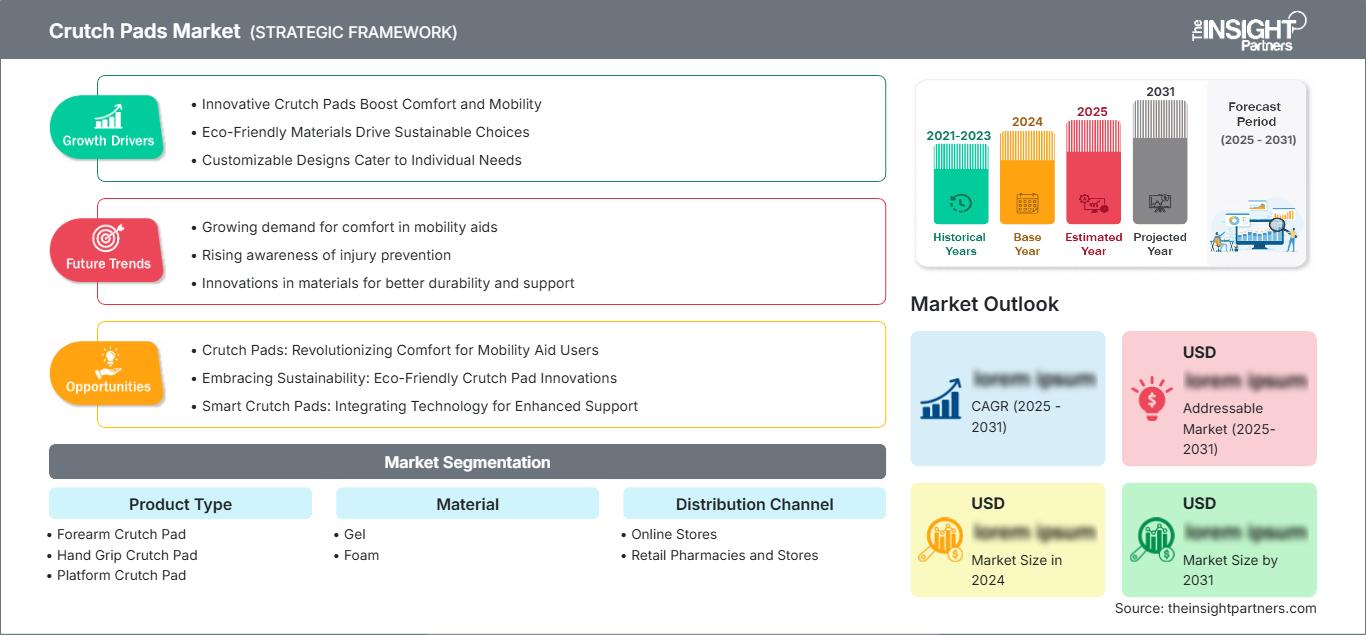
Regional Insights
North America Crutch Pads Market
North America held ~38% share of the global Crutch Pads Market Share in 2025 and is expected to grow at a ~5% CAGR from 2026 to 2034. This is due to an established ecosystem of DME, high healthcare expenditure, and high customer awareness about mobility devices. Factors driving demand include injuries related to orthopedics, recuperation from joint replacement surgeries, assistance for elderly people’s mobility needs, and rehabilitation programs in hospitals, clinics, and even in home care centers.
Being replaceable is a major factor driving the growth of the market since it deals with pads which are accessory products which come in contact with the body frequently and need frequent cleaning and replacement. It is easy for customers to buy upgrades to their existing basic foam pads with more advanced features like gel pads and anatomical designs. Premiumization in this category happens easily without needing to buy a new crutch.
U.S. Crutch Pads Market
The United States accounted for around ~84% of the North American Crutch Pads Market Share in 2025 and is anticipated to witness a ~5% CAGR till 2034. This is the largest market in North America owing to the availability of a large number of patients, well-developed rehabilitation facilities, and advanced home medical equipment industry in the country. There will be constant demand for replacement pads and comfort in the market from hospitals, ambulatory surgery centers, sports medicine providers, and home care providers in the country.
Country’s market penetration is due to the presence of companies in the country. Medline Industries, Inc. is the company that caters to healthcare facilities with medical surgical distribution, while Alex Orthopedic Inc., North Coast Medical Inc., and Briggs Healthcare are some of the companies that cater to DME and rehabilitation segments. Companies like Vive Health and Apothecary Products, LLC enable consumers to have access to the market, and Walk Easy Inc. provides crutches along with accessories that are adjustable and comfortable.
Europe Crutch Pads Market
In 2025, Europe accounted for approximately ~29% of the world’s revenue and will maintain the growth rate of about ~4% CAGR up to 2034. The market of the region has a matured demand basis due to the availability of health care facilities, presence of rehabilitation clinics, and an older adult population that requires mobility aids. Product selection in this area depends on clinical recommendations, availability of pharmacies, and preference for hygiene-friendly material.
The leading country in Europe is Germany, which is due to the large medical device and home-care distribution infrastructure, rehabilitation system, and elderly population. In the UK, the demand basis includes rehabilitation facilities within the National Health Service and private orthopedic clinics, home-care services, as well as pharmacy retail. France offers well-established medical equipment distribution infrastructure and rising demand for home-care services. In Italy and Spain, pharmacies are the major sales channel and the number of replacement purchases. The companies are focusing on developing ergonomic grips, breathable covers, and fastening systems. There are such mobility experts in Europe as Walk Easy Inc. and healthcare distributors such as Medline Industries, Inc. In Europe, online channels have gradually become more popular.
APAC Crutch Pads Market
The Asia Pacific is expected to have roughly ~22% of the world’s revenues in 2025, growing at a ~6% CAGR until 2034, and will be the fastest-growing region. China is the biggest market in the Asia Pacific due to its substantial population base, growth in its orthopedic care capacity, and increasing penetration of e-commerce in the region. Japan and South Korea provide advanced rehabilitation systems and aging populations in their regions. India is a market with strong long-term potential.
Healthcare policy expansion, high cases of trauma and orthopedic procedures, and increased availability of durable medical equipment are some of the regional drivers. Urban patients buy replacement pads through online platforms that make information regarding specifications and materials easy to find. Local and foreign companies are likely to gain from affordable product offerings, regional partnerships, and knowledge about proper pad and crutch selection.
Middle East & Africa Crutch Pads Market
The Middle East & Africa is projected to grow at a ~6% CAGR through 2034, supported by expanding healthcare infrastructure, medical tourism, and improving access to rehabilitation services. Saudi Arabia is the leading country in the Middle East & Africa, reflecting large public healthcare investment, hospital expansion, and growing demand for mobility and home-care products. The UAE also supports demand through private healthcare, medical tourism, and modern retail channels.
The South African Region and other parts of the MEA are participating by offering hospitals, orthopedic trauma centers, and pharmacies. The infrastructure creation in healthcare centers, rehabilitation centers, and homecare service facilities is slowly creating a broader user base to participate. Those suppliers who have durable and affordable foam as well as gel products can cater to both institutional buying and replacement markets.
Segmentation Analysis
Product Type
Product Type defines the Crutch Pads Market scope by matching comfort components to the specific part of the crutch and the user’s support requirement. Demand is shaped by injury type, duration of use, user weight distribution, skin sensitivity, and the need to reduce pressure on the hands, underarms, forearms, or legs. This segment remains the primary purchase decision point for both new crutch users and replacement buyers.
- Forearm Crutch Pad: Forearm pads support users of forearm or elbow crutches, particularly those with long-term mobility needs. They reduce contact discomfort, improve stability, and are important for rehabilitation programs where extended daily use is common.
- Hand Grip Crutch Pad: Hand-grip pads cushion the primary weight-bearing contact point on standard crutches. They are widely used to reduce palm fatigue, blistering, and numbness during recovery from lower-limb injuries or surgery.
- Platform Crutch Pad: Platform pads support the forearm on platform crutches, often used by individuals who cannot grip conventional handles. They are strategically important for users with arthritis, neurological impairment, or hand weakness.
- Axillary Crutch Pad: Axillary pads cushion the underarm area of traditional crutches. They remain a high-volume category because underarm crutches are commonly supplied after fractures, sprains, and post-operative procedures.
- Leg Support Crutch Pad: Leg-support pads provide cushioning for devices that support the lower leg during non-weight-bearing recovery. They serve users seeking alternatives to conventional crutches and help reduce discomfort during prolonged mobility.
Material
Material is a key differentiator in the Crutch Pads Market because it determines pressure relief, durability, hygiene, and price. Gel and foam products serve overlapping but distinct needs: gel emphasizes pressure distribution and premium comfort, while foam emphasizes lightweight cushioning, affordability, and broad availability. Material selection also affects washability and replacement frequency.
- Gel: Gel pads are positioned as premium comfort accessories because they conform to contact areas and distribute pressure more evenly. They are particularly relevant for users with sensitive skin, prolonged crutch use, or recurring hand and underarm discomfort.
- Foam: Foam pads are the mainstream choice for standard replacement needs, offering lightweight cushioning at accessible price points. Their broad compatibility, ease of manufacture, and availability through pharmacies and online stores support consistent demand.
Distribution Channel
Distribution Channel influences product visibility, pricing, and purchase convenience across the Crutch Pads Market. Traditional healthcare and pharmacy channels remain important for first-time buyers and clinically guided purchases, while online stores are expanding rapidly through replacement demand, wider assortment, and direct-to-consumer engagement.
- Online Stores: Online stores enable easy comparison of gel and foam options, sizing information, reviews, and home delivery. They are especially important for repeat purchasers and caregivers seeking specific pad types without visiting a medical-supply location.
- Retail Pharmacies and Stores: Retail pharmacies and medical-supply stores provide immediate availability and in-person guidance. They remain important for first-time crutch users, urgent replacement needs, and buyers who prefer to assess material texture before purchase.
Opportunity Snapshot
| Product Type | Revenue Contribution | Trend Tag (MAX 2 words, specific) | Adoption Stage (Emerging/Scaling/Mature) |
|---|---|---|---|
| Forearm Crutch Pad | Medium | Long-Term Mobility | Scaling |
| Hand Grip Crutch Pad | High | Pressure Relief | Mature |
| Platform Crutch Pad | Low | Assisted Grip | Emerging |
| Axillary Crutch Pad | High | Post-Injury Recovery | Mature |
| Leg Support Crutch Pad | Medium | Hands-Free Recovery | Scaling |
Crutch Pads Market Growth Drivers and Impact Analysis
Rising Orthopedic and Post-Surgical Recovery Needs
Injured limbs from fractures, torn ligaments, prosthetic joints, and surgery on the lower limb result in a group of crutch users whose requirements include comfort pads when recovering from their injuries. With orthopedic operations and sports injuries being prevalent in many age groups, there is an increasing need for comfortable pads, which decrease fatigue and irritation caused by using crutches. The effect is seen more in the replacement market since the pads wear off over time due to sweat, washing, and bearing weight. In addition, health professionals have a great deal of influence in recommending specific pads that increase patient comfort and ensure correct usage of crutches. This results in market opportunity for manufacturers to provide products tailored to temporary recovery, lifelong disability, or after surgery needs.
Aging Populations and Home-Based Care
Older adults are more likely to experience balance limitations, arthritis, neurological conditions, and extended recovery periods after surgery, increasing their reliance on walking aids. As care shifts toward home and community settings, families and caregivers are purchasing mobility accessories directly rather than relying solely on hospital supply. This shift raises demand for pads that improve daily comfort, reduce pressure injuries, and make crutches easier to use for extended periods. The commercial impact is stronger demand through pharmacies, home medical equipment dealers, and online stores. It also encourages product designs that are easy to attach, clean, and replace. Suppliers that package pads with clear instructions and compatibility information can address caregiver needs while reducing returns and improper fitting. Aging demographics therefore support both initial adoption and recurring replacement demand.
Ergonomic Comfort and Material Innovation
User comfort has become a decisive purchase criterion as consumers recognize that hard or poorly fitted crutch contact points can cause numbness, abrasions, and reduced mobility adherence. Gel inserts, memory foam, breathable covers, contoured shapes, and antimicrobial surfaces address these pain points while allowing suppliers to move beyond commodity pricing. The impact is a gradual premiumization of the category, with buyers willing to pay more for pads that offer better pressure distribution and durability. For manufacturers, material innovation also supports differentiation in a market where basic crutch designs are largely standardized. Companies that validate comfort claims through ergonomic testing and provide transparent material information can strengthen trust among clinicians, retailers, and consumers. This driver is especially relevant for long-term users, who prioritize sustained comfort over the lowest upfront price.
Crutch Pads Market Future Trends
Personalized Fit and Ergonomic Design
Crutch Pads Market trends are expected to move toward greater personalization, with pads designed around hand size, grip angle, body weight, and duration of use. Future products are likely to combine contoured foam bases with removable gel inserts, breathable covers, and adjustable straps that accommodate different crutch models. Digital sizing guides, online fit questionnaires, and clearer product specifications will help users select the appropriate pad without clinical supervision. This trend matters because improper fit can reduce comfort and discourage consistent use of mobility aids. Through 2034, suppliers that offer modular pad systems, replacement covers, and compatibility information are likely to gain an advantage. The commercial effect should be higher repeat purchase rates, fewer sizing-related returns, and stronger differentiation between basic foam covers and ergonomically engineered comfort solutions.
Sustainable and Hygiene-Focused Materials
Sustainability and hygiene will increasingly influence material selection and product communication. Buyers are expected to seek washable covers, longer-lasting foam structures, recyclable packaging, and materials that withstand repeated cleaning without losing cushioning performance. Healthcare buyers may place greater emphasis on documented material safety, while consumers will value pads that remain odor-resistant and structurally stable over time. This trend could encourage the use of bio-based foams, recycled textiles, and reduced-plastic packaging, provided cost and durability remain competitive. For suppliers, sustainability will become a practical procurement issue rather than only a marketing message. Companies that can demonstrate material safety, cleaning compatibility, and extended product life will be better positioned in hospital tenders, pharmacy assortments, and online marketplaces. The result may be a gradual shift toward durable, replaceable, and lower-waste pad systems.
Crutch Pads Market Opportunities
Expand Direct-to-Consumer Replacement Sales
Online Stores offer a clear opportunity to capture recurring replacement demand from crutch users, caregivers, and rehabilitation patients. Because pads wear out faster than crutches, repeat purchasing is a natural revenue stream for brands with strong product pages, sizing tools, subscription options, and bundle offers. Suppliers can improve conversion by providing compatibility charts, material comparisons, cleaning instructions, and customer reviews. Partnerships with orthopedic clinics, physical-therapy providers, and home-care organizations can also direct patients to trusted replacement products after initial device fitting. The opportunity is particularly strong for gel pads and specialty designs, where consumers need more education before purchase. Companies that invest in search visibility, clear product imagery, and responsive customer support can build loyalty in a category where convenience and confidence strongly influence repeat buying.
Crutch Pads Market Forecasts suggest that online channels will continue to gain importance as consumers become more comfortable purchasing medical accessories digitally. Suppliers that align product design, packaging, and content with e-commerce requirements can reduce friction across the purchase journey.
Develop Rehabilitation and Institutional Partnerships
Hospitals, rehabilitation centers, sports-medicine clinics, and home-care providers represent a high-value route to market because they influence initial product selection and subsequent replacement purchases. Suppliers can develop standardized pad kits for orthopedic departments, rehabilitation programs, and discharge planning, ensuring patients receive appropriate comfort accessories when crutches are issued. Institutional partnerships can also support bulk procurement, private-label programs, and clinician education on pad selection. The opportunity is especially relevant for suppliers with reliable supply chains, consistent quality, and the ability to offer both economical foam and premium gel options. By embedding products into rehabilitation protocols and discharge kits, manufacturers can create predictable demand while improving patient comfort and adherence. This approach also helps differentiate suppliers from low-cost generic pad sellers.
Recent Developments
- October 2025: iWALKFree, Inc. — iWALKFree published clinical-focused guidance on how hands-free crutch solutions can help maintain musculoskeletal health during lower-limb recovery. The company highlighted the role of mobility-aid selection in supporting patient compliance, comfort, and recovery outcomes for individuals requiring non-weight-bearing ambulation.
- September 2025: Medline Industries, Inc. — Medline released its annual sustainability report covering 2024 progress across operations, products, and communities. The report reflects the company’s continued focus on responsible sourcing, product sustainability, and supply-chain resilience across its broad healthcare product portfolio.
- November 2025: Alex Orthopedic Inc. — Alex Orthopedic published guidance for home medical equipment and durable medical equipment providers on specialty pillows, medical cushions, and comfort products. The company emphasized the growing demand for comfort-focused orthopedic accessories that support recovery, pain management, and daily-use comfort.
Frequently Asked Questions

- Comprehensive Market Sizing and Forecast Analysis
- Detailed Segmentation Analysis
- In-Depth Market Dynamics Assessment
- Regional and Country-Level Insights
- Competitive Landscape and Company Benchmarking
- Strategic Business Intelligence
Recent Reports
Testimonials

The Insight Partners provided valuable market intelligence that supported our global go-to-market strategy. Their team was professional, responsive, and attentive to our feedback, providing thoughtful analysis and helpful methodological clarifications throughout the project.
Junmo Kim Chief Financial Officer (CFO), Enertech Co., Ltd.
The Insight Partners' SCADA System Market report is comprehensive, with valuable insights on current trends and future forecasts. The team was highly professional, responsive, and supportive throughout. We are very satisfied and highly recommend their services.
RAN KEDEM Partner, Reali Technologies LTDs
I requested a report on a very specific software market and the team produced the report in a few days. The information was very relevant and well presented. I then requested some changes and additions to the report. The team was again very responsive and I got the final report in less than a week.
JEAN-HERVE JENN Chairman, Future Analytica
We worked with The Insight Partners for an important market study and forecast. They gave us clear insights into opportunities and risks, which helped shape our plans. Their research was easy to use and based on solid data. It helped us make smart, confident decisions. We highly recommend them.
PIYUSH NAGPAL Sr. Vice President, High Beam Global
The Insight Partners delivered insightful, well-structured market research with strong domain expertise. Their team was professional and responsive throughout. The user-friendly website made accessing industry reports seamless. We highly recommend them for reliable, high-quality research services
YUKIHIKO ADACHI CEO, Deep Blue, LLC.
This is the first time I have purchased a market report from The Insight Partners.While I was unsure at first, I visited their web site and felt more comfortable to take the risk and purchase a market report.I am completely satisfied with the quality of the report and customer service. I had several questions and comments with the initial report, but after a couple of dialogs over email with their analyst I believe I have a report that I can use as input to our strategic planning process.Thank you so much for taking the extra time and making this a positive experience.I will definitely recommend your service to others and you will be my first call when we need further market data.
JOHN SUZUKI President and Chief Executive Officer, Board Director, BK Technologies
I wish to appreciate your support and the professionalism you displayed in the course of attending to my request for information regarding to infectious disease IVD market in Nigeria. I appreciate your patience, your guidance, and the fact that you were willing to offer a discount, which eventually made it possible for us to close a deal. I look forward to engaging The Insight Partners in the future, all thanks to the impression you have created in me as a result of this first encounter.
DR CHIJIOKE ONYIA MANAGING DIRECTOR, PineCrest Healthcare Ltd.Reason to Buy
- Informed Decision-Making
- Understanding Market Dynamics
- Competitive Analysis
- Identifying Emerging Markets
- Customer Insights
- Market Forecasts
- Risk Mitigation
- Boosting Operational Efficiency
- Strategic Planning
- Investment Justification
- Tracking Industry Innovations
- Aligning with Regulatory Trends





 Get Free Sample for