
Cyber Knife Market Size, Growth & Demand by 2034
Coverage: By Application (Lung cancer, Brain cancer, Liver cancer, Pancreas cancer, and Others); End-user (Hospitals, Clinics, Ambulatory surgical centers, Radiotherapy centers, and Others), and Geography (North America, Europe, Asia Pacific, and South and Central America)
- Status : Data Released
- Report Code : TIPRE00029319
- Category : Life Sciences
- No. of Pages : 150
- Available Report Formats :


- Last update date : August 13, 2026


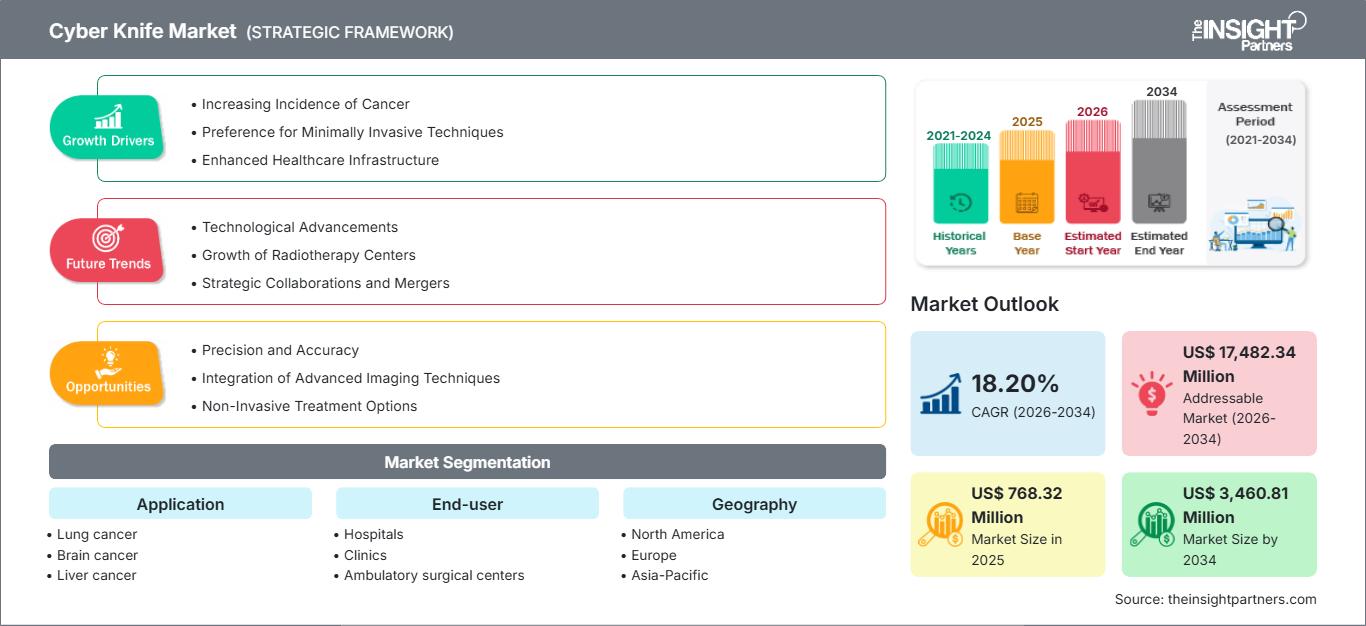
2025 Market Size
US$ 768.32 Mn
Base year value
2034 Forecast
US$ 3,460.81 Mn
Projected by 2034
CAGR 2026-2034
18.20 %
Growth rate
Addressable Market
US$ 17,482.34 Mn
(2026-2034)
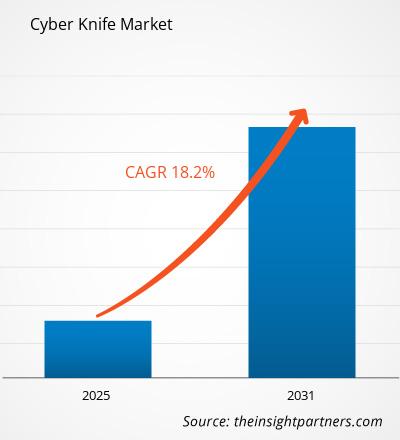
The Cyber Knife Market was valued at US$ 768.32 Million in 2025 and is projected to reach US$ 3,460.81 Million by 2034, expanding at a CAGR of 18.20% during 2026–2034. Rising adoption of non-invasive stereotactic radiosurgery, increasing cancer incidence, and continuous technological innovation in image-guided radiation systems are supporting sustained market expansion. Healthcare providers continue investing in precision oncology solutions that improve treatment outcomes while reducing complications and hospital stays.
Across North America, favorable reimbursement frameworks, well-established oncology infrastructure, and increasing investments in advanced radiation therapy systems continue supporting strong adoption. The Cyber Knife Market size in the region is expected to expand at a CAGR of 17.5–18.5% through 2034. Growing demand for outpatient cancer treatment, wider availability of specialized oncology centers, and increasing clinical acceptance of robotic radio surgery remain the primary structural factors strengthening regional growth.
Cyber Knife Market Assessment and Insights
- North America: Accounted for 39–43% Cyber Knife Market share in 2025 and is projected to grow at a CAGR of 17.5–18.5% during 2026–2034. Strong healthcare expenditure, favorable reimbursement, and extensive adoption of advanced stereotactic radiosurgery systems continue to reinforce regional leadership.
- U.S.: Represented 82–86% of the North American market in 2025 and is anticipated to register a CAGR of 17.8–18.8% during 2026–2034, supported by advanced oncology infrastructure, leading research hospitals, and continuous investment in precision radiation therapy.
- Europe: Held 27–31% share in 2025 and is forecast to expand at a CAGR of 17.0–18.0% during 2026–2034. Germany, the United Kingdom, and France remain the leading markets due to strong public healthcare systems and expanding oncology treatment capacity.
- Asia Pacific: Accounted for 22–26% share in 2025 and is expected to witness the fastest regional expansion with a CAGR of 19.5–20.5% during 2026–2034. China, Japan, South Korea, and India continue investing heavily in cancer treatment infrastructure and precision radiotherapy technologies.
- Largest Segment: Hospitals accounted for 52–56% market share in 2025 and are projected to grow at a CAGR of 17.8–18.8% during 2026–2034, driven by comprehensive oncology services and higher capital investment capacity.
- High Growth Segment: Radiotherapy Centers represented 18–22% market share in 2025 and are anticipated to expand at a CAGR of 19.8–20.8% during 2026–2034, supported by increasing demand for specialized outpatient cancer treatment facilities.
- Key companies analyzed in detail: GE HealthCare, Accuray Incorporated, Elekta AB, Nucletron B.V., Hitachi America, Ltd., IBA Group, Mitsubishi Electric Corporation, Nordion Inc., Philips Healthcare, Siemens Healthineers AG, and Varian Medical Systems.
Source: The Insight Partners' analysis based on proprietary research, government publications, company annual reports, investor presentations, industry databases, and expert interviews.
Technological progress in robotics and radiosurgery, image-guided planning, and adaptive radiation therapy has changed stereotactic radiosurgery from an innovative procedure to an accepted one for certain cancer indications. Manufacturers are constantly refining their methods of treatment accuracy through planning assisted by artificial intelligence and motion monitoring, as well as through the incorporation of imaging during the treatment process. On the other hand, the health care industry continues to increase radiation oncology capabilities in response to the growing rate of cancers and improving treatment results through minimally invasive interventions.
The future growth will depend on the increasing investment in health care in emerging economies, wider reimbursements, and constant development of the infrastructure of oncology. The governments of countries are emphasizing the importance of programs for cancer prevention, and private health care organizations continue investing in radiotherapy equipment. Collaboration between equipment manufacturers, research organizations, and hospitals will further advance the innovations and expand the use of this technology.
Cyber Knife Market Report Scope
| Report Attribute | Details |
|---|---|
| Market size in 2025 | US$ 768.32 Million |
| Market Size by 2034 | US$ 3,460.81 Million |
| Global CAGR (2026 - 2034) | 18.20% |
| Historical Data | 2021-2024 |
| Forecast period | 2026-2034 |
Cyber Knife Market Analysis
The rising number of cases of cancer, together with a greater inclination toward minimally invasive treatment approaches, is propelling the Cyber Knife Market to grow at a significant rate globally. The growing list of indications of stereotactic radiosurgery in the areas of brain, lung, liver, pancreas, and recurrent tumors is boosting the demand in the market. There is more focus being placed on precision medicine in the healthcare environment, thus leading to a push by hospitals towards adopting robotic radiation platforms that will help to achieve greater accuracy in targeting while reducing the risks of exposure to healthy tissues.
There has been greater emphasis placed on supply chain resilience as the vendors concentrate on localized procurement of components, developing ties with suppliers and providing enhanced services. There has been investment by the vendors in physician training, maintenance programs and software updates which help to improve utilization of equipment during their entire lifecycle.
The level of competitiveness keeps rising with the technological advancement serving as the basis of differentiation in the Cyber Knife Market analysis. Accuray Incorporated keeps innovating the CyberKnife technology through software upgrades and clinical trials whereas Elekta AB, Varian Medical Systems, GE HealthCare, Philips Healthcare, Siemens Healthineers AG, and Mitsubishi Electric Corporation expand their oncology technology portfolio through imaging, treatment planning, and digital workflow solutions. The vendors are emphasizing the use of interoperable technology, AI technology, and adaptive radiation therapy technology.
The strategic focus keeps shifting towards investing in emerging markets, which have growing cancer treatment facilities. They keep developing their regional distribution network, clinical training program, and technical support to make sure that the customers adopt the product. The research collaboration with leading cancer institutes and the approval of the advanced software capabilities is expected to enhance competitive positioning and drive market growth over the forecast period.
● REPORT CUSTOMIZATION
Tailor This Report To Align With Your Specific Business Requirements
This report can be customized to align precisely with your business objectives, scope, and target markets. Customization options include tailored segmentation, geography, competitive analysis, and strategic insights to support informed decision-making.
Customize This Report →WHAT YOU CAN ADJUST
- ● Segmentations
- ● Geography
- ● Competitive Analysis
- ● Language Preferences
Cyber Knife Market: Strategic Insights
Regional Insights
North America Cyber Knife Market
The North American region is projected to contribute 39–43% of the global share of the Cyber Knife Market during 2025 and expand at a compound annual growth rate of 17.5-18.5% between 2026 and 2034. The region has benefited from advanced healthcare facilities, high expenditure on healthcare, extensive reimbursement of procedures for radiation oncology, and fast adoption of robot-assisted radio surgery techniques. Rising cancer cases and increasing need for minimally invasive procedures keep motivating investments in advanced radiotherapy equipment.
Leading academic hospitals and cancer centers continue advancing radiotherapy procedures using artificial intelligence for planning, imaging, and adaptive procedures for radiotherapy treatments. Government-funded cancer detection programs, supportive regulatory environments, and clinical research also contribute to the competitive edge in the region. Technology companies, healthcare providers, and research institutes continue working together to maintain their leadership throughout the forecast period.
U.S. Cyber Knife Market
The U.S. accounted for 82–86% of the North America market in 2025 and is expected to exhibit a CAGR of 17.8–18.8% over 2026–2034. The U.S. is highly equipped with comprehensive oncology infrastructure, abundance of dedicated cancer centers, and high investments in cutting-edge radiation therapy equipment. Favorable reimbursements along with increasing use of precision medicine further fueling adoption of robotic radiosurgery systems in various cancers.
There has been continuous upgrading of stereotactic radiosurgery services in order to ensure better results and lower the burden on the hospitals regarding admissions. There are active engagements of academic medical centers in conducting clinical trials for novel treatment approaches, software enhancements, and adaptive radiotherapy. The availability of prominent technology vendors along with increased awareness regarding non-invasive cancer treatment options is expected to drive the market growth in the region.
Europe Cyber Knife Market
In 2025, Europe held the market share of 27–31%, which is expected to reach the rate of 17.0–18.0% CAGR for the forecast period of 2026–2034. Germany has been the leader in the regional market because of its substantial investments in oncological facilities and advanced university hospitals as well as early adoption of precision radiation solutions. Continuous development of national healthcare system and modernization of facilities used for cancer treatment will drive purchase of devices within the region.
United Kingdom continues implementing modernization of National Health Service as well as investing in specialized oncological facilities. Cooperation of research institutions and hospitals will promote implementation of new treatment planning solutions. France, Italy, and Spain have been increasing their investments into infrastructure facilities for cancer treatment and stereotactic radiosurgery facilities. Growing expenditure in healthcare industry, health policies, and growing demand for minimally invasive treatments support regional market performance.
APAC Cyber Knife Market
The Asia Pacific region contributes 22% -26% of the worldwide market and is projected to be the fastest-growing regional CAGR of 19.5%-20.5% during 2025-2034. The largest regional demand comes from China because of fast development of healthcare facilities in this region, whereas Japan shows good adoption due to advanced hospitals and an aging population.
Oncology treatment facilities are increasing in India, South Korea, and Australia with the help of governmental healthcare programs and investments by private hospitals. Increasing knowledge about cancer, rising healthcare expenditure, and increasing availability of radiotherapy facilities are driving regional adoption.
Middle East & Africa Cyber Knife Market
The Middle East & Africa market is projected to expand at a CAGR of 18.5–19.5% during 2026–2034. Saudi Arabia and the United Arab Emirates continue investing in advanced oncology infrastructure through national healthcare modernization strategies, while South Africa remains an important treatment hub within Sub-Saharan Africa.
Increasing government expenditure, expansion of specialized cancer centers, and growing private healthcare participation continue supporting adoption of advanced stereotactic radiosurgery technologies. Although installation volumes remain comparatively lower than developed markets, ongoing healthcare infrastructure development is expected to create attractive long-term growth opportunities across the region.
Segmentation Analysis
Application
The Application segment is expected to expand at a CAGR of 18.4–19.2% during 2026–2034. The Cyber Knife Market scope continues to widen as stereotactic radiosurgery gains acceptance across multiple cancer indications requiring highly precise radiation delivery. Increasing clinical evidence, improved treatment planning technologies, and physician preference for non-invasive therapeutic approaches continue driving broader adoption across oncology specialties.
- Lung cancer: Represents one of the largest treatment applications owing to increasing incidence, improved respiratory motion tracking technology, and growing preference for stereotactic body radiotherapy among patients unsuitable for surgery.
- Brain cancer: Remains a highly established indication because Cyber Knife systems deliver exceptional precision for intracranial tumors while minimizing radiation exposure to surrounding healthy neurological structures.
- Liver cancer: Growing adoption is supported by increasing diagnosis rates and expanding use of stereotactic treatment for patients requiring localized therapy where surgical intervention may not be appropriate.
- Pancreas cancer: Clinical adoption continues increasing as physicians seek targeted treatment approaches capable of delivering high radiation doses while reducing damage to nearby critical organs.
- Others: Includes additional oncology indications where stereotactic radiosurgery provides clinically effective treatment alternatives, supported by continuous research and expanding physician experience.
End-user
The End-user segment is projected to register a CAGR of 17.8–18.8% during 2026–2034. Growing investment in oncology infrastructure, increasing patient volumes, and broader implementation of precision medicine continue supporting equipment adoption across hospitals and specialized treatment centers. Expansion of outpatient cancer care also contributes to changing procurement strategies.
- Hospitals: Largest end-user owing to comprehensive oncology services, multidisciplinary clinical expertise, greater financial resources, and increasing installation of advanced radiation therapy platforms.
- Clinics: Adoption continues increasing among specialized oncology clinics seeking minimally invasive treatment capabilities while improving patient convenience and operational efficiency.
- Ambulatory surgical centers: Growing interest in outpatient cancer management encourages selective adoption through collaborative treatment networks and referral partnerships.
- Radiotherapy centers: Specialized cancer treatment facilities continue expanding rapidly because they focus exclusively on advanced radiation oncology services and efficient patient throughput.
- Others: Includes academic institutions and research organizations utilizing stereotactic radiosurgery systems for clinical research, physician training, and specialized treatment programs.
Opportunity Snapshot
| Segment Name | Revenue Contribution | Trend Tag | Adoption Stage |
|---|---|---|---|
| Lung cancer | High | Motion Tracking | Mature |
| Brain cancer | High | Precision Therapy | Mature |
| Liver cancer | Medium | Image Guidance | Scaling |
| Pancreas cancer | Medium | Adaptive Planning | Scaling |
| Others | Low | Clinical Expansion | Emerging |
Cyber Knife Market Growth Drivers and Impact Analysis
Growing Global Burden of Cancer and Rising Demand for Precision Radiotherapy
The increasing incidence of cancer continues to represent the most significant catalyst for the Cyber Knife Market. According to international oncology statistics published by the World Health Organization (WHO) and the International Agency for Research on Cancer (IARC), global cancer cases continue to rise because of aging populations, changing lifestyles, and improved diagnostic capabilities. Healthcare providers are increasingly adopting stereotactic radiosurgery for patients requiring highly targeted, non-invasive treatment with minimal recovery time. Cyber Knife systems deliver sub-millimeter precision while protecting surrounding healthy tissues, making them particularly valuable for complex tumors involving the brain, lung, liver, and pancreas. Expanding reimbursement coverage, continuous investment in oncology infrastructure, and greater awareness of precision radiation therapy are encouraging hospitals to modernize treatment capabilities. These developments collectively increase installation rates, strengthen equipment utilization, and improve long-term revenue opportunities for technology providers.
Continuous Technological Advancements in Image-Guided Radiosurgery
Technological innovation continues transforming robotic radiosurgery by improving treatment precision, operational efficiency, and patient outcomes. Manufacturers are integrating artificial intelligence, adaptive treatment planning, advanced imaging systems, respiratory motion tracking, and real-time tumor monitoring into next-generation platforms. These capabilities enable clinicians to treat moving tumors without invasive fixation while shortening treatment preparation and improving workflow efficiency. Software upgrades also reduce planning variability and support standardized clinical outcomes across treatment centers. As healthcare providers increasingly evaluate total lifecycle value instead of initial acquisition costs alone, advanced technologies become an important competitive differentiator. Continuous product innovation therefore supports higher adoption rates, expands clinical indications, and encourages replacement of older radiotherapy systems.
Expanding Healthcare Investments Across Emerging Economies
Rapid healthcare infrastructure development across Asia Pacific, Latin America, and selected Middle Eastern countries continues creating favorable conditions for advanced radiotherapy equipment deployment. Governments are increasing healthcare expenditure while implementing national cancer control strategies focused on improving diagnosis and treatment accessibility. Private hospital groups are simultaneously investing in comprehensive oncology centers equipped with modern radiation therapy technologies. International clinical partnerships, physician training initiatives, and technology transfer programs further strengthen adoption potential across developing healthcare markets. As awareness of minimally invasive cancer treatment continues increasing, patient acceptance and physician confidence are also improving. These structural developments encourage manufacturers to establish localized service networks, financing solutions, and long-term strategic partnerships supporting sustainable market expansion.
Cyber Knife Market Future Trends
Artificial Intelligence Enhancing Treatment Planning
Artificial intelligence is increasingly becoming an integral component of advanced stereotactic radiosurgery platforms by improving contouring accuracy, treatment planning, workflow automation, and quality assurance. These Cyber Knife Market trends are expected to enhance treatment consistency while reducing planning time and minimizing operator variability. AI-supported adaptive radiotherapy enables clinicians to personalize treatment according to anatomical changes during therapy, improving clinical outcomes. Software developers continue introducing cloud-enabled planning environments, predictive analytics, and intelligent automation capabilities that improve productivity while supporting greater patient throughput. As regulatory approvals expand globally, artificial intelligence is expected to become a standard competitive differentiator across future Cyber Knife systems.
Expansion of Outpatient Radiosurgery Services
Healthcare providers increasingly prefer outpatient treatment models that improve patient convenience while reducing hospitalization costs. Cyber Knife technology supports this transition by enabling highly precise, non-invasive therapy requiring minimal recovery time. Dedicated radiotherapy centers continue expanding capacity to accommodate growing patient demand, while hospitals increasingly establish specialized outpatient oncology programs. The combination of favorable reimbursement, improved workflow efficiency, and increasing patient preference for minimally invasive treatment is expected to accelerate installation of Cyber Knife systems beyond traditional tertiary hospitals. This trend will broaden geographic access to advanced cancer treatment while improving equipment utilization across healthcare networks.
Cyber Knife Market Opportunities
Expansion Across Emerging Oncology Networks
Healthcare modernization initiatives throughout Asia Pacific, Latin America, Eastern Europe, and the Middle East present significant long-term investment opportunities for manufacturers of robotic radiosurgery systems. Cyber Knife Market Forecasts indicate that expanding public healthcare expenditure, rising private hospital investments, and increasing implementation of national cancer programs will continue driving procurement of advanced radiation therapy technologies. Vendors capable of providing financing solutions, physician education, localized maintenance support, and integrated digital services are expected to strengthen competitive positioning. Continued collaboration with regional healthcare providers and academic institutions will further accelerate technology adoption while expanding access to precision oncology across underserved populations.
Integration with Digital Oncology Ecosystems
Growing adoption of connected healthcare infrastructure creates substantial opportunities to integrate Cyber Knife platforms with hospital information systems, diagnostic imaging networks, electronic medical records, and cloud-based treatment planning software. Digital interoperability improves multidisciplinary collaboration while enhancing workflow efficiency across oncology departments. Equipment manufacturers that combine hardware innovation with predictive maintenance, remote diagnostics, artificial intelligence, and advanced clinical analytics can generate recurring service revenue beyond equipment sales. Increasing digital transformation initiatives among hospitals worldwide are expected to strengthen demand for comprehensive oncology platforms capable of supporting personalized cancer treatment and long-term operational efficiency.
Recent Developments
- May 2025: Accuray Incorporated announced expanded clinical evidence supporting the CyberKnife S7 System through presentations at international oncology conferences, highlighting treatment efficiency improvements, adaptive workflow capabilities, and favorable patient outcomes across multiple tumor indications.
- October 2024: GE HealthCare expanded its radiation oncology collaboration portfolio by strengthening advanced imaging integration designed to improve radiotherapy planning accuracy and oncology workflow efficiency across comprehensive cancer centers.
- June 2024: Elekta AB introduced software enhancements supporting adaptive radiation therapy workflows and expanded interoperability across oncology treatment platforms, helping providers improve treatment precision and operational efficiency.
Frequently Asked Questions

- Comprehensive Market Sizing and Forecast Analysis
- Detailed Segmentation Analysis
- In-Depth Market Dynamics Assessment
- Regional and Country-Level Insights
- Competitive Landscape and Company Benchmarking
- Strategic Business Intelligence
Recent Reports
Testimonials

The Insight Partners' SCADA System Market report is comprehensive, with valuable insights on current trends and future forecasts. The team was highly professional, responsive, and supportive throughout. We are very satisfied and highly recommend their services.
RAN KEDEM Partner, Reali Technologies LTDs
I requested a report on a very specific software market and the team produced the report in a few days. The information was very relevant and well presented. I then requested some changes and additions to the report. The team was again very responsive and I got the final report in less than a week.
JEAN-HERVE JENN Chairman, Future Analytica
We worked with The Insight Partners for an important market study and forecast. They gave us clear insights into opportunities and risks, which helped shape our plans. Their research was easy to use and based on solid data. It helped us make smart, confident decisions. We highly recommend them.
PIYUSH NAGPAL Sr. Vice President, High Beam Global
The Insight Partners delivered insightful, well-structured market research with strong domain expertise. Their team was professional and responsive throughout. The user-friendly website made accessing industry reports seamless. We highly recommend them for reliable, high-quality research services
YUKIHIKO ADACHI CEO, Deep Blue, LLC.
This is the first time I have purchased a market report from The Insight Partners.While I was unsure at first, I visited their web site and felt more comfortable to take the risk and purchase a market report.I am completely satisfied with the quality of the report and customer service. I had several questions and comments with the initial report, but after a couple of dialogs over email with their analyst I believe I have a report that I can use as input to our strategic planning process.Thank you so much for taking the extra time and making this a positive experience.I will definitely recommend your service to others and you will be my first call when we need further market data.
JOHN SUZUKI President and Chief Executive Officer, Board Director, BK Technologies
I wish to appreciate your support and the professionalism you displayed in the course of attending to my request for information regarding to infectious disease IVD market in Nigeria. I appreciate your patience, your guidance, and the fact that you were willing to offer a discount, which eventually made it possible for us to close a deal. I look forward to engaging The Insight Partners in the future, all thanks to the impression you have created in me as a result of this first encounter.
DR CHIJIOKE ONYIA MANAGING DIRECTOR, PineCrest Healthcare Ltd.Reason to Buy
- Informed Decision-Making
- Understanding Market Dynamics
- Competitive Analysis
- Identifying Emerging Markets
- Customer Insights
- Market Forecasts
- Risk Mitigation
- Boosting Operational Efficiency
- Strategic Planning
- Investment Justification
- Tracking Industry Innovations
- Aligning with Regulatory Trends





 Get Free Sample for