
Depyrogenated Sterile Empty Vials Market Share, Growth & Demand by 2034
Coverage: By Material ( Plastic, Glass ); Volume ( 2 ml, 5 ml, 10 ml, 20 ml, More than 20 ml ); End User ( Clinical labs, Compounding labs, Pharmaceutical and Biotechnology companies, Other ), and Geography (North America, Europe, Asia Pacific, and South and Central America)
- Status : Data Released
- Report Code : TIPRE00020021
- Category : Life Sciences
- No. of Pages : 150
- Available Report Formats :


- Last update date : June 23, 2026


2025 Market Size
US$ 1.26 Bn
Base year value
2034 Forecast
US$ 2.45 Bn
Projected by 2034
CAGR 2026-2034
7.68 %
Growth rate
Addressable Market
US$ 16.72 Bn
(2026-2034)
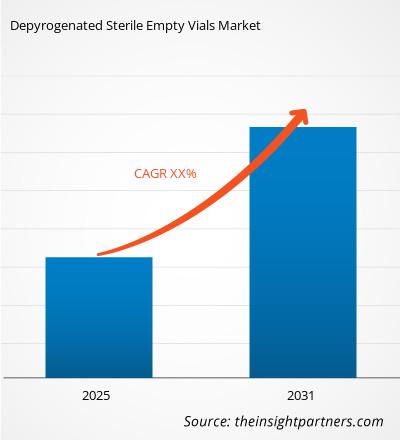
The Depyrogenated Sterile Empty Vials Market was valued at US$ 1.26 Billion in 2025 and is projected to reach US$ 2.45 Billion by 2034, expanding at a CAGR of 7.68% during 2026–2034. Market expansion is being supported by rising injectable drug production, increasing biologics commercialization, and stringent regulatory requirements surrounding contamination control. Demand for ready-to-fill sterile packaging components is also increasing as pharmaceutical manufacturers seek operational efficiency and reduced processing risks.
North America remains a pivotal revenue-generating region for the Depyrogenated Sterile Empty Vials Market and is anticipated to register an estimated CAGR of around 7.2% through 2034. Growth is supported by advanced pharmaceutical manufacturing infrastructure, increasing biologics and vaccine production, and continuous investment in aseptic processing technologies. Expanding contract manufacturing activities and the growing adoption of ready-to-use sterile packaging systems further reinforce regional demand.
Depyrogenated Sterile Empty Vials Market Assessment and Insights
- Market Size (2025): US$ 1.26 Billion
- Market Size (2034): US$ 2.45 Billion
- CAGR (2026–2034): 7.68%
- Leading Region: North America
- Fastest-Growing Region: Asia Pacific
- Leading Segment: Glass
- Key Innovation / Competitive Trend: Expansion of ready-to-use sterile vial platforms and automated aseptic filling compatibility
Source: The Insight Partners' analysis based on proprietary research, government publications, company annual reports, investor presentations, industry databases, and expert interviews.
The market has progressed from being a specialized packaging category toward becoming a critical component of pharmaceutical quality assurance strategies. Increased production of injectable therapeutics, biologics, vaccines, and specialty drugs has elevated the importance of depyrogenated sterile containers. Manufacturers are focusing on process validation, contamination prevention, and supply chain reliability to meet evolving pharmaceutical industry requirements.
Over the coming decade, demand is expected to be influenced by biologic drug pipelines, personalized medicine programs, and expanding pharmaceutical manufacturing capacity across emerging economies. Automation in fill-finish operations, growing outsourcing activity, and increasing regulatory scrutiny surrounding sterile packaging environments are likely to create sustained momentum for high-quality depyrogenated sterile vial solutions.
Depyrogenated Sterile Empty Vials Market Report Scope
| Report Attribute | Details |
|---|---|
| Market size in 2025 | US$ 1.26 Billion |
| Market Size by 2034 | US$ 2.45 Billion |
| Global CAGR (2026 - 2034) | 7.68% |
| Historical Data | 2021-2024 |
| Forecast period | 2026-2034 |
Depyrogenated Sterile Empty Vials Market Analysis
The market is closely tied to the growth of injectable pharmaceuticals, where sterility and product integrity directly influence patient safety and regulatory compliance. Pharmaceutical and biotechnology companies increasingly require depyrogenated sterile vials that minimize preparation steps before filling operations. Rising production of monoclonal antibodies, cell therapies, vaccines, and high-value biologics has accelerated demand for validated sterile packaging formats.
Supply chains supporting the market include raw material suppliers, vial manufacturers, sterilization service providers, pharmaceutical packaging specialists, and drug manufacturers. Quality assurance remains a defining factor across the value chain. End users prioritize traceability, particulate control, and consistent sterility performance, leading suppliers to invest in advanced manufacturing and inspection technologies.
Competition is characterized by established pharmaceutical packaging providers alongside specialized sterile container manufacturers. Companies are differentiating through manufacturing scale, quality certifications, customization capabilities, and compatibility with automated filling systems. Organizations such as Thermo Fisher Scientific, DWK Life Sciences, Gerresheimer, Stevanato Group, and Merck KGaA continue to strengthen their positions through technology development and strategic capacity investments.
Investment activity increasingly targets high-value containment solutions designed for biologics and injectable therapeutics. Production facilities are being upgraded to support ready-to-use packaging formats and higher quality standards. Strategic positioning increasingly depends on geographic manufacturing reach, regulatory expertise, and the ability to serve pharmaceutical clients seeking resilient supply chains for critical sterile packaging components.
● REPORT CUSTOMIZATION
Tailor This Report To Align With Your Specific Business Requirements
This report can be customized to align precisely with your business objectives, scope, and target markets. Customization options include tailored segmentation, geography, competitive analysis, and strategic insights to support informed decision-making.
Customize This Report →WHAT YOU CAN ADJUST
- ● Segmentations
- ● Geography
- ● Competitive Analysis
- ● Language Preferences
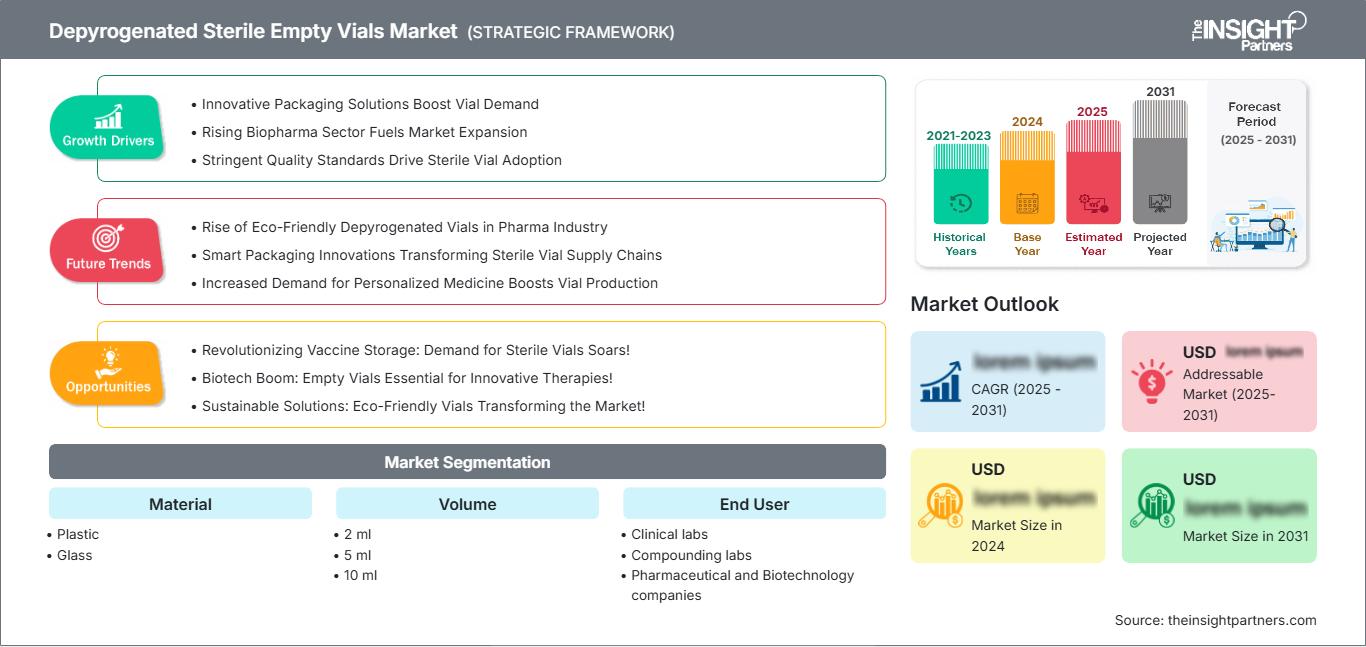
Depyrogenated Sterile Empty Vials Market: Strategic Insights
Regional Insights
North America Depyrogenated Sterile Empty Vials Market
North America accounts for the largest share of the global market and is projected to expand at an estimated CAGR of approximately 7.2% through 2034. The region benefits from a mature pharmaceutical manufacturing ecosystem, strong biologics development activity, and extensive regulatory oversight. Growing demand for injectable therapies has increased reliance on validated sterile packaging systems that support aseptic manufacturing environments.
The presence of major pharmaceutical companies, biotechnology innovators, and contract development and manufacturing organizations strengthens demand across the region. Investments in fill-finish facilities, vaccine production capabilities, and advanced sterile processing technologies continue to reinforce market expansion. Increasing adoption of ready-to-use containers further supports sustained demand for depyrogenated sterile empty vials.
U.S. Depyrogenated Sterile Empty Vials Market
The U.S. represents approximately 75–80% of the North American market and is expected to grow at a CAGR of nearly 7.3% through 2034. Strong biologics pipelines, expanding specialty pharmaceutical production, and increasing investment in domestic drug manufacturing support market growth. Demand remains particularly strong among organizations producing injectable biologics, vaccines, and complex therapeutics.
The country hosts significant operations from industry participants including Thermo Fisher Scientific, Corning Incorporated, Merck KGaA affiliates, and international packaging providers. Pharmaceutical manufacturers increasingly seek sterile packaging solutions compatible with automated aseptic filling lines. The expansion of contract manufacturing services and growing emphasis on supply chain security further enhance demand for high-quality depyrogenated sterile vial products.
Europe Depyrogenated Sterile Empty Vials Market
Europe accounts for approximately 25–30% of global revenue and is anticipated to record a CAGR of around 7.0% through 2034. Strong pharmaceutical manufacturing capabilities, rigorous regulatory frameworks, and growing biologics production underpin regional demand. Germany remains the leading country due to its extensive pharmaceutical and packaging manufacturing base.
The UK benefits from active biotechnology research, clinical development programs, and growing investments in advanced therapeutics. Demand for sterile packaging continues to rise as pharmaceutical companies expand injectable drug manufacturing and contract development activities.
Germany leads the regional market owing to its concentration of pharmaceutical manufacturers, packaging specialists, and engineering expertise. Strong exports of pharmaceutical products and investments in aseptic production technologies continue to support adoption of depyrogenated sterile empty vials.
France, Italy, and Spain collectively contribute substantial demand through vaccine manufacturing, biologics production, and expanding pharmaceutical packaging operations. Increased modernization of sterile manufacturing facilities and continued investment in healthcare innovation support long-term market prospects across these countries.
APAC Depyrogenated Sterile Empty Vials Market
Asia Pacific is expected to be the fastest-growing regional market, with a projected CAGR exceeding 8.5% through 2034. The region currently accounts for approximately 22–27% of global revenue and continues to benefit from expanding pharmaceutical production capacities. China remains the leading country due to large-scale drug manufacturing infrastructure and significant biologics investments.
China's pharmaceutical sector continues to upgrade manufacturing standards while increasing production of injectable therapies and biosimilars. Japan contributes through advanced pharmaceutical research and high-quality manufacturing practices. South Korea's growing biologics industry and export-oriented production facilities further strengthen regional demand.
India and Australia are also important contributors. India benefits from expanding pharmaceutical exports, vaccine manufacturing capabilities, and government initiatives supporting domestic production. Australia continues to attract investment in biotechnology development and clinical research, creating additional opportunities for sterile packaging suppliers serving high-value injectable drug segments.
Middle East & Africa Depyrogenated Sterile Empty Vials Market
The Middle East & Africa market is expected to expand at a CAGR of approximately 6.8% through 2034. Although smaller than other regions, increasing healthcare investments and pharmaceutical manufacturing initiatives are creating favorable conditions for market growth. Saudi Arabia currently represents the leading national market within the region.
Saudi Arabia continues to invest in healthcare infrastructure and pharmaceutical localization programs, encouraging demand for sterile packaging components. The UAE is strengthening its position as a regional healthcare and pharmaceutical logistics hub, supporting increasing adoption of advanced sterile manufacturing solutions.
South Africa remains a significant market due to its established pharmaceutical sector and healthcare manufacturing capabilities. Across the broader region, infrastructure development, industrial diversification efforts, and expanding pharmaceutical production are gradually increasing demand for depyrogenated sterile empty vials used in injectable drug manufacturing.
Segmentation Analysis
Material
- Plastic: Plastic depyrogenated sterile empty vials are gaining attention for lightweight handling, breakage resistance, and transportation efficiency. Adoption is increasing in specialized laboratory applications where durability and operational convenience are important considerations.
- Glass: Glass remains the dominant material due to superior chemical resistance, product compatibility, and regulatory acceptance. Pharmaceutical manufacturers continue to prefer glass vials for biologics, vaccines, and injectable formulations requiring long-term stability.
Volume
- 2 ml: Frequently used for highly concentrated biologics, diagnostic reagents, and specialty injectables where precise dosing and minimal product wastage are critical operational requirements.
- 5 ml: Widely utilized across pharmaceutical manufacturing and clinical laboratory environments because it provides flexibility for diverse injectable formulations and research applications.
- 10 ml: Commonly selected for vaccine production, biologics packaging, and multi-dose applications requiring balanced storage capacity and handling efficiency during filling operations.
- 20 ml: Supports larger injectable volumes and specialized pharmaceutical products where expanded storage capacity and manufacturing flexibility are necessary.
- More than 20 ml: Utilized in selected industrial, pharmaceutical, and laboratory applications requiring larger containment volumes for bulk processing, testing, or specialized formulations.
End User
- Clinical labs: Clinical laboratories utilize sterile depyrogenated vials for sample preparation, analytical procedures, and diagnostic workflows requiring contamination-free environments and consistent quality assurance.
- Compounding labs: Compounding facilities depend on sterile packaging solutions to maintain preparation integrity while supporting customized formulations and patient-specific therapeutic requirements.
- Pharmaceutical and Biotechnology companies: This segment generates the highest demand due to large-scale injectable drug production, biologics manufacturing, vaccine development, and stringent sterility requirements.
Opportunity Snapshot
| End User | Revenue Contribution | Trend Tag | Adoption Stage |
| Clinical labs | Medium | Diagnostics | Mature |
| Compounding labs | Medium | Customization | Scaling |
| Pharmaceutical and Biotechnology companies | High | Biologics | Mature |
Depyrogenated Sterile Empty Vials Market Growth Drivers and Impact Analysis
Expansion of Injectable Biologics Manufacturing
The rapid growth of biologics, biosimilars, vaccines, and advanced therapeutic products is significantly increasing demand for sterile primary packaging solutions. Many biologic formulations require stringent contamination control measures due to their sensitivity to environmental conditions and manufacturing variables. Depyrogenated sterile empty vials help manufacturers reduce preparation requirements while supporting validated aseptic filling processes.
The growing number of injectable therapies entering commercial production has created sustained demand for reliable sterile containers. Pharmaceutical companies increasingly prioritize packaging components capable of maintaining product integrity throughout manufacturing and distribution. As biologics pipelines continue to expand globally, suppliers capable of delivering high-quality sterile vial solutions are positioned to benefit from long-term demand growth. The resulting market impact extends beyond packaging, influencing supply chain investments, manufacturing modernization, and quality assurance initiatives throughout the pharmaceutical ecosystem.
Stringent Regulatory Expectations for Sterility Assurance
Regulatory authorities worldwide continue to strengthen expectations related to contamination prevention, aseptic manufacturing, and pharmaceutical quality systems. Depyrogenated sterile empty vials help manufacturers align with these requirements by minimizing risks associated with pyrogen contamination and microbial exposure during fill-finish operations.
The increasing complexity of injectable drug manufacturing has elevated the importance of validated packaging components. Pharmaceutical companies are investing heavily in quality-focused production systems designed to satisfy inspection requirements and maintain patient safety standards. Demand for pre-sterilized and depyrogenated containers is therefore rising across both developed and emerging markets. This trend supports premium product adoption, encourages investment in advanced manufacturing technologies, and strengthens the role of specialized packaging suppliers within pharmaceutical production networks.
Growth of Outsourced Fill-Finish and Contract Manufacturing Services
Contract development and manufacturing organizations are expanding their capabilities to support pharmaceutical companies seeking operational flexibility and accelerated commercialization timelines. These organizations increasingly prefer ready-to-use sterile packaging formats that streamline manufacturing workflows and reduce preparation complexity.
Depyrogenated sterile empty vials enable contract manufacturers to improve production efficiency while maintaining strict quality standards. As outsourcing activity expands globally, packaging suppliers are experiencing increased demand from organizations handling multiple product types and customer requirements. The broader impact includes greater standardization of aseptic processes, faster project execution, and growing demand for packaging solutions compatible with automated filling systems. This dynamic continues to strengthen market growth prospects across the sterile pharmaceutical packaging landscape.
Depyrogenated Sterile Empty Vials Market Future Trends
Transition Toward Ready-to-Use Sterile Packaging Platforms
Pharmaceutical manufacturers are increasingly adopting ready-to-use packaging systems that reduce operational complexity and support faster manufacturing timelines. Depyrogenated sterile empty vials fit well within this transition because they eliminate several preparation steps while supporting contamination control objectives.
The expectation is that in the future demand will be driven towards packaging formats that are easily interfaced to automated fill-finish equipment. Suppliers that can offer validated and ready-to-use solutions, with strong documentation support, are likely to have competitive advantages. As production volumes of biologics increase and manufacturing efficiency becomes a strategic priority, the adoption of advanced sterile packaging platforms is expected to accelerate across multiple end-user categories.
Integration of Automation and Digital Quality Monitoring
Manufacturing facilities are increasingly incorporating automation, machine vision inspection, and digital quality monitoring systems into sterile production environments. These technologies require packaging components with highly consistent specifications and performance characteristics.
Depyrogenated sterile empty vial suppliers will also need to adopt innovative inspection equipment and utilize data management systems to facilitate automated pharmaceutical production. As this trend progresses, digital quality frameworks could play a significant role in supplier selection. However, the merging of automation and sterility assurances would alter the playing field and may elevate the entire sector.
Depyrogenated Sterile Empty Vials Market Opportunities
Emerging Biopharmaceutical Manufacturing Hubs
Countries across Asia Pacific, the Middle East, and parts of Latin America are investing heavily in pharmaceutical self-sufficiency and biologics manufacturing capabilities. These initiatives create significant opportunities for suppliers of sterile packaging components required for injectable drug production.
Companies can enhance their regional position by building manufacturing alliances, establishing distribution networks, and localizing supply presence. By actively engaging with pharmaceutical manufacturers in nascent manufacturing centers now, it may lead to a greater long-term commercial upside. The long-term prospect seems bright from capacity expansion and compliance investment, with further developments of the regional pharma landscape.
Specialized Packaging Solutions for Advanced Therapies
Cell therapies, gene therapies, and precision biologics are increasingly demanding packaging solutions that can support highly sensitive formulations. Contamination control is often critical for these products, as is special handling and validated manufacturing environments.
Manufacturers that develop differentiated sterile vial offerings for advanced therapeutic applications can access premium market segments. Opportunities range from product supply and technical support to validation services and collaborative development programs. As advanced therapies transition from clinical research to commercial manufacturing, the need for sophisticated sterile containment solutions is anticipated to grow substantially.
Recent Developments
- August 2025: Stevanato Group reported strong growth in its Biopharmaceutical and Diagnostic Solutions segment, highlighting increasing demand for high-value containment products, including EZ-fill® vial solutions. The company noted continued scaling of manufacturing capacity to support injectable biologics and advanced pharmaceutical packaging requirements.
- November, 2024: Stevanato Group, Gerresheimer, and Schott Pharma announced a collaboration to educate the life sciences market and promote ready-to-use (RTU) vials and cartridges. Called the Alliance for RTU, the group seeks to share expertise and technical knowledge surrounding “high-quality sterile primary packaging, specifically ready-to-fill vials and cartridges, highlighting RTU configurations' advantages over conventional bulk packaging.
- September, 2024: Gerresheimer AG, Stevanato Group S.p.A., and SCHOTT Pharma AG & Co. KGaA announced that they have entered into a strategic industry alliance to support market adoption of Ready-to-Use (RTU) vials and cartridges. The Alliance for RTU aims to share with pharmaceutical companies, CMOs, and CDMOs expertise and technical knowledge in high-quality sterile primary packaging, specifically ready-to-fill vials and cartridges, highlighting RTU configurations' advantages over conventional bulk packaging.
Frequently Asked Questions

- Comprehensive Market Sizing and Forecast Analysis
- Detailed Segmentation Analysis
- In-Depth Market Dynamics Assessment
- Regional and Country-Level Insights
- Competitive Landscape and Company Benchmarking
- Strategic Business Intelligence
Recent Reports
Testimonials

The Insight Partners' SCADA System Market report is comprehensive, with valuable insights on current trends and future forecasts. The team was highly professional, responsive, and supportive throughout. We are very satisfied and highly recommend their services.
RAN KEDEM Partner, Reali Technologies LTDs
I requested a report on a very specific software market and the team produced the report in a few days. The information was very relevant and well presented. I then requested some changes and additions to the report. The team was again very responsive and I got the final report in less than a week.
JEAN-HERVE JENN Chairman, Future Analytica
We worked with The Insight Partners for an important market study and forecast. They gave us clear insights into opportunities and risks, which helped shape our plans. Their research was easy to use and based on solid data. It helped us make smart, confident decisions. We highly recommend them.
PIYUSH NAGPAL Sr. Vice President, High Beam Global
The Insight Partners delivered insightful, well-structured market research with strong domain expertise. Their team was professional and responsive throughout. The user-friendly website made accessing industry reports seamless. We highly recommend them for reliable, high-quality research services
YUKIHIKO ADACHI CEO, Deep Blue, LLC.
This is the first time I have purchased a market report from The Insight Partners.While I was unsure at first, I visited their web site and felt more comfortable to take the risk and purchase a market report.I am completely satisfied with the quality of the report and customer service. I had several questions and comments with the initial report, but after a couple of dialogs over email with their analyst I believe I have a report that I can use as input to our strategic planning process.Thank you so much for taking the extra time and making this a positive experience.I will definitely recommend your service to others and you will be my first call when we need further market data.
JOHN SUZUKI President and Chief Executive Officer, Board Director, BK Technologies
I wish to appreciate your support and the professionalism you displayed in the course of attending to my request for information regarding to infectious disease IVD market in Nigeria. I appreciate your patience, your guidance, and the fact that you were willing to offer a discount, which eventually made it possible for us to close a deal. I look forward to engaging The Insight Partners in the future, all thanks to the impression you have created in me as a result of this first encounter.
DR CHIJIOKE ONYIA MANAGING DIRECTOR, PineCrest Healthcare Ltd.Reason to Buy
- Informed Decision-Making
- Understanding Market Dynamics
- Competitive Analysis
- Identifying Emerging Markets
- Customer Insights
- Market Forecasts
- Risk Mitigation
- Boosting Operational Efficiency
- Strategic Planning
- Investment Justification
- Tracking Industry Innovations
- Aligning with Regulatory Trends





 Get Free Sample for