
Dermatological Phototherapy Lamp Market Size, Demand & Growth by 2034
Coverage: By Type (Ultraviolet, Visible, Light, Infrared, Laser); Application (Psoriasis, Acne, Eczema, Vitiligo) , and Geography (North America, Europe, Asia Pacific, and South and Central America)
- Status : Data Released
- Report Code : TIPRE00025960
- Category : Life Sciences
- No. of Pages : 150
- Available Report Formats :


- Last update date : June 23, 2026


2025 Market Size
US$ 463.98 Mn
Base year value
2034 Forecast
US$ 861.79 Mn
Projected by 2034
CAGR 2026-2034
8.05 %
Growth rate
Addressable Market
US$ 6,273.48 Mn
(2026-2034)
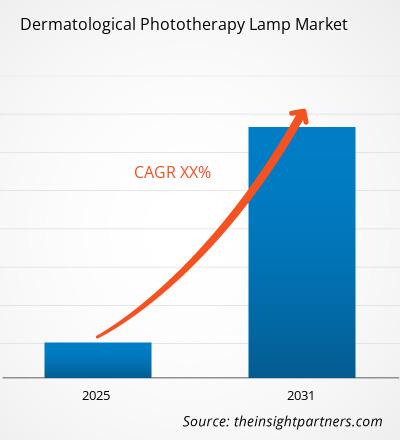
The Dermatological Phototherapy Lamp Market is demonstrating sustained expansion as phototherapy becomes an increasingly important non-invasive treatment modality for chronic skin disorders. The market is valued at US$ 463.98 million in 2025 and is projected to reach US$ 861.79 million by 2034, advancing at a CAGR of 8.05% during 2026–2034. Rising clinical preference for targeted light-based therapies, growing prevalence of inflammatory skin diseases, and technological improvements in phototherapy systems continue to strengthen market adoption across hospitals, specialty dermatology clinics, and home-care settings.
North America remains a pivotal revenue-generating region for the Dermatological Phototherapy Lamp Market and is anticipated to expand at an estimated 7.8% CAGR through the forecast period. Growth is supported by increasing diagnosis rates of psoriasis and vitiligo, favorable reimbursement frameworks for selected phototherapy procedures, and widespread availability of advanced dermatology infrastructure. The region also benefits from strong physician awareness and ongoing investments in dermatological treatment technologies.
Dermatological Phototherapy Lamp Market Assessment and Insights
- Market Size (2025): US$ 463.98 Million
- Market Size (2034): US$ 861.79 Million
- CAGR (2026–2034): 8.05%
- Leading Region: North America
- Fastest-Growing Region: Asia-Pacific
- Leading Segment: Ultraviolet Phototherapy Lamps
- Key Innovation/Competitive Trend: Smart dosing systems and home-based phototherapy platforms
Source: The Insight Partners' analysis based on proprietary research, government publications, company annual reports, investor presentations, industry databases, and expert interviews.
The Dermatological Phototherapy Lamp Market has evolved from conventional ultraviolet treatment systems toward highly specialized platforms incorporating precision wavelength control, improved safety mechanisms, and patient-friendly interfaces. Clinical evidence supporting phototherapy for psoriasis, vitiligo, eczema, and acne has encouraged healthcare providers to integrate these systems into routine dermatological treatment pathways.
Future market expansion will be shaped by broader access to dermatology care, increasing utilization of home phototherapy devices, and technological convergence with digital treatment monitoring. Manufacturers are also focusing on compact systems, improved energy efficiency, and enhanced treatment customization, enabling wider deployment across healthcare facilities and outpatient settings.
Dermatological Phototherapy Lamp Market Report Scope
| Report Attribute | Details |
|---|---|
| Market size in 2025 | US$ 463.98 Million |
| Market Size by 2034 | US$ 861.79 Million |
| Global CAGR (2026 - 2034) | 8.05% |
| Historical Data | 2021-2024 |
| Forecast period | 2026-2034 |
Dermatological Phototherapy Lamp Market Analysis
Growing incidence of chronic dermatological disorders is a major factor influencing market demand. Conditions such as psoriasis, vitiligo, eczema, and inflammatory acne often require long-term disease management, creating sustained demand for non-pharmacological treatment options. Phototherapy lamps provide controlled exposure to therapeutic wavelengths that can reduce symptoms while minimizing systemic drug exposure.
The market ecosystem includes lamp manufacturers, wavelength technology providers, dermatology clinics, hospitals, distributors, and service providers. Ultraviolet systems continue to dominate commercial demand due to established clinical acceptance, while visible-light and laser-based technologies are gaining traction in targeted dermatological applications. Increasing integration of portable systems into outpatient treatment models is further expanding the value chain.
Competition is characterized by technological differentiation, product reliability, treatment efficacy, and regulatory compliance. Companies such as Hydrosun, AMS, Kernel, Lutronic, Daavlin, Hydrosun Medizintechnik, Dr. Hönle Medizintechnik GmbH, Wuhan ZJZK Technology, Schulze & Böhm GmbH, LaMeditech, Choyang Medical Industry, and Koninklijke Philips NV continue to strengthen their market positions through product development and geographic expansion.
Investment activity is increasingly directed toward home-use phototherapy devices, digital treatment tracking platforms, and energy-efficient lighting technologies. Market participants are prioritizing strategic partnerships with healthcare providers and distributors while expanding product portfolios that address both institutional and consumer treatment settings.
● REPORT CUSTOMIZATION
Tailor This Report To Align With Your Specific Business Requirements
This report can be customized to align precisely with your business objectives, scope, and target markets. Customization options include tailored segmentation, geography, competitive analysis, and strategic insights to support informed decision-making.
Customize This Report →WHAT YOU CAN ADJUST
- ● Segmentations
- ● Geography
- ● Competitive Analysis
- ● Language Preferences
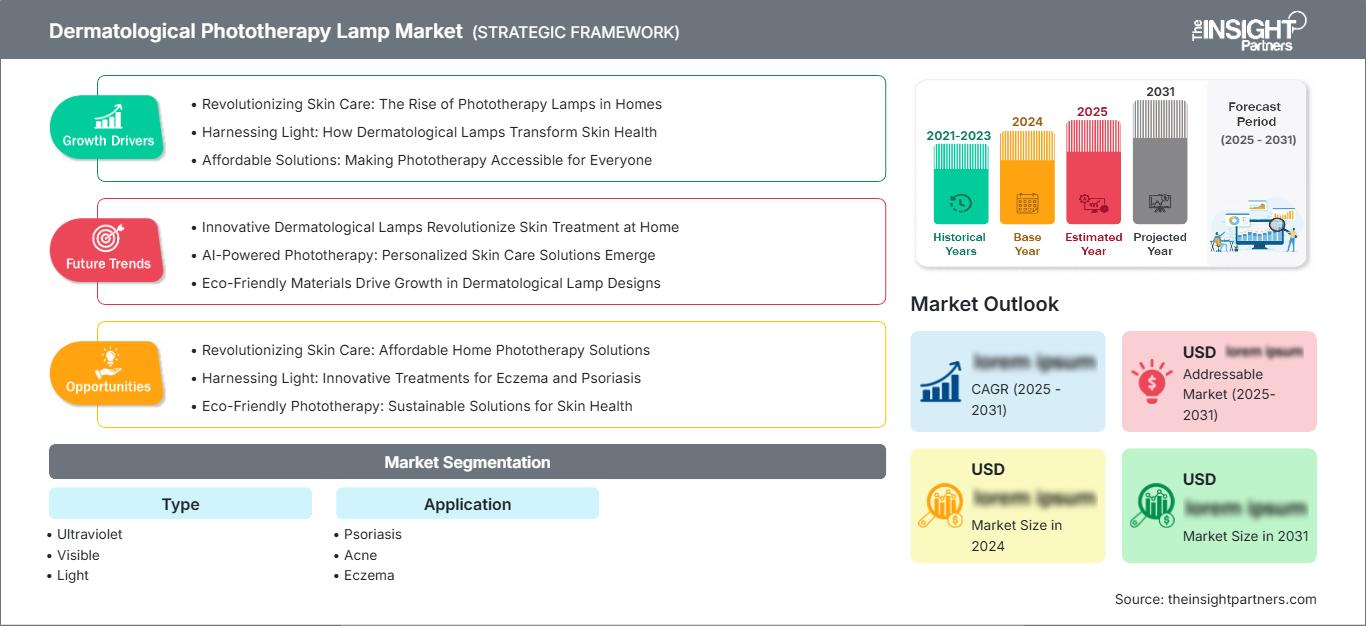
Dermatological Phototherapy Lamp Market: Strategic Insights
Regional Insights
North America Dermatological Phototherapy Lamp Market
North America accounts for the largest share of the Dermatological Phototherapy Lamp Market and is projected to grow at approximately 7.8% CAGR during the forecast period. Strong healthcare spending, advanced dermatology networks, and widespread awareness of light-based therapeutic interventions support regional demand. The increasing burden of chronic skin diseases continues to create a stable patient pool requiring recurring treatment.
Clinical acceptance of narrowband UVB therapy, growing adoption of excimer laser technologies, and expansion of home phototherapy programs contribute to regional market maturity. Favorable reimbursement mechanisms for selected procedures and ongoing technological innovation further reinforce market development across the United States and Canada.
U.S. Dermatological Phototherapy Lamp Market
The United States represents roughly 75–80% of the North American market and is expected to expand at a CAGR approaching 7.9% through 2034. The country's leadership stems from advanced dermatology infrastructure, substantial healthcare expenditure, and strong adoption of technologically sophisticated treatment systems.
The presence of major industry participants, including Daavlin and Koninklijke Philips NV, supports continuous product availability and innovation. Psoriasis and vitiligo remain leading application areas, while demand for acne-focused light therapy solutions is increasing. Expansion of home-treatment programs and physician-guided remote monitoring is also contributing to broader utilization across patient populations.
Europe Dermatological Phototherapy Lamp Market
Europe accounts for approximately 25–30% of global market revenue and is anticipated to register a CAGR of nearly 7.5% during the forecast period. Strong dermatology research capabilities, established healthcare systems, and favorable treatment awareness continue to support adoption. Germany remains the leading national market owing to its robust medical device manufacturing ecosystem and strong clinical utilization of phototherapy.
The United Kingdom benefits from increasing demand for non-invasive dermatological therapies and expanding awareness regarding chronic skin disease management. Dermatology centers continue integrating advanced ultraviolet and visible-light treatment systems to improve patient outcomes while reducing long-term medication dependency.
Germany leads the regional market due to the presence of prominent manufacturers and a strong tradition of photomedicine research. High adoption of narrowband UVB technologies and sustained investment in clinical dermatology infrastructure support consistent market growth.
France, Italy, and Spain collectively represent a significant opportunity base. Rising patient awareness, expanding outpatient dermatology services, and increasing acceptance of targeted light-based treatments are encouraging healthcare providers to adopt modern phototherapy solutions across public and private healthcare settings.
APAC Dermatological Phototherapy Lamp Market
Asia-Pacific is the fastest-growing regional market and is projected to achieve a CAGR exceeding 9.0% through 2034. The region currently contributes approximately 20–25% of global revenue and benefits from expanding healthcare infrastructure, growing dermatology service capacity, and increasing healthcare expenditure.
China leads regional demand due to its large patient population, expanding hospital networks, and increasing investment in advanced medical technologies. Government initiatives supporting healthcare modernization continue to improve access to specialized dermatology services.
Japan, South Korea, India, and Australia are witnessing growing adoption of phototherapy systems. Rising diagnosis rates of psoriasis and vitiligo, improved healthcare access, and greater physician familiarity with light-based treatment protocols are supporting market expansion. Regional manufacturing capabilities also contribute to improved product availability and affordability.
Middle East & Africa Dermatological Phototherapy Lamp Market
The Middle East & Africa market is expected to record a CAGR of approximately 7.2% during the forecast period. Demand is supported by expanding healthcare infrastructure, increasing dermatology specialization, and rising awareness of non-invasive treatment alternatives.
Saudi Arabia remains the leading national market owing to healthcare modernization initiatives and growing investments in specialized medical services. Advanced hospitals are increasingly incorporating phototherapy systems into dermatology treatment programs.
The UAE and South Africa are also emerging as important growth centers. Expanding private healthcare networks and increasing availability of advanced dermatological treatments are supporting market penetration. Broader healthcare infrastructure development across the region is expected to create additional opportunities for phototherapy equipment suppliers.
Segmentation Analysis
Type
- Ultraviolet: The most established category, widely utilized for psoriasis, vitiligo, and eczema treatment due to strong clinical validation, standardized treatment protocols, and broad adoption across hospitals, clinics, and home-care settings.
- Visible Light: Increasingly used for acne management and skin rejuvenation applications, benefiting from favorable safety profiles, reduced treatment complexity, and growing demand for non-invasive dermatological procedures.
- Infrared: Supports tissue repair and inflammation reduction applications, attracting interest in adjunctive dermatological therapies where enhanced circulation and recovery outcomes are desired.
- Laser: Delivers highly targeted treatment for localized lesions and difficult-to-treat skin conditions, enabling precision therapy with minimal exposure of surrounding healthy tissue.
Application
- Psoriasis: Represents the largest application segment due to chronic disease prevalence, recurring treatment requirements, and strong clinical evidence supporting phototherapy effectiveness in symptom management.
- Acne: Growing adoption of blue-light and visible-light therapies is driving demand, particularly among patients seeking drug-free treatment alternatives and reduced systemic side effects.
- Eczema: Phototherapy is increasingly incorporated into treatment protocols for moderate-to-severe cases where long-term symptom control and inflammation reduction are required.
- Vitiligo: Strong clinical utilization of narrowband UVB systems and targeted phototherapy approaches supports substantial demand for repigmentation-focused treatment solutions.
Opportunity Snapshot
| Application | Revenue Contribution | Trend Tag | Adoption Stage |
| Psoriasis | High | NB-UVB | Mature |
| Acne | Medium | Blue-Light | Scaling |
| Eczema | Medium | Inflammation Control | Scaling |
| Vitiligo | High | Repigmentation | Mature |
Dermatological Phototherapy Lamp Market Growth Drivers and Impact Analysis
Rising Global Burden of Chronic Dermatological Disorders
The growing prevalence of psoriasis, eczema, vitiligo, and persistent inflammatory acne is creating sustained demand for phototherapy technologies. Many of these conditions require long-term management rather than one-time treatment interventions, making phototherapy an attractive therapeutic option. As healthcare providers seek alternatives that reduce systemic medication exposure, phototherapy lamps are increasingly incorporated into treatment pathways.
The market impact is significant because chronic dermatological disorders often involve recurring treatment cycles, generating consistent equipment utilization. Hospitals and dermatology clinics continue expanding phototherapy capabilities to meet rising patient demand. In addition, greater disease awareness and improved diagnostic access are increasing the number of patients eligible for phototherapy treatment, supporting long-term market expansion.
Expansion of Home-Based Phototherapy Treatment Models
Healthcare systems are increasingly emphasizing patient convenience and decentralized care delivery. Home phototherapy systems allow patients to receive treatment without frequent clinic visits, reducing travel burdens and improving adherence to prescribed treatment regimens. Technological advances have also improved safety features, treatment monitoring capabilities, and user-friendly device interfaces.
The impact extends beyond patient convenience. Home-use systems create an additional revenue channel for manufacturers while helping healthcare providers manage increasing patient volumes. As remote monitoring technologies continue evolving, physician-supervised home phototherapy is expected to become a more prominent component of dermatological care strategies.
Advancements in Precision Wavelength and Targeted Therapy Technologies
Manufacturers are making huge investments in technology that increases treatment precision and efficacy, as well as enhances patient safety. Technologies related to narrowband UVB technology, excimer laser systems, and wavelength-specific treatments help physicians target the affected areas precisely without exposing healthy skin.
Such developments increase clinician confidence in phototherapy treatment and also increase possible applications for phototherapy. Precise technology may help enhance efficacy, reduce adverse reactions, and encourage more physicians to use phototherapy. With increased sophistication in technology, the likelihood of replacing old technologies will increase and fuel further market growth.
Dermatological Phototherapy Lamp Market Future Trends
Integration of Digital Treatment Monitoring Platforms
Digital healthcare technologies are increasingly being incorporated into phototherapy workflows. Modern systems are being developed with treatment tracking features, dosing management capabilities, and connectivity functions that enable physicians to monitor patient adherence and treatment progress remotely.
In the coming years, digital technology could be an important competitive advantage for manufacturers of phototherapy systems. The new smart phototherapy platform technologies have the potential to enable customized treatment schemes, dynamic dose regulation, and better treatment effect monitoring, while further enhancing patient engagement and clinical management for treatments administered in the home environment.
Growing Adoption of LED-Based Dermatological Phototherapy Systems
LED technology is gaining attention as manufacturers seek alternatives that offer improved energy efficiency, longer operational life, and greater wavelength control. LED-based systems also provide opportunities for compact device designs suitable for both clinical and home-care settings.
Future trends in market growth could encompass more widespread adoption of LED technologies incorporating various wavelengths that could treat several skin conditions. As the cost of manufacturing falls and the amount of evidence grows, systems for LED phototherapy treatments have the potential to garner increasing installation rates.
Dermatological Phototherapy Lamp Market Opportunities
Expansion Across Emerging Healthcare Markets
Emerging economies present substantial opportunities due to improving healthcare infrastructure, rising healthcare expenditure, and increasing awareness of dermatological conditions. Many countries are expanding specialty care services and investing in modern medical technologies to improve treatment accessibility.
Manufacturers can benefit from these trends via local distribution channels, collaboration, and product ranges designed according to local specifications. Manufacturers that strike a balance between cost-effectiveness and functionality are likely to emerge as leaders in developing markets for health care.
Development of Specialized Multi-Indication Treatment Platforms
Demand is increasing for systems capable of treating multiple dermatological conditions through configurable wavelength options and flexible treatment protocols. Such platforms can improve equipment utilization and provide healthcare facilities with greater clinical versatility.
An investment in multi-function phototherapy devices enables manufacturers to make their products stand out. Hospitals and clinics looking to increase their productivity might find it worthwhile to go for a platform that can accommodate different types of skin conditions – like psoriasis, eczema, acne, and vitiligo.
Recent Developments
- June, 2026: Solius Labs announced the launch of Solius Pro, the only FDA-cleared personalized UVB light therapy device available without a prescription. Solius uses a patent-pending skin analysis system that measures each user's unique skin tone to determine a precise UVB dose, stimulating the natural health benefits of the sun in approximately five minutes per week. The FDA established a new product code for Solius, recognizing it as a novel health technology category and placing the device in a distinct regulatory category.
- October, 2025: Dermalux introduced the Tri-Wave MD acne treatment platform, utilizing blue, red, and near-infrared LED phototherapy wavelengths. The device targets acne through multi-mechanism treatment pathways and reflects broader industry movement toward wavelength-specific, non-invasive dermatological treatment technologies.
- May, 2025: STRATA Skin Sciences, Inc. announced the expansion of CPT reimbursement codes for 308nm excimer laser treatments, broadening reimbursement eligibility beyond psoriasis to additional inflammatory and autoimmune skin conditions. The development may improve patient access to phototherapy-based treatment options and strengthen the utilization of excimer laser technologies in dermatology practices.
Frequently Asked Questions

- Comprehensive Market Sizing and Forecast Analysis
- Detailed Segmentation Analysis
- In-Depth Market Dynamics Assessment
- Regional and Country-Level Insights
- Competitive Landscape and Company Benchmarking
- Strategic Business Intelligence
Recent Reports
Testimonials

The Insight Partners' SCADA System Market report is comprehensive, with valuable insights on current trends and future forecasts. The team was highly professional, responsive, and supportive throughout. We are very satisfied and highly recommend their services.
RAN KEDEM Partner, Reali Technologies LTDs
I requested a report on a very specific software market and the team produced the report in a few days. The information was very relevant and well presented. I then requested some changes and additions to the report. The team was again very responsive and I got the final report in less than a week.
JEAN-HERVE JENN Chairman, Future Analytica
We worked with The Insight Partners for an important market study and forecast. They gave us clear insights into opportunities and risks, which helped shape our plans. Their research was easy to use and based on solid data. It helped us make smart, confident decisions. We highly recommend them.
PIYUSH NAGPAL Sr. Vice President, High Beam Global
The Insight Partners delivered insightful, well-structured market research with strong domain expertise. Their team was professional and responsive throughout. The user-friendly website made accessing industry reports seamless. We highly recommend them for reliable, high-quality research services
YUKIHIKO ADACHI CEO, Deep Blue, LLC.
This is the first time I have purchased a market report from The Insight Partners.While I was unsure at first, I visited their web site and felt more comfortable to take the risk and purchase a market report.I am completely satisfied with the quality of the report and customer service. I had several questions and comments with the initial report, but after a couple of dialogs over email with their analyst I believe I have a report that I can use as input to our strategic planning process.Thank you so much for taking the extra time and making this a positive experience.I will definitely recommend your service to others and you will be my first call when we need further market data.
JOHN SUZUKI President and Chief Executive Officer, Board Director, BK Technologies
I wish to appreciate your support and the professionalism you displayed in the course of attending to my request for information regarding to infectious disease IVD market in Nigeria. I appreciate your patience, your guidance, and the fact that you were willing to offer a discount, which eventually made it possible for us to close a deal. I look forward to engaging The Insight Partners in the future, all thanks to the impression you have created in me as a result of this first encounter.
DR CHIJIOKE ONYIA MANAGING DIRECTOR, PineCrest Healthcare Ltd.Reason to Buy
- Informed Decision-Making
- Understanding Market Dynamics
- Competitive Analysis
- Identifying Emerging Markets
- Customer Insights
- Market Forecasts
- Risk Mitigation
- Boosting Operational Efficiency
- Strategic Planning
- Investment Justification
- Tracking Industry Innovations
- Aligning with Regulatory Trends





 Get Free Sample for