
Diabetic Ulcer Treatment Market Share, Growth & Forecast by 2034
Coverage: By Ulcer Type (Foot Ulcer, Mouth Ulcer, Skin Ulcer, Corneal Ulcer, Others); Treatment Type (Wound Care Dressings, Biologics, Therapy devices); End User (Hospitals, Ambulatory Surgery Centers, Home Care, Community Health Centers) , and Geography (North America, Europe, Asia Pacific, and South and Central America)
- Status : Data Released
- Report Code : TIPRE00006922
- Category : Life Sciences
- No. of Pages : 150
- Available Report Formats :


- Last update date : July 08, 2026


2025 Market Size
US$ 8.24 Bn
Base year value
2034 Forecast
US$ 13.59 Bn
Projected by 2034
CAGR 2026-2034
6.45 %
Growth rate
Addressable Market
US$ 102.69 Bn
(2026-2034)
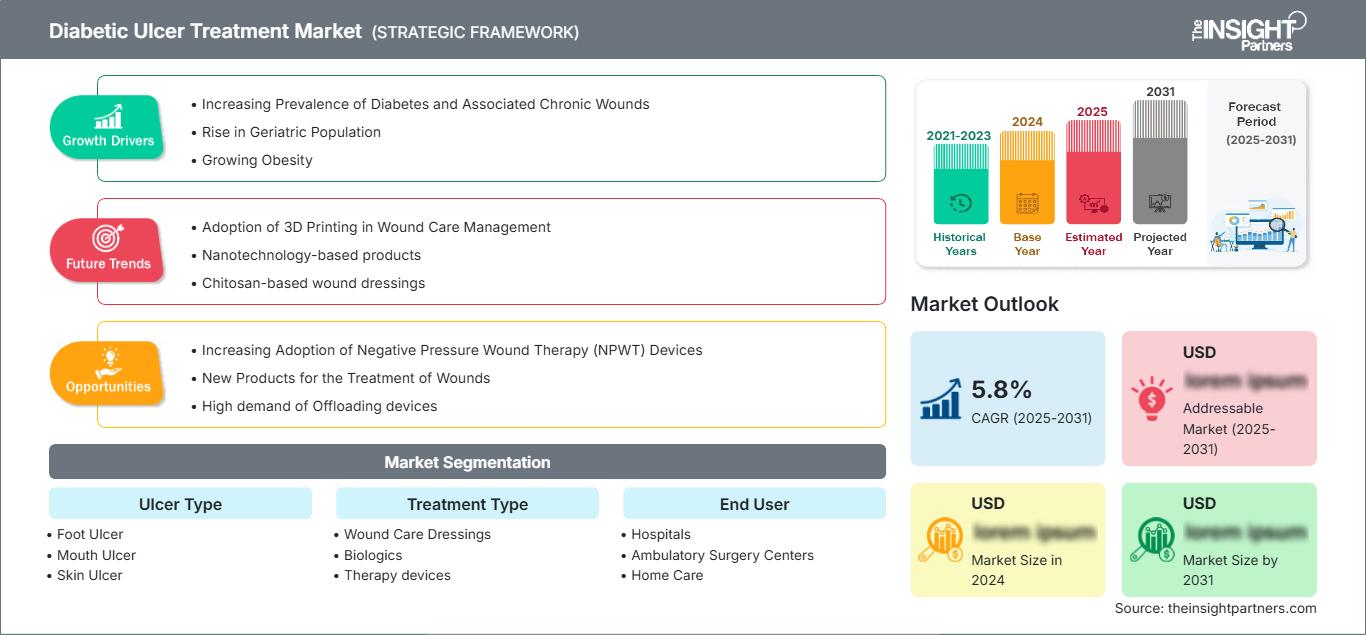
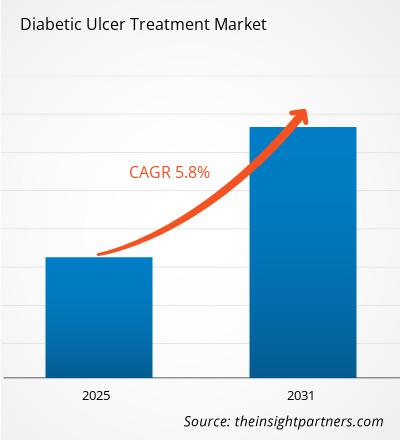
The Diabetic Ulcer Treatment Market was valued at US$ 8.24 billion in 2025 and is projected to reach US$ 13.59 billion by 2034, expanding at a CAGR of 6.45% during 2026–2034. Growing diabetes prevalence, increasing incidence of chronic wounds, and broader adoption of advanced wound care technologies are reshaping treatment pathways. Healthcare systems are increasingly prioritizing early intervention and multidisciplinary wound management to reduce complications, lower hospitalization rates, and improve patient outcomes.
North America remains a critical revenue-generating region within the Diabetic Ulcer Treatment Market and is anticipated to expand at an estimated CAGR of 6.1% through 2034. Rising diabetic populations, favorable reimbursement structures for advanced wound care products, and widespread adoption of biologics and therapy devices continue to support market expansion. Growing investments in outpatient wound management programs and digital wound monitoring solutions further strengthen regional demand.
Diabetic Ulcer Treatment Market Assessment and Insights
- North America: North America accounted for 36–40% of the diabetic ulcer treatment market share in 2025 and is projected to expand at a CAGR of 5.8%–6.4% during 2026–2034. Growth is driven by advanced wound care infrastructure, increasing prevalence of diabetes, and widespread adoption of evidence-based diabetic wound management solutions.
- U.S.: The U.S. represented 78–82% of the North American diabetic ulcer treatment market in 2025 and is anticipated to register a CAGR of 5.9%–6.5% during 2026–2034, supported by a high burden of diabetic foot complications, strong reimbursement coverage, and increasing use of advanced wound care products.
- Europe: Europe held 27–31% of diabetic ulcer treatment market share in 2025 and is expected to grow at a CAGR of 5.6%–6.2% during 2026–2034. Germany, the United Kingdom, and France remain the leading regional markets, supported by widespread adoption of advanced wound care therapies and well-established healthcare systems.
- Asia Pacific: Asia Pacific accounted for 23–27% of the diabetic ulcer treatment market size in 2025 and is forecast to expand at a CAGR of 7.0%–7.8% during 2026–2034. China, Japan, and India drive regional growth through rising diabetes prevalence, improving healthcare infrastructure, and increasing access to advanced wound management solutions.
- Largest Segment – Foot Ulcer: The foot ulcer segment represented the largest diabetic ulcer treatment market share and is expected to grow at a CAGR of 6.3%–6.9% during 2026–2034, driven by its high prevalence among diabetic patients and elevated risk of severe complications requiring long-term treatment.
- High Growth Segment – Biologics: The biologics segment is projected to register the fastest growth with a CAGR of 7.4%–8.1% during 2026–2034, supported by increasing adoption of regenerative wound healing therapies and continuous advancements in biologic wound care products.
- Key companies analyzed in detail: ConvaTec Group Plc; Solventum Corporation; Coloplast A/S; Smith & Nephew plc; B. Braun SE; Medline Industries, LP; Medtronic plc; Cardinal Health, Inc.; Mölnlycke Health Care AB; Organogenesis Holdings Inc.
Source: The Insight Partners' analysis based on proprietary research, government publications, company annual reports, investor presentations, industry databases, and expert interviews.
The Diabetic Ulcer Treatment Market report has evolved from conventional wound management approaches toward evidence-based therapies emphasizing accelerated healing, infection prevention, and limb preservation. Healthcare providers increasingly utilize advanced dressings, biologics, and negative pressure wound therapy systems to address the complexity of diabetic wounds and reduce the risk of amputations.
Diabetic ulcer treatment market momentum is expected to remain supported by demographic and clinical trends. Expanding awareness regarding diabetic foot care, improved access to specialized wound centers, and the integration of artificial intelligence into wound assessment platforms are creating opportunities for manufacturers and healthcare providers seeking better clinical and economic outcomes.
Diabetic Ulcer Treatment Market Report Scope
| Report Attribute | Details |
|---|---|
| Market size in 2025 | US$ 8.24 Billion |
| Market Size by 2034 | US$ 13.59 Billion |
| Global CAGR (2026 - 2034) | 6.45% |
| Historical Data | 2021-2024 |
| Forecast period | 2026-2034 |
Diabetic Ulcer Treatment Market Analysis
The growing burden of diabetes worldwide continues to increase the number of patients requiring long-term ulcer management. Foot ulcers account for a substantial share of treatment demand because of their association with infection, hospitalization, and lower-limb amputation. Healthcare providers are emphasizing preventive screening and early intervention, supporting sustained demand for advanced wound care products.
The value chain includes raw material suppliers, dressing manufacturers, biologics developers, therapy device providers, hospitals, outpatient clinics, home healthcare providers, and reimbursement agencies. Strong collaboration among these stakeholders is improving treatment accessibility and enabling more integrated care pathways across chronic wound management settings.
Competition within the Diabetic Ulcer Treatment Market is characterized by innovation-driven differentiation. Major participants including ConvaTec, Smith+Nephew, 3M, Coloplast, Medtronic, and Mölnlycke Health Care are investing in advanced materials, antimicrobial technologies, and biologic therapies.
Investment activity increasingly focuses on regenerative medicine, smart wound monitoring systems, and outpatient treatment solutions. Companies are strengthening clinical evidence portfolios while pursuing strategic partnerships and product launches aimed at improving healing rates and reducing total treatment costs across healthcare systems.
● REPORT CUSTOMIZATION
Tailor This Report To Align With Your Specific Business Requirements
This report can be customized to align precisely with your business objectives, scope, and target markets. Customization options include tailored segmentation, geography, competitive analysis, and strategic insights to support informed decision-making.
Customize This Report →WHAT YOU CAN ADJUST
- ● Segmentations
- ● Geography
- ● Competitive Analysis
- ● Language Preferences
Diabetic Ulcer Treatment Market: Strategic Insights
Regional Insights
North America Diabetic Ulcer Treatment Market
North America represents the largest regional diabetic ulcer treatment market and is expected to grow at approximately 6.1% CAGR through 2034. High diabetes prevalence, strong reimbursement frameworks, and advanced wound care infrastructure continue to support adoption of premium treatment modalities. Healthcare providers increasingly favor multidisciplinary care models combining endocrinology, vascular medicine, and wound management expertise.
The region also benefits from strong clinical research activity and rapid commercialization of advanced wound care products. Expanding use of biologics, antimicrobial dressings, and therapy devices contributes to favorable treatment outcomes while supporting market expansion across hospital and outpatient settings.
U.S. Diabetic Ulcer Treatment Market
The U.S. accounts for approximately 75–80% of the North American diabetic ulcer treatment market and is projected to expand at a CAGR of nearly 6.2% through 2034. Rising healthcare expenditure, widespread diabetes screening programs, and increased utilization of advanced wound care technologies are supporting demand growth across multiple treatment settings.
Leading manufacturers maintain substantial commercial and research operations within the country, enhancing product availability and innovation. Demand is particularly strong for diabetic foot ulcer treatments, advanced wound dressings, and negative pressure wound therapy systems. Home-based wound care services and remote monitoring technologies are also gaining traction among providers seeking cost-effective treatment pathways.
Europe Diabetic Ulcer Treatment Market
Europe accounts for approximately 25–30% of global revenue and is forecast to grow at a CAGR of around 5.9% through 2034. The region benefits from established healthcare systems, growing elderly populations, and increasing adoption of evidence-based wound care protocols. Germany remains the leading national market due to strong healthcare spending and widespread availability of specialized wound management services.
The UK continues to experience steady demand for diabetic ulcer treatment products as healthcare providers emphasize early intervention and limb preservation. Expanding utilization of community-based wound care programs and advanced dressings supports market development, with growth estimated near 5.8% annually.
Germany will remain the major market due to its advanced healthcare infrastructure and widespread adoption of modern wound treatment technologies. There will be significant growth in biologics usage and therapeutic devices, helping Germany achieve a CAGR of around 6.0%.
France, Italy, and Spain together account for a considerable share of demand. All of these countries are focusing on investments in chronic disease management, diabetes screening, and wound treatment clinics. Awareness of preventive treatments will boost uptake in both hospital and ambulatory settings.
APAC Diabetic Ulcer Treatment Market
Asia Pacific is anticipated to be the fastest-growing regional diabetic ulcer treatment market, expanding at an estimated 7.5% CAGR through 2034 while representing roughly 20–25% of global revenue. Rising diabetes prevalence, healthcare infrastructure development, and improving access to advanced therapies are accelerating market penetration throughout the region.
China leads regional demand due to its large diabetic population and increasing investments in chronic disease management. Government initiatives aimed at improving healthcare accessibility continue to support the adoption of treatments across urban and secondary healthcare facilities.
Both Japan and South Korea can leverage their technologically sophisticated healthcare sectors and the adoption of wound care technologies. India is turning out to be an important market owing to the increase in cases of diabetes, access to healthcare, and awareness of diabetic foot problems. Australia's contribution to the industry comes from its wound care protocols and healthcare reimbursement framework.
Middle East & Africa Diabetic Ulcer Treatment Market
The Middle East & Africa diabetic ulcer treatment market is expected to register a CAGR of approximately 6.7% through 2034. Growing diabetes prevalence, healthcare modernization initiatives, and increasing investment in chronic disease management are supporting market development across the region.
Saudi Arabia stands out as the key market due to significant government healthcare spending and initiatives to transform the sector. Increasing demand for innovative wound care products is improving treatment outcomes among patients with diabetes.
The UAE keeps up its investments in healthcare facilities and digital healthcare solutions. South Africa remains an important market in Africa, with increased emphasis on diabetes and wound care availability. In the larger MEA region, expansion of healthcare facilities and greater clinical awareness present new growth prospects for innovative ulcer treatment companies.
Segmentation Analysis
Ulcer Type
- Foot Ulcer – Represents the largest revenue-generating segment owing to its high prevalence among diabetic patients and elevated risk of infection, hospitalization, and lower-limb amputation. Growing adoption of advanced wound dressings, biologics, and therapy devices supports effective healing, reduces complications, and improves long-term clinical outcomes.
- Mouth Ulcer – Demand is driven by diabetes-related immune dysfunction, delayed tissue healing, and increased susceptibility to oral infections. Effective treatment focuses on pain relief, infection control, and faster healing through topical medications and supportive therapies, primarily delivered across outpatient and dental healthcare settings.
- Skin Ulcer – Rising incidence among elderly diabetic patients is increasing demand for advanced wound management products that promote tissue regeneration and prevent infection. Improved treatment approaches help accelerate healing, minimize complications, reduce healthcare costs, and enhance patients' overall quality of life and mobility.
- Corneal Ulcer – Growing awareness of diabetes-related ocular complications and improved access to ophthalmic care are supporting market growth. Specialized treatments, including antimicrobial therapies and surgical interventions, help preserve vision, prevent permanent corneal damage, and improve outcomes in patients with severe diabetic eye complications.
Treatment Type
- Wound Care Dressings – Maintain the largest diabetic ulcer treatment market share because of widespread clinical use across all wound stages. Continuous innovation in antimicrobial, hydrofiber, foam, and moisture-balancing dressings improves healing efficiency, reduces infection risks, enhances patient comfort, and supports effective long-term diabetic ulcer management.
- Biologics – Experiencing rapid adoption as regenerative therapies demonstrate superior healing outcomes in chronic and difficult-to-treat diabetic ulcers. Growth factors, skin substitutes, and cellular therapies stimulate tissue repair, reduce healing time, and provide effective treatment options for patients unresponsive to conventional wound care.
- Therapy devices – Market growth is fueled by increasing adoption of negative pressure wound therapy, electrical stimulation, and other advanced device-based solutions. These technologies improve blood circulation, stimulate tissue regeneration, reduce wound size, shorten healing duration, and enhance treatment effectiveness for complex diabetic ulcers.
End User
- Hospitals – Account for a significant share of diabetic ulcer treatments due to multidisciplinary wound care teams, advanced surgical capabilities, and access to specialized therapeutic technologies. Hospitals primarily manage severe, infected, and complex ulcer cases requiring comprehensive clinical intervention and continuous patient monitoring.
- Ambulatory Surgery Centers – Increasingly preferred for specialized wound procedures because they offer cost-effective, efficient, and minimally invasive treatment options. The growing adoption of advanced wound management technologies and shorter patient recovery times continues to support market expansion in these outpatient healthcare facilities.
- Home Care – Expanding rapidly as healthcare systems prioritize outpatient treatment, remote patient monitoring, and personalized wound management. Home-based care improves patient convenience, reduces hospital admissions, lowers treatment costs, and supports continuous management of chronic diabetic ulcers through caregiver assistance and digital health technologies.
- Community Health Centers – Play an essential role in early diabetic ulcer detection, routine wound assessment, diabetic care, and foot education. Their accessibility in underserved communities supports timely intervention, reduces disease progression, improves treatment adherence, and helps minimize complications associated with chronic diabetic wounds.
Opportunity Snapshot
| End User | Revenue Contribution | Trend Tag | Adoption Stage |
| Hospitals | High | Limb Salvage | Mature |
| Ambulatory Surgery Centers | Medium | Outpatient Care | Scaling |
| Home Care | High | Remote Monitoring | Scaling |
| Community Health Centers | Medium | Early Screening | Emerging |
Diabetic Ulcer Treatment Market Growth Drivers and Impact Analysis
Rising Global Burden of Diabetes and Chronic Wounds
The persistent rise in the global population of people suffering from diabetes continues to be the most significant factor responsible for the expansion of the Diabetic Ulcer Treatment Market. The increasing number of cases leads to the emergence of diabetic foot ulcers and other types of chronic wounds that need to be treated regularly. The problem gets complicated by demographic trends, as elderly diabetic patients have slower wound-healing rates. To reduce the risk of infections and amputations, wound management technologies are being improved to help patients avoid hospitalization. In the wake of the increased medical and economic burden caused by untreated diabetic ulcers, governments, healthcare organizations, and insurance companies encourage earlier intervention and specialized care programs for advanced dressings, biologics, and therapeutic devices, while encouraging manufacturers to develop more effective treatment solutions that deliver measurable clinical improvements.
Advancements in Regenerative Medicine and Biologic Therapies
Technological advances in biologics and regenerative medicine are significantly improving outcomes for diabetic ulcer treatment. Modern biologic products are designed to stimulate tissue repair, promote cellular regeneration, and accelerate wound closure in patients with chronic wounds. These innovations are designed to overcome weaknesses inherent in traditional wound care techniques and offer physicians more targeted treatments. With clinical data on regenerative medicine therapies continually growing, these procedures are increasingly used as part of treatment routines in hospitals and wound care centers. In addition to clinical effectiveness, there is an important cost-saving effect, as improved healing leads to reduced treatment expenses and the need for hospitalization. Major investment activity in the industry fuels further innovation.
Expansion of Specialized Wound Care Infrastructure
Healthcare practitioners worldwide are now establishing specialized wound centers, outpatient centers, and comprehensive diabetes care programs. Such establishments facilitate timely diagnosis, ongoing monitoring, and coordinated treatment plans, which help the patient recover more effectively. Wound care specialists frequently draw on knowledge and skills from multiple disciplines, such as endocrinology, vascular medicine, podiatry, and nursing, to develop a holistic approach for diabetic patients. This also helps with the wider adoption of wound care technology and improves access to treatment. In turn, more screening and interventions help drive the market forward.
Diabetic Ulcer Treatment Market Future Trends
Integration of Digital Wound Monitoring Platforms
Digital health technologies are increasingly becoming a core element of diabetic ulcer treatment strategies. Healthcare providers have started implementing wound imaging systems, advanced assessment tools, and other monitoring approaches to improve clinical decision-making. These technologies enable continuous tracking of healing progress and the early identification of complications. With the rising emphasis on value-based care and diabetic ulcer treatment market trends in healthcare, monitoring solutions are expected to see broader adoption. Future advancements in these technologies will likely incorporate telemedicine functionality within wound care workflows.
Shift Toward Personalized and Multimodal Treatment Approaches
Treatment modalities have been shifting from rigid methods to personalized approaches based on patient and wound characteristics. Healthcare professionals have resorted to integrating advanced dressings, biologics, therapies, and infection-prevention methods to enhance healing capacity. This strategy aligns with the recognition that diabetic wounds often require consideration of biological and environmental factors. Further developments will involve incorporating biomarker-directed and customized regenerative treatments.
Diabetic Ulcer Treatment Market Opportunities
Expansion of Home-Based Wound Management Services
Home care represents a significant opportunity as healthcare systems seek cost-effective alternatives to prolonged hospitalization. Advances in portable wound therapy devices, telehealth platforms, and remote monitoring technologies are enabling more diabetic ulcer treatments to be delivered outside traditional healthcare facilities. Companies capable of providing integrated home care solutions can benefit from the rising demand for convenient and patient-centered treatment models. Investments in caregiver education, digital connectivity, and simplified product designs are expected to support market penetration in this segment.
Emerging Market Penetration Through Preventive Care Programs
Strong market expansion and opportunities for segment leadership will be driven by developing countries, where diabetes prevalence is high, and access to healthcare services continues to improve. Governments and related organizations have already initiated greater investments in preventive care measures to support earlier diagnosis of diabetic foot conditions and ulcer detection. Manufacturers that align with diabetic foot care initiatives and the diabetic ulcer treatment market forecast are well positioned to emerge as industry leaders. Collaborations with health authorities, community-based care groups, and other healthcare providers will further accelerate the adoption of advanced medical technologies across these emerging markets.
Recent Developments
- March, 2026: FibroBiologics, Inc. announced that onboarding of the clinical sites has been completed for its Phase 1/2 clinical trial evaluating the safety and efficacy of CYWC628 for the treatment of refractory diabetic foot ulcers (DFUs).
- April, 2025: ConvaTec received regulatory approval for ConvaNiox, a nitric oxide-generating wound dressing technology designed for hard-to-heal wounds, including diabetic foot ulcers. The company reported plans for phased commercialization, supported by clinical evidence demonstrating improved healing outcomes.
- January, 2025: Mölnlycke Health Care, a world-leading MedTech company specializing in wound care solutions, announced an investment of USD 8 million in Siren. The healthcare tech company Siren is on a mission to help reduce the risk of diabetic foot ulcers by early detection of potential injuries through temperature-sensing textile technology.
Frequently Asked Questions

- Comprehensive Market Sizing and Forecast Analysis
- Detailed Segmentation Analysis
- In-Depth Market Dynamics Assessment
- Regional and Country-Level Insights
- Competitive Landscape and Company Benchmarking
- Strategic Business Intelligence
Recent Reports
Testimonials

The Insight Partners' SCADA System Market report is comprehensive, with valuable insights on current trends and future forecasts. The team was highly professional, responsive, and supportive throughout. We are very satisfied and highly recommend their services.
RAN KEDEM Partner, Reali Technologies LTDs
I requested a report on a very specific software market and the team produced the report in a few days. The information was very relevant and well presented. I then requested some changes and additions to the report. The team was again very responsive and I got the final report in less than a week.
JEAN-HERVE JENN Chairman, Future Analytica
We worked with The Insight Partners for an important market study and forecast. They gave us clear insights into opportunities and risks, which helped shape our plans. Their research was easy to use and based on solid data. It helped us make smart, confident decisions. We highly recommend them.
PIYUSH NAGPAL Sr. Vice President, High Beam Global
The Insight Partners delivered insightful, well-structured market research with strong domain expertise. Their team was professional and responsive throughout. The user-friendly website made accessing industry reports seamless. We highly recommend them for reliable, high-quality research services
YUKIHIKO ADACHI CEO, Deep Blue, LLC.
This is the first time I have purchased a market report from The Insight Partners.While I was unsure at first, I visited their web site and felt more comfortable to take the risk and purchase a market report.I am completely satisfied with the quality of the report and customer service. I had several questions and comments with the initial report, but after a couple of dialogs over email with their analyst I believe I have a report that I can use as input to our strategic planning process.Thank you so much for taking the extra time and making this a positive experience.I will definitely recommend your service to others and you will be my first call when we need further market data.
JOHN SUZUKI President and Chief Executive Officer, Board Director, BK Technologies
I wish to appreciate your support and the professionalism you displayed in the course of attending to my request for information regarding to infectious disease IVD market in Nigeria. I appreciate your patience, your guidance, and the fact that you were willing to offer a discount, which eventually made it possible for us to close a deal. I look forward to engaging The Insight Partners in the future, all thanks to the impression you have created in me as a result of this first encounter.
DR CHIJIOKE ONYIA MANAGING DIRECTOR, PineCrest Healthcare Ltd.Reason to Buy
- Informed Decision-Making
- Understanding Market Dynamics
- Competitive Analysis
- Identifying Emerging Markets
- Customer Insights
- Market Forecasts
- Risk Mitigation
- Boosting Operational Efficiency
- Strategic Planning
- Investment Justification
- Tracking Industry Innovations
- Aligning with Regulatory Trends





 Get Free Sample for