
Diathermy Equipment Market Growth, Demand & Size by 2034
Diathermy Equipment Market Size and Forecasts (2021–2034), Global and Regional Share, Trends, and Growth Opportunity Analysis Report Coverage : by Product (Microwave Diathermy Equipment, Shortwave Diathermy Equipment, Ultrasound Diathermy Equipment); Application (Physical Therapy and Electrosurgery); End User (Hospitals, Clinics, Physiotherapy Centers, Other End Users); and Geography (North America, Europe, Asia Pacific, and South and Central America)
- Status : Data Released
- Report Code : TIPRE00040131
- Category : Life Sciences
- No. of Pages : 150
- Available Report Formats :


- Last update date : July 09, 2026


2025 Market Size
US$ 3.71 Bn
Base year value
2034 Forecast
US$ 6.34 Bn
Projected by 2034
CAGR 2026-2034
6.13 %
Growth rate
Addressable Market
US$ 45.49 Bn
(2026-2034)
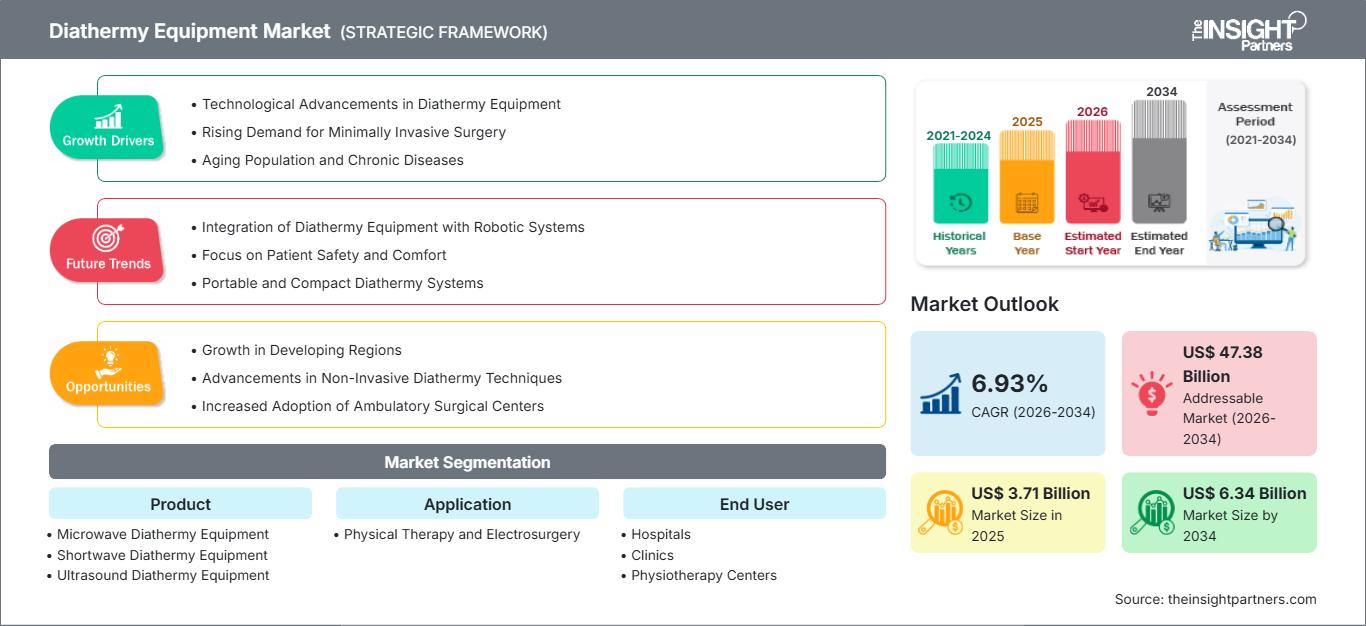
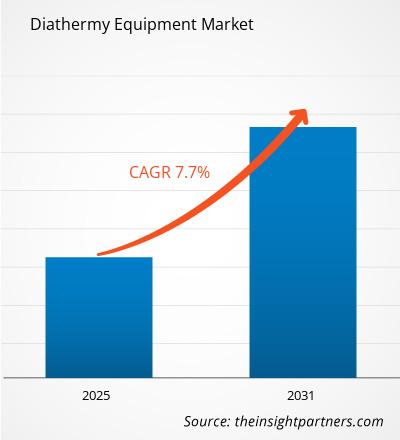
The Diathermy Equipment market was valued at US$ 3.71 billion in 2025 and is expected to reach US$ 6.34 billion by 2034; it is estimated to record a CAGR of 6.13% during 2026-2034.
Diathermy Equipment Market Assessment and Insights
- North America: North America accounted for 34–38% of the diathermy equipment market share in 2025 and is projected to expand at a CAGR of 6.4%–6.8% during 2026–2034. Growth is driven by advanced healthcare infrastructure and increasing adoption of minimally invasive surgical procedures, which continue to sustain strong demand for equipment replacement and technological upgrades.
- U.S.: The U.S. represented 82–86% of the North American market in 2025 and is anticipated to register a CAGR of 6.5%–6.9% during 2026–2034, supported by high surgical procedure volumes, advanced hospital infrastructure, and continuous investment in next-generation surgical technologies.
- Europe: Europe held 27–31% of the market share in 2025 and is expected to grow at a CAGR of 6.1%–6.5% during 2026–2034. Germany, the United Kingdom, and France remain key markets, supported by advanced surgical care capabilities and ongoing modernization of healthcare facilities.
- Asia Pacific: Asia Pacific captured 24–28% of the market in 2025 and is projected to grow at a CAGR of 7.6%–8.1% between 2026 and 2034. According to the diathermy equipment market forecast, China, Japan, and India are leading regional expansion through the development of healthcare infrastructure, increasing surgical procedure volumes, and rising investments in advanced medical technologies.
- Largest Segment – Electrosurgery Application: The electrosurgery application segment represented the largest market share and is expected to grow at a CAGR of 7.0%–7.4% during 2026–2034, driven by growing preference for precision tissue cutting and coagulation in minimally invasive surgical procedures.
- High Growth Segment – Ultrasound Diathermy Equipment: The ultrasound diathermy equipment segment is projected to register the fastest growth with a CAGR of 7.8%–8.3% during 2026–2034, supported by expanding rehabilitation services and increasing treatment of musculoskeletal disorders.
- Key companies analyzed in detail: Medtronic plc; Johnson & Johnson; Stryker Corporation; Olympus Corporation; B. Braun SE; CONMED Corporation; Smith+Nephew plc; Zimmer Biomet Holdings, Inc.; biolitec AG; Surkon Medical Co., Ltd.
Source: The Insight Partners' analysis based on proprietary research, government publications, company annual reports, investor presentations, industry databases, and expert interviews.
There has been an expansion in the clinical application of diathermy technology due to increased desire among healthcare practitioners for effective, efficient, and comfortable treatment methods. Improvements in microwave, short wave, and ultrasound diathermy technology have led to better control of energy and greater accuracy of treatment, allowing the technology to be utilized in a wide variety of rehabilitation, pain treatment, and surgical applications. Thus, the market for diathermy equipment has shifted from simple physiotherapy equipment to sophisticated devices that also provide a high level of safety.
In the coming years, industry players will concentrate on the development of diathermy equipment in terms of workflow optimization and connectivity, along with specialization of devices according to specific applications. Hospitals and specialty clinics will favor technologies that not only provide better results but also decrease the time taken for procedures.
Diathermy Equipment Market Report Scope
| Report Attribute | Details |
|---|---|
| Market size in 2025 | US$ 3.71 Billion |
| Market Size by 2034 | US$ 6.34 Billion |
| Global CAGR (2026 - 2034) | 6.13% |
| Historical Data | 2021-2024 |
| Forecast period | 2026-2034 |
Diathermy Equipment Market Analysis
Increasing cases of chronic pain, sports injuries, arthritis, and need for postoperative rehabilitation continue to fuel demand for diathermy equipment. Health care practitioners are using deep heating treatments to help with tissue repair and recovery from inflammation. The increasing number of elderly people is adding to utilization, owing to the increase in musculoskeletal problems related to aging.
The value chain includes component manufacturers, medical device producers, distributors, healthcare organizations, rehabilitation clinics, and service providers. The importance of energy accuracy, flexibility of use, safety systems, and intuitive interfaces is becoming more prominent. Compliance with regulations and clinical testing are still important considerations that affect purchase decision-making, especially by major hospital chains and specialists.
Diversified firms involved in medical technology and specialized firms producing therapy equipment are the two main types of firms competing in the market. This market includes such strategic players as Medtronic, Johnson & Johnson, Stryker Corporation, Olympus Corporation, B. Braun Melsungen, CONMED Corporation, Smith & Nephew, Zimmer Biomet, Biolitec AG, and Surkon Medical Ltd.
More investments are being made into such innovative technologies as advanced surgical energy devices, digitized therapy devices, and comprehensive therapy options. Such strategic goals as energy delivery precision, increased range of procedures possible, and improved workflows of physicians are among those currently being pursued by the firms in the market. Firms that can combine technology innovation and cost-effective application will succeed in this market.
● REPORT CUSTOMIZATION
Tailor This Report To Align With Your Specific Business Requirements
This report can be customized to align precisely with your business objectives, scope, and target markets. Customization options include tailored segmentation, geography, competitive analysis, and strategic insights to support informed decision-making.
Customize This Report →WHAT YOU CAN ADJUST
- ● Segmentations
- ● Geography
- ● Competitive Analysis
- ● Language Preferences
Diathermy Equipment Market: Strategic Insights
Regional Insights
North America Diathermy Equipment Market
North America accounts for the largest share of the diathermy equipment market and is projected to register a CAGR of approximately 6.5% through 2034. The region benefits from advanced healthcare infrastructure, high procedure volumes, and strong adoption of evidence-based rehabilitation therapies. Growing demand for minimally invasive interventions and pain management solutions continues to support equipment procurement across healthcare facilities.
Hospitals and outpatient rehabilitation centers increasingly integrate ultrasound and shortwave diathermy systems into treatment pathways. Continued investment in orthopedic care, sports medicine, and surgical technologies enhances market expansion. Regulatory oversight also encourages the adoption of technologically advanced systems with improved safety and performance characteristics, supporting long-term diathermy equipment market development.
U.S. Diathermy Equipment Market
The United States represents the dominant national market in North America and is expected to grow at a CAGR of approximately 6.6% through 2034. The country accounts for an estimated 75–80% of regional revenue due to its extensive healthcare expenditure, large patient base, and concentration of leading medical technology companies.
The strong presence of manufacturers such as Medtronic, Johnson & Johnson, Stryker Corporation, CONMED Corporation, and Zimmer Biomet contributes to continuous product innovation. Demand is particularly notable in physical therapy, orthopedic rehabilitation, sports medicine, and electrosurgical procedures. Healthcare providers increasingly prioritize advanced energy platforms that improve procedural precision and reduce treatment duration, supporting sustained diathermy equipment market growth across both therapeutic and surgical applications.
Europe Diathermy Equipment Market
Europe represents a mature yet innovation-driven market, accounting for approximately 25–30% of global revenue. The region is projected to expand at a CAGR near 6.4% through 2034, supported by aging demographics, growing rehabilitation requirements, and widespread adoption of advanced medical technologies. Germany remains the leading national market due to its strong healthcare infrastructure and medical device ecosystem.
The United Kingdom continues to witness increasing utilization of physiotherapy technologies across public and private healthcare settings. The rising prevalence of musculoskeletal disorders and expanding outpatient rehabilitation services support the adoption of ultrasound and shortwave diathermy systems.
Germany leads regional demand owing to substantial healthcare investments, advanced hospital networks, and strong domestic medical technology capabilities. Growing emphasis on precision surgery and rehabilitation efficiency strengthens equipment procurement across clinical settings.
France, Italy, and Spain collectively contribute significant market demand through the modernization of healthcare facilities and an increasing focus on chronic pain management. Expanding rehabilitation programs and greater awareness of non-invasive therapeutic options further support market expansion across Southern Europe.
APAC Diathermy Equipment Market
Asia Pacific is expected to be the fastest-growing regional diathermy equipment market, advancing at an estimated CAGR of around 8.0% through 2034 while contributing approximately 22–27% of global revenue. Rapid healthcare infrastructure development, expanding patient populations, and increasing access to specialized treatment services are creating favorable market conditions.
Demand from China is driven by the push to modernize hospitals, increase surgeries, and increase investment in patient rehabilitation. The government’s drive to improve healthcare provision will go a long way toward driving the adoption of technology in healthcare.
Japan, South Korea, India, and Australia have an increasing demand for energy technologies in both therapeutic and surgical practices. Growing healthcare expenditure, physiotherapy networks, and healthcare policies will drive technology adoption. In India, in particular, there are significant opportunities arising from the provision of rehabilitation services and non-invasive therapies.
Middle East & Africa Diathermy Equipment Market
The Middle East & Africa diathermy equipment market is gradually expanding and is projected to achieve a CAGR of approximately 6.8% through 2034. Healthcare diversification initiatives and infrastructure investments are supporting the adoption of advanced therapeutic and surgical technologies across the region.
Saudi Arabia is viewed as the most dominant market owing to comprehensive healthcare modernization and investments geared towards economic diversification. The development of specialist hospitals and rehabilitation centers increases the demand for more equipment.
Advanced medical technologies are increasingly common in the UAE, South Africa, and the rest of the MEA due to the need for improved treatment options. Increasing investment in healthcare infrastructure, surgical capabilities, and rehabilitation treatments drives the market's long-term growth prospects in these regions.
Segmentation Analysis
Product
- Microwave Diathermy Equipment: Utilized for targeted deep tissue heating and pain management applications. Demand is supported by rehabilitation programs seeking precise energy penetration and efficient treatment delivery for musculoskeletal conditions.
- Shortwave Diathermy Equipment: Widely adopted in physiotherapy environments due to proven effectiveness in improving circulation, reducing stiffness, and accelerating tissue recovery across a broad range of therapeutic indications.
- Ultrasound Diathermy Equipment: Represents the most commercially significant product category owing to versatility, portability, clinical familiarity, and expanding use in sports medicine, orthopedic rehabilitation, and pain management settings.
Application
- Physical Therapy and Electrosurgery: Physical therapy applications generate substantial demand through rehabilitation and pain management programs, while electrosurgery adoption continues rising as hospitals seek precision energy systems that improve procedural outcomes and tissue management.
End User
- Hospitals: Major purchasers of advanced diathermy systems due to high patient throughput, extensive surgical activity, and growing integration of energy-based therapeutic technologies.
- Clinics: Increasingly adopting compact and cost-efficient systems to address outpatient rehabilitation, pain management, and specialized treatment requirements.
- Physiotherapy Centers: Strong demand driven by growing patient preference for non-invasive therapies and expanding treatment programs targeting musculoskeletal recovery.
Opportunity Snapshot
| End User | Revenue Contribution | Trend Tag | Adoption Stage |
| Hospitals | High | Precision Surgery | Mature |
| Clinics | Medium | Outpatient Care | Scaling |
| Physiotherapy Centers | High | Pain Recovery | Mature |
| Other End Users | Low | Specialty Therapy | Emerging |
Diathermy Equipment Market Growth Drivers and Impact Analysis
Rising Burden of Musculoskeletal and Chronic Pain Conditions
Musculoskeletal disorders remain among the most common causes of disability globally, creating sustained demand for rehabilitation and pain management solutions. Diathermy equipment is increasingly utilized to address conditions such as osteoarthritis, lower back pain, tendon injuries, and sports-related trauma. Healthcare providers value these technologies for their ability to deliver deep tissue heating that promotes circulation and supports recovery without invasive intervention.
The growing elderly population has an even stronger impact on this dynamic in demand. Since older people are more likely to have problems associated with degenerative joint diseases and decreased mobility, physiotherapy and rehabilitative treatments remain relevant. Diathermy units have thus gained importance in complex treatment procedures. The ability of such equipment to work in tandem with other treatment methods is contributing to growing acceptance in the medical field. This driver directly influences purchasing decisions among hospitals, clinics, and rehabilitation centers, reinforcing long-term market expansion.
Expansion of Minimally Invasive and Energy-Based Surgical Procedures
Modern-day surgical practice is increasingly precise and time-efficient, with shorter patient recovery periods an integral part of it. Energy-based systems help achieve this goal to a great extent by serving as important tools for electrosurgical procedures. Diathermy-based systems allow surgeons to cut, cauterize, and seal tissues.
Healthcare organizations will continue to invest in advanced platforms to improve procedural efficiency and ensure consistent repetition. In response to this trend, manufacturers are developing intelligent energy delivery systems that adapt to different tissues. They increase surgeons' comfort and help achieve patient safety goals. With the rising popularity of minimally invasive procedures across surgical specialties, there will be increasing demand for surgical energy devices.
Growth of Rehabilitation Infrastructure and Outpatient Care Models
In healthcare institutions around the world, there is now increased focus on rehabilitation therapy and outpatient care options. The motivation behind this trend stems from the need to control costs, accommodate greater patient volume, and recognize the benefits of rehabilitation therapy for improving future health outcomes. Diathermy machines are well-suited to this context, as they are used in non-invasive treatment modalities and can be adapted to different settings.
As the number of physiotherapy centers, sports medicine clinics, and community rehabilitation centers expands, the customer base for equipment producers grows. There is a need for treatments that cause minimal pain yet enable rapid recovery and the resumption of normal activities. This results in a shift towards better treatments and more efficient operations, thereby extending the demand for diathermy machines beyond the hospital setting.
Diathermy Equipment Market Future Trends
Integration of Smart Energy Management and Digital Connectivity
Future generations of the diathermy machine will include smart software applications such as individualized therapy programs, optimized parameter control, and digital storage of patient information. To reduce treatment variation, healthcare facilities have turned to innovative solutions to achieve better outcomes. Devices that analyze treatment data provide the basis for evidence-based decision-making to enhance the quality of care. These developments reflect evolving trends in the diathermy equipment market, with a focus on improving efficiency and treatment outcomes.
The machine's connectivity enables remote monitoring, diagnostics, and workflow optimization. There is also a chance that the manufacturers will try to combine cloud analytics and predictive maintenance, which will help in improving the performance of the equipment. These improvements can increase the value proposition for healthcare institutions. Intelligent energy management systems may become a competitive factor in the future.
Convergence of Therapeutic and Surgical Energy Technologies
The traditional differences between therapeutic diathermy and surgical energy systems are slowly blurring due to the versatility of technology platforms being used. Manufacturers are leveraging advancements in energy control, thermal management, and tissue interaction across various clinical applications. This presents new possibilities for ecosystems and integrated solutions in healthcare products.
Future innovation shall focus on efficient energy delivery, improved safety, and greater clinician control. Healthcare professionals will receive technology platforms that cater to diverse requirements while minimizing training and equipment management issues. Organizations working on cross-platform technology development will surely reap the benefits, as their customers' expectations shift towards energy-based technology.
Diathermy Equipment Market Opportunities
Untapped Potential in Emerging Healthcare Systems
Many developing nations still face challenges related to a lack of rehabilitation infrastructure and limited access to sophisticated technological solutions. Rapid urbanization, increased healthcare spending, and expanding insurance coverage are conducive to establishing market presence. Companies that provide affordable technology solutions based on the specific needs of developing healthcare systems will gain a strong competitive advantage.
Investment opportunities are not limited to the sale of devices but can also involve training clinicians, building service networks, and entering into distribution agreements. Many governments in developing countries are focusing on improving their health care sectors and therefore have a strong need for technology solutions that help increase effectiveness and efficiency.
Expansion of Specialized Rehabilitation and Sports Medicine Services
The growing involvement in recreational and professional sports is leading to more musculoskeletal injuries requiring rehabilitation. At the same time, healthcare professionals are increasingly acknowledging the benefits of specialized rehabilitation programs for orthopedic and neurological disorders. This creates great potential for the development of diathermy technology.
This can be capitalized on by manufacturers developing customized technological products that address the needs of sports medicine, rehabilitation after surgery, and chronic pain. Collaborating with rehabilitation centers, athletics, and specialty clinics will help speed up the process. With increasing individualization of treatments, there will be tremendous gains in the long run.
Recent Developments
- October, 2025: Olympus Corporation announced the launch of THUNDERBEATTM II, the next-generation hybrid energy device for soft tissue management, designed to deliver faster, more hemostatic dissection and large vessel transection in both laparoscopic and open surgery.
- September, 2025: Medtronic, a global leader in healthcare technology, announced the launch of two advanced surgical energy generators in India under the Valleylab FT10 series – the Valleylab FT10 Electrosurgical Generator (VLFT10FXGEN) and the Valleylab FT10 Vessel Sealing Generator (VLFT10LSGEN). Both devices are USFDA-approved and CE-marked, providing Indian hospitals with access to adaptive surgical technology designed to enhance precision, safety and efficiency in the operating room.
- March, 2025: Johnson & Johnson MedTech announced the launch of the DUALTO Energy System. This surgical solution combines multiple energy modalities into an integrated platform for use across open and minimally invasive surgery. The system can be paired with Service Solutions to support uptime and is designed to work with the Polyphonic Fleet software application for device management. DUALTO has also been designed for future use with the company's OTTAVA Robotic Surgical System.
Frequently Asked Questions

- Comprehensive Market Sizing and Forecast Analysis
- Detailed Segmentation Analysis
- In-Depth Market Dynamics Assessment
- Regional and Country-Level Insights
- Competitive Landscape and Company Benchmarking
- Strategic Business Intelligence
Recent Reports
Testimonials

The Insight Partners provided valuable market intelligence that supported our global go-to-market strategy. Their team was professional, responsive, and attentive to our feedback, providing thoughtful analysis and helpful methodological clarifications throughout the project.
Junmo Kim Chief Financial Officer (CFO), Enertech Co., Ltd.
The Insight Partners' SCADA System Market report is comprehensive, with valuable insights on current trends and future forecasts. The team was highly professional, responsive, and supportive throughout. We are very satisfied and highly recommend their services.
RAN KEDEM Partner, Reali Technologies LTDs
I requested a report on a very specific software market and the team produced the report in a few days. The information was very relevant and well presented. I then requested some changes and additions to the report. The team was again very responsive and I got the final report in less than a week.
JEAN-HERVE JENN Chairman, Future Analytica
We worked with The Insight Partners for an important market study and forecast. They gave us clear insights into opportunities and risks, which helped shape our plans. Their research was easy to use and based on solid data. It helped us make smart, confident decisions. We highly recommend them.
PIYUSH NAGPAL Sr. Vice President, High Beam Global
The Insight Partners delivered insightful, well-structured market research with strong domain expertise. Their team was professional and responsive throughout. The user-friendly website made accessing industry reports seamless. We highly recommend them for reliable, high-quality research services
YUKIHIKO ADACHI CEO, Deep Blue, LLC.
This is the first time I have purchased a market report from The Insight Partners.While I was unsure at first, I visited their web site and felt more comfortable to take the risk and purchase a market report.I am completely satisfied with the quality of the report and customer service. I had several questions and comments with the initial report, but after a couple of dialogs over email with their analyst I believe I have a report that I can use as input to our strategic planning process.Thank you so much for taking the extra time and making this a positive experience.I will definitely recommend your service to others and you will be my first call when we need further market data.
JOHN SUZUKI President and Chief Executive Officer, Board Director, BK Technologies
I wish to appreciate your support and the professionalism you displayed in the course of attending to my request for information regarding to infectious disease IVD market in Nigeria. I appreciate your patience, your guidance, and the fact that you were willing to offer a discount, which eventually made it possible for us to close a deal. I look forward to engaging The Insight Partners in the future, all thanks to the impression you have created in me as a result of this first encounter.
DR CHIJIOKE ONYIA MANAGING DIRECTOR, PineCrest Healthcare Ltd.Reason to Buy
- Informed Decision-Making
- Understanding Market Dynamics
- Competitive Analysis
- Identifying Emerging Markets
- Customer Insights
- Market Forecasts
- Risk Mitigation
- Boosting Operational Efficiency
- Strategic Planning
- Investment Justification
- Tracking Industry Innovations
- Aligning with Regulatory Trends





 Get Free Sample for