
Disposable Medical Supplies Market Growth, Trends & Forecast by 2034
Coverage: By Type (Diagnostic Supplies, Dialysis Consumables, Radiology Consumables, Infusion Products, Intubation and Ventilation Supplies, Hypodermic Products, Sterilization Consumables, Nonwoven Medical Supplies, Wound Care Consumables, Others); Application ( Cardiovascular, Cerebrovascular, Ophthalmology, Gynecology, Urology, Orthopedics, Others); End User (Hospitals, Clinics/ Ambulatory Surgery Centers, Research Institutes, Others) , and Geography (North America, Europe, Asia Pacific, and South and Central America)
- Status : Data Released
- Report Code : TIPRE00009283
- Category : Life Sciences
- No. of Pages : 150
- Available Report Formats :


- Last update date : July 08, 2026


2025 Market Size
US$ 322.38 Bn
Base year value
2034 Forecast
US$ 534.28 Bn
Projected by 2034
CAGR 2026-2034
5.77 %
Growth rate
Addressable Market
US$ 3,881.23 Bn
(2026-2034)
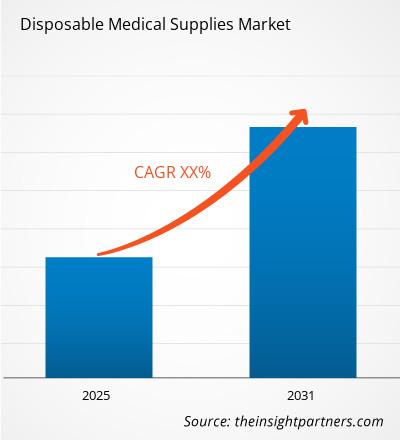
The Disposable Medical Supplies Market size is estimated at US$ 322.38 billion in 2025 and is projected to reach approximately US$ 534.28 billion by 2034, reflecting a sustained growth trajectory at a CAGR of 5.77% during 2026–2034. Demand remains closely linked to healthcare infrastructure expansion, chronic disease management, and increasing procedural standardization across clinical settings.
North America remains a major revenue-generating region within the disposable medical supplies market, supported by mature healthcare systems, stringent infection-control requirements, and extensive procedural volumes. The regional market is anticipated to advance at an estimated 5.2% CAGR through 2034. Growth is reinforced by increasing outpatient surgical activity, aging demographics requiring long-term care interventions, and continuous procurement of single-use products to reduce healthcare-associated infection risks.
Disposable Medical Supplies Market Assessment and Insights
- North America: North America accounted for 34–38% share in 2025 and is anticipated to expand at a CAGR of 5.2–5.8% during 2026–2034. High procedure volumes, standardized hospital procurement practices, and extensive outpatient surgery networks continue to support sustained regional market growth.
- U.S.: The U.S. represented 82–86% of the North American disposable medical supplies market in 2025 and is projected to register a CAGR of 5.3–5.9% during 2026–2034, supported by increasing surgical procedures, robust healthcare infrastructure, and sustained demand for single-use medical supplies.
- Europe: Europe held 25–29% disposable medical supplies market share in 2025 and is expected to grow at a CAGR of 4.8–5.4% during 2026–2034. Germany, the United Kingdom, and France remain the leading markets due to stringent infection-prevention protocols, aging populations, and continued demand for wound care products.
- Asia Pacific: Asia Pacific accounted for 24–28% disposable medical supplies market share in 2025 and is forecast to expand at a CAGR of 6.5–7.1% during 2026–2034. China, Japan, and India continue to benefit from expanding hospital capacity, growing local manufacturing, and improving access to chronic care procedures.
- Largest Segment: Nonwoven Medical Supplies represented the largest market segment and is expected to record a CAGR of 5.9–6.5% during 2026–2034, reflecting widespread use in drapes, gowns, masks, and procedure packs across operating rooms, emergency care, and infection-control settings.
- High Growth Segment: Infusion Products is projected to grow at a CAGR of 6.6–7.2% during 2026–2034, driven by increasing demand for oncology, critical care, and home infusion therapies, along with the growing adoption of safer single-use administration systems.
- Key companies analyzed in detail: Medtronic plc; Becton, Dickinson and Company; 3M Company; Cardinal Health, Inc.; Nipro Corporation; Ansell Limited; Owens & Minor, Inc.; Mölnlycke Health Care AB; Semperit AG Holding; Medline Industries, Inc.
Source: The Insight Partners' analysis based on proprietary research, government publications, company annual reports, investor presentations, industry databases, and expert interviews.
The Disposable Medical Supplies Market has evolved from a volume-driven procurement environment toward a quality-focused ecosystem emphasizing infection prevention, clinical efficiency, and patient safety. Hospitals and ambulatory care facilities increasingly prioritize products offering superior barrier protection, traceability, and workflow optimization. Manufacturers are consequently investing in material innovation, supply-chain resilience, and automation-enabled production capabilities.
The disposable medical supplies market forecast indicates that future growth will be influenced by healthcare decentralization, broader procedural availability across emerging economies, and increasing adoption of single-use solutions in outpatient care environments. Purchasing decisions are expected to increasingly prioritize product effectiveness, regulatory adherence, and sustainability factors. As healthcare organizations focus on improving operational efficiency, demand for comprehensive disposable product portfolios is likely to expand across diverse clinical applications.
Disposable Medical Supplies Market Report Scope
| Report Attribute | Details |
|---|---|
| Market size in 2025 | US$ 322.38 Billion |
| Market Size by 2034 | US$ 534.28 Billion |
| Global CAGR (2026 - 2034) | 5.77% |
| Historical Data | 2021-2024 |
| Forecast period | 2026-2034 |
Disposable Medical Supplies Market Analysis
Growing prevalence of chronic cardiovascular, orthopedic, ophthalmic, and urological conditions continues to elevate procedural demand worldwide. Disposable medical supplies serve as foundational healthcare products across diagnosis, treatment, monitoring, and post-procedure care. Rising surgical intervention rates, coupled with increased adoption of minimally invasive techniques, are strengthening consumption of wound care materials, infusion products, sterilization consumables, and diagnostic supplies.
The disposable medical supplies market report encompasses raw material suppliers, medical-grade polymer manufacturers, converters, contract manufacturers, distributors, healthcare procurement organizations, and end users. Supply-chain reliability has become a strategic priority following disruptions experienced across healthcare markets. Healthcare institutions increasingly favor suppliers capable of ensuring consistent product availability, quality assurance, and regulatory compliance across large-scale procurement contracts.
Competition continues to be defined by large product lines, wide distribution channels, and strong regulatory abilities. Among the companies which wield influence include Medtronic, BD, 3M, Cardinal Health, Nipro, ANSELL LTD, Halyard (Owens & Minor), Molnlycke Health Care AB, Sempermed, and Medline Industries, Inc. Product differentiation is based on the safety attributes, user-friendly design, and efficiency in costs.
Investment is largely directed towards production facilities, automation, advanced material research and development, and localization of the supply chain. Market players are establishing themselves through building up production presence in order to reduce the risk associated with sourcing and be able to respond more effectively to changes in health care demand.
● REPORT CUSTOMIZATION
Tailor This Report To Align With Your Specific Business Requirements
This report can be customized to align precisely with your business objectives, scope, and target markets. Customization options include tailored segmentation, geography, competitive analysis, and strategic insights to support informed decision-making.
Customize This Report →WHAT YOU CAN ADJUST
- ● Segmentations
- ● Geography
- ● Competitive Analysis
- ● Language Preferences
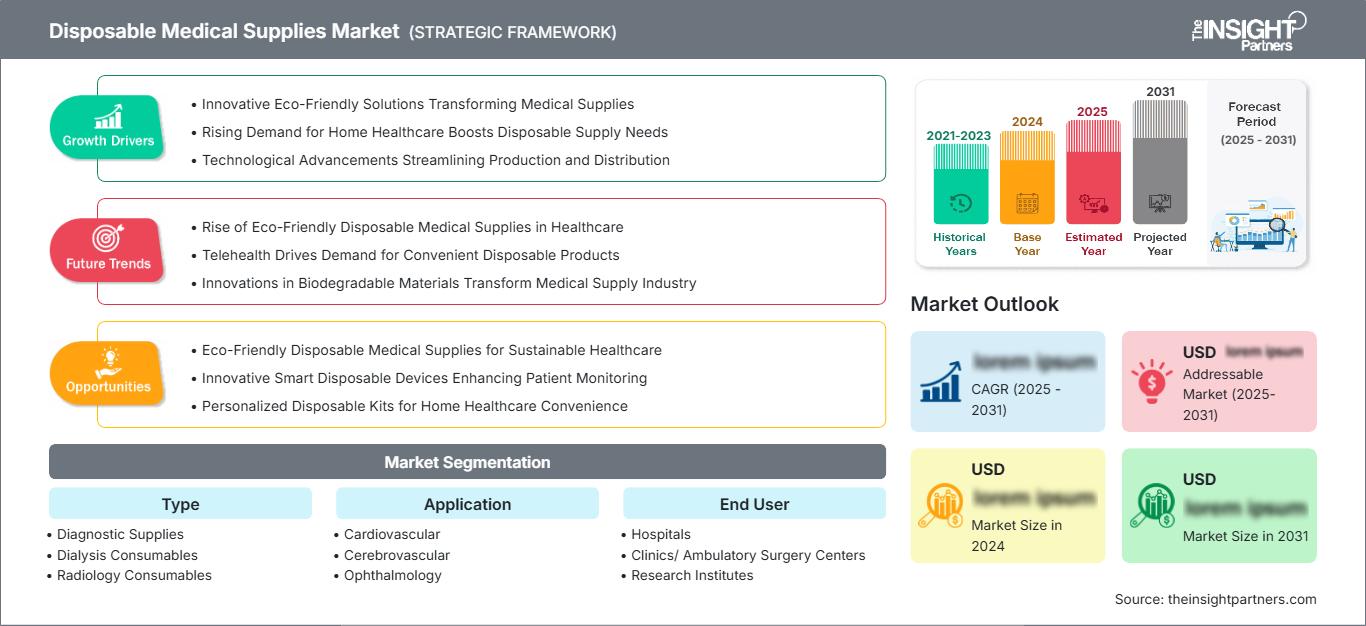
Disposable Medical Supplies Market: Strategic Insights
Regional Insights
North America Disposable Medical Supplies Market
North America accounts for the largest share of the Disposable Medical Supplies Market and is projected to expand at approximately 5.2% CAGR through 2034. Strong healthcare expenditure, extensive surgical procedure volumes, and strict infection-control standards support consistent product consumption. Hospitals and ambulatory surgery centers maintain high utilization rates for single-use consumables, reinforcing procurement stability across major product categories.
The regional demand is supplemented by the technological integration within the health care systems and increasing numbers of patients treated on an outpatient basis. The increase in the number of cases of cardiovascular diseases and orthopedic diseases is creating recurring demand for infusion therapy products, wound care products, and diagnostics supplies.
U.S. Disposable Medical Supplies Market
The United States represents roughly 75–80% of the North American Disposable Medical Supplies market and is expected to grow at an estimated 5.3% CAGR through the forecast period. The country's large healthcare infrastructure, substantial procedural volumes, and widespread adoption of infection-prevention protocols sustain demand across virtually all disposable product categories.
Major producers and suppliers have considerable presence within the United States, enabling product availability and development. The cardiovascular, orthopedic, gynecological, and ophthalmological areas continue to be very important in terms of demand. Growth in outpatient surgeries and home health care services continues to drive the use of disposables within the medical field.
Europe Disposable Medical Supplies Market
Europe contributes approximately 24–29% of global disposable medical supplies market revenue and is anticipated to record a CAGR near 5.1% through 2034. The region benefits from universal healthcare coverage across many countries, established procurement systems, and strong regulatory oversight. Infection prevention initiatives and aging populations continue to stimulate demand for high-quality disposable products.
Germany – the most important market in Europe – enjoys a high-quality hospital system, advanced use of medical equipment, and an active procedure base. There is continued high demand for products in the categories of sterilization consumables, wound care products, and diagnostics materials necessary for clinical procedures.
In the UK, there is continuous growth in the demand for medical supplies fueled by health system improvements and increased use of outpatient treatments. Purchasing practices tend to prefer those suppliers who can provide products that ensure quality assurance and environmental safety.
France, Italy, and Spain altogether constitute an important share of the regional demand. Growth is supported by chronic diseases management programs, improvements in the healthcare infrastructure, and increased use of disposable products to minimize cross-contamination risk.
APAC Disposable Medical Supplies Market
Asia Pacific is projected to be the fastest-growing regional disposable medical supplies market, accounting for approximately 22–27% of global revenue while advancing at a CAGR approaching 7.0%. Healthcare infrastructure expansion, growing healthcare expenditure, and rising procedural volumes continue to transform regional demand dynamics.
China continues to be the biggest market for APAC region because of the big investment in healthcare, manufacturing ability, and development of hospitals in the country. The government's healthcare programs aimed at making healthcare more accessible and up-to-date help to purchase disposable medical goods.
There are steady demands in Japan as a result of an older population and sophisticated healthcare system. South Korea also gains from being technologically developed and offering more specialized healthcare services. India is growing fast because of increased availability of healthcare services and more private healthcare investments in the country.
Middle East & Africa Disposable Medical Supplies Market
The Middle East & Africa disposable medical supplies market is expected to register a CAGR of approximately 6.1% through 2034. Healthcare infrastructure investments, population growth, and increasing access to specialized medical services are expanding demand for disposable healthcare products across the region.
Saudi Arabia is considered to be the leader in the market because of extensive efforts for modernizing healthcare systems and constant investments into building up hospitals. The country will continue developing its healthcare system as part of broader efforts aimed at economic diversification, and will increase purchasing of medical disposables.
The United Arab Emirates will be positively influenced by healthcare tourism, development of private healthcare, and advanced clinical infrastructure. South Africa will remain an important market in the African region owing to growing demands in the field of healthcare and public healthcare programs.
Segmentation Analysis
Type
- Diagnostic Supplies: Widely utilized across laboratory testing, disease screening, and patient monitoring applications. Demand is supported by increasing diagnostic volumes and growing emphasis on early disease detection within healthcare systems.
- Dialysis Consumables: Essential for renal care procedures and long-term kidney disease management. Expanding chronic kidney disease prevalence and increasing dialysis treatment access continue to drive sustained product utilization.
- Radiology Consumables: Includes disposable products used during imaging procedures. Growing diagnostic imaging volumes and increasing adoption of advanced imaging technologies support consistent consumption patterns.
- Infusion Products: Critical for medication administration, fluid management, and emergency care applications. Rising hospital admissions and chronic disease treatment requirements contribute to strong market demand.
- Intubation and Ventilation Supplies: Fundamental to critical care and respiratory treatment environments. Demand remains supported by intensive care requirements and expanding emergency healthcare preparedness initiatives.
- Hypodermic Products: Extensively used for injections, vaccination programs, and drug delivery procedures. Global immunization efforts and increasing injectable therapeutics contribute to market expansion.
- Sterilization Consumables: Support infection prevention and clinical safety across healthcare facilities. Regulatory compliance requirements and patient safety priorities continue to strengthen demand.
- Nonwoven Medical Supplies: Includes gowns, drapes, masks, and protective apparel. Strong infection-control focus and widespread procedural utilization make this a leading market segment.
- Wound Care Consumables: Used across acute and chronic wound management applications. Increasing surgical procedures and aging populations support ongoing segment growth.
Application
- Cardiovascular: High procedural volumes and growing prevalence of heart-related conditions create substantial demand for diagnostic, infusion, and surgical consumables.
- Cerebrovascular: Rising incidence of stroke and neurological interventions supports utilization of specialized disposable products across treatment pathways.
- Ophthalmology: Expanding cataract and vision-correction procedures contribute to steady demand for sterile and procedure-specific disposable supplies.
- Gynecology: Increasing women's healthcare services and diagnostic procedures support consumption of single-use medical products across clinical settings.
- Urology: Growing prevalence of urinary disorders and minimally invasive interventions drives demand for procedure-related disposable supplies.
- Orthopedics: Rising joint replacement procedures and trauma treatments support significant utilization of wound care, sterilization, and surgical consumables.
End User
- Hospitals: Largest end-user segment due to extensive procedural activity, inpatient care requirements, and broad utilization of disposable medical products.
- Clinics/ Ambulatory Surgery Centers: Rapidly expanding due to increasing outpatient procedures and cost-efficient care delivery models requiring single-use consumables.
- Research Institutes: Utilize disposable supplies for clinical studies, laboratory investigations, and healthcare innovation activities requiring contamination control.
Opportunity Snapshot
| End User | Revenue Contribution | Trend Tag | Adoption Stage |
| Hospitals | High | Infection Control | Mature |
| Clinics/ Ambulatory Surgery Centers | Medium | Outpatient Care | Scaling |
| Research Institutes | Low | Clinical Research | Emerging |
Disposable Medical Supplies Market Growth Drivers and Impact Analysis
Rising Global Focus on Infection Prevention and Patient Safety
Healthcare organizations remain focused on infection control programs designed to lower healthcare-acquired infections and provide better patient outcomes. Single-use medical devices help reduce the risk of contamination by avoiding product re-use and lessening dependence on the sterilization process. Regulatory agencies and accreditation organizations have started stressing the importance of infection prevention, pushing healthcare organizations to use more single-use products in their clinical departments.
The impact extends beyond hospitals into ambulatory surgery centers, specialty clinics, and home healthcare settings. Nonwoven medical products, sterilization consumables, and wound care products, among others, can directly benefit from the new clinical trends. Companies that can provide increased barrier protection and stable supplies are likely to grow in the future.
Expansion of Surgical and Minimally Invasive Procedures
Growing procedural volumes across cardiovascular, orthopedic, gynecological, ophthalmological, and urological specialties are increasing consumption of disposable medical products. Advances in surgical techniques have expanded treatment accessibility, while aging populations continue to generate higher procedural demand worldwide.
This trend results in repetitive needs for infusion devices, hypodermic devices, wound care products, and other procedural devices. Medical facilities are increasingly looking for standardized disposables that can help enhance efficiency and simplify operations. This demand facilitates the growth of the market in both developed and developing healthcare settings.
Healthcare Infrastructure Development in Emerging Economies
Many developing nations are investing substantially in hospitals, specialty clinics, diagnostic centers, and healthcare workforce expansion. Rising healthcare accessibility is generating increased demand for essential disposable products required across diagnostic, therapeutic, and surgical applications.
The market impact is particularly evident across Asia Pacific, the Middle East, and selected African countries. New healthcare facilities require reliable procurement channels and consistent product availability. Manufacturers expanding regional production and distribution capabilities are expected to benefit from increasing healthcare utilization and infrastructure modernization efforts.
Disposable Medical Supplies Market Future Trends
Sustainable and Environmentally Responsible Disposable Products
Sustainability is becoming an increasingly important factor in healthcare procurement strategies, with hospitals and healthcare providers evaluating environmental impact alongside product performance and cost efficiency. Manufacturers are responding by developing recyclable solutions, reducing packaging requirements, and implementing lower-carbon production practices while ensuring compliance with clinical safety standards.
The disposable medical supplies market trends highlight a growing shift toward the adoption of environmentally responsible disposable healthcare products. Future procurement decisions are expected to increasingly favor companies with strong sustainability initiatives and transparent environmental practices. Manufacturers that prioritize sustainable innovation are likely to enhance their market position while meeting evolving customer expectations and regulatory requirements.
Digital Supply Chain Integration and Smart Inventory Management
Digital technology has been used by healthcare providers to increase inventory visibility, procurement efficiency, and supply chain continuity. The procurement of disposable medical supplies is one of the most important aspects that healthcare organizations focus on to optimize inventory.
In the next few years, the implementation of predictive analytics, automated replenishment, and inventory monitoring systems is anticipated to affect procurement practices. Companies that can offer digital procurement ecosystems are more likely to have better relationships with customers. Supply chain transparency might be one of the factors that differentiate companies from one another.
Disposable Medical Supplies Market Opportunities
Expansion of Outpatient and Ambulatory Care Networks
Procedures shifting from traditional hospital settings to ambulatory surgery centers and outpatient clinics represent significant growth opportunities. In such facilities, disposables are a must to make the process efficient, prevent infections, and allow for a rapid turnover of patients without complicated sterilization.
Suppliers can take advantage of developing product portfolios that are developed for outpatient workflows and smaller facility procurement needs. Investments in targeted distribution strategies, customized packaging formats, and procedure-specific product bundles could help in stronger penetration in the market. As health systems focus on affordable care delivery, outpatient opportunities are expected to expand significantly.
Localization of Manufacturing and Supply Resilience Strategies
Healthcare providers and governments increasingly recognize the importance of resilient medical supply chains. This has created opportunities for regional manufacturing expansion and diversified sourcing strategies across disposable medical products.
Investment in local production facilities, inventories, and distribution networks can help organizations enhance their flexibility while minimizing disruption to their supply chain. This could also lead to improved regulatory compliance and enhanced procurement processes. As healthcare continues to focus on improving its supply security, having the ability to manufacture locally will remain a key strategic advantage.
Recent Developments
- December 2025: Medtronic plc announced U.S. FDA clearance of the Hugo robotic-assisted surgery system for urologic surgical procedures, expanding its surgical ecosystem and strengthening procedure-related consumables demand across operating rooms. The development supports broader integration of disposable surgical accessories and single-use procedural components within advanced surgical workflows.
- July 2025: BD (Becton, Dickinson and Company) announced the first pharma-sponsored clinical trial utilizing its BD Libertas wearable injector technology for biologic drug delivery. The initiative highlights continuing innovation in drug-device combination products and supports demand for advanced disposable injection and infusion-related solutions across healthcare settings.
- February 2025: Rockwell Medical, Inc. announced that the Company entered into a distribution services agreement (the "Agreement") with a leading manufacturer of medical equipment including hemodialysis machines, disposable products, and automated fluid balance systems (the "Partner"). Leveraging the Company's existing reliable distribution network and transportation subsidiary, Rockwell Medical will now be able to distribute a single-use bicarbonate cartridge to its customers at dialysis centers, hospital-based outpatient centers, and skilled nursing facilities.
Frequently Asked Questions

- Comprehensive Market Sizing and Forecast Analysis
- Detailed Segmentation Analysis
- In-Depth Market Dynamics Assessment
- Regional and Country-Level Insights
- Competitive Landscape and Company Benchmarking
- Strategic Business Intelligence
Recent Reports
Testimonials

The Insight Partners provided valuable market intelligence that supported our global go-to-market strategy. Their team was professional, responsive, and attentive to our feedback, providing thoughtful analysis and helpful methodological clarifications throughout the project.
Junmo Kim Chief Financial Officer (CFO), Enertech Co., Ltd.
The Insight Partners' SCADA System Market report is comprehensive, with valuable insights on current trends and future forecasts. The team was highly professional, responsive, and supportive throughout. We are very satisfied and highly recommend their services.
RAN KEDEM Partner, Reali Technologies LTDs
I requested a report on a very specific software market and the team produced the report in a few days. The information was very relevant and well presented. I then requested some changes and additions to the report. The team was again very responsive and I got the final report in less than a week.
JEAN-HERVE JENN Chairman, Future Analytica
We worked with The Insight Partners for an important market study and forecast. They gave us clear insights into opportunities and risks, which helped shape our plans. Their research was easy to use and based on solid data. It helped us make smart, confident decisions. We highly recommend them.
PIYUSH NAGPAL Sr. Vice President, High Beam Global
The Insight Partners delivered insightful, well-structured market research with strong domain expertise. Their team was professional and responsive throughout. The user-friendly website made accessing industry reports seamless. We highly recommend them for reliable, high-quality research services
YUKIHIKO ADACHI CEO, Deep Blue, LLC.
This is the first time I have purchased a market report from The Insight Partners.While I was unsure at first, I visited their web site and felt more comfortable to take the risk and purchase a market report.I am completely satisfied with the quality of the report and customer service. I had several questions and comments with the initial report, but after a couple of dialogs over email with their analyst I believe I have a report that I can use as input to our strategic planning process.Thank you so much for taking the extra time and making this a positive experience.I will definitely recommend your service to others and you will be my first call when we need further market data.
JOHN SUZUKI President and Chief Executive Officer, Board Director, BK Technologies
I wish to appreciate your support and the professionalism you displayed in the course of attending to my request for information regarding to infectious disease IVD market in Nigeria. I appreciate your patience, your guidance, and the fact that you were willing to offer a discount, which eventually made it possible for us to close a deal. I look forward to engaging The Insight Partners in the future, all thanks to the impression you have created in me as a result of this first encounter.
DR CHIJIOKE ONYIA MANAGING DIRECTOR, PineCrest Healthcare Ltd.Reason to Buy
- Informed Decision-Making
- Understanding Market Dynamics
- Competitive Analysis
- Identifying Emerging Markets
- Customer Insights
- Market Forecasts
- Risk Mitigation
- Boosting Operational Efficiency
- Strategic Planning
- Investment Justification
- Tracking Industry Innovations
- Aligning with Regulatory Trends





 Get Free Sample for