
Electrochromic Glass Market Growth, Trends & Demand by 2034
Coverage: by Type (Polymer Dispersed Liquid Crystal, Suspended Particle Device, Others); Application (Windows, Mirror, Display); End-Use Industry (Automotive, Aerospace, Building and Construction, Others), and Geography (North America, Europe, Asia Pacific, and South and Central America)
- Status : Data Released
- Report Code : TIPRE00009490
- Category : Chemicals and Materials
- No. of Pages : 150
- Available Report Formats :


- Last update date : August 10, 2026


2025 Market Size
US$ 2.16 Bn
Base year value
2034 Forecast
US$ 3.68 Bn
Projected by 2034
CAGR 2026-2034
6.14 %
Growth rate
Addressable Market
US$ 26.50 Bn
(2026-2034)
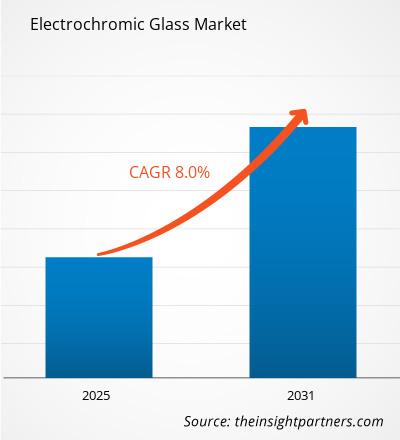
The Electrochromic Glass Market size was valued at US$ 2.16 Billion in 2025 and is projected to reach US$ 3.68 Billion by 2034; it is expected to register a CAGR of 6.14% during 2026–2034. The market includes electronically controlled glazing solutions that regulate light transmission, solar heat gain, and privacy through electrochemical switching mechanisms. Increasing adoption of smart building technologies, energy-efficient vehicles, and advanced architectural materials is influencing demand across multiple industries.
The North American Electrochromic Glass Market size is supported by increasing integration of dynamic glazing systems in commercial buildings, premium automobiles, and aerospace applications. The region is estimated to expand at a CAGR range of 5.8–6.8% between 2026–2034, supported by green building standards, energy conservation initiatives, and investments in smart infrastructure. Growing preference for automated glass solutions is further encouraging adoption among architects, automotive manufacturers, and facility developers.
Electrochromic Glass Market Assessment and Insights
- North America accounted for an estimated share of 30–34% in 2025 and is projected to grow at a CAGR range of 5.8–6.8% during 2026–2034. Demand is supported by smart buildings, automotive applications, aerospace innovation, and energy efficiency regulations.
- US: The US represented approximately a 24–28% share in 2025 and is expected to register a CAGR range of 5.9–6.9% during 2026–2034, driven by commercial construction, electric vehicles, and advanced aircraft glazing adoption.
- Europe held an estimated share of 27–31% in 2025 and is forecast to grow at a CAGR range of 5.4–6.4% during 2026–2034. Germany, France, the UK, and Italy are contributing through sustainable buildings and premium automotive applications.
- Asia Pacific captured approximately a 26–30% share in 2025 and is expected to expand at a CAGR range of 6.5–7.5% during 2026–2034. China, Japan, South Korea, and India are supporting growth through construction modernization and vehicle electrification.
- Largest Segment: Automotive represented the largest segment with an estimated market share of 35–40% in 2025 and is projected to grow at a CAGR range of 6.2–7.2% during 2026–2034.
- High Growth Segment: Building and Construction accounted for approximately a 30–35% share in 2025 and is expected to grow at a CAGR range of 6.6–7.6% during 2026–2034 due to smart building adoption.
- Key companies analyzed in detail: AGC Inc., ChromoGenics AB, Compagnie de Saint-Gobain S.A., Resonac Corporation, Kinestral Technologies, Inc., Pleotint LLC, Polytronix, Inc., Research Frontiers Incorporated, Smartglass International Ltd., View, Inc.
Source: The Insight Partners' analysis based on proprietary research, government publications, company annual reports, investor presentations, industry databases, and expert interviews.
Electrochromic Glass Market evolution has been shaped by improvements in thin-film coatings, electrochemical materials, manufacturing precision, and integration with building automation platforms. Early applications focused on premium architectural projects, while advancements in switching speed, durability, and control systems have expanded adoption across automotive and aerospace sectors. Manufacturers are increasingly optimizing production processes to reduce costs and improve optical performance, enabling broader commercial deployment of dynamic glazing technologies.
Future expansion of the Electrochromic Glass Market will be influenced by increasing investments in sustainable infrastructure, smart mobility solutions, and energy-efficient construction practices. Emerging economies are creating new opportunities through urban development and green building initiatives. Supportive policies related to carbon reduction and energy conservation are encouraging technology adoption, while collaborations between glass manufacturers, technology providers, and construction stakeholders are expected to accelerate product innovation.
Electrochromic Glass Market Report Scope
| Report Attribute | Details |
|---|---|
| Market size in 2025 | US$ 2.16 Billion |
| Market Size by 2034 | US$ 3.68 Billion |
| Global CAGR (2026 - 2034) | 6.14% |
| Historical Data | 2021-2024 |
| Forecast period | 2026-2034 |
Electrochromic Glass Market Analysis
The Electrochromic Glass Market growth is influenced by rising demand for energy-efficient glazing systems, enhanced passenger comfort solutions, and automated building management technologies. Dynamic glass enables controlled solar transmission, reducing dependence on artificial lighting and climate control systems. Increasing focus on reducing building energy consumption and improving vehicle cabin experiences is supporting adoption across commercial, residential, automotive, and aerospace applications. The ecosystem includes raw material suppliers, coating technology developers, glass manufacturers, system integrators, and end users.
Production activities depend on specialized materials, including electrochromic coatings, conductive layers, transparent electrodes, and advanced glass substrates. Supply chain efficiency is influenced by coating expertise, manufacturing scalability, and integration capabilities. Companies are investing in process improvements to enhance switching durability, color range, and response times. Growing collaboration between material suppliers and application developers is enabling customized solutions for different environmental and performance requirements.
The Electrochromic Glass Market analysis indicates increasing competition among established glass manufacturers, technology innovators, and smart glazing specialists. Companies such as AGC Inc., Compagnie de Saint-Gobain S.A., and Research Frontiers Incorporated are strengthening their positions through technology development and application diversification. Kinestral Technologies, Inc., View, Inc., and Pleotint LLC are focusing on advanced smart glass solutions for commercial and transportation applications.
Strategic investments are centered on improving manufacturing capacity, expanding geographic presence, and developing integrated control systems. ChromoGenics AB and Smartglass International Ltd. contribute through specialized electrochromic solutions, while Resonac Corporation and Polytronix, Inc. support material and technology advancements. Competitive differentiation is increasingly based on product reliability, energy performance, installation flexibility, and compatibility with smart infrastructure systems.
● REPORT CUSTOMIZATION
Tailor This Report To Align With Your Specific Business Requirements
This report can be customized to align precisely with your business objectives, scope, and target markets. Customization options include tailored segmentation, geography, competitive analysis, and strategic insights to support informed decision-making.
Customize This Report →WHAT YOU CAN ADJUST
- ● Segmentations
- ● Geography
- ● Competitive Analysis
- ● Language Preferences
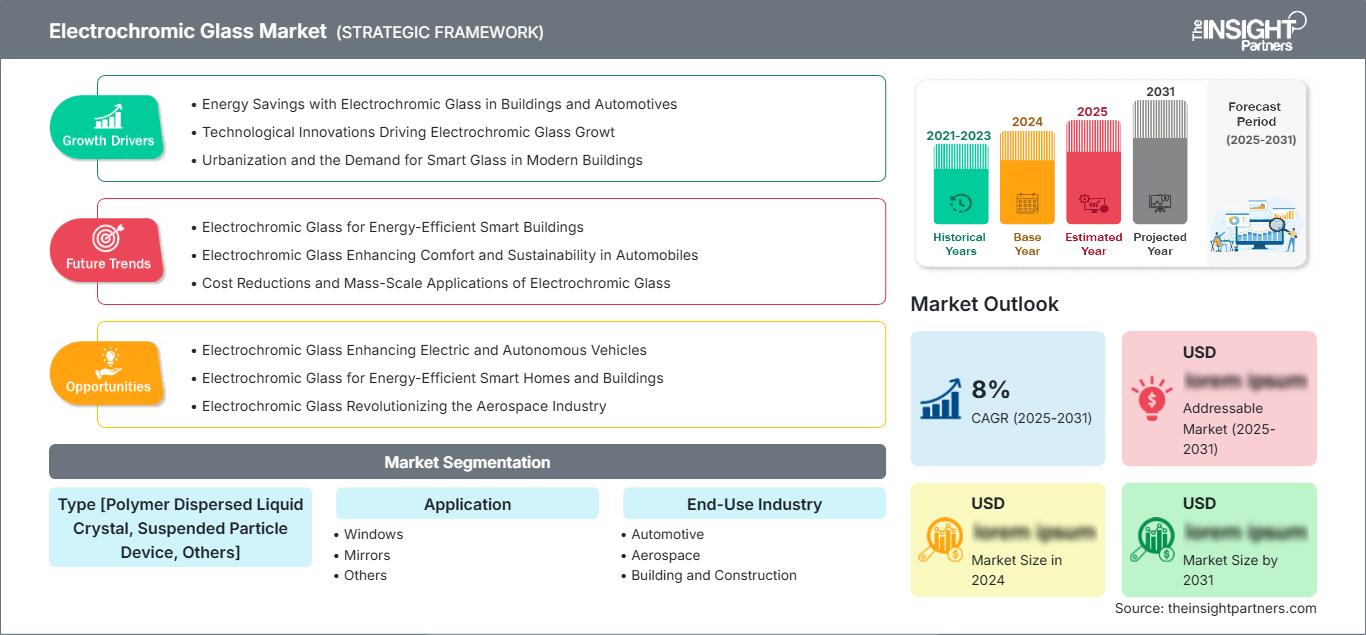
Electrochromic Glass Market: Strategic Insights
Regional Insights
North America Electrochromic Glass Market
North America accounted for an estimated share of 30–34% in 2025 and is projected to expand at a CAGR range of 5.8–6.8% during 2026–2034. The region benefits from strong adoption of energy-efficient construction materials, smart building automation, and advanced automotive technologies. Government initiatives promoting lower building emissions and improved energy management are supporting demand for electronically controlled glazing solutions across commercial infrastructure.
The US remains the leading contributor within the region, supported by investments in green buildings, premium vehicles, aerospace modernization, and intelligent architecture. Major technology developers and glass manufacturers are expanding applications through partnerships with construction firms and automotive suppliers. Increasing emphasis on reducing operational energy costs and improving occupant comfort is expected to sustain regional adoption through the forecast period, with North America maintaining a significant position in global deployment.
U.S. Electrochromic Glass Market
The U.S. represented approximately 24–28% of the Electrochromic Glass Market share of North America in 2025 and is anticipated to register a CAGR range of 5.9–6.9% during 2026–2034. Demand is supported by commercial real estate modernization, sustainable building certifications, and growing adoption of smart glazing systems in premium vehicle models. Federal and state-level efficiency programs are encouraging developers to integrate technologies that improve building performance.
Companies including View, Inc., Research Frontiers Incorporated, and Kinestral Technologies, Inc. maintain a presence in the US market through advanced glazing solutions for architectural and transportation applications. Automotive manufacturers are increasingly exploring electronically adjustable glass for enhanced passenger experience, while aerospace applications are expanding through lightweight and energy-efficient cabin solutions. The combination of technological innovation, construction activity, and sustainability targets continues to strengthen market opportunities across the country.
Europe Electrochromic Glass Market
Europe held around 27–31% share of the market in 2025 and is forecast to exhibit a CAGR of 5.4–6.4% from 2026 to 2034. Germany continues to be the key player owing to its expertise in automotive engineering, industrial automation, and sustainable construction. France, the UK, Italy, and Spain are also making their contributions through commercial construction and renovations, and energy-efficient buildings.
The UK market is influenced by increasing adoption of low-energy buildings and renovation activities focused on improving thermal performance. Germany continues to meet the requirement through its premium vehicles and advanced manufacturing capabilities. France, Italy, and Spain have begun adopting the product gradually across their commercial construction, hospitality, and transportation sectors. Europe's focus on reducing building energy requirements and improving carbon efficiency is driving the adoption of smart glazing technology across various applications.
APAC Electrochromic Glass Market
The APAC region holds roughly a 26% to 30% share in 2025 and is forecast to grow at a CAGR of 6.5% to 7.5% from 2026 to 2034. The demand for smart glazing in China is driven by urbanization, the growth of smart cities, and construction activity.
India and Australia are making slow yet steady progress toward adopting smart glazing technology, driven by the development of their commercial infrastructure and energy-efficient buildings. With favorable government policies promoting sustainable construction and the modernization of transportation infrastructure, the region’s growing manufacturing base and investment in intelligent building systems should bolster its market presence.
Middle East & Africa Electrochromic Glass Market
The Middle East & Africa are set to capture a developing market share in 2025 and have the potential to grow at a compound annual growth rate (CAGR) of 4.8 to 5.8 percent between 2026 and 2034. Both Saudi Arabia and the UAE are setting trends through massive infrastructure development, luxurious building designs, and energy-efficient architectural plans.
South Africa is slowly considering electronically controlled glazing for commercial and premium constructions. The growth drivers for this market include energy management needs, climate change, and infrastructure advancements. The reduction in cooling requirements in buildings has spurred the need for technologies that control heat transfer while remaining aesthetically pleasing.
Segmentation Analysis
Type
The Type segment of the Electrochromic Glass Market is expected to grow at a CAGR range of 5.8–6.8% during 2026–2034. Different electrochromic technologies are being adopted based on switching performance, transparency control, durability, and application requirements. Manufacturers are focusing on improving response time, optical quality, and scalability to support broader commercial and industrial deployment.
- Polymer Dispersed Liquid Crystal: Solutions are preferred where rapid switching between transparent and opaque states is required. These materials support privacy glass applications and are increasingly integrated into architectural environments requiring flexible visual control.
- Suspended Particle Device: Technology provides adjustable light transmission and enhanced user control. It is widely considered for premium automotive and architectural applications where variable shading and passenger comfort are important performance factors.
- Other: Technologies include alternative electrochromic approaches developed for specialized applications. These solutions contribute to innovation by addressing specific requirements related to optical performance, energy management, and application-specific glazing needs.
Application
The Application segment is projected to register a CAGR range of 6.0–7.0% during 2026–2034. Increasing integration of smart glass into vehicles, buildings, and specialty applications is improving energy efficiency, privacy control, and user experience. The segment continues evolving through advancements in automation systems and connectivity features.
- Windows: Represent a major application area due to demand for energy-saving solutions in commercial and residential buildings. Smart windows help regulate sunlight exposure, improve indoor comfort, and support sustainable architecture initiatives.
- Mirrors: Increasingly adopting electrochromic technologies for applications requiring adjustable reflectivity and enhanced user convenience. Automotive rear-view mirror systems represent a significant area where glare reduction improves safety.
- Other: Applications include specialized uses in transportation, aerospace, and interior design. These solutions support customized requirements where controlled transparency, privacy, and aesthetic functionality are important considerations.
End-Use Industry
The End-Use Industry is projected to grow at a CAGR of 6.1–7.1% between 2026 and 2034. Focusing on energy efficiency, mobility, and intelligent infrastructure is encouraging usage in several industries. The Electrochromic Glass Market scope is widening due to demand for materials that combine functionality with environmental performance.
- Automotive: Applications maintain strong demand due to increasing adoption of smart glazing in premium vehicles. Manufacturers are incorporating electronically controlled glass to improve passenger comfort, reduce heat exposure, and enhance vehicle aesthetics.
- Aerospace: Applications are supported by demand for lightweight cabin solutions and improved passenger experience. Electrochromic technologies are being evaluated for aircraft windows to provide adjustable shading and better thermal management.
- Building and Construction: Applications are growing through smart building projects and energy-efficient architecture. Developers are integrating dynamic glazing solutions to optimize daylight management, reduce cooling loads, and improve building sustainability.
- Other: Industries include specialized transportation and design applications where controlled light transmission and privacy features provide operational advantages. These uses continue developing as technology costs decline and system integration improves.
Opportunity Snapshot
| End-Use Industry | Revenue Contribution (High/Medium/Low) | Trend Tag | Adoption Stage |
| Automotive | High | Smart Vehicles | Scaling |
| Aerospace | Medium | Cabin Comfort | Emerging |
| Building and Construction | High | Green Buildings | Scaling |
| Others | Low | Specialty Uses | Emerging |
Electrochromic Glass Market Growth Drivers and Impact Analysis
Increasing demand for energy-efficient building solutions
The growing importance of reducing energy use in buildings has led to increased demand for dynamic glazing. Smart glass technologies have been adopted in commercial and institutional buildings to regulate the amount of solar heat entering the premises, optimize natural light usage, and minimize reliance on mechanical cooling systems. With green building codes and sustainability goals driving design, the use of electronically controlled glazing in the construction and redevelopment of facilities has been encouraged. It is beneficial in enhancing occupant comfort and meeting efficiency goals. With efforts to reduce carbon emissions gaining traction, the use of glazing technology will grow in office complexes, airports, hotels, and major infrastructure projects.
Growing integration of smart glass in automotive applications
Automobile manufacturers are increasingly using advanced glazing technology to improve the functionality, design, and experience of their vehicles. The use of electrochromic technology enables adjustments in transparency, reduced glare, and improved thermal management, making it suitable for premium automobiles and future mobility solutions. The increase in production of electric automobiles has further boosted the demand for this technology due to its suitability in terms of weight and efficiency. With its integration into digital systems and the connectivity of automobiles, there are emerging opportunities beyond its use in mirrors and windows. As automotive companies continue investing in differentiated features, electronically controlled glass is expected to gain greater acceptance in high-value vehicle segments and specialized transportation applications.
Advancements in material technologies and manufacturing processes
Continuous innovations in electrochromic materials, coatings, and manufacturing have improved product performance and market viability. Companies are now concentrating on improvements in switching speed, durability, optical performance, and scalable manufacturing to overcome problems that arose from past technology. Innovations in thin-film deposition and smart control systems are facilitating the implementation of the technology in larger glass and a variety of applications. Cost savings from improved manufacturing efficiency are also making the products more affordable for use across a wider range of industries. With technology vendors working alongside glass manufacturers and end users, new products have been designed for architectural, automotive, and aerospace applications.
Electrochromic Glass Market Future Trends
Integration of smart glazing with connected building ecosystems
The Electrochromic Glass Market trends are increasingly influenced by integration with intelligent building management systems, Internet of Things platforms, and automated climate control technologies. The next generation of smart buildings will feature glazing systems that automatically respond to sunlight intensity, occupancy behavior, and energy demand. With integration with sensors and intelligent control systems, buildings can be made efficient and comfortable for occupants. There are efforts to develop integrated systems that integrate lighting, ventilation, heating, and glazing controls. The development will definitely boost usage in commercial properties, airports, and luxury real estate projects amid growing digital transformation in the construction industry.
Expansion of advanced glazing applications in mobility sectors
Future growth will be driven by the wider adoption of electrochromic glass in electric cars, aircraft cabins, and advanced transport solutions. Companies are researching new lightweight, energy-efficient glazing products that offer a better passenger experience and reduced thermal load. Car makers are focusing on luxury interiors and personalized features, which create opportunities to integrate smart glass into their products. Aerospace manufacturers are also investigating advanced windows that provide shade and improve the cabin environment. With efficiency, automation, and customer experience being prioritized by the transport industry, electrochromic technology might evolve from its conventional applications to become an integral part of future mobility solutions.
Electrochromic Glass Market Opportunities
Expansion into emerging smart city infrastructure projects
Electrochromic Glass Market Forecasts indicate growth driven by the implementation of smart cities and sustainable urban development projects in emerging markets. Urbanization in the APAC, MEA, and Latin America regions has generated a need for energy-efficient building materials. Intelligent buildings, transport facilities, and business centers have been constructed in these regions where electrochromic glass will play an important role in energy management. Organizations can tap into these prospects by offering affordable solutions, building regional partnerships, and designing their products according to the construction practices of each region. Growth through emerging-market ventures can also be a strategy, as sustainability-based infrastructure investments are increasing worldwide.
Development of customized solutions for specialized industries
Manufacturers have opportunities to develop application-specific electrochromic solutions for aerospace, automotive, and advanced architectural projects. Customization based on size, optical performance, switching characteristics, and integration requirements can help companies address diverse customer needs. Automotive premium carmakers and aviation industry suppliers are looking for innovations to make vehicles more comfortable and efficient. In addition, architects have been designing specialized glass for high-performance buildings. Firms that engage in research, collaboration, and flexible manufacturing will be able to better secure their competitive advantage. Customized product development is expected to become increasingly crucial as users seek products tailored to specific environments and objectives.
Recent Developments
- March 2025: Miru Smart Technologies has launched one of the largest electrochromic sunroof window devices for the automotive industry, utilizing Argotec's advanced TPU films. This development highlights the scalability and commercial potential of their innovative and sustainable window solutions for future vehicle designs.
- February 2025: SageGlass, a subsidiary of Saint-Gobain, has launched RealTone™, the first neutral electrochromic glass solution. This product addresses architectural concerns by eliminating the common “blue hue” found in electrochromic glass, while maintaining the performance standards established by SageGlass.
Frequently Asked Questions

- Comprehensive Market Sizing and Forecast Analysis
- Detailed Segmentation Analysis
- In-Depth Market Dynamics Assessment
- Regional and Country-Level Insights
- Competitive Landscape and Company Benchmarking
- Strategic Business Intelligence
Recent Reports
Testimonials

The Insight Partners' SCADA System Market report is comprehensive, with valuable insights on current trends and future forecasts. The team was highly professional, responsive, and supportive throughout. We are very satisfied and highly recommend their services.
RAN KEDEM Partner, Reali Technologies LTDs
I requested a report on a very specific software market and the team produced the report in a few days. The information was very relevant and well presented. I then requested some changes and additions to the report. The team was again very responsive and I got the final report in less than a week.
JEAN-HERVE JENN Chairman, Future Analytica
We worked with The Insight Partners for an important market study and forecast. They gave us clear insights into opportunities and risks, which helped shape our plans. Their research was easy to use and based on solid data. It helped us make smart, confident decisions. We highly recommend them.
PIYUSH NAGPAL Sr. Vice President, High Beam Global
The Insight Partners delivered insightful, well-structured market research with strong domain expertise. Their team was professional and responsive throughout. The user-friendly website made accessing industry reports seamless. We highly recommend them for reliable, high-quality research services
YUKIHIKO ADACHI CEO, Deep Blue, LLC.
This is the first time I have purchased a market report from The Insight Partners.While I was unsure at first, I visited their web site and felt more comfortable to take the risk and purchase a market report.I am completely satisfied with the quality of the report and customer service. I had several questions and comments with the initial report, but after a couple of dialogs over email with their analyst I believe I have a report that I can use as input to our strategic planning process.Thank you so much for taking the extra time and making this a positive experience.I will definitely recommend your service to others and you will be my first call when we need further market data.
JOHN SUZUKI President and Chief Executive Officer, Board Director, BK Technologies
I wish to appreciate your support and the professionalism you displayed in the course of attending to my request for information regarding to infectious disease IVD market in Nigeria. I appreciate your patience, your guidance, and the fact that you were willing to offer a discount, which eventually made it possible for us to close a deal. I look forward to engaging The Insight Partners in the future, all thanks to the impression you have created in me as a result of this first encounter.
DR CHIJIOKE ONYIA MANAGING DIRECTOR, PineCrest Healthcare Ltd.Reason to Buy
- Informed Decision-Making
- Understanding Market Dynamics
- Competitive Analysis
- Identifying Emerging Markets
- Customer Insights
- Market Forecasts
- Risk Mitigation
- Boosting Operational Efficiency
- Strategic Planning
- Investment Justification
- Tracking Industry Innovations
- Aligning with Regulatory Trends





 Get Free Sample for