
Electronic Pill Box Market Growth, Trends & Demand by 2034
Coverage: By Type (Wire, Wireless); Indication (Dementia, Parkinson's Disease, Cancer Management, Diabetes Care, Geriatric Care, Others); End User (Senior Care and Assisted Living, Long Term Care Centers, Home Care Settings), and Geography (North America, Europe, Asia Pacific, and South and Central America)
- Status : Data Released
- Report Code : TIPRE00015776
- Category : Life Sciences
- No. of Pages : 150
- Available Report Formats :


- Last update date : July 08, 2026


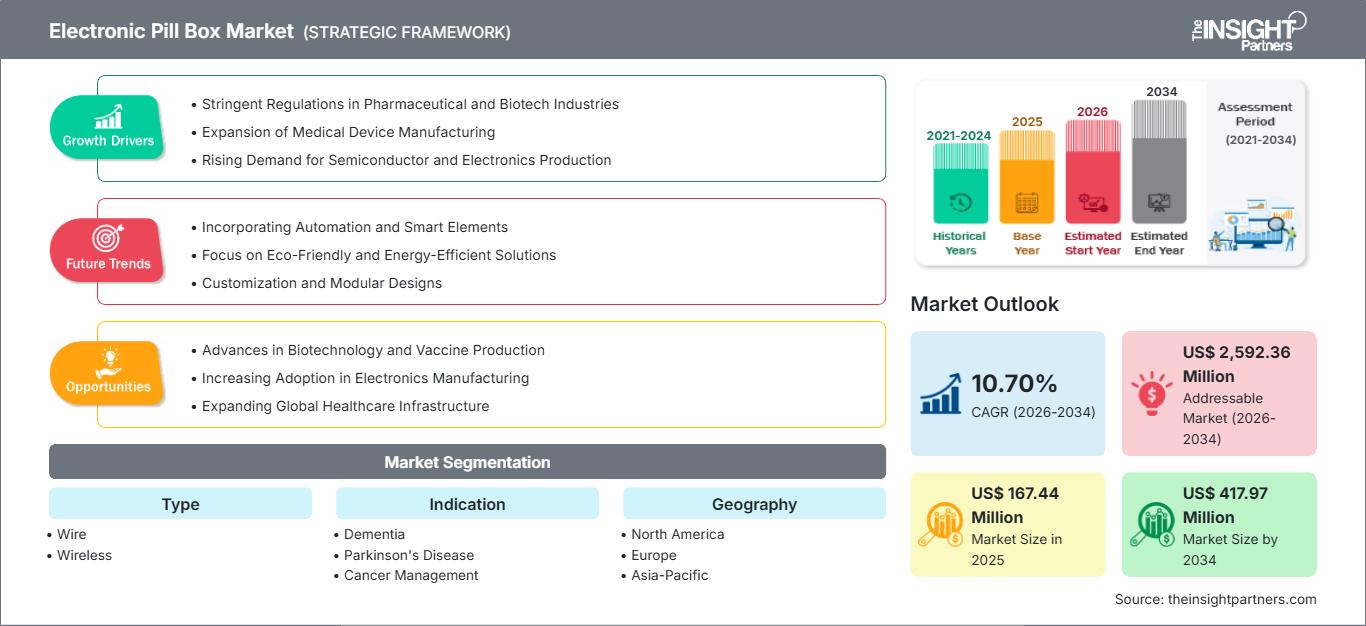
2025 Market Size
US$ 167.44 Mn
Base year value
2034 Forecast
US$ 417.97 Mn
Projected by 2034
CAGR 2026-2034
10.70 %
Growth rate
Addressable Market
US$ 2,592.36 Mn
(2026-2034)
The electronic pill box market size was valued at US$ 167.44 Million in 2025 and is projected to reach US$ 417.97 Million by 2034, registering a CAGR of 10.70% during 2026–2034. Growing emphasis on medication adherence, expanding elderly populations, and the integration of connected healthcare technologies are strengthening the demand. Healthcare providers and caregivers are increasingly adopting intelligent medication management solutions to reduce missed doses, improve treatment outcomes, and support chronic disease management across homecare and institutional settings.
North America is expected to maintain its leadership throughout the forecast period, expanding at an estimated CAGR of 10.2–10.8% during 2026–2034. The region benefits from high adoption of digital health technologies, increasing prevalence of chronic illnesses, and supportive reimbursement initiatives for remote patient monitoring. Rising investments in connected healthcare infrastructure and expanding home-based elderly care programs continue to reinforce demand for intelligent medication adherence devices.
Electronic Pill Box Market Assessment and Insights
- North America: Accounted for 36–40% electronic pill box market share in 2025 and is anticipated to expand at a CAGR of 10.2–10.8% during 2026–2034, supported by widespread digital healthcare adoption, aging demographics, and growing implementation of remote patient monitoring solutions.
- U.S.: Represented 78–82% of the North American market in 2025 and is projected to grow at a CAGR of 10.3–10.9% during 2026–2034, driven by increasing chronic disease prevalence, healthcare digitization, and strong penetration of connected medication management systems.
- Europe: Held 26–30% share in 2025 and is expected to record a CAGR of 9.8–10.4% during 2026–2034. Germany, the UK, and France remain leading markets due to advanced healthcare infrastructure, favorable aging demographics, and expanding digital health initiatives.
- Asia Pacific: Captured 22–26% share in 2025 and is forecast to register a CAGR of 11.8–12.5% during 2026–2034. China, Japan, South Korea, and India are witnessing increasing adoption through healthcare modernization, rising chronic disease burden, and supportive digital healthcare investments.
- Largest Segment: Wireless electronic pill boxes accounted for 56–60% market share in 2025 and are projected to grow at a CAGR of 11.0–11.6% during 2026–2034, reflecting increasing demand for cloud-connected medication adherence platforms.
- High Growth Segment: Diabetes Care represented 18–22% of electronic pill box market share in 2025 and is expected to advance at a CAGR of 12.3–13.0% during 2026–2034, supported by expanding diabetic populations and greater emphasis on long-term medication compliance.
- Key companies analyzed in detail: Koninklijke Philips N.V., MedMinder Systems, Inc., PharmRight Corporation, Medipense Inc., e-pill, LLC, Pillo Health, Inc., PillDrill, Inc., Medfolio LLC, Robotik Technology Ltd., Vaica Medical Ltd.
Source: The Insight Partners' analysis based on proprietary research, government publications, company annual reports, investor presentations, industry databases, and expert interviews.
Continuous improvements in interconnected health technology innovations have advanced the capability of electronic pill boxes from mere alarm systems to smart medication management systems with features that include adherence monitoring, caregiver notifications, cloud analytics, and telemedicine application integration. There are efforts to integrate wireless capabilities, mobile apps, automated dispensing, and AI-powered reminders in order to enhance compliance among patients suffering from chronic illnesses. Manufacturing methods are also becoming increasingly modularized in terms of electronics and software systems that are designed to accommodate customized needs of hospitals, nursing homes, and home healthcare services and minimize costs in system life cycle maintenance.
Going forward, future growth will likely result from growing digitization of healthcare in emerging markets, increased investments in remote patient monitoring ecosystem, and encouragement for digital therapeutics via regulations. Healthcare systems are focusing on preventive measures and medication adherence to avoid unnecessary hospitalization, which provides additional opportunities for connected medication management solutions. With improvements in healthcare interoperability standards and changes in reimbursement practices, companies are expected to increase innovation in the healthcare software platforms.
Electronic Pill Box Market Report Scope
| Report Attribute | Details |
|---|---|
| Market size in 2025 | US$ 167.44 Million |
| Market Size by 2034 | US$ 417.97 Million |
| Global CAGR (2026 - 2034) | 10.70% |
| Historical Data | 2021-2024 |
| Forecast period | 2026-2034 |
Electronic Pill Box Market Analysis
With rise in chronic diseases prevalence, there is high demand for the medication adherence technology throughout the globe. Diabetes, Parkinson's disease, dementia, and cancer are usually associated with complex medication regimes which may prove challenging to both patients and caregivers. The electronic pillboxes are meeting the requirements through automation of reminders, medication scheduling, caregiver alerting and cloud monitoring. Increased growth in the home healthcare market, aging population and remote patient monitoring are some of the factors influencing the value chain for suppliers, software developers, health care organization, pharmacies, distributors and digital health care service providers.
On the supply side, there has been rising reliance on innovations in the wireless communication modules, batteries, sensors and cloud security. Manufacturers have been concentrating on compliance of their devices with the health care standards as well as cybersecurity and interoperability to achieve effective medication management. There has been increasing collaboration among health care providers, insurers and digital health organizations.
Competition within the electronic pill box market is characterized by continuous product innovation, strategic partnerships, software integration, and expansion into remote healthcare ecosystems. The electronic pill box market report focuses on key players including Koninklijke Philips N.V. leverages its broader connected healthcare portfolio to strengthen medication management capabilities, while MedMinder Systems, Inc. and PharmRight Corporation continue expanding automated adherence solutions for healthcare organizations. Medipense Inc., e-pill, LLC, Pillo Health, Inc., PillDrill, Inc., Medfolio LLC, Robotik Technology Ltd., and Vaica Medical Ltd. remain focused on specialized dispensing technologies, caregiver connectivity, and chronic disease management applications.
Investment activity increasingly targets artificial intelligence, Internet of Things connectivity, cloud-based healthcare analytics, and digital therapeutic platforms that improve medication adherence outcomes. Companies are strengthening competitive positioning through recurring software revenues, subscription-based monitoring services, and partnerships with pharmacies, insurers, and healthcare systems. These strategic initiatives are enhancing product differentiation while supporting long-term commercial expansion across both mature healthcare markets and rapidly digitizing emerging economies.
● REPORT CUSTOMIZATION
Tailor This Report To Align With Your Specific Business Requirements
This report can be customized to align precisely with your business objectives, scope, and target markets. Customization options include tailored segmentation, geography, competitive analysis, and strategic insights to support informed decision-making.
Customize This Report →WHAT YOU CAN ADJUST
- ● Segmentations
- ● Geography
- ● Competitive Analysis
- ● Language Preferences
Electronic Pill Box Market: Strategic Insights
Regional Insights
North America Electronic Pill Box Market
North America accounted for 36–40% of the electronic pill box market in 2025 and is projected to expand at a CAGR of 10.2–10.8% during 2026–2034. The region benefits from advanced healthcare infrastructure, widespread adoption of remote patient monitoring, and growing awareness regarding medication adherence. Increasing prevalence of chronic diseases, coupled with a rapidly aging population, continues to support demand for connected medication management devices across hospitals, long-term care facilities, and home healthcare environments.
Healthcare providers are increasingly integrating electronic pill boxes into broader digital health ecosystems to improve patient outcomes and reduce avoidable hospital admissions caused by medication non-adherence. Government initiatives supporting telehealth services, higher healthcare expenditure, and expanding reimbursement for remote care further encourage adoption. Technology vendors are also collaborating with pharmacies, insurance providers, and healthcare organizations to enhance patient engagement through cloud-based medication monitoring, automated reminders, and caregiver notification platforms.
U.S. Electronic Pill Box Market
The U.S. represented 78–82% of the electronic pill box market in North America in 2025 and is anticipated to register a CAGR of 10.3–10.9% during 2026–2034. High healthcare spending, favorable digital health adoption, and the growing burden of diabetes, cardiovascular diseases, dementia, and Parkinson's disease continue to stimulate market demand. Healthcare providers increasingly deploy connected medication adherence technologies to improve treatment compliance while reducing healthcare costs associated with medication errors and hospital readmissions.
The country also hosts several leading manufacturers and digital health innovators that continuously invest in software-enabled medication management solutions. Integration with electronic health records, mobile healthcare applications, and telemedicine platforms is becoming increasingly common. Rising consumer acceptance of smart home healthcare devices and expanding home-based elderly care services further strengthen the long-term outlook for electronic pill box adoption across the United States.
Europe Electronic Pill Box Market
Europe held 26–30% of the global market in 2025 and the electronic pill box market forecast is expected to register a CAGR of 9.8–10.4% during 2026–2034. Germany remains the leading regional market due to strong healthcare infrastructure, high medical technology adoption, and increasing investments in digital healthcare transformation. Public healthcare systems continue supporting technologies that improve medication adherence among elderly populations and patients managing multiple chronic conditions.
The UK electronic pill box market is witnessing steady adoption of connected medication management systems through expanding telehealth services and integrated community healthcare programs. Growing emphasis on reducing avoidable hospital admissions and improving long-term disease management has encouraged healthcare providers to deploy intelligent medication adherence solutions across residential and institutional care settings.
France, Italy, and Spain continue expanding digital health investments while modernizing chronic disease management programs. Aging populations, increasing healthcare digitization, and government initiatives supporting connected healthcare solutions contribute to sustained demand across Southern Europe. Continued collaboration between healthcare providers and technology developers is expected to strengthen regional adoption throughout the forecast period.
APAC Electronic Pill Box Market
Asia Pacific accounted for 22–26% of the global market in 2025 and is expected to register the fastest regional expansion with a CAGR of 11.8–12.5% during 2026–2034. China leads regional demand for healthcare modernization, while Japan benefits from having one of the world's oldest populations, which requires long-term medication adherence solutions.
South Korea and India continue expanding investments in digital healthcare infrastructure and connected medical technologies. Australia also supports electronic pill box market growth through the adoption of advanced telehealth and community-based chronic disease management initiatives.
Healthcare digitization policies, expanding middle-class healthcare expenditure, and growing awareness of medication compliance continue to create favorable market conditions across Asia Pacific.
Middle East & Africa Electronic Pill Box Market
The Middle East & Africa electronic pill box market is projected to expand at a CAGR of 8.8–9.5% during 2026–2034. Saudi Arabia leads regional demand through healthcare modernization programs, while the United Arab Emirates continues investing in smart healthcare infrastructure and digital patient management technologies.
South Africa electronic pill box market is emerging supported by expanding healthcare access and increasing chronic disease awareness. Demand is gradually increasing for home healthcare technologies that improve medication adherence among aging populations.
Ongoing investments in healthcare infrastructure, digital transformation initiatives, and expanding public healthcare programs across the Rest of MEA are expected to support steady long-term market development.
Segmentation Analysis
Type
The Type segment in the electronic pill box market is anticipated to grow at a CAGR of 10.6–11.2% during 2026–2034. Advancements in connectivity, sensor technology, and mobile healthcare applications are driving innovation across electronic pill boxes. Manufacturers continue enhancing product functionality through automated reminders, remote monitoring capabilities, and cloud-based medication management platforms, enabling improved treatment adherence for patients and caregivers.
- Wire: Wired electronic pill boxes remain relevant in hospitals and institutional healthcare facilities where continuous power availability, operational stability, and centralized medication management are prioritized over mobility and remote connectivity.
- Wireless: Wireless electronic pill boxes are witnessing strong adoption because they enable smartphone connectivity, cloud synchronization, caregiver notifications, and remote medication monitoring, making them highly suitable for home healthcare and chronic disease management.
Indication
The Indication segment in electronic pill box market is expected to register a CAGR of 11.1–11.7% during 2026–2034. Rising prevalence of chronic diseases and increasing life expectancy are expanding demand for disease-specific medication adherence solutions. Healthcare providers increasingly recommend electronic pill boxes to improve treatment compliance, minimize medication errors, and support long-term patient monitoring across diverse therapeutic applications.
- Dementia: Patients with dementia increasingly rely on intelligent medication reminders that reduce missed doses while enabling caregivers to monitor medication adherence remotely and improve overall patient safety.
- Parkinson's Disease: Individuals managing Parkinson's disease benefit from precise medication scheduling because treatment effectiveness often depends on accurate dosing intervals throughout the day.
- Cancer Management: Electronic pill boxes support cancer patients receiving oral therapies by improving adherence, documenting medication history, and facilitating caregiver involvement during prolonged treatment cycles.
- Diabetes Care: Diabetes management represents a strategically significant application because many patients require continuous medication schedules, making adherence technologies valuable for improving long-term therapeutic outcomes.
- Geriatric Care: Elderly patients frequently manage multiple prescriptions simultaneously, encouraging adoption of automated medication management systems that reduce confusion, improve adherence, and support independent living.
Opportunity Snapshot
| Segment Name | Revenue Contribution | Trend Tag | Adoption Stage |
| Dementia | High | Memory Care | Mature |
| Parkinson's Disease | Medium | Dose Timing | Scaling |
| Cancer Management | Medium | Oral Oncology | Scaling |
| Diabetes Care | High | Chronic Care | Scaling |
| Geriatric Care | High | Aging Support | Mature |
Electronic Pill Box Market Growth Drivers and Impact Analysis
Rising Burden of Chronic Diseases Driving Medication Adherence Technologies
The increased number of chronic illnesses around the world continues boosting the need for medication management technology. Individuals diagnosed with such conditions as diabetes, cardiovascular disease, dementia, Parkinson's disease, and cancer may need a number of medications administered on time. By sending notifications to patients, their caregivers, and even doctors, electronic pill boxes can help decrease the number of skipped doses and, consequently, increase the effectiveness of treatment and prevent unnecessary hospital visits. As value-based healthcare becomes popular, healthcare facilities are beginning to use electronic pill boxes in remote monitoring initiatives. Insurance companies and pharmaceutical companies understand the importance of medication compliance, which directly affects healthcare expenses. Therefore, the use of technology that helps boost medication compliance will continue growing. The number of chronic illnesses will continue growing among the older and middle-aged population, and therefore the demand for electronic pill boxes will keep growing as well.
Expansion of Home Healthcare and Remote Patient Monitoring Ecosystems
The increased number of chronic illnesses around the world continues boosting the need for medication management technology. Individuals diagnosed with such conditions as diabetes, cardiovascular disease, dementia, Parkinson's disease, and cancer may need a number of medications administered on time. By sending notifications to patients, their caregivers, and even doctors, electronic pill boxes can help decrease the number of skipped doses and, consequently, increase the effectiveness of treatment and prevent unnecessary hospital visits. As value-based healthcare becomes popular, healthcare facilities are beginning to use electronic pill boxes in remote monitoring initiatives. Insurance companies and pharmaceutical companies understand the importance of medication compliance, which directly affects healthcare expenses. Therefore, the use of technology that helps boost medication compliance will continue growing. The number of chronic illnesses will continue growing among the older and middle-aged population, and therefore the demand for electronic pill boxes will keep growing as well.
Advancements in Connected Healthcare Technologies and Smart Medical Devices
Constant innovations in IoT architecture, AI, cloud computing, and wireless communication technologies are boosting the functionality of electronic pill dispensers. Vendors are working on intelligent devices that can perform customized medicine reminders, predict adherence statistics, facilitate care communication, and integrate smoothly with EHRs. Such technological advances boost the clinical relevance of the product while providing interoperability in digital health care ecosystems. Health care organizations prefer smart medication management tools that generate valuable patient information rather than simple reminder tools. The efforts in cybersecurity, software development, and mobile apps help make the products more competitive amid the growing popularity of connected health care systems all over the world.
Electronic Pill Box Market Future Trends
Artificial Intelligence Enabling Personalized Medication Management
AI is expected to be one of the key attributes of the next generation of electronic pill organizers. Smart algorithms will help to assess medication behavior, pinpoint potential challenges in adherence and create personal reminders based on patients' routines. The predictive analytics can be used by the healthcare provider to identify the patients who need an intervention in advance of adverse outcomes caused by non-adherence to medications. The integration with wearables and digital therapeutic tools will make it possible to enhance patients' engagement through the combination of medication adherence and comprehensive health monitoring. With growing machine learning skills, the producers of the solutions will most likely develop the adaptive systems for medication management that will allow for continuous improvement of reminder frequencies, caregiver interaction, and patient assistance.
Growing Integration with Digital Healthcare Ecosystems
Electronic pill boxes are increasingly becoming platforms for healthcare rather than just devices reminding about taking medications. In the future, the development of products is expected to focus on the ability to connect to the electronic medical record system, pharmacy management software, telemedicine platforms, and remote patient monitoring apps. The cloud technology will enable interaction between doctors, pharmacists, carers, and patients in the in the electronic pill box market trends. It will increase the visibility of treatments in the healthcare environment. Additionally, the development of SaaS business models in the industry is anticipated to gain traction to generate continuous revenues based on subscription of adherence management and analysis services.
Electronic Pill Box Market Opportunities
Expansion Across Emerging Healthcare Markets
The emerging markets offer substantial business potential as the authorities keep on making investments in the areas of healthcare modernization, connectivity development, and chronic diseases management. Asian-Pacific countries, Latin America, and even certain Middle Eastern nations are improving access to healthcare and supporting the use of connected medical devices that enhance the quality of the treatments and increase the efficiency of operations. The increased disposable income levels, high rates of smartphone ownership, and availability of telemedicine services offer good opportunities for the e-pillbox manufacturers interested in geographical expansion. Collaborations with hospitals, pharmacies, distributors, and public healthcare organizations may help to penetrate the markets and tackle growing problems related to medication compliance.
Development of Subscription-Based Digital Medication Management Services
Manufacturers have substantial opportunities to diversify revenue beyond hardware sales by introducing subscription-based medication management ecosystems. Cloud platforms offering caregiver dashboards, medication analytics, adherence reporting, physician connectivity, and predictive health insights can generate recurring revenues while improving customer retention. Healthcare providers increasingly value integrated service platforms that combine intelligent dispensing devices with digital health management capabilities. Partnerships with insurance companies, pharmacy chains, and remote care providers can further enhance reimbursement opportunities and expand user adoption. Continuous software updates, artificial intelligence-driven personalization, and premium monitoring services also create differentiation in an increasingly competitive marketplace. These business models are expected to strengthen profitability while supporting long-term customer relationships and sustainable electronic pill box market expansion.
Recent Developments
- May 2025: MedMinder announced that the Kahlert Institute for Addiction Medicine adopted the MedMinder smart medication management platform. The deployment integrates MedMinder's connected electronic pill dispenser into addiction treatment programs to improve medication adherence and patient monitoring.
- April 2025: Hello Heart introduced its connected smart pill box featuring integrated medication reminders, illuminated dose indicators, and synchronization with its mobile health platform. The launch demonstrates growing industry investment in intelligent medication-adherence technologies designed to improve chronic disease management and remote patient engagement.
- January 2025: MedMinder Systems, Inc. launched a next-generation connected electronic pill box incorporating AI-enabled adherence analytics, enhanced cybersecurity, real-time dose tracking, and telehealth integration. The product targets elderly populations and patients managing chronic diseases while expanding the company's presence in remote medication management solutions.
Frequently Asked Questions

- Comprehensive Market Sizing and Forecast Analysis
- Detailed Segmentation Analysis
- In-Depth Market Dynamics Assessment
- Regional and Country-Level Insights
- Competitive Landscape and Company Benchmarking
- Strategic Business Intelligence
Recent Reports
Testimonials

The Insight Partners' SCADA System Market report is comprehensive, with valuable insights on current trends and future forecasts. The team was highly professional, responsive, and supportive throughout. We are very satisfied and highly recommend their services.
RAN KEDEM Partner, Reali Technologies LTDs
I requested a report on a very specific software market and the team produced the report in a few days. The information was very relevant and well presented. I then requested some changes and additions to the report. The team was again very responsive and I got the final report in less than a week.
JEAN-HERVE JENN Chairman, Future Analytica
We worked with The Insight Partners for an important market study and forecast. They gave us clear insights into opportunities and risks, which helped shape our plans. Their research was easy to use and based on solid data. It helped us make smart, confident decisions. We highly recommend them.
PIYUSH NAGPAL Sr. Vice President, High Beam Global
The Insight Partners delivered insightful, well-structured market research with strong domain expertise. Their team was professional and responsive throughout. The user-friendly website made accessing industry reports seamless. We highly recommend them for reliable, high-quality research services
YUKIHIKO ADACHI CEO, Deep Blue, LLC.
This is the first time I have purchased a market report from The Insight Partners.While I was unsure at first, I visited their web site and felt more comfortable to take the risk and purchase a market report.I am completely satisfied with the quality of the report and customer service. I had several questions and comments with the initial report, but after a couple of dialogs over email with their analyst I believe I have a report that I can use as input to our strategic planning process.Thank you so much for taking the extra time and making this a positive experience.I will definitely recommend your service to others and you will be my first call when we need further market data.
JOHN SUZUKI President and Chief Executive Officer, Board Director, BK Technologies
I wish to appreciate your support and the professionalism you displayed in the course of attending to my request for information regarding to infectious disease IVD market in Nigeria. I appreciate your patience, your guidance, and the fact that you were willing to offer a discount, which eventually made it possible for us to close a deal. I look forward to engaging The Insight Partners in the future, all thanks to the impression you have created in me as a result of this first encounter.
DR CHIJIOKE ONYIA MANAGING DIRECTOR, PineCrest Healthcare Ltd.Reason to Buy
- Informed Decision-Making
- Understanding Market Dynamics
- Competitive Analysis
- Identifying Emerging Markets
- Customer Insights
- Market Forecasts
- Risk Mitigation
- Boosting Operational Efficiency
- Strategic Planning
- Investment Justification
- Tracking Industry Innovations
- Aligning with Regulatory Trends





 Get Free Sample for