
Embolization Agents Market Trends & Developments 2034
Coverage: By Product (Coils, Plugs, Beads/Particles, Detachable Balloons, Glue, Sponge/Gelatin, Liquid Embolics, Sclerosants & Precipitating Agents); Application (Oncology, Neurology, Urology (PAE), Cardiology, Peripheral vascular diseases ); End User (Hospitals, Cardiac centers, Ambulatory surgical centers); and Geography
- Status : Data Released
- Report Code : TIPRE00025058
- Category : Life Sciences
- No. of Pages : 150
- Available Report Formats :


- Last update date : January 27, 2026


2025 Market Size
US$ 3.64 Bn
Base year value
2034 Forecast
US$ 7.10 Bn
Projected by 2034
CAGR 2026-2034
7.69 %
Growth rate
Addressable Market
US$ 48.32 Bn
(2026-2034)
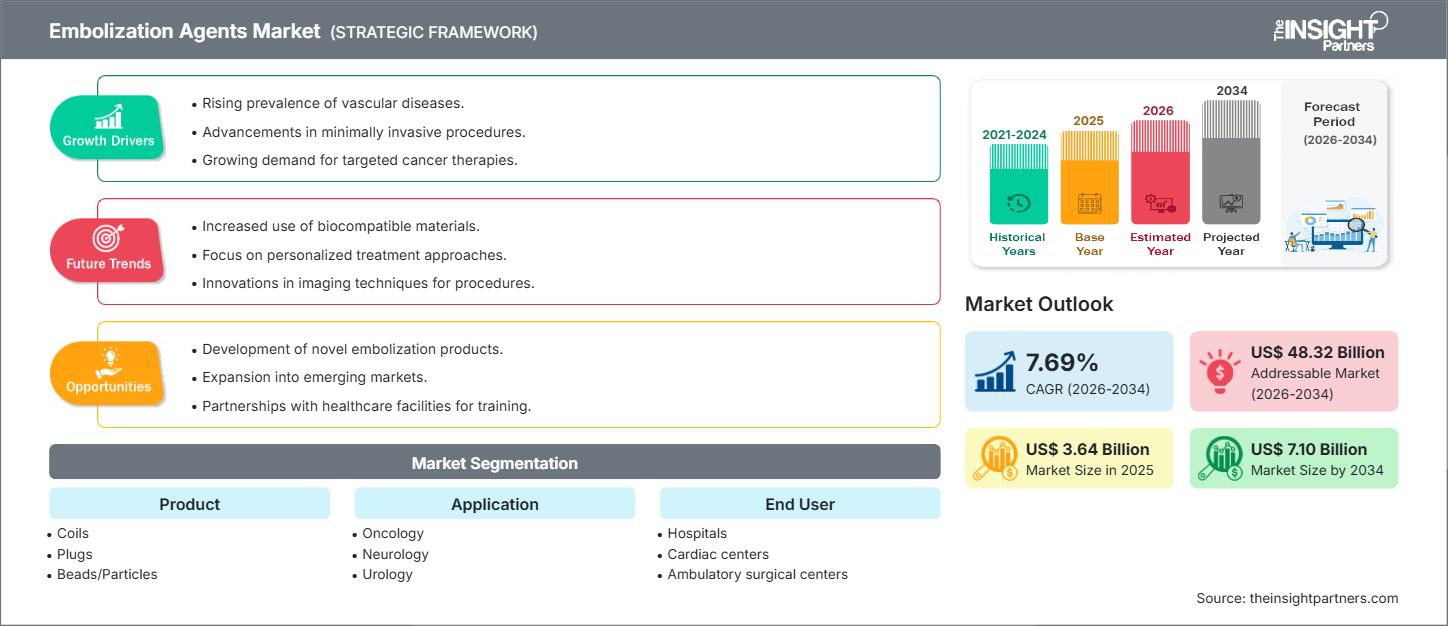
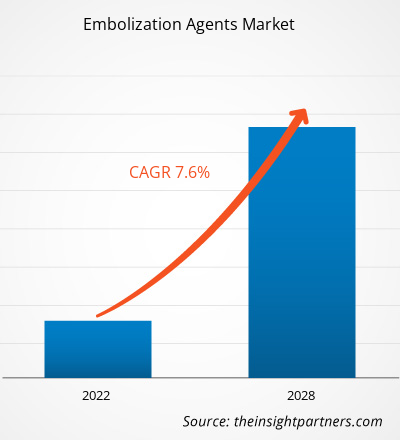
The Embolization Agents Market size is expected to reach US$ 7.10 Billion by 2034 from US$ 3.64 Billion in 2025. The market is anticipated to register a CAGR of 7.69% during 2026–2034.
Embolization Agents Market Analysis
The global embolization agents market is witnessing robust adoption across interventional oncology, peripheral vascular disease, and neurovascular care. Procedure volumes continue to shift toward minimally invasive embolotherapy as hospitals expand interventional radiology suites and as evidence accumulates for durable occlusion using mechanical coils, vascular plugs, calibrated microspheres, and liquid embolics. Market growth is driven by multipurpose platforms (coils and plugs for rapid mechanical occlusion; PEG, trisacryl–gelatin, and other calibrated microspheres for targeted arterial blockade; and EVOH-based liquid embolics for complex lesions), broader indications (tumor devascularization, hemorrhage control, AVMs/AVFs), and ongoing portfolio upgrades (radiopaque beads, hydrogel expansion coils, large-volume detachable coils).
Embolization Agents Market Overview
Embolization agents are materials designed to occlude blood vessels selectively and durably. Core categories include coils (detachable and pushable), plugs, beads/particles (calibrated microspheres and PVA), detachable balloons, glues, sponges/gelatin, liquid embolics (e.g., EVOH/DMSO), sclerosants, and precipitating agents. These agents are delivered via catheters under fluoroscopic guidance to achieve mechanical or thrombogenic occlusion, with use spanning oncology (e.g., uterine fibroids, HCC metastases), neurology (AVMs/aneurysms), urology (PAE), cardiology (aneurysm/hemorrhage management), and peripheral vascular diseases. Recent advances emphasize visibility, packing density, controllability, and compatibility with microcatheters and diagnostic catheters to minimize non-target embolization and procedural time.
Market Assessment and Insights
- Global market for Embolization Agents was valued at US$ 3.64 Billion in 2025
- Annual market size is expected to reach US$ 7.10 Billion by 2034
- Total addressable market (TAM) during 2026-2034 is projected to reach approximately US$ 48.32 Billion
- Market is anticipated to register a CAGR of 7.69% during the forecast period
- The United States represents a key market, supported by Rising prevalence of vascular diseases., Advancements in minimally invasive procedures., Growing demand for targeted cancer therapies., as well as evolving industry dynamics
- Market analysis covers North America, Europe, Asia-Pacific, South and Central America, Middle East and Africa, with growth evaluated across the forecast period
- Market opportunities such as Development of novel embolization products., Expansion into emerging markets., Partnerships with healthcare facilities for training. are expected to influence market dynamics and addressable market
- Report profiles industry participants, including Medtronic, Terumo Corporation, Cook Medical LLC, Boston Scientific Corporation, Abbott, Stryker Corporation, Penumbra, Inc., Merit Medical Systems Inc., DePuy Synthes, while analyzing competitive strategies and innovation developments
-
Source: The Insight Partners' analysis based on proprietary research, government publications, company annual reports, investor presentations, industry databases, and expert interviews.
● REPORT CUSTOMIZATION
Tailor This Report To Align With Your Specific Business Requirements
This report can be customized to align precisely with your business objectives, scope, and target markets. Customization options include tailored segmentation, geography, competitive analysis, and strategic insights to support informed decision-making.
Customize This Report →WHAT YOU CAN ADJUST
- ● Segmentations
- ● Geography
- ● Competitive Analysis
- ● Language Preferences
Embolization Agents Market: Strategic Insights
-
Get Top Key Market Trends of this report.This FREE sample will include data analysis, ranging from market trends to estimates and forecasts.
Embolization Agents Market Drivers and Opportunities
Market Drivers:
- Rising Cancer and Cardiovascular Burden: The global increase in chronic diseases, particularly cancer and cardiovascular conditions, is driving the demand for surgery-sparing, catheter-based embolization as a preferred treatment modality.
- Technology Enhancements Across Agents: Continuous innovation is yielding superior devices, such as hydrogel-expanding coils for higher packing density, radiopaque/color-enhanced beads for improved visualization, and non-adhesive liquid embolics with highly controlled deposition kinetics.
- Workflow Gains from High-Volume Coils: New device designs, like large-volume coils and quick-deployment vascular plugs, reduce the number of devices needed, thereby decreasing procedure times, reducing radiation exposure, and improving overall workflow efficiency in the Cath Lab.
Market Opportunities:
- Drug-Device Combinations, Radioembolization: The integration of embolics with therapeutic agents (e.g., drug-eluting beads) and advancements in radioembolization techniques allow for improved local tumor control and more precise, personalized therapy delivery.
- Portfolio Integration with Advanced Microcatheters: Opportunities exist for vendors to seamlessly integrate their embolization agents with specialized, flexible microcatheters and sophisticated navigation systems to safely reach increasingly tortuous and distal anatomies in the neurovascular space.
- Clinical Evidence for Benign Prostatic Hyperplasia (PAE): Expanding clinical evidence in non-oncology applications, such as trauma control, gastrointestinal hemorrhage management, and especially the rapidly growing Prostatic Artery Embolization (PAE) procedure, broadens the market footprint.
Embolization Agents Market Report Segmentation Analysis
The embolization agents market share is analyzed across various segments to provide a clearer understanding of its structure, growth potential, and emerging trends. Below is the standard segmentation approach used in most industry reports:
By Product:
- Coils: Detachable and pushable metallic coils for mechanical occlusion and thrombogenesis
- Plugs: Single-device occluders for rapid closure in high-flow vessels
- Beads/Particles: Calibrated microspheres (PVA, trisacryl–gelatin, hydrogel)
- Detachable Balloons: Temporary or permanent occlusion devices, mostly neurovascular
- Glue: Rapid-setting liquid embolics (e.g., NBCA)
- Sponge/Gelatin: Temporary agents for hemorrhage control
- Liquid Embolics: Non-adhesive, precipitating agents like EVOH/DMSO
- Sclerosants & Precipitating Agents: Ethanol or chemicals for permanent vessel closure
By Application:
- Oncology
- Neurology
- Urology (PAE)
- Cardiology
- Peripheral vascular diseases
By End User:
- Hospitals
- Cardiac centers
- Ambulatory surgical centers
By Geography:
- North America
- Europe
- Asia Pacific
- South & Central America
- Middle East & Africa
Embolization Agents Market Report Scope
| Report Attribute | Details |
|---|---|
| Market size in 2025 | US$ 3.64 Billion |
| Market Size by 2034 | US$ 7.10 Billion |
| Global CAGR (2026 - 2034) | 7.69% |
| Historical Data | 2021-2024 |
| Forecast period | 2026-2034 |
| Segments Covered |
By Product
|
| Regions and Countries Covered |
North America
|
| Market leaders and key company profiles |
|
Embolization Agents Market Players Density: Understanding Its Impact on Business Dynamics
The Embolization Agents Market is growing rapidly, driven by increasing end-user demand due to factors such as evolving consumer preferences, technological advancements, and greater awareness of the product's benefits. As demand rises, businesses are expanding their offerings, innovating to meet consumer needs, and capitalizing on emerging trends, which further fuels market growth.
Embolization Agents Market Share Analysis by Geography
North America is expected to remain the dominant market, while Asia Pacific is anticipated to witness the fastest growth during the forecast period, driven by the scaling of interventional oncology services. The embolization agents market shows a different growth trajectory in each region due to factors such as interventional capacity, clinical adoption, and healthcare funding. Below is a summary of market share and trends by region:
North America
- Market Share: Leads globally due to advanced interventional capacity and high adoption rates.
- Key Drivers: Widespread integration of dedicated interventional radiology suites.
- Trends: Focus on innovation, particularly hydrogel-expanding coils and advanced liquid embolics for complex neurovascular cases.
Europe
- Market Share: Significant share, supported by established oncologic embolization programs.
- Key Drivers: Established use of calibrated microspheres for chemoembolization.
- Trends: Increasing integration of advanced imaging (fusion imaging) with embolization procedures.
Asia-Pacific
- Market Share: Fastest-growing region due to rapid healthcare modernization.
- Key Drivers: Hospital network expansion and investment in state-of-the-art angiography systems.
- Trends: Rapid adoption of standard coils and PVA particles, with a move toward drug-eluting beads (DEB) in key centers.
South and Central America
- Market Share: Emerging market with growth potential driven by public-private investments.
- Key Drivers: Trauma care upgrades driving demand for rapid hemorrhage control agents.
- Trends: Cloud-based, cost-effective embolization solutions are gaining traction, especially in trauma settings.
Middle East and Africa
- Market Share: Developing market with strong growth potential due to rising healthcare investments.
- Key Drivers: National e-health strategies and hospital modernization initiatives.
- Trends: Implementation of embolization in integrated care models for vascular and oncologic services.
Embolization Agents Market Players Density: Understanding Its Impact on Business Dynamics
Competitive Landscape and Strategic Moves
Competition is robust, characterized by major, diversified med-tech conglomerates such as Medtronic, Terumo Corporation, and Boston Scientific Corporation, competing fiercely with specialized players like Penumbra, Inc. and Merit Medical Systems Inc.
This competitive environment pushes vendors to differentiate through:
- Innovation in Material Science: Developing radiopaque beads and hydrogel-expanding materials to improve visibility and packing density.
- Portfolio Completeness: Offering a full range of products, from coils and plugs to liquid embolics and specialized microcatheters.
- Clinical Evidence Generation: Funding trials (like Medtronic’s PELE IDE study) to expand indications and solidify procedural adoption.
Major Companies operating in the Embolization Agents Market are:
- Medtronic
- Terumo Corporation
- Cook Medical LLC
- Boston Scientific Corporation
- Abbott
- Stryker Corporation
- Penumbra, Inc.
- Merit Medical Systems Inc.
- DePuy Synthes
Disclaimer: The companies listed above are not ranked in any particular order.
Embolization Agents Market News and Recent Developments
- Medtronic enrolled the first patient in the PELE IDE clinical trial for the Onyx™ Liquid Embolic System, evaluating its safety and effectiveness in U.S. patients with peripheral arterial hemorrhage. The EMBOLISE trial, published in The New England Journal of Medicine (Nov 2024), demonstrated that adjunctive middle meningeal artery embolization with Onyx™ significantly reduces recurrence risk in chronic subdural hematoma compared to surgery alone. The Onyx™ system remains a core neurovascular product, developed over 20 years for AVMs and neurovascular embolization.
- Terumo Corporation’s MicroVention subsidiary published one-year results from the CLEVER study on the WEB™ 17 intrasaccular aneurysm embolization system, showing high occlusion rates (~86.5% for ruptured and ~82.4% for unruptured aneurysms) with low complication rates. Terumo has also expanded its embolization portfolio to include LifePearl™ drug-eluting microspheres, AZUR™ hydrogel-coated coils and plugs, and new systems such as OPUSWAVE® and DualView®, supporting comprehensive neurovascular care.
Embolization Agents Market Report Coverage and Deliverables
The "Embolization Agents Market Size and Forecast (2021–2034)" report provides a detailed analysis of the market covering below areas:
- Embolization Agents Market size and forecast at global, regional, and country levels for all the key market segments covered under the scope
- Embolization Agents Market trends, as well as market dynamics such as drivers, restraints, and key opportunities
- Detailed PEST and SWOT analysis
- Embolization Agents Market analysis covering key market trends, global and regional framework, major players, regulations, and recent market developments
- Industry landscape and competition analysis covering market concentration, heat map analysis, prominent players, and recent developments in the Embolization Agents Market
- Detailed company profiles
Frequently Asked Questions

- Comprehensive Market Sizing and Forecast Analysis
- Detailed Segmentation Analysis
- In-Depth Market Dynamics Assessment
- Regional and Country-Level Insights
- Competitive Landscape and Company Benchmarking
- Strategic Business Intelligence
Recent Reports
Testimonials

The Insight Partners' SCADA System Market report is comprehensive, with valuable insights on current trends and future forecasts. The team was highly professional, responsive, and supportive throughout. We are very satisfied and highly recommend their services.
RAN KEDEM Partner, Reali Technologies LTDs
I requested a report on a very specific software market and the team produced the report in a few days. The information was very relevant and well presented. I then requested some changes and additions to the report. The team was again very responsive and I got the final report in less than a week.
JEAN-HERVE JENN Chairman, Future Analytica
We worked with The Insight Partners for an important market study and forecast. They gave us clear insights into opportunities and risks, which helped shape our plans. Their research was easy to use and based on solid data. It helped us make smart, confident decisions. We highly recommend them.
PIYUSH NAGPAL Sr. Vice President, High Beam Global
The Insight Partners delivered insightful, well-structured market research with strong domain expertise. Their team was professional and responsive throughout. The user-friendly website made accessing industry reports seamless. We highly recommend them for reliable, high-quality research services
YUKIHIKO ADACHI CEO, Deep Blue, LLC.
This is the first time I have purchased a market report from The Insight Partners.While I was unsure at first, I visited their web site and felt more comfortable to take the risk and purchase a market report.I am completely satisfied with the quality of the report and customer service. I had several questions and comments with the initial report, but after a couple of dialogs over email with their analyst I believe I have a report that I can use as input to our strategic planning process.Thank you so much for taking the extra time and making this a positive experience.I will definitely recommend your service to others and you will be my first call when we need further market data.
JOHN SUZUKI President and Chief Executive Officer, Board Director, BK Technologies
I wish to appreciate your support and the professionalism you displayed in the course of attending to my request for information regarding to infectious disease IVD market in Nigeria. I appreciate your patience, your guidance, and the fact that you were willing to offer a discount, which eventually made it possible for us to close a deal. I look forward to engaging The Insight Partners in the future, all thanks to the impression you have created in me as a result of this first encounter.
DR CHIJIOKE ONYIA MANAGING DIRECTOR, PineCrest Healthcare Ltd.Reason to Buy
- Informed Decision-Making
- Understanding Market Dynamics
- Competitive Analysis
- Identifying Emerging Markets
- Customer Insights
- Market Forecasts
- Risk Mitigation
- Boosting Operational Efficiency
- Strategic Planning
- Investment Justification
- Tracking Industry Innovations
- Aligning with Regulatory Trends





 Get Free Sample for