
Endoscope Drying Cabinets Market Demand, Size & Forecast by 2034
Endoscope Drying Cabinets Market Size and Forecasts (2021 - 2034), Global and Regional Share, Trends, and Growth Opportunity Analysis Report Coverage : by Product (Double Door Cabinet, Single Door Cabinet, Benchtop, Wall-mounted, Floor-standing); Size (8 Endoscope, 12 Endoscope, 16 Endoscope); End User (Ambulatory Surgical Centers, Hospitals, Clinics); and Geography (North America, Europe, Asia Pacific, and South and Central America)
- Status : Data Released
- Report Code : TIPRE00040835
- Category : Life Sciences
- No. of Pages : 150
- Available Report Formats :


- Last update date : July 06, 2026


2025 Market Size
US$ 276.75 Mn
Base year value
2034 Forecast
US$ 557.28 Mn
Projected by 2034
CAGR 2026-2034
8.09 %
Growth rate
Addressable Market
US$ 3,749.58 Mn
(2026-2034)
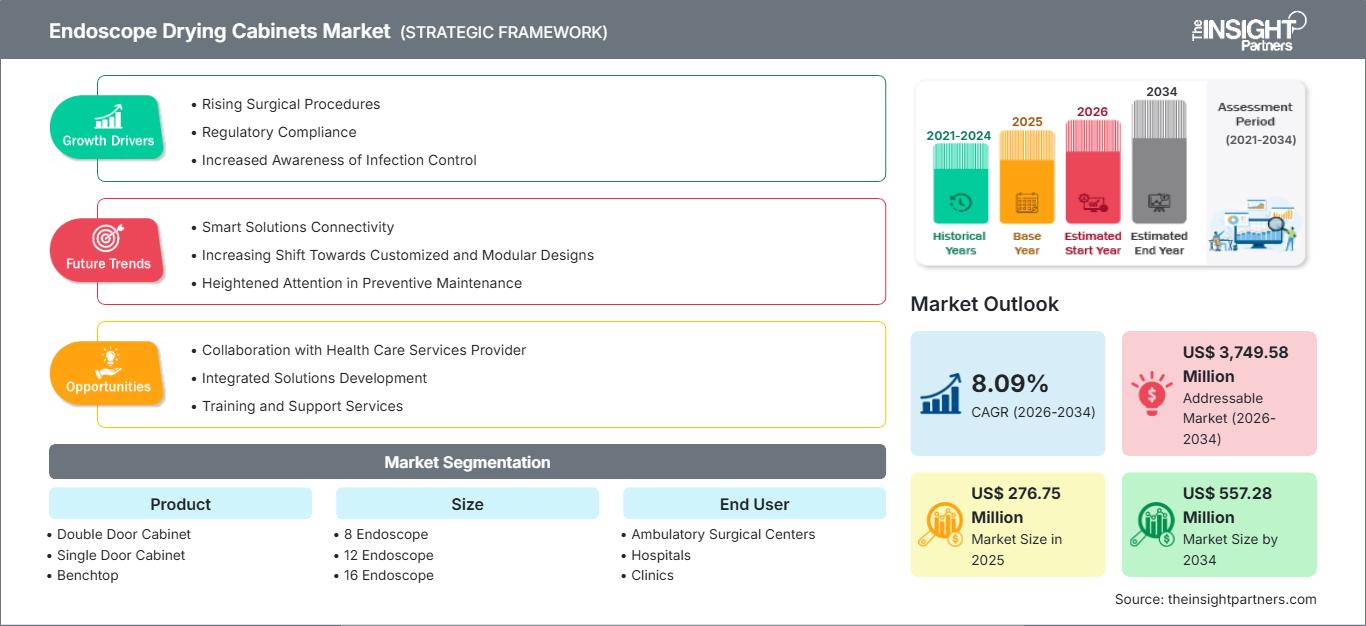
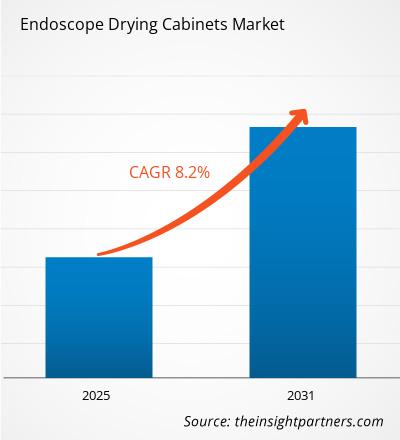
The endoscope drying cabinets market was valued at US$ 276.75 Million in 2025 and is projected to reach US$ 557.28 Million by 2034, expanding at a CAGR of 8.09% during 2026–2034. Increasing emphasis on endoscope reprocessing quality, stringent infection prevention protocols, and the growing volume of gastrointestinal and pulmonary endoscopic procedures are strengthening demand worldwide. Healthcare providers are prioritizing automated drying and storage systems to reduce contamination risks while improving compliance with evolving clinical standards, supporting sustained endoscope drying cabinets market growth throughout the forecast period.
North America is expected to retain its dominant position throughout the assessment period due to its advanced hospital infrastructure, rigorous infection prevention regulations, and substantial procedural volumes in gastrointestinal and respiratory care. The endoscope drying cabinets market forecast indicates that the region is likely to grow at a CAGR of 7.6–8.2% between 2026 and 2034, supported by the increasing adoption of automated drying cabinets in place of traditional storage methods, rising investments in sterile processing departments, and the continued expansion of outpatient endoscopy services.
Endoscope Drying Cabinets Market Assessment and Insights
- North America: North America accounted for 34–38% share in 2025 and is projected to register a CAGR of 7.6–8.2% during 2026–2034. Strong regulatory oversight, increasing adoption of automated endoscope reprocessing workflows, and continuous healthcare infrastructure investments support regional expansion.
- U.S.: The U.S. represented 76–80% of the North American market in 2025 and is forecast to grow at a CAGR of 7.7–8.3% during 2026–2034, supported by large hospital networks and high endoscopic procedure volumes.
- Europe: Europe captured 28–32% share in 2025 and is expected to grow at a CAGR of 7.4–8.0% during 2026–2034. Germany, the UK, France, Italy, and Spain continue investing in infection prevention technologies and compliant endoscope storage systems.
- Asia Pacific: Asia Pacific accounted for 23–27% share in 2025 and is anticipated to record the highest CAGR of 8.8–9.5% during 2026–2034. China, Japan, South Korea, India, and Australia are expanding healthcare capacity and endoscopy infrastructure.
- Largest Segment: Hospitals represented the largest segment with a market share of 60–64% in 2025 and are projected to expand at a CAGR of 7.9–8.5% during 2026–2034, supported by high procedural throughput and stringent sterilization requirements.
- High Growth Segment: 16 Endoscope cabinets are anticipated to witness the fastest expansion, holding a market share of 28–32% in 2025 while advancing at a CAGR of 8.8–9.4% during 2026–2034, reflecting demand from high-volume endoscopy departments.
- Key companies analyzed in detail: Olympus Corporation, Gallay Medical & Scientific Pty Ltd, Stanley Healthcare, Smartline Medical Pty Ltd, MEDIVATORS Inc., Elmed Electronics & Medical Industry & Trade Inc., Choyang Medical Co., Ltd., Arc Healthcare Solutions, STERIS plc, Steelco S.p.A., Belimed AG.
Source: The Insight Partners' analysis based on proprietary research, government publications, company annual reports, investor presentations, industry databases, and expert interviews.
Increased procedural complexity along with the growing focus on infection prevention is changing the market for endoscope drying cabinets. Intelligent air flow management, HEPA filtration systems, digital monitoring, and automated traceability features are being incorporated into these products to increase their effectiveness and ensure compliance. Manufacturing is increasingly oriented around modular cabinet design, energy efficiency, and endoscope flexibility in order to help healthcare institutions streamline their workflows and maximize the usage of equipment within sterile processing departments.
The future development of the endoscope drying cabinets market is expected to be positively influenced by increased investments in healthcare in emerging markets, greater regulatory convergence, and digital hospital infrastructure deployment. Investments are being made in connected monitoring systems, predictive maintenance features, and environmentally friendly cabinet design in order to gain a competitive advantage. Increased scope of the endoscope drying cabinets market along with the growing need for standardized infection prevention solutions is anticipated to offer positive long-term prospects.
Endoscope Drying Cabinets Market Report Scope
| Report Attribute | Details |
|---|---|
| Market size in 2025 | US$ 276.75 Million |
| Market Size by 2034 | US$ 557.28 Million |
| Global CAGR (2026 - 2034) | 8.09% |
| Historical Data | 2021-2024 |
| Forecast period | 2026-2034 |
Endoscope Drying Cabinets Market Analysis
Endoscope drying cabinet market growth is fueled by the rise in the implementation of infection prevention policies and modernization of the procedures used in endoscope reprocessing. Endoscopes have complex internal structures that necessitate controlled drying prior to storage in order to avoid microbial contamination. The growing number of procedures performed in gastroenterology, pulmonology, urology, and otolaryngology will foster stable demand for endoscope drying solutions in hospitals, ASCs, and specialty care clinics. Accreditation standards and clinical practice guidelines remain favorable drivers of the adoption of automated drying equipment. Thus, hospitals find it increasingly important to include endoscope drying and storage into their endoscope reprocessing procedures in order to benefit from the development of endoscope drying cabinets market.
Market participants include cabinet manufacturers, air filtration system providers, sensor technology developers, sterilizer manufacturers, medical device distributors, and hospital procurement organizations. Supply chain stakeholders continue to enhance product quality through advanced airflow designs, antimicrobial cabinet materials, and integrated monitoring platforms. Additionally, the growing focus on sustainability is encouraging manufacturers to reduce energy consumption during the drying process. These advancements strengthen the long-term outlook presented in the endoscope drying cabinets market report, particularly as healthcare providers increasingly emphasize standardized infection prevention measures and operational efficiency within centralized sterile processing departments.
Competition in the endoscope drying cabinets market includes the development of technology, regulations, and services. Olympus Corporation, STERIS plc, Belimed AG, Steelco S.p.A., and MEDIVATORS Inc. are constantly enriching their product portfolios via integrated endoscope reprocessing solutions featuring washing, drying, storage, and documentation of workflow. Local producers are offering tailored cabinet configurations and flexible installation and technical support services to meet various demands of their customers operating in the developed and emerging healthcare sectors.
Development activities of key players in the market will be aimed at intelligent drying cabinets featuring remote monitoring, traceability, environmental sensing, and predictive maintenance capabilities. Healthcare providers will be interested in solutions that help to streamline the process of compliance reporting and minimize the amount of manual labor required for the process and downtime. Cooperation of equipment producers, healthcare providers, and distribution companies will help promote advanced drying systems. This development is believed to facilitate the growth of the endoscope drying cabinets market share and endoscope drying cabinets market trends in the future period.
● REPORT CUSTOMIZATION
Tailor This Report To Align With Your Specific Business Requirements
This report can be customized to align precisely with your business objectives, scope, and target markets. Customization options include tailored segmentation, geography, competitive analysis, and strategic insights to support informed decision-making.
Customize This Report →WHAT YOU CAN ADJUST
- ● Segmentations
- ● Geography
- ● Competitive Analysis
- ● Language Preferences
Endoscope Drying Cabinets Market: Strategic Insights
Regional Insights
North America Endoscope Drying Cabinets Market
North America held 34–38% of the endoscope drying cabinets market share in 2025 and is expected to grow at a CAGR of 7.6–8.2% between 2026 and 2034. North America is driven by the presence of established healthcare infrastructure, extensive endoscopic procedures performed, and strong infection prevention protocols. Hospitals are increasingly upgrading their manual drying methods with automated drying cabinets which have advanced features like flow management, continuous monitoring, and validated storage conditions. Increased expenditure in the development of sterile processing departments and digitalized hospitals is further facilitating procurement of these innovative drying solutions.
Increasing focus on reducing healthcare-associated infections is driving healthcare organizations to follow standard protocols for the storage of endoscopes. Rising incidences of gastrointestinal disorders, colorectal cancer screenings, and minimally invasive diagnosis are contributing to continued growth in hospitals, ambulatory surgical centers, and specialty clinics. Increased services offered by manufacturers to ensure equipment uptime is aiding adoption of drying cabinet technologies.
U.S. Endoscope Drying Cabinets Market
The U.S. held a share of 76-80% in the North America market in 2025 and will demonstrate a CAGR of 7.7-8.3% during 2026-2034. Flexible endoscopes have been used extensively in the departments of gastroenterology, pulmonology, urology, and otolaryngology and will help in sustaining the growth rates of investments in highly-advanced drying cabinets. Hospitals with large-scale networks have increasingly focused on automating the documentation process, monitoring environment, and optimizing workflow in order to enhance compliance and infection control measures.
The top players have established strong commercial presence, technical support, and distribution alliances across the country and help in faster implementation of advanced technologies. The increasing replacement of old reprocessing infrastructure along with rising numbers of endoscopy cases in outpatient settings will drive the healthcare facilities to invest in energy-saving and interconnected cabinet systems.
Europe Endoscope Drying Cabinets Market
In 2025, Europe accounted for 28-32% of the endoscope drying cabinets market share and is forecasted to have a CAGR of 7.4-8.0% over 2026-2034. Regulatory compliance, increasing modernization of hospitals, and the implementation of infection prevention practices drive the market growth. Germany maintains its position as the top national market owing to the country's developed healthcare system and high usage of automated endoscope reprocessing equipment.
The United Kingdom continues building up investments in infrastructure of sterilization in hospitals and capacity growth of endoscopy departments. Healthcare facilities increasingly use automated drying cabinets in order to optimize processes, comply with new decontamination standards, and minimize the risks related to moisture retention. Growing interest to minimally invasive diagnostics further drives procurement in the sector.
France, Italy, and Spain are gradually stepping up investments in technologies for infection control amid the modernization of endoscopy departments in hospitals. Hospitals integrate digitally controlled drying cabinets within centralized sterile processing centers. Growth in government-backed healthcare infrastructure and increased volumes of procedures will support regional demand; Germany will maintain its leadership over the forecast period.
APAC Endoscope Drying Cabinets Market
Asia Pacific accounted for 23–27% of the global market in 2025 and is projected to register the fastest growth, with a CAGR of 8.8–9.5% during 2026–2034. The expansion of the endoscope drying cabinets market size in the region is being driven by strong healthcare infrastructure investments, increasing hospital capacity, and rising demand for advanced infection control solutions, with China leading regional adoption through large-scale healthcare development initiatives.
Japan and South Korea continue adopting advanced automated reprocessing technologies supported by mature healthcare systems and stringent quality standards.
India and Australia are witnessing rising investments in endoscopy infrastructure, infection prevention programs, and hospital modernization, creating favorable conditions for broader deployment of automated endoscope drying cabinets across public and private healthcare institutions.
Middle East & Africa Endoscope Drying Cabinets Market
The Middle East & Africa market is projected to expand at a CAGR of 7.1–7.8% during 2026–2034, supported by healthcare infrastructure modernization and increasing adoption of advanced infection prevention technologies. Saudi Arabia remains the leading market within the region.
The United Arab Emirates continues investing in technologically advanced hospitals and specialized endoscopy centers, encouraging procurement of automated drying and storage systems.
South Africa and the Rest of MEA are gradually improving healthcare capacity through infrastructure development and modernization initiatives. Rising investments in hospital equipment, combined with expanding diagnostic services, are expected to support long-term demand for endoscope drying cabinets across the region.
Segmentation Analysis
Product
The product segment is projected to expand at a CAGR of 8.1–8.7% during 2026–2034. Product innovation continues to focus on enhanced airflow management, HEPA filtration, digital monitoring, and flexible installation options that improve infection prevention and workflow efficiency. Healthcare facilities increasingly prefer automated drying cabinets capable of maintaining validated drying environments while accommodating different endoscope models. Manufacturers are also introducing energy-efficient designs and intelligent monitoring capabilities to strengthen regulatory compliance and optimize equipment utilization.
- Double Door Cabinet: Double door cabinets are widely adopted in large hospitals due to their higher storage capacity and efficient workflow separation. Their ability to reduce cross-contamination risks makes them suitable for centralized sterile processing departments handling high daily procedure volumes.
- Single Door Cabinet: Single door cabinets remain popular among medium-sized healthcare facilities seeking reliable drying performance within limited installation space. They provide cost-effective storage while supporting standardized endoscope reprocessing and regulatory compliance requirements.
- Benchtop: Benchtop cabinets address the needs of specialty clinics and smaller endoscopy units where available floor space is limited. Compact designs enable efficient drying and storage without compromising validated airflow performance or infection prevention objectives.
- Wall-mounted: Wall-mounted systems maximize space utilization while maintaining organized workflow in constrained healthcare environments. Their installation flexibility makes them increasingly attractive for outpatient facilities expanding endoscopy capabilities.
- Floor-standing: Floor-standing cabinets continue serving high-volume hospitals requiring larger storage capacity and operational flexibility. Advanced models integrate digital monitoring, environmental sensors, and traceability functions to enhance workflow efficiency and quality assurance.
Size
The size segment is anticipated to register a CAGR of 8.2–8.8% during 2026–2034. Healthcare providers increasingly select cabinet capacity according to procedural workload, available installation space, and long-term expansion strategies. Growing endoscopy volumes and centralized reprocessing operations are encouraging investments in higher-capacity drying systems that improve operational efficiency while minimizing equipment turnaround time across busy healthcare facilities.
- 8 Endoscope: Cabinets designed for eight endoscopes are primarily utilized in specialty clinics and smaller hospitals. They provide efficient drying and secure storage while supporting facilities with moderate procedural volumes and limited infrastructure requirements.
- 12 Endoscope: Twelve-endoscope cabinets balance storage capacity and operational flexibility, making them suitable for medium-sized hospitals and ambulatory surgical centers. They support efficient workflow management while accommodating increasing procedure volumes without excessive space requirements.
- 16 Endoscope: Sixteen-endoscope cabinets are increasingly preferred by large hospitals and centralized sterile processing departments managing substantial daily endoscopy workloads. Their larger capacity improves equipment availability, reduces workflow interruptions, and supports future procedural expansion.
End User
The end user segment is expected to grow at a CAGR of 8.0–8.6% during 2026–2034. Rising awareness of infection prevention, expanding minimally invasive procedures, and regulatory requirements continue encouraging healthcare providers to modernize endoscope reprocessing infrastructure. Automated drying cabinets are becoming an essential component of standardized workflow management across diverse healthcare settings.
- Ambulatory Surgical Centers: Ambulatory surgical centers increasingly adopt compact and automated drying cabinets to support growing outpatient procedure volumes. Efficient storage systems help optimize workflow, maintain compliance, and reduce equipment turnaround time between scheduled interventions.
- Hospitals: Hospitals remain the dominant end-user category owing to high endoscopy volumes, complex procedural requirements, and comprehensive infection prevention programs. Investments in centralized sterile processing departments continue driving demand for advanced drying cabinets with intelligent monitoring and traceability capabilities.
- Clinics: Specialty clinics are progressively upgrading from manual storage practices to automated drying systems as procedural volumes increase. Compact cabinet configurations and simplified maintenance requirements support wider adoption while improving operational consistency and patient safety.
Opportunity Snapshot
| Segment Name | Revenue Contribution | Trend Tag | Adoption Stage |
| Ambulatory Surgical Centers | Medium | Outpatient Care | Scaling |
| Hospitals | High | Central Sterilization | Mature |
| Clinics | Low | Compact Systems | Emerging |
Endoscope Drying Cabinets Market Growth Drivers and Impact Analysis
Increasing Focus on Infection Prevention and Endoscope Reprocessing Compliance
Healthcare facilities across the world are improving their infection control policies due to new clinical guidelines for reprocessing of flexible endoscopes. Drying process has become crucial as any excess water could promote growth of microbes and thus increase risk to patients' health. Therefore, medical institutions are switching from traditional storing approaches to automated drying cabinets that provide controlled air flow, real-time environmental monitoring, and traceable drying cycles. This will help healthcare facilities to meet current regulatory requirements and minimize human errors related to manual operations. Healthcare facilities are also creating central sterilization services that would streamline the workflow process and optimize use of medical devices. As the procedure volume continues to grow, the demand for reliable drying solutions will also increase, which will further drive the market development and motivate manufacturers to create more advanced drying cabinets.
Growing Volume of Minimally Invasive Endoscopic Procedures
The rise in the use of minimally invasive diagnostic and treatment approaches is driving the installed base of flexible endoscopes on a global scale. Gastroenterology endoscopy, bronchoscopy, urology, and otorhinolaryngology procedures are witnessing strong growth driven by the rising number of aging patients, chronic diseases, and screening programs leading to increased diagnostic needs. Higher utilization demands faster and consistent reprocessing processes to achieve efficiency without compromising safety from infections. Drying cabinets speed up equipment turnover, reduce human intervention, and even contribute to maintaining endoscopic equipment performance due to the provision of controlled environment for storage. This trend has driven healthcare institutions to include drying cabinets in their reprocessing facility upgrade projects. Such a development is generating ongoing business prospects for manufacturers of large-scale and digital drying cabinet solutions.
Digitalization of Sterile Processing Departments
More health care professionals are opting for digitized sterile processing systems in order to achieve visibility, regulatory compliance, and preventive maintenance. The modern endoscope drying cabinets now feature electronic traceability, environmental sensing, remote monitoring, automated alerts, and diagnostics to ease regulatory compliance in relation to institutional quality management systems. This not only helps reduce the burden of administration but also offers real-time documentation in infection prevention audit and accreditation processes. Connection of such medical devices with information technology systems in hospitals makes it possible to offer asset management and optimize workflows in reprocessing departments. In light of the above developments in connected medical devices, companies that can design intelligent drying products will have an advantage over other firms.
Endoscope Drying Cabinets Market Future Trends
Expansion of Smart Connected Drying Cabinet Technologies
Future innovations will focus on smart cabinet systems capable of real-time monitoring, predictive maintenance, cloud-based reporting, and automated compliance documentation. Healthcare facilities are increasingly seeking intelligent solutions that reduce manual record-keeping while improving equipment utilization and workflow visibility. Manufacturers are integrating advanced sensors that continuously monitor airflow, humidity, temperature, and cabinet performance, enabling immediate corrective action when operating conditions deviate from validated standards. Predictive maintenance, AI-assisted diagnostics, and remote service capabilities are expected to reduce maintenance costs and minimize equipment downtime. These technological advancements, highlighted in endoscope drying cabinets market trends, will support greater processing efficiency, enhanced regulatory compliance, and improved management of growing medical procedure volumes.
Greater Adoption Across Emerging Healthcare Markets
Emerging economies are expected to become increasingly important contributors to industry expansion as governments continue investing in healthcare infrastructure modernization and infection prevention initiatives. New hospitals, specialized endoscopy centers, and outpatient facilities are creating additional demand for automated drying technologies that support standardized reprocessing practices. Manufacturers are responding by developing cost-effective cabinet configurations that balance advanced functionality with affordability and localized service support. Regional production capabilities, expanded distributor networks, and targeted training programs are further improving market accessibility. As awareness of validated endoscope drying practices continues increasing, adoption is expected to accelerate across developing healthcare systems, creating new revenue opportunities while supporting broader improvements in patient safety and clinical quality.
Endoscope Drying Cabinets Market Opportunities
Investment in High-Capacity Drying Solutions for Large Healthcare Networks
Large hospital groups and integrated healthcare networks continue expanding centralized sterile processing departments to improve operational efficiency across multiple clinical sites. This trend creates substantial opportunities for manufacturers offering high-capacity drying cabinets capable of accommodating increasing endoscope inventories while maintaining validated drying conditions. Demand is expected to grow for modular cabinet systems that support future expansion, intelligent inventory management, and seamless integration with digital hospital platforms. Companies investing in scalable product portfolios, comprehensive maintenance services, and long-term customer support programs will be well positioned to secure strategic procurement contracts. These investments can also strengthen recurring revenue through service agreements, software upgrades, and preventive maintenance solutions that extend equipment lifecycle and improve customer retention.
Development of Sustainable and Energy-Efficient Cabinet Platforms
Sustainability objectives are becoming increasingly influential in healthcare procurement decisions, encouraging manufacturers to develop environmentally responsible drying cabinet technologies. Energy-efficient airflow systems, optimized filtration performance, recyclable materials, and reduced operating costs are expected to become key purchasing considerations for healthcare organizations seeking lower environmental impact. Companies that incorporate sustainable engineering while maintaining validated drying performance can strengthen their competitive differentiation and address evolving institutional procurement criteria. Additional opportunities exist in developing compact systems requiring lower power consumption without compromising storage capacity or infection prevention performance. Continued investment in environmentally efficient product innovation is likely to support long-term growth while aligning with broader healthcare sustainability initiatives and operational cost reduction strategies.
Recent Developments
- In May 2025: Olympus Corporation launched its ScopeLocker Air™ endoscope drying cabinet. Manufactured by Capsa Healthcare and distributed by Olympus, the system features space-efficient HEPA-filtered air pumps integrated directly into the top of the cabinet to maximize facility space. It distributes independent airflows both through internal channels and around the external scope bodies to meet strict society infection control guidelines.
- 2025: STERIS plc continued expanding its endoscope reprocessing portfolio by promoting the RELIANCE™ 6500 Endoscope Drying and Storage Cabinet, designed to meet ANSI/AAMI ST91 recommendations. The system offers continuous HEPA-filtered airflow, configurable storage capacity, digital inventory management, and enhanced traceability features, supporting healthcare facilities seeking standardized endoscope drying and storage workflows.
- In June 2024, parent companies Metall Zug and Miele officially completed their transaction to merge the hospital infection-control and life-sciences operations of Steelco and Belimed into a new standalone entity named SteelcoBelimed. This joint venture consolidates their high-performance automated endoscope reprocessing (AER) lines and automated drying cabinet portfolios (such as Steelco's EW MAXI infrastructure) under a unified global commercial pipeline
Frequently Asked Questions

- Comprehensive Market Sizing and Forecast Analysis
- Detailed Segmentation Analysis
- In-Depth Market Dynamics Assessment
- Regional and Country-Level Insights
- Competitive Landscape and Company Benchmarking
- Strategic Business Intelligence
Recent Reports
Testimonials

The Insight Partners' SCADA System Market report is comprehensive, with valuable insights on current trends and future forecasts. The team was highly professional, responsive, and supportive throughout. We are very satisfied and highly recommend their services.
RAN KEDEM Partner, Reali Technologies LTDs
I requested a report on a very specific software market and the team produced the report in a few days. The information was very relevant and well presented. I then requested some changes and additions to the report. The team was again very responsive and I got the final report in less than a week.
JEAN-HERVE JENN Chairman, Future Analytica
We worked with The Insight Partners for an important market study and forecast. They gave us clear insights into opportunities and risks, which helped shape our plans. Their research was easy to use and based on solid data. It helped us make smart, confident decisions. We highly recommend them.
PIYUSH NAGPAL Sr. Vice President, High Beam Global
The Insight Partners delivered insightful, well-structured market research with strong domain expertise. Their team was professional and responsive throughout. The user-friendly website made accessing industry reports seamless. We highly recommend them for reliable, high-quality research services
YUKIHIKO ADACHI CEO, Deep Blue, LLC.
This is the first time I have purchased a market report from The Insight Partners.While I was unsure at first, I visited their web site and felt more comfortable to take the risk and purchase a market report.I am completely satisfied with the quality of the report and customer service. I had several questions and comments with the initial report, but after a couple of dialogs over email with their analyst I believe I have a report that I can use as input to our strategic planning process.Thank you so much for taking the extra time and making this a positive experience.I will definitely recommend your service to others and you will be my first call when we need further market data.
JOHN SUZUKI President and Chief Executive Officer, Board Director, BK Technologies
I wish to appreciate your support and the professionalism you displayed in the course of attending to my request for information regarding to infectious disease IVD market in Nigeria. I appreciate your patience, your guidance, and the fact that you were willing to offer a discount, which eventually made it possible for us to close a deal. I look forward to engaging The Insight Partners in the future, all thanks to the impression you have created in me as a result of this first encounter.
DR CHIJIOKE ONYIA MANAGING DIRECTOR, PineCrest Healthcare Ltd.Reason to Buy
- Informed Decision-Making
- Understanding Market Dynamics
- Competitive Analysis
- Identifying Emerging Markets
- Customer Insights
- Market Forecasts
- Risk Mitigation
- Boosting Operational Efficiency
- Strategic Planning
- Investment Justification
- Tracking Industry Innovations
- Aligning with Regulatory Trends





 Get Free Sample for