
Fire Resistant Hydraulic Fluid Market Share, Growth & Demand by 2034
Coverage: By Type (Water-based, Anhydrous-based); Application (Mining, Metal Processing, Marine, Aviation, Others) , and Geography (North America, Europe, Asia Pacific, and South and Central America)
- Status : Data Released
- Report Code : TIPRE00021441
- Category : Chemicals and Materials
- No. of Pages : 150
- Available Report Formats :


- Last update date : November 20, 2026


2025 Market Size
US$ 1.42 Bn
Base year value
2034 Forecast
US$ 2.03 Bn
Projected by 2034
CAGR 2026-2034
4.05 %
Growth rate
Addressable Market
US$ 15.67 Bn
(2026-2034)
The Fire Resistant Hydraulic Fluid Market was valued at US$ 1.42 Billion in 2025 and is projected to reach US$ 2.03 Billion by 2034, expanding at a 4.05% CAGR during 2026–2034. The market covers hydraulic fluids formulated to reduce ignition and flame propagation risks in hydraulic systems operating near heat sources, molten materials, combustible environments, or safety-critical equipment. Its scope is segmented by Type into Water-based and Anhydrous-based fluids and by Application into Mining, Metal Processing, Marine, and Aviation.
Across North America, demand is supported by the replacement of conventional mineral-oil hydraulic fluids in high-risk machinery, stronger attention to fire prevention, and continued use of hydraulic systems in mining and metal processing. The regional market is estimated to expand at ~4% CAGR through 2034. The Fire Resistant Hydraulic Fluid Market size in the region is influenced by industrial safety requirements, equipment modernization, and the need to balance fire resistance with viscosity control, component compatibility, thermal stability, and service life.
Fire Resistant Hydraulic Fluid Market Assessment and Insights
Regional Outlook
- North America: ~32% of the Fire Resistant Hydraulic Fluid Market share in 2025 | ~4% CAGR through 2034. Market position: North America represents the largest regional demand center, supported by established mining, metal processing, and industrial hydraulic equipment bases. Mature safety practices and replacement of conventional fluids reinforce demand despite relatively moderate expansion.
- US: ~80% of North American market revenue in 2025 | ~4% CAGR through 2034. Market position: The US accounts for most regional consumption, supported by extensive industrial equipment deployment, mining activity, aerospace hydraulic requirements, and supplier capabilities serving both general industrial and safety-critical applications.
- Europe: ~28% of the global market in 2025 | ~4% CAGR through 2034. Market position: Europe has a mature installed base and strong emphasis on machinery safety, environmental performance, and fluid efficiency. Germany and the UK remain important demand centers, with France and Italy supporting industrial applications.
- Asia Pacific: ~27% of the global market in 2025 | ~5% CAGR through 2034. Market position: Asia Pacific is the fastest-growing regional market, supported by industrialization, steel production, mining investments, and expansion of hydraulic equipment. China leads regional consumption, while Japan, South Korea, and India support technology-intensive demand.
Segment Outlook
- Water-based: ~63% Share in 2025 | ~4% CAGR through 2034. Market position: Water-based fluids lead because their high water content provides strong fire-resistance characteristics and makes them suitable for mining, steel, and other high-temperature industrial environments where ignition risk is a primary equipment-selection consideration.
- Aviation: ~20% Share in 2025 | ~6% CAGR through 2034. Market position: Aviation represents the highest-growth application because hydraulic systems in commercial and military aircraft require specialized fire-resistant formulations, stringent performance qualification, low-temperature capability, thermal stability, and compatibility with demanding airframe specifications.
Competitive Coverage
Exxon Mobil Corporation, BASF SE, Do-Fluoride Chemicals Co., Ltd., Quaker Chemical Corporation, Southwestern Petroleum Corporation, Eastman Chemical Company, Houghton International Inc., China Petrochemical Corporation, MORESCO Corporation, The Idemitsu Kosan Company, Ltd.
Methodology
The Insight Partners follows Data Collection & Secondary Research, Primary Research, Data Analysis, and Data Triangulation & Final Review to validate market estimates and insights.
Source: The Insight Partners' analysis based on proprietary research, government publications, company annual reports, investor presentations, industry databases, and expert interviews.
The Fire Resistant Hydraulic Fluid Market has shifted from water-based fluids being dominant in hazardous environments to a wider range, which includes both water-based and anhydrous synthetics. The development of fluids involves balancing fire resistance against other properties such as lubricity, oxidation stability, anti-corrosion properties, viscosity control, seal compatibility, and equipment efficiency. Water-based fluids have significance in mining and metal processing applications, whereas the anhydrous fluids cater to situations where higher lubrication performance, environmental factors, and specific operating conditions make anhydrous fluids suitable. Aviation is technologically distinct in that fluids have to meet specific requirements in aircrafts instead of industrial fluid classes.
Going forward, adoption is anticipated to become wider in Asian and certain Middle Eastern regions as the number of industrial equipment, steel production facilities, mining operations, shipbuilding, and infrastructural constructions increases. Moreover, product innovation may focus on improving the lifespan of fluids, reducing the environmental impact, improving compatibility, and simplifying fluid management. Workplace safety and reliability concerns may prompt the changeover from standard combustible hydraulic fluids. Advanced hydraulic systems can provide an opportunity for suppliers to develop fire-resistant fluids for high pressures.
Fire Resistant Hydraulic Fluid Market Report Scope
| Report Attribute | Details |
|---|---|
| Market size in 2025 | US$ 1.42 Billion |
| Market Size by 2034 | US$ 2.03 Billion |
| Global CAGR (2026 - 2034) | 4.05% |
| Historical Data | 2021-2024 |
| Forecast period | 2026-2034 |
Fire Resistant Hydraulic Fluid Market Analysis
The growth of the Fire Resistant Hydraulic Fluid Market can be attributed to the inherent operational risks involved with hydraulic machines in case of potential leaks and hose breaks leading to contact between the fluid and the source of ignition. The presence of mining machines, metal processing machinery, presses, and other specialist machines that operate near heat sources, sparks, and combustible substances makes fire-resistant fluids a functional safety component and not just an alternative to lubricants. This market's value chain involves raw material suppliers, additive companies, formulation companies, machine manufacturers, distribution networks, maintenance firms, and industrial customers. The choice of fluid would thus be based on performance and hydraulic machine compatibility.
There is a fundamental difference in supply dynamics for water-based and anhydrous fluids. Water-based fluids depend on the controlled amount of water, glycol or its derivatives, additives, and design that can manage the issues of corrosion and viscosity. The anhydrous fluids would depend upon the use of synthetic esters, polyalkylene glycol technology, and phosphoric ester technology depending upon the application requirement. The factors that would influence the supply chain would thus include specialty chemicals, additives technology, technical services, and distribution region.
The competitive positioning is influenced by the breadth of the portfolio of formulations as well as supporting the application-specific qualification. Exxon Mobil Corporation and Eastman Chemical Company have positioned themselves in the market for aviation hydraulic fluids, while Quaker Chemical Corporation and Houghton International Inc. have positioned themselves in the industrial sector using the water and synthetic technologies. BASF SE, MORESCO Corporation and The Idemitsu Kosan Company, Ltd. are formulators and lubricants in the industrial sector. China Petrochemical Corporation and Southwestern Petroleum Corporation provide regional availability in terms of supply, while specialized manufacturers are able to compete based on application engineering as well as the fluid specification.
More investment has been seen towards better performance of the formulations, environmentally friendly nature, longevity of the fluid and regional availability. MORESCO Corporation has concentrated on recycling technology in water-glycol fluid showing how the lifecycle management becomes an important differentiator in the products. Quaker Chemical Corporation and BASF SE have a broad portfolio of various technologies of the fluids, whereby the customer is allowed to choose the type of fluid depending on fire hazard, pressure, temperature, environmental conditions and equipment.
● REPORT CUSTOMIZATION
Tailor This Report To Align With Your Specific Business Requirements
This report can be customized to align precisely with your business objectives, scope, and target markets. Customization options include tailored segmentation, geography, competitive analysis, and strategic insights to support informed decision-making.
Customize This Report →WHAT YOU CAN ADJUST
- ● Segmentations
- ● Geography
- ● Competitive Analysis
- ● Language Preferences
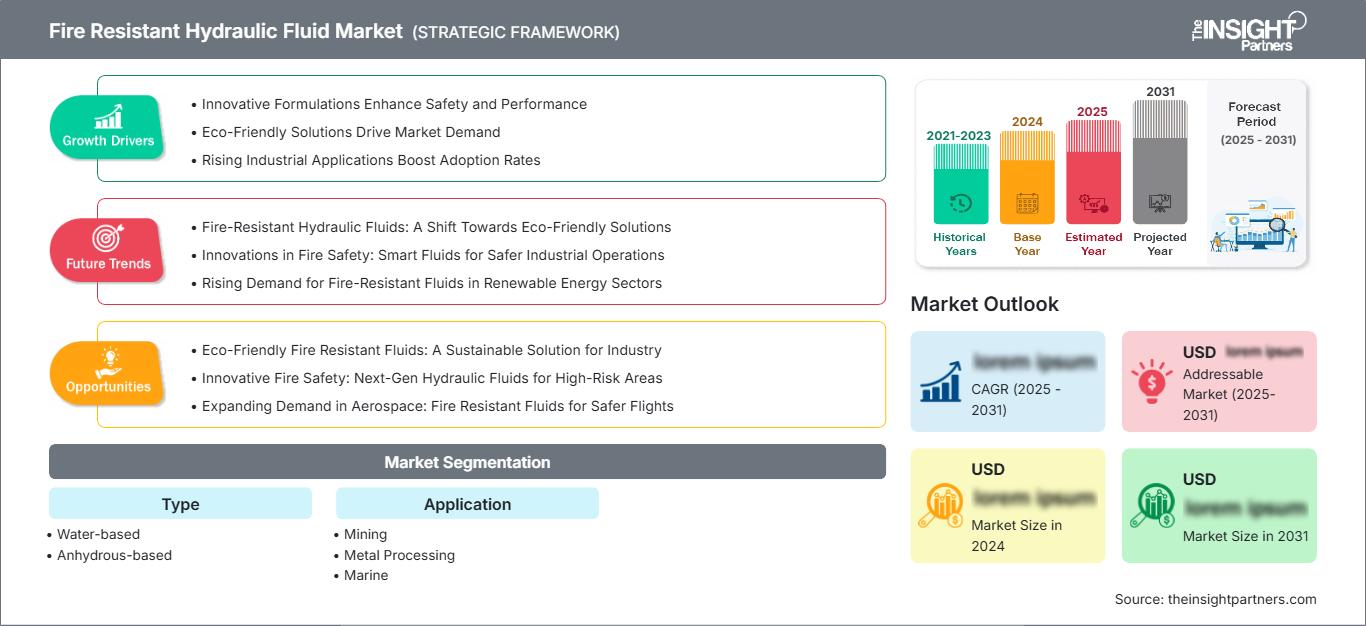
Fire Resistant Hydraulic Fluid Market: Strategic Insights
Regional Insights
North America Fire Resistant Hydraulic Fluid Market
North America represented ~32% of the global market in 2025 and is expected to expand at ~4% CAGR through 2034. There exists a substantial installed base of hydraulic machines in applications related to mining, metal working, heavy industrial manufacture, maritime and aerospace activities. Replacement opportunities arise where operators reevaluate combustible mineral oil fluids upon equipment upgrades and maintenance efforts or changes in safety practices at work. The US represents the major demand market while Canada makes its contribution via mining operations and industrial activities connected to energy generation and specialized machinery.
In terms of demand drivers, there is the presence of a robust technical service network. Competing firms offer not only their products but also services related to proper selection of fluids, compatibility with systems, contamination control and condition monitoring. Products based on water continue to be significant in fire prone industrial applications whereas anhydrous fluids are used in those systems which require superior lubrication qualities.
U.S. Fire Resistant Hydraulic Fluid Market
The US accounted for ~80% of North American revenue in 2025 and is projected to grow at ~4% CAGR through 2034. The reason for the location has to do with the size of domestic mining, metals processing, manufacturing, shipping, and aviation activity along with an effective distribution chain for industrial lubricants. The fire-resistant hydraulic fluids come into play in cases where hydraulic equipment is used in close proximity to furnaces, molten materials, underground equipment, or any other ignition source.
In addition, there is demand due to the presence of special aviation needs and supplier relations. Exxon Mobil Corporation and Eastman Chemical Company have strong exposure to aviation hydraulic fluid needs, whereas Quaker Chemical Corporation and Houghton International Inc. cater to industrial hydraulic fluid needs. U.S. buyers are focusing on how the hydraulic fluids perform based on operating temperature, pressure, seal and pump compatibility, durability, and fire resistance attributes.
Europe Fire Resistant Hydraulic Fluid Market
Europe accounted for ~28% of the global market in 2025 and is forecast to expand at ~4% CAGR through 2034. Germany is the leading country in Europe, supported by its large industrial machinery, metalworking, automotive manufacturing, and engineering base. The UK also maintains significant demand through aerospace, marine, offshore, and industrial applications. France contributes through aerospace, industrial equipment, and transport-related hydraulic systems, while Italy and Spain add demand from metal processing, machinery manufacturing, marine equipment, and industrial production.
Due to the mature industrial base in the area, equipment modernization and replacement becomes an important factor influencing the demand on the market. Increasingly, buyers pay attention not only to fluid fire resistance but also to their efficiency in terms of service life, equipment compatibility, and environmental characteristics. Thus, high-performing anhydrous solutions find themselves in demand in cases where lubrication performance is critical, while water-based fluids retain importance in cases of high fire protection priorities.
Demand in Europe is additionally driven by the presence of existing technical standards and safety procedures for equipment. In such a situation, suppliers with good formulation skills can stand out through certification, technical documentation, and lifecycle considerations as well as compatibility.
APAC Fire Resistant Hydraulic Fluid Market
APAC represented ~27% of the global market in 2025 and is expected to expand at ~5% CAGR through 2034, making it the fastest-growing regional market. China is the leading country in Asia Pacific, supported by large steelmaking, manufacturing, mining, and heavy-equipment industries. Japan and South Korea contribute through advanced manufacturing, shipbuilding, machinery, and specialty chemical capabilities, while India is supported by industrial expansion and infrastructure investment.
China's scale provides the strongest regional consumption base, while India offers additional growth through industrial modernization. Australia contributes through mining and resource-processing applications. Industrial safety initiatives, increasing equipment sophistication, and greater attention to hydraulic-system reliability can encourage conversion toward fire-resistant fluids. Regional suppliers can benefit from localization, shorter supply chains, technical support, and formulations adapted to high-temperature industrial environments.
Middle East & Africa Fire Resistant Hydraulic Fluid Market
The Middle East and Africa market is projected to expand at ~5% CAGR through 2034, supported by energy-related industrial activity, mining, infrastructure development, ports, and heavy machinery utilization. Saudi Arabia represents an important Middle East demand center because of its large industrial and energy ecosystem, while the UAE contributes through ports, marine services, construction equipment, and industrial facilities. South Africa remains important for mining and mineral processing.
Across the rest of MEA, adoption depends on the expansion and modernization of industrial equipment fleets. Fire-resistant hydraulic fluids can be particularly relevant where machinery operates around heat sources, heavy processing equipment, or offshore and marine environments. Supplier opportunities are linked to distribution coverage, equipment compatibility support, fluid condition monitoring, and the ability to provide formulations suitable for demanding temperature and contamination conditions.
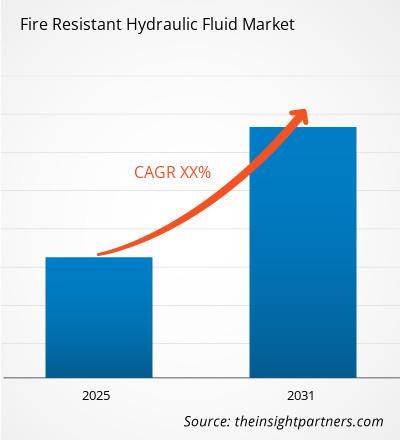
Segmentation Analysis
Type
Water-based and Anhydrous-based fluids represent the two defined product categories. Water-based products remain widely selected where maximum fire resistance and heat dissipation are important, whereas anhydrous formulations provide stronger lubrication and operating flexibility in systems where water content is undesirable. The Fire Resistant Hydraulic Fluid Market scope therefore spans both safety-led and performance-led fluid selection. The Water-based segment is expected to grow at ~4% CAGR from 2026 to 2034, while Anhydrous-based fluids are projected to expand at ~5% CAGR.
- Water-based: These formulations are prominent in mining and metal processing because high water content reduces ignition propensity and provides effective heat removal. Their strategic importance is strongest in applications where fire safety takes precedence over extreme-pressure lubrication performance.
- Anhydrous-based: These fluids serve applications requiring stronger lubrication, thermal stability, or specialized compatibility. Synthetic ester, phosphate ester, and related technologies allow formulators to target demanding industrial and aviation systems where water content can constrain operating performance.
Application
The application structure comprises Mining, Metal Processing, Marine, and Aviation. Each application has distinct hydraulic-system requirements, making viscosity, pressure capability, temperature exposure, fluid compatibility, and fire performance central purchasing criteria. Mining and metal processing generate substantial recurring industrial demand, while aviation is more specification-driven and technically specialized. Mining is projected to grow at ~4% CAGR, Metal Processing at ~4%, Marine at ~4%, and Aviation at ~6% through 2034.
- Mining: Hydraulic systems used in mining equipment face elevated fire risks and demanding operating conditions. Fire-resistant fluids support safer operation of machinery while maintaining hydraulic performance under heavy loads, contamination exposure, and extended duty cycles.
- Metal Processing: Steelmaking, casting, pressing, and related processes place hydraulic equipment near high-temperature surfaces and molten materials. Fire-resistant fluids reduce the consequences of leakage or spray ignition and are integrated into broader plant safety strategies.
- Marine: Marine and offshore hydraulic systems require reliable operation under moisture, corrosion, variable temperatures, and space constraints. Fire resistance becomes particularly important for equipment operating near engines, hot surfaces, drilling systems, and other potential ignition sources.
- Aviation: Aviation hydraulic fluids are highly specialized and qualification-driven. Formulations must combine fire resistance with thermal stability, low-temperature flow, corrosion protection, material compatibility, and long service performance under demanding aircraft operating conditions.
Opportunity Snapshot
| Application | Revenue Contribution | Trend Tag | Adoption Stage |
| Mining | High | Underground Safety | Mature |
| Metal Processing | High | Furnace Safety | Mature |
| Marine | Medium | Offshore Systems | Scaling |
| Aviation | Medium | Aircraft Efficiency | Scaling |
Fire Resistant Hydraulic Fluid Market Growth Drivers and Impact Analysis
Stricter Fire-Safety Requirements in High-Risk Hydraulic Operations
Fire prevention remains a fundamental purchasing criterion in mining, steelmaking, foundries, and other industrial environments where hydraulic equipment operates near heat or ignition sources. Modern hydraulic systems can generate high pressure, and hose failures or leakage can release fluid into hazardous areas. This increases the operational value of formulations designed to resist ignition and limit flame propagation. Safety-oriented fluid selection also supports risk reduction beyond the hydraulic component itself because a fire can affect workers, machinery, production lines, and facility infrastructure simultaneously. As operators review plant safety procedures and upgrade older equipment, conversion from conventional mineral-oil fluids can become an attractive maintenance decision. This mechanism supports steady replacement demand for both water-based and anhydrous fire-resistant formulations.
Expansion of Hydraulic Machinery in Mining and Metal Processing
Mining and metal processing require hydraulic power for material handling, presses, production equipment, mobile machinery, and specialized systems. Capacity expansion and modernization increase the installed base of hydraulic equipment that must operate reliably under high loads and challenging thermal conditions. Fire-resistant fluids become especially relevant where hydraulic systems are located close to furnaces, molten metals, underground workings, or other hazards. New equipment installations can also provide easier opportunities to specify compatible fire-resistant fluids from the outset, while retrofit projects create conversion demand in existing systems. The effect extends across fluid manufacturers, distributors, equipment suppliers, and maintenance contractors because fluid selection can require system flushing, seal evaluation, pump compatibility checks, and ongoing condition monitoring. This creates recurring technical-service opportunities alongside product consumption.
Rising Demand for Reliable Hydraulic Performance in Safety-Critical Equipment
Industrial buyers increasingly assess hydraulic fluids through multiple performance parameters rather than fire resistance alone. Pump efficiency, oxidation stability, viscosity control, corrosion protection, seal compatibility, cleanliness, and service life influence the total cost of operating hydraulic equipment. This favors suppliers that can formulate products for specific machinery and operating conditions. In aviation, the requirements are even more stringent because fluids must satisfy aircraft-specific specifications and performance tests. In marine and industrial applications, buyers similarly seek formulations that remain stable under moisture, temperature fluctuations, and prolonged equipment use. The resulting purchasing behavior supports premium technical formulations where improved service life or equipment protection offsets higher fluid costs. It also encourages suppliers to expand technical support and fluid analysis services as part of the overall customer proposition.
Fire Resistant Hydraulic Fluid Market Future Trends
Greater Emphasis on Lower-Impact and Recyclable Fluid Technologies
The Fire Resistant Hydraulic Fluid Market trends increasingly point toward formulations that combine fire safety with reduced environmental burden and improved lifecycle management. Water-glycol systems are receiving attention for recycling approaches that reduce waste generation, while synthetic formulations are being evaluated for biodegradability and renewable feedstock potential. This direction is relevant because hydraulic fluids are recurring consumables, and disposal requirements can influence total operating costs. Future product development is therefore likely to consider the complete fluid lifecycle, including production inputs, operating longevity, fluid monitoring, recovery, and end-of-life treatment. Suppliers that can demonstrate measurable reductions in waste or resource consumption while retaining fire resistance and hydraulic performance may gain greater acceptance in environmentally sensitive industrial sites, marine applications, and facilities with increasingly structured sustainability programs.
More Specialized Fluids for Electrified and Automated Equipment
Hydraulic equipment is becoming more integrated with electronic controls, sensors, automated maintenance systems, and energy-efficiency programs. This creates demand for fluids that maintain stable performance across tighter operating windows and interact reliably with modern pumps, valves, seals, and monitoring equipment. As machinery becomes more automated, unexpected fluid degradation can interrupt increasingly capital-intensive production systems. Future formulations are therefore likely to focus on longer service intervals, lower deposit formation, stable viscosity behavior, and improved compatibility with advanced hydraulic components. Aviation, automated metal-processing equipment, offshore systems, and specialized mobile machinery can benefit from these developments. Suppliers may increasingly pair fluid products with condition monitoring, laboratory analysis, and digital maintenance recommendations, shifting product differentiation toward performance assurance rather than fire resistance as a standalone specification.
Fire Resistant Hydraulic Fluid Market Opportunities
Localized Production and Distribution in High-Growth Industrial Economies
The strongest commercial opportunity lies in expanding local formulation, packaging, technical support, and distribution capabilities across industrializing economies. China and India offer substantial manufacturing and metal-processing bases, while Southeast Asian markets provide additional opportunities through industrial equipment, shipbuilding, ports, and resource processing. Local supply can reduce lead times and improve technical responsiveness for customers that require application-specific formulations or regular fluid replenishment. Suppliers can also use regional partnerships with equipment manufacturers, distributors, and maintenance contractors to establish conversion programs for hydraulic systems currently using conventional fluids. The opportunity extends beyond product sales because successful conversion often requires fluid selection, flushing procedures, seal compatibility assessment, and condition monitoring. The Fire Resistant Hydraulic Fluid Market Forecasts therefore indicate opportunities for integrated technical-service models alongside regional product expansion.
Premium Formulations for High-Performance Aviation and Marine Systems
Aviation and marine systems offer opportunities for suppliers able to meet demanding performance requirements while maintaining fire resistance. Aircraft hydraulic fluids require specialized qualification, thermal stability, low-temperature performance, corrosion protection, and material compatibility, creating relatively high technical barriers to entry. Marine and offshore applications have different priorities, including moisture resistance, equipment reliability, environmental considerations, and operation in confined spaces. Product development can target longer fluid life, lower maintenance requirements, improved erosion protection, and enhanced compatibility with modern hydraulic components. Strategic partnerships with equipment manufacturers, maintenance organizations, and specialized distributors can help suppliers build application credibility. Investment in testing, certification, technical support, and fluid analysis can consequently provide stronger differentiation than competing through basic product availability alone.
Recent Developments
- November 2025: Quaker Chemical Corporation – Quaker Houghton published updated technical guidance on fire-resistant hydraulic fluids and viscosity, highlighting the importance of fire resistance, synthetic formulation, viscosity selection, thermal stability, and equipment protection. Its portfolio includes water-glycol and anhydrous technologies, while its QUINTOLUBRIC 888 line is positioned for demanding industrial applications. The company also documented use of fire-resistant fluid in die-casting equipment where hydraulic systems operate near high-temperature processes.
- October 2025: Eastman Chemical Company – Eastman's Solutia manufacturing operation supporting Skydrol aviation fluids received an AS9100 quality-management certification transfer in October 2025, covering manufacture and distribution of Skydrol and related aviation fluids and fluid-analysis services. The certification supports the quality infrastructure surrounding Eastman's aviation hydraulic fluid portfolio, which includes fire-resistant phosphate ester products used in aircraft hydraulic systems.
Frequently Asked Questions

- Comprehensive Market Sizing and Forecast Analysis
- Detailed Segmentation Analysis
- In-Depth Market Dynamics Assessment
- Regional and Country-Level Insights
- Competitive Landscape and Company Benchmarking
- Strategic Business Intelligence
Recent Reports
Testimonials

The Insight Partners provided valuable market intelligence that supported our global go-to-market strategy. Their team was professional, responsive, and attentive to our feedback, providing thoughtful analysis and helpful methodological clarifications throughout the project.
Junmo Kim Chief Financial Officer (CFO), Enertech Co., Ltd.
The Insight Partners' SCADA System Market report is comprehensive, with valuable insights on current trends and future forecasts. The team was highly professional, responsive, and supportive throughout. We are very satisfied and highly recommend their services.
RAN KEDEM Partner, Reali Technologies LTDs
I requested a report on a very specific software market and the team produced the report in a few days. The information was very relevant and well presented. I then requested some changes and additions to the report. The team was again very responsive and I got the final report in less than a week.
JEAN-HERVE JENN Chairman, Future Analytica
We worked with The Insight Partners for an important market study and forecast. They gave us clear insights into opportunities and risks, which helped shape our plans. Their research was easy to use and based on solid data. It helped us make smart, confident decisions. We highly recommend them.
PIYUSH NAGPAL Sr. Vice President, High Beam Global
The Insight Partners delivered insightful, well-structured market research with strong domain expertise. Their team was professional and responsive throughout. The user-friendly website made accessing industry reports seamless. We highly recommend them for reliable, high-quality research services
YUKIHIKO ADACHI CEO, Deep Blue, LLC.
This is the first time I have purchased a market report from The Insight Partners.While I was unsure at first, I visited their web site and felt more comfortable to take the risk and purchase a market report.I am completely satisfied with the quality of the report and customer service. I had several questions and comments with the initial report, but after a couple of dialogs over email with their analyst I believe I have a report that I can use as input to our strategic planning process.Thank you so much for taking the extra time and making this a positive experience.I will definitely recommend your service to others and you will be my first call when we need further market data.
JOHN SUZUKI President and Chief Executive Officer, Board Director, BK Technologies
I wish to appreciate your support and the professionalism you displayed in the course of attending to my request for information regarding to infectious disease IVD market in Nigeria. I appreciate your patience, your guidance, and the fact that you were willing to offer a discount, which eventually made it possible for us to close a deal. I look forward to engaging The Insight Partners in the future, all thanks to the impression you have created in me as a result of this first encounter.
DR CHIJIOKE ONYIA MANAGING DIRECTOR, PineCrest Healthcare Ltd.Reason to Buy
- Informed Decision-Making
- Understanding Market Dynamics
- Competitive Analysis
- Identifying Emerging Markets
- Customer Insights
- Market Forecasts
- Risk Mitigation
- Boosting Operational Efficiency
- Strategic Planning
- Investment Justification
- Tracking Industry Innovations
- Aligning with Regulatory Trends





 Get Free Sample for