
Grease Market Trends, Share & Demand by 2034
Coverage: by Thickener Type (Metallic Soap Thickener, Non Soap Thickener, Inorganic Thickener, Others); End Use Industry (Automotive, Construction and Off-Highways, General Manufacturing, Steel, Mining, Others) , and Geography (North America, Europe, Asia Pacific, and South and Central America)
- Status : Data Released
- Report Code : TIPRE00005850
- Category : Chemicals and Materials
- No. of Pages : 150
- Available Report Formats :


- Last update date : July 27, 2026


2025 Market Size
US$ 6.92 Bn
Base year value
2034 Forecast
US$ 9.44 Bn
Projected by 2034
CAGR 2026-2034
3.51 %
Growth rate
Addressable Market
US$ 74.30 Bn
(2026-2034)
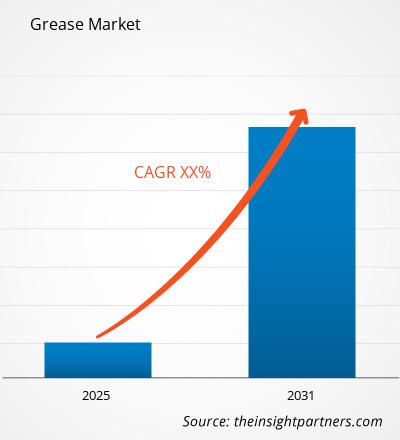
The global Grease market was valued at US$ 6.92 billion in 2025 and is expected to reach US$ 9.44 billion by 2034; it is estimated to record a CAGR of 3.51% during 2026-2034.
Grease Market Assessment and Insights
- North America accounted for an estimated share of 27–31% in 2025 and is expected to grow at a CAGR range of 3.5–4.5% from 2026–2034. The region benefits from mature automotive, industrial, and energy sectors requiring advanced lubrication solutions.
- US represented approximately 22–26% share in 2025 and is projected to expand at a CAGR range of 3.5–4.3% during 2026–2034. Demand is supported by manufacturing activity, vehicle maintenance, and industrial equipment usage.
- Europe held around 24–28% share in 2025 and is anticipated to record a CAGR range of 3.2–4.2% through 2034. Germany, the UK, France, and Italy remain key contributors due to automotive manufacturing and industrial engineering capabilities.
- Asia Pacific captured an estimated 32–36% share in 2025 and is expected to grow at a CAGR range of 4.2–5.0% during 2026–2034. China, India, Japan, and South Korea drive consumption through industrial expansion and infrastructure development.
- Largest Segment Metallic Soap Thickener accounted for approximately 55–60% market share in 2025 and is expected to grow at a CAGR range of 3.4–4.2% between 2026–2034 due to broad industrial applicability.
- High Growth Segment Non Soap Thickener represented around 18–23% share in 2025 and is projected to expand at a CAGR range of 4.5–5.5% due to demand for specialized high-temperature and extreme-condition lubrication.
- Key companies analyzed in detail: Exxon Mobil Corporation, Chevron Corporation, BP p.l.c., Shell plc, TotalEnergies SE, FUCHS SE, Idemitsu Kosan Co., Ltd., ENEOS Corporation, Axel Americas, LLC, Petro-Canada Lubricants Inc., Klüber Lubrication München SE & Co. KG, and SKF AB.
Source: The Insight Partners' analysis based on proprietary research, government publications, company annual reports, investor presentations, industry databases, and expert interviews.
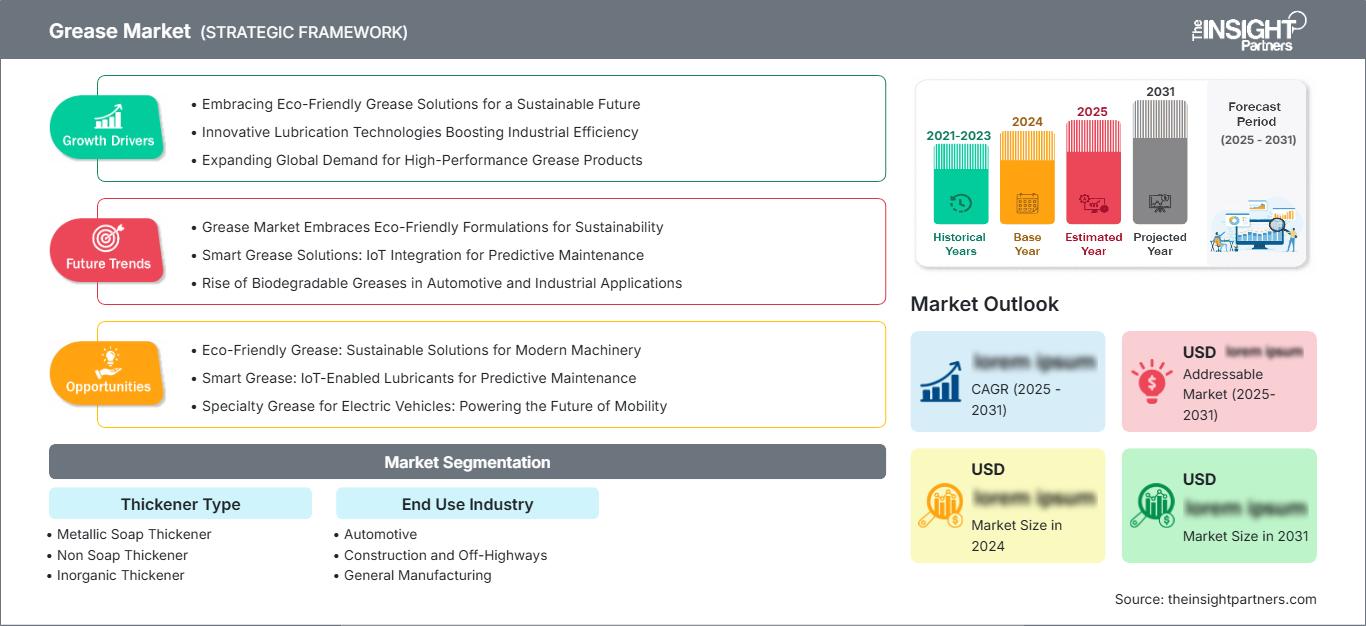
The grease market growth has come about through innovations in thickener chemistry, base oils, and formulation technologies aimed at enhancing the performance of equipment under challenging conditions. There has been a trend towards lithium complex, polyurea, calcium sulfonate, and synthetic base greases which offer enhanced resistance to temperature, better load-carrying capacity, and longer service life. Automation of industries has led to an increase in demand for greases that are suitable for precision instruments and can last long before maintenance is carried out.
Future innovations in the market will probably revolve around sustainable formulations, biolubricants, and custom-made greases for electric cars, renewable energy technology, and automated production lines. Increased industrial capacity in developing countries, stringent environmental standards, and infrastructure development will offer business opportunities for companies that manufacture lubricants according to specific applications.
Grease Market Report Scope
| Report Attribute | Details |
|---|---|
| Market size in 2025 | US$ 6.92 Billion |
| Market Size by 2034 | US$ 9.44 Billion |
| Global CAGR (2026 - 2034) | 3.51% |
| Historical Data | 2021-2024 |
| Forecast period | 2026-2034 |
Grease Market Analysis
The expansion of the grease market is determined by the increase in the need for lubricants in the field of transport, manufacturing, construction, and mining. The structure of the chain includes suppliers of basic oils, additives, and thickening agents, formulators of grease, distribution channels for industrial supply, and consumers who use lubricants for the protection of equipment.
Automotive and equipment producers demand more effective lubricants, which allow working for a long period of time without frequent maintenance. Increasing production of commercial trucks, off-road equipment, and industrial machinery results in stable consumption of grease products. Companies are developing new types of grease to overcome problems associated with extreme pressure, temperature variations, water resistance, and compatibility issues.
The competitive positioning in the grease market report is influenced by innovation in products, manufacturing regionally, technical assistance abilities, and collaborations strategically. Global lubricant companies like Exxon Mobil Corporation, Chevron Corporation, BP p.l.c., Shell plc, and TotalEnergies SE continue to bolster their product lines through innovations in formulations and application specific products. Specialist grease manufacturers including FUCHS SE, Idemitsu Kosan Co., Ltd., ENEOS Corporation, Axel Americas, LLC, and Petro-Canada Lubricants Inc. emphasize on specialized products for their industrial and automotive clients.
In terms of investment, the trend is more towards performance-based, sustainable lubricants, and capacity expansion in emerging markets. Businesses are strengthening their supply chain efficiency through local manufacturing, technology-based monitoring systems, and technical collaborations with the manufacturers of equipment. It is clear from the analysis of the market that innovation in formulation performance, sustainability, and application would be key to competitive positioning.
● REPORT CUSTOMIZATION
Tailor This Report To Align With Your Specific Business Requirements
This report can be customized to align precisely with your business objectives, scope, and target markets. Customization options include tailored segmentation, geography, competitive analysis, and strategic insights to support informed decision-making.
Customize This Report →WHAT YOU CAN ADJUST
- ● Segmentations
- ● Geography
- ● Competitive Analysis
- ● Language Preferences
Grease Market: Strategic Insights
Regional Insights
North America Grease Market
The competitive positioning in the market is influenced by innovation in products, manufacturing regionally, technical assistance abilities, and collaborations strategically. Global lubricant companies like Exxon Mobil Corporation, Chevron Corporation, BP p.l.c., Shell plc, and TotalEnergies SE continue to bolster their product lines through innovations in formulations and application specific products. Specialist grease manufacturers including FUCHS SE, Idemitsu Kosan Co., Ltd., ENEOS Corporation, Axel Americas, LLC, and Petro-Canada Lubricants Inc. emphasize on specialized products for their industrial and automotive clients.
In terms of investment, the trend is more towards performance-based, sustainable lubricants, and capacity expansion in emerging markets. Businesses are strengthening their supply chain efficiency through local manufacturing, technology-based monitoring systems, and technical collaborations with the manufacturers of equipment. It is clear from the analysis of the market that innovation in formulation performance, sustainability, and application would be key to competitive positioning.
U.S. Grease Market
Approximately 22%–26% of the North American grease market was captured by the U.S., with an expected growth rate of CAGR of 3.5% to 4.3% between 2026 and 2034. The presence of numerous automotive fleets, manufacturing capabilities, and extensive utilization of construction machinery and mining equipment is beneficial for the growth of this market in the region.
Leading organizations that have a significant market presence include Exxon Mobil Corporation, Chevron Corporation, Shell plc, and Petro-Canada Lubricants Inc. The increasing usage of synthetic and high performance greases in electric cars, robotics, and industrial equipment promotes the diversification of applications of the grease. The developed maintenance system in the country ensures continuous demand.
Europe Grease Market
Europe was valued at 24%-28% of the market shares of grease in 2025 and will register CAGR growth in the range of 3.2%-4.2% during 2026-2034. Germany will be the leading country in Europe on account of its presence in the automobile industry, industrial machines, and engineering. United Kingdom will add value to the market via transport, manufacturing, and energy industries that require special lubricants.
Efficiency and advanced engineering of Germany have resulted in the demand for high-end greases that need to be used in automated processes and heavy machineries. Efficiency in the country has made it a major consumer of specialty lubricants.
United Kingdom, France, Italy, and Spain make for the leading regions in Europe due to their contribution via manufacture of automobiles, industrial maintenance, and other activities. Aerospace and transport sectors in France have been contributing to the market, while manufacturing, construction, and machine operations in Italy and Spain have added value to the market. Lubricants manufacturers in Europe are focusing more on developing sustainable formulations keeping environmental regulations in mind.
APAC Grease Market
The Asia Pacific region has held about 32–36% grease market share of the in 2025, and the region is forecast to maintain a CAGR of 4.2–5.0% from 2026 to 2034. China emerges as the foremost nation in the Asia Pacific because of large-scale production, vehicle manufacturing, and investments made in infrastructure.
Demand in the region is being stimulated by economic growth, development of infrastructure, and greater use of machinery. Initiatives taken by governments to promote manufacturing, electric vehicles, and industrial growth have spurred usage of high-end lubricants.
Middle East & Africa Grease Market
The Middle East & Africa segment accounted for a share of 7–10% of the global grease market in 2025 and is anticipated to grow with a CAGR between 3.0–4.0% from 2026–2034. Saudi Arabia stands out as the key country owing to the presence of operations within the energy sector, industries, and infrastructure.
The UAE and South Africa make their contributions due to construction, mining, and manufacturing activities. Expansion of the energy sector, need for maintenance, and diversification in the industrial sector are helping to drive lubricant demand within the region. The infrastructure development taking place in the GCC nations and the mining operations in Africa are expected to offer opportunities for the market players.
Segmentation Analysis
Thickener Type
The thickener type segment is a fundamental component of the market, influencing performance characteristics such as temperature resistance, mechanical stability, and load-bearing capacity. The segment is expected to register a CAGR range of 3.5–4.5% during 2026–2034. Metallic soap thickeners continue to dominate due to widespread industrial usage, while non soap and inorganic alternatives gain attention for specialized operating environments.
- Metallic Soap Thickener is the dominant category due to extensive use in automotive, industrial machinery, and general manufacturing applications. Lithium-based and lithium complex formulations remain widely adopted because of balanced performance, availability, and cost efficiency.
- Non Soap Thickener formulations are increasingly preferred for high-temperature, high-speed, and specialized applications. Polyurea and other advanced systems provide enhanced durability, making them suitable for demanding industrial equipment and precision machinery.
- Inorganic Thickener products serve applications requiring resistance against extreme temperatures, chemicals, and harsh operating conditions. These formulations support industries where conventional greases may experience performance limitations under severe environments.
End Use Industry
The end use industry segment represents a major area of application within the market, with an expected CAGR range of 3.8–4.8% during 2026–2034. Automotive, construction and off-highways, general manufacturing, steel, and mining industries depend on lubrication solutions to improve equipment reliability, reduce downtime, and extend component lifespan.
- Automotive applications represent a significant consumption area due to vehicle production, maintenance requirements, and increasing demand for specialized greases in electric and conventional vehicles.
- Construction and Off-Highways demand is supported by heavy machinery operations requiring lubricants capable of handling pressure, vibration, dust exposure, and challenging outdoor conditions.
- General Manufacturing uses grease products across machinery, bearings, and production systems where operational continuity and maintenance efficiency are critical factors.
- Steel industry applications require durable lubrication solutions for high-load equipment, rolling mills, and processing machinery operating under elevated temperatures and demanding conditions.
- Mining operations rely on specialized greases for heavy equipment, conveyors, and extraction machinery where reliability and protection against harsh environments are essential.
Opportunity Snapshot
| End Use Industry | Revenue Contribution (High/Medium/Low) | Trend Tag | Adoption Stage |
|---|---|---|---|
| Automotive | High | EV Lubrication | Scaling |
| Construction and Off-Highways | High | Heavy Equipment | Mature |
| General Manufacturing | High | Smart Machinery | Mature |
| Steel | Medium | Mill Operations | Mature |
| Mining | Medium | Extreme Conditions | Scaling |
Grease Market Growth Drivers and Impact Analysis
Expansion of Automotive and Industrial Equipment Applications
Increasing vehicle production, industrial machinery deployment, and equipment modernization are creating sustained demand for advanced lubrication solutions. Automotive manufacturers require greases for bearings, chassis components, electric vehicle systems, and other moving parts where performance consistency is essential. Industrial sectors are also replacing older equipment with automated and high-speed machinery that requires specialized lubrication products. This shift is increasing demand for formulations offering longer service intervals, improved thermal stability, and enhanced protection against wear. The expansion of manufacturing facilities in emerging economies is further supporting consumption, as new production lines require reliable lubrication systems. As equipment complexity increases, manufacturers are increasingly selecting application-specific grease solutions to improve operational efficiency and minimize maintenance-related interruptions.
Rising Adoption of High-Performance Lubrication Solutions
Demand for high-performance greases is increasing as industries operate machinery under higher loads, extreme temperatures, and challenging environmental conditions. Mining, steel, construction, and energy industries require lubricants that maintain performance under pressure, contamination exposure, and extended operating cycles. Advanced thickener technologies, synthetic base oils, and improved additive systems are enabling manufacturers to develop products with enhanced mechanical stability and resistance properties. These developments are encouraging end users to replace conventional products with specialized formulations designed for demanding applications. Equipment manufacturers and maintenance providers are increasingly collaborating with lubricant suppliers to select products based on operational requirements rather than only cost considerations. This transition is strengthening the market position of premium grease formulations across industrial sectors.
Increasing Focus on Equipment Efficiency and Maintenance Optimization
Industries are increasingly prioritizing preventive maintenance strategies to reduce downtime, improve asset utilization, and extend machinery operating life. Grease products play an important role in maintenance programs by protecting components from friction, corrosion, and mechanical degradation. Digital monitoring systems and predictive maintenance technologies are helping companies optimize lubrication schedules and identify equipment performance issues earlier. This trend is particularly relevant in manufacturing, mining, and transportation sectors where unexpected equipment failures can significantly affect productivity. Lubricant suppliers are responding by developing products with longer relubrication intervals and improved durability characteristics. The focus on lifecycle cost reduction is encouraging businesses to evaluate lubrication solutions based on total operational benefits rather than initial product costs.
Grease Market Future Trends
Growth of Sustainable and Bio-Based Lubrication Formulations
Environmental considerations are influencing the development of sustainable grease formulations with reduced ecological impact. Manufacturers are investing in bio-based base oils, biodegradable additives, and environmentally acceptable lubricant technologies to address evolving regulatory expectations. These products are gaining attention in applications where accidental lubricant release may affect surrounding environments, including marine, agriculture, and forestry equipment. Future innovation is expected to focus on balancing environmental performance with durability, temperature resistance, and load-bearing capabilities. As industries adopt sustainability targets, lubricant suppliers are expected to expand portfolios featuring renewable raw materials and improved lifecycle characteristics. The grease market trends will influence product development strategies and encourage greater adoption of environmentally responsible lubrication solutions across multiple end-use industries.
Advanced Lubrication Solutions for Electric and Automated Systems
The increasing adoption of electric vehicles, robotics, and automated industrial systems is creating demand for specialized grease formulations. These applications require lubricants compatible with electrical components, high-speed movement, reduced maintenance cycles, and compact mechanical designs. Electric mobility growth is encouraging manufacturers to develop products addressing specific requirements such as low noise operation, thermal management, and material compatibility. Similarly, automated factories require precision lubrication solutions capable of maintaining performance in continuous operating environments. Future product development will likely emphasize customized formulations created in collaboration with equipment manufacturers. The integration of smart maintenance technologies will further support demand for advanced greases capable of improving reliability and efficiency in next-generation industrial systems.
Grease Market Opportunities
Increasing Demand from Emerging Industrial Economies
Emerging economies present significant opportunities due to expanding manufacturing capacity, infrastructure development, and increasing industrial equipment deployment. Countries across Asia Pacific, the Middle East, and Africa are investing in transportation networks, construction projects, mining operations, and manufacturing facilities, creating additional lubricant demand. Suppliers can capitalize on these opportunities by establishing regional production capabilities, strengthening distribution partnerships, and offering application-specific solutions suited to local industrial requirements. Growth in automotive production and industrial automation in developing grease market forecast is expected to further increase consumption of specialized grease products. Companies with strong technical support capabilities and localized customer engagement strategies are positioned to benefit from rising demand in these regions.
Development of Customized Grease Solutions for Specialized Applications
Specialized industrial applications are creating opportunities for manufacturers to develop customized grease formulations designed for specific operational challenges. Industries such as steel production, mining, renewable energy, and advanced manufacturing require products capable of operating under extreme conditions. Suppliers can differentiate themselves by providing technical expertise, formulation customization, and performance testing services. The increasing complexity of equipment systems is encouraging end users to seek lubrication partners rather than standard product suppliers. Companies investing in research and development can capture demand for premium products offering improved efficiency, reduced maintenance requirements, and longer component life. Customized solutions are expected to become an important growth avenue as industrial users focus on optimizing equipment performance.
Recent Developments
- June 2026: Engen expanded its lubricant range with a Grease Tubes line, introducing a tube packaging format for three of its grease products aimed at automotive, industrial, and general maintenance use.
- May 2026: CITGO Petroleum Corporation launched its Mystik JT-6 Heavy Duty SynBlend 460 Moly Plus #2 (HD460 Moly Plus #2), the latest product in its premium line of JT-6 greases. Engineered with advanced technology and designed for severe-duty applications, this new grease offers superior performance that goes beyond traditional molybdenum disulfide (moly)-based greases.
Frequently Asked Questions

- Comprehensive Market Sizing and Forecast Analysis
- Detailed Segmentation Analysis
- In-Depth Market Dynamics Assessment
- Regional and Country-Level Insights
- Competitive Landscape and Company Benchmarking
- Strategic Business Intelligence
Recent Reports
Testimonials

The Insight Partners' SCADA System Market report is comprehensive, with valuable insights on current trends and future forecasts. The team was highly professional, responsive, and supportive throughout. We are very satisfied and highly recommend their services.
RAN KEDEM Partner, Reali Technologies LTDs
I requested a report on a very specific software market and the team produced the report in a few days. The information was very relevant and well presented. I then requested some changes and additions to the report. The team was again very responsive and I got the final report in less than a week.
JEAN-HERVE JENN Chairman, Future Analytica
We worked with The Insight Partners for an important market study and forecast. They gave us clear insights into opportunities and risks, which helped shape our plans. Their research was easy to use and based on solid data. It helped us make smart, confident decisions. We highly recommend them.
PIYUSH NAGPAL Sr. Vice President, High Beam Global
The Insight Partners delivered insightful, well-structured market research with strong domain expertise. Their team was professional and responsive throughout. The user-friendly website made accessing industry reports seamless. We highly recommend them for reliable, high-quality research services
YUKIHIKO ADACHI CEO, Deep Blue, LLC.
This is the first time I have purchased a market report from The Insight Partners.While I was unsure at first, I visited their web site and felt more comfortable to take the risk and purchase a market report.I am completely satisfied with the quality of the report and customer service. I had several questions and comments with the initial report, but after a couple of dialogs over email with their analyst I believe I have a report that I can use as input to our strategic planning process.Thank you so much for taking the extra time and making this a positive experience.I will definitely recommend your service to others and you will be my first call when we need further market data.
JOHN SUZUKI President and Chief Executive Officer, Board Director, BK Technologies
I wish to appreciate your support and the professionalism you displayed in the course of attending to my request for information regarding to infectious disease IVD market in Nigeria. I appreciate your patience, your guidance, and the fact that you were willing to offer a discount, which eventually made it possible for us to close a deal. I look forward to engaging The Insight Partners in the future, all thanks to the impression you have created in me as a result of this first encounter.
DR CHIJIOKE ONYIA MANAGING DIRECTOR, PineCrest Healthcare Ltd.Reason to Buy
- Informed Decision-Making
- Understanding Market Dynamics
- Competitive Analysis
- Identifying Emerging Markets
- Customer Insights
- Market Forecasts
- Risk Mitigation
- Boosting Operational Efficiency
- Strategic Planning
- Investment Justification
- Tracking Industry Innovations
- Aligning with Regulatory Trends





 Get Free Sample for