
Hygiene Adhesives Market Size, Demand & Growth by 2034
Coverage: By Resin Type (Ethylene-vinyl-acetate, Styrene-ethylene-butadiene-styrene, Styrene-isoprene-styrene, Styrene-butadiene-styrene, Other Resin Types); Product Type (Woven, Non-woven); Application (Polishing, Cutting, Grinding, Other Applications), and Geography (North America, Europe, Asia Pacific, and South and Central America)
- Status : Data Released
- Report Code : TIPRE00014624
- Category : Chemicals and Materials
- No. of Pages : 150
- Available Report Formats :


- Last update date : June 29, 2026


2025 Market Size
US$ 16.01 Bn
Base year value
2034 Forecast
US$ 31.24 Bn
Projected by 2034
CAGR 2026-2034
7.7 %
Growth rate
Addressable Market
US$ 212.64 Bn
(2026-2034)
The global hygiene adhesives market size is projected to reach US$ 31.24 billion by 2034 from US$ 16.01 billion in 2025. The market is anticipated to register a CAGR of 7.7% during the forecast period 2026–2034.
Key market dynamics include a heightening global focus on skin-friendly and high-performance disposable products, rising consumer awareness regarding personal wellness and sanitation, and a significant shift toward bio-based, sustainable adhesive solutions. Additionally, the market is expected to benefit from the growing popularity of premium adult incontinence products, expansion in organized retail and healthcare channels across emerging economies, and the increasing inclusion of specialized hot-melt adhesives in high-speed manufacturing lines for baby diapers and feminine hygiene items.
Hygiene Adhesives Market Analysis
The hygiene adhesives market analysis shows a shift toward low-VOC and skin-friendly formulations as consumers and manufacturers prioritize safety and comfort. The market is bifurcated into synthetic hot-melt sectors and high-growth bio-based, sustainable segments driven by stringent environmental regulations. Strategic opportunities are emerging in specialty adult incontinence and medical wellness applications, where superior elastic attachment and core integrity offer a clear competitive advantage over legacy bonding methods. The analysis also notes that market expansion depends on absolute bond reliability in high-speed manufacturing lines and consistent chemical stability under variable moisture conditions. Competitive differentiation now stands out depending on branding that highlights dermatologically tested components, zero skin-irritation profiles, and auditable sustainability metrics. This approach helps premium suppliers command higher margins in a highly cost-sensitive and technically demanding global market.
Hygiene Adhesives Market Overview
Disposable hygiene products have advanced from basic convenience items to highly sophisticated personal care solutions. The market includes ultra-thin baby diapers, highly absorbent adult incontinence pads, and discreet, ergonomic feminine hygiene products. Both multinational chemical corporations and specialized formulation startups compete in this market, utilizing advanced polymer bases such as Styrenic Block Copolymers, Ethylene-Vinyl Acetate, and polyolefins. Growing demand for extended-wear and high-comfort personal care options among an aging population in North America and Western Europe has increased the reliance on advanced, elastic-bonding adhesives. Asia-Pacific leads globally in both production volume and consumption, driven by rapid urbanization, expanding middle-class populations, and rising awareness of female and infant hygiene. The US market remains a primary innovation hub, driven by evolving consumer health priorities and a highly advanced retail ecosystem. Large-scale domestic production facilities focus on technical enhancements, supporting rapid market adoption across key demographics. Strong infrastructure and established supply chains continue to solidify its leading position in regional manufacturing and distribution networks.
● REPORT CUSTOMIZATION
Tailor This Report To Align With Your Specific Business Requirements
This report can be customized to align precisely with your business objectives, scope, and target markets. Customization options include tailored segmentation, geography, competitive analysis, and strategic insights to support informed decision-making.
Customize This Report →WHAT YOU CAN ADJUST
- ● Segmentations
- ● Geography
- ● Competitive Analysis
- ● Language Preferences
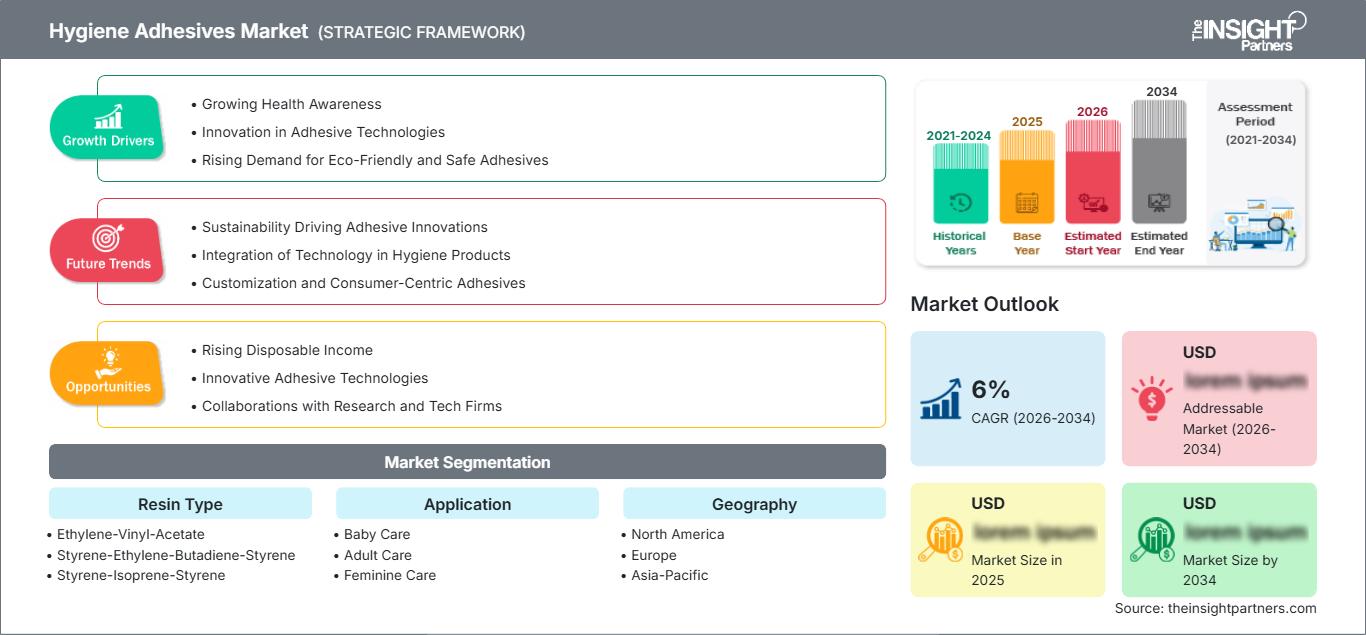
Hygiene Adhesives Market: Strategic Insights
-
Get Top Key Market Trends of this report.This FREE sample will include data analysis, ranging from market trends to estimates and forecasts.
Hygiene Adhesives Market Drivers and Opportunities
Market Drivers:
- Booming Demand for Baby Diapers and Adult Incontinence Products: Rapidly shifting demographic profiles, characterized by declining infant mortality rates in developing markets and an aging global population, are accelerating the volume consumption of disposable hygiene products. This ongoing surge relies heavily on advanced adhesives to maintain product structural integrity and prevent leaks.
- Regulatory Push and Consumer Preference for Eco-Friendly Solutions: Stricter governmental regulations regarding volatile organic compounds and chemical emissions are forcing manufacturers to swap traditional solvent-based bonding methods for advanced water-based or hot-melt formulations. The market is steadily pivoting toward bio-based components to appeal to eco-conscious buyers.
- Rapid Urbanization and Rising Disposable Income in Emerging Markets: Growing industrialization, combined with expanding modern retail infrastructures and digital commerce access across developing parts of the world, has substantially improved the accessibility and affordability of personal care products, boosting bulk adhesive procurement.
Market Opportunities:
- Formulation of Next-Generation Bio-Based Hot Melts: Developing robust, 100% biodegradable and compostable hot-melt adhesives provides a massive opportunity for manufacturers seeking early-mover advantages in strictly regulated markets like Western Europe and North America.
- Expansion into Strategic Asian and Latin American Manufacturing Hubs: Establishing dedicated production and R&D footprints within high-growth regions allows adhesive suppliers to work closely with local nonwoven conversion facilities, minimizing logistics friction and optimizing production costs.
- Customization for Ultra-Thin and Breathable Product Designs: As personal care brands continuously innovate toward thinner cores and breathable backsheets, adhesive formulators have a strong opportunity to design specialized, low-add-on coatings that deliver exceptional bond strength without compromising product flexibility or skin breathability.
Hygiene Adhesives Market Report Segmentation Analysis
The hygiene adhesives market share is analyzed across various segments to provide a clearer understanding of its structure, growth potential, and emerging trends. Below is the standard segmentation approach used in most industry reports:
By Resin Type:
- Ethylene-vinyl-acetate: A widely adopted polymer option valued for its excellent thermal stability, strong initial tack, and cost-effective performance across standard hygiene bonding layers.
- Styrene-ethylene-butadiene-styrene: A premium elastomer segment known for outstanding UV resistance, thermal aging properties, and superior elastic performance in high-stretch diaper waistbands.
- Styrene-isoprene-styrene: Highly favored for pressure-sensitive applications due to its high cohesive strength, low melt viscosity, and excellent adhesion to low-energy nonwoven surfaces.
- Styrene-butadiene-styrene: The dominant thermoplastic elastomer block copolymer driver, heavily utilized for structural positioning and construction bonding in high-speed conversion lines.
By Product Type:
- Woven: Specialized adhesive configurations designed to bond structural textile backings and reinforced edge seams without bleeding through the woven fabric matrix.
- Non-woven: The primary volume driver across the hygiene industry, engineered specifically to secure multi-layered fluid distribution systems, top sheets, and barrier leg cuffs.
By Application:
- Polishing
- Cutting
- Grinding
By Geography:
- North America
- Europe
- Asia Pacific
- South & Central America
- Middle East & Africa
Hygiene Adhesives Market Report Scope
| Report Attribute | Details |
|---|---|
| Market size in 2025 | US$ 16.01 Billion |
| Market Size by 2034 | US$ 31.24 Billion |
| Global CAGR (2026 - 2034) | 7.7% |
| Historical Data | 2021-2024 |
| Forecast period | 2026-2034 |
| Segments Covered |
By Resin Type
|
| Regions and Countries Covered |
North America
|
| Market leaders and key company profiles |
|
Hygiene Adhesives Market Players Density: Understanding Its Impact on Business Dynamics
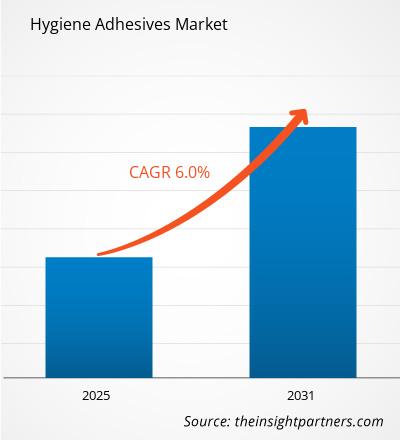
The Hygiene Adhesives Market is growing rapidly, driven by increasing end-user demand due to factors such as evolving consumer preferences, technological advancements, and greater awareness of the product's benefits. As demand rises, businesses are expanding their offerings, innovating to meet consumer needs, and capitalizing on emerging trends, which further fuels market growth.
Hygiene Adhesives Market Share Analysis by Geography
Asia-Pacific is expected to grow fastest in the coming years. Emerging markets in South & Central America, the Middle East, and Africa also have many untapped opportunities for personal care chemical producers and nonwoven converters to expand.
The hygiene adhesives market is undergoing a significant transformation, moving from a standard chemical commodity to a highly customized, functional material. Growth is driven by the expansion of the global personal care ecosystem, strict environmental compliance mandates, and an increased corporate focus on manufacturing line optimization. Below is a summary of market share and trends by region:
1. North America
- Market Share: Holds a mature and significant share, characterized by highly consolidated value chains and premium consumer segments.
- Key Drivers:
- Accelerated growth in the adult diaper and incontinence category due to an aging baby-boomer demographic.
- A highly advanced product manufacturing landscape requiring premium-grade, low-odor adhesive formulations.
- Robust market penetration of specialized, high-margin medical and skin-contact personal care goods.
- Trends: Widespread manufacturing adoption of low-temperature application hot melts to decrease energy usage, along with an increasing focus on hypoallergenic certifications.
2. Europe
- Market Share: Accounts for a sizable market footprint, operating under the world’s most stringent environmental and consumer safety regulations.
- Key Drivers:
- Strict EU regulations on microplastics, chemical compliance, and carbon emissions forcing shifts in raw material sourcing.
- High consumer demand for sustainable, circular-economy products and plastic-free disposable options.
- Strong infrastructure for advanced technical textile and nonwoven component manufacturing.
- Trends: A significant industry shift toward completely bio-based polymers and water-borne technologies, alongside collaborative value-chain partnerships aimed at building truly compostable hygiene products.
3. Asia-Pacific
- Market Share: Commands the single largest global market share, fueled by immense production output and massive localized consumption.
- Key Drivers:
- Skyrocketing volume demand for modern baby diapers and feminine care goods across China, India, and Southeast Asia.
- Rising purchasing power, growing middle-class segments, and large-scale urbanization driving retail conversion.
- Dominance as a primary global export hub for converted nonwoven goods and raw hygiene components.
- Trends: Massive capital investments in automated, high-output production lines running at top speeds, which directly fuels the local demand for ultra-stable hot melt systems.
4. South and Central America
- Market Share: An emerging market region with steady development, anchored by major manufacturing developments in Brazil, Argentina, and Chile.
- Key Drivers:
- Improving healthcare access and rising baseline consumer awareness surrounding baby care and female sanitation.
- Ongoing localization of personal care production by multinational hygiene brands to cut import costs.
- Gradual expansion of modern distribution, hypermarkets, and organized retail chains into tier-2 cities.
- Trends: Growth of cost-effective, multi-functional adhesive solutions designed to operate efficiently across multi-purpose manufacturing equipment.
5. Middle East and Africa
- Market Share: A highly dynamic, developing market sector showing strong growth potential in urbanized economic centers.
- Key Drivers:
- Favorable regional demographics, including high birth rates across sub-Saharan Africa boosting the core diaper market.
- Strategic domestic industrial investments in the GCC region to minimize dependence on imported chemical supplies.
- Increasing demand for high-temperature stable formulations tailored to resist degradation in hot, arid distribution networks.
- Trends: Rapid transition away from unbranded or informal personal care options toward structured, locally produced disposable hygiene items.
High Market Density and Competition
Competition is intensifying due to the presence of established global chemical giants and specialized formulation leaders. Market participants navigate a complex landscape alongside regional adhesive experts and niche chemical compounders to capture shifting consumer demands.
This competitive environment pushes vendors to differentiate through:
- Technical Performance and Line Efficiency: Formulating high-performance hot melts that operate reliably at low application temperatures, lowering energy consumption and protecting thin backsheets from burning or bleed-through.
- Portfolio Diversification: Expanding standard adhesive configurations to include specialized elastic-attachment, positioning, and high-integrity core bonding options suited to different nonwoven layers.
- Supply Chain Integration and Raw Material Control: Securing reliable pipelines of bio-based tackifiers and synthetic polymers to maintain production continuity and comply with strict clean-label certifications.
Opportunities and Strategic Moves
- Partner with nonwoven converters and high-output machinery builders to co-develop zero-defect adhesive application technologies optimized for ultra-high-speed manufacturing lines.
- Incorporate sustainable raw materials and circular-economy certifications into core product lines to satisfy the strict ESG metrics of multinational personal care consumer brands.
Major Companies operating in the Hygiene Adhesives Market are:
- 3M
- Arkema Group (Bostik SA)
- Evonik Industries AG
- Exxon Mobil Corporation
- H. B. Fuller Company
- Henkel AG and Co. KGaA
- Hexion
- Huntsman Corp.
- Sika AG
- The Dow Chemical Company
Disclaimer: The companies listed above are not ranked in any particular order.
Hygiene Adhesives Market News and Recent Developments
- In February 2026, Sika agreed to acquire Akkim, a leading global manufacturer of adhesives and sealants based in Turkey. This acquisition will strengthen Sika’s position in the global adhesives and sealants industry and unlock substantial growth opportunities through expanded presence in the distribution channel and broader geographic reach. In addition, Akkim will add considerable production capacity, enabling a more efficient operational footprint.
- In September 2025, Huntsman Advanced Materials, a division of Huntsman Corporation, announced the launch of a newly reformulated range of ARALDITE epoxy adhesives that are free from intentionally added BPA (Bisphenol A) and substances classified as CMR (Carcinogenic, Mutagenic, or Reprotoxic) under the EU’s CLP regulation. ARALDITE adhesives have set the industry benchmark for reliability and performance for over 80 years, supporting a wide range of applications in transportation, marine, medical, wind energy, and industrial manufacturing. The products are widely used in the production and assembly of buses, trucks, rail vehicles, filtration systems, and more.
Hygiene Adhesives Market Report Coverage and Deliverables
The Hygiene Adhesives Market Size and Forecast (2021–2034) report provides a detailed analysis of the market covering below areas:
- Hygiene Adhesives Market size and forecast at global, regional, and country levels for all the key market segments covered under the scope
- Hygiene Adhesives Market trends, as well as market dynamics such as drivers, restraints, and key opportunities
- Detailed PEST and SWOT analysis
- Hygiene Adhesives Market analysis covering key market trends, global and regional framework, major players, regulations, and recent market developments
- Industry landscape and competition analysis covering market concentration, heat map analysis, prominent players, and recent developments in the Hygiene Adhesives Market
- Detailed company profiles
Frequently Asked Questions

- Comprehensive Market Sizing and Forecast Analysis
- Detailed Segmentation Analysis
- In-Depth Market Dynamics Assessment
- Regional and Country-Level Insights
- Competitive Landscape and Company Benchmarking
- Strategic Business Intelligence
Recent Reports
Testimonials

The Insight Partners' SCADA System Market report is comprehensive, with valuable insights on current trends and future forecasts. The team was highly professional, responsive, and supportive throughout. We are very satisfied and highly recommend their services.
RAN KEDEM Partner, Reali Technologies LTDs
I requested a report on a very specific software market and the team produced the report in a few days. The information was very relevant and well presented. I then requested some changes and additions to the report. The team was again very responsive and I got the final report in less than a week.
JEAN-HERVE JENN Chairman, Future Analytica
We worked with The Insight Partners for an important market study and forecast. They gave us clear insights into opportunities and risks, which helped shape our plans. Their research was easy to use and based on solid data. It helped us make smart, confident decisions. We highly recommend them.
PIYUSH NAGPAL Sr. Vice President, High Beam Global
The Insight Partners delivered insightful, well-structured market research with strong domain expertise. Their team was professional and responsive throughout. The user-friendly website made accessing industry reports seamless. We highly recommend them for reliable, high-quality research services
YUKIHIKO ADACHI CEO, Deep Blue, LLC.
This is the first time I have purchased a market report from The Insight Partners.While I was unsure at first, I visited their web site and felt more comfortable to take the risk and purchase a market report.I am completely satisfied with the quality of the report and customer service. I had several questions and comments with the initial report, but after a couple of dialogs over email with their analyst I believe I have a report that I can use as input to our strategic planning process.Thank you so much for taking the extra time and making this a positive experience.I will definitely recommend your service to others and you will be my first call when we need further market data.
JOHN SUZUKI President and Chief Executive Officer, Board Director, BK Technologies
I wish to appreciate your support and the professionalism you displayed in the course of attending to my request for information regarding to infectious disease IVD market in Nigeria. I appreciate your patience, your guidance, and the fact that you were willing to offer a discount, which eventually made it possible for us to close a deal. I look forward to engaging The Insight Partners in the future, all thanks to the impression you have created in me as a result of this first encounter.
DR CHIJIOKE ONYIA MANAGING DIRECTOR, PineCrest Healthcare Ltd.Reason to Buy
- Informed Decision-Making
- Understanding Market Dynamics
- Competitive Analysis
- Identifying Emerging Markets
- Customer Insights
- Market Forecasts
- Risk Mitigation
- Boosting Operational Efficiency
- Strategic Planning
- Investment Justification
- Tracking Industry Innovations
- Aligning with Regulatory Trends





 Get Free Sample for